Highland Staff

Oct 162014
 

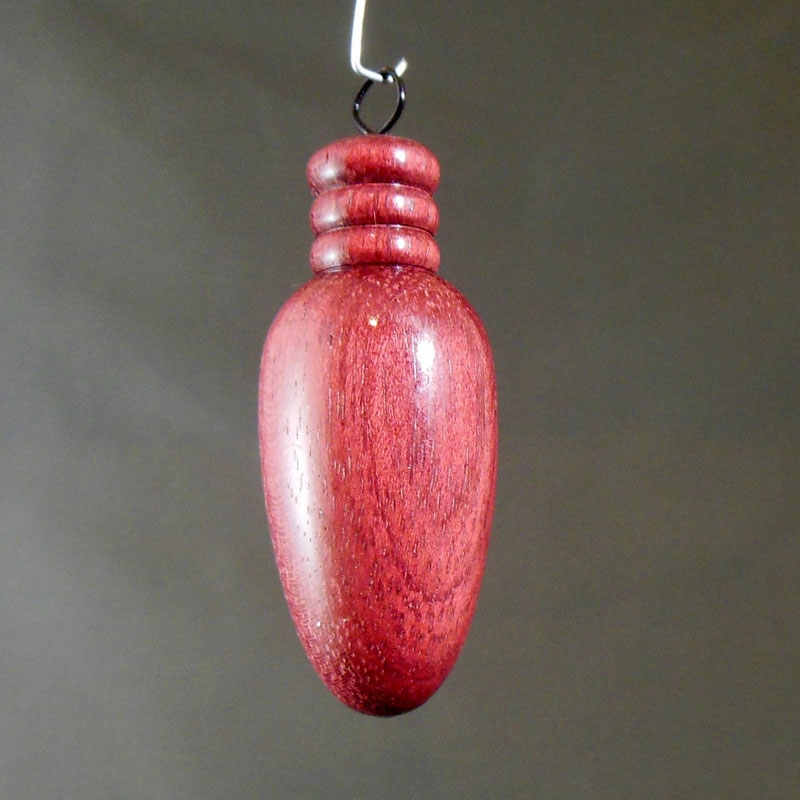
In the most recent issue of The Highland Woodturner, I gave the step-by-step instruction of turning a wooden snowman ornament. In Part 2 you can find out how to turn a wooden bell ornament here on the Highland Woodworking blog. Finally, here in Part 3 I will turn a wooden Christmas tree light as seen below.

Figure-3

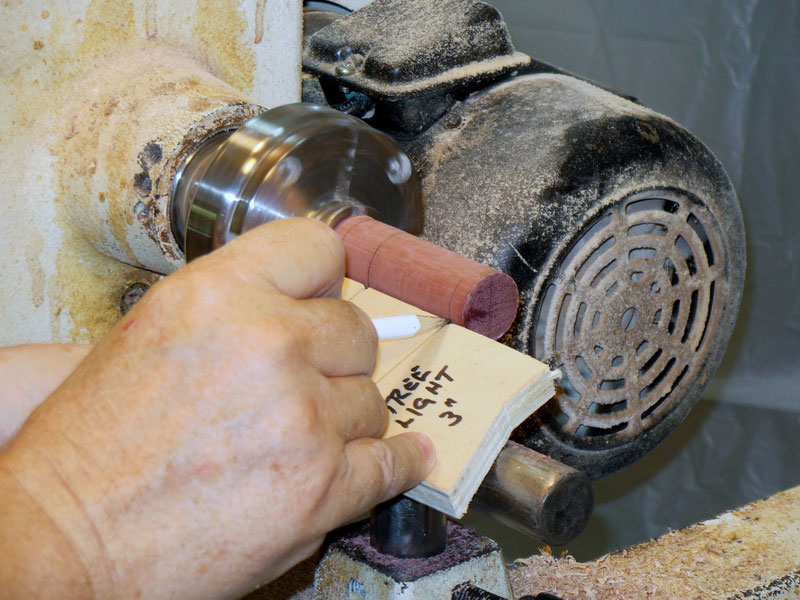
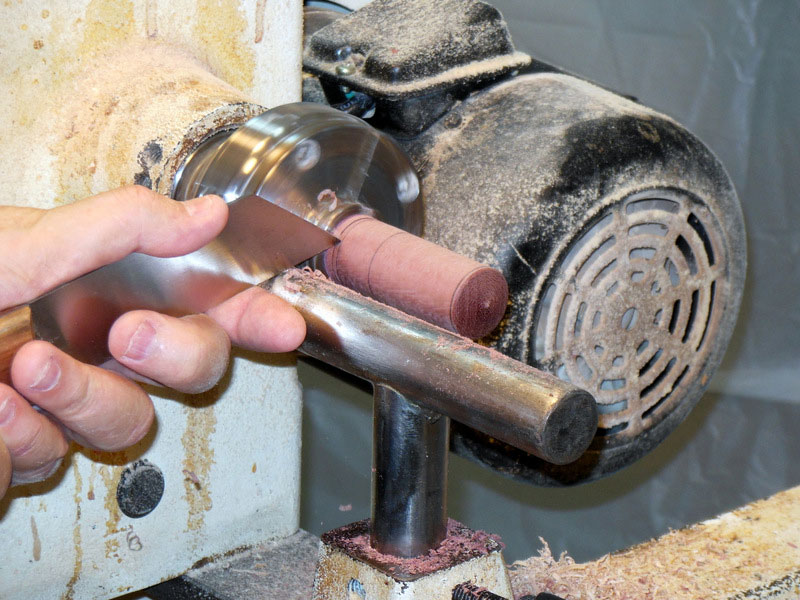
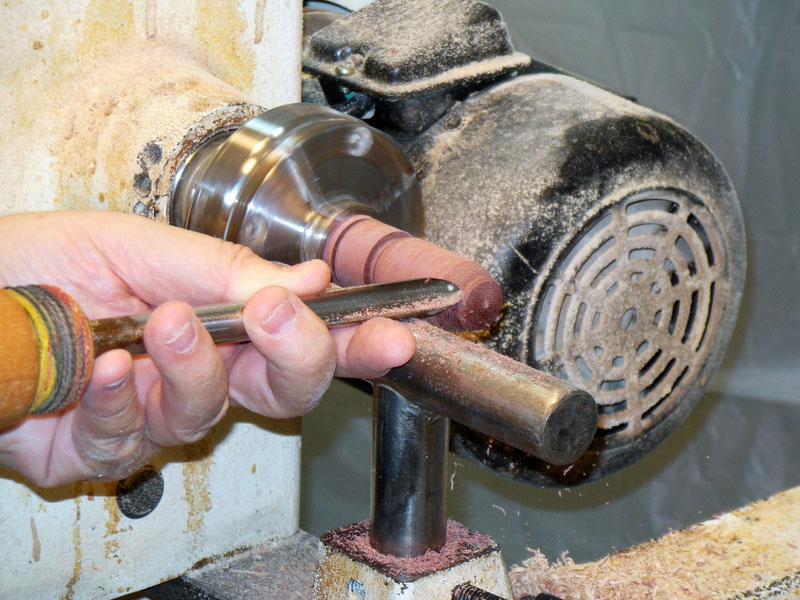
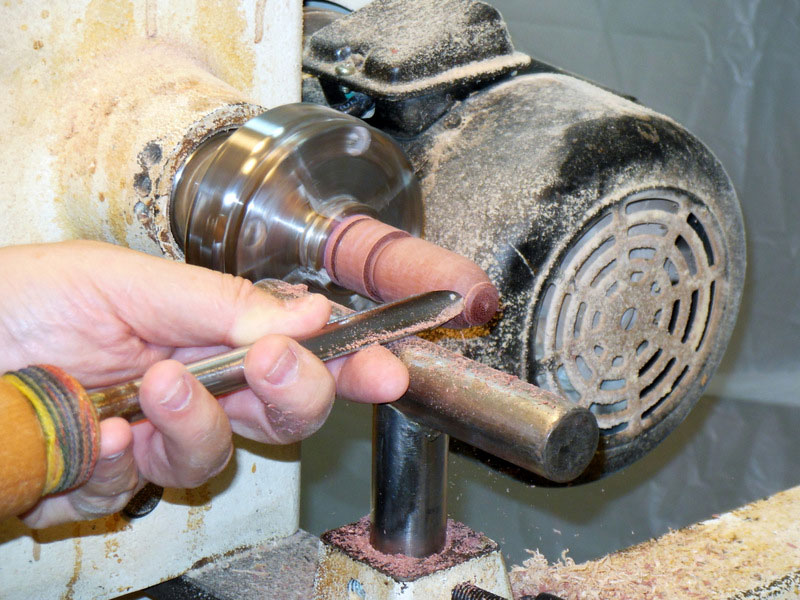
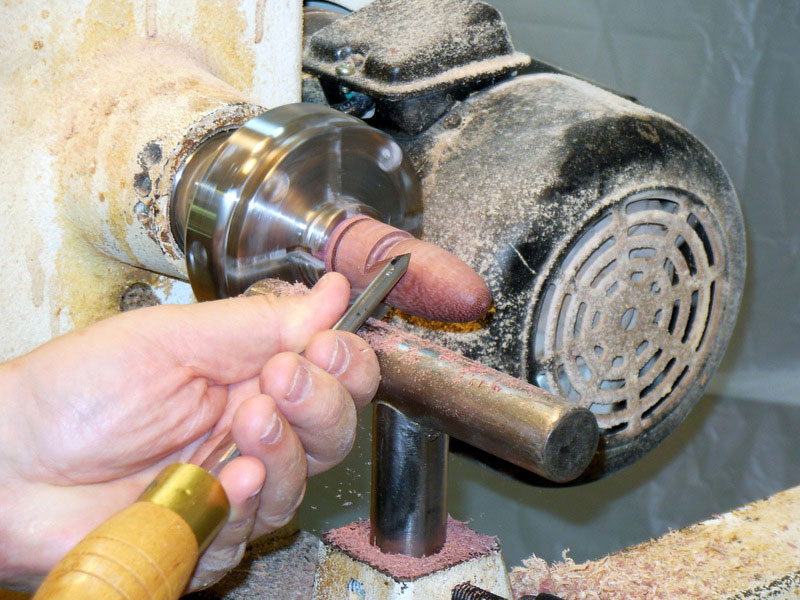
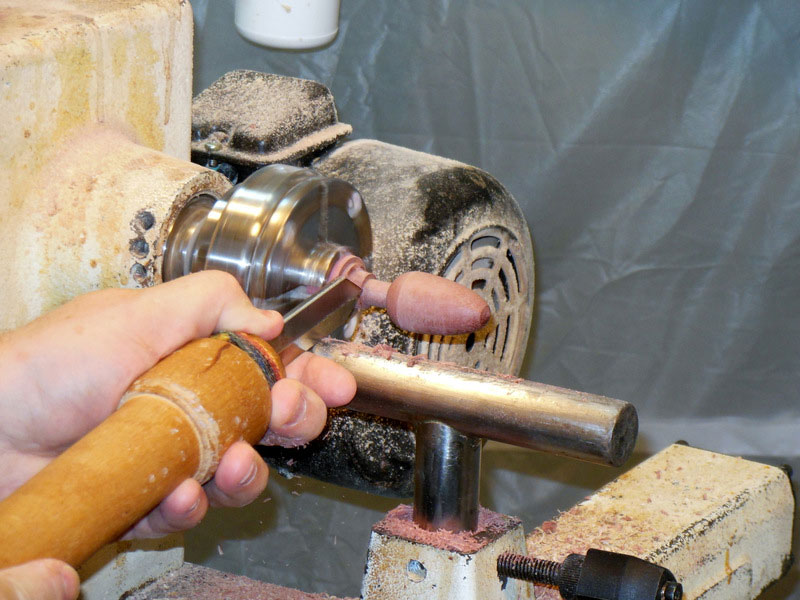
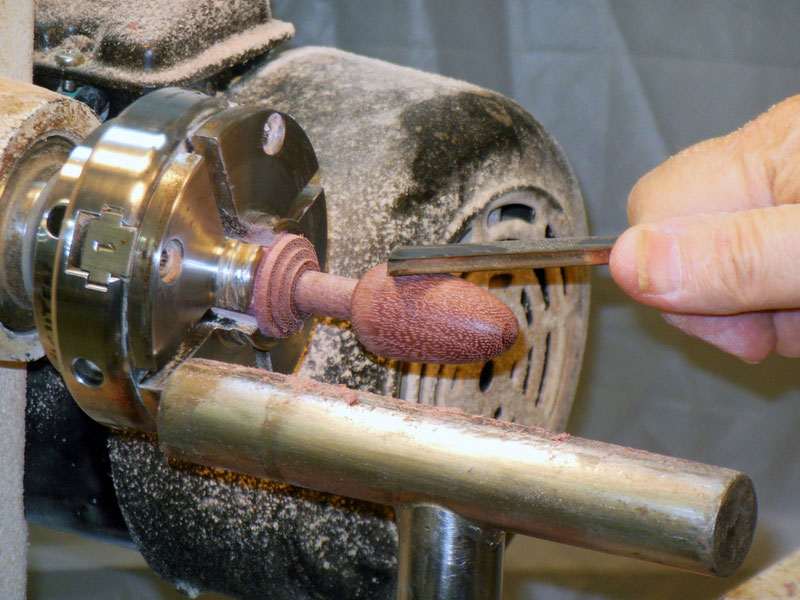
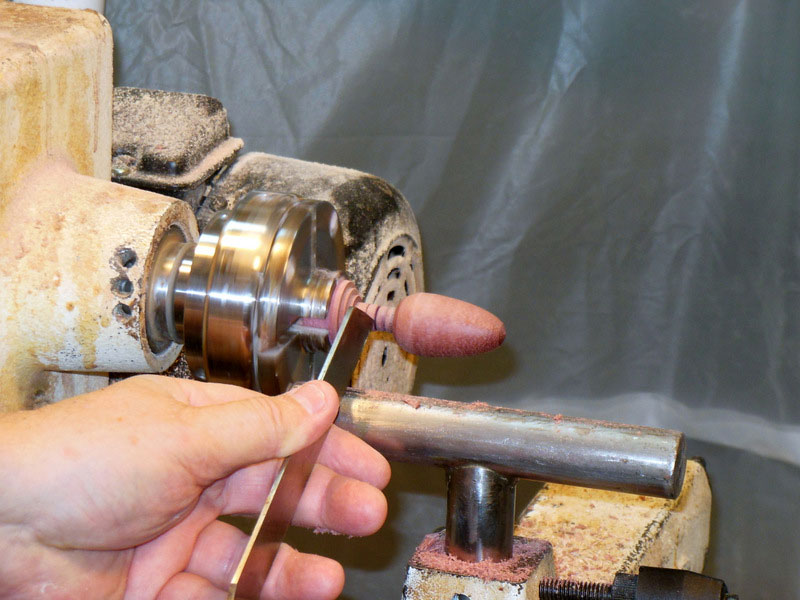
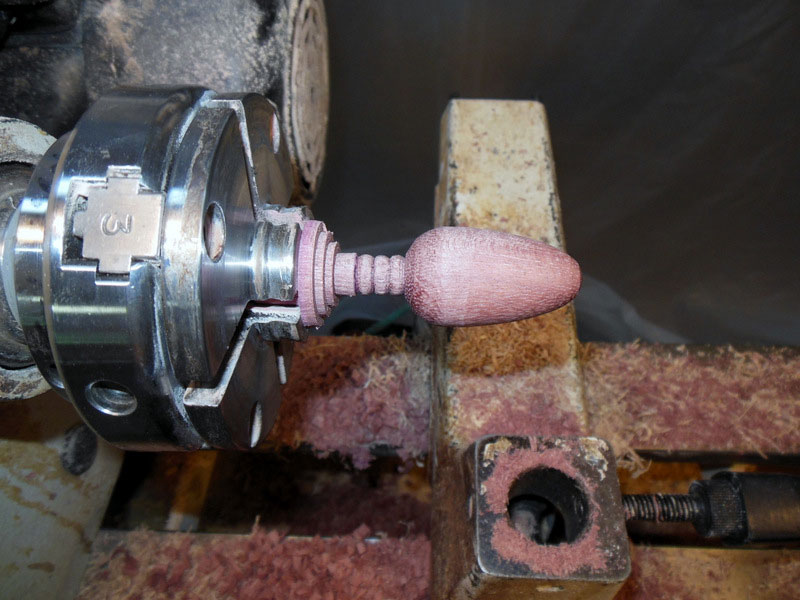
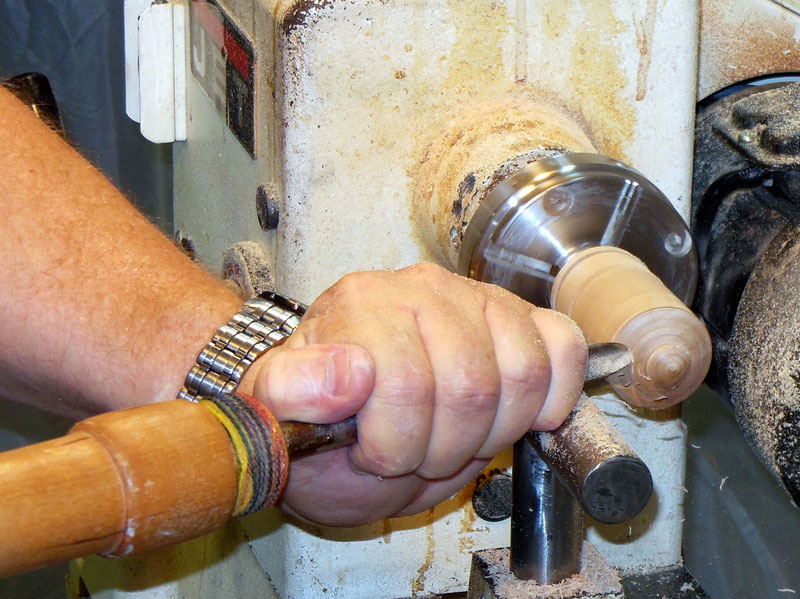
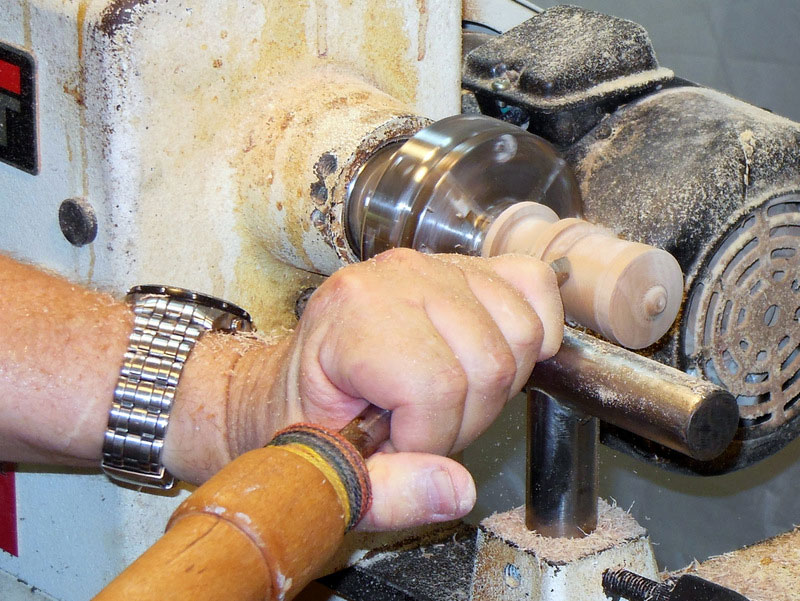
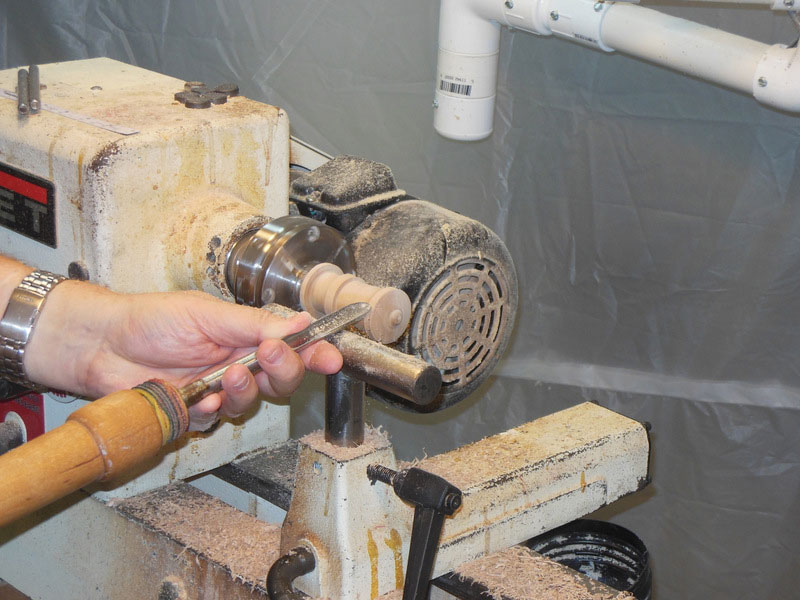
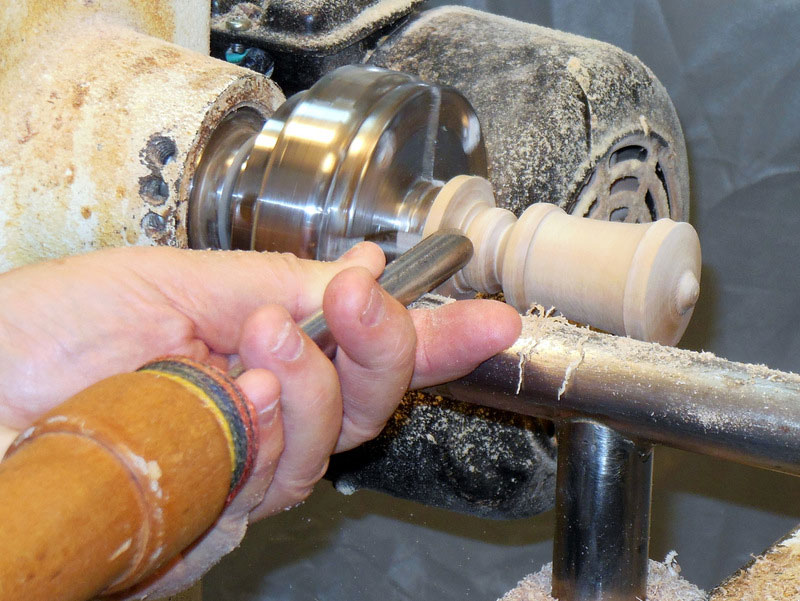
Making the light bulb ornament follows the same steps as the two earlier ornaments: mount the blank, use the template to lay out the parts, mark off those lines with a parting tool, and start shaping the bulb. See Figures 1 through 4 below.

Figure 1  -  Use the bulb template to mark the sections of the ornament

Figure 1 – Use the bulb template to mark the sections of the ornament

Figure 2  -  Use a parting tool to make shallow cuts at each marked line

Figure 2 – Use a parting tool to make shallow cuts at each marked line

Figure 3 - Use a spindle gouge to shape the bulb...

Figure 3 – Use a spindle gouge to shape the bulb…

Figure 4 -  Taper the bulb just like the tree lights from the 1960's

Figure 4 – Taper the bulb just like the tree lights from the 1960’s

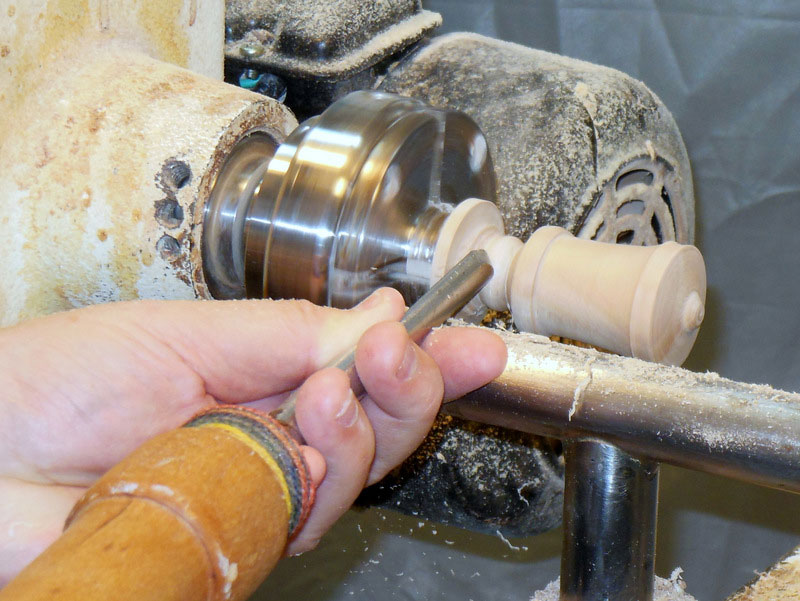
I’ve found the skew is quite useful in the small curve at the top of the bulb (Figure 5). Once the bulb is shaped to your satisfaction, use a parting tool to waste away material on the socket area.

Figure 5 - Use a skew at the top of the bulb area (a gouge will also work, of course)

Figure 5 – Use a skew at the top of the bulb area (a gouge will also work, of course)

Figure 6 - Start cutting down the socket area of the ornament

Figure 6 – Start cutting down the socket area of the ornament

Figure 7 -  Take the socket down to around 3/8 inch diameter

Figure 7 – Take the socket down to around 3/8 inch diameter

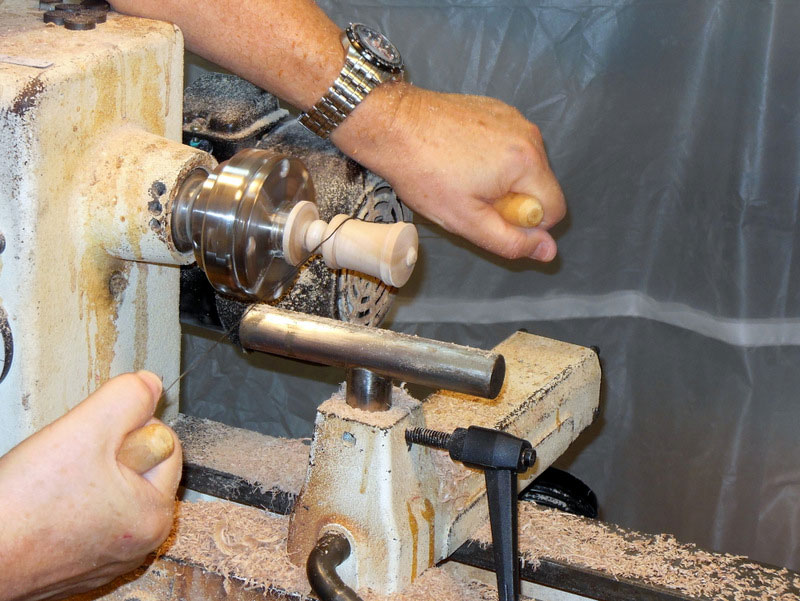
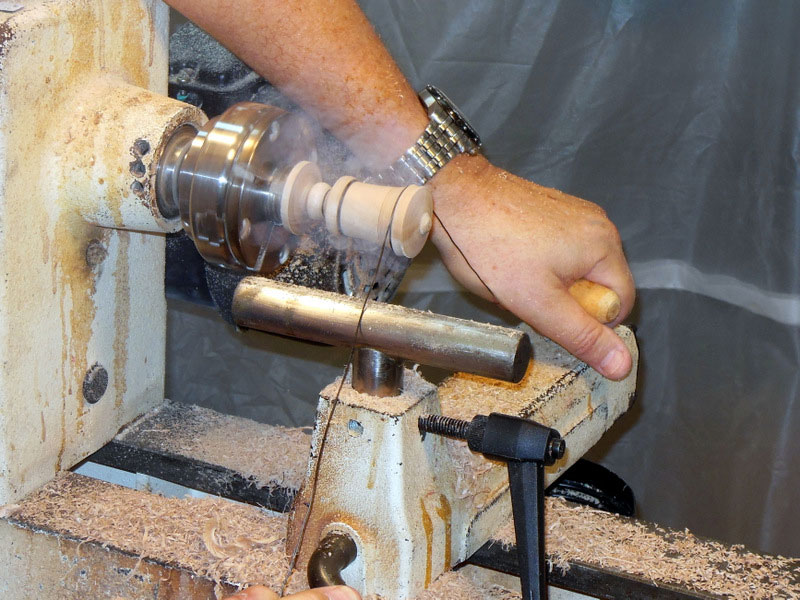
If you have a fluted parting tool (Figure 8), it is excellent for cutting small beads that simulate the threads of the bulb’s screw connector. If you don’t have one, a skew can be used to cut sharp threads with a V-cut, or a small gouge can be used.

Figure-8-Ornament

Figure 8 – A fluted parting tool

Figure-10-Light

Figure 9 – Use the fluted parting tool to cut the socket
“threads”

Figure 10 - After shaping the bulb and socket

Figure 10 – After shaping the bulb and socket

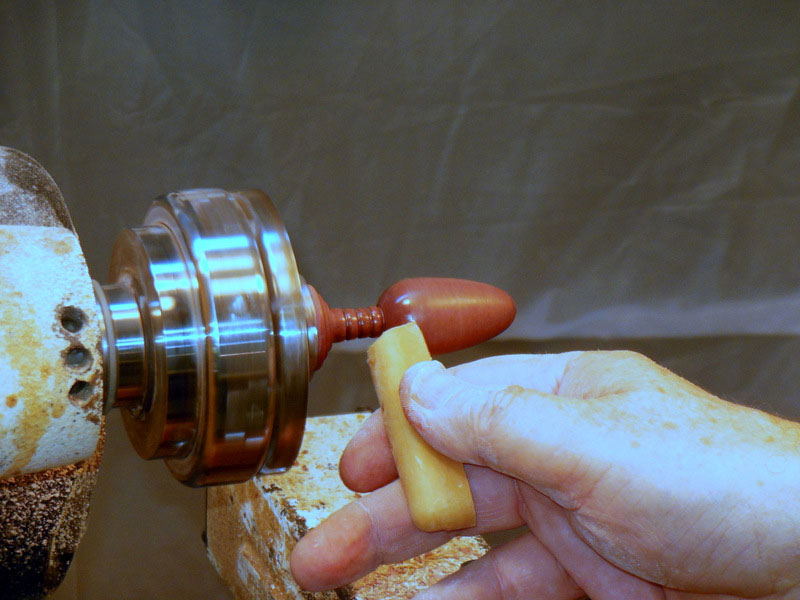
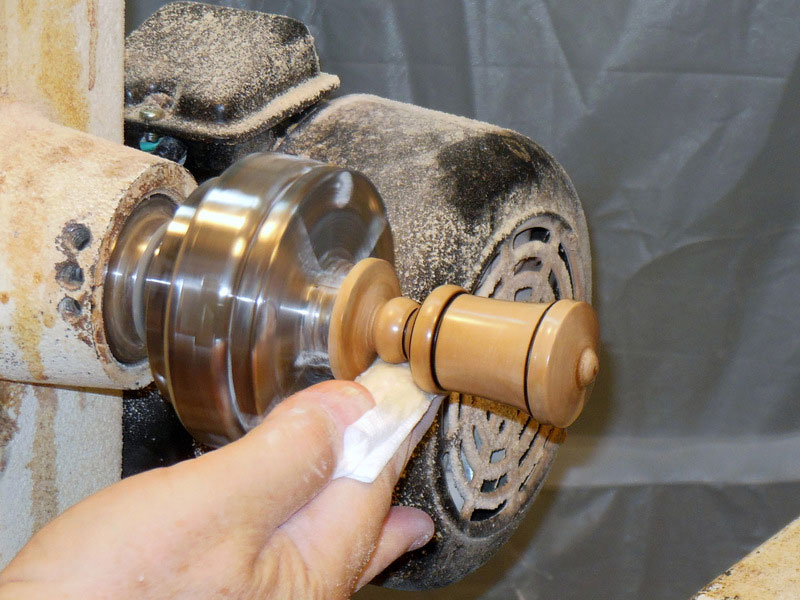
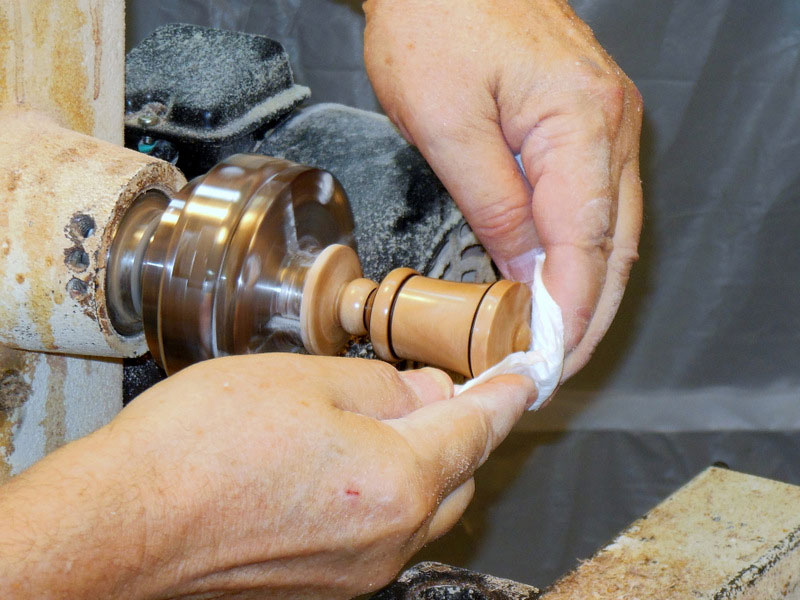
Apply finish and wax

Figure 11 – Apply finish and wax

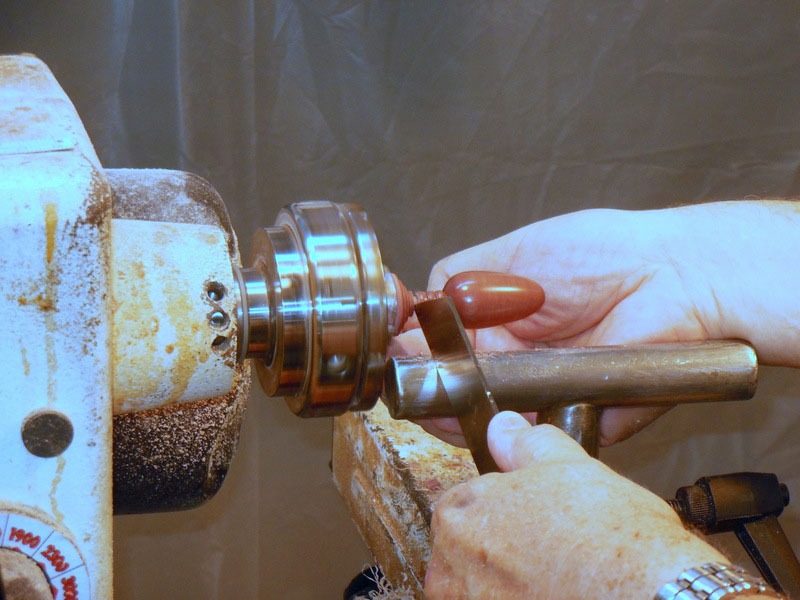
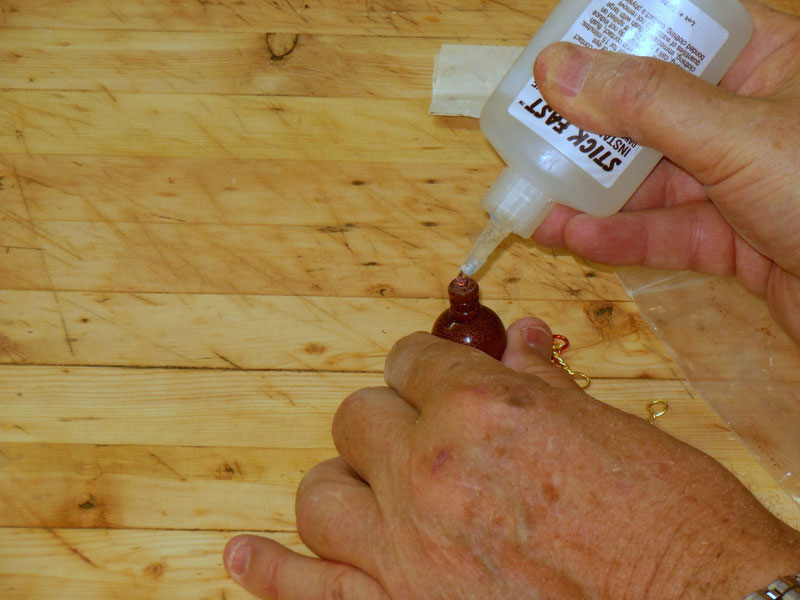
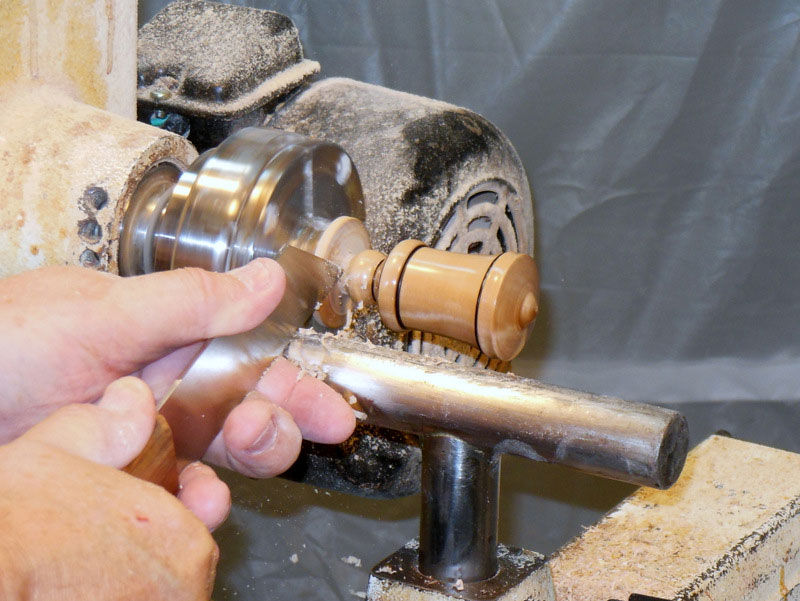
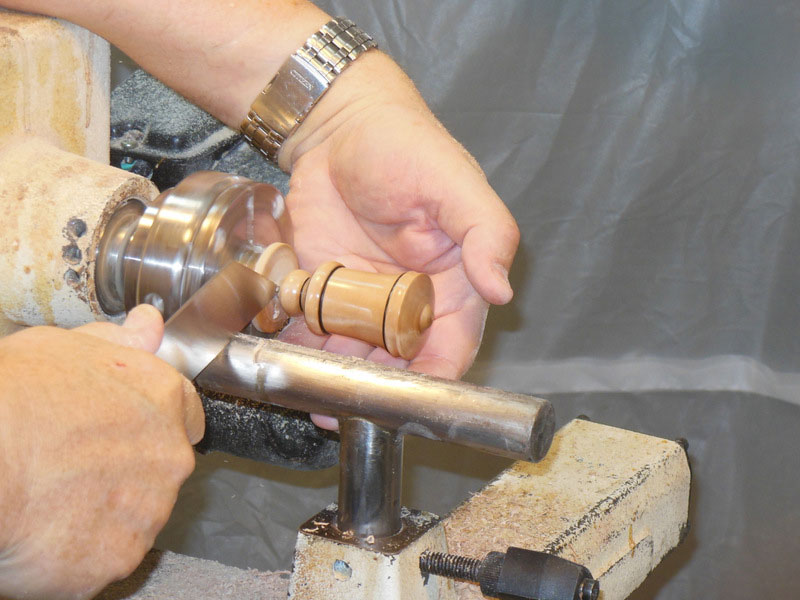
Finally part off the ornament (Figure 12). I’ve drilled the hanger holes on the drill press for the bulb ornaments, as discussed above, so with a drop of glue, the hanger can be screwed in place. (Figure 13)

Figure 12  - Part off the light bulb ornament

Figure 12 – Part off the light bulb ornament

Figure 13 - Put a drop of CA glue on the hanger hole, then insert the hanger

Figure 13 – Put a drop of CA glue on the hanger hole, then insert the hanger

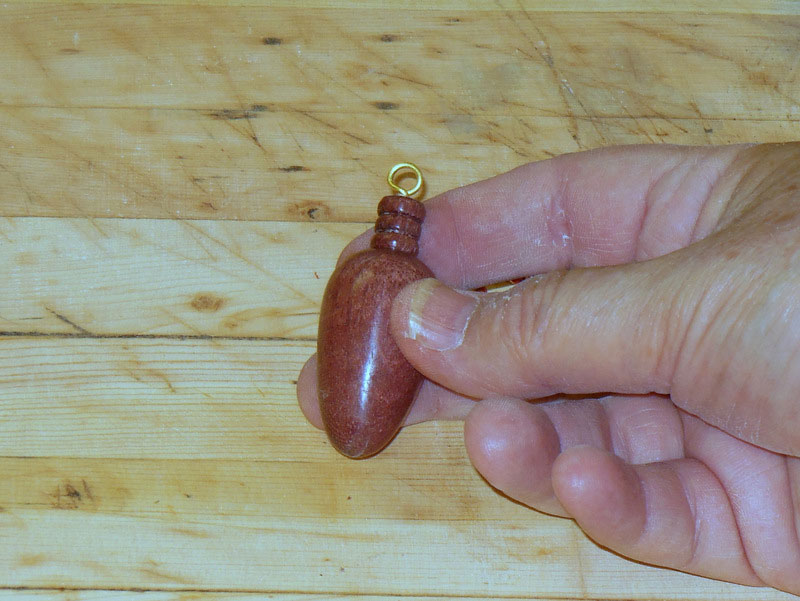
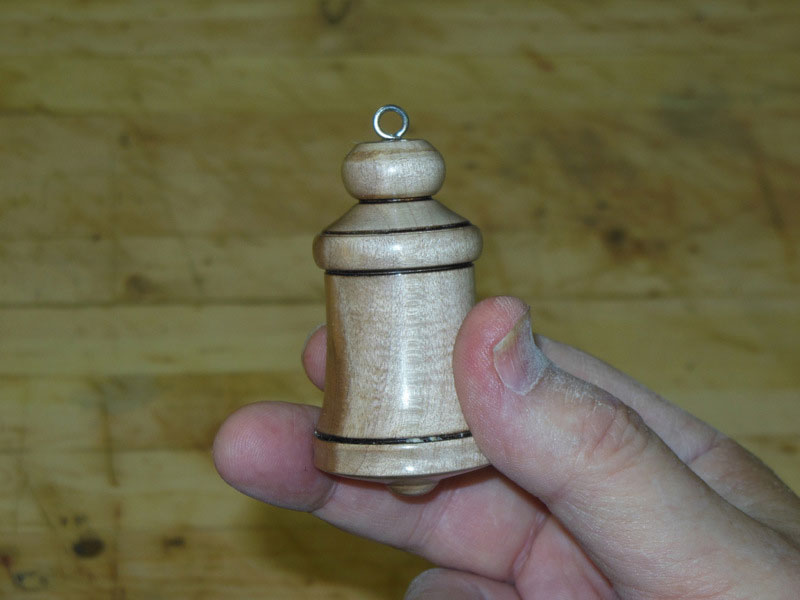
The Christmas tree light bulb ornament is finished!

Figure 14 - The completed bulb ornament

Figure 14 – The completed bulb ornament

CLICK HERE to return to the October 2014 issue of The Highland Woodturner.


Oct 162014
 

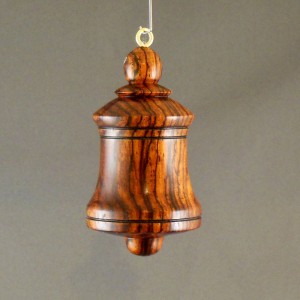
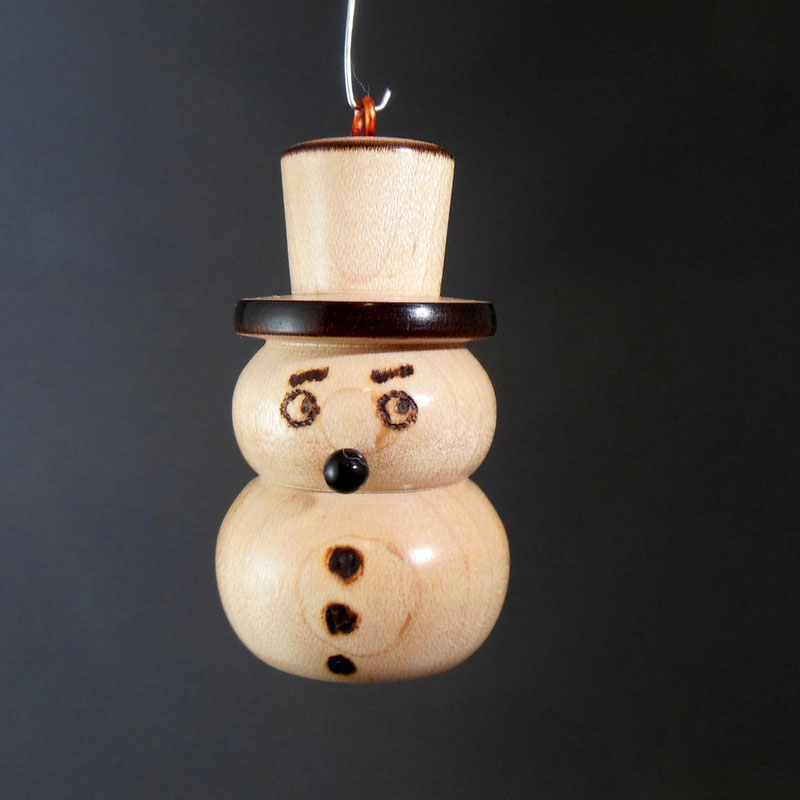
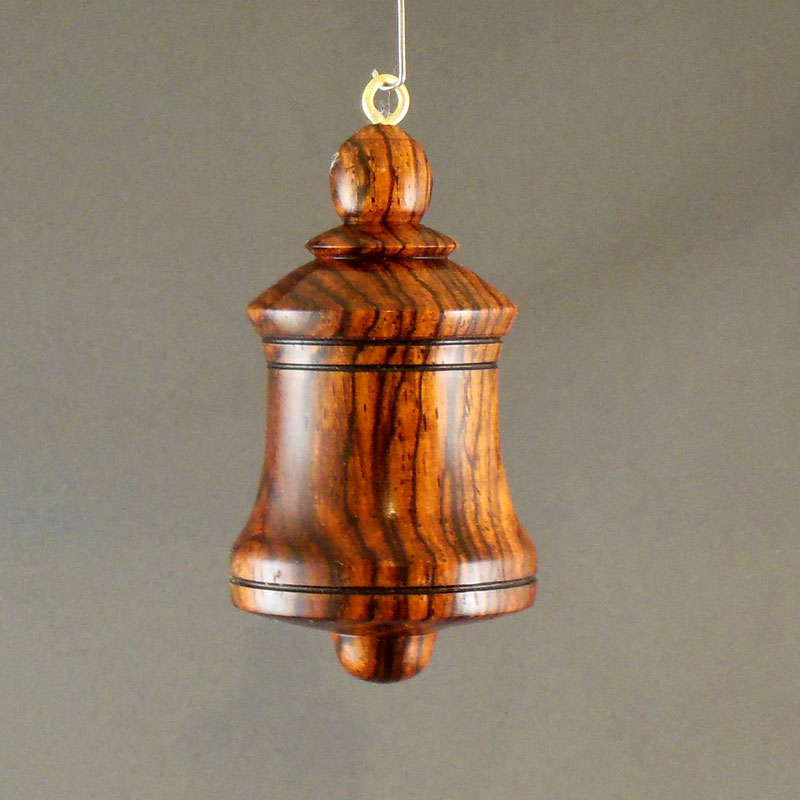
In the first part of this article, I showed how to make a Christmas tree ornament shaped like a snowman (see Figure 1). In this part, I’ll show you how to turn a bell ornament (Figure 2).
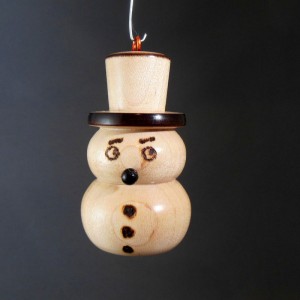
figure1

Figure 1 – The Snowman Ornament

figure2

Figure 2 – The Bell Ornament

Ornament Sizes

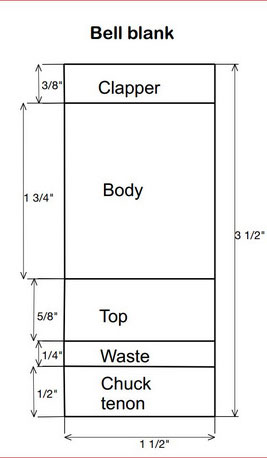
Figure 3 below shows the size of the blanks for the bell ornament, and details the location of each major division of the piece.
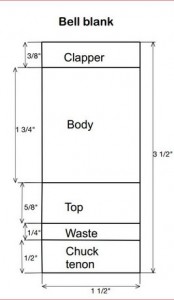
Figure 4 - Ornament Sizing

Figure 3 – Ornament Sizing

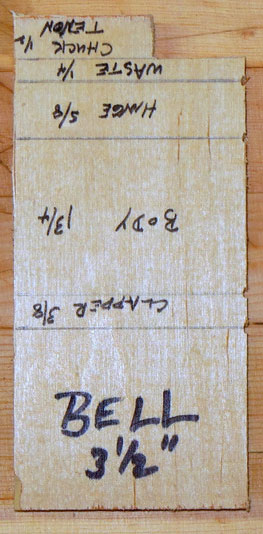
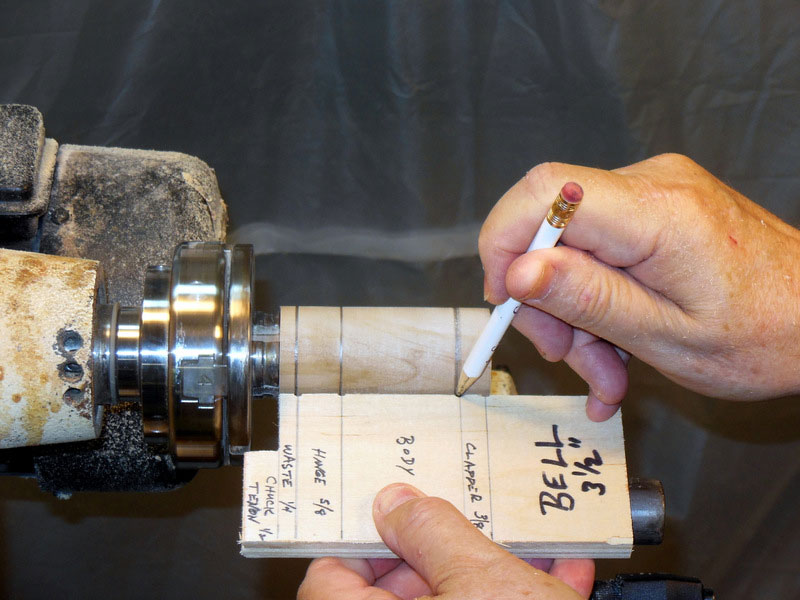
If you, like me, are making lots of these ornaments for Christmas gifts, I suggest making a sizing template for each ornament (Figure 4). This makes it much faster to lay out each new blank when you’re ready to turn it.
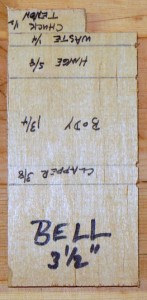
Figure 5 - Templates for the 3 Types of Ornaments

Figure 4 – Template for the Bell Ornament

Preparing the Blanks

Part 1 of this article has more detailed instructions on preparing the blanks for the ornaments, so I won’t repeat them here.

For the bell ornaments, cut lengths of 1 ½ square spindles to 3 ½ inches; for the bulb ornaments, cut lengths of 1 inch square spindles to 3 inches. Mark the ends for center, mount them between centers, and rough them down to round. On one end, cut a ½ inch long tenon to fit whatever chuck you’re using.

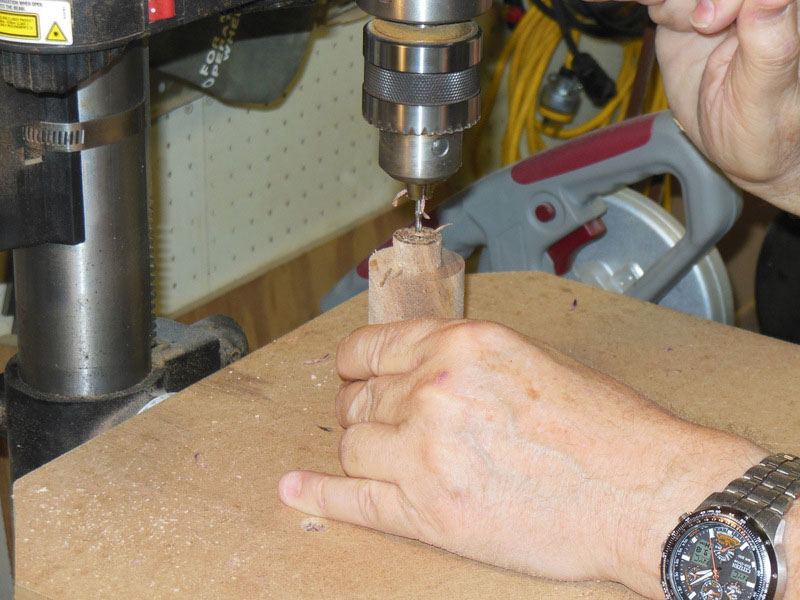
You may wish to drill a hole for the hanger right now (Figure 5); it’s easier to do it now, rather than waiting until the ornament has been turned and doesn’t have a flat surface to sit on. Remember that for the bell and bulb ornaments, the top of the ornament is on the chuck end, so the hole needs to be at least an inch deep (to account for the tenon which is parted off).
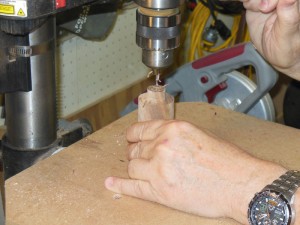
Figure 6 - Drill a hole for the hanger on the top of the ornament, either before turning (shown) or after

Figure 5 – Drill a hole for the hanger on the top of the ornament, either before turning (shown) or after

Making the bell ornament

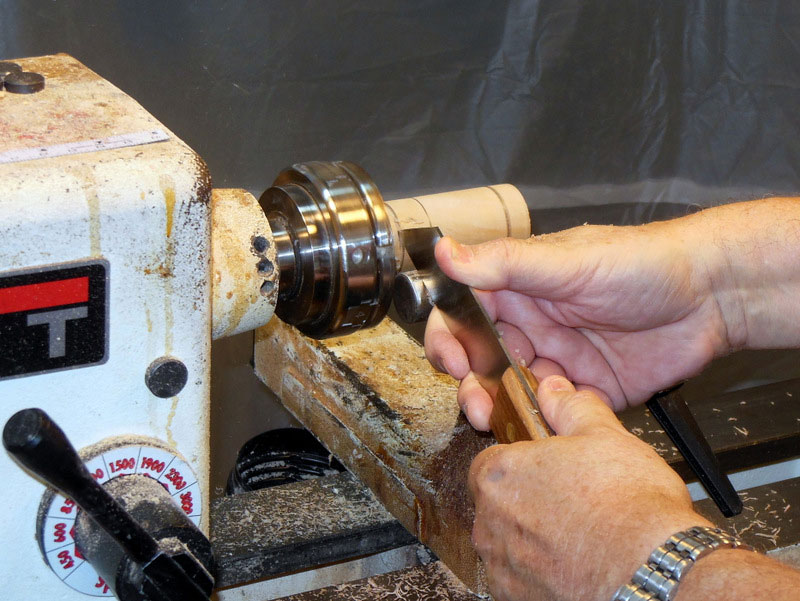
To make the bell ornament, take one of the bell blanks and mount it in the chuck. Then use the bell template to mark off the parts of the bell (Figure 6). Use a parting tool to cut in a half inch or so at the first line (in the waste area) to mark the end of the turning (Figure 7)
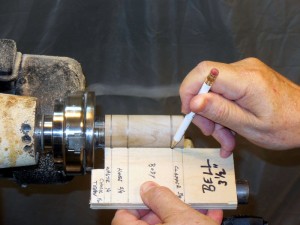
Figure-7

Figure 6 – Use the bell template to mark off the sections of the bell ornament
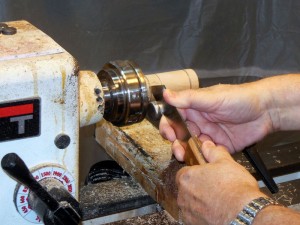
Figure 8  - Use a parting tool to delineate the top of the ornament

Figure 7 – Use a parting tool to delineate the top of the ornament

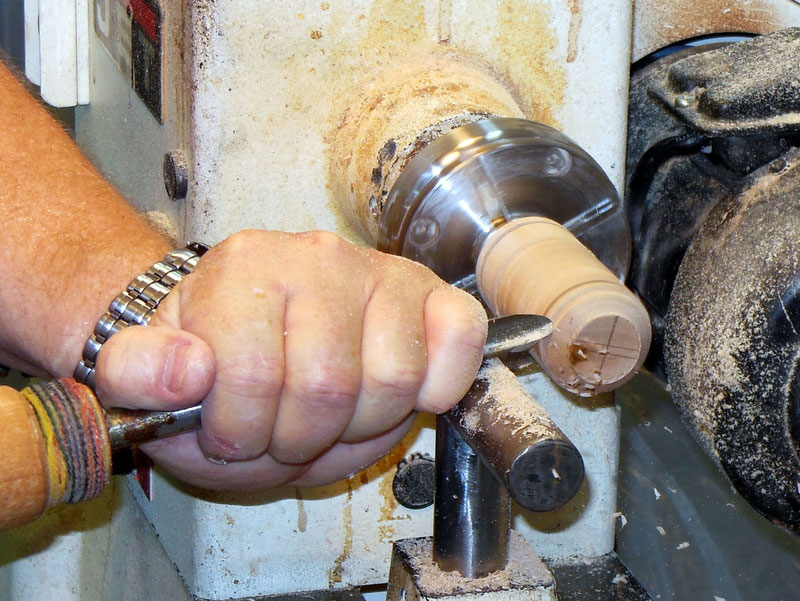
The bell ornament is laid out so that the bottom of the ornament is toward the tailstock. After making shallow cuts at the marked lines, I start by working on the bottom, cutting a shallow curve across, going in about 2/3 of the diameter, and then, right in the center, turning a small “bump” (Figures 8 and 9), which is the clapper of the bell, just visible below the bell’s body.
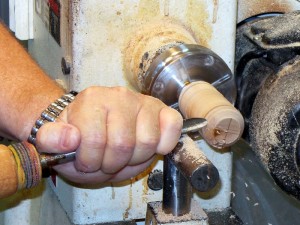
Figure 9  - Using a spindle gouge, start a shallow curve on the bottom (rightmost) part of the bell

Figure 8 – Using a spindle gouge, start a shallow curve on the bottom (rightmost) part of the bell
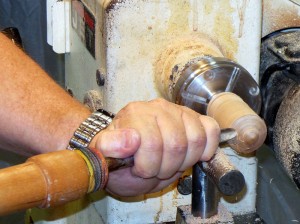
Figure 10  - Cut in about 2/3 of the diameter, to leave a rounded "bump" on the bottom

Figure 9 – Cut in about 2/3 of the diameter, to leave a rounded “bump” on the bottom

With the clapper shaped, move left to the body of the bell. Using the spindle gouge, begin cutting a slope from the bottom edge to the marked line to the left, which is the top edge of the body. For a decoration, leave a raised flat area at both the bottom and top edges of the body.
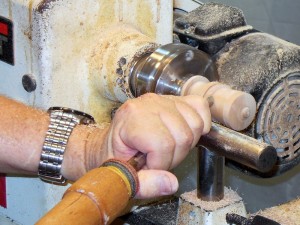
Figure 11- Start turning the body of the bell

Figure 10- Start turning the body of the bell
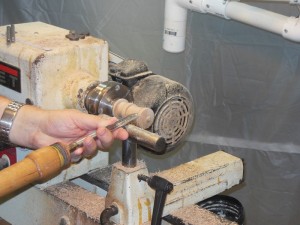
Figure 12  - Slope the body from the bottom (right) to the top (left)

Figure 11 – Slope the body from the bottom (right) to the top (left)

After shaping the body as desired, move left again to the crown of the bell (between the waste cutoff and the body). Turn a large bead in this area.
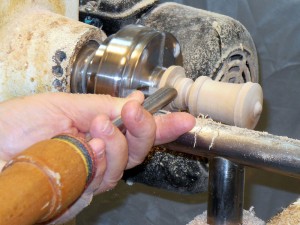
Figure 13 - Begin shaping the crown of the bell

Figure 12 – Begin shaping the crown of the bell
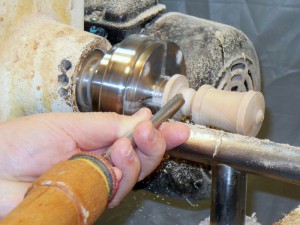
Figure 14 - This is turned as a rather fat bead

Figure 13 – This is turned as a rather fat bead

Using a narrow parting tool or the toe of a skew, cut a couple of very shallow lines at the top and bottom of the body, and use a burning wire (a length of steel wire with a small handle on each end – homemade of course, although you can buy them) to burn in two dark black lines for decoration (Figure 14). You might want to increase the speed of the lathe up to 1500 or 1900 if you’re having trouble getting a burn. Be aware, you’ll get smoke, as shown in Figure 15.
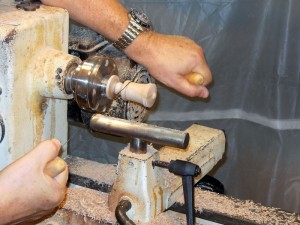
Figure 15 - Burn a line at the top of the body

Figure 14 – Burn a line at the top of the body
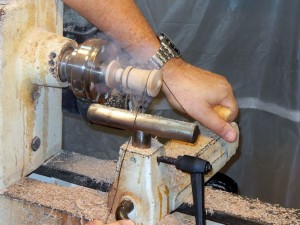
Figure 16  - And burn a line at the bottom of the body

Figure 15 – And burn a line at the bottom of the body

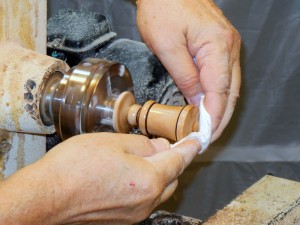
Unless you want to do more decoration, the bell ornament is ready for finishing. As with the snowman ornament, put on a coat of friction polish with the lathe off, polish it with the application cloth, put on some wax with the lathe on, and polish it with the wax applicator cloth (or paper towel).
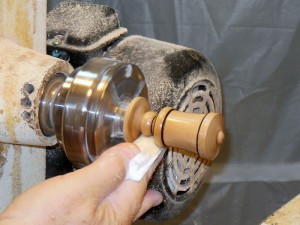
Figure 17 - Apply a friction polish…

Figure 16 – Apply a friction polish…

Figure 18 - …and a coat of wax

Figure 17 – …and a coat of wax

Part the bell ornament off (Figure 18), and in the same manner as the snowman ornament, attach a hanger on the top.
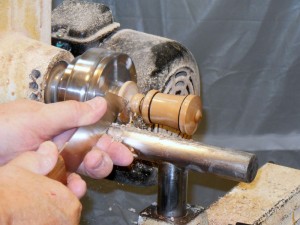
Figure 19  - Part off the bell ornament

Figure 18 – Part off the bell ornament
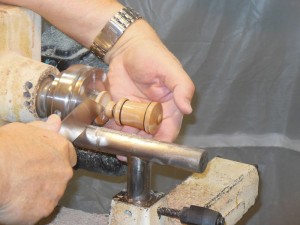
Figure 20 - Be sure to catch the piece as you part it off

Figure 19 – Be sure to catch the piece as you part it off

(If you haven’t already drilled the hanger hole, you’ll have to do that first, of course.) If you’re mass-producing, however, set the ornament aside, turn all the other bells, then drill all of them for the hanger.

The bell ornament is finished!
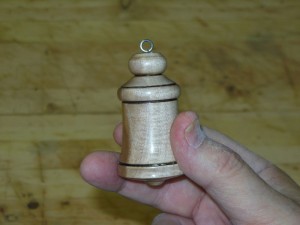
Figure 21  - The completed bell ornament

Figure 20 – The completed bell ornament

CLICK HERE for Part 3 – The Christmas Tree Light Bulb (seen below)
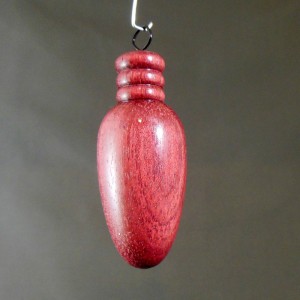
Figure-3

The Christmas Tree Light Bulb
Oct 152014
 

Looking out over my back yard,I can see that autumn is beginning to encroach upon Atlanta, though I still need to find a good way to get rid of Kudzu. Along with the hopefully cooler weather, the changing leaves and the pumpkin spice everything, we also get a wonderful woodworking holiday: the annual Highland Woodworking open house. This year the open house will be on Friday, October 17th from 10am to 6pm and on Saturday, October 18th from 9am to 5pm. I am looking forward to the event and will be in attendance, but more importantly several artisan toolmakers including a few folks from Lie-Nielsen Tool Works will be there, and on Saturday we will get a visit from Master Cabinetmaker Frank Klausz.

Another wonderful thing about the open house is that Highland will be offering some secret tool deals. The team at Highland was able to secure a special selection of tools that they will be offering at once in a lifetime prices. I”ll be looking them over to see if there is anything I can add to my collection and I recommend coming out to take a look as well. Sadly you have to be at the store to get the deals as they aren’t being offered online or over the phone. The folks from Lie-Nielsen will also be demonstrating some of their tools, offering up some tips and tricks and giving pointers to those interested in their hand tools.

On Saturday, special guest Frank Klausz will be in attendance. I’ve done some reading both about and by Frank and am looking forward to meeting the man himself. Frank is a Master Cabinetmaker and has been working with wood for over 50 years. He started out as an apprentice in his Father’s shop at the age of 14 and has been woodworking ever since. I’ve personally wondered what it would be like to devote myself to woodworking as much as Frank has and wish I could find the time and stability to do so myself. Frank will be at the open house on Saturday answering questions, offering wisdom and showing off some of his amazing skills. The real treat however will be for the folks that can make it out to Highland Woodworking the next day.

On Sunday the 19th Frank Klausz will be offering a special demonstration class on hand-tool joinery. Hand-tool joinery is something I’ve been working on myself for the past couple months so learning from Frank will be an absolute treat. Frank will be covering topics like dovetails, half-lap joints, mortise and tenon joints and everything in between. There will also be a demonstration on how to keep your hand tools sharp, and I intend to take some serious notes on that, also probably some pictures since sharpening tools can be tricky. The motto Frank works by is “If you’re going to do it, do it well” and I can imagine that he will display that to the fullest extent. Hopefully I will see some friendly faces on Sunday joining me for a day of woodworking adventure.


Matthew York has been a woodturner since 2004 and has been interested in woodworking since he was a teenager. He currently lives in downtown Atlanta and has a small shop in his basement. He is an avid woodworker and is always available to talk about the craft. He can be contacted at fracturedturnings@gmail.com or visit his website at fracturedturnings.com. You can also follow him on twitter at @raen425

Oct 142014
 

That Steven Johnson just won’t leave me alone.  I’m thinking of blocking his email address. He just won’t stop bugging me about the Festool cord-and-hose boom arm. I’m hoping for one of two outcomes. Either he sees I’m happy with this month’s tip to solve the problem or alternatively, maybe he thinks I’m just fooling myself and he will take pity on me and just send me one. Prepaid, that is.  Of course, he said he’s going to send me some of his “gently-used” washers, too, but I’m still waiting.

So, what are the chances he’ll be sending me a boom arm that costs $365.00? Well, OK, I’ll give you that it goes everywhere your CT dust extractor goes, which means there’s no disconnecting and moving, as there is with my bungee cord. And, it’s always set up and ready to use. Oh, yeah, and there’s no hunting for the end of the hose or the cord.  Y’know what? Maybe that Steve Johnson is onto something. Where’s my Highland Woodworking order form? Until we can get a Festool boom, you and I can enjoy my bungee cord version below:

tips1

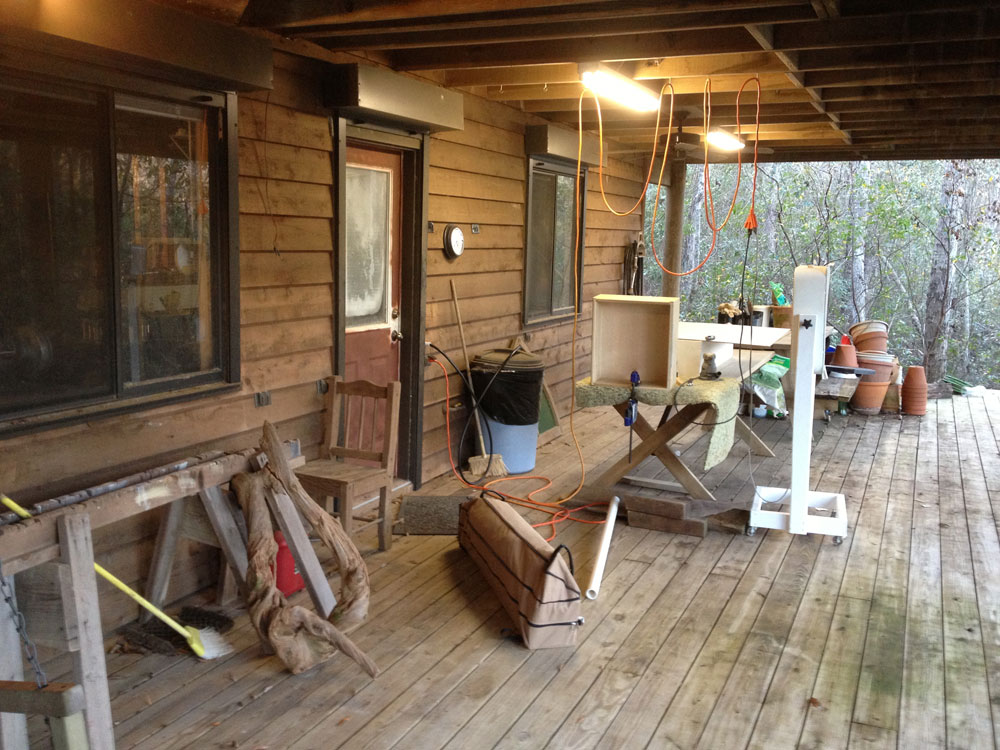
My cord management system started out with this succession of screw hooks installed in the ceiling joists for the purpose of hanging items to paint. By looping an extension cord from hook to hook it’s easy to keep the cord above the work and out of the way, but easy to let out more cord when needed, too

tips2

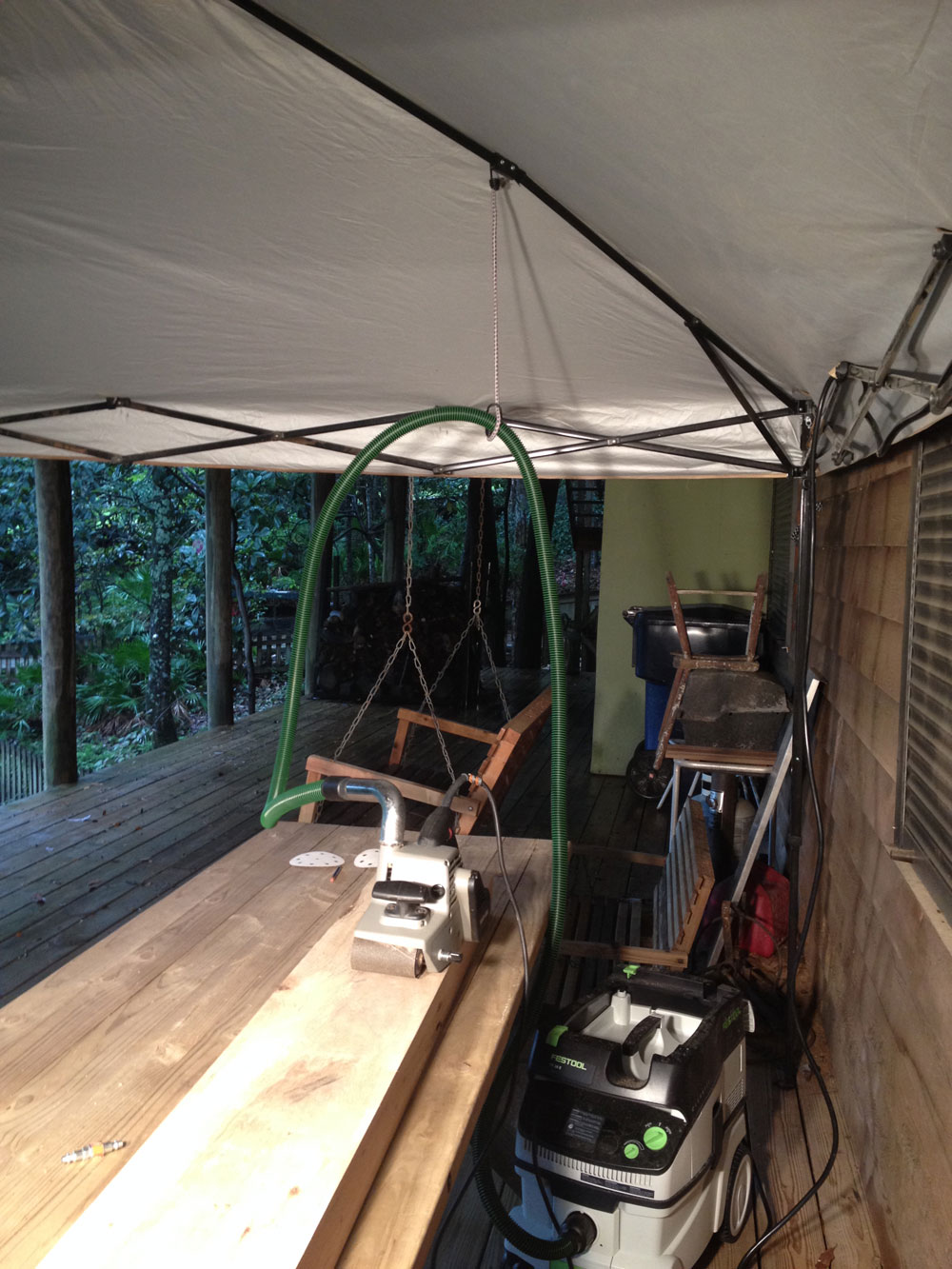
The next generation embraced cord management and dust extractor hose management, too. Some tools have long enough cords for the electricity to follow the elevated hose. The bungee cord provides flexibility as the sander moves from one end of the board the other.

tips3

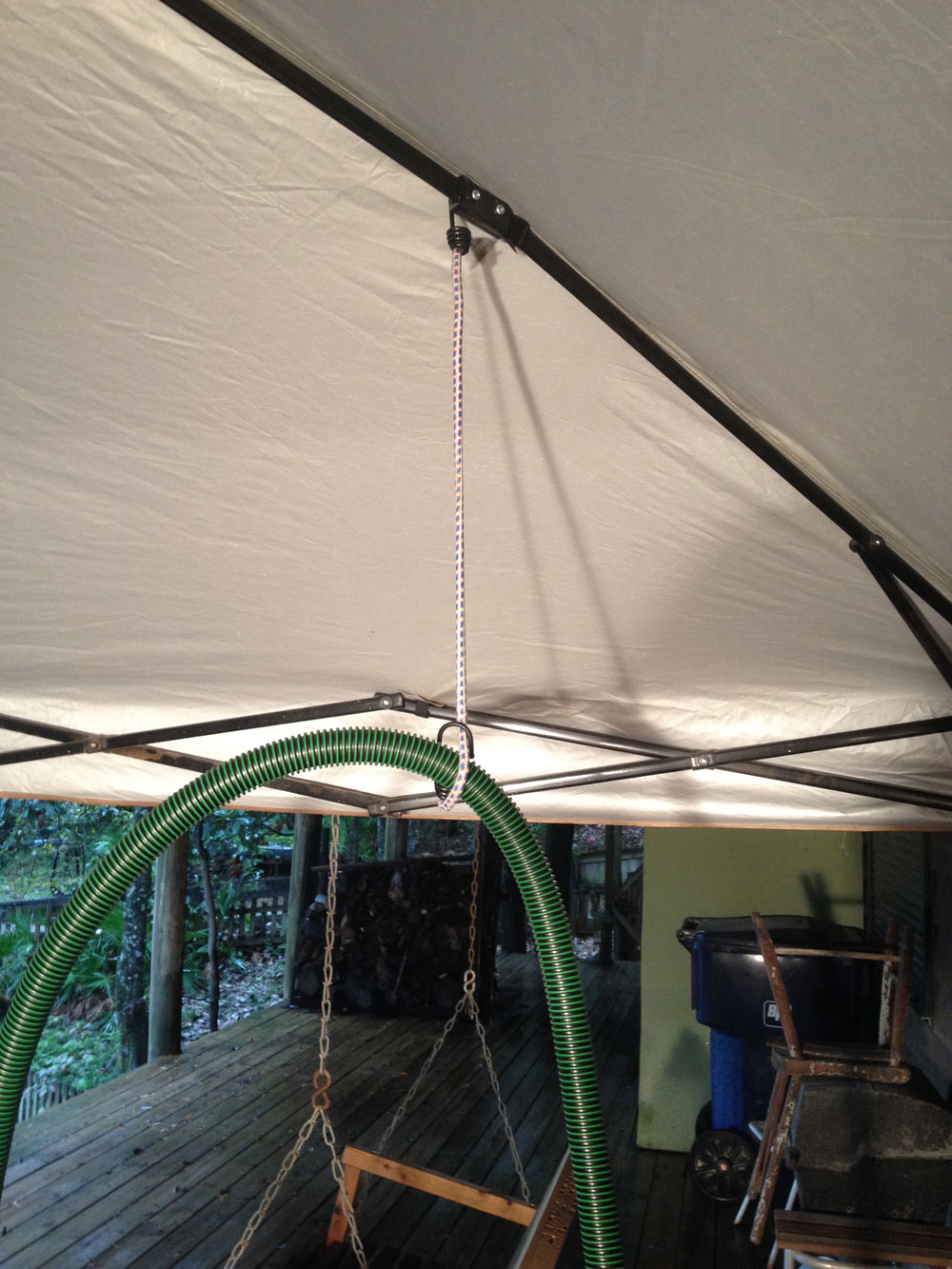
A closeup of the bungee cord attachment. A forecast probability of rain had me put up the “tent” so I could sand away without getting sanding dust all over the shop, but still not get rained on.


Jim Randolph is a veterinarian in Long Beach, Mississippi. His earlier careers as lawn mower, dairy farmer, automobile mechanic, microwave communications electronics instructor and journeyman carpenter all influence his approach to woodworking. His favorite projects are furniture built for his wife, Brenda, and for their children and grandchildren. His and Brenda’s home, nicknamed Sticks-In-The-Mud, is built on pilings (sticks) near the wetlands (mud) on a bayou off Jourdan River. His shop is in the lower level of their home. Questions and comments on woodworking may be written below in the comments section. Questions about pet care should be directed to his blog on pet care, www.MyPetsDoctor.com. We regret that, because of high volume, not all inquiries can be answered personally.

Oct 132014
 

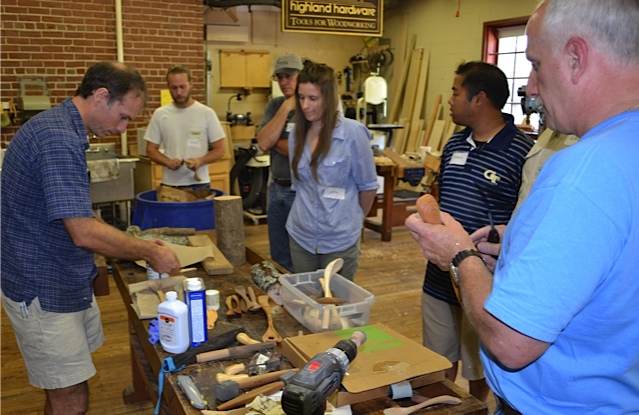
I went to Highland last weekend for a Saturday class on Spoon Making.  I have made a few spoons over the years, mostly by trial and error, watching Roy Underhill and some other videos on the internet.  It is always funny to me there is a mythos about many kinds of woodworking and Spoon Making has its share.   Generally speaking, you are pretty far down the handle if you use power tools.  The really good makers have a large beat-up stump in the middle of a brick floor, use a small axe to get the initial shape, and a curved knife made by American Indians on an island in Puget Sound. The rest of us use whatever we have in the shop and knives we buy from Highland.

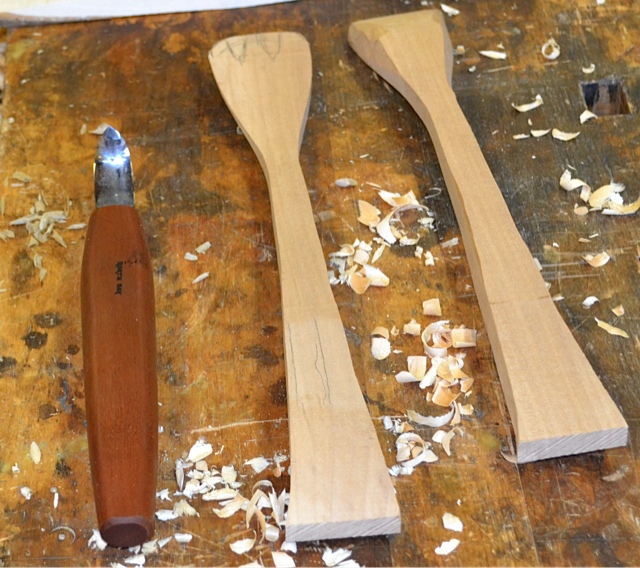
Curved Knife and Fork and Spoon Blank

Curved Knife and Fork and Spoon Blank

When I tried my first spoon, I took an old piece of dried wood and started hacking at it with my small axe and then with whatever knives and chisels I had in the shop.  It did not take me more than about two days of hacking to decide that the traditional methods were not for me.  My style degenerated into seriously considering using my chain saw to hollow out the bowl.  I figured if I could clamp the saw into my workbench vise with the chain facing my chest, then I could hollow the bowl by pressing the nose of the chain into the blank piece while holding it to my chest.  Of course, I would be wearing my leather apron just in case it slipped away.  (Do not try this at home, Ralph.  You do understand sarcasm when you see it, right?!!)  The point being that without the right tools and a little instruction, it is really easy to get tired and discouraged trying to make a spoon out of dry hardwood.

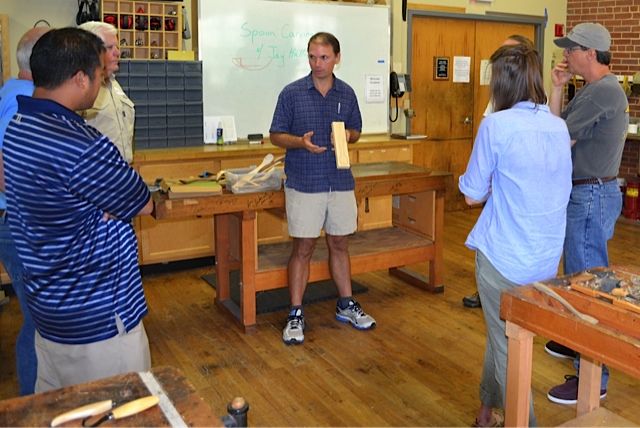
Instructor Jay Halinan and Our Class

Instructor Jay Hallinan and Our Class

Our instructor, Jay Hallinan, met us at Highland early on Saturday and introduced our little  group to the art of Spoons.  Turns out there is more to spoons than you ever thought about.  The shape of the bowl, the shape of the handle, the shape of the end of the spoon to fit into a pot for stirring, all are more involved than you would think.  For instance, an eating spoon must be shaped so that when you put food in your mouth, you don’t have to scrape the bottom of the bowl with your teeth to use it.  Jay showed us some salad spoons, larger than eating spoons, which were too heavy on the handle end and tended to tilt out of the salad bowl flipping lettuce all over the table.  Who would have thought?

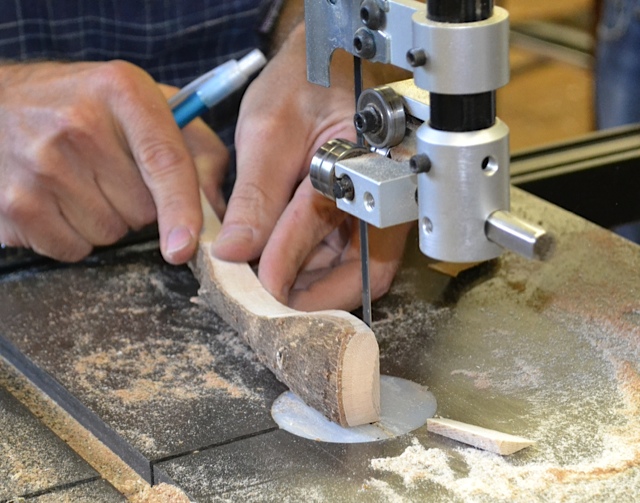
Rough Shaping

Rough Shaping

We went over tools and sharpening.  The best primary tool is the curved knife.  Used upside down so the blade comes out the bottom of the hand and with the thumb on the end of the handle for leverage, it is surprisingly effective in hollowing the bowl.  One of the best things I learned from the class is that the shape of the spoon does not have to be symmetrical.  You know me, Mr Engineer, I want things to be parallel and perpendicular, but who cares if the handle is curved.  The issue is how it feels in the hand and how it eats and how it stirs and your name on the back of the handle.
We used soft wood to do our spoons so no one would get discouraged with the difficulty of the carving and whittling.  Our first spoons were made from blanks Jay had prepared for us beforehand.  After that, we had plenty of scraps and fire wood we could choose from and begin to make another.  And the point is just that — you can use scraps, fire wood, found wood, fallen limbs and shrub trimmings to make a spoon.  Many people sit around and spread a cloth on the floor to keep the spouse happy and carve away while watching TV or listening to music.

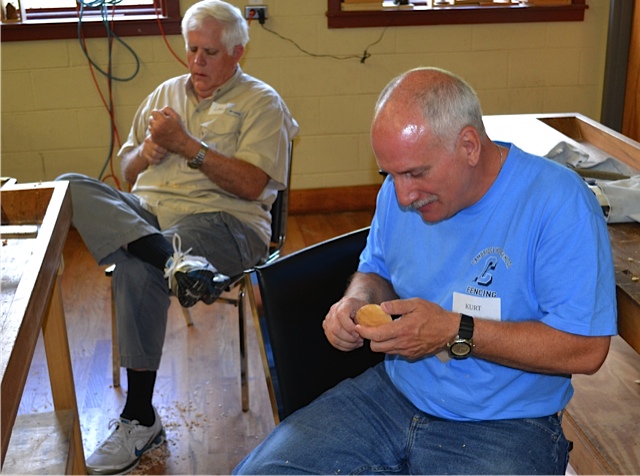
Intensive Carving

Intensive Carving

All in all, it was an excellent class.  Coming to the Seminar Room at Highland is like coming home.  The workbench at the front of the class is signed by instructors who have taught there and you will recognize many of them.  The best thing about it is the camaraderie of like-minded people who come to learn a new old skill.  I am always pleased to have classmates ask about some other class I’ve taken or some blog I read that they have not yet discovered.  We all go to lunch together to one of the bars next door and the instructor generally goes along with us.  And on the way back from lunch you can shop in Highland Woodworking and buy a basic tool kit for making spoons.  You can even get the address of the guy in Puget Sound.

Basic Finishes

Basic Finishes

Oct 122014
 

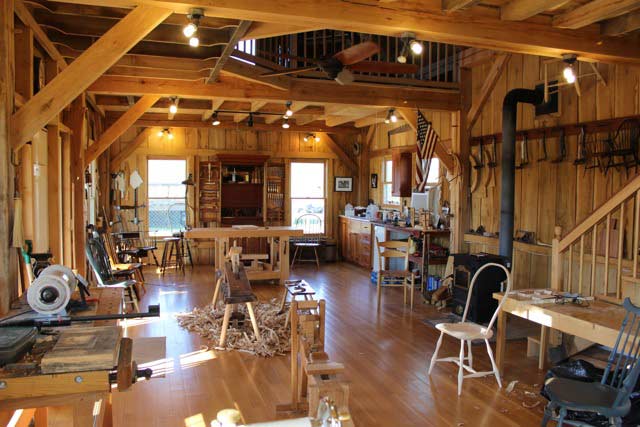
shop3September/October is the time of year that woodworkers go back to their shops after a summer of vacations, retreats, warm weather, and relaxation.

Several of our blog contributors wrote about their experiences of getting back into the shop, preparing for the creation of holiday presents, and their general overlook of the woodworking season. Click through below to read each of our contributors blog entries and get inspired to get back into YOUR shop!

Terry Chapman – A Campaign Furniture Fall and Winter

Curtis Turner – A Few Maintenance Chores

Anne Briggs – A New Woodworking Opportunity

Curtis Turner – Cleaning Up the Shop

Terry Chapman – A Good Sweep

Brian Benham – Taking Back Shop Space

Steve Johnson – Wood Truth & News Lies

Lee Laird – Fighting Mr. Rust Demon

Oct 082014
 

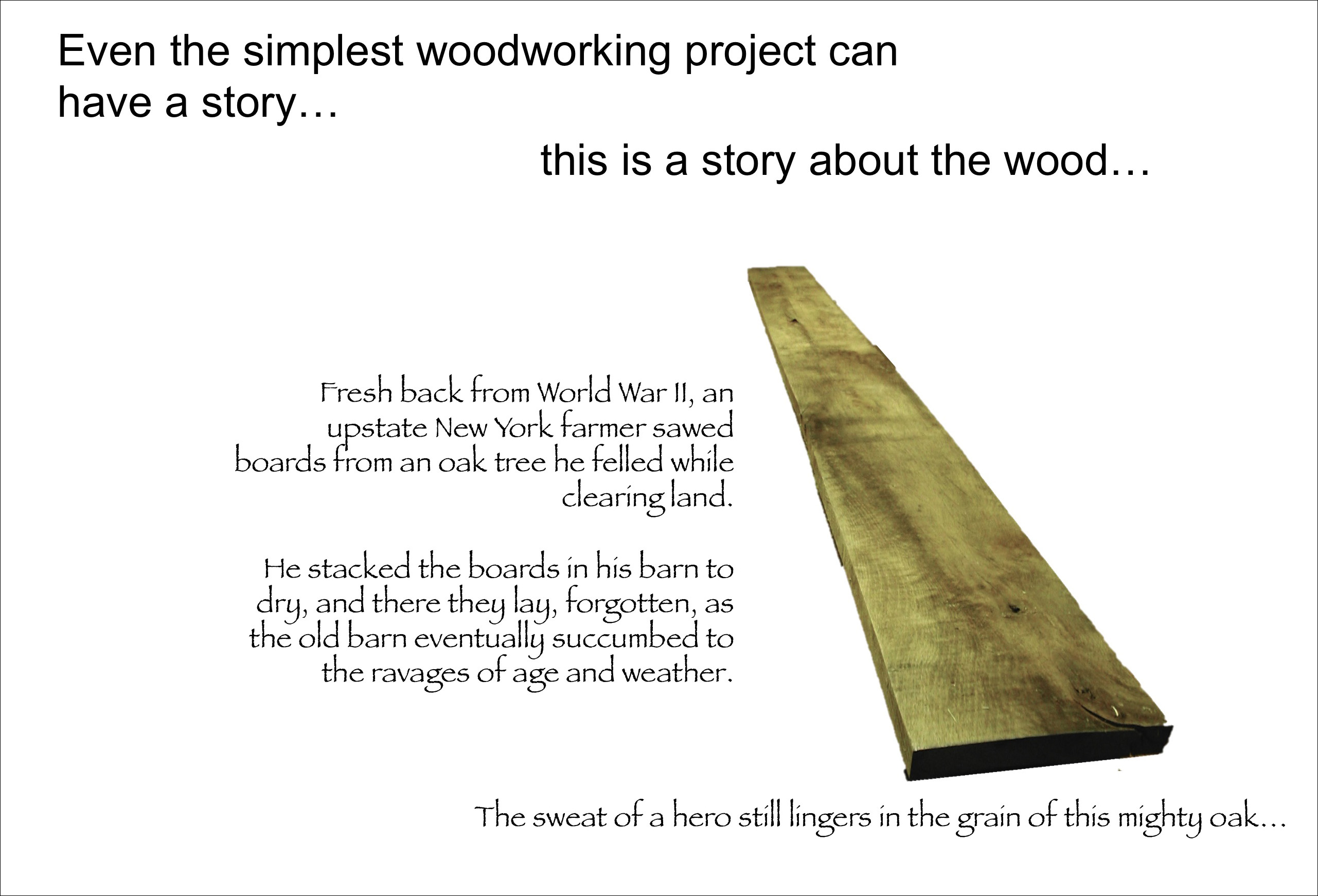
A “backstory” is a literary device used to lend depth and color to the main story. Characters often have history that impacts their present decisions and actions, and that history often is revealed as a ‘backstory” that helps us understand the character’s current motivations and psyche. The backstory enriches and enlightens and makes the main story line more compelling.

Like an author creates a character, a woodworker creates a “thing,” and that “thing” likely has an interesting “backstory.” The backstory of your work can make what you make more compelling and more valuable.

As we move from outside to in, as summer changes to fall, many of us are already planning the holiday gifts we will make for others. An interesting backstory may well turn out to be as highly valued as the object itself. Imagine your woodworking gift accompanied by an interesting backstory… the history of the piece, from idea to plan to wood to finished product. The story of your woodworking efforts will be appreciated… indeed, perhaps even cherished. And how you tell the backstory will make a big difference.

Photos are an obvious choice for creating the backstory behind your project, but you will need words, too. PowerPoint and Keynote are two great programs that allow you to combine pictures and words easily. There are also a number of free photo-management programs that include the ability to produce photo albums with labels and descriptions. You could simply “paste” photos into a word processing program for an effect almost as nice.

The backstory behind the creation of a woodworking project is an historical timeline, so start with the wood, the idea, or the plan. Was there something special about the wood, how it was acquired, or where? Did something about the recipient trigger the idea for the gift? Did you design the piece with the recipient in mind, and what was the motivation? From there, simply follow the timeline and show snippets of the project that might be interesting to a non-woodworker.

Did you use a special hard-to-make joint? Did the project require extensive handwork? Or was a special jig made to accomplish the machine work? Did you apply a special finish? In all likelihood, the little things you do everyday will be very intriguing to a non-woodworker and will help them appreciate the thought, effort, experience, and expertise that went into your gift.

With a little planning, the backstory of your woodworking project can be easily compiled. If you take pictures and keep notes throughout the project, chances are you can put the backstory into a pretty binder and finish it up about the same time you are rubbing out that last coat of shellac. Present the two items, your woodworking project and its backstory, together, and wait for the smiles.

Figure 1 - The "backstory" booklet cover

Figure 1 – The “backstory” booklet cover

Not too long ago I had a chance to visit a friend I haven’t seen in almost five years. I had made and given him a small piece of furniture and shortly thereafter he was transferred to another city. Today, five years later, that small piece of furniture is still prominent in his living room, as is the “backstory” of the project I gave him at the same time. He told me that he has never had a guest in his house that wasn’t fascinated by the booklet describing the process, from wood to finished piece.

This year, consider making a “backstory” to accompany the woodworking gifts you give. We would love to see them, too. Send us an electronic version of your backstory and we will share the best with the rest of the woodworking community right here in the Highland Woodworking Blog!


Steven Johnson is retired from an almost 30-year career selling medical equipment and supplies, and now enjoys improving his shop, his skills, and his designs on a full time basis (although he says home improvement projects and furniture building have been hobbies for most of his adult life).

Steven can be reached directly via email at downtoearthwoodworks@me.com.