Highland Staff

Oct 072014
 

Basic Bowl Turning at Highland

Class starts early on a Saturday morning with everyone sipping coffee and chatting amicably, the group of us ranging in skill level from those who have been turning for a while to folks who have never held a woodturning tool before.  The classroom at Highland is a great place, all old wood with various projects and tables stacked here and there; the atmosphere in the room is one of eager anticipation.

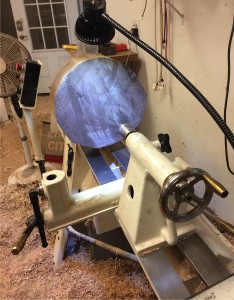
When our instructor, Phil Colson, arrives he greets us all warmly and we do the standard introductory spiel, once around the room telling a bit about ourselves and a bit about why we are here. Once introductions had been made we begin the class itself, starting with a tour of the lathe, an overview of the basic tools we will be using and the theories behind turning a bowl. We discuss the roughing gouge, spindle gouge, bowl gouge and so on.

Phil sketches a simple bowl design on the board and illustrates how best to approach the tools and the work itself.  After the explanation comes the practical instruction, and we all gather around Phil”s large shop lathe while he demonstrates a few basic techniques, some do’s and don’ts and other pieces of information we will need to make our bowl. For instance, how best to hold a roughing gouge and introduce it to the spinning piece, allowing the bevel to rub before engaging the cutting edge of the tool.

Finally, after a coffee break, it is time to get our hands dirty. Using some cut off pieces of 2×4, Phil has us in front of the lathe learning how to round the stock with the roughing gouge and how to introduce the tips of the tools to the pieces we were making. We practice forming beads and coves using the spindle gouge and discuss the use of the skew and parting tool. There are plenty of hands on opportunities for instruction as Phil moves through the room. He offers tips and pointers and will correct someone’s stance or hold on a tool when the need arises. The class itself provides all the tools and materials needed, though you are encouraged to bring your own if you have them. Not only do you learn the proper use for the various woodturning tools, the instructor also covers the basics of sharpening, a vital skill for any woodworker. A sharp tool is far better to use than a dull tool.

Time passes and we all became more familiar with the use of the basic tools. After a bit more instruction at the blackboard and some conversations about bowl form and design we begin the true point of that day’s class, turning our first bowls. We utilize the bowl gouge for most of the work, shaping the outside, sanding and then turning the blank before hollowing out the bowl itself. I won’t bore you with the details, nor will I deprive you of the adventure of discovering turning for yourself. There is something magical about taking a rough piece of wood and creating an amazing piece of functional art all in a matter of hours.
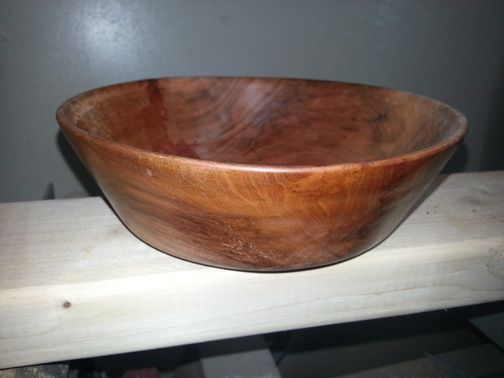
My first bowl

My first bowl

With the tools, instruction and materials provided by Highland Woodworking and this class you are bound to have an exciting new passion in your life. This class was my first personal foray into the world of woodturning and I have been diving in ever since. I highly recommend any of the classes at Highland but if you are interested in turning, a wonderful place to start is the Basic Bowl Turning class.


Matthew York has been a woodturner since 2004 and has been interested in woodworking since he was a teenager. He currently lives in downtown Atlanta and has a small shop in his basement. He is an avid woodworker and is always available to talk about the craft. He can be contacted at fracturedturnings@gmail.com or visit his website at fracturedturnings.com. You can also follow him on twitter at @raen425
Oct 062014
 

With my recent lower back surgeries, I’ve had a decent period of time where I was completely unable to do any woodworking, and while this hopefully doesn’t directly relate to any reader, many will likely have (past or present) life get in the way of our enjoyable pastime.

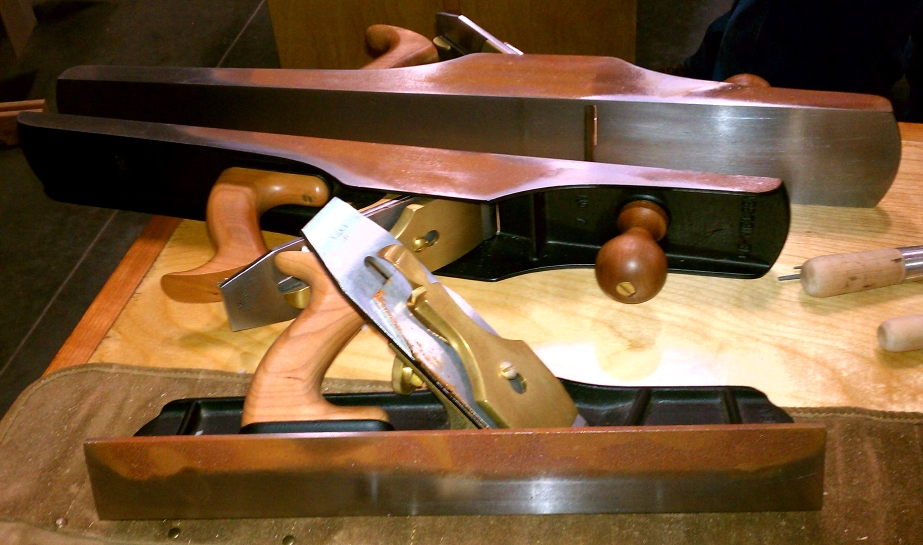
I thought I’d share some of my thoughts about getting back into the shop. As we all know, with the passing of time, some not so nice things can occur in your shop. Specifically, since many of your tools are probably made from steel or iron, there is a somewhat high probability that Mr. Rust Demon just might have paid you a visit. I know, we all try to do what we can to protect our precious tools, but this is a beast that never rests.

Rusty planes2When I was finally able to get into my shop, the first thing I did was to give my planes a once-over, just to make sure no rust had started to take hold. It is pretty amazing just how fast rust can get a foothold, and even with some of the best preventatives, if some dust can accumulate, there is a great likelihood rust will soon follow. For those that don’t already know, dust seems to absorb moisture directly from the air, and then holds the moisture in close proximity to the metal. Not a good situation.

So, while looking for any potential rust, I was also making sure to remove any dust that was present. I was lucky this time and there were no signs of rust on any of my tools, but there have been times I was not so lucky. We’ve had a very dry period where I live, and this just may have been what saved my tools.

If I find rust, I eradicate it as quickly as possible, since once a tool has rust, it will only spread. The location of the rust dictates how much precision is required during the removal process. For example, if the rust is on the top surface of a plane iron, towards the rear, I can use some fine grit sandpaper, a sanding sponge, a Scotch Brite, or just about anything. This is because nothing references off of this surface, nor will it ever come in contact with any wood. If, on the other hand, I find some rust on the sole of a plane, I would use either some fine-grit sandpaper or a Scotch Brite, making sure to have a perfectly flat granite block, piece of plate glass, or a wing on a table saw or powered jointer as my reference surface. This would allow me to again remove any rust, but also retain the necessary flat nature of the sole. As one additional note, even though I would be working on a known flat surface, I would still need to work slowly and make sure I applied pressure only towards the center of the plane’s sole. It is interesting how something as simple as a little pressure, if it isn’t directed where you need it, will cause quicker removal of material at that location compared to other areas. This is the same concept as when we apply a slight camber to a plane iron, simply by applying additional pressure and strokes to one corner, even though the iron looks to stay in contact across its width.

Another thing I find useful if I haven’t been able to work with my tools in a while, is a re-sharpening. Even though a sharp tool polished with a higher-grit stone will be slow to deteriorate, I’ve found tools that I know I put away razor sharp acting almost like I’d already used them for awhile. Now I’m not talking about going crazy and bringing the full bevel back to 25-degrees and sharpening from there. Just a basic “touch-up”, if you will, so that freshly sharpened behavior is back.

Lastly, if it has been a really long time since you’ve touched a tool, start with an off cut that doesn’t mean anything to you. Basically just get your feel back, since using tools is similar to playing an instrument, and even the best musician will warm up before a recital, even if they play regularly.

I hope these tips will help everyone to enjoy themselves as they get back in the shop.


Lee Laird has enjoyed woodworking for over 20 years. He is retired from the U.S.P.S. and works for Lie-Nielsen Toolworks as a show staff member, demonstrating tools and training customers. You can email him at lee@lie-nielsen.com or follow him on Twitter at twitter.com/is9582

Oct 032014
 

It’s likely on your checklist right alongside tuning up the snow blower, draining the gas from the lawnmower, and getting the winter togs out of the closet. And if stocking up on wood is not on your list, it should be.

Fall is a great time to buy lumber for all your upcoming wintertime projects. It is clearly a more pleasant time of year to haul wood, plus any wood you buy now will have time to acclimate to your shop. Right now there may be another very good reason to “stock up.”

Erasmus said, “When I have a little money I buy books… and if I have any left I buy food and clothes.” Substitute “wood” for “books” and this describes me exactly. Last week I made the first of what will be several trips to my supplier to stock up for winter. On the long drive, I tuned in to an all news station and listened, again, to rosy reports on the economy, a surging stock market, still-lower unemployment numbers, and no inflation. I was emotionally uplifted by the time I arrived, but my delusions were summarily dashed when I realized that lumber prices had shot up since my last visit.

Knowing a bit about supply and demand, and processing the bits of “news” I heard on my drive, I surmised that lumber prices were up due to high demand. “You’re kidding, right?” was the reaction from my trusted wood source. He explained…

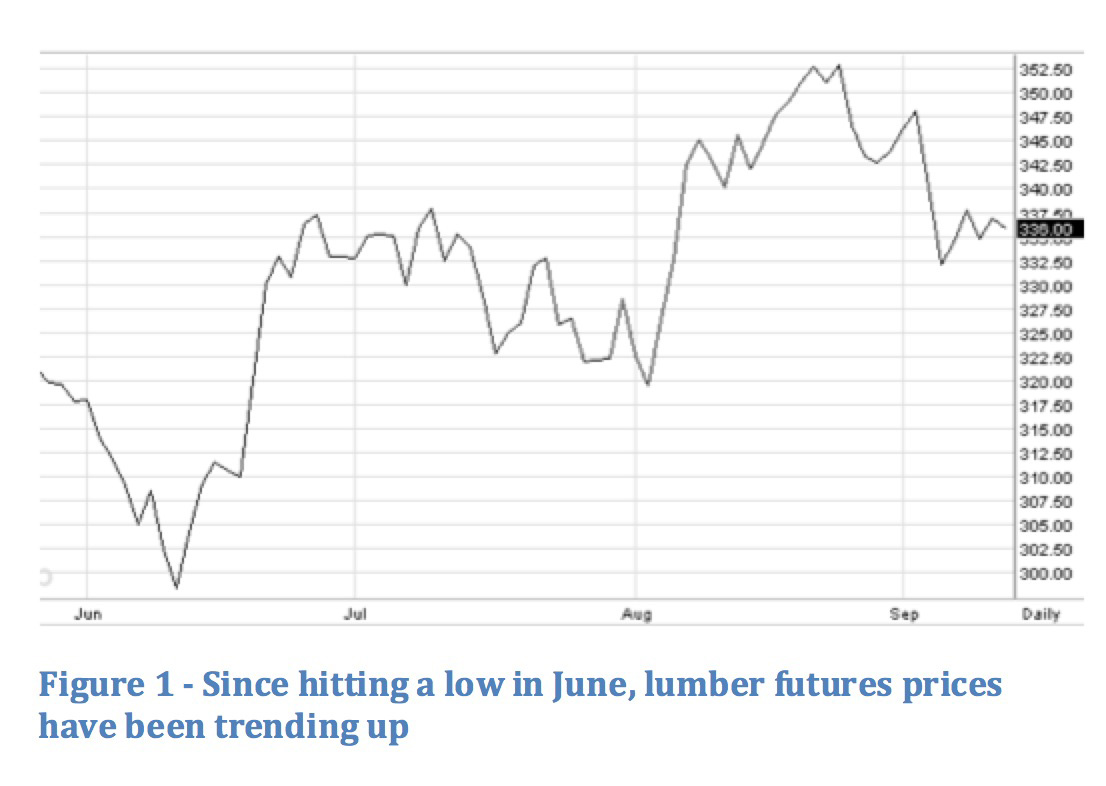
lumberfutures“The economy is so bad. No one is building houses around here so there is no demand for high-grade hardwoods for cabinets, fireplace mantels, trim, or anything else. As a result, the price people are paying for timber is so low that everyone has quit selling their trees. No timber, no lumber, and that translates to shortages. Short supply means rising prices.”

Okay, the rules of supply and demand are safe, but the premise under which I was operating was all wrong. There is a shortage of lumber, but not because the demand is high; it is because people who own stands of timber are holding off selling their trees until prices go up… at least around here.

One thing I learned from moving around the country is that all lumber pricing, like all politics, is local. Where you live the economy may be better, and perhaps a surge in construction is driving hardwood lumber prices higher. Whatever the reasons, the consensus (and futures contracts) agree, lumber prices are going up. As we all get ready for a winter of shop time and furniture building, now might be a good time to stock up on the one thing we all need for woodworking… more wood!


Steven Johnson is retired from an almost 30-year career selling medical equipment and supplies, and now enjoys improving his shop, his skills, and his designs on a full time basis (although he says home improvement projects and furniture building have been hobbies for most of his adult life).

Steven can be reached directly via email at downtoearthwoodworks@me.com.

Oct 012014
 

Welcome to “Tips From Sticks-In-The-Mud Woodshop.” I am a hobbyist, not a professional, someone who loves woodworking, just like you do. I have found some better ways to accomplish tasks in the workshop and look forward to sharing those with you each month, as well as hearing your problem-solving ideas.

Tip #1: RED NAIL POLISH

Everyone who is patient raise your hand. That’s what I thought: nobody. Well, except for you, in the back, and I thought you looked a little strange. I am with the majority, having no patience, especially with electrical plugs. When I am ready to plug in, I want to plug in now!

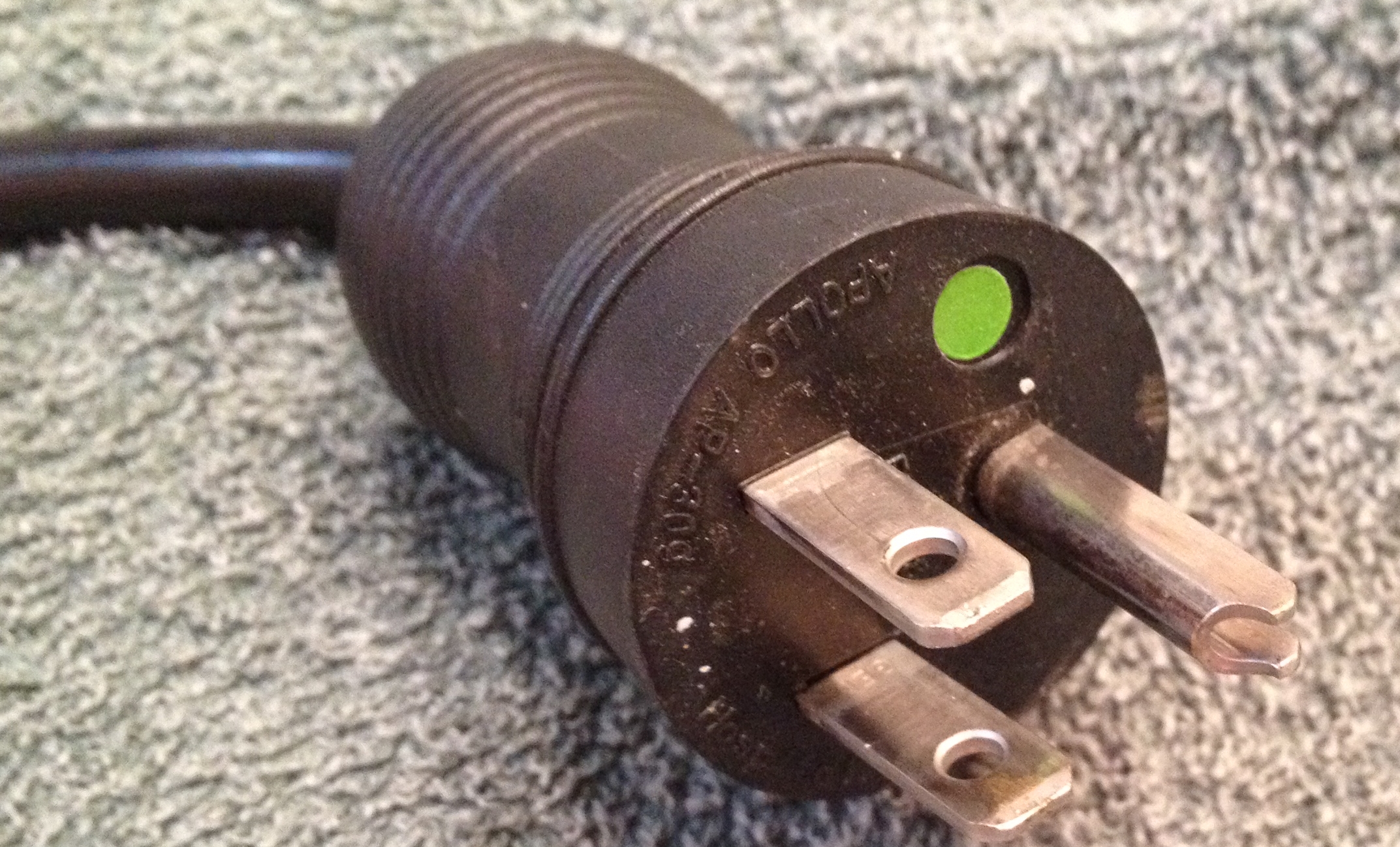
NO body is going to make a mistake with these: the round part goes in the round hole, and it directs the other two where they belong.

NO body is going to make a mistake with these: the round part goes in the round hole, and it directs the other two where they belong.

The 3-prong jobs are easy; even those over 40 with “too-short arms” can see which orientation is correct for them. These newfangled double-insulated tools, however, with their polarized plugs just don’t create enough contrast to tell the wider blade of the plug from the narrow one. Now, you could just try to put it in, then turn it over when it doesn’t go.

Everything’s a little fuzzy. I think I have some glasses around the shop somewhere. Which one is the wide one?

“Everything’s a little fuzzy. I think I have some glasses around the shop somewhere. Which one is the wide one?”

But who has time for that? Then, some manufacturers feel the need to buck the international standard when they incorporate cord-holding moldings into their plugs. On most tools the side with the holding loop lines up with the grounding hole, but not always!

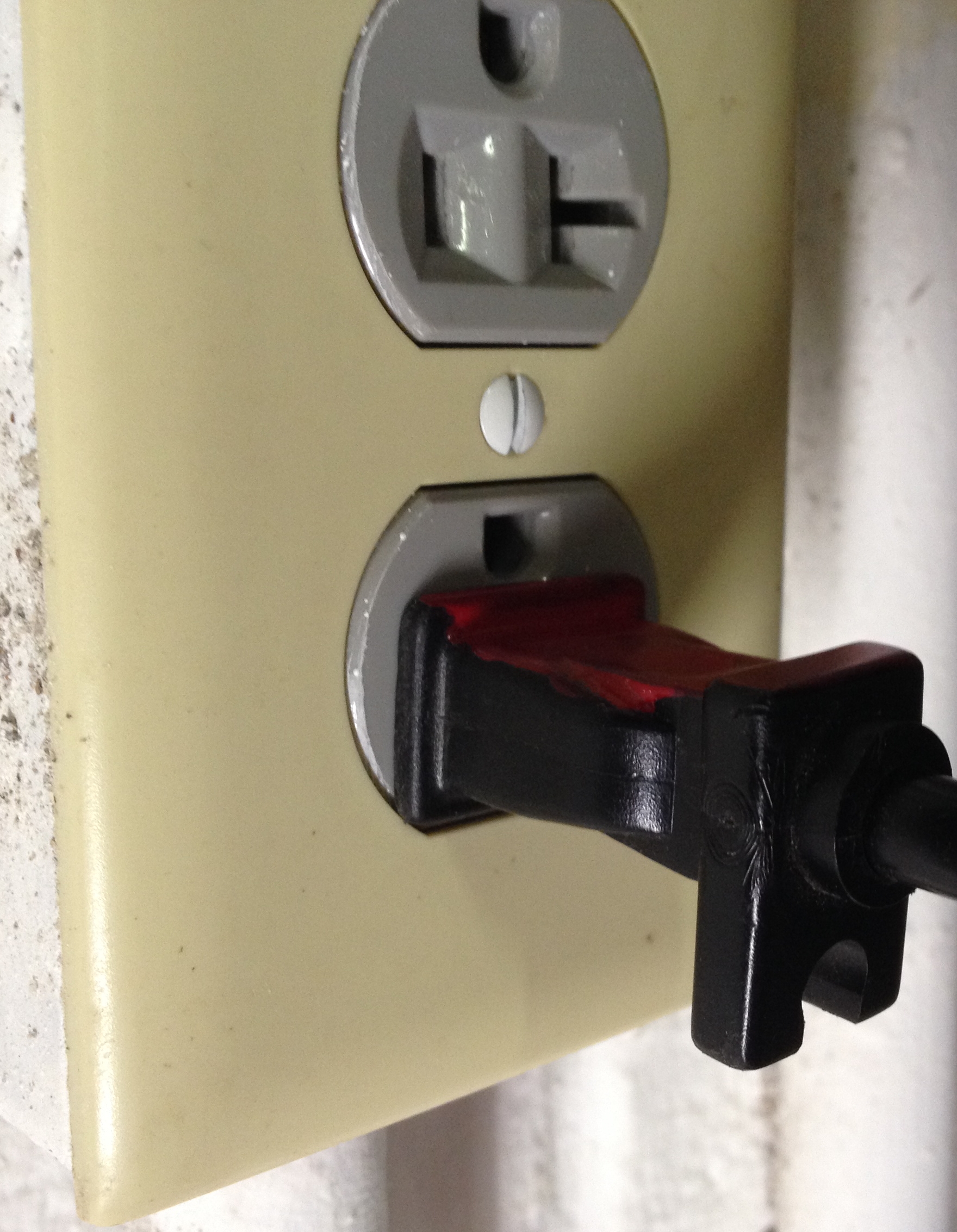
The manufacturer of this Craftsman vacuum, who shall remain unnamed, thought it would be smart to put the cord-holding loop on the side opposite the ground hole. Why? Just to be different? Just to annoy me?

The manufacturer of this Craftsman vacuum, who shall remain unnamed, thought it would be smart to put the cord-holding loop on the side opposite the ground hole. Why? Just to be different? Just to annoy me?

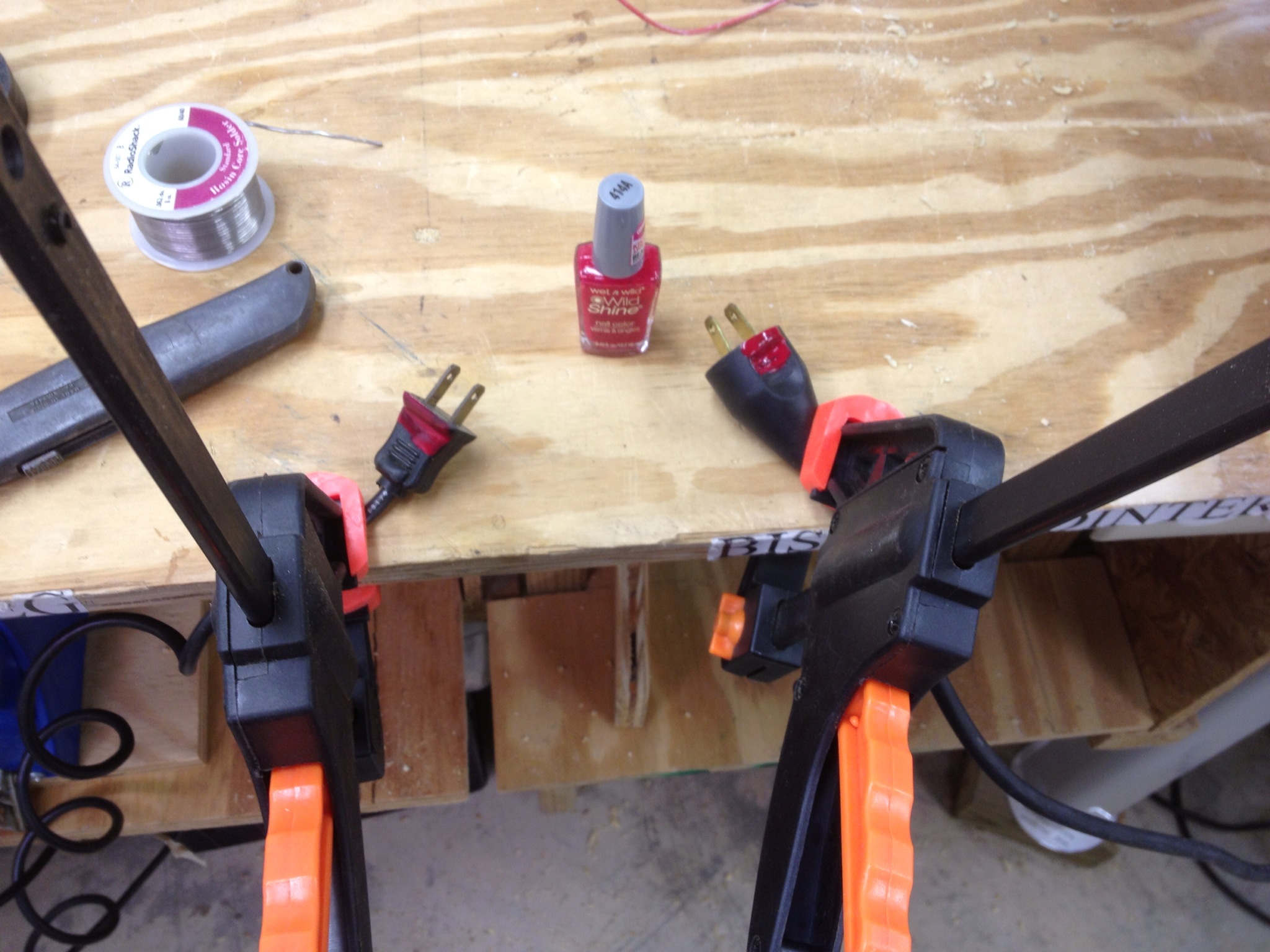
My timesaving solution for this problem is to paint red nail polish (why, yes, it is the shade I usually wear!) on the side of the plug that coordinates to the grounding hole.

Cover the entire surface so that you will see at first glance which way to orient the plug. Use multiple thin coats. Nail polish dries quickly, you can finish an entire plug in 15 minutes.

Cover the entire surface so that you will see at first glance which way to orient the plug. Use multiple thin coats. Nail polish dries quickly, you can finish an entire plug in 15 minutes.

Technique: Like any paint job, multiple, thin layers work best. Maybe it’s the cheap nail polish I bought, but it took me 5 coats to get really good coverage. The stuff wears like iron, though!

Technique: Like any paint job, multiple, thin layers work best. Maybe it’s the cheap nail polish I bought, but it took me 5 coats to get really good coverage. The stuff wears like iron, though!

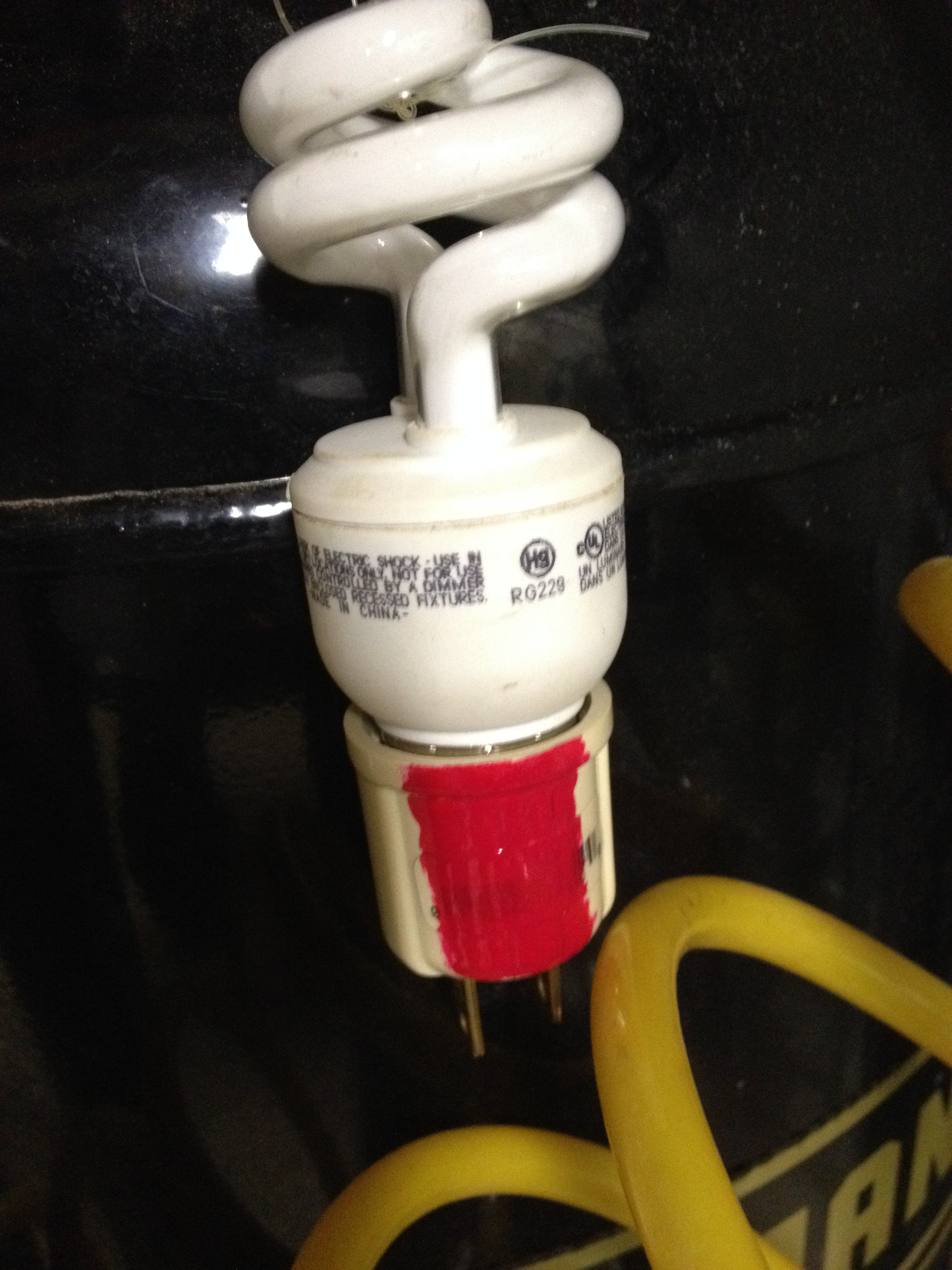
The same technique works on anything that plugs in. I used it on this lightbulb adapter so I quickly know which way to turn it to plug it in.

Tip #2:  COAT HANGERS

No Southern-fried Southern boy wants to be called a Yankee, but we share the characteristics of shrewdness and thrift. Thus, each month we include a money-saving tip. It’s OK if you call me “cheap.” 

Coat hanger, coat hanger, how do I love thee? Let me count the ways. No, this won’t be a treatise on 1000 ways to use coat hangers (yes, I looked it up, it’s supposed to be written as two words unless you’re from the land where “women glow and men plunder,” where coathanger is said to be preferred).

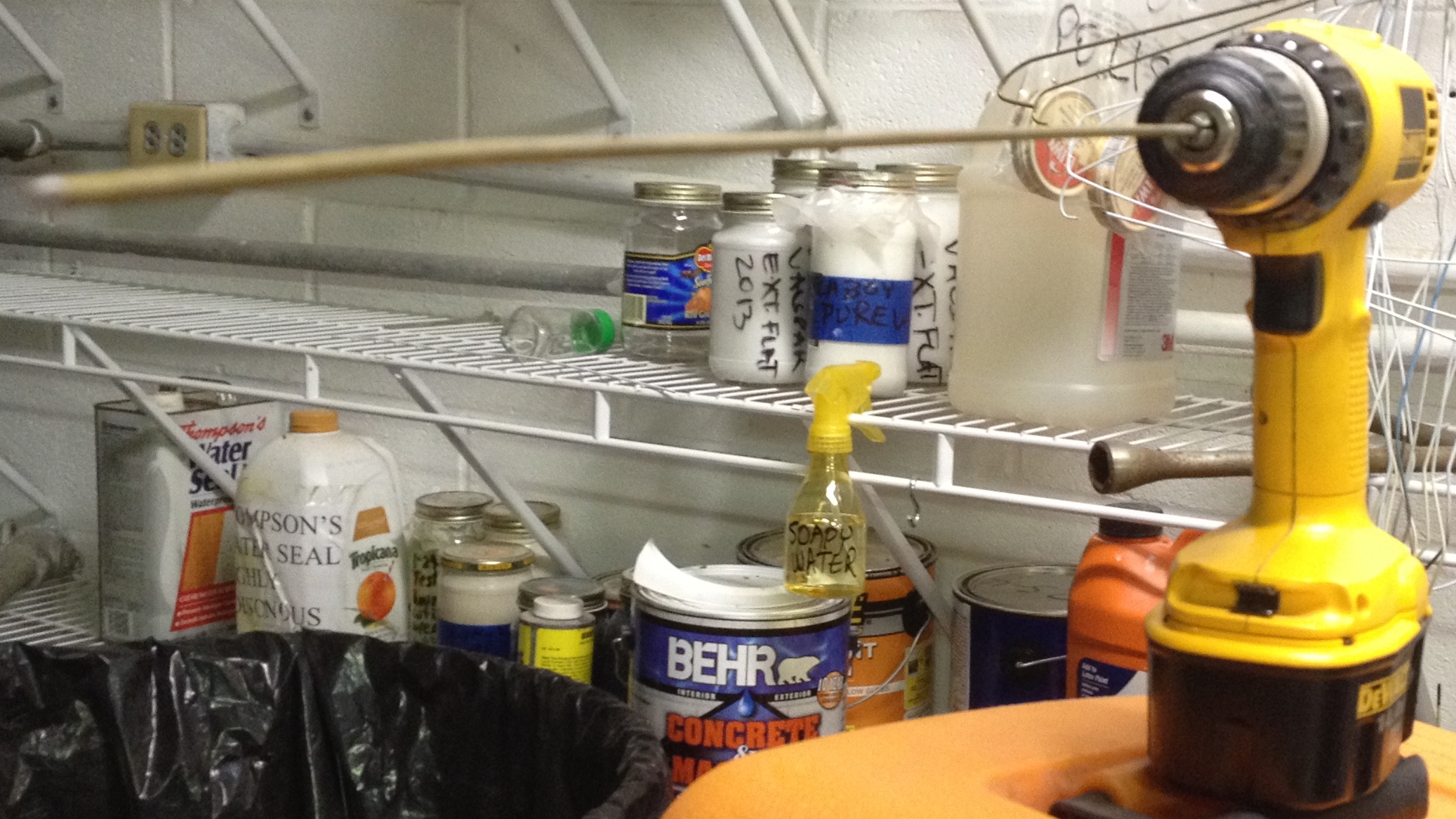
  1. Need a long drill bit? If you’re drilling through something relatively soft, like wood or insulation board, cut the bottom part of the coat hanger off, restricting yourself to just the completely straight part. Cut one end square and the other end on the most acute angle you can.
    A light wiping of WD40, machine oil or even Vaseline will lube this “drill bit” for easier entry. Shown is the chisel point version, but you can also sharpen the tip on your grinder for even easier, faster entry.

    A light wiping of WD40, machine oil or even Vaseline will lube this “drill bit” for easier entry. Shown is the chisel point version, but you can also sharpen the tip on your grinder for an even easier and faster entry.

    Wrap your fist around the middle for support to prevent bending. Using discretion, don’t push too hard or run the drill too fast, either of which could cause you to lose control. Now, the business end can act as a chisel-point bit and if you need a guide to show you where to come out on the opposite side of a wall, drill away. As always, be sure you’re not going to hit electrical wires or water pipes. This baby will drill right through Romex and PVC.

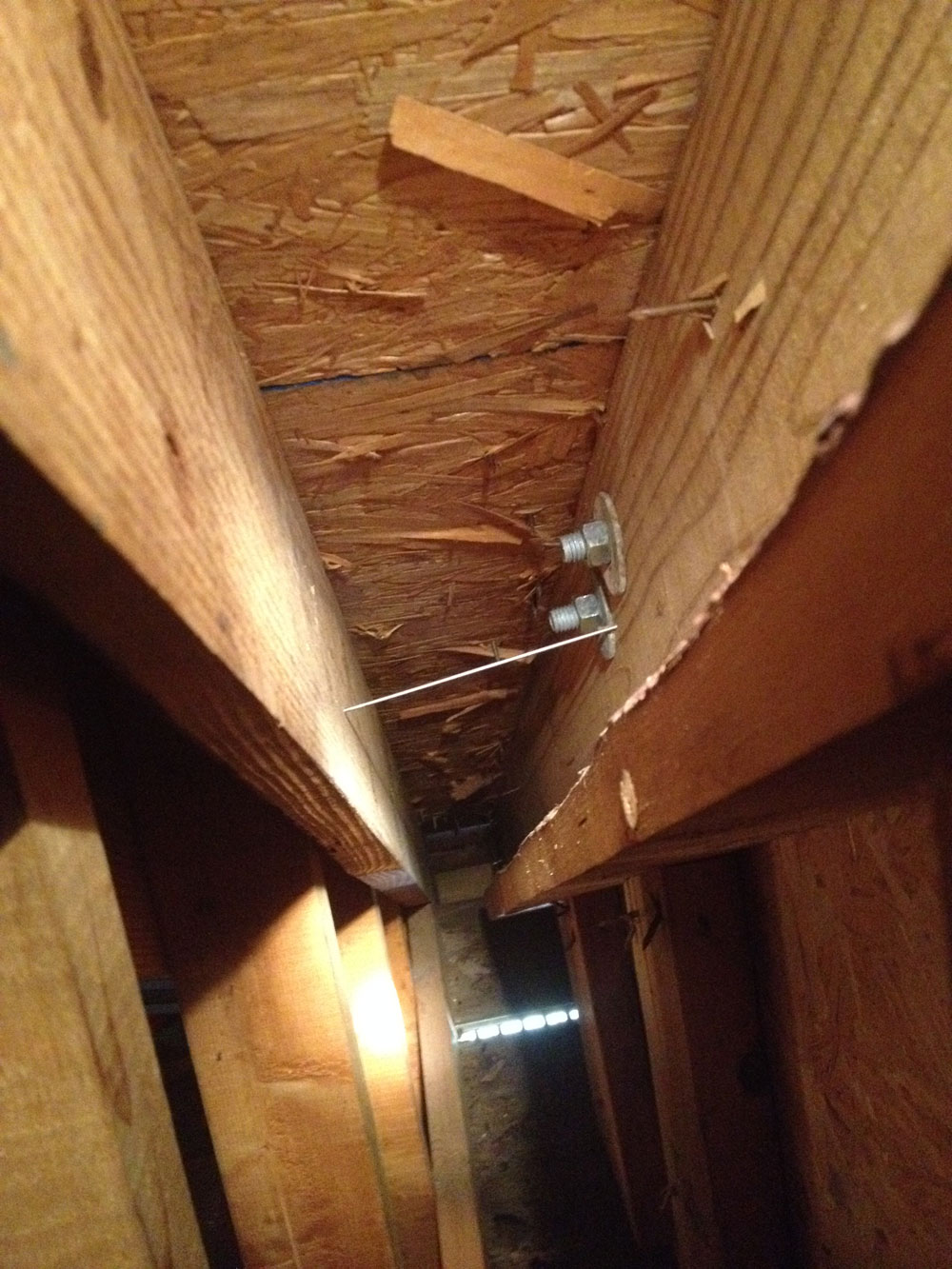
    I needed to know where to drill outside on the roof to put these lag bolts into the rafter. With this guide I was right on target.

    I needed to know where to drill outside on the roof to put these lag bolts into the rafter. With this guide I was right on target.

  2. If your stud finder isn’t giving you clearcut direction, this “drill bit” will allow you to define the edges of a stud without making gigantic holes.
  3. A coat hanger is the repairman’s chewing gum. I have brazed many a muffler and tailpipe with nothing more than an acetylene torch and a hanger.
  4. Speaking of repairs, the soft metal of a coat hanger will assume almost any shape you want. I once had a broken fan belt and no time to go to the store for a replacement. Using tip #1 above I drilled a hole either side of the rent in the belt. I then cut a U-shaped piece of hanger, passed it through the holes from the “pulley side,” and twisted the ends together on the outside. It worked so well on the fan that I forgot to replace the belt for months.
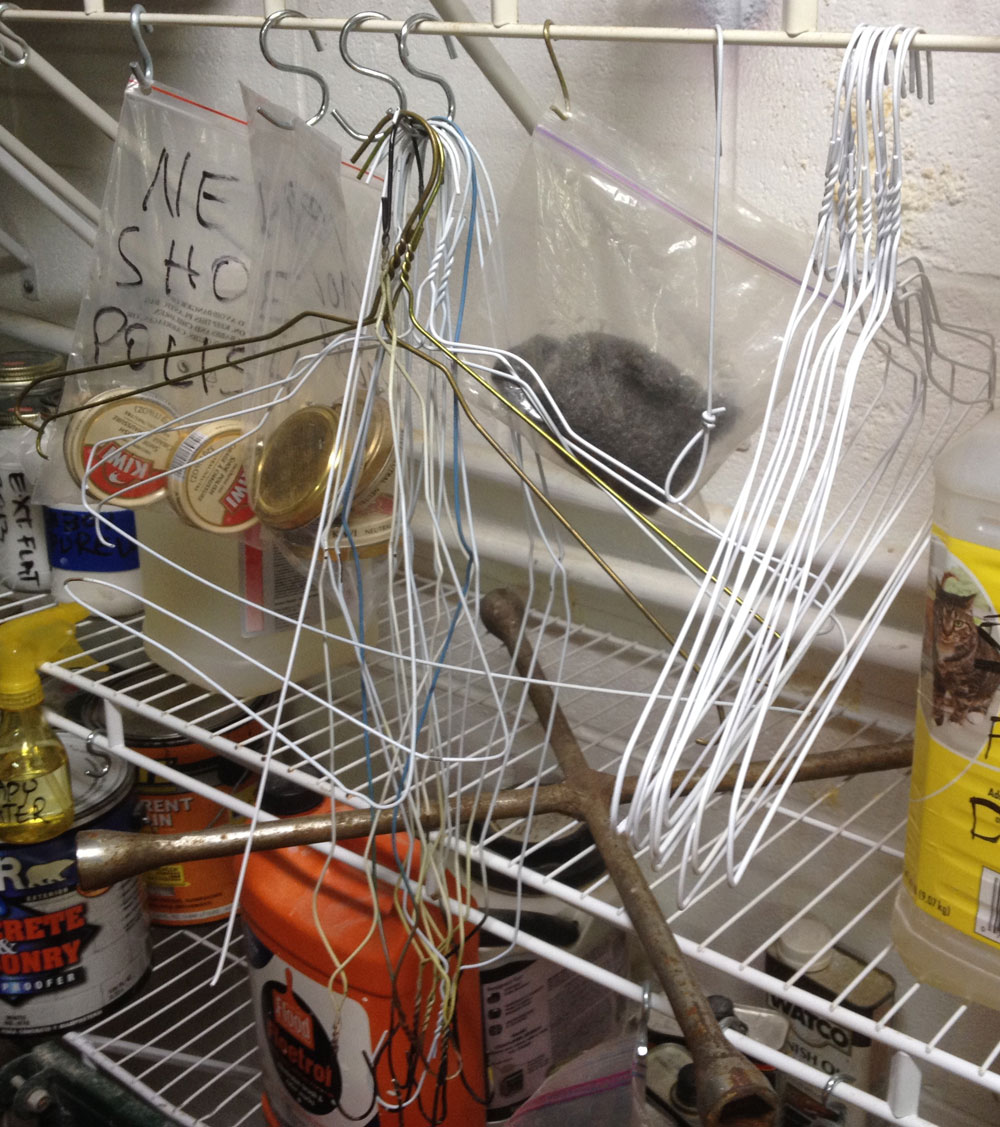
  5. Genetically incapable of discarding anything with future value, I keep a collection of hangers previously used.
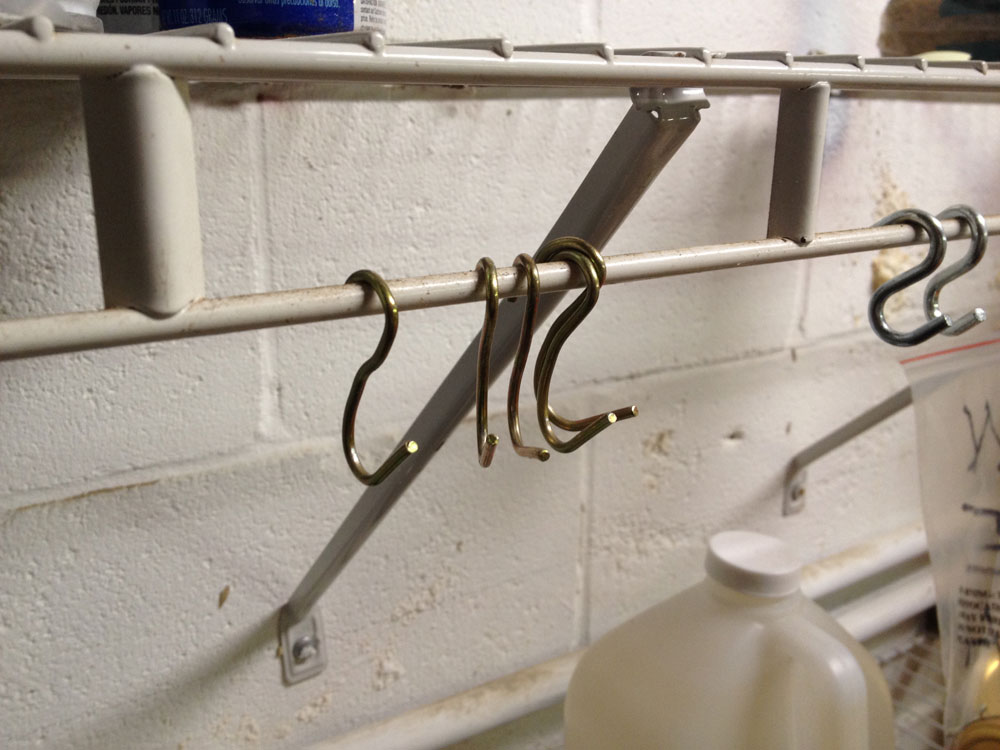
    These are all “gently used,” but stand ready for their next service opportunity. I even keep the ones I’ve used for drill bits as long as they aren’t damaged in use.

    These are all “gently used,” but stand ready for their next service opportunity. I even keep the ones I’ve used for drill bits as long as they aren’t damaged in use.

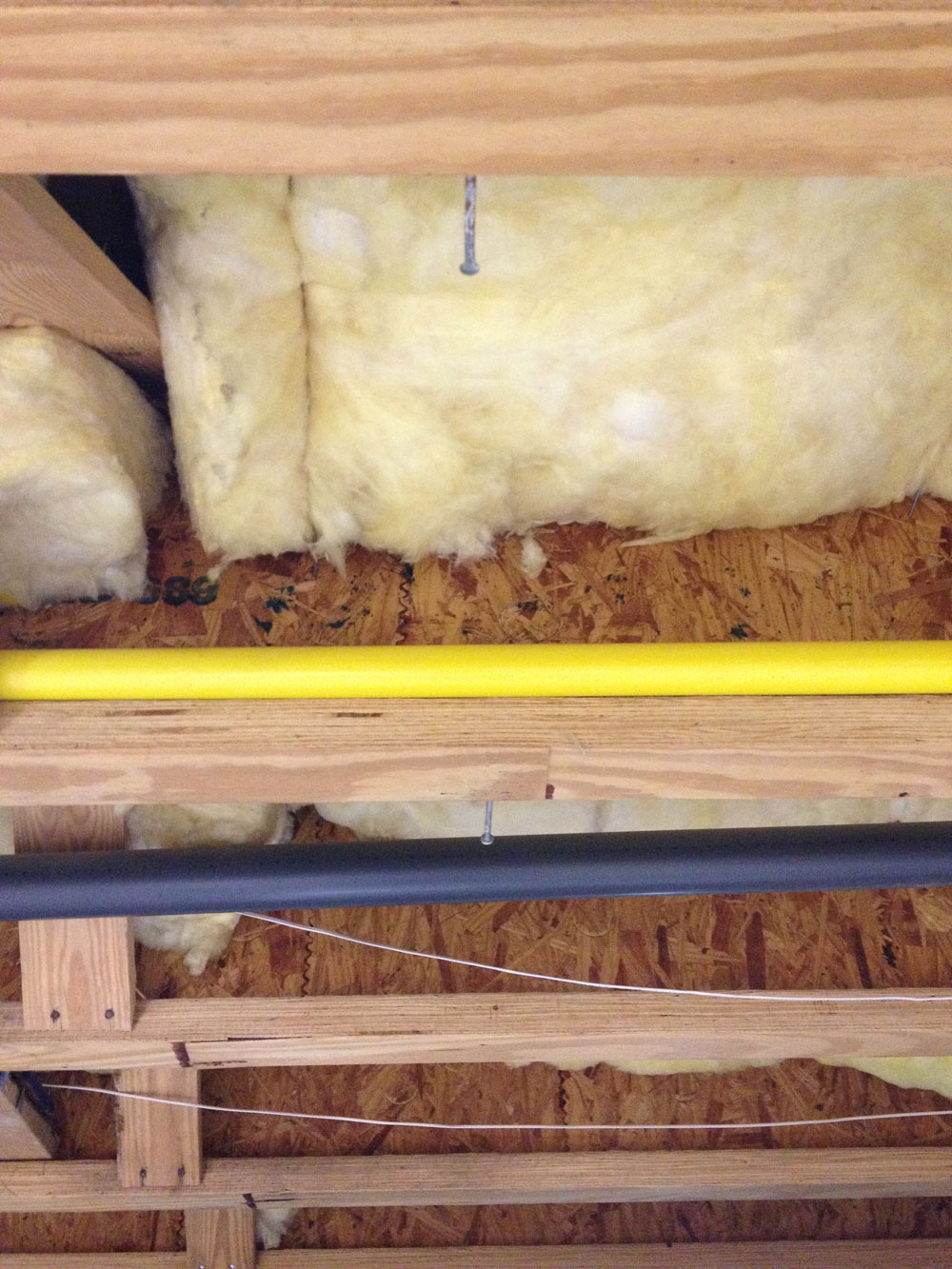
    Straightened, but with the hook still on the top, you can hang almost anything from them. They are great for painting small, medium, even large items. In the area I use for painting, there are a kazillion (Sorry, Steve) nails in the I-beam rafters.

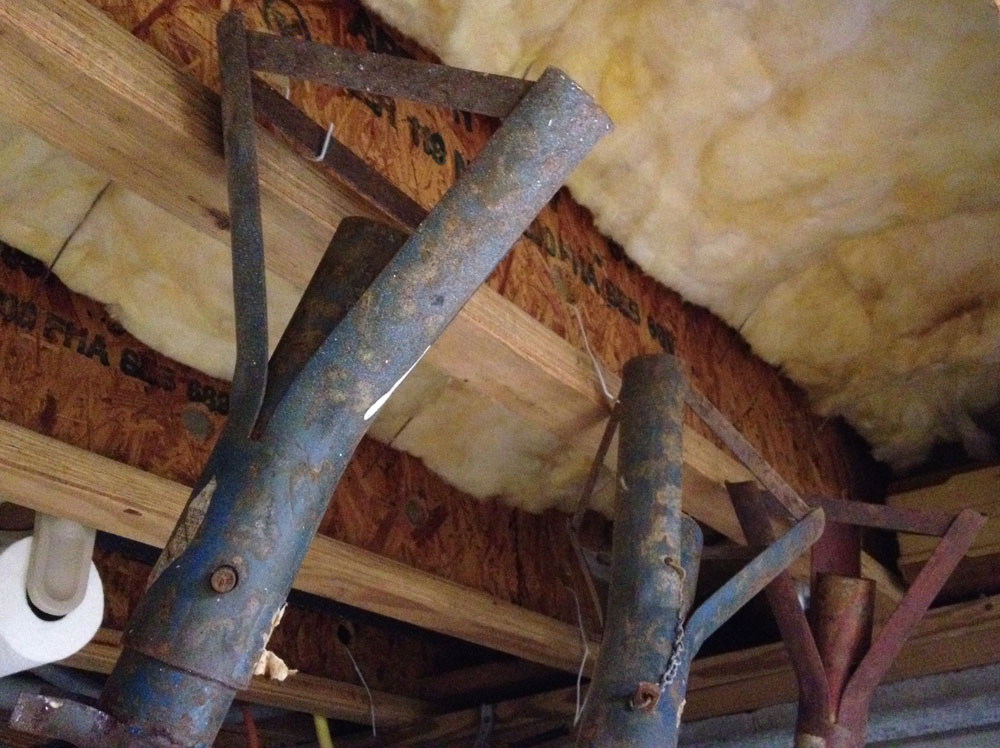
    These nails are permanently in these ceiling joists in the painting area, always ready to be pressed into service for hanging.

    These nails are permanently in these ceiling joists in the painting area, always ready to be pressed into service for hanging.

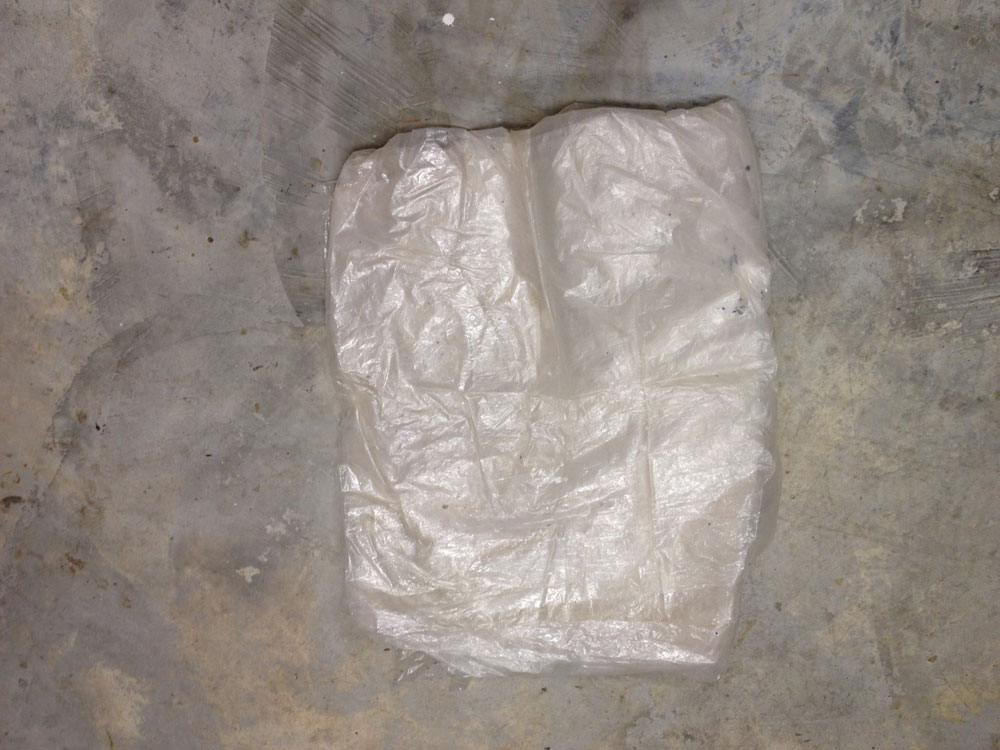
    Because it’s an open and well-lighted area, I can spread a plastic drop cloth to catch most of the drippy paint.

    What? Sure, it’s beat up. And patched. You thought I’d throw it away after I used it once? You must be new to the column!

    What? Sure, it’s beat up. And patched. You thought I’d throw it away after I used it once? You must be new to the column!

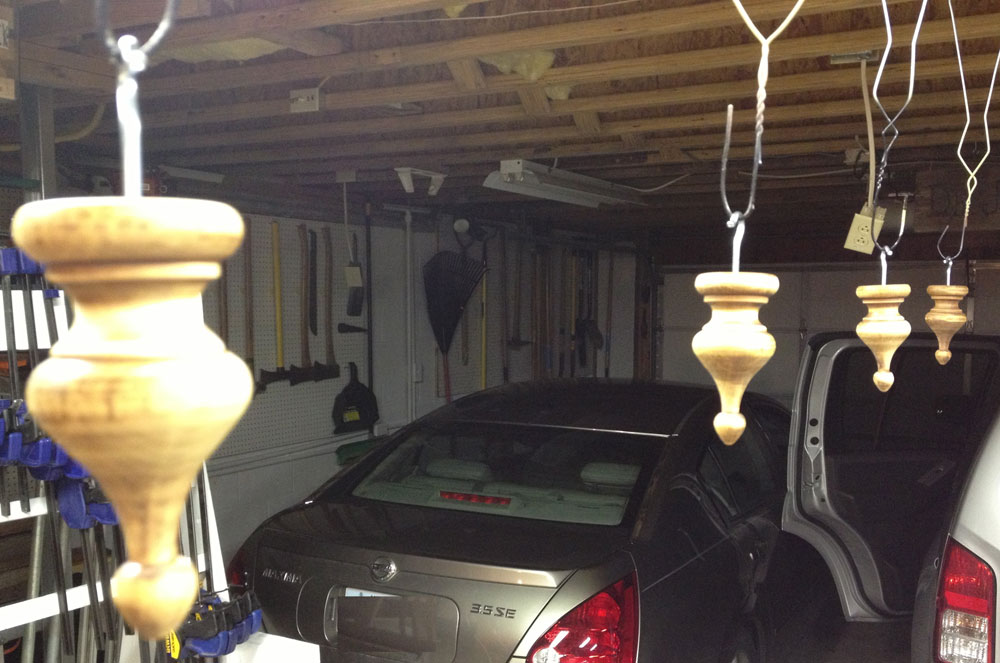
    For little bitty items, like these finials, you can screw a hook into the mounting hole, gang two or even three hangers together to get it down to a comfortable working height, and paint away.

    For little bitty items, like these finials, you can screw a hook into the mounting hole, gang two or even three hangers together to get it down to a comfortable working height, and paint away.

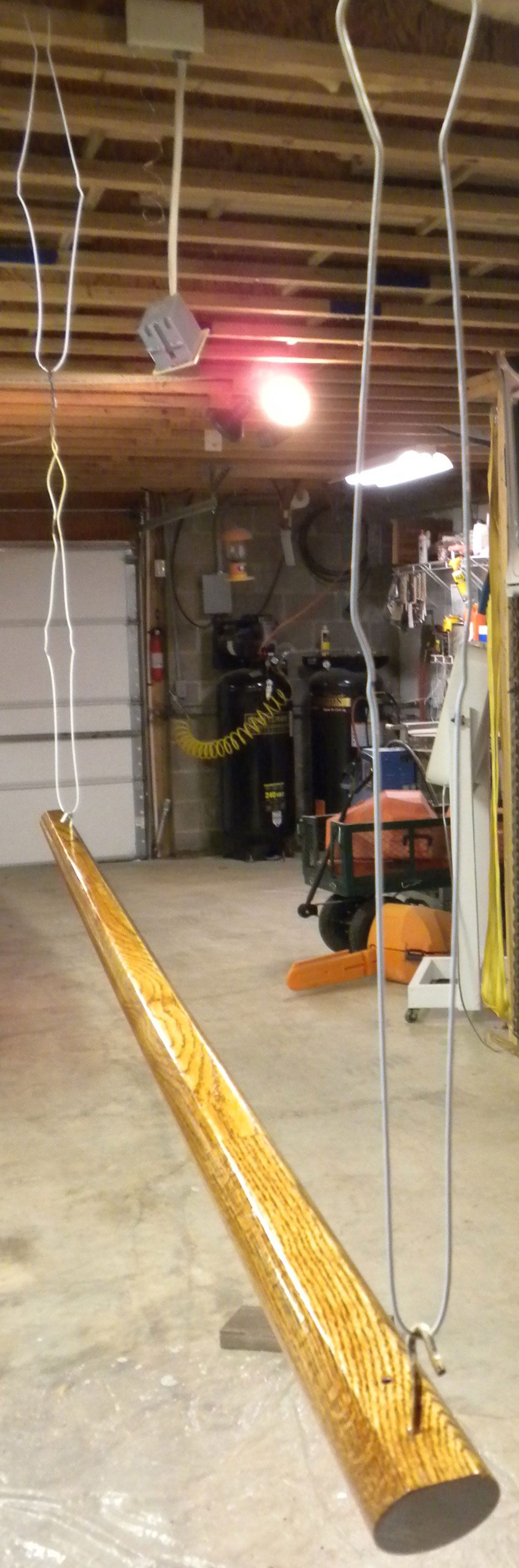
    Longer items, like this handrail, can be hung lower, or horizontally, for easy access. Note that two straightened hangers are used to accomplish the desired height. The screw hook in the middle makes a handy way to stop the item’s movement while applying finish without touching the wet surface. Longer items, like this handrail to the left, can be hung lower, or horizontally, for easy access. Note that two straightened hangers are used to accomplish the desired height. The screw hook in the middle makes a handy way to stop the item’s movement while applying finish without touching the wet surface.

  6. The metal in coat hangers is soft and malleable. That can be good or bad. Depends on your planned usage. The softness of the metal makes it easy to cut with even the least sophisticated tool, such as the shear in the jaws of your slip-joint pliers. On the other hand, if you want to take a piece out by fatiguing the metal, you will be at it for a while. Hard, brittle metals lend themselves to better success with that method.
    Because the metal is soft, I was able to shape it into these hangers.

    Because the metal is soft, I was able to shape it into these hangers.

    On the other hand, soft metal is easily bent, so making these hooks for jack stands, the angle had to be very acute.

    On the other hand, soft metal is easily bent, so making these hooks for jack stands, the angle had to be very acute.

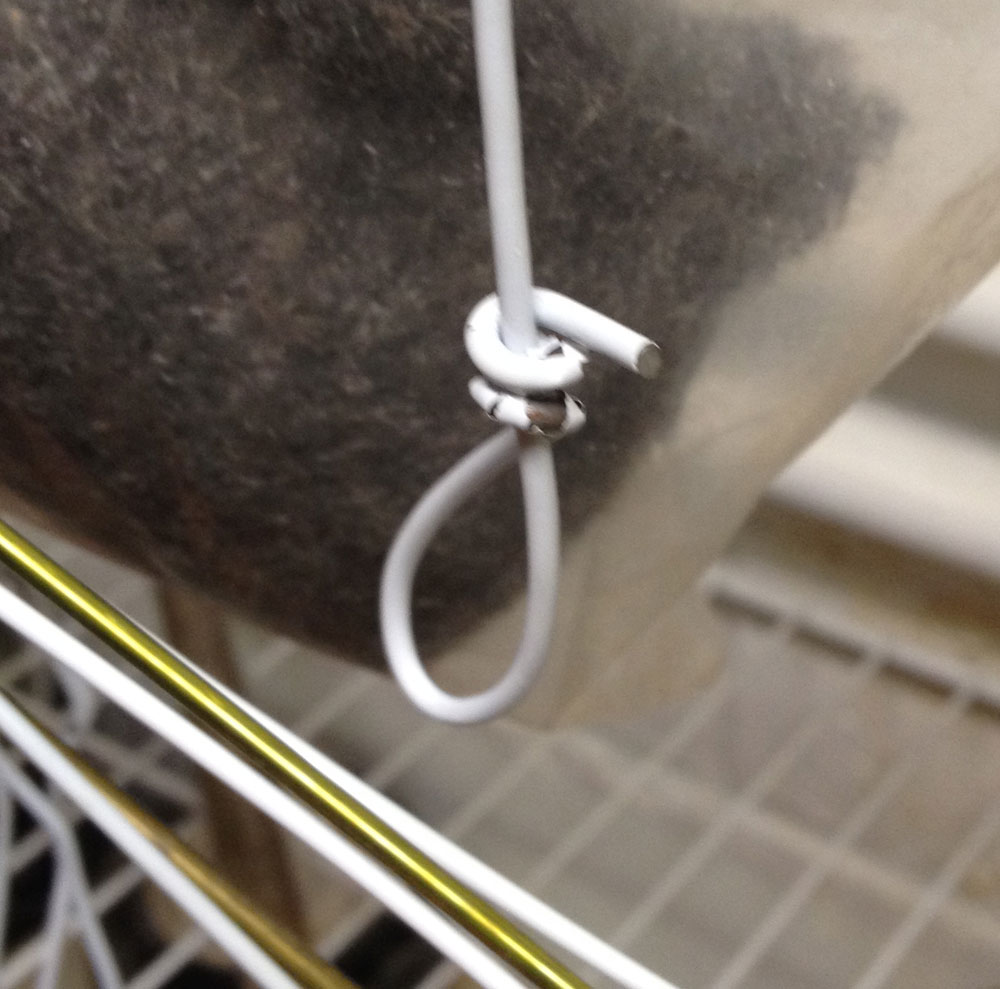
    Coat hangers make a great twist tie. Okay, so they’re not quite as easy to use as the ones from the grocery’s produce department, but they are a lot more substantial!

    Coat hangers make a great twist tie. Okay, so they’re not quite as easy to use as the ones from the grocery’s produce department, but they are a lot more substantial!

    CLICK HERE to go back to the October 2014 issue of Wood News Online


    Jim Randolph is a veterinarian in Long Beach, Mississippi. His earlier careers as lawn mower, dairy farmer, automobile mechanic, microwave communications electronics instructor and journeyman carpenter all influence his approach to woodworking. His favorite projects are furniture built for his wife, Brenda, and for their children and grandchildren. His and Brenda’s home, nicknamed Sticks-In-The-Mud, is built on pilings (sticks) near the wetlands (mud) on a bayou off Jourdan River. His shop is in the lower level of their home. Questions and comments on woodworking may be written below in the comments section. Questions about pet care should be directed to his blog on pet care, www.MyPetsDoctor.com. We regret that, because of high volume, not all inquiries can be answered personally.

Sep 302014
 

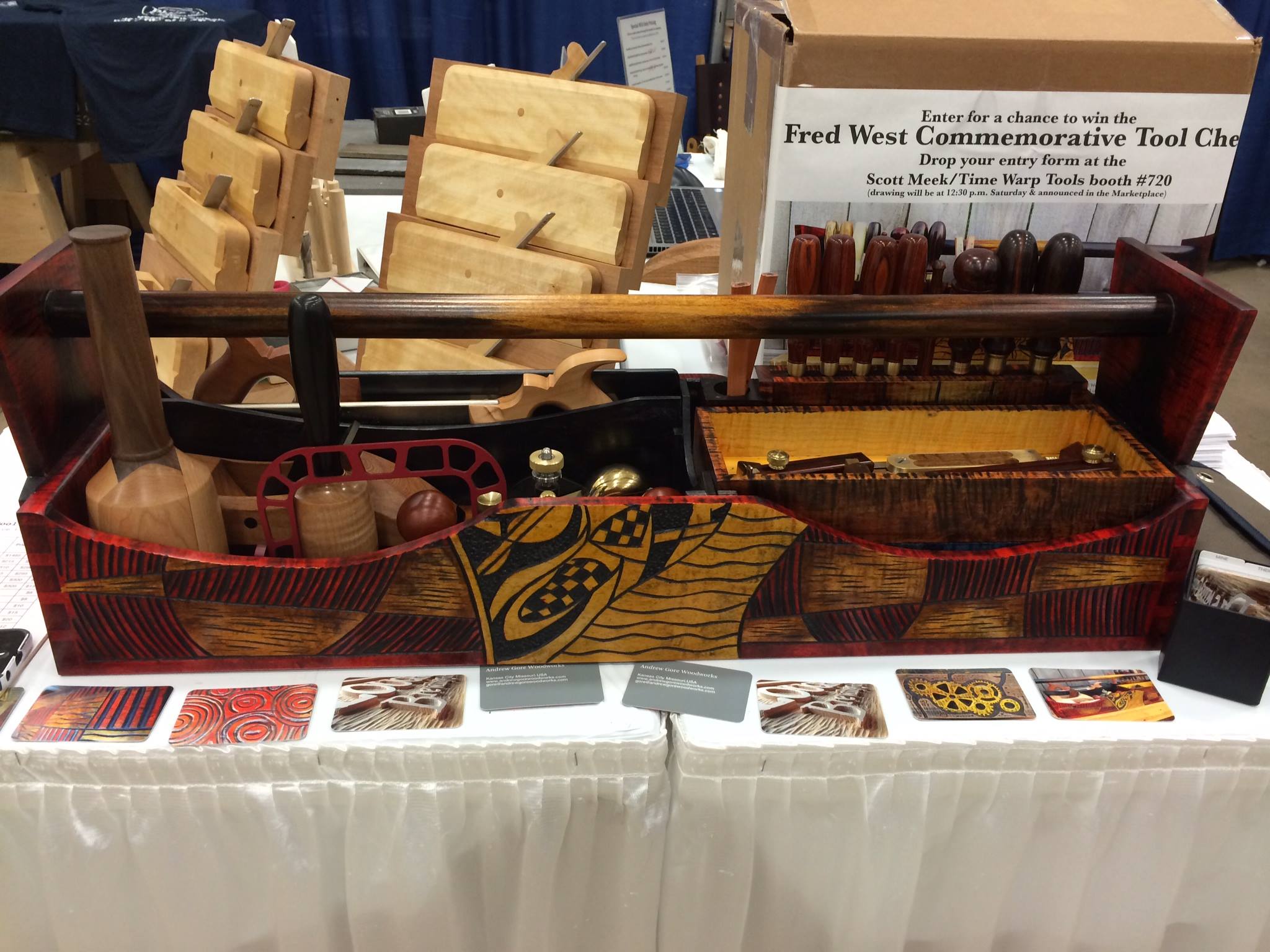
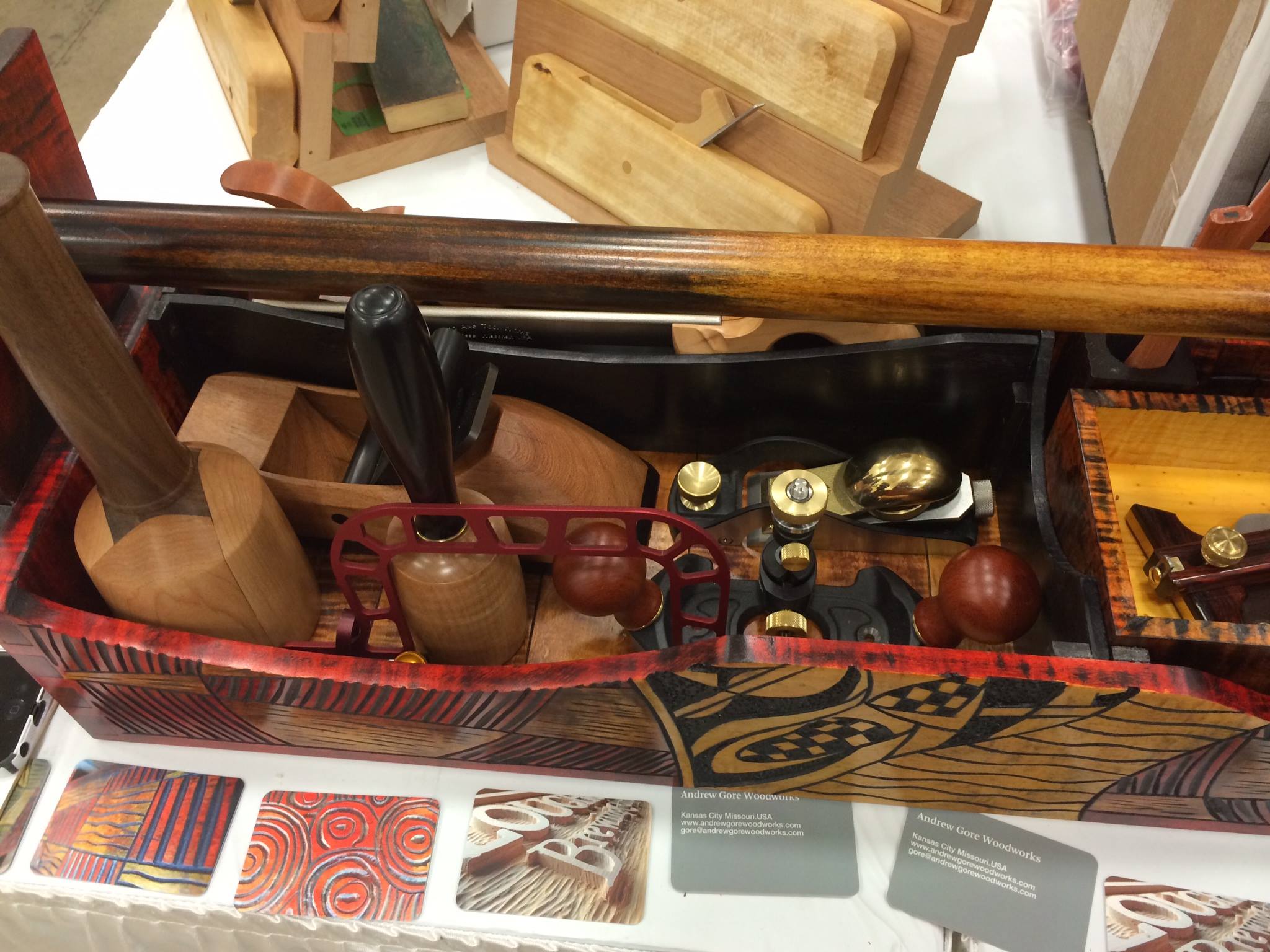
While at WIA 2014 a few weeks ago, we came across the Fred West Commemorative Tool Chest made by Andrew Gore of Andrew Gore Woodworks.

We caught up with Andrew at WIA and he discussed the significance behind the chest and what was included inside of it. Below is our video, as well as a transcription for the parts that are hard to hear.

My name is Andrew Gore from Andrew Gore Woodworks in Kansas City, MO. I specialize in customized work as far as tool chests and relief carving with a lot of color added to it.

Back in the Spring of 2014, I was approached by Mark Harrell from Bad Axe Tool Works and Scott Meek from Scott Meek Woodworks in regards to coming up with a commemorative tool chest for a really good friend of ours, a guy named Fred West from West Chester, PA. Fred was a spokesperson for the hand tool industry. He was a supporter of hand tool makers and woodworkers like myself and he was very encouraging and inspiring for us and really pushed the level of woodwork that we do.

Unfortunately, Fred had a very short battle with a rare form of cancer and passed away in January of 2014. This Spring I was approached by both Scott and Mark about coming up with a commemorative tool chest to remember this guy, that could ultimately be filled with the finest hand tools that were available. I was given a lot of free reign as far as the design and the appearance of the chest. The whole idea is for it to be a museum quality tool chest; museum quality in the tool chest itself, but also museum quality in the tools that are inside of it. It needed to be an opportunity for an unsuspecting person to receive the generosity that Fred showed all of us by his giving and caring for us, his friends.

After a lot of brainstorming and putting everything together, this was the first-ever Fred West Commemorative Tool Chest. Some of the makers involved who donated their tools to the chest include:

The total value of the chest is somewhere between the $5500-6000 range and at 12:30 today (9/13/14) there will be a drawing to give it away for free as the first commemorative tool chest to an unsuspecting woodworker that was participating here at WIA.

1492156_10152495558449024_4811533596717518415_o

10655202_10152495558534024_6748282562965362531_o

10658813_10152495558494024_80748246192867629_o

Below are several additional links about the Fred West Commemorative Tool chest:

Popular Woodworking Blog: http://www.popularwoodworking.com/woodworking-blogs/editors-blog/fred-west-commemorative-tool-chest-giveaway

Scott Meek’s Blog: http://www.scottmeekwoodworks.com/fred-west-commemorative-tool-chest

Andrew Gore’s Blog: http://andrewgorewoodworks.com/tool_chests/fred_west_commemorative_tool_chest

Sep 292014
 

For this month’s Wood News Online we received the following Ask the Staff question from D. Grover:

I recently acquired a Pfeil bowl adze, which needs sharpening.  I am at a loss in figuring out how to accomplish this and what type of honing stones, etc. to use.  With the size, inside bevel and the angle of the adze head vis-a-vis the handle, I can’t quite figure out the best way to do this.  I’ve not seen slip stones large enough. How should I go about sharpening?

Read our answer in the comments below and feel free to leave your own answer in the comments section!

Sep 252014
 

Ok people, it’s time to get back in the shop. Summer is over, Labor Day is gone so you can’t wear the white apron any more this year. Holiday season is coming, and it’s time to make something.

Summer time is when we all head off in different directions, vacations at the beach, trips to the cool mountains, pool time with the kids at home. While you were gone, the shop dust settled, and those projects you were so hot to work on last spring may not look so good after you have not seen them for a few months.

Now if you are like me, you really don’t want to do anything but the woodworking you love.  I heard Mr. Norm say once on his show that everyday when he goes to the shop, he takes the first five minutes to pick up or clean up something.  I think that is an excellent idea.

I thought the floor was pretty clean.

So what do you do first?  I think we would all do well with a good sweeping.  I swept my shop a while back and thought it looked pretty good.  Right after sweeping I took some pictures for some turning projects and someone who saw them wanted to know when I was going to sweep the floor.  Hurt my feelings, but perhaps is an indication of how hard it is to get the shop really clean.  I think a good sweep, then a good vacuum down on your hands and knees to get all that fine dust, and finally a good brush with the trusty shop brush will do the trick.

We will continue next time with the rest of the steps to get your shop in shape for the New Woodworking Season.  It’s going to be all right!!