Highland Staff

May 062019
 

No Southern-fried Southern boy wants to be called a Yankee, but we share the characteristics of shrewdness and thrift. Thus, each month we include a money-saving tip from Sticks in the Mud woodworker, Jim Randolph. It’s OK if you call him “cheap.”

We’ve written a number of times about all of the good stuff that can be had on the side of the road, especially on garbage and refuse pickup days. Click here for free stuff. And here. And here.

Now, garbage piles are not the only place to find good stuff for your woodshop.

Dumpsters can be good. A family was building a pool house on my walking path a couple of years ago and the cedar scraps I got from there were fabulous. Commercial construction dumpsters can be lucrative, too. I once collected (and sold) enough scrap steel from one to buy a new tool. Huge pieces of wood that you and I would treasure, many commercial builders just throw away.

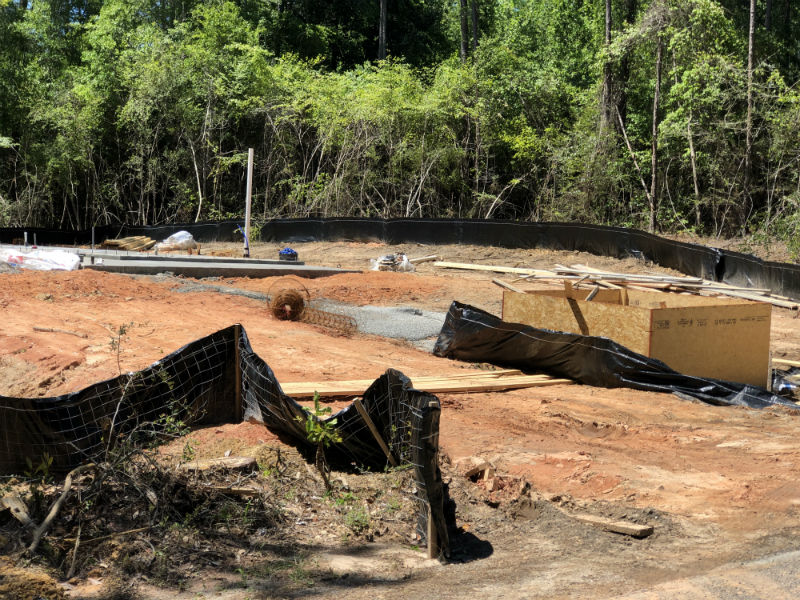
Two new homes are going up right down the street from our house. Now, there won’t be any nice wood until the trim process begins, but the framers are already tossing out nice-sized pieces of spruce, or, “whitewood,” as the industry likes to call it now. You might find it useful as unseen interior wood in furniture, or in repair and maintenance projects around the house.

You must constantly think safety when looking for discards. You could
put a nail through your shoe, you could fall from the dumpster and break your head open, you could fall into the dumpster and get hurt.

Still, the rewards can be terrific.
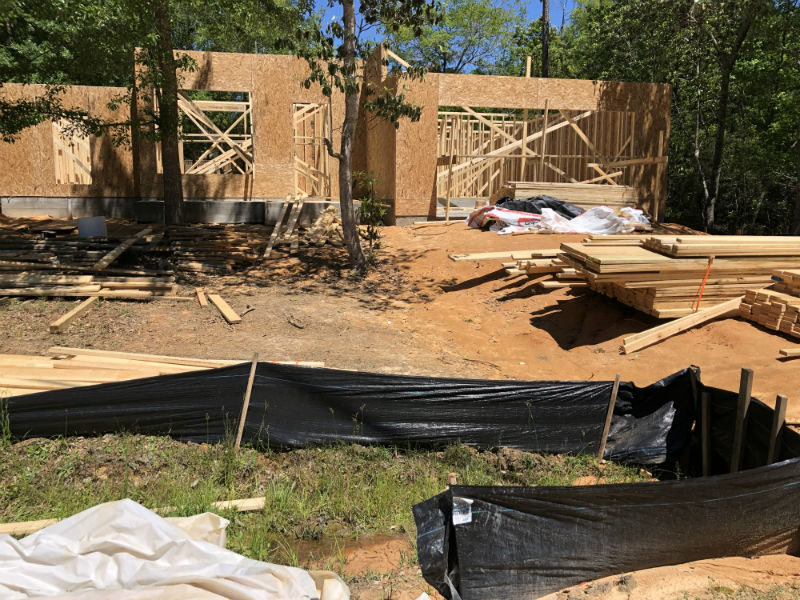
Not everything that gets ordered for a new home gets incorporated. In addition to thinking safety, think courtesy. And legality. Don’t trespass. Don’t take anything without permission. Don’t take anything that could still be used to build the house unless it’s in the dumpster. When I passed this house on my predawn Monday morning walk today, there were spruce 2x4s everywhere. Anything 14-½” or longer could be used for blocking in the walls.
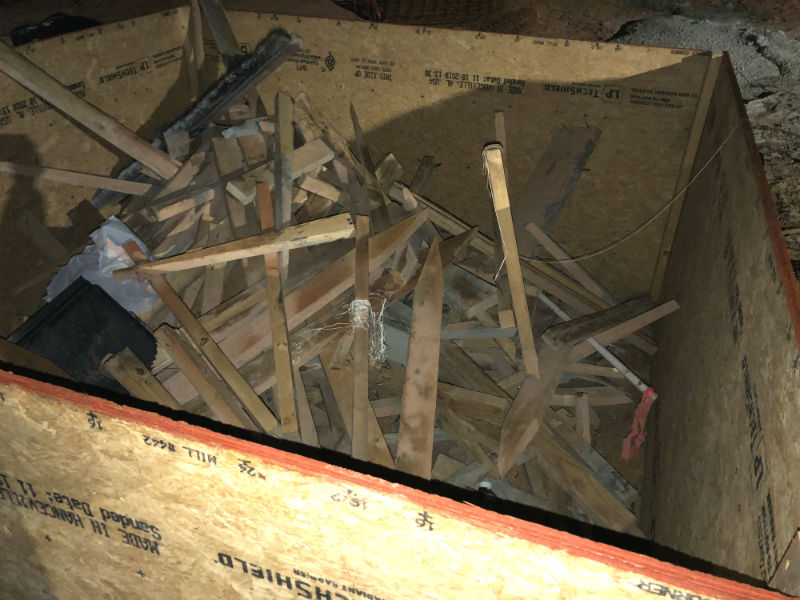
This contractor made his own trash container. I’m eager to see how he’s going to empty it.
Meanwhile, there is a lot of good, usable wood in here. I’ll be talking to the contractor soon to get permission to “dig.”

Jim Randolph is a veterinarian in Long Beach, Mississippi. His earlier careers as lawn mower, dairy farmer, automobile mechanic, microwave communications electronics instructor and journeyman carpenter all influence his approach to woodworking. His favorite projects are furniture built for his wife, Brenda, and for their children and grandchildren. His and Brenda’s home, nicknamed Sticks-In-The-Mud, is built on pilings (sticks) near the wetlands (mud) on a bayou off Jourdan River. His shop is in the lower level of their home.Questions and comments on woodworking may be written below in the comments section. Questions about pet care should be directed to his blog on pet care, www.MyPetsDoctor.com. We regret that, because of high volume, not all inquiries can be answered personally.
May 032019
 

Welcome to “Tips From Sticks-In-The-Mud Woodshop.” I am a hobbyist who loves woodworking and writing for those who also love the craft. I have found some ways to accomplish tasks in the workshop that might be helpful to you, and I enjoy hearing your own problem-solving ideasPlease share them in the COMMENTS section of each tip.  If, in the process, I can also make you laugh, I have achieved 100% of my goals.

Over the next few posts and columns we’re going to look at how I make panels from used oak flooring.

Ever since I first made a project with used oak flooring, I’ve been in love with it.

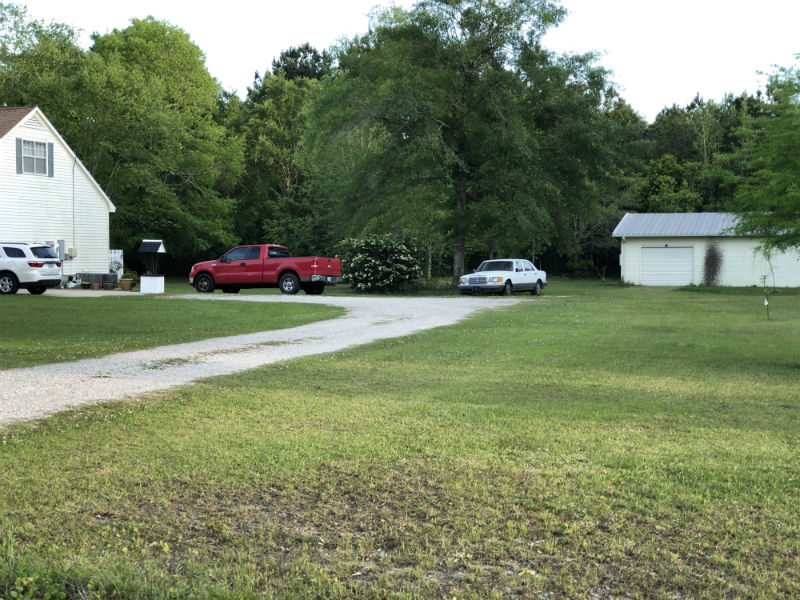
About a year ago a pile of it appeared in front of a house I pass twice every day going to and from work. I’ve always been interested in that house because it has a gigantic garage/workshop combination in the back yard. A few years ago, when it was for sale, I was tempted to get an appointment to look, just for curiosity, but I never did.

This seems to be a great house. It has changed hands only once during the 25 years I’ve been driving past it. The building in the back appears to be a spacious shop and garage.

According to the county contract, debris on the side of the road is supposed to be picked up every week. It rarely happens that way. When these folks got new wood floors, the old stuff sat on the side of the road for weeks. And weeks. I’d pass it and think, “I have no use for that wood. Why would I clog up my wood storage with something I don’t even have a plan for?”

But, day after day went by, then week after week, and I longed to “save” that wood. (Who was going to save me from craving it?)

Finally, one rainy day, I took my little utility trailer to work with me, left the office a little early, and stopped on the side of the road in front of the house.

”Man!” I thought. “This wood is a lot rougher than it looked driving by.”

When I pulled up to load this wood, I discovered it was rough. Did
the contractor pull it up with a Bobcat?

Still, I was committed. I must have looked pretty funny to people passing on the busy country road, a guy in a long-sleeved dress shirt and tie picking up
trash on the roadside.

Not only was the lumber rougher than it looked initially, there was a lot more of it once I began picking up. I couldn’t throw it in the trailer fast enough.

By the time I got home, supper was on the table. I disconnected the trailer, aimed my big, rescued fan at the wet pile and went upstairs. It had been rained on for weeks, it could take a few more weeks to dry.

Finally, I needed my trailer for another job, so I began to empty it and organize. “I might as well remove nails as I go,” I thought. I try not to talk to myself when I’m in the garage. Brenda already thinks I’m a little nutso, there’s no point in giving her more ammunition.

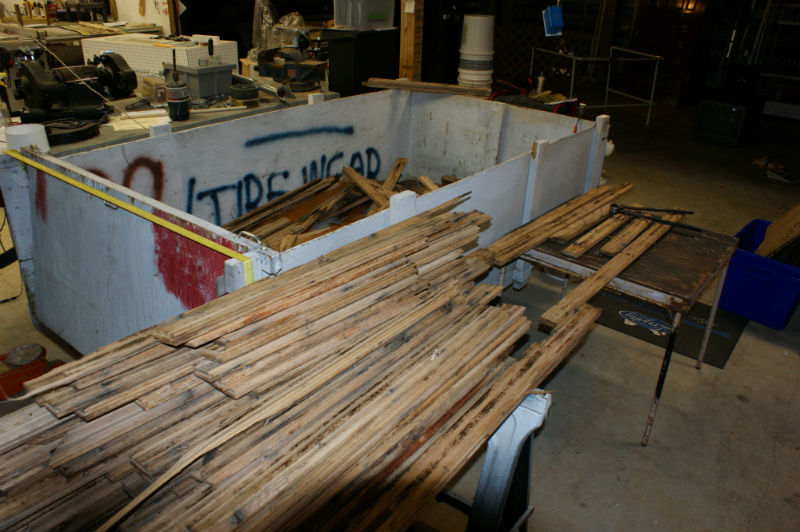
As I took out nails I also sorted by length, tore off loose splinters and tossed into the burn pile any boards that were obviously useless. It was soon evident that there was a lot of wood here, and, even with the recently-renovated wood storage, I wasn’t going to be able to keep it at home. Off to work it went.

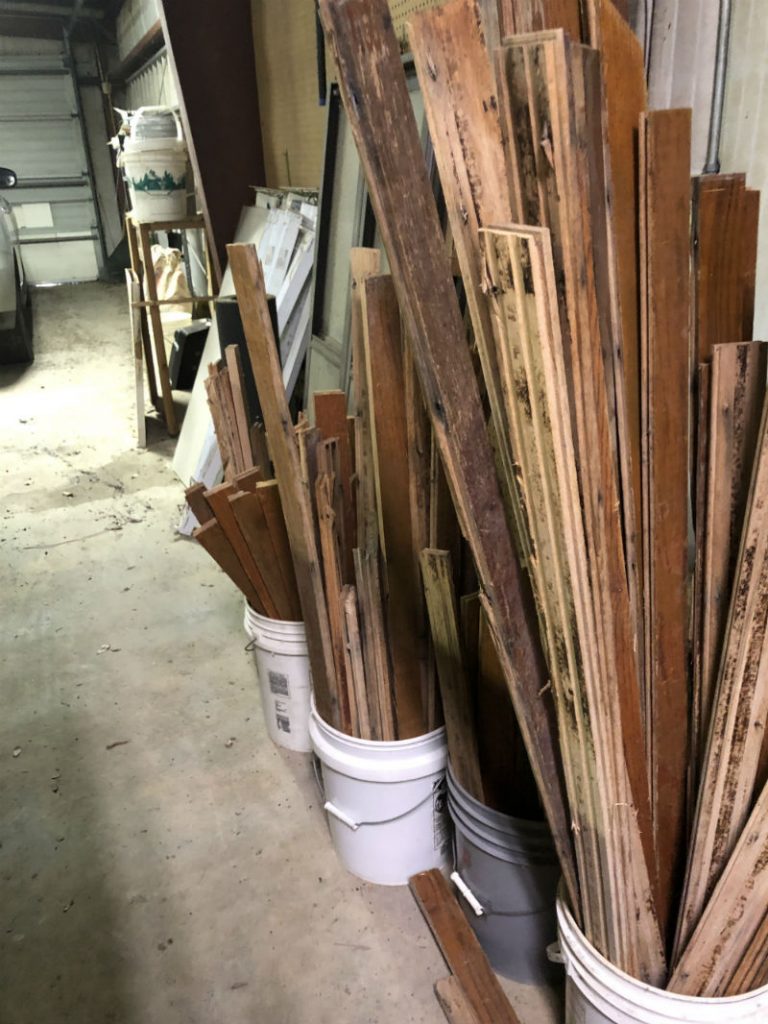
Vertically stored, this oak flooring can sit here at work, out of the way, until I need it.

Jim Randolph is a veterinarian in Long Beach, Mississippi. His earlier careers as lawn mower, dairy farmer, automobile mechanic, microwave communications electronics instructor and journeyman carpenter all influence his approach to woodworking. His favorite projects are furniture built for his wife, Brenda, and for their children and grandchildren. His and Brenda’s home, nicknamed Sticks-In-The-Mud, is built on pilings (sticks) near the wetlands (mud) on a bayou off Jourdan River. His shop is in the lower level of their home.Questions and comments on woodworking may be written below in the comments section. Questions about pet care should be directed to his blog on pet care, www.MyPetsDoctor.com. We regret that, because of high volume, not all inquiries can be answered personally.
May 012019
 

Set it and forget it.

That’s probably the way most of us treat calibration of our large power tools.

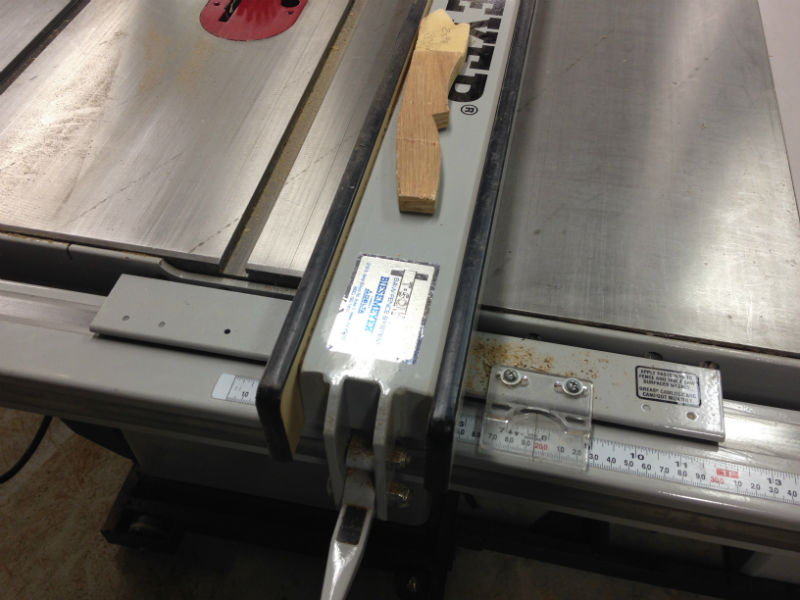
When my Delta Unisaw arrived, I spent days setting it up. Got the tables perfectly coplanar, squared the Biesemeyer fence just a hair out of perfect to reduce the risk of kickback, made the rule as accurate as I could, then lubricated every moving part with spray graphite. Since then, except for periodic adjustments to the fence, I don’t think I’ve lifted a finger to adjust anything.

The Delta Unisaw is a beast of a workhorse. Not much need for recalibration, though it never hurts to check one’s alignment.

And, that was 13 years ago.

Band saw? The fence gets squared often because it has to be taken completely off the saw to cut anything without it. You can’t just push it out of the way. The blade gets tensioned and detensioned. I do adjust the guide rollers fairly often, although I don’t understand how they get out of alignment. The drive belt suffered terminal rot last year, also after about 13 years. (I had to get all new tools after Katrina’s flood.)

Drill press? I check the squareness of the table to the drill bit once or twice a year, usually when I’m inspired that a hole has to be perfectly square to a board’s surface.

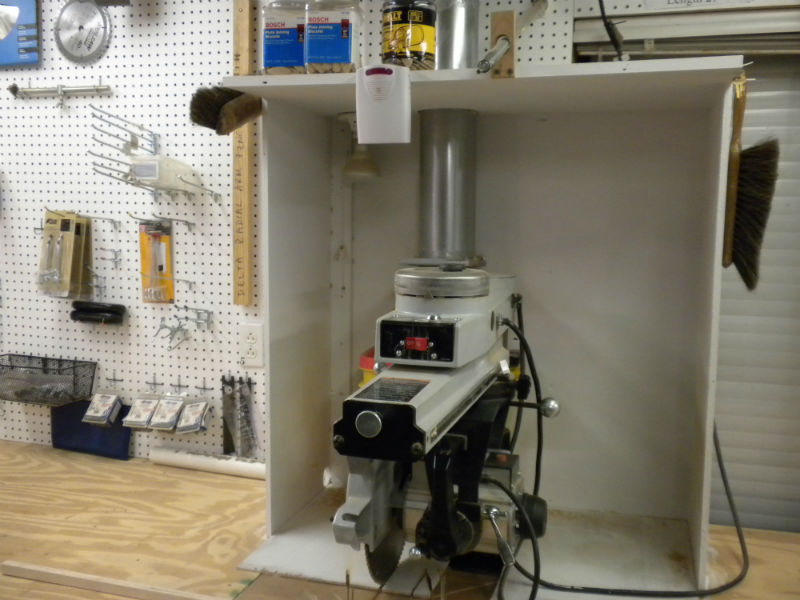
I can’t remember the last time I checked any settings on either miter saw, or the radial arm saw. That sucker is built like a deuce-and-a-half truck.

Speaking of beasts … since no 18-wheelers have been in my shop to run over this beast, I don’t worry much about it getting out of alignment.

What about you?

Jim Randolph is a veterinarian in Long Beach, Mississippi. His earlier careers as lawn mower, dairy farmer, automobile mechanic, microwave communications electronics instructor and journeyman carpenter all influence his approach to woodworking. His favorite projects are furniture built for his wife, Brenda, and for their children and grandchildren. His and Brenda’s home, nicknamed Sticks-In-The-Mud, is built on pilings (sticks) near the wetlands (mud) on a bayou off Jourdan River. His shop is in the lower level of their home.Questions and comments on woodworking may be written below in the comments section. Questions about pet care should be directed to his blog on pet care, www.MyPetsDoctor.com. We regret that, because of high volume, not all inquiries can be answered personally.
Apr 252019
 

Steve Gass, creator of the SawStop Table Saw finger-saving technology, has a lot of confidence in his table saws. So much confidence that he was willing to go on Discovery Channel’s Time Warp show to demonstrate the technology, using his own finger!

Watch the demonstration in the video below:

Learn more about the SawStop Table Saws available at Highland Woodworking

Apr 232019
 

Many years ago, Alan Noel wrote an article for Wood News telling the story of an accident with his tablesaw, and his reasoning for upgrading to a SawStop.

Just before my 54th birthday, I was using my old tablesaw to cut some pieces of poplar into long strips to hold glass panels in cabinet doors. I had done cuts like this safely many times before, but this time something distracted me and I must have taken my eye off the saw for a fraction of a second. To my pain and horror, all of a sudden I realized I had cut myself. It shocked me how incredibly fast it all happened.

Click to read more of Alan’s tablesaw story

Click to learn more about the SawStop tablesaw options available at Highland

Apr 182019


Have you ever wondered how the SawStop braking technology actually works? This short video walks you through the process and shows you the secrets of SawStop’s amazing finger detection technology.

Click here to take a closer look at the SawStop Tablesaw options available at Highland Woodworking.

Apr 112019


For the April issue of Wood News Online, Norm Reid reviewed the newest book by Christian Becksvoort, Shaker Inspiration:

This book conveys the wisdom of a master craftsman drawing on a long and successful career as a cabinetmaker. Charmingly written in a briefly stated, friendly tone, it easily belies the wealth of knowledge it conveys. Less a treatise on Shaker furniture than an exposition of Becksvoort’s career in a one- man shop, it will be especially valuable for woodworkers who aspire to succeed in business as woodworking craftsmen. While it will be of interest to many woodworkers who want to follow the career path that Becksvoort took, it contains a great deal of wisdom about how and how not to set up shop for oneself.

Read the rest of the review

Purchase your own copy of Shaker Inspiration

Click the link for more great woodworking book ideas