Highland Staff

Mar 192015
 

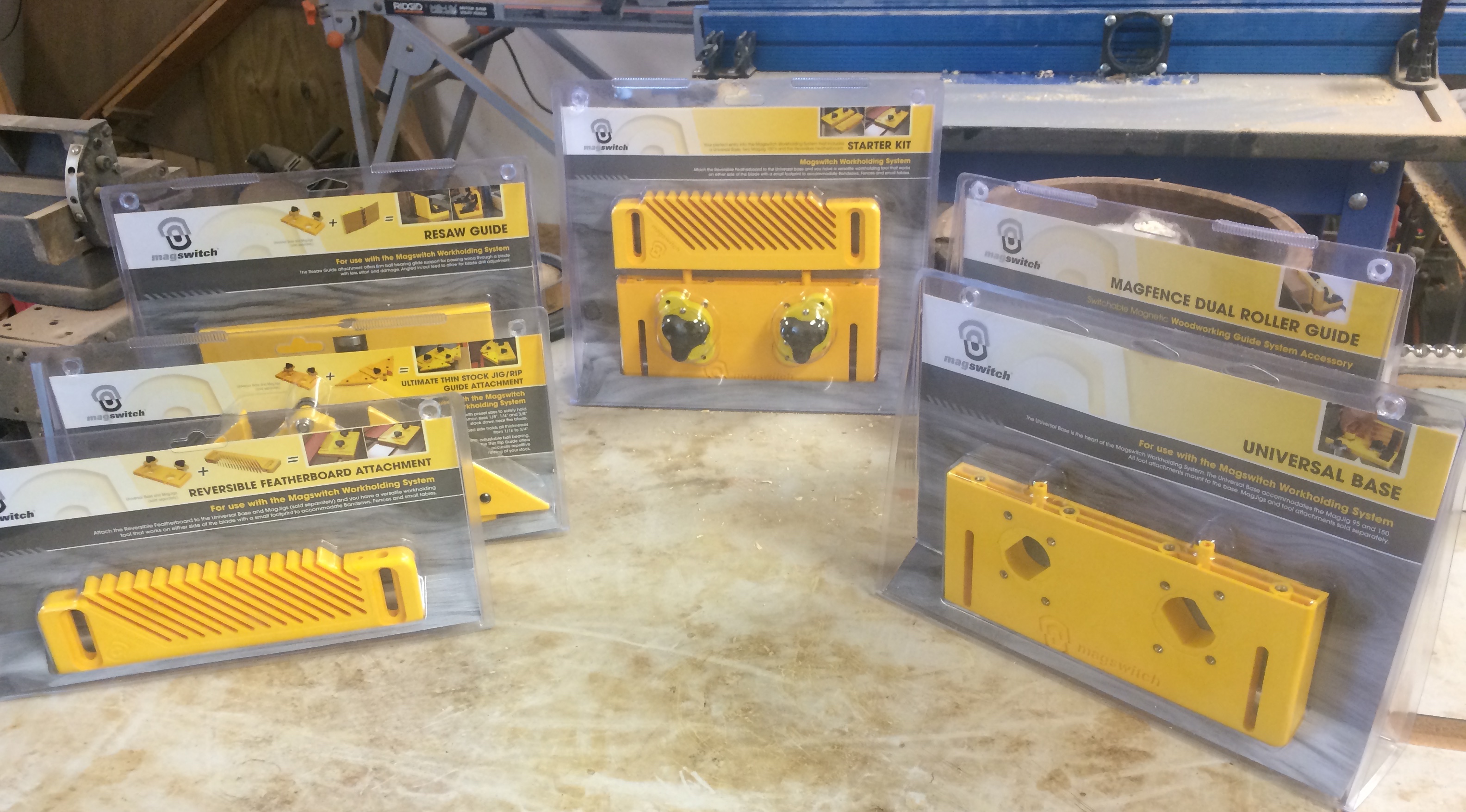
Magswitch has come up with new saw guides, feather boards and hold down jigs.  I picked up a set at Highland and gave them a try.

The system is designed in a series of pieces beginning with a Universal Base.  The Base holds two very strong magnets which can be switched on and off by twisting a toggle on top of the magnet.  The magnets are rated at either 95 pounds or 150 pounds breakaway force and they are really strong.  You can attach various pieces to the Base and have either a Featherboard, a Roller Guide, a Resaw Guide, or a Thin Stock Jig and Rip Guide.

The Magswitch Products

The Magswitch Products

The system works by dropping the magnets into the base and attaching one of the elements.  By flipping the magnet switches and setting the Base on a metal surface,  the Base becomes essentially unmovable.

When I first saw the elements, I thought the various pieces were quickly and easily transferred to and from the Base.  That is not the case— they are attached with Phillips head screws and some are not easy to reach.  It turns out one way to make the system much easier to use is to have several Bases with elements attached and then swap the magnets from piece to piece.  As an alternative, one could buy several magnets and leave them permanently attached to different bases.

In use, the Featherboard works like a champ.  Once attached to the Base, and magnets transferred into place, it is a very simple matter to place and adjust the board.  If the Base needs to be moved, a quick twist of the knob on top of the magnet releases or sets the Base and you are on your way.

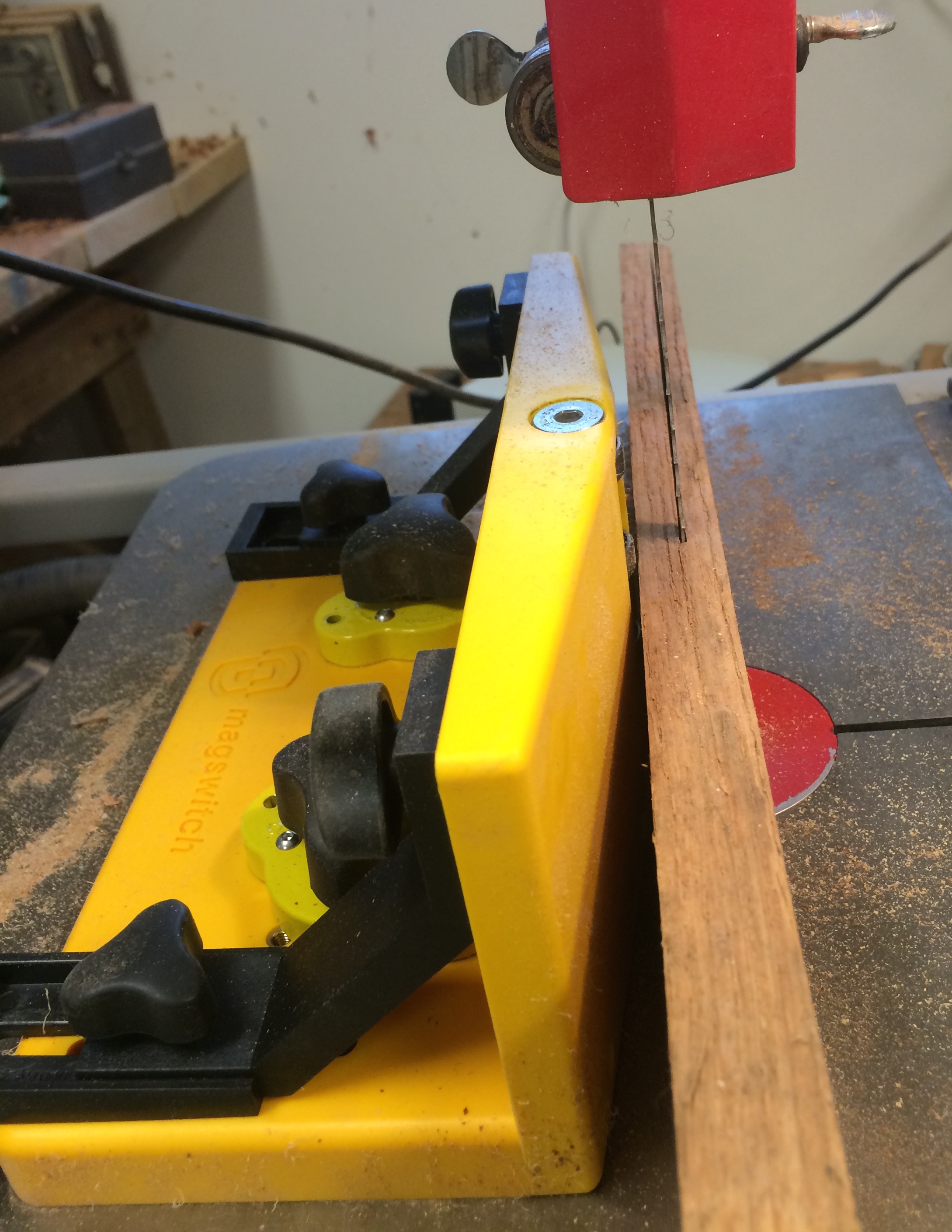
There are two Roller Guides available — one straight with two sets of bearings for the table saw and another made for resawing on the bandsaw, having one set of bearings in the center and the sides sloped away.  Both can be adjusted so the fence is vertical.

Band Saw Roller Guide

Band Saw Roller Guide

Funny thing, I cussed the Roller Guides pretty good because the magnets would not fit into the holes provided.  Took me longer than it should have to see the removable plastic bushings to adapt to the bigger/stronger magnets.

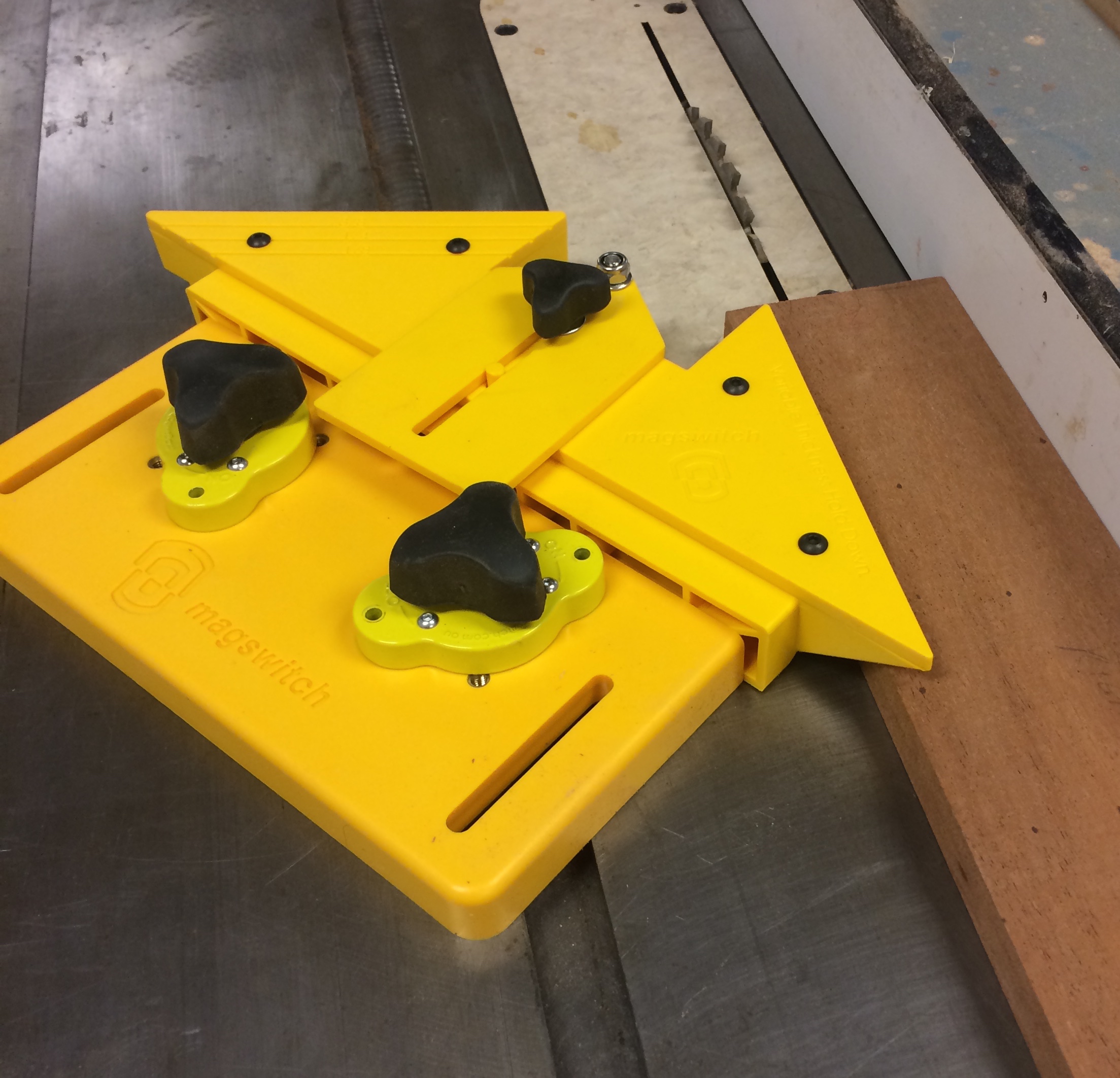
The Thin Stock Jig and Rip Guide is one of the odder pieces.  It is designed to hold down thin stock on the table saw using the same Base and magnets as in all of the other pieces.  The trick with this one is it has to be set at an angle so the edge is parallel to the fence.  There are several different thicknesses for ripping depending on which edge you face toward the fence.

IMG_1580If there is an issue with the Magswitch system, it is how best to configure the combination of Bases and magnets to fit your needs.  It is probably best to buy a Starter Kit, and then decide which unit is most important for you and how much trouble you are willing to stand to switch the magnets around.  Bases are about $19, but magnets are either $25 or $35 each and you need two for each Base.  Once you get set up, they work very well indeed.

Mar 062015
 

wn115Our March 2015 issue of Wood News Online is now available for reading and it is chock full of some great woodworking project ideas, safety tips, and advice.

This month’s articles include:

My Tell Tale Pyrography– Professor Nsir Malik discusses his passion for pyrography – the art of decorating wood with burn marks. He discusses how he constructed his own “pyrography contraption” and shares some of his beautiful and colorful pieces of artwork that he has made.

Designing and Making a Bench– Rod Scott has had several other articles published within Wood News. This month he discusses a sitting bench he constructed using 2 cast iron end pieces that were found in an old barn on a homestead property.

We’ve got an in-depth review of the Hock Kitchen Knife Kit made by Ron Hock. We’ve also got a book review of The Soul of a Tree-A Woodworker’s Reflections, the biography and philosophy of woodworker George Nakashima. We’re excited to continue our Lie-Nielsen Tool of the Month column with Lee Laird’s review of the Lie-Nielsen No. 60-1/2RN Low Angle Rabbet Block Plane with Nicker.

Our Show Us Series includes:

Show Us Your Shop– Herb Schlobohm takes us on a tour of his anti-shop, which is a different take on the typical shops that we have highlighted in the past.

Show Us Your Woodworking– Butch Montgomery has built a variety of woodworking projects and enjoys paying attention to what people around him need, and then surprising them with a custom made piece.

Show Us Your Woodcarving– Rodney Miller, who we recently featured in our Show Us Your Woodturning column in The Highland Woodturner, has a passion for carving “Love Spoons” which can be made with just a piece of wood and a pocket knife.

This month’s tip columns include:

 The Down to Earth Woodworker– Steve puts a trio of popular woodworking tapes to the test, discusses design flaws in store bought wooden furniture (compared to pieces you’ve made yourself), and begins a new project- The 5S Compliant Shop Wall Cabinet.

Tips from Sticks in the Mud– Jim’s got a helpful tip on enlarging pre-drilled holes, as well as a money-saving tip on creative ways to store wood.

Alan Noel’s Finishing Tip– Alan shares a variety of common household items that you can use in your finishing processes. We’ve also got an Ask the Staff finishing tip on the best way to match stain colors.

A lot of our recent Safety Tips have discussed the dangers of blade spin down and this month Ed Scent gives us several suggestions for staying safe in the shop when you’re working around machinery with fast and sharp blades.

All of this and more including new product specials and sales in this month’s issue of Wood News Online.

Mar 032015
 

I built my wood shop workbench about 25 years ago and the hardest thing about it was not having a bench to build the bench. Sometimes holding your work is one of the things which takes up as much effort as the work.

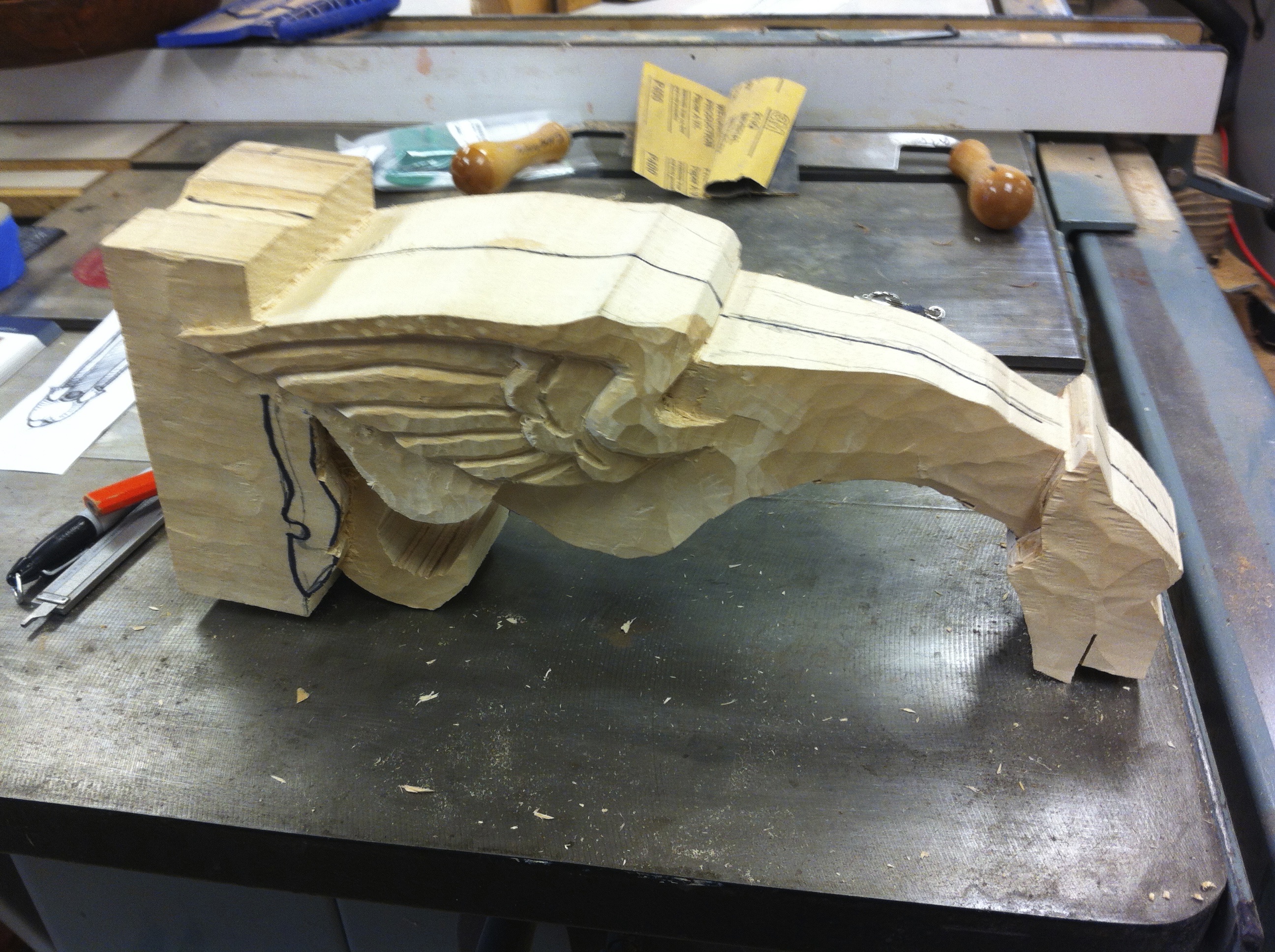
I started carving a gargoyle a while back (do you have one? Don’t judge me) and holding that thing was a real chore.

Gargoyle

Gargoyle

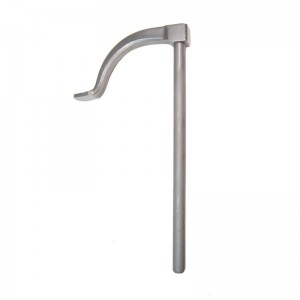
One thing I added to my bench recently is a holdfast.  The traditional forged ones simply drive into a hole in the top of your bench a little bit like whack-a -mole with your bench mallet.  They have a flat hook on the end and the sideways pressure in the hole locks it in place. You loosen it by whacking the shaft sideways. Works like a champ and sometimes you can find a local blacksmith to make one for you.

Forged Holdfast

Forged Holdfast

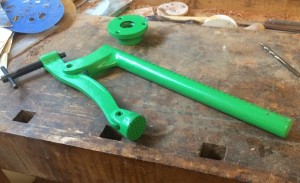
A more modern version has a small screw on top of the clamp part, and fits into a metal bracket set in the top of the bench.  It is related to the traditional style in that it locks into place with a sideways warp in the bracket.  To use this clamp, just drop it in the hole in the center of the bracket and then a quick twist to the screw puts a large amount of pressure on the work.  To release the clamp, loosen the screw and then pull up on the top of the shaft.  The grooves on the shaft release from the grooves in the bracket and it is free.

New Holdfast

New Holdfast

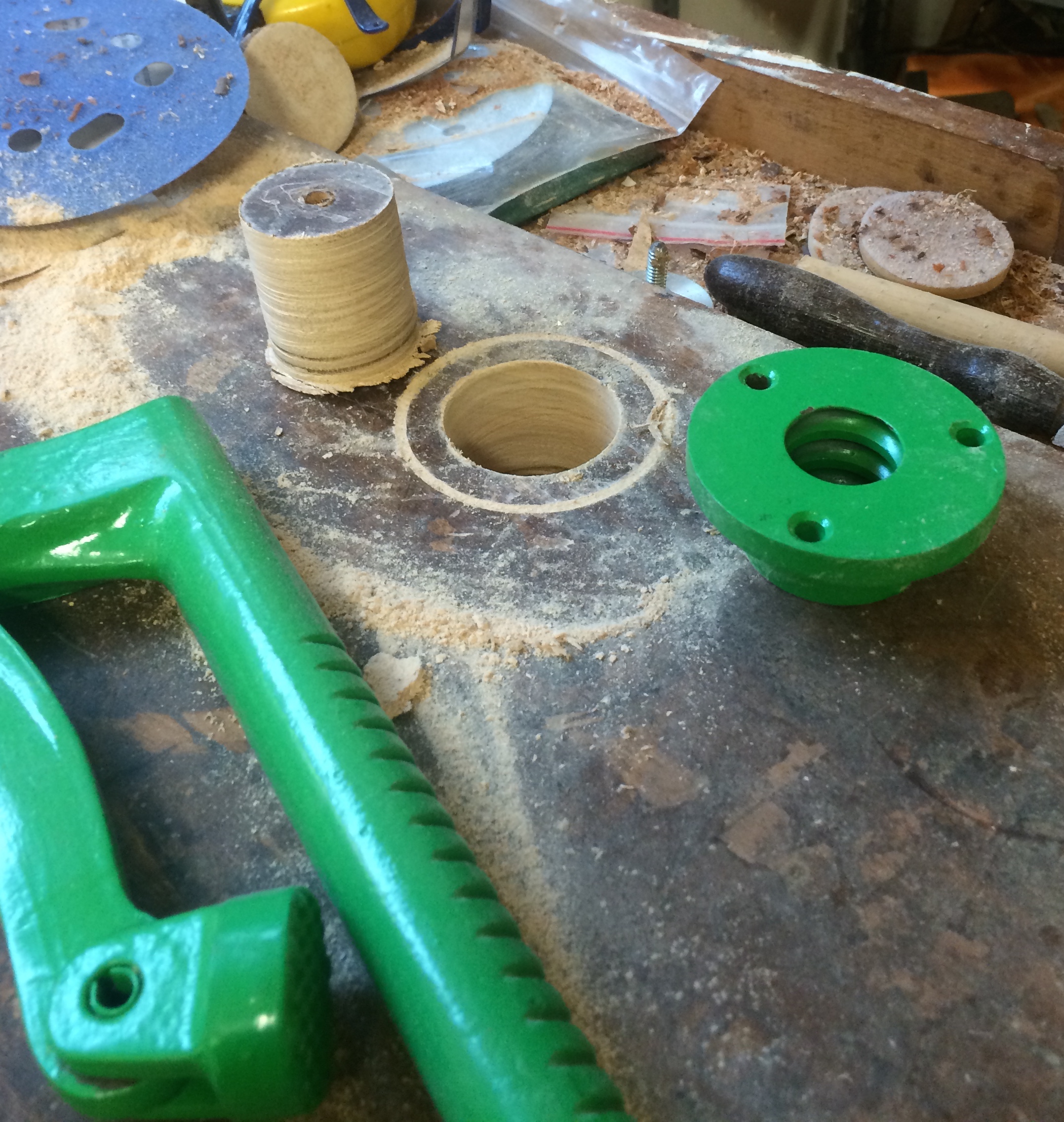
Installation is simple once you decide where it needs to go to be most useful. You can use a simple straight hole in the bench and it will work fine, but the better installation is with the bracket. I drilled a pilot hole in the top of my bench, and then used a larger hole saw to drill in the depth of the bracket flange, plus a little bit. Then without removing any wood, I used a smaller hole saw to drill all the way through the top of the bench still using the same pilot hole. That way I had concentric holes and could chisel out the flange depth by hand.  Worked like a champ after I dropped the bracket in place and added some screws.

Holes drilled for bracket

Holes drilled for bracket

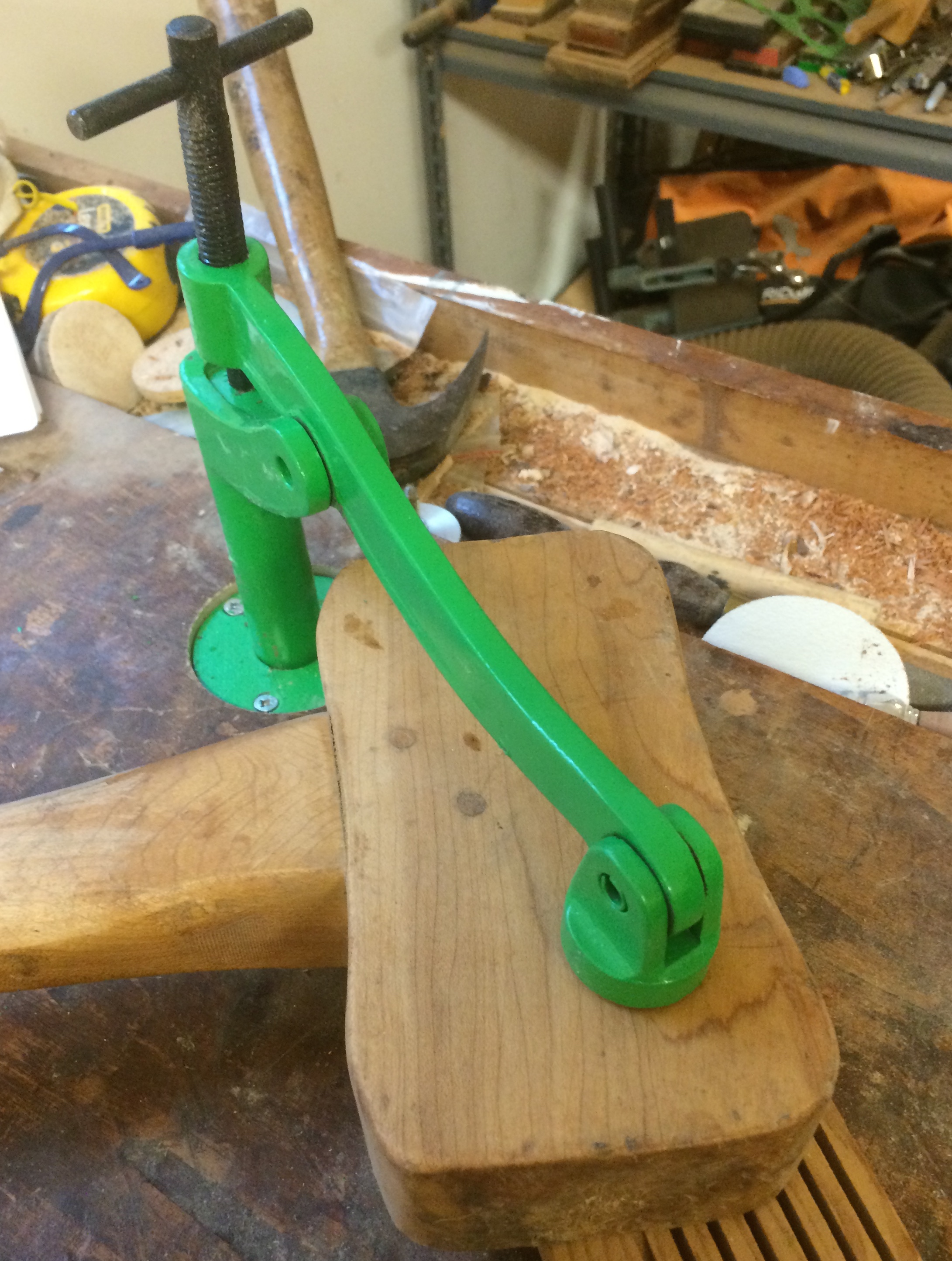
Between the new holdfast, my new leg vise, the shoulder vise on the end of the bench, the bench dogs on the top of the bench, the bench “L” vice on the end with two clamping points, and various and sundry other pipe clamps, I bet I could clamp a herd of cats.

Finished Installation

Finished Installation

Feb 252015
 

No Southern-fried Southern boy wants to be called a Yankee, but we share the characteristics of shrewdness and thrift.  Thus, each month we include a money-saving tip.  It’s OK if you call me “cheap.”

Search the Web for “wood storage” and you will be inundated with more articles and videos than you can digest in a lifetime.  Every woodworker has his own take on where and how to store materials for future use.  And, I believe that most will agree that the answer to our storage problem is, “put it somewhere that can’t be used for anything else.”

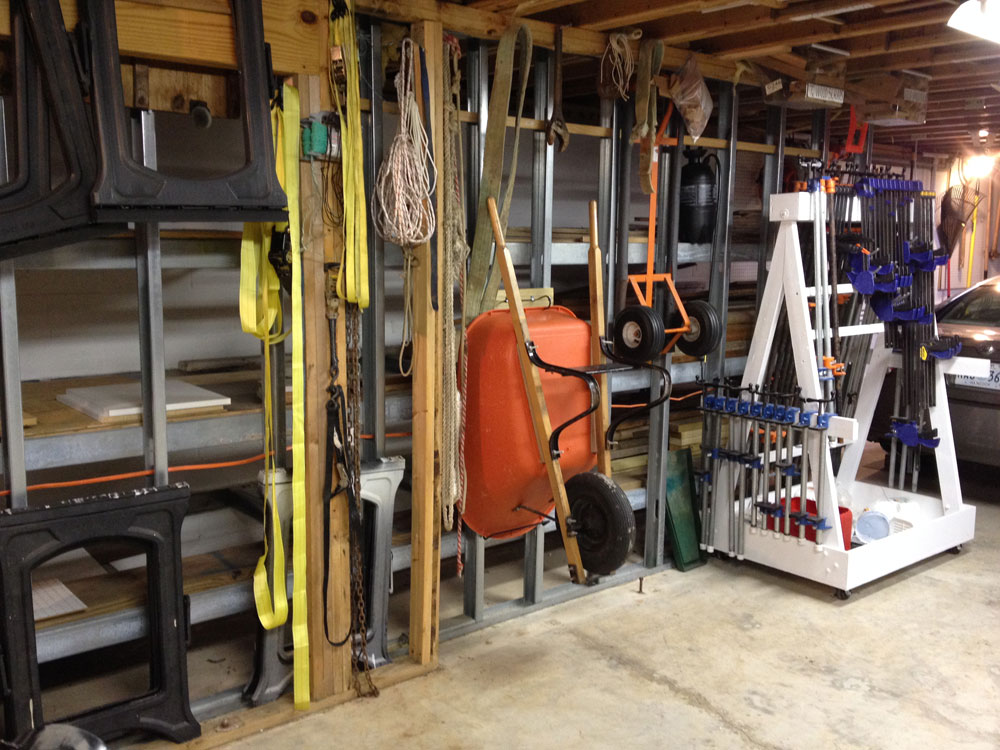
In my case, the majority of wood storage is between the front wall of our house and a wall that supports a porch above.

This wall was originally made of wood, but the studs were weakened by Hurricane Katrina’s floodwaters, so I replaced it with a galvanized steel wall.

This wall was originally made of wood, but the studs were weakened by Hurricane Katrina’s floodwaters, so I replaced it with a galvanized steel wall.

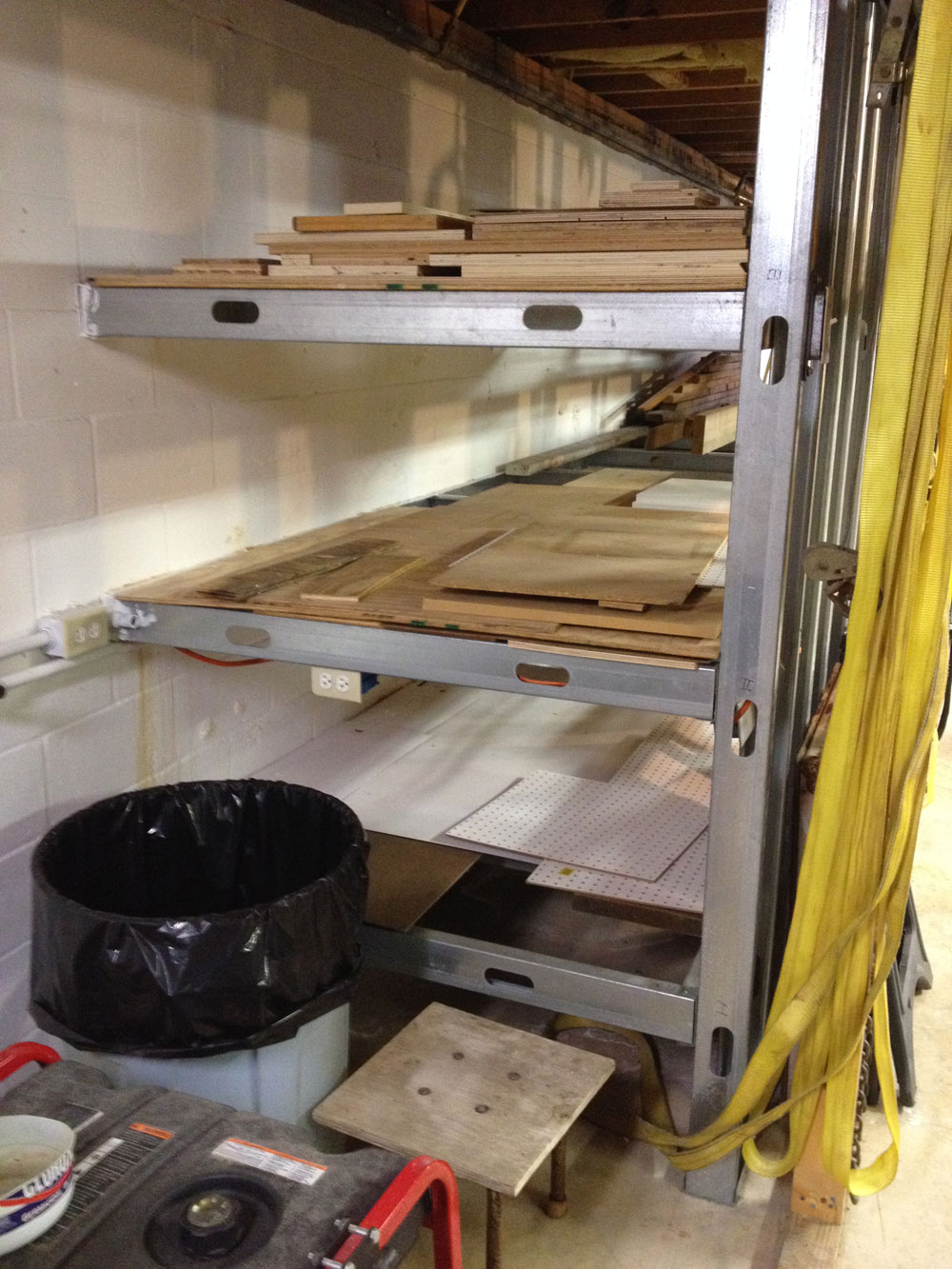
That space is too narrow for parking, so I made a rigid frame to support materials of all shapes and sizes.  One end is dedicated to sheet goods and, with an inexpensive layer of lauan as the foundation, I can add everything from full sheets to small scraps.

The plywood end of the storage area allows for full sheets down to small scraps, as well as room for expansion by simply adding cross members for additional layers

The plywood end of the storage area allows for full sheets down to small scraps, as well as room for expansion by simply adding cross members for additional layers

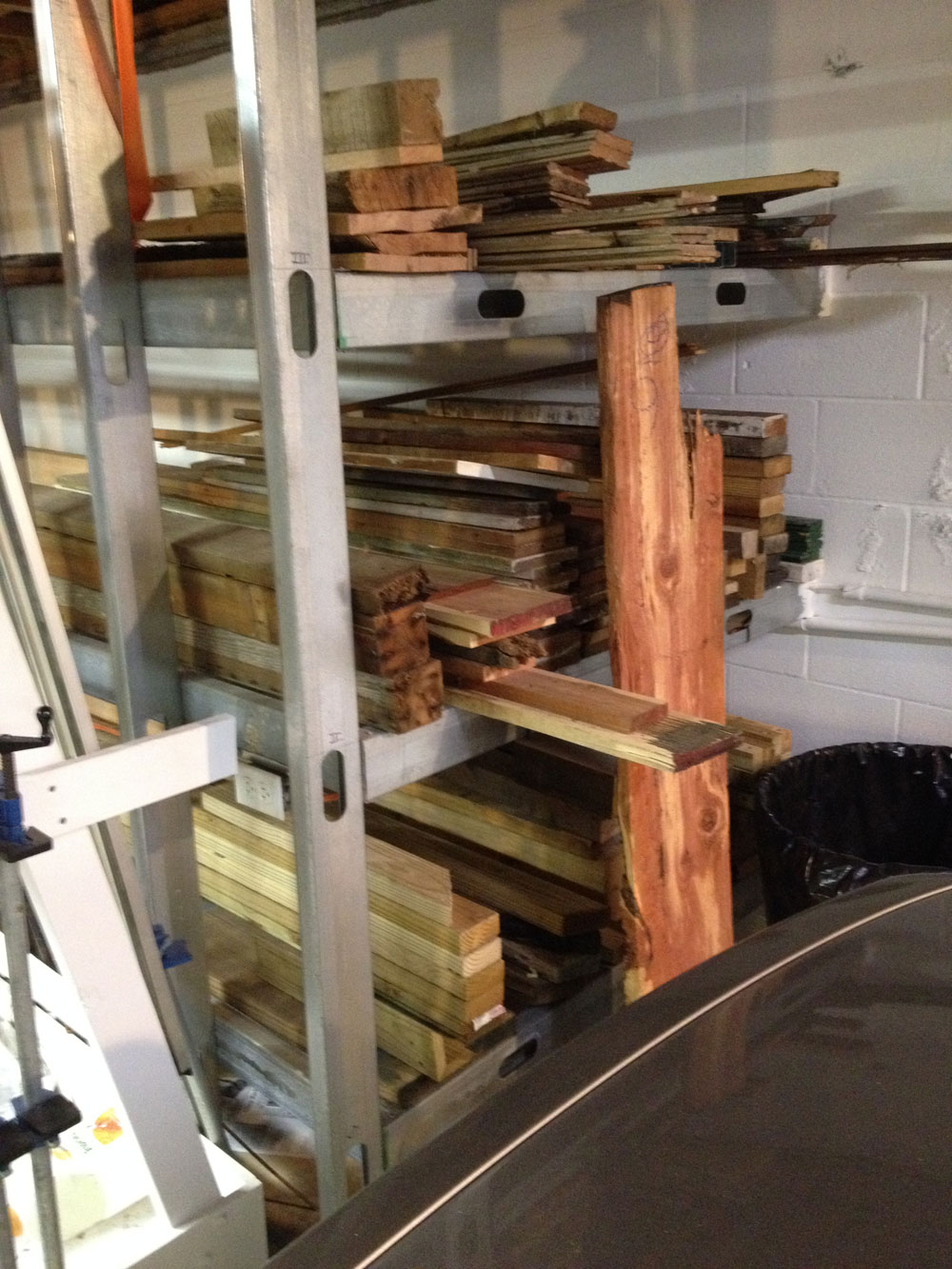
The other end is for solid wood and is organized by species, with the bulk of the space going to treated pine.

Because I handle all of our home’s maintenance, I keep plenty of treated lumber for outdoor use, as well as leftovers from previous projects.

Because I handle all of our home’s maintenance, I keep plenty of treated lumber for outdoor use, as well as leftovers from previous projects.

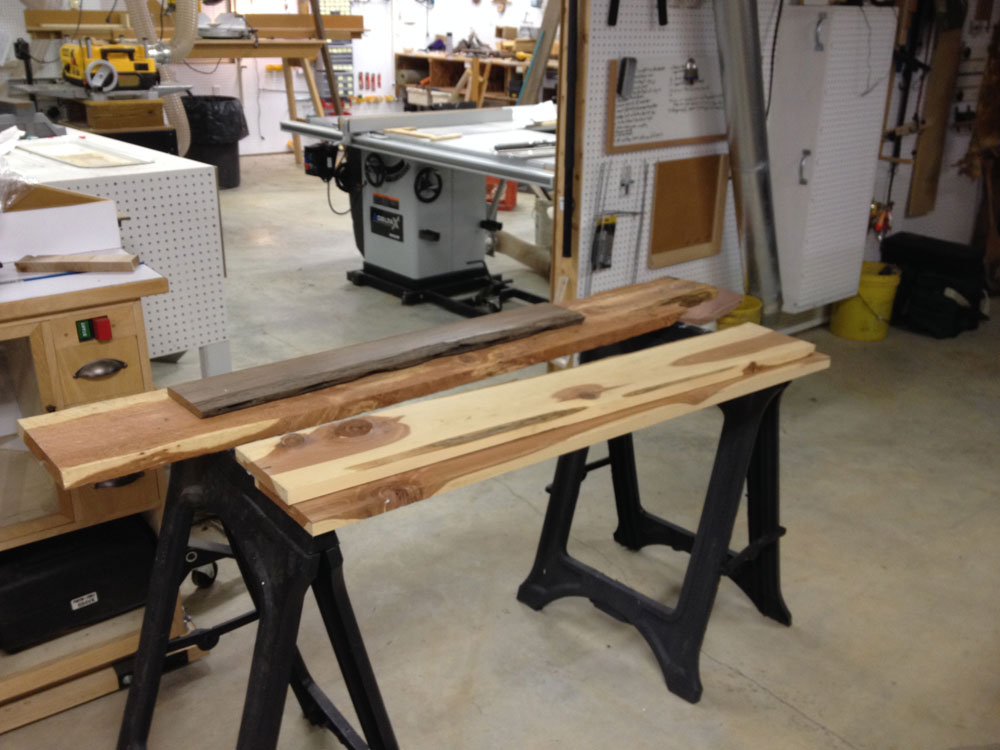
Lumber for a current project could be stored, but I usually keep it close at hand on sawhorses nearer to the work area.

Lumber for a current project could be stored, but I usually keep it close at hand on sawhorses nearer to the work area.

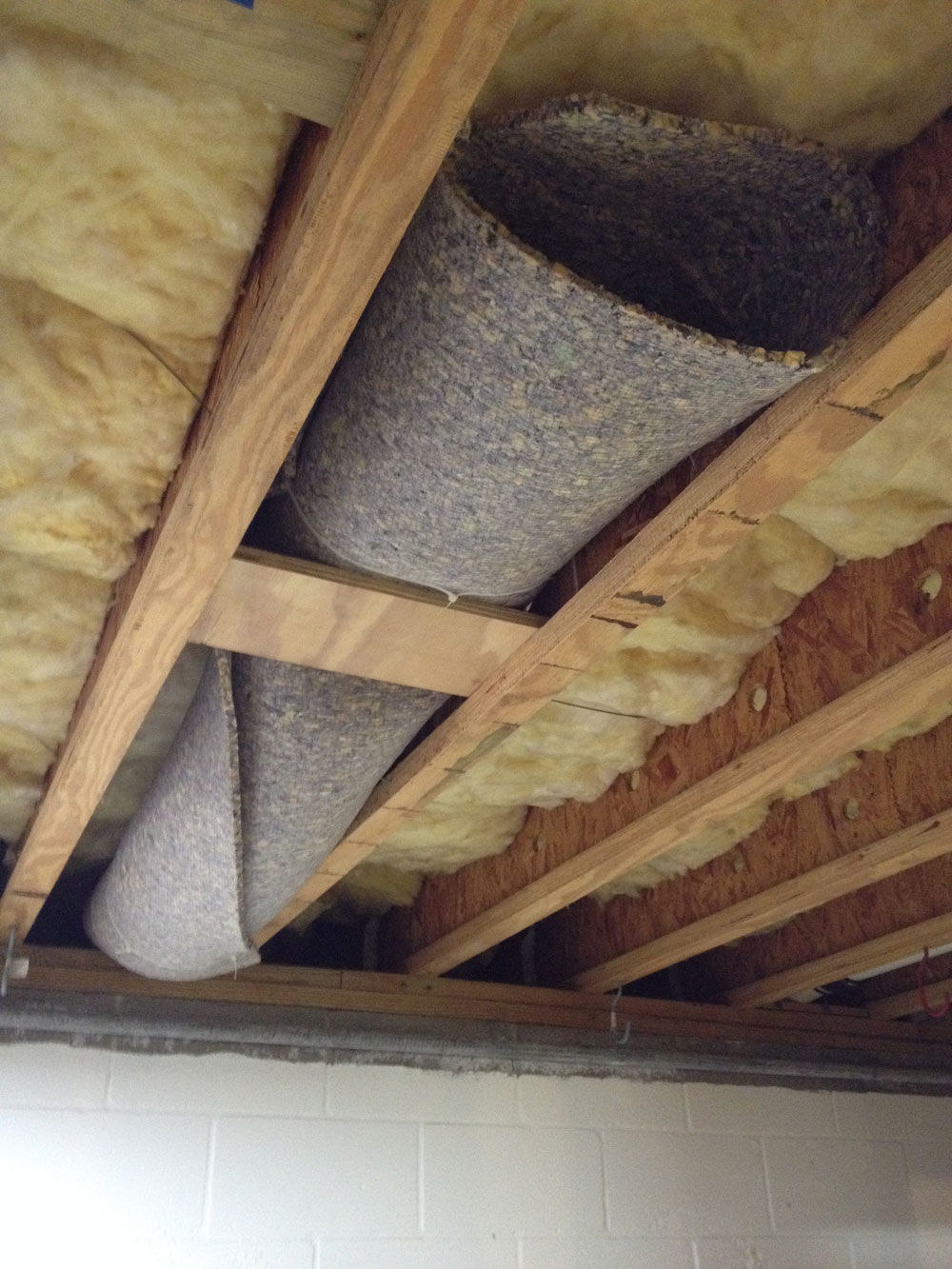
Under the house is the roughest of the rough; mostly construction lumber, cedar siding left over from our home’s original construction, posts and poles.

Having experienced, “Don’t I have (fill in the blank with a wood species and scrap size) somewhere?” many, many times, I try not to throw away any scrap I think might be usable.  Perhaps the best part of this storage system is that there is nearly zero monetary or space cost to this system.

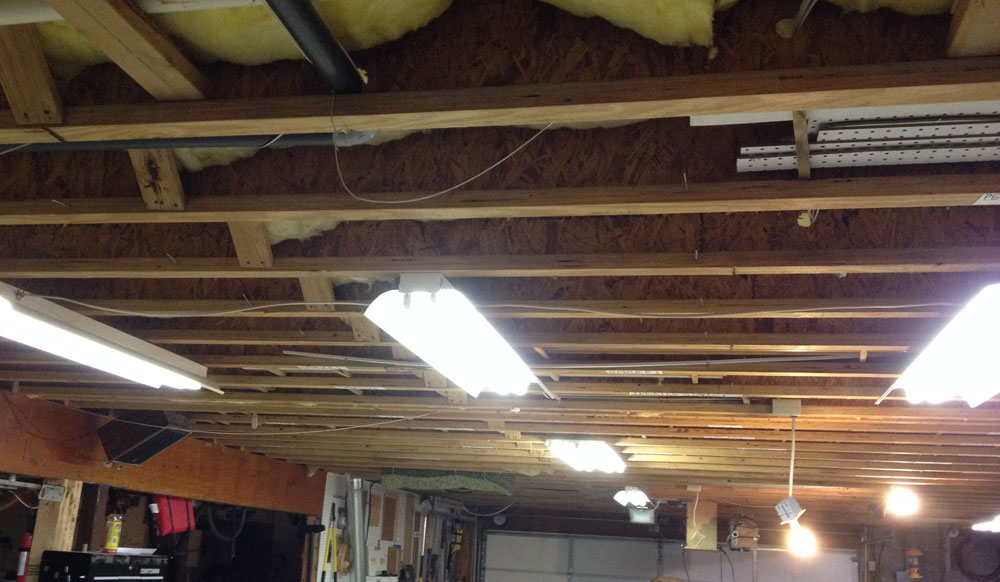
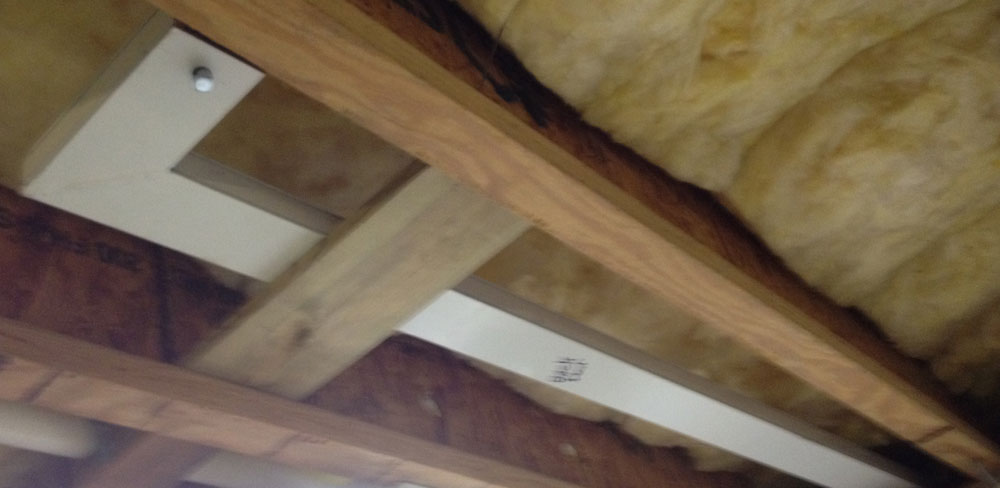
The inspiration started with a tip I read online, suggesting the storage of dowels in PVC gutter downspouts attached to the underside of ceiling joists in the shop.  I was convinced this was the storage solution for me, and I got on a ladder, measuring for the lengths of downspouts I wanted to purchase when it hit me:  “I can store stuff up inside these wooden I-joists without sacrificing ceiling height and without buying anything.”

An overview of the parking side of our garage to orient you for the ceiling photos.

An overview of the parking side of our garage to orient you for the ceiling photos.

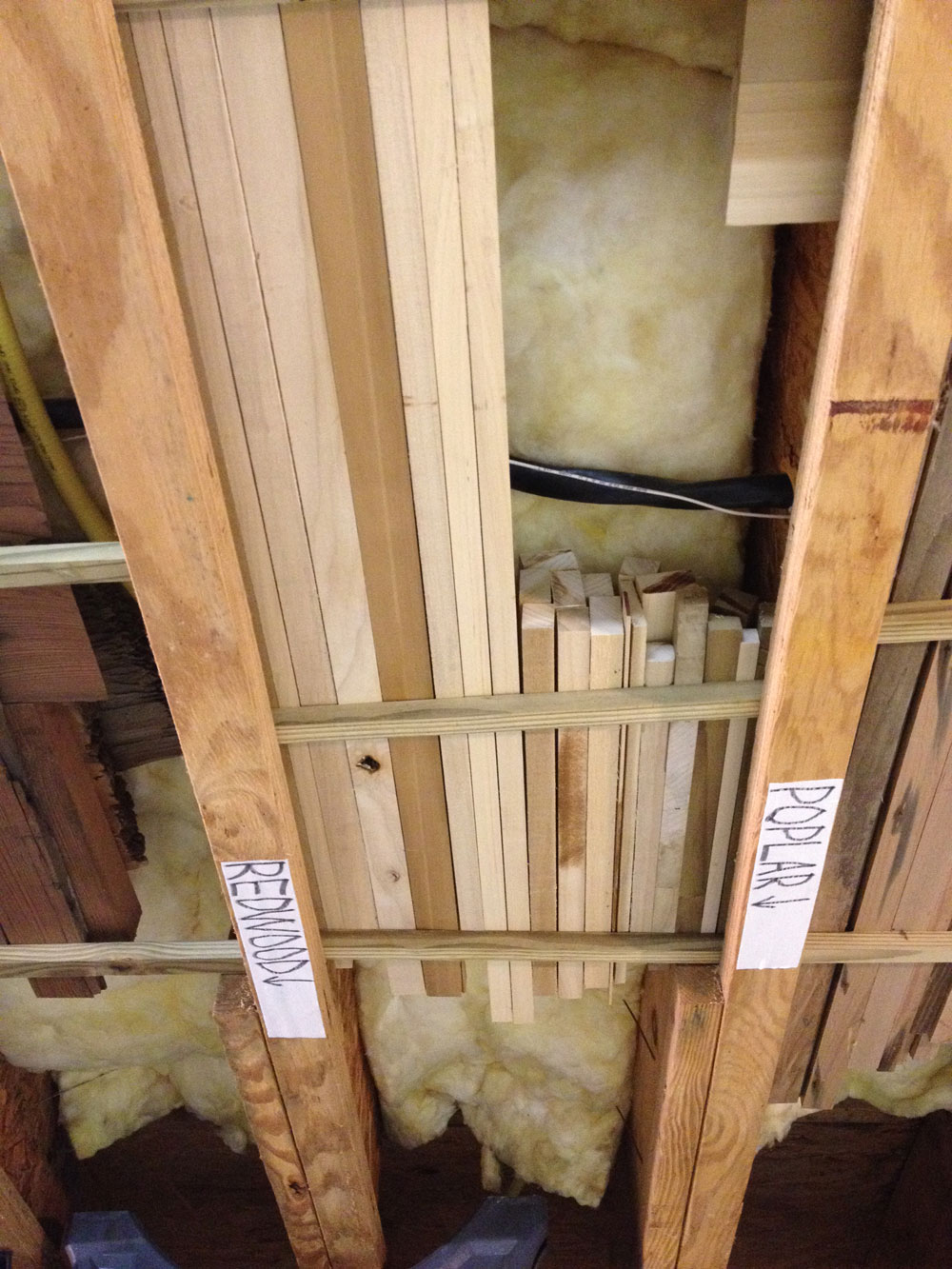
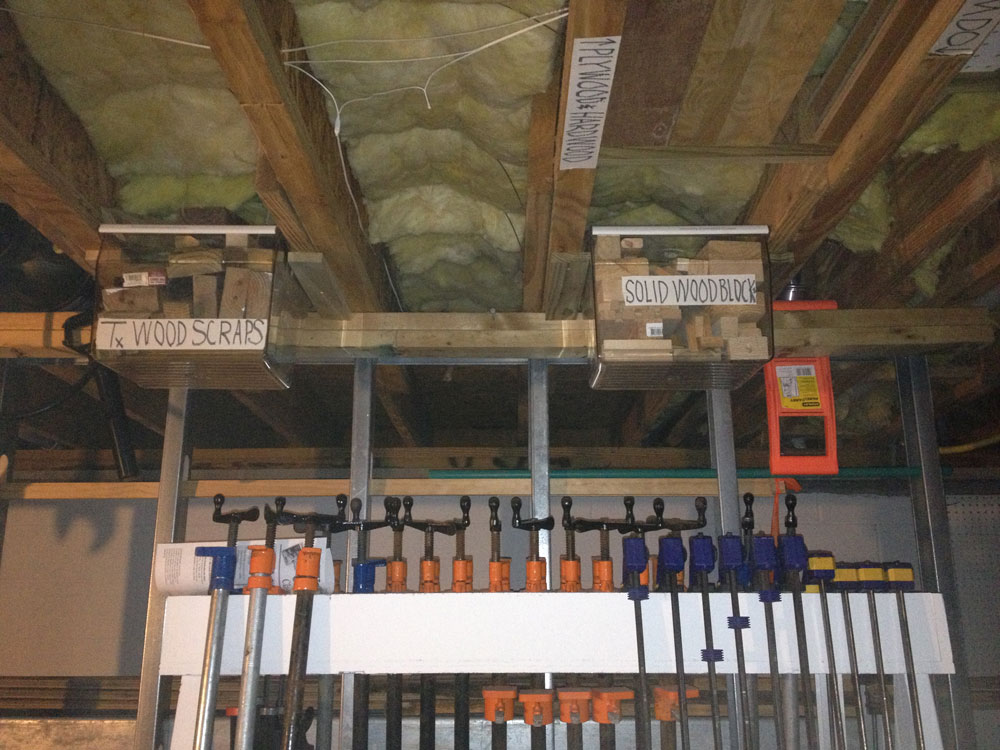
Here’s how I did it:  I already had little strips of treated lumber I use for stakes and a thousand other uses.  It was a simple matter to take an inside measurement of the space between joists to customize roughly 14″ pieces of the little stakes (the space between joists is not always equal) to fit tightly, where they act as supports for the scraps.  Close together for short scraps, far apart for longer pieces or even letting long lengths span several supports.  Each collection is organized from longer to shorter.

Short scraps are accommodated with supports close together.

Short scraps are accommodated with supports close together.

Long scraps not only need supports far apart, they need support in the middle to prevent warping. Good organization helps. Taking the time to sort from short to long pays off when you need a scrap of a certain length.

Long scraps not only need supports far apart, they need support in the middle to prevent warping. Good organization helps. Taking the time to sort from short to long pays off when you need a scrap of a certain length.

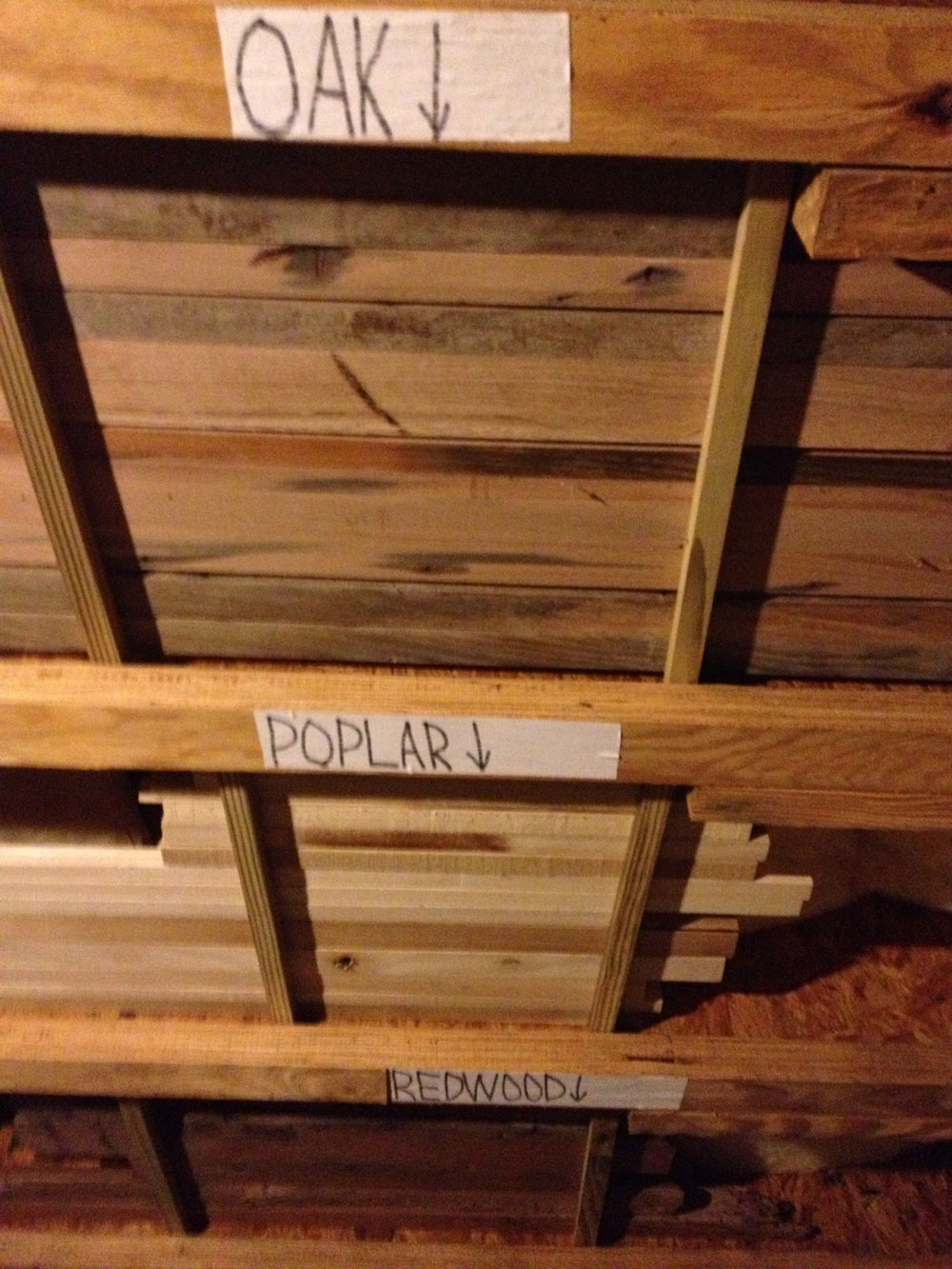
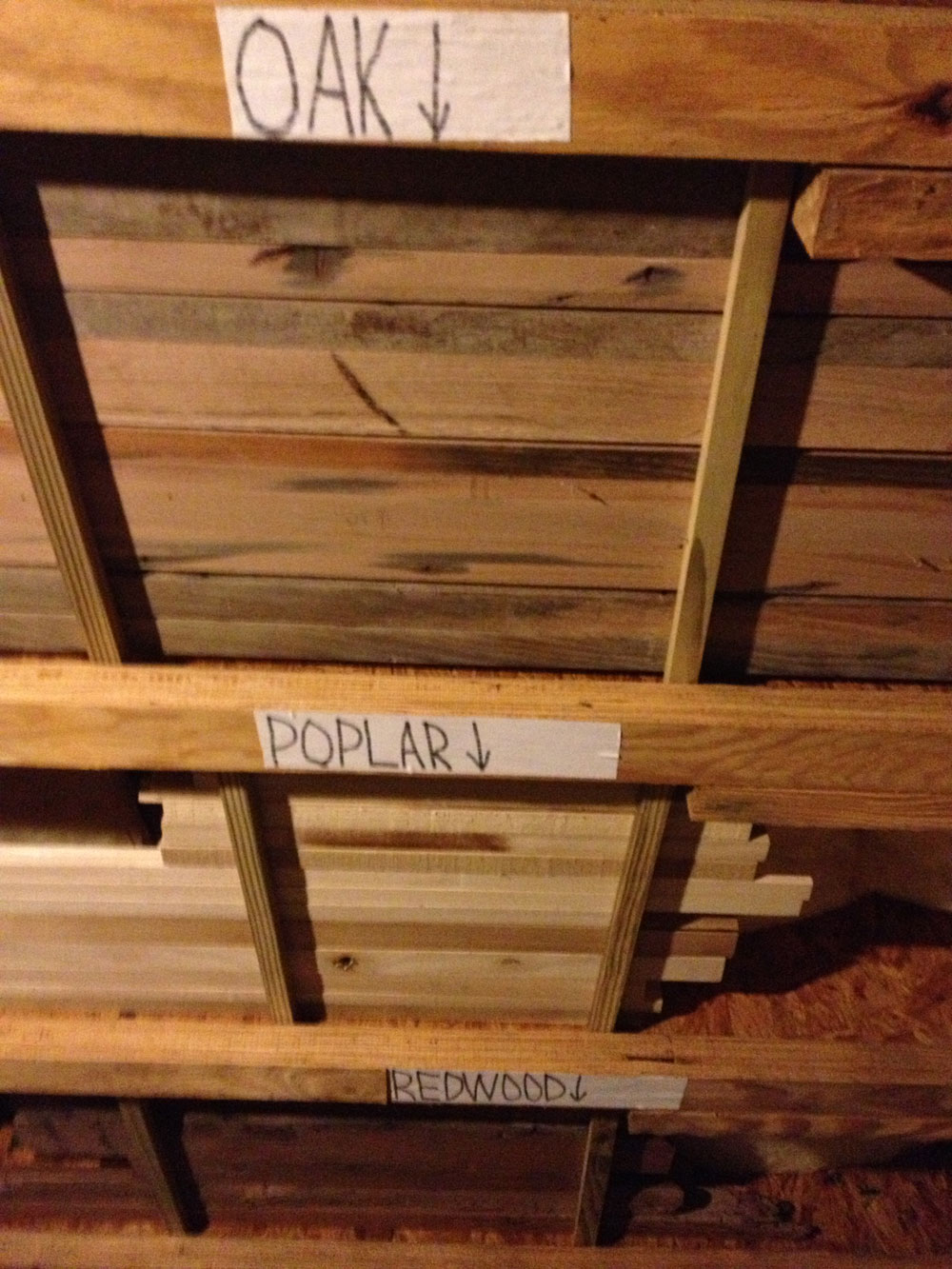
At first, when I had only a few rafters in use, it was easy to look up and see what kind of scrap was stored where.  Now, I have 20 rafter storage spaces, necessitating an identification system.   Initially, I used blue painter’s tape, but the lack of contrast between blue tape and black Magic Marker made reading difficult, especially against the glare of ceiling lights. Two-inch adhesive tape (enter the tiny bit of cost) solves the problem, with excellent contrast between black and white.

Like your grammar school teacher said, “Neatness counts.” Take your time with lettering for a neater job and greater legibility.

Like your grammar school teacher said, “Neatness counts.” Take your time with lettering for a neater job and greater legibility.

I also use this free space for storing very long pipe clamps, garage door hurricane supports and anything else that will fit.

I also use this free space for storing very long pipe clamps, garage door hurricane supports, and anything else that will fit.

You’re not paying for “router pad,” are you? If so, CLICK HERE to learn how to get all you want FREE!

You’re not paying for “router pads” are you? If so, CLICK HERE to learn how to get all you want for FREE!

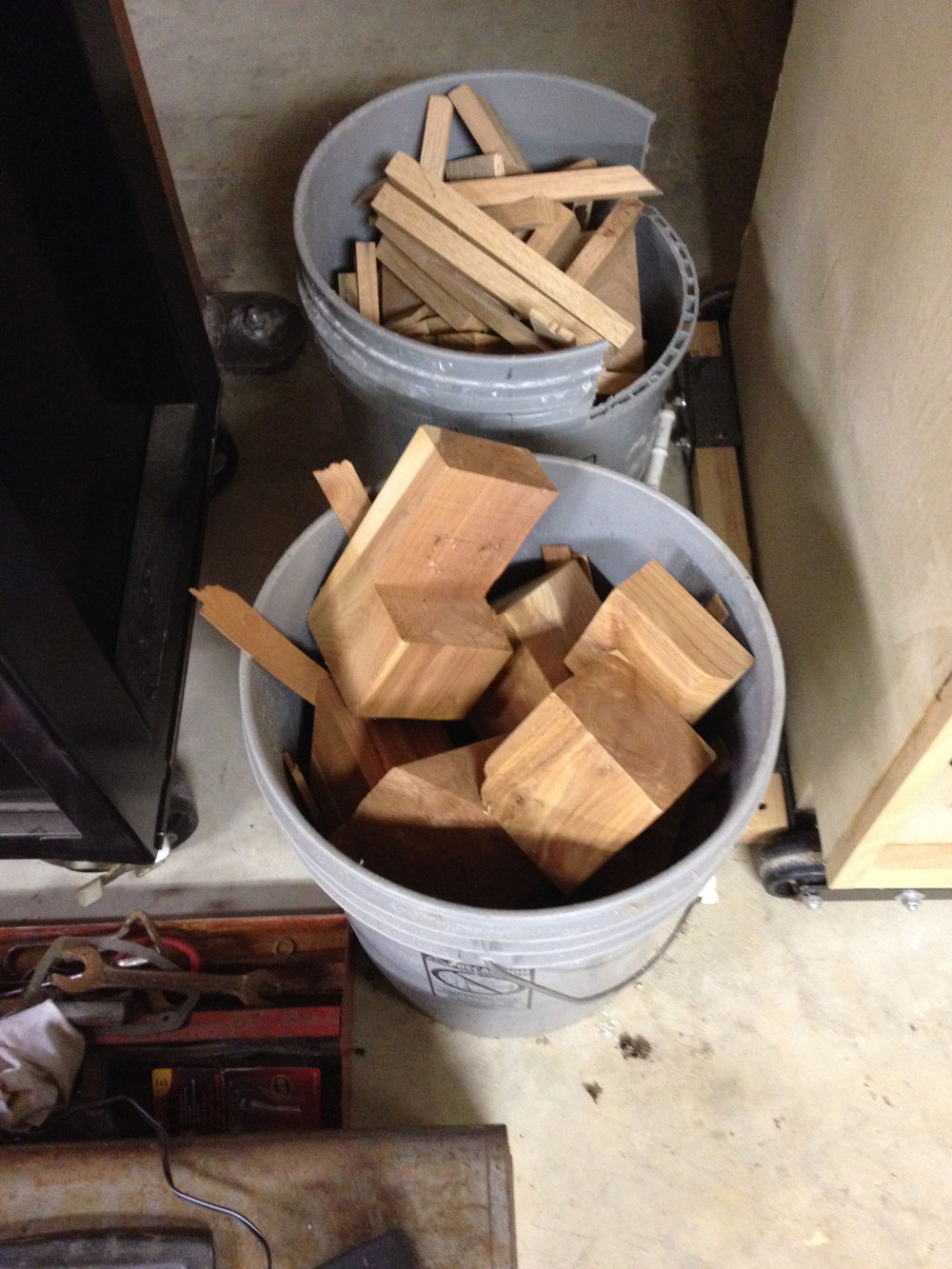
Some very, very small scraps are still worth keeping, but they won’t easily fit into or onto conventional storage.  For that, 5-gallon buckets are the cat’s meow.

This bucket holds all of my very small cedar scraps and stores neatly out of the way.

This bucket holds all of my very small cedar scraps and stores neatly out of the way.

Then, there’s the wild card scrap storage:  drawers salvaged from old refrigerators.  The vertical standards can be used to hang the drawers in their original fashion, or you can improvise by fashioning wooden runners to support the drawer edges.

While this storage does hang down below ceiling height, I chose an area where it didn’t matter. Also, if it ever presents a problem, it’s a simple matter to take it down.

While this storage does hang down below ceiling height, I chose an area where it didn’t matter. Also, if it ever presents a problem, it’s a simple matter to take it down.

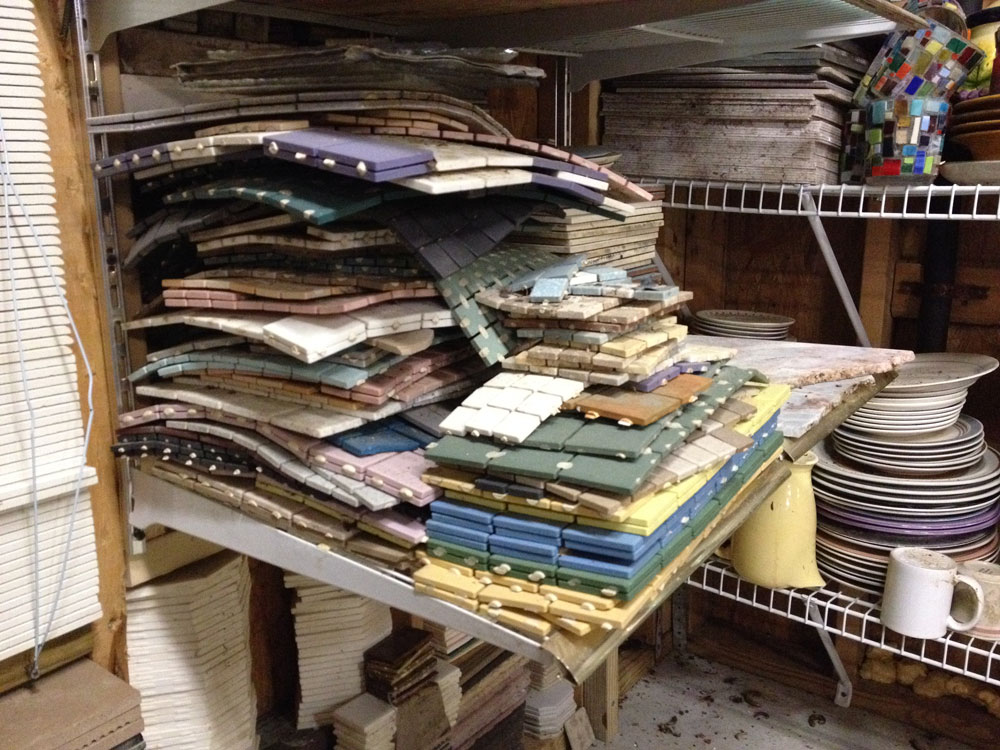
In my wife’s tile studio I used refrigerator shelves for storing some really heavy pieces. They are up to the job.

In my wife’s tile studio I used refrigerator shelves for storing some really heavy pieces. They are up to the job.

Jim Randolph is a veterinarian in Long Beach, Mississippi. His earlier careers as lawn mower, dairy farmer, automobile mechanic, microwave communications electronics instructor and journeyman carpenter all influence his approach to woodworking. His favorite projects are furniture built for his wife, Brenda, and for their children and grandchildren. His and Brenda’s home, nicknamed Sticks-In-The-Mud, is built on pilings (sticks) near the wetlands (mud) on a bayou off Jourdan River. His shop is in the lower level of their home. Questions and comments on woodworking may be written below in the comments section. Questions about pet care should be directed to his blog on pet care, www.MyPetsDoctor.com. We regret that, because of high volume, not all inquiries can be answered personally.

Feb 242015
 

Welcome to “Tips From Sticks-In-The-Mud Woodshop.” I am a hobbyist, not a professional, someone who loves woodworking, just like you do. I have found some better ways to accomplish tasks in the workshop and look forward to sharing those with you each month, as well as hearing your problem-solving ideas.

I can’t take credit for this tip but it’s too good not to share.  Sadly, I’m not clever enough to have thought of it.

I’ve faced this very situation before and the best I could come up with was to let my hole saw wobble around on the board until it “caught.”

The origin of the tip is Danny Lipford’s TV show, Today’s Homeowner.  Danny and his crew are based in Mobile, Alabama.  If you don’t know the show, you still might have heard Danny’s distinctive voice on commercials for “Glue Dots.”  Each Today’s Homeowner  show features a segment by Joe Truini called Simple Solutions.  And, almost every week I watch Joe’s tip and wonder, “Why didn’t I think of that?”

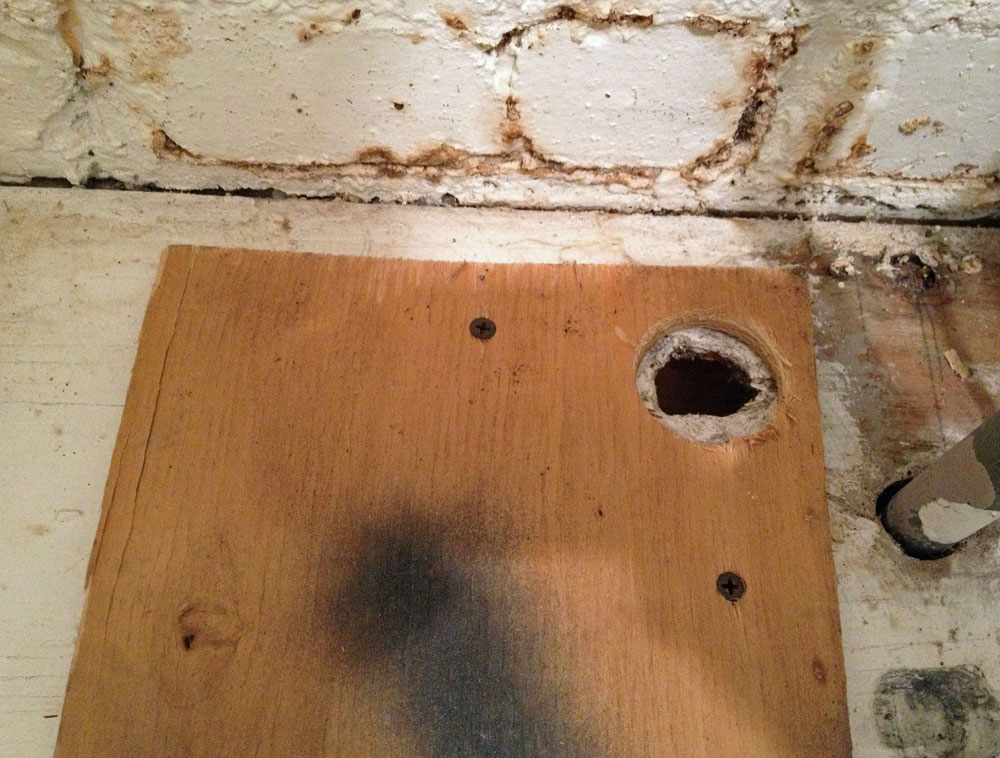
I have a hole in this plywood deck, but the new tubing that needs to go through it is bigger than the old one. How can I make the hole bigger without making a huge mess? (For demonstration purposes I drilled the hole in the top plywood first.

I have a hole in this plywood deck, but the new tubing that needs to go through it is bigger than the old one. How can I make the hole bigger without making a huge mess? (For demonstration purposes I drilled the hole in the top plywood first.

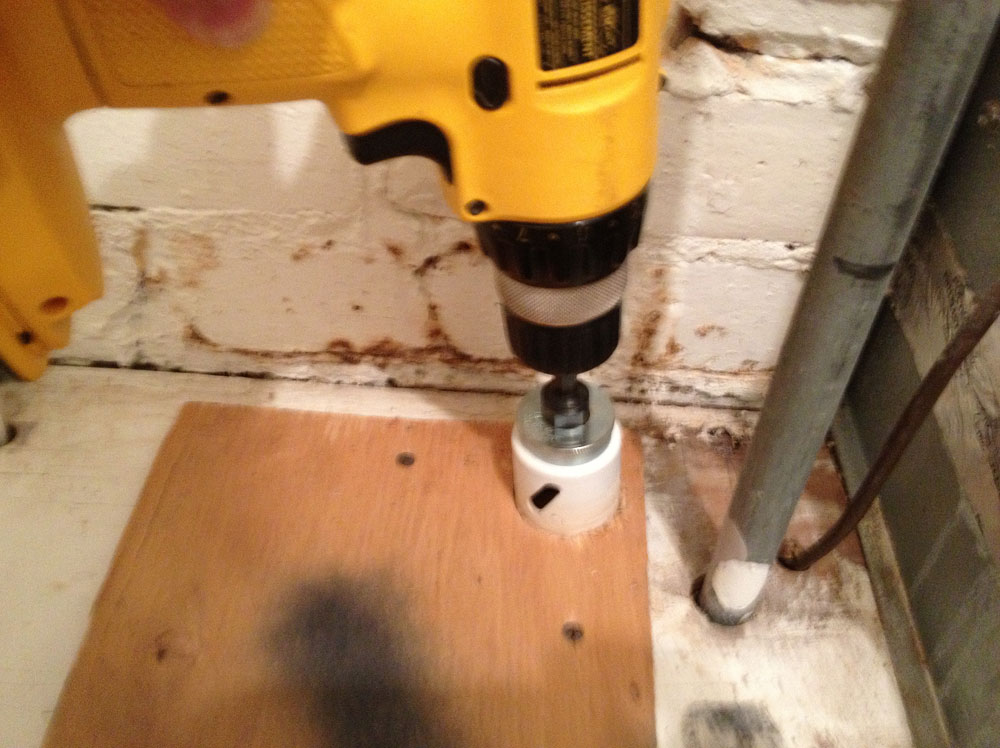
Joe says if you have a hole in a board or piece of plywood that you need to be larger, rather than “booger up” the board using my technique, or take a jig saw to the hole to enlarge it, start by attaching a piece of plywood to the original board with the too-small hole. You can attach it with screws if the screw holes won’t show, or use double-stick carpet tape.  If the exact location of the hole doesn’t matter you can just approximate the center of the original hole, drill a pilot hole, change to the hole saw, and start drilling.  The guide bit on your hole saw will lead the hole saw into your attached plywood and straight through both pieces.

If, on the other hand, your hole has to be exactly concentric with the original hole, you have two options:  Option One, you can outline the old hole’s circumference onto the new plywood with a pencil or marking knife, separate the two boards, and then find the center of the marked hole on the plywood and drill the pilot hole.  Option Two is a little harder but potentially more accurate. Attach the two boards to each other, then find the center of the original hole.  The first technique may introduce error because you may not get the intact plywood back onto the target in exactly the same position it was in when you marked the circle.  If you’re dealing with a fixed stand, as I am in the accompanying photos, you need to lie on your back to mark the circle and find the center, then drill a tiny pilot hole from underneath (make sure you are wearing proper eye protection since the accompanying drill-bit shavings will be falling onto you).  Next, from the top, use the pilot hole you just drilled to guide your hole saw through both pieces.  This same technique will work if you use a spade bit to enlarge an existing hole.

Almost there! In no time the hole saw is through the plywood and into the decking with a nice, neat new hole!

Almost there! In no time the hole saw is through the plywood and into the decking with a nice, neat new hole!

Jim Randolph is a veterinarian in Long Beach, Mississippi. His earlier careers as lawn mower, dairy farmer, automobile mechanic, microwave communications electronics instructor and journeyman carpenter all influence his approach to woodworking. His favorite projects are furniture built for his wife, Brenda, and for their children and grandchildren. His and Brenda’s home, nicknamed Sticks-In-The-Mud, is built on pilings (sticks) near the wetlands (mud) on a bayou off Jourdan River. His shop is in the lower level of their home. Questions and comments on woodworking may be written below in the comments section. Questions about pet care should be directed to his blog on pet care, www.MyPetsDoctor.com. We regret that, because of high volume, not all inquiries can be answered personally.

Feb 162015
 

Everyone loves to get a new hand plane whether it is still sealed from a retail store, or happens to have over 100 years of work under its belt. Unfortunately, there is always a chance that something can happen to cause some accidental damage to the tool. Many types of damage are such that you can recover from them and again use your plane, but there are a few types of damage =that are game enders.

I’ve had a number of woodworkers over the years ask me what they could do to fix a number of different problems, so I’ll talk about a couple of the different types of damage that you may find on a previously owned tool, or that you may have already experienced yourself, and what I’d do next:

1.  “I thought that finishing nail was set low enough” or “I have a scratch on the sole of my plane that leaves a mark on the wood when I plane.”  –  This is a relatively easy fix, but it does require a little extra focus in the process. When I’ve had this problem on a plane’s sole, I’d get a sheet of either 100-grit or 150-grit ( or perhaps even 60-grit for a bit deeper scratch) along with my known-flat granite plate, but know that you can also use a piece of float-glass, a table saw’s table or anything else that is truly flat. If you don’t know it is actually flat then check before you start working so you can save a lot of extra work. I will either use a little tape to hold the sandpaper on my flat surface, or if I’m working on my granite plate I could just do a very light spritz of water and the surface tension holds the paper in place, or just use a light spray of adhesive. Before moving the plane to the sandpaper, make sure to wind the blade back into the body of the plane, 1/8” or so. You don’t want to have the blade hit the sandpaper, but you do need it in the plane and tensioned just like you work. It is important to pay close attention to the amount of pressure you apply to the plane and keep the pressure evenly distributed.

Depending on the plane’s shape, you may have no choice but to hold it by the tote and the knob. I prefer to hold it closer to the center of the body, if that is in any way possible. During my strokes on the sandpaper, I try to keep my shoulders above the plane at all times, so the pressure doesn’t shift towards the end of the plane closest to me. I also work the plane in the forward stroke only, and directly away from my hips! This seems to make it much easier to keep my body in tune with what I’m doing, and the straight forward movement is better for keeping the sole square rather than standing to the side of the plane and moving the arms across the body. I feel like I tend to get a little loose when working in both directions, and the arcing movement when moving the arms across the body can be very difficult to have an even removal of material.

No matter which grit of paper I start with, I usually work up through at least 220-grit, and then apply a little paste wax when I’m done. I also check to see if there are any remnants from the scratch at the end of the sole. There are times where the scratch started at, or ended at one end, and then ends up leaving a sharp section. If I find this is the case, I pick up one of my smallest smoothing files and lightly blend the problem area into the surrounding area. Even if the scratch at the toe won’t damage the wood, blending out any sharp areas will feel better when you handle the plane. While checking the toe/heel do the same thing at the mouth of the plane just to make sure nothing is overlooked.

With the plane’s body back in working condition, make sure you examine your blade for any damage. Depending on the orientation of the plane’s stroke to the foreign object, you may also have a nick in the blade. If you do find there is damage to your blade, assess whether it is small enough so you might work it out fairly quickly on your 1000-grit stone. If it’s deeper than what you could expect to remove in less than 5-minutes, I’d either move to my coarse diamond plate, or to my powered grinder. If it does require some time on the powered grinder, remember to dress your wheel first so that it cuts as quickly and as cool as possible. Put on your eye protection, no matter if it is just a quick grind, or an extended session! Use a very light touch when grinding and don’t spend too much time directly over the nicked section. Work in from one side and grind all the way across to the other side. If your blade is square, work to keep it square during your grinding. If you want a visual to help with that portion, using a black Sharpie and with a good square, mark a line all the way across the back of the blade, just behind where the nick ends. With this you can tell if you are accidentally applying more pressure to part of it, or if the metal between the edge and your line is consistent. After you finish grinding, it’s time for your usual sharpening routine to get your plane back into service.

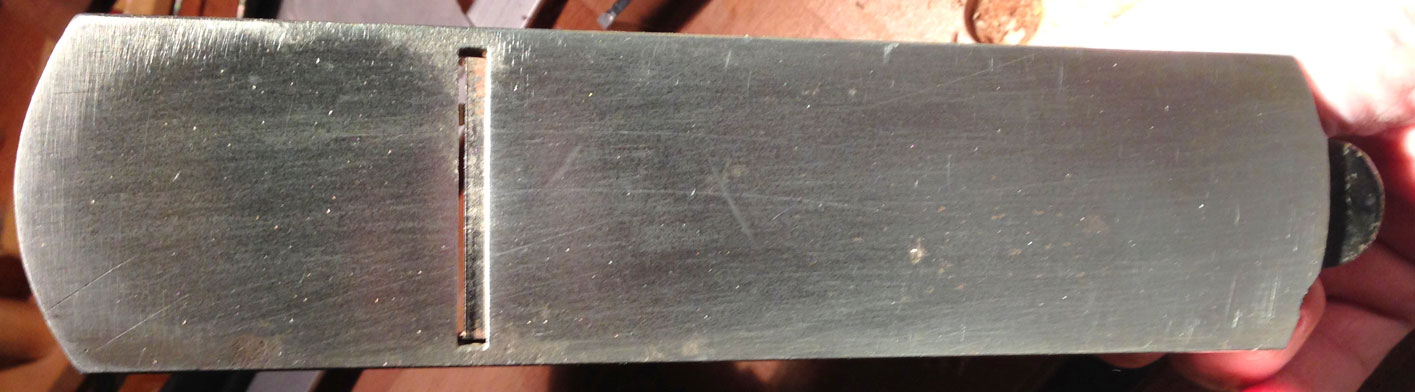
2.  If you buy, have, or are given an older used plane and it just won’t work, this might help: I’ve seen some used planes that no matter how incrementally it was adjusted, it would go from nothing at all to taking a chunk out of the board in the very slightest of adjuster movements. While there are planes that you can tell from across the room that the sole isn’t flat, there are others that look decent enough to the naked eye. If your plane is behaving like this scenario, take a dark marker and cover the sole of the plane. Take a piece of 220-grit (or higher) sandpaper and put it on a known flat surface (see above). With the blade in the plane (backed up so it can’t hit the sandpaper), apply light, even pressure to the plane and make one pass across the paper. Take a look at the sole of your plane. What you are likely to see is a couple of areas showing signs of touching the paper. **Note:  If the areas that were touching show all the way across at the toe, immediately in front of the blade, and at the heel then the sole is not the problem. While most new quality planes would touch on all parts of their sole, the previous example will work just fine and is the standard setup for Japanese wooden planes.

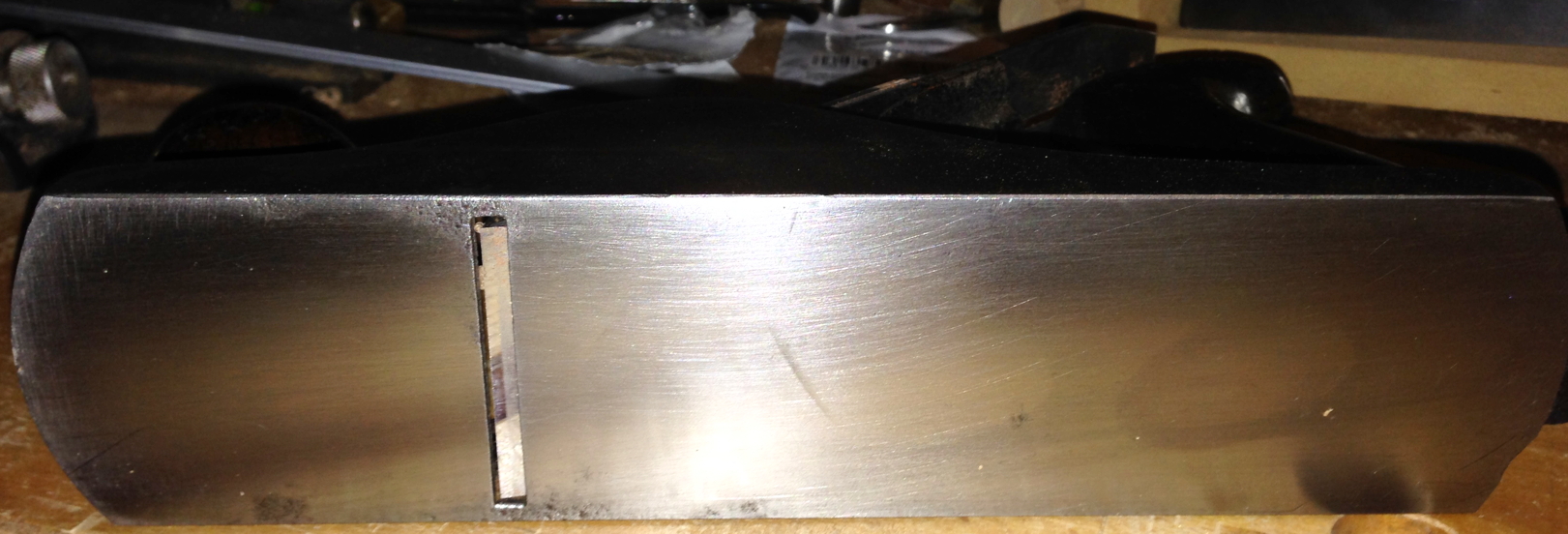
Now if the sole has a different pattern of removed ink, you will likely need to work on flattening the sole of your plane. Depending on how severe the issue is on your plane, you can decide if it is worth your effort. I’ve actually seen an old plane that I was told they believed had been in a fire. While I didn’t measure the distance of the toe and heel out from the mouth, I’m not sure it would have had a lot of metal left at the two ends if they had tried to flatten it or had a machinist mill away the high areas. But, assuming your plane’s sole is reasonable, you can start with as coarse of a grit as 60-grit (if you have quite a bit to remove) or perhaps 100-grit (if it isn’t too dramatic). Either way you go, just make sure to follow the same advice as I gave in #1 above, pay close attention to the pressure you apply to the plane during your work, and have patience. When I was early in my woodworking, the times that I made the biggest mistakes were mostly due to my lack of patience. I’d start speeding up to make the end come quicker, only to find I made more work for myself and was farther from the finish line. And while I’m sure that most of you who are reading this will probably want to work the sole until it dead flat and perfect, below is a photo of one of my elderly Stanley #3 planes. This plane works beautifully, and can keep up with many of the new quality planes, even though it’s sole looks like this:
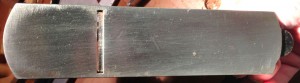
You can see the toe portion of the plane and how the outside edges are all lower than the mid-section
You can see the toe portion of the plane and how the outside edges are all lower than the mid-section

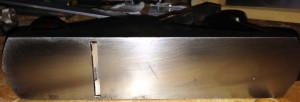
From this view it is easier to see the rough area on each side of the mouth. It is a lower surface so it doesn’t impact the cut. I have put a radius on the blade so it stops cutting there, too.
From this view it is easier to see the rough area on each side of the mouth. It is a lower surface so it doesn’t impact the cut. I have put a radius on the blade so it stops cutting there, too.

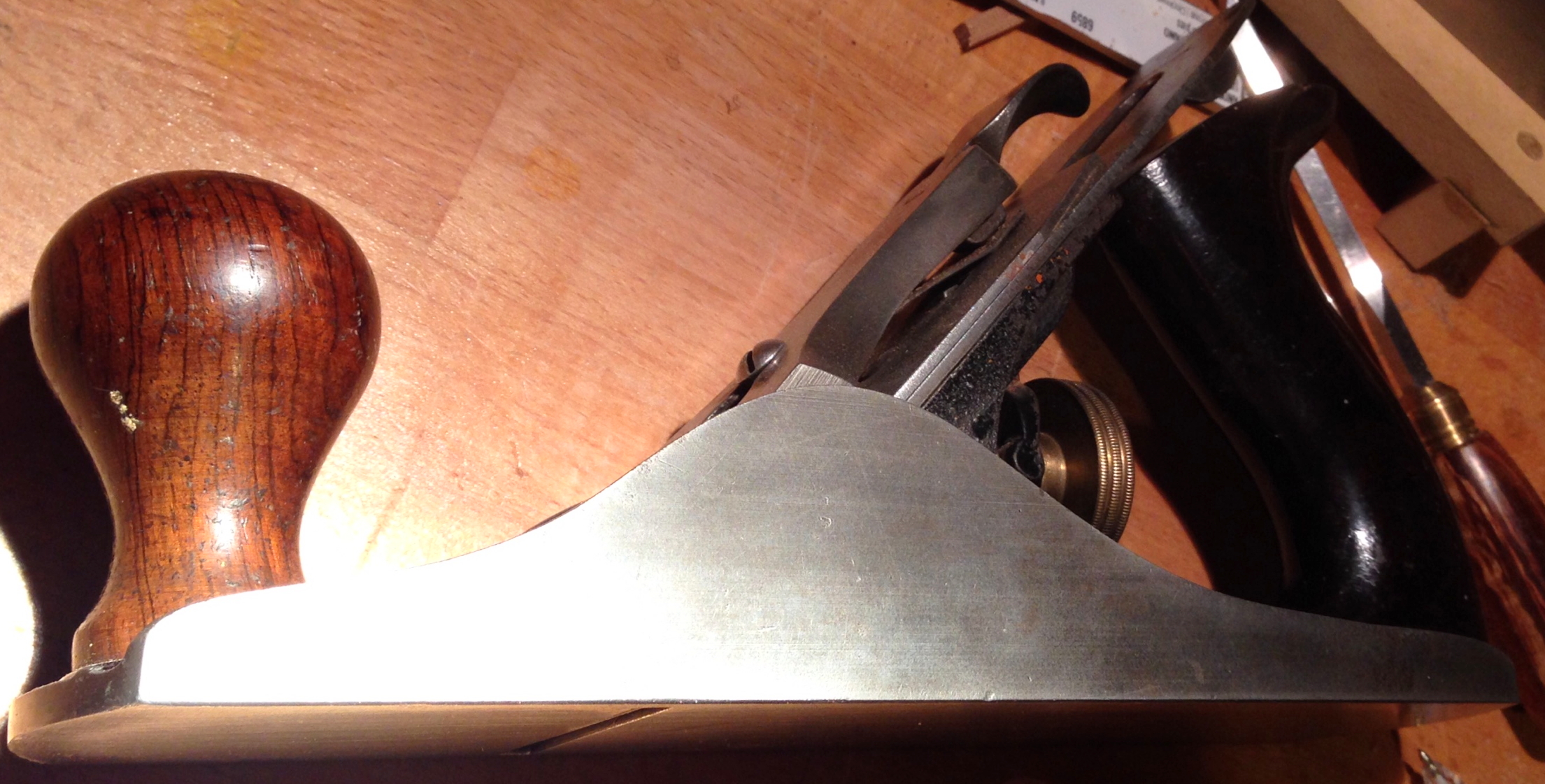
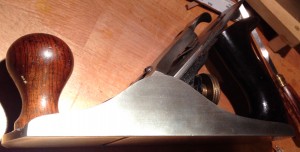
A different view so I could show the beautiful knob on this ca 1905 or so plane.

A different view so I could show the beautiful knob on this CA 1905, or so plane.

Part of the reason it works as well as it does, without having the full sole flat, is that it has enough of the sole flat(ish). When I first got it home years ago, my inclination was to put in the work to make the sole perfect. Well, luckily I decided to sharpen the blade and do a full setup. Then I tried it and wow! I immediately saw it was unnecessary for me to spend my time, energy and even my supplies (like my sandpaper) to make it take a nice, fine shaving. It would seem that there are different levels of perfect. Some are perfect looking, but some that don’t quite look as good can still be perfect workers! Decide what part is the most important for you and go for it. Remember, everyone is different in how they get their enjoyment.

I hope that one of these tips will help your planes. Even though I wrote this with the slant of an older plane that has some problems vs. a new perfect plane, these tips apply to all planes.

I will have other “tip” entries in the near future. Stay tuned.

As always, let me know if you have any questions or comments. Thanks for checking out the blog.

Feb 132015
 

This is the 3rd part of a 3 part series.

To read Part 1, CLICK HERE

To read Part 2, CLICK HERE

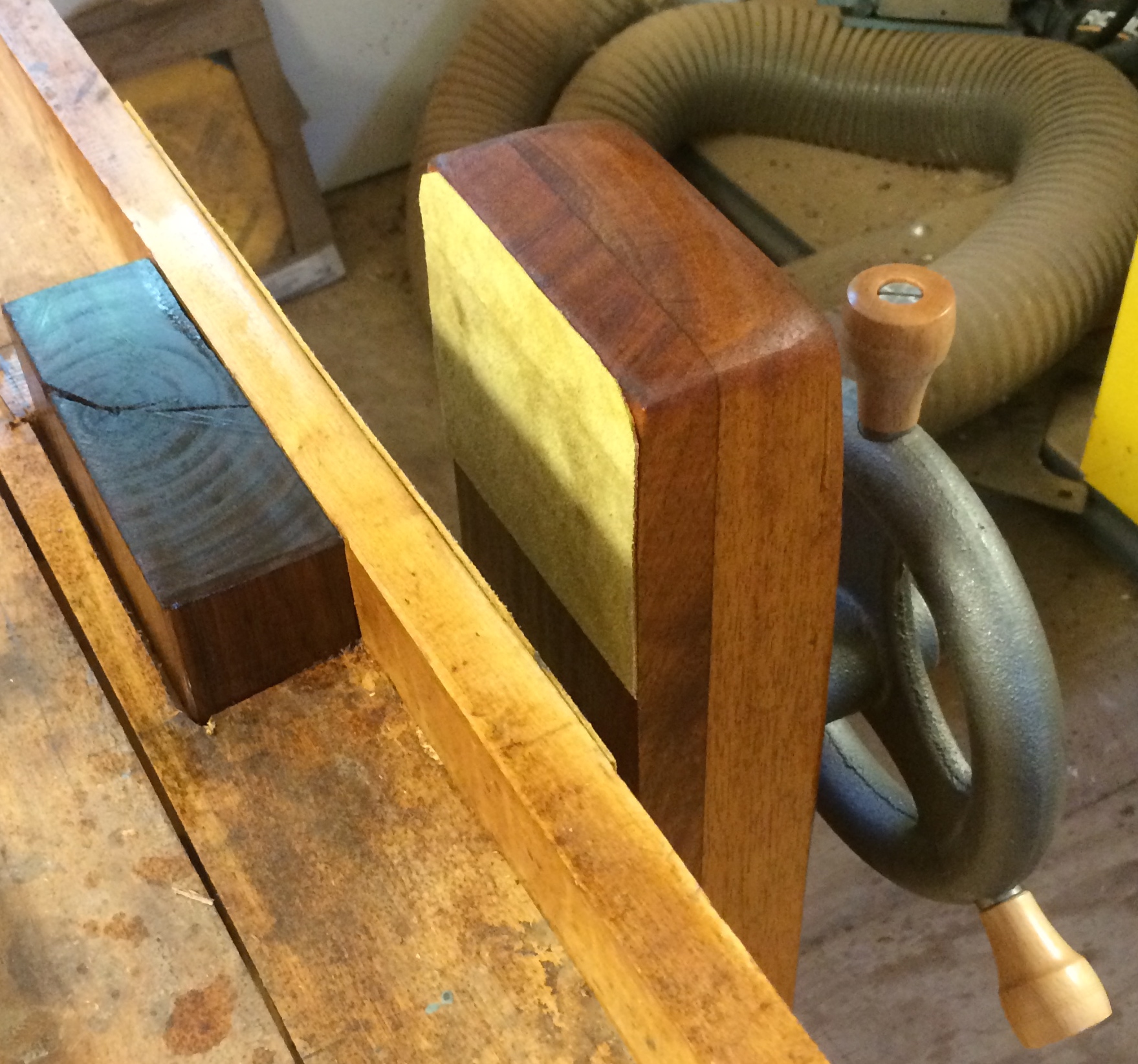
Yay!!! My new Leg Vise is complete.  I added two coats of finish and the suede pad and that boy is ready to work.

Suede and Finiish

Suede and Finish

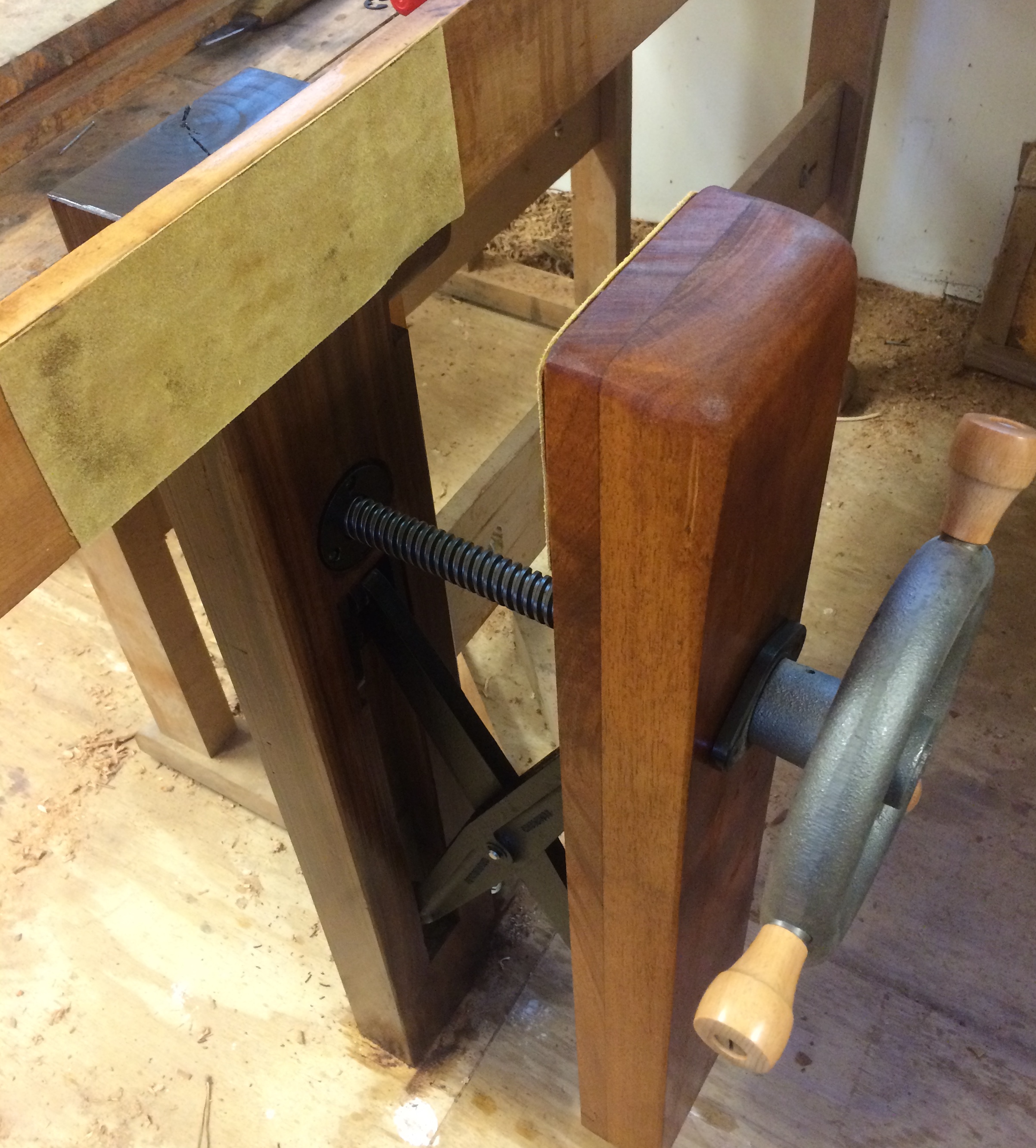
If you have been following my installation, there is a Part 1 and a Part 2 and this is the last one.  To review, I picked out the hardware I needed after using the Flow Chart in Part 1 and then had to adapt the vise to the skinny legs of my bench.  Using some old pieces of lumber from the shop (who else would have a thick piece of air dried walnut just lying around?) I made the pieces I needed and then cut the mortises into them for the criss cross piece. I added the hardware and the wheel and it works like a champ.

Suede and Finish Redux

Suede and Finish Redux

Funny, I almost missed the suede in the box. I thought it was just packing material and I almost threw it away. I cut it to fit and glued it to the face of the vise and the side of the tool tray and it looks good.

I don’t mind telling you, I am so proud of this thing. It is actually fairly easy to install  — once you have done it.  I read the directions from Benchcrafted’s web site many times because they can be a little bit confusing. If I were to do it again, I bet I could do it in less than a day.

In fact, to really appreciate this leg vise, look at this very short video. No drooling!

CLICK HERE to find out more information on the Benchcrafted Leg Vise and to purchase your own.