Highland Staff

Apr 152015
 

My son thinks I’m a little bit strange sometimes.  He calls me often (partially to see if I’m still living), but when he called today, I told him I was in the shop testing my new wood clamps on the old bath scale.  He says, right, sure you are.  I bought a new bath scale and I thought with nothing to lose, I could use the old scale to see how much pressure clamps could generate.
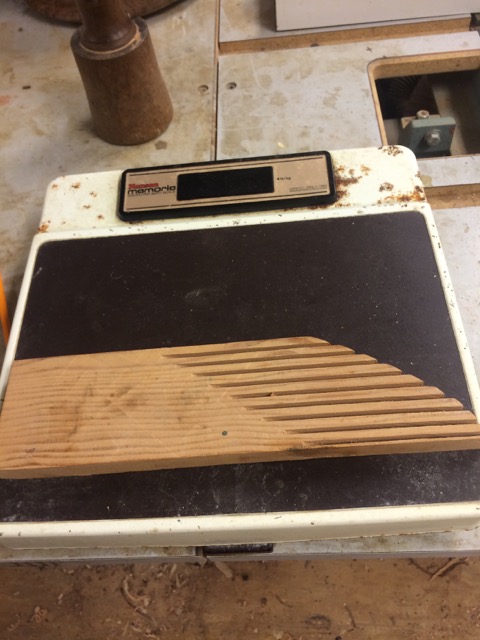
Testing Setup

Testing Setup

I have some of the new Kreg Automaxx Sliding Bar Clamps from Highland.  I set up a sophisticated testing platform and a rigid test procedure to see what they would do in a head to head comparison with some of my regular clamps.  To check out the clamps, I simply clamped the scale to the saw table and read the weight on the scale.  I guess it could have been more scientific sounding if I had changed it over to kilograms, but you will have to live with pounds.
Cabinet-Maker's Clamp at 246 Pounds

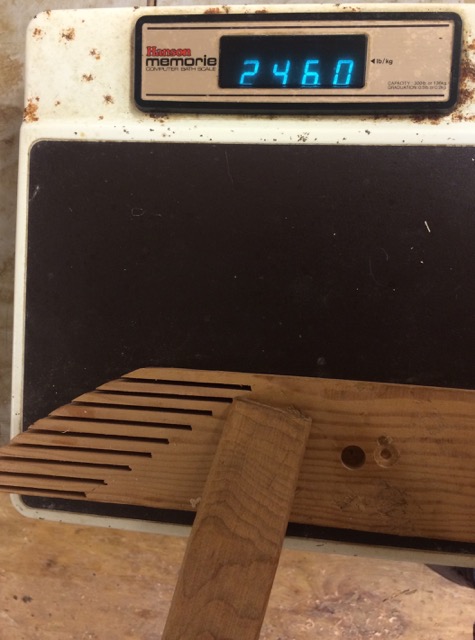
Cabinet-Maker’s Clamp at 246 Pounds

My scale is rated at 300 pounds and when I cranked down with the Kreg, I had no problem at all pushing it over the top.  I tried a traditional cabinet-makers screw clamp, a cheap pipe clamp, a nice Jorgensen clamp, and just for funsies, my new leg clamp on the work bench.

I see clamps advertised as 500 pounds clamping pressure, but I never knew how different clamps compared.  Do you really need 500 pounds — I think that may squeeze the glue out of the joint.  And if it takes that much pressure to pull the joint closed you may need to refine your hand planing technique.

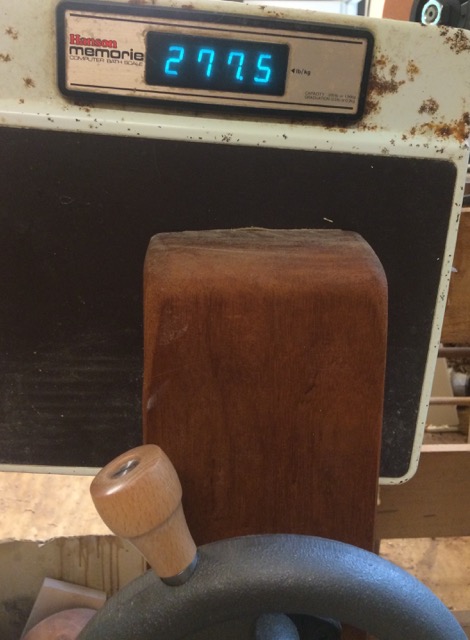
As you might expect, the cabinet-maker’s clamp took the most work to generate the high pressures.  The pipe clamp pushed it up there with no problem and the sliding handle at right angles is easy to twist.  Jorgensen clamps work just fine. And then my new leg vise hit 277 pounds without even cranking it down good and hard.
My New Leg Vise with Scale Clamped

My New Leg Vise with Scale Clamped

Kreg makes some good stuff, including my router table from Highland.  These Automaxx clamps are made like vise-grip pliers, but the unique feature is that you can adjust the grip to a pressure you like and then leave them set to that value.  To adjust the pressure, there is a little screw inside the handle.  If you back that screw off completely, the pressure goes all the way up to an error message on my scale, i.e., easily over 300 pounds.  If there is a problem, it is when I back the screw off completely, my hands will not fit over the handles and I could not close the clamp.  The way to use these things is to find that right spot and then leave it there — they are designed that way.
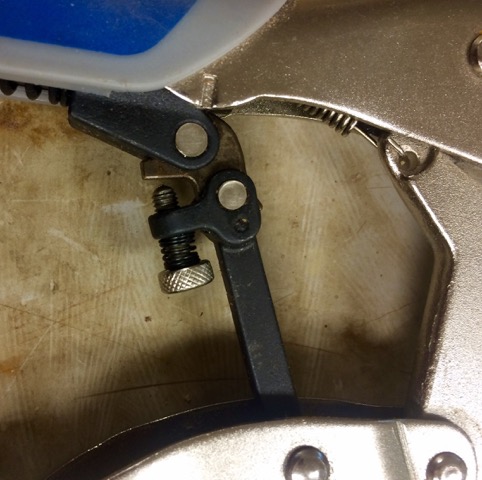
Adjustment Screw in Center of Handle

Adjustment Screw in Center of Handle

Kreg definitely makes some sweet clamps! Click here to get some of your own.
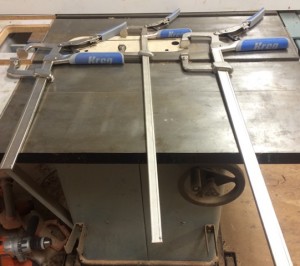
Kreg AutoMaxx Sliding Bar Clamps
Kreg AutoMaxx Sliding Bar Clamps
Apr 092015
 

Have you ever tried traditional woodworking? If yes, you may think the process was way too long and boring, and asked yourself why you did that when you could have use power tools. Well I’m going to tell you 6 reasons I prefer it and why I think everyone that enjoys woodworking should try it out and discover the magical of hand tools.

1. The price: It is cheaper to buy hand tools than power tools, and you know it! You could have bought a $10 coping saw rather than a $500 band saw to do the same job. Same thing goes for the drill press, table saw, planer… I’ll let you calculate how many thousand bucks you could save or make if you sell your power tools…

2. The hand tools you buy are going to last a lifetime and even longer if you take care of them. Imagine your grandchildren using your hand plane to make their workbench! Owning such a heritage tool is a lot more inspiring than owning a machine that only last 10 years. And the skills you’ll acquire to maintain the edge of the tool or the tool in general just can’t be bought.

3. The exercise you get while using hand tools is also beneficial for you. You know the benefits of it and you know you need to do it, so why wouldn’t you include some in your hobby? Just try ripping a 4 x 2 x 6. Trust me; you won’t need to go to the gym if you do that all day long.

4. The noise! What do you prefer? The rhythmic sound of a hand saw or the loud noises of the table saw? You need to have a peaceful state of mind while working with wood so you don’t make mistakes, but the noises power tools make are just irritating, and if you don’t wear ear protection, you could do serious damage in the long run. Please, do yourself a favor and save your hearing!

5. Less power, so less injury. No one would like to lose a finger when they can avoid it, so why would you run such a risk? To save time of course! That’s why power tools were invented; to get the job done faster, but they come with their downsides…

6. Have you ever made something you were proud of, show it to your friends and just listen their compliments and admiration? You know that feeling and when you do everything by hand you feel it ten times more! What would you be the most proud of: A log cabin you made with a chainsaw in 2 weeks or a log cabin you made with an axe, saw, chisel and a gauge in 2 months? This is mainly why I’m still using only hand tools. Yes, it takes more time to do everything by hand, but the satisfaction of a completed project makes you forget it.

Again, the only downside of using hand tools is that it’s more time consuming than using power tools. But if you don’t sell your work, I don’t see any downsides to spending a little more time and getting the benefits of traditional woodworking.

The list goes on and I’m sure there are more reasons why traditional woodworking is better physically and mentally. I hope it was enough to convince you, and to motivate you to get started in traditional woodworking!

Justin has been woodworking since he’s 10 years old, and now, at 15 years old he aspires to make a living out of it. Having made multiple small and large projects from wooden spoons, to timber framed projects, he already carries quite a bit of knowledge.

Apr 022015
 
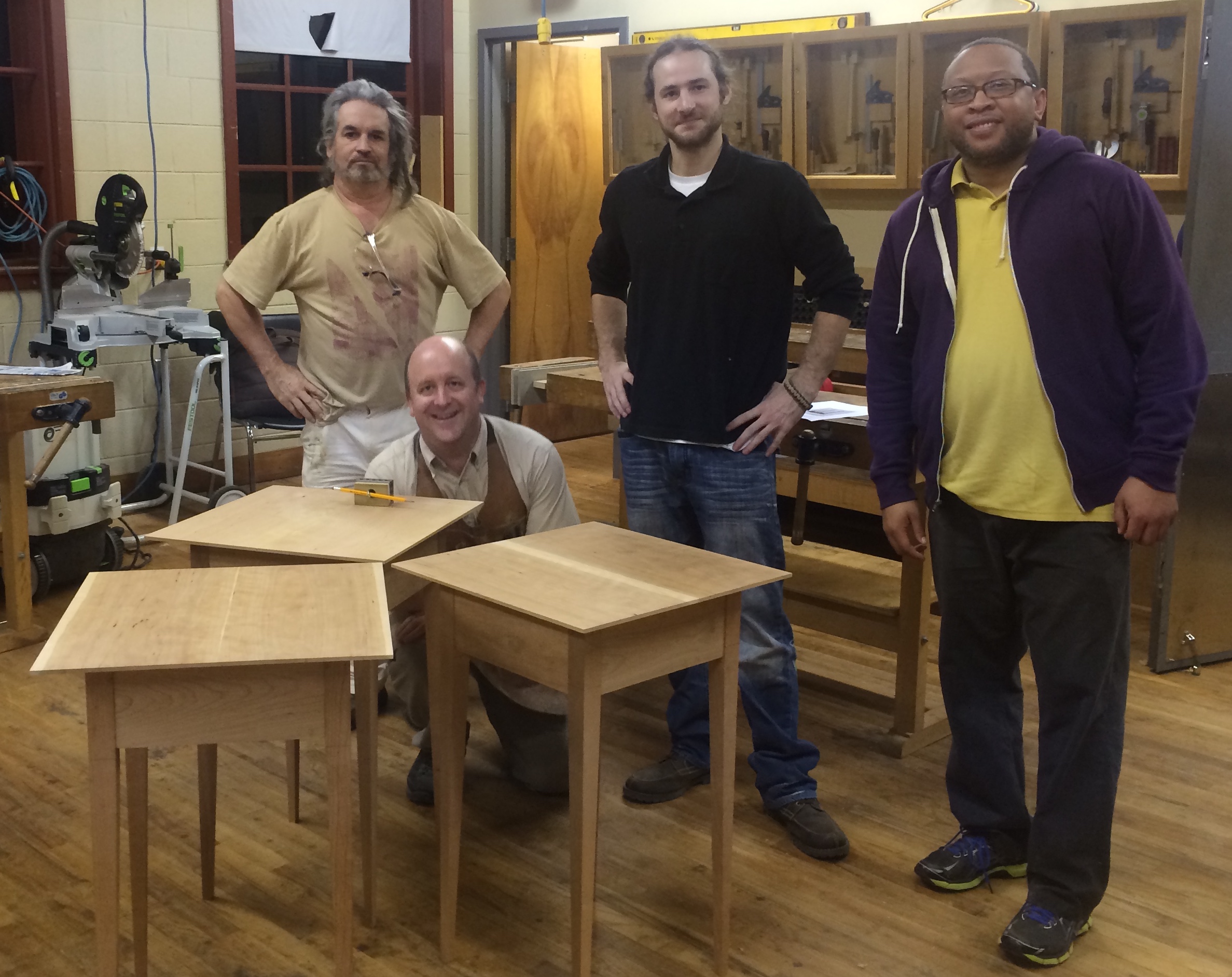
My Classmates and Instructor

My Classmates and Jim Dillon, the instructor of the Build a Shaker Style End Table class

Funny how when I go to a class at Highland, I feel like I’m going home.  I like the old workbench signed by the instructors who have taught in the classroom.  I like the shaving horses hung up in the ceiling trusses.  I like the pictures on the walls.  I like the glass front cabinets around the walls filled with precision tools all in order, ready to use.  I like the SawStop Table Saw ready to use.  I like having a bench just for me.  I like kindred spirits in the class with me.  I like not having to travel 60 miles round trip to get a nice piece of lumber to make a project.  I like that if I decide to buy a new tool, I can walk down one flight of stairs and buy it.  I like the instructor being right there to push me through the project.  I like taking home a nice finished product at the end of the class.

Taper Jig with Tage Frid and Sam Maloof watching us work.

Taper Jig with Tage Frid and Sam Maloof watching us work from up on the walls.

I like walking down to my home shop before I go to work to see if it still looks as good as I remember.  I like showing the project to my friends and my co-workers.  I like it when they want to touch it and smell it and they all want to take it home.  I like my end table, made by me for me to keep for a long time.  I like my signature on the bottom of my table.  I like classes at Highland, and if you have the chance to take one, I’m sure you will too!

Did I say I like my table?

Did I say I like my table?

Mar 312015
 

No Southern-fried Southern boy wants to be called a Yankee, but we share the characteristics of shrewdness and thrift.  Thus, each month we include a money-saving tip.  It’s OK if you call me “cheap.” 

Useful are even the smallest pieces of PVC pipe you begged from the plumbers at the construction site up the street.  If you, like me, live where humidity is generated for distribution to the rest of the country, you try to do everything you can to keep the wetness out of your shop.

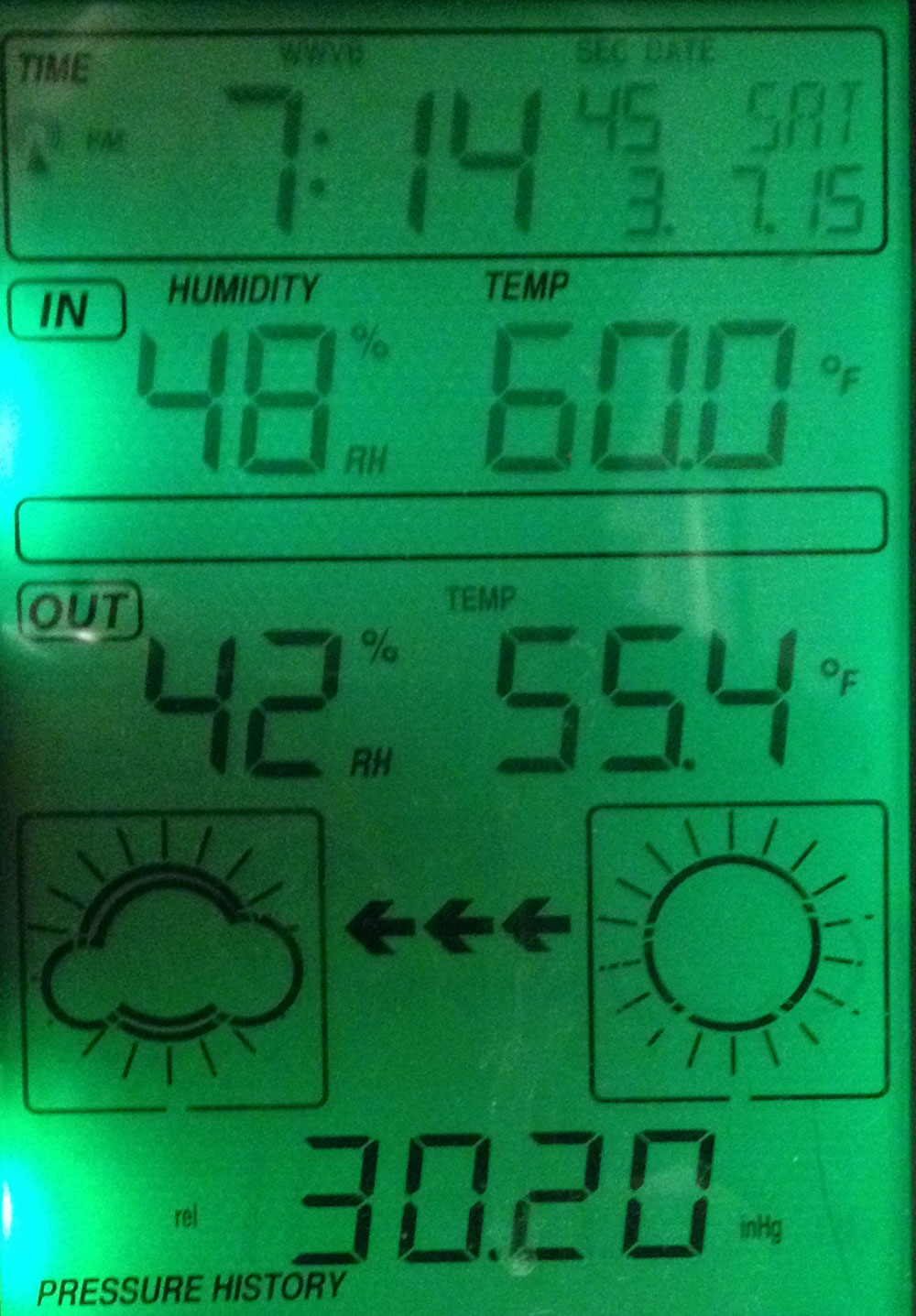
For example, I keep the doors and windows closed, except when the hygrometer tells me the humidity outside is near to or lower than the indoor humidity.

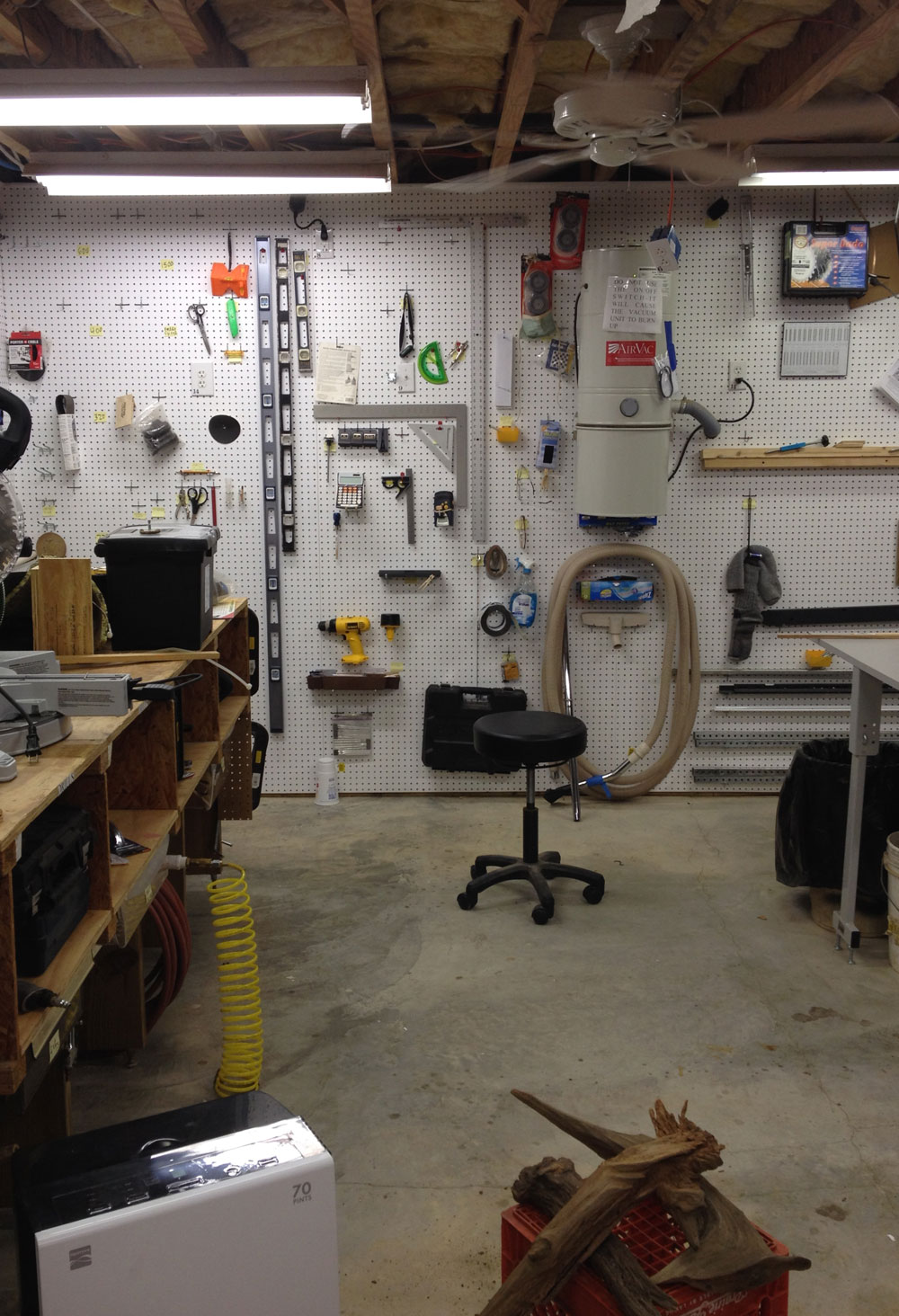
A high-capacity dehumidifier (lower left) combined with a ceiling fan (upper right) for circulation, centrally-placed among cast-iron power tools minimizes rust risk. As an added bonus, the brisk flow of dry air from the dehumidifier can air-dry wood in no time. The collection being dried in this photo consists of boscoyos, Cajun French for “cypress knees.”

A high-capacity dehumidifier (lower left) combined with a ceiling fan (upper right) for circulation, centrally-placed among cast-iron power tools minimizes rust risk. As an added bonus, the brisk flow of dry air from the dehumidifier can air-dry wood in no time. The collection being dried in this photo consists of boscoyos, Cajun French for “cypress knees.”

When the north wind brings in dry air, take advantage of the opportunity to air out the shop. Today is such a day.

When the north wind brings in dry air, take advantage of the opportunity to air out the shop. Today is such a day.

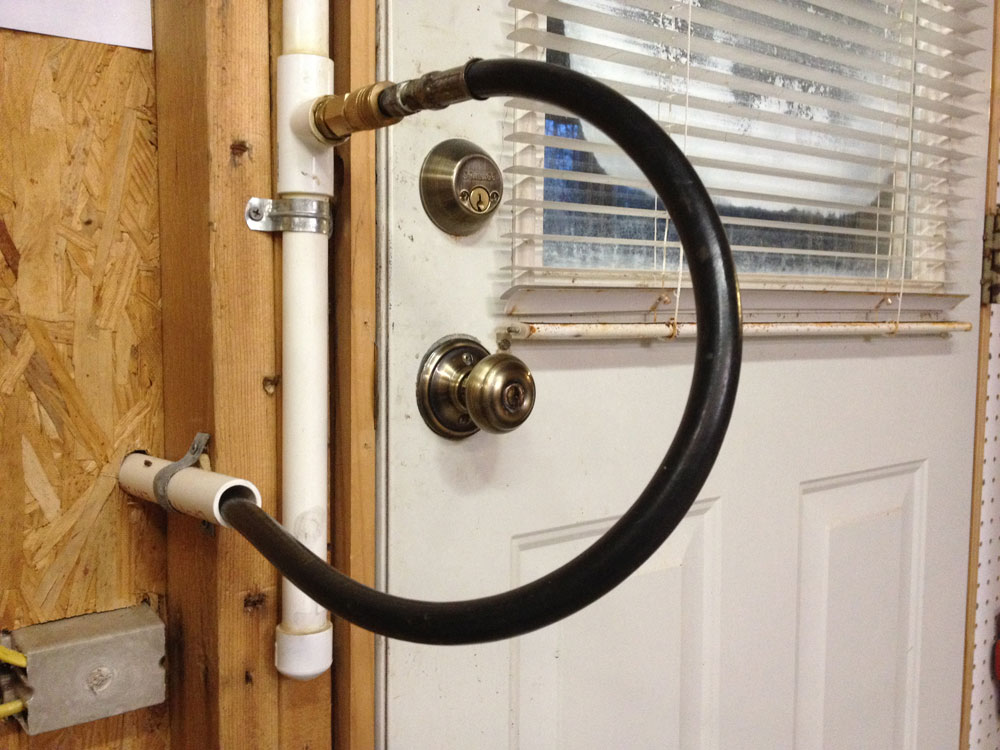
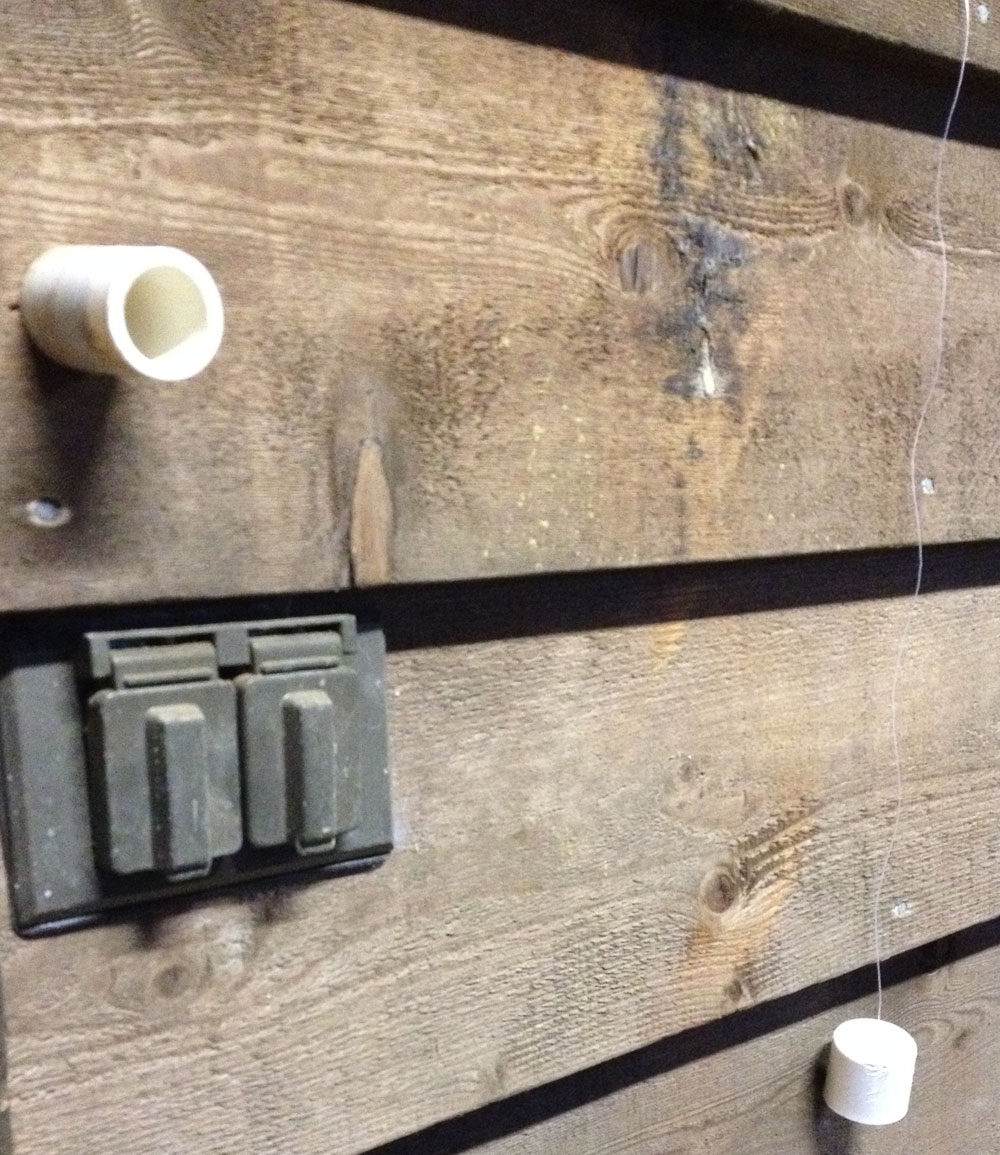
Sometimes you need to run a power cord or air hose outside, necessitating an incompletely-closed door or window.  Instead, you can drill a hole through the wall exactly the outside diameter of a piece of PVC pipe which has an inside diameter capable of allowing passage of your cord or hose.

When drilling your hole, make a test hole in scrap first to ensure the bit you choose will deliver a tight fit. Asking your wife before drilling through the wall is optional. Sometimes it’s easier to get forgiveness than permission.

When drilling your hole, make a test hole in scrap first to ensure the bit you choose will deliver a tight fit. Asking your wife before drilling through the wall is optional. Sometimes it’s easier to get forgiveness than permission.

Because I do a lot of sanding outdoors, and I like to have compressed air to blow away sanding dust from my project, I use this little passageway for the air hose, allowing the door to stay closed.

Although this wall is mostly protected from rain, I angled the hole down toward the outside so that any rainwater that comes this way can’t go indoors.

Although this wall is mostly protected from rain, I angled the hole down toward the outside so that any rainwater that comes this way can’t go indoors.

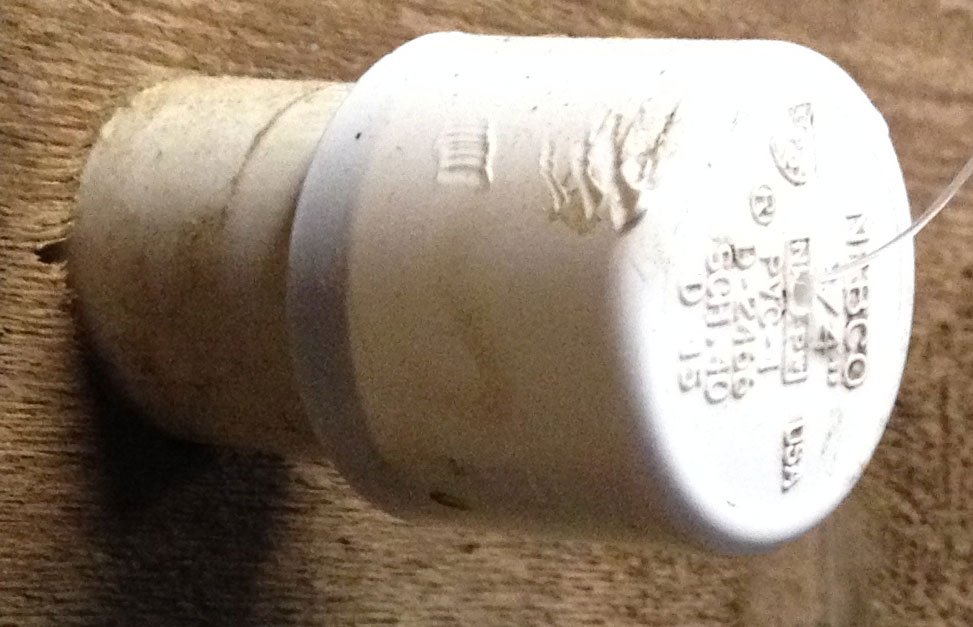
A 50-cent PVC cap keeps out Mr. No-Shoulders, as well as any other unwelcome visitors.

A 50-cent PVC cap keeps out Mr. No-Shoulders, as well as any other unwelcome visitors.

Mr. No-Shoulders, for those who have not yet made his acquaintance, or don’t know him by this name.

Mr. No-Shoulders, for those who have not yet made his acquaintance, or don’t know him by this name.


Jim Randolph is a veterinarian in Long Beach, Mississippi. His earlier careers as lawn mower, dairy farmer, automobile mechanic, microwave communications electronics instructor and journeyman carpenter all influence his approach to woodworking. His favorite projects are furniture built for his wife, Brenda, and for their children and grandchildren. His and Brenda’s home, nicknamed Sticks-In-The-Mud, is built on pilings (sticks) near the wetlands (mud) on a bayou off Jourdan River. His shop is in the lower level of their home. Questions and comments on woodworking may be written below in the comments section. Questions about pet care should be directed to his blog on pet care, www.MyPetsDoctor.com. We regret that, because of high volume, not all inquiries can be answered personally.

Mar 302015


Do you, like me, find it annoying when woodworkers find fault with this or that style clamp?

One of my favorite online woodworkers/podcasters recently said, “When I first started woodworking I bought a ton of C-clamps, mostly because they were cheap.  Now I wish I had that money back.  I never use them anymore.”

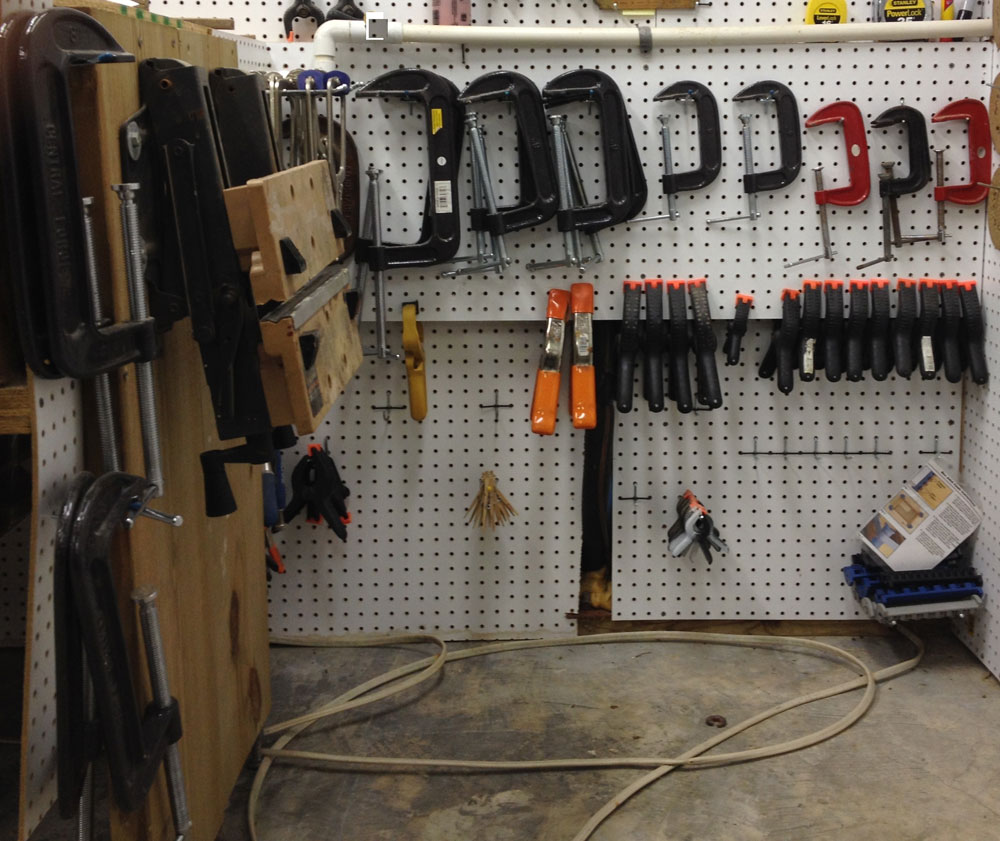
I respectfully disagree.  I find C-clamps to be exceedingly useful.  As you can see from the accompanying photo, I have a ton of them, in all sizes.

From 4" to 12" my C-clamps see a lot of action. A 12" C-clamp can apply so much pressure, it will open a coconut. Spread that pressure out with a caul and you have a clamp with a lot of reach combined with a lot of power.

From 4″ to 12″ my C-clamps see a lot of action. A 12″ C-clamp can apply so much pressure, it will open a coconut. Spread that pressure out with a caul and you have a clamp with a lot of reach combined with a lot of power.

Like most tools, there are situations where they are perfect, and situations where they are useless.

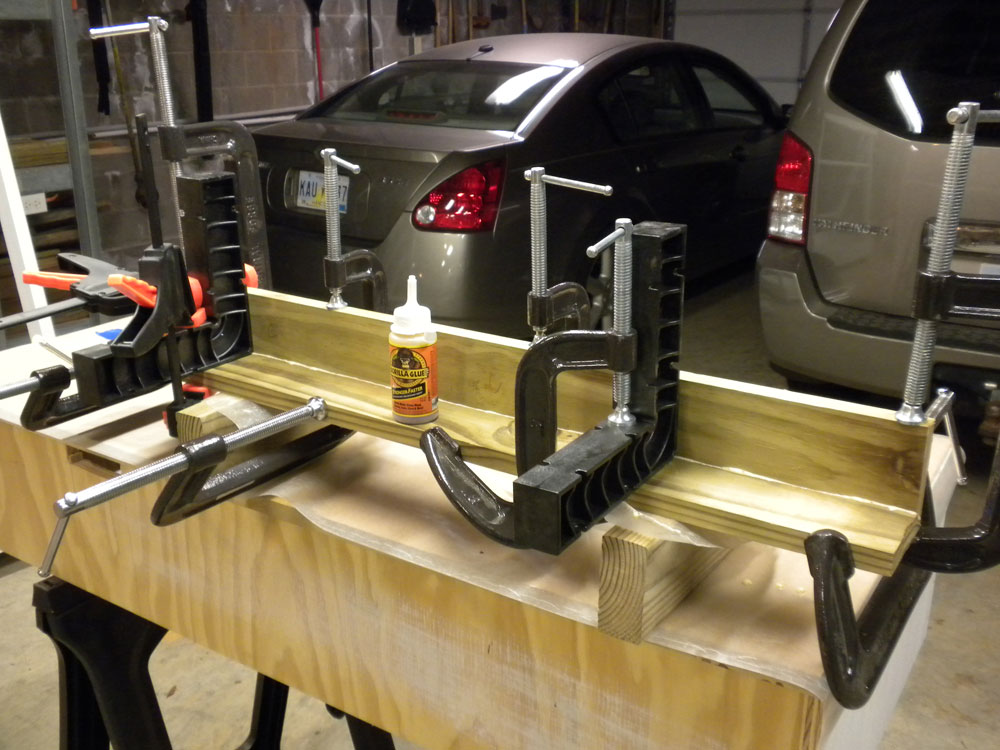
C-clamps can apply an amazing amount of pressure for minimal cost. Use a caul to prevent marring your work. There isn’t a clamp in my shop that could have done this job as well.

C-clamps can apply an amazing amount of pressure for minimal cost. Use a caul to prevent marring your work. There isn’t a clamp in my shop that could have done this job as well.

It is also not unusual to hear woodworkers putting down pipe clamps, but, they have their place and like my imported C-clamps, you can’t beat the price.  Some brands of pipe clamp heads, also called “jaws,” come with a nifty spiral spring-wire to protect the threads on the distal end, the end opposite the head.  While it’s not necessary to even have threads on that end, it is useful when joining two lengths of pipe together to make a really long clamp.

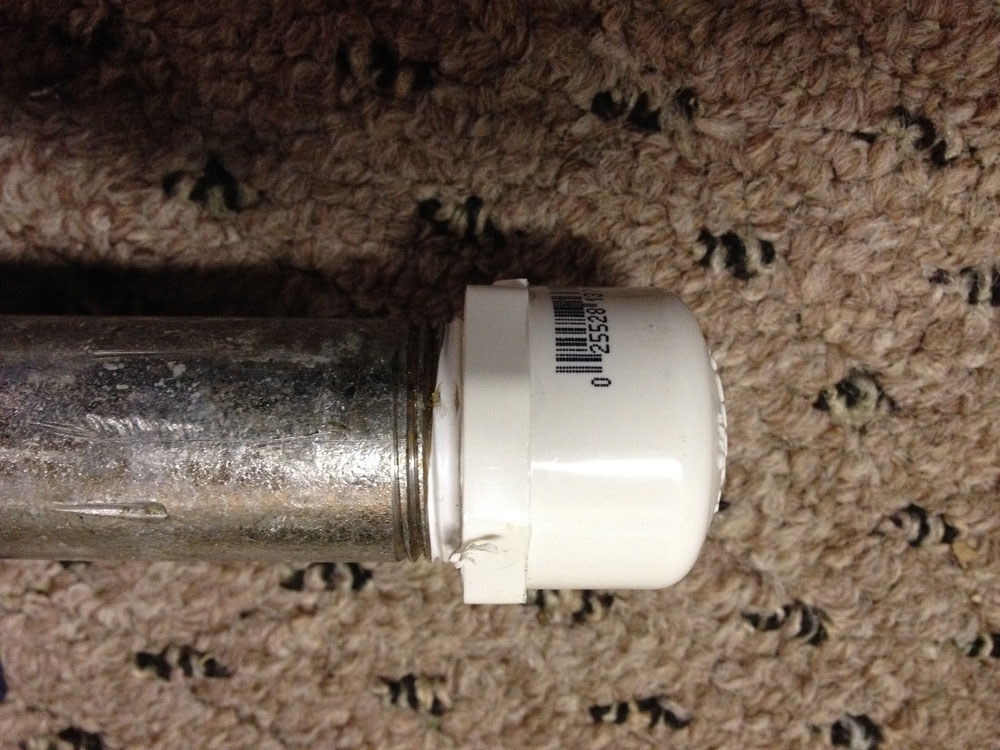
If the style of jaws you have doesn’t include that spring, you can inexpensively protect the threads with a threaded 3/4″ PVC cap.

It’s not terribly difficult to cross-thread the soft PVC on steel pipe. To make the cap easier to install and remove at a later date, wrap a layer or two of Teflon thread tape on first.

It’s not terribly difficult to cross-thread the soft PVC on steel pipe. To make the cap easier to install and remove at a later date, wrap a layer or two of Teflon thread tape on first.


Jim Randolph is a veterinarian in Long Beach, Mississippi. His earlier careers as lawn mower, dairy farmer, automobile mechanic, microwave communications electronics instructor and journeyman carpenter all influence his approach to woodworking. His favorite projects are furniture built for his wife, Brenda, and for their children and grandchildren. His and Brenda’s home, nicknamed Sticks-In-The-Mud, is built on pilings (sticks) near the wetlands (mud) on a bayou off Jourdan River. His shop is in the lower level of their home. Questions and comments on woodworking may be written below in the comments section. Questions about pet care should be directed to his blog on pet care, www.MyPetsDoctor.com. We regret that, because of high volume, not all inquiries can be answered personally.

Mar 272015
 

It’s a PVC kind of month.  And, because PVC has three letters in it, we’re having three tips this month instead of the usual two.  The French call it “lagniappe.”

Did you know that the University of Southern Mississippi has one of the world’s leading programs in Polymer Science and Engineering?  Just up the road from us in Hattiesburg, MS.  Yes, I am digressing, yet where would we be today without PVC and the other polymer plastics we use in every aspect of everything we do all day, every day?

The University of Southern Mississippi School of Polymer Science and Engineering has world-class research facilities. The program even includes studying ways polymers can be used in pharmaceutical delivery in vivo. Yes, U.S.M. also has three letters.

The University of Southern Mississippi School of Polymer Science and Engineering has world-class research facilities. The program even includes studying ways polymers can be used in pharmaceutical delivery in vivo. Yes, U.S.M. also has three letters.

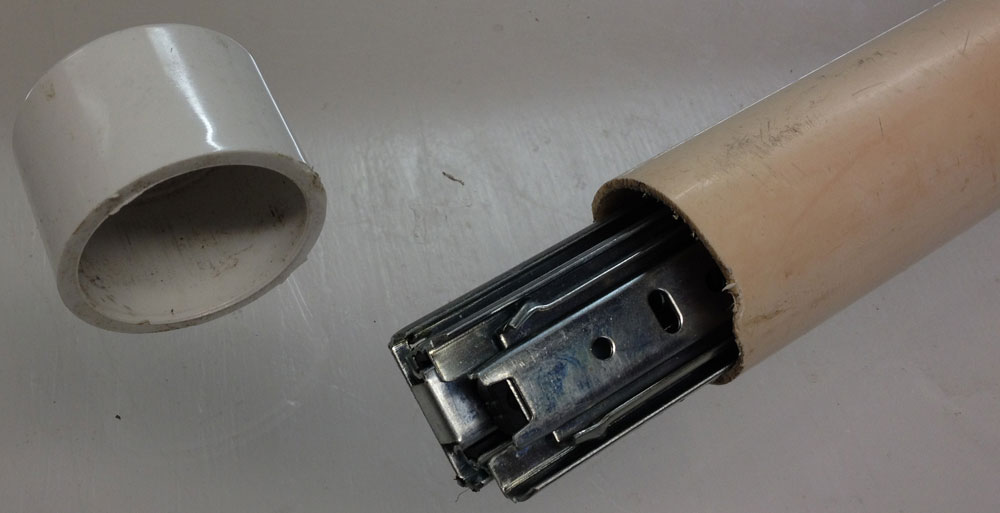
Short lengths of PVC pipe are inexpensive to purchase, and even cheaper if you ask a building site for their scraps.  If you keep a variety of diameters in two foot lengths, they make great storage for your projects’ drawer slides while you are sanding and finishing.  Because most related hardware comes pre-lubricated, any dust in the environment will be attracted to it and gum up the moving parts.  Get a couple of PVC caps at about a dollar each and your hardware is protected.  Let the caps sit in place with a friction fit (no glue) and you can work from either or both ends.

Free pipe and $2 worth of caps and your pre-lubricated drawer slides are protected from dust and trauma. OK, so it’s an ugly piece of pipe! Who cares? It’s free!

Free pipe and $2 worth of caps and your pre-lubricated drawer slides are protected from dust and trauma. OK, so it’s an ugly piece of pipe! Who cares? It’s free!


Jim Randolph is a veterinarian in Long Beach, Mississippi. His earlier careers as lawn mower, dairy farmer, automobile mechanic, microwave communications electronics instructor and journeyman carpenter all influence his approach to woodworking. His favorite projects are furniture built for his wife, Brenda, and for their children and grandchildren. His and Brenda’s home, nicknamed Sticks-In-The-Mud, is built on pilings (sticks) near the wetlands (mud) on a bayou off Jourdan River. His shop is in the lower level of their home. Questions and comments on woodworking may be written below in the comments section. Questions about pet care should be directed to his blog on pet care, www.MyPetsDoctor.com. We regret that, because of high volume, not all inquiries can be answered personally.

Mar 262015
 

“Set In Place” is the second “S” in 5S implementation. It encompasses the arrangement of tools and supplies in logical ways. But woodworkers who have taken a class with me and are utilizing the principles of 5S to make their shop time more efficient and fun know that we don’t just “Set In Place,” but we also learn to “Set Back In Place Clean & Ready To Go.” Putting a tool away when we are finished using it keeps our workspaces clear and uncluttered and allows us to work safely and concentrate more fully. Taking a few seconds to clean the tool before storing it keeps our storage areas clean and we save time because the tool is ready to use the next time we need it.

Thus when someone asks how my shop stays so neat and clean I repeat my 5S mantra, “Put tools and supplies away when you are through using them!” But there is allowance for one occasional exception to this rule.

When making cope and stick cabinet doors, I always start with the coping cut. Fiddling around with shaped backer boards to curb the blowout on a cope cut always seemed like a waste of time, so for me “rails/copes first” makes sense. When all the rails are made (and a few just?in?case extras) I change over to the sticking bit and make all the long grain cuts in rails and stiles at one time.

A shortage of clamps (who really has enough?) means I have to glue?up doors in batches. Recently I was gluing up the fourth large batch of a large door order and came to one where I had failed to rout the sticking cut on the stiles. How did that happen? Trust me, I checked everything twice (or thought I did) before I unplugged my router table, disconnected the dust collection, and rolled it out of the way. Fortunately, though, I had left the sticking bit in the router, all set up and ready to go. Whew!

If a project includes a complicated or “finicky” setup, it is okay to leave the setup in place until you are sure… very sure… you have all the parts you need. This should be relatively rare though, and 99% of the time, putting things back where they belong when you are through using them is a good “5S” work habit.

Want to learn more about 5S and how you can gain more space, have more time, and enjoy your workshop even more? Check out my 5S class at Popular Woodworking University.

5sclass