Highland Staff

Jun 182015
 

hwtjune2015If you’re in need of some turning project ideas, look no further than this month’s issue of The Highland Woodturner, which is full of a variety of projects for turners of all levels.

This month’s issue includes:

Acorn Turning and Burning: Acorns are a quick and easy turning project, but what makes this specific project unique is the wood burning techniques that Curtis has incorporated. Check out these beautiful acorns and make some of your own!

Project: A Wobbly Weedpot: Weedpots are a popular first turning project, but Rick Morris takes it to another level and adds a weeble concept to the project. Weebles were popular toys from the 1970’s with the famous catchphrase “Weebles wobble, but they don’t fall down.” Rick includes step by step turning directions so you can make your own!

Pen Turning Video Tutorial: We’ve brought back our popular pen turning video with Morton, who gives you the step-by-step video directions of turning beautiful wooden pens.

Show Us Your Woodturning: This month we’re showing the woodturnings of Bruce Hoover, who has turned a variety of projects including urns, bowls, platters, and more.

All of this and more in our June 2015 issue of The Highland Woodturner.

Jun 162015
 

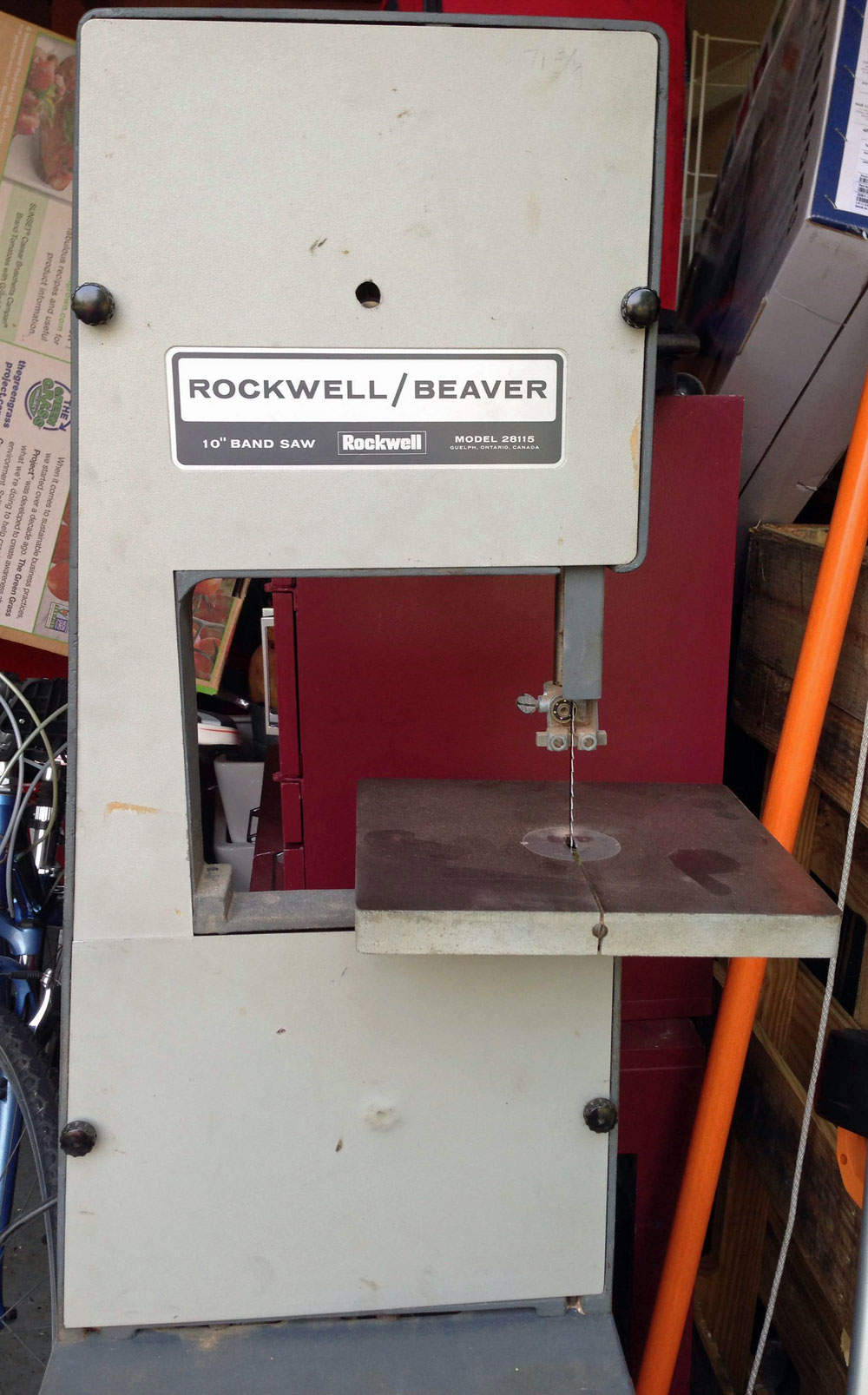
bandsawblogThe bandsaw. I was introduced to this woodworking machine some time ago as the tool that every woodturner would need to get into the craft. The bandsaw that I own is an 80 or so year old Rockwell Beaver 10 inch bandsaw, originating from Ontario, Canada. Perhaps 80 years ago my great grandfather bought this bandsaw and used it in his small apartment to aid in his woodcarving hobby.

Before my great grandfather passed, he passed it on to my grandfather; my grandfather, not being a woodworker, used this bandsaw infrequently, but made an effort to repair and upkeep the machine. Later, my grandfather lent the bandsaw to his neighbor, a woodturner. My grandfather’s neighbor turns bowls, boxes, and all sorts of lathe related projects as a career and found great use in this bandsaw for cutting out bowl blanks from rough, green wood. My grandfather’s neighbor, at some point, purchased a larger 14 inch bandsaw and returned our 10 inch bandsaw to my grandfather.

For years the Rockwell Beaver bandsaw sat in my grandfather’s garage, waiting for its next use by another woodworker. In the summer of 2014 my grandfather and I cleaned the bandsaw; we sanded the table flat, realigned the wheels, and cleaned the bearings. After doing this we bought the Highland Woodworking 3/8″ Woodturners Blade and spent some time properly tuning our bandsaw. The task took a serious amount of time to properly align and tension the blade and wheels. After doing this we cut our first pieces of wood. The saw cut through wood like butter! So, we brought out our first blank to be cut round. The blank was a 40% moisture content box elder blank. The bandsaw did not cut well due to its 1/4 horsepower motor. However, with the sharp blade and much time we had cut our first blank! I have since turned this blank on the lathe and the bowl turned out great! I’ve been using this bandsaw ever since, in tandem with my newer 14″ bandsaw.

I’m very thankful of my grandfather, and great grandfather, for giving me this bandsaw.

I have been woodworking for well over 2 years now. I first started making simple bird houses and toolboxes. Recently I made a bench, numerous bowls, and other small projects. I know that I will carry woodworking with me through the rest of my life.

Jun 102015
 
Do you have “project creep” every time you start a new job?  It seems that I do.  What started as a new top for my wife’s cheap bedside table turned into two new pieces of furniture.  CLICK HERE to read how that happened.

Project creep is also known as “as long as we’re doing this we might as well…”  A task starts out with a certain scope, but that vision gets expanded into additional components along the way. The present job (click here to read about it) started as handrails for our lower deck, but turned into much more.

When I was but a pup of a carpenter, one of my mentors, Jack English, taught me how to make a half-lap joint with a circular saw when you can’t use a dado blade.  In this case, I was working with 20′ 2x4s and I had only 13′ of open space from the radial arm saw to the farthest wall, so quick and easy dado blade cuts were not an option for me.

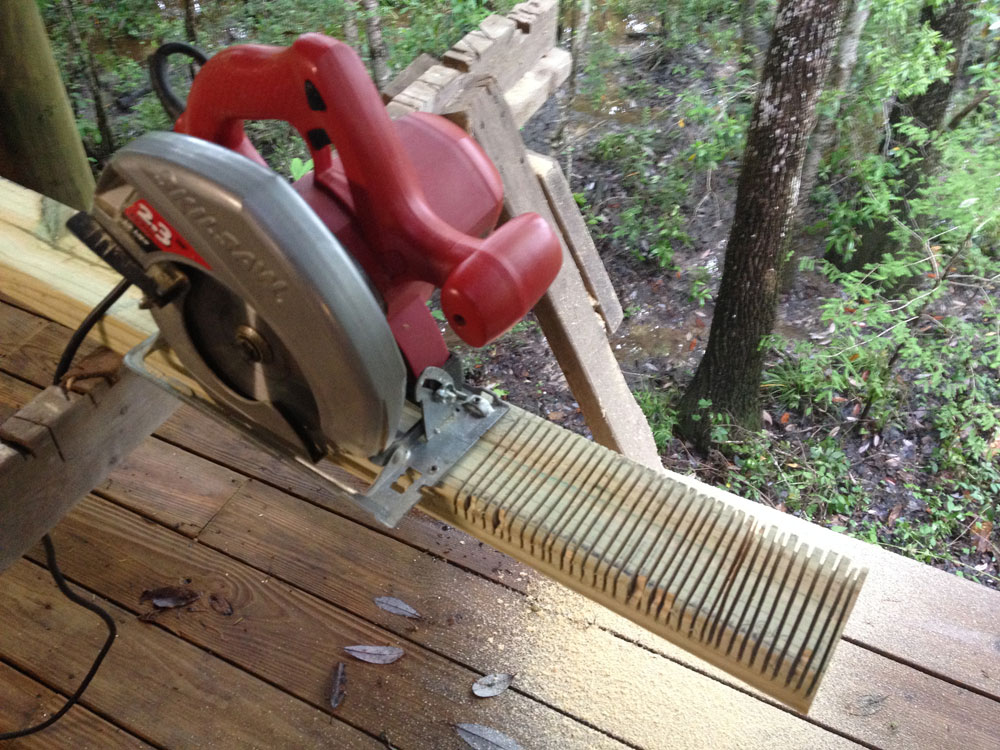
The technique is simple, and most of you have probably used it:  Using a circular saw, cut kerfs through the area you want to lap, being very careful not to cut too deep and keep your shoulder perfectly square.  You can always take off more wood, but making spacers for a half-lap joint made too deep is both difficult and unsightly.  The closer the cuts are to each other the “finer” the cleanup will be.
An accurate depth setting, or, better yet, a slightly conservative setting, and you won’t be throwing away so many boards.  Make the kerf cuts close to each other for a faster, easier cleanup.

An accurate depth setting, or, better yet, a slightly conservative setting, and you won’t be throwing away so many boards. Make the kerf cuts close to each other for a faster, easier cleanup.

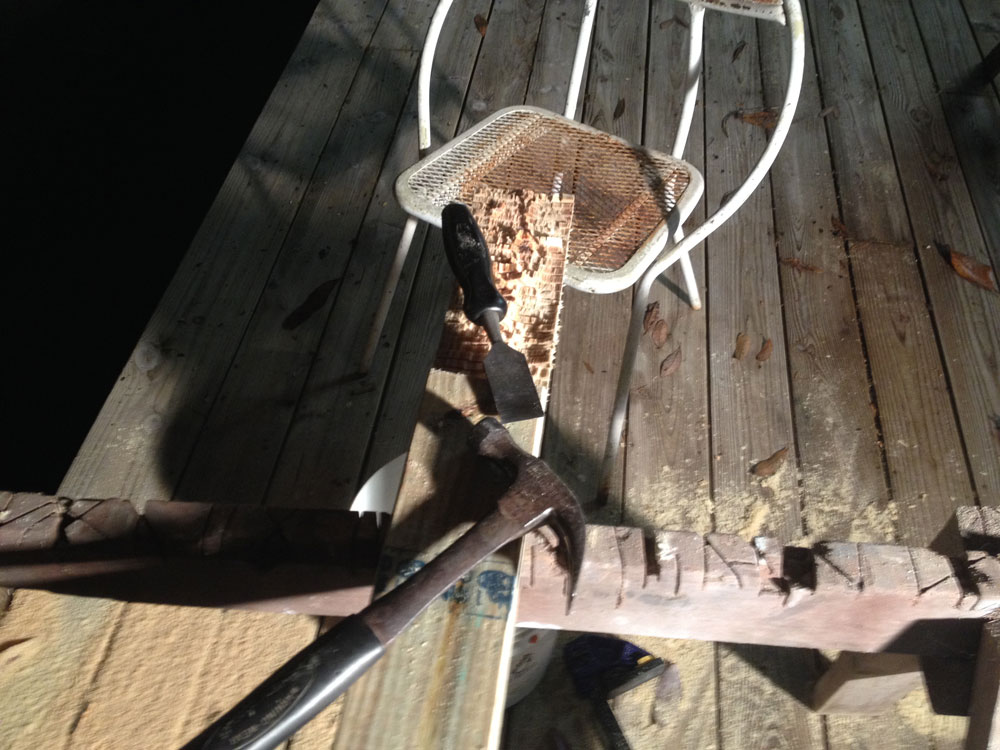
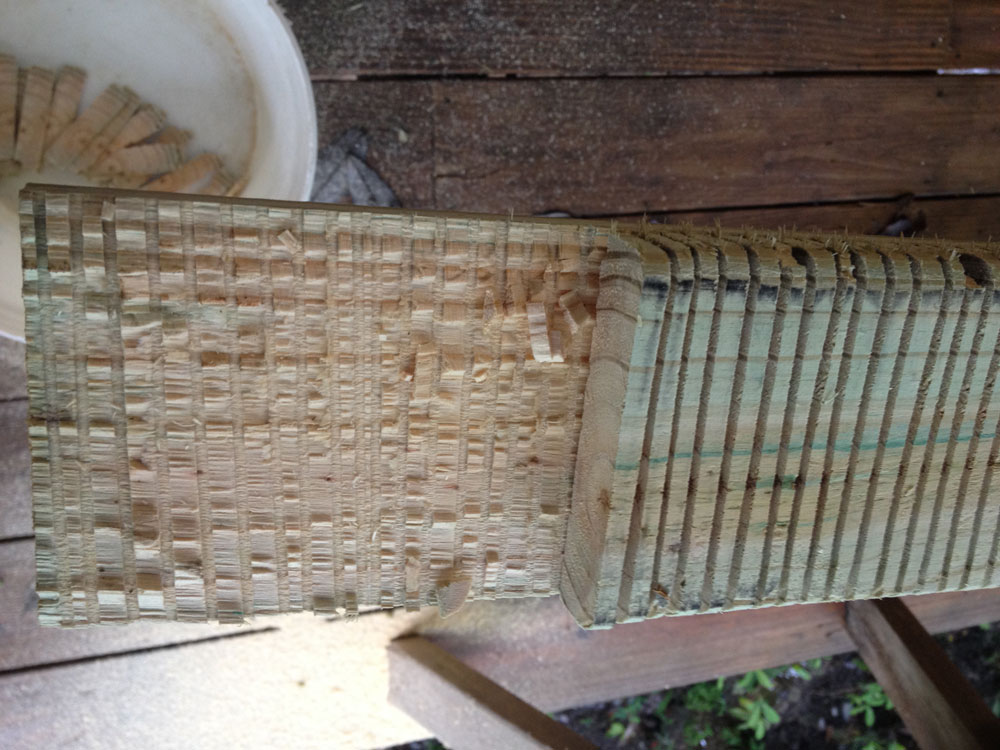
At this point, if you smack the remaining wafers of wood with your hammer, you’ll have a jillion little pieces to pick up from the floor, and lots of remaining wood in the joint to remove as you refine the joint.
For demonstration purposes I used the hammer-only technique here, and you see how much material still needs to be cleaned.  That’s because the only part that breaks off is close to the hammer head.  Also, pine has a lot of knots, so this treated pine adds an added factor that the knot wood won’t break off cleanly.  Yes, it’s dark, but I’m not averse to working deep into the night, if I’m having fun.  I’m also not averse to sitting down to put myself closer to the work to gain a better angle for driving the chisel.)

For demonstration purposes I used the hammer-only technique here, and you see how much material still needs to be cleaned. That’s because the only part that breaks off is close to the hammer head. Also, pine has a lot of knots, so this treated pine adds an added factor that the knot wood won’t break off cleanly. Yes, it’s dark, but I’m not averse to working deep into the night, if I’m having fun. I’m also not averse to sitting down to put myself closer to the work to gain a better angle for driving the chisel.

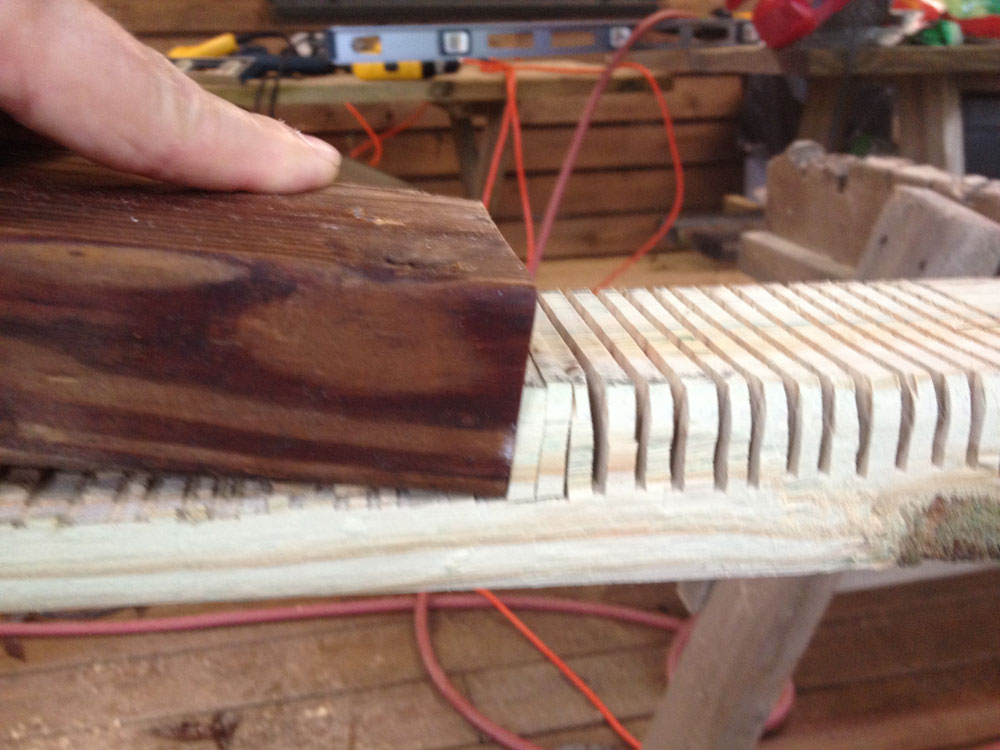
Instead, take a board the same width as your joint, put the end grain against the first wafer, angle it down a little toward the joint, then hit the board with your hammer or mallet.
A little bit of a downward angle and a series of good, smart smacks gets the process started.

A little bit of a downward angle and a series of good, smart smacks gets the process started.

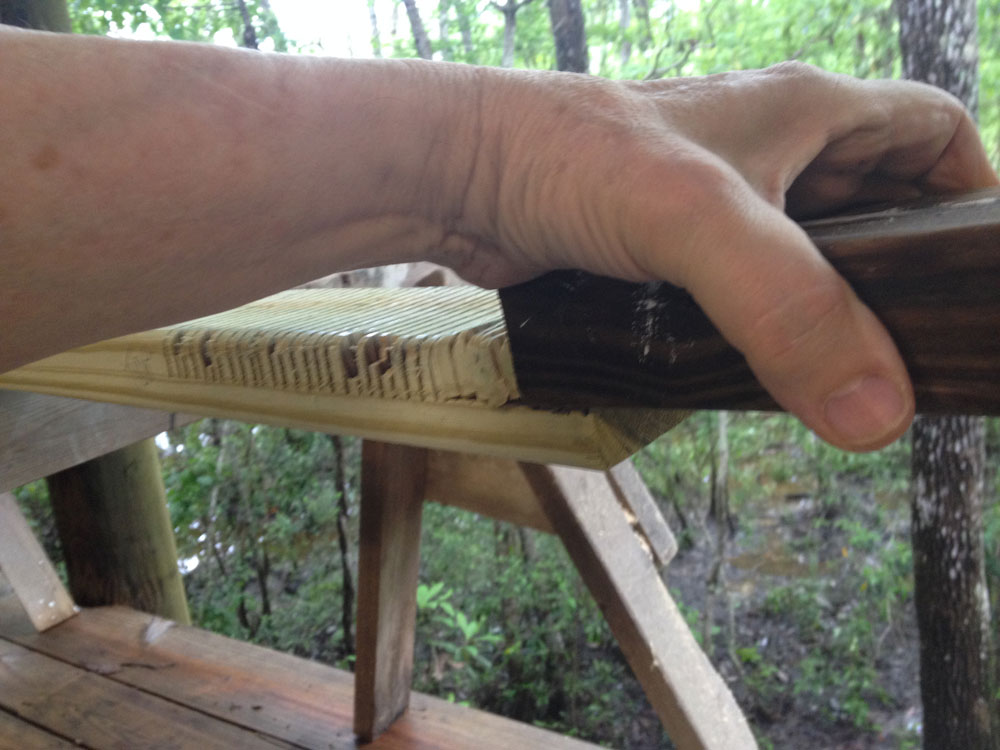
Keep driving the wafers forward toward the back of the joint, piling up like a squeezed accordion.
Drive like a defensive tackle and keep compressing those wafers.  Each one will help dislodge the next and keep the pressure down low on your cuts, leaving you less to clean up.

Drive like a defensive tackle and keep compressing those wafers. Each one will help dislodge the next and keep the pressure down low on your cuts, leaving you less to clean up.

Unless you’re unlucky enough to have a knot in the joint, you’ll have very little cleanup to do.  A sharp chisel makes short work of the remaining debris.
As you see, there isn’t a lot of work left to be done.

As you see, there isn’t a lot of work left to be done.

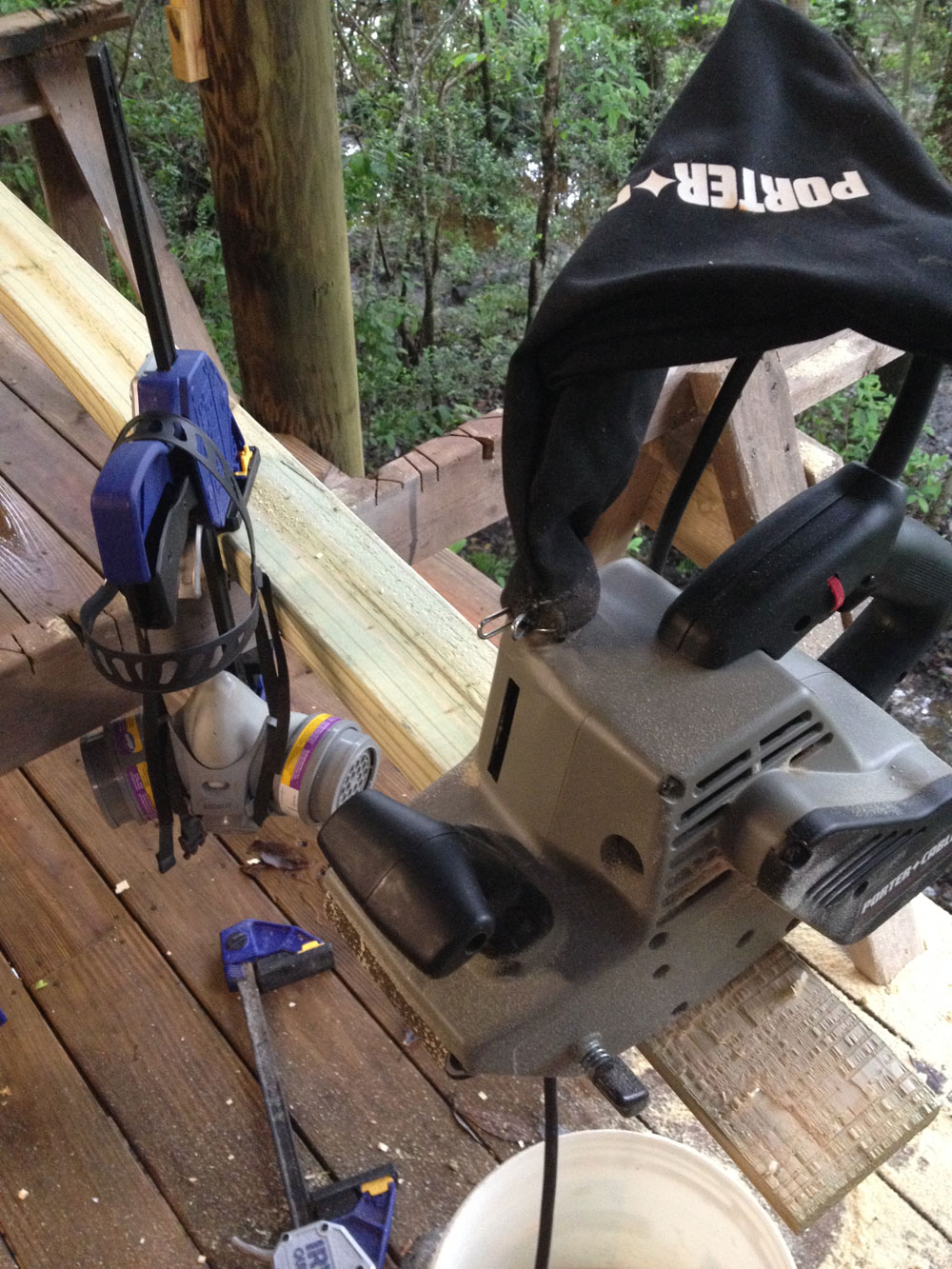
Want to make even shorter work of it?  Fire up the belt sander.  If you sand the joint smooth instead of chiseling, I recommend being a little more conservative with your initial saw setting for depth of cut, and lots of test fits.  It doesn’t take an 80-grit belt very long to go too deep in this scenario.  Just be sure to keep the sander flat in both planes, or your joint will be trashed.  Any remaining fine-tuning with your chisel won’t take more than a few minutes.
I made each of these joints the width of the piling it was adjacent to, so some were 7" and some were 10".  While most traditional half-laps are the same length as the width of the board, 3½” in this case, there are no rules, and I wanted lots of strength and screws attaching the boards to the pilings to go through the joints.

I made each of these joints the width of the piling it was adjacent to, so some were 7″ and some were 10″. While most traditional half-laps are the same length as the width of the board, 3½” in this case, there are no rules, and I wanted lots of strength and screws attaching the boards to the pilings to go through the joints.

Joints were going well, and all of the vertical 2x4s were up and the half-laps looked quite good.  Then, I began to think…

Thinking.  That should have been my first clue that project creep was on its way.  “These are good joints, but how much more visible will the horizontal components of this handrail be?  Enough to make a way to use the dado blade for an even prettier half-lap joint?”
Jun 022015
 

No Southern-fried Southern boy wants to be called a Yankee, but we share the characteristics of shrewdness and thrift.  Thus, each month we include a money-saving tip.  It’s OK if you call me “cheap.”

During a substantial part of building my deck handrail, a veritable monsoon hung over the top of our town.  While the local TV station reported about 18″ of rain in 4 days, we emptied over 32″ from our personal rain gauge.  Even though I was working on a deck that has another deck on the level above, that deck isn’t a roof, and significant rainwater alternately dripped or poured through the spaces between the upper deck boards.  Here are some cheap (read “free”) ways to protect your tools.

Some tools don’t care if they are wet or dry.  I didn’t fuss over the Swanson Speed Square, but some other tools needed attention to ensure they didn’t suffer from exposure to rainwater.

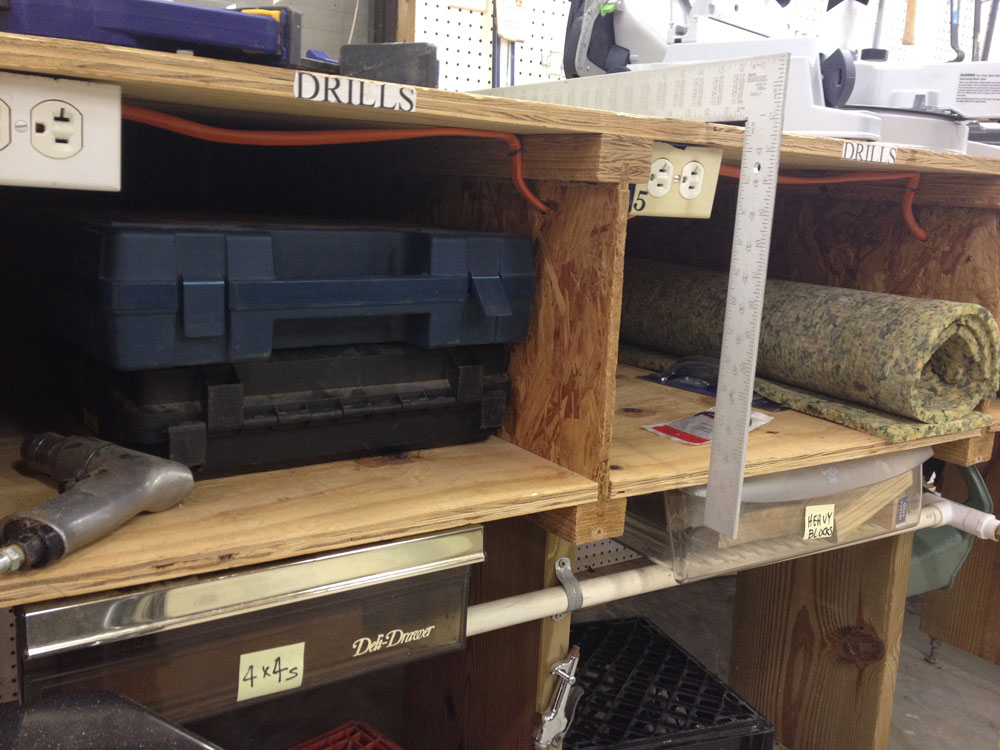
It is my routine to cover tools small enough to be encased.  I put my drills back in their original carriers when I’m finished with them:
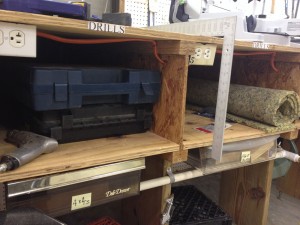
Open shelves under what I call my “saw table” make it easy to see what’s in place. Labels over each shelf make easy work of finding exactly the tool you want.

Open shelves under what I call my “saw table” make it easy to see what’s in place. Labels over each shelf make easy work of finding the exact tool you want.

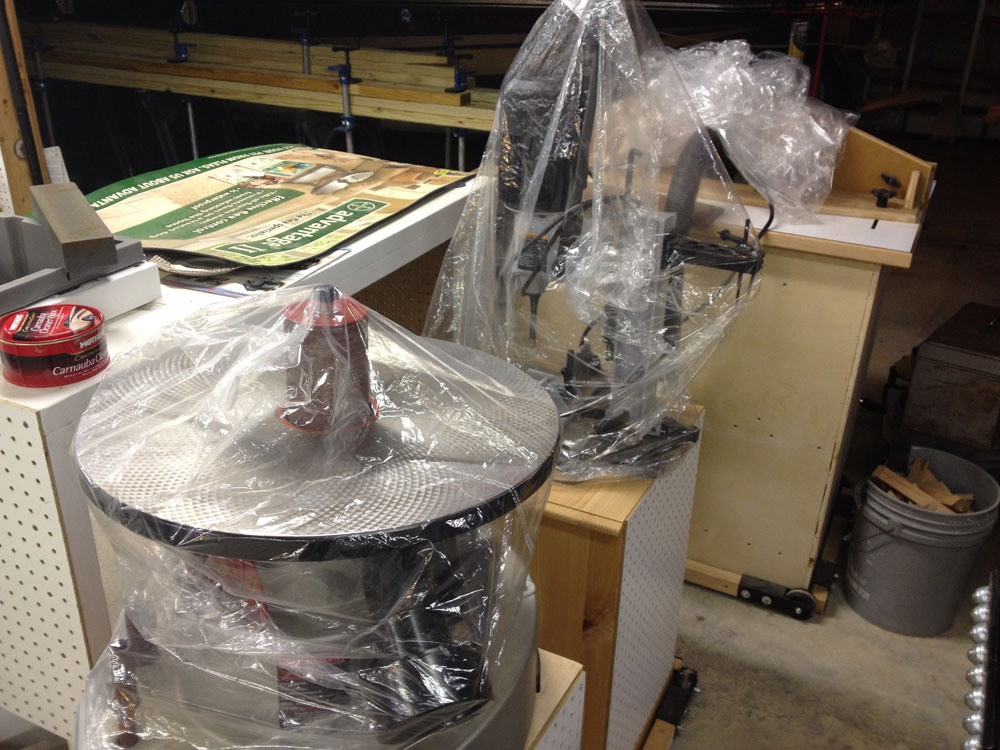
Portable and benchtop power tools get covered with plastic from the cleaners:
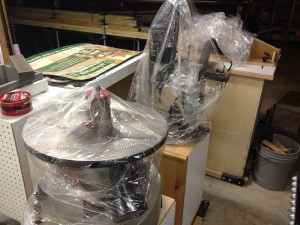
Because I wear a starched, long-sleeved shirt 7 days a week, we always have plenty of plastic bags from the cleaners. When the clerk asks me what kind of starch, I say, “Super heavy-duty stainless steel.” She writes, “heavy.”

Because I wear a starched, long-sleeved shirt 7 days a week, we always have plenty of plastic bags from the cleaners. When the clerk asks me what kind of starch, I say, “Super heavy-duty stainless steel.” She writes, “heavy.”

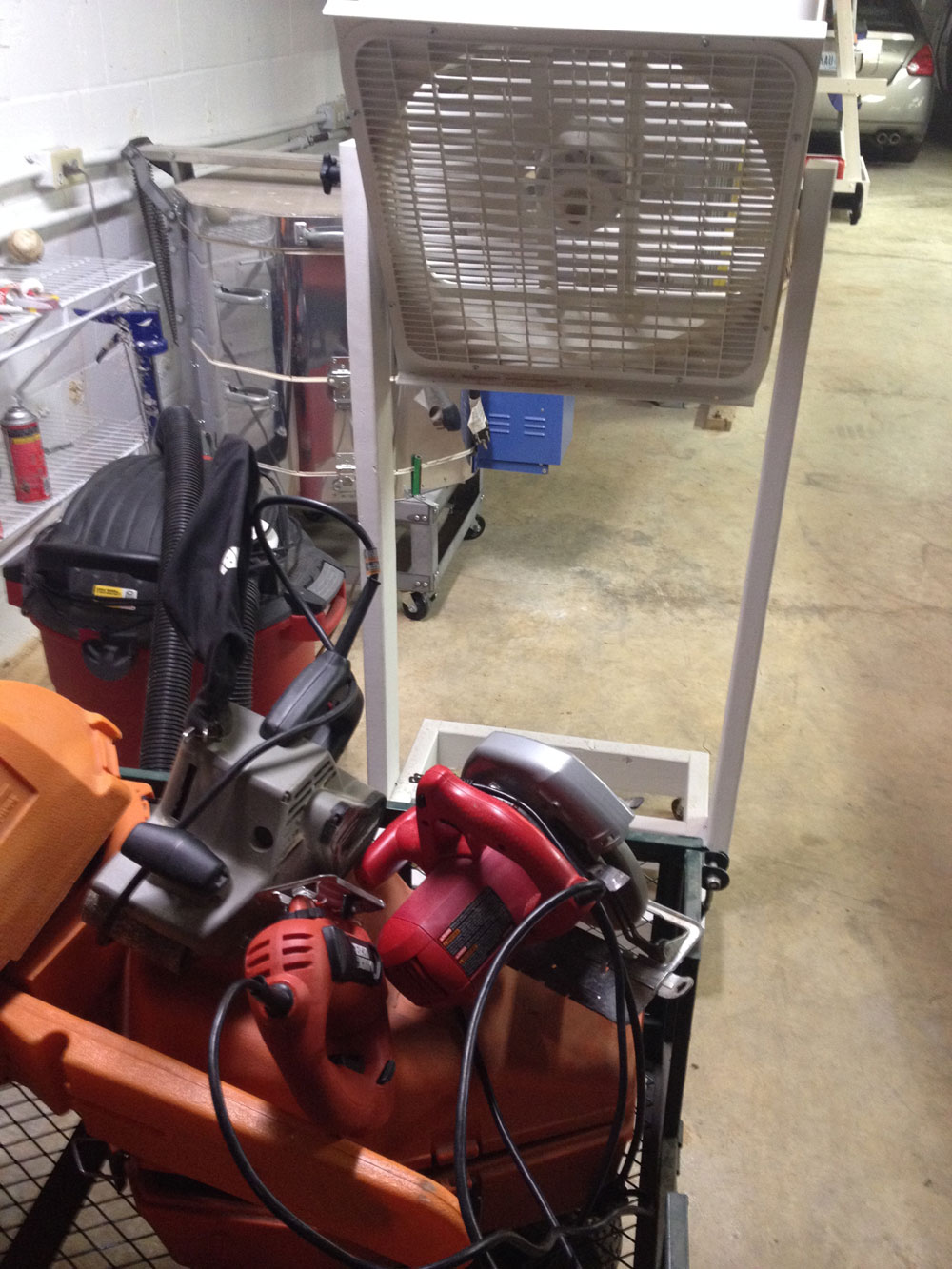
Some tools were outside while I was working, but sat under a covered porch, so they were “exposed,” but not dripped-on.  I was confident that those would be OK if they were dried quickly, but it was just as important that they be dry on the inside as out.  I set them up so that air could circulate around and through them, then turned on my free fan (see my April, 2013 tip).  OK, it’s not a totally free technique, because I do have to pay for the electricity, but that is way less than buying a new tool.
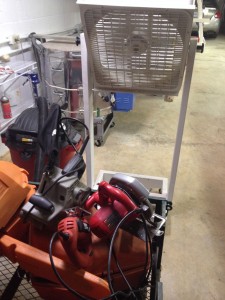
By putting tools on top of these chain saws, plenty of air could circulate around them, ensuring good drying inside and out.

By putting tools on top of these chain saws, plenty of air can circulate around them, ensuring good drying inside and out.
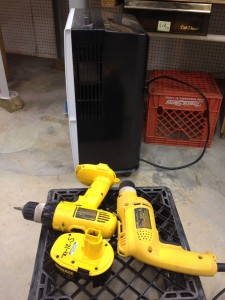
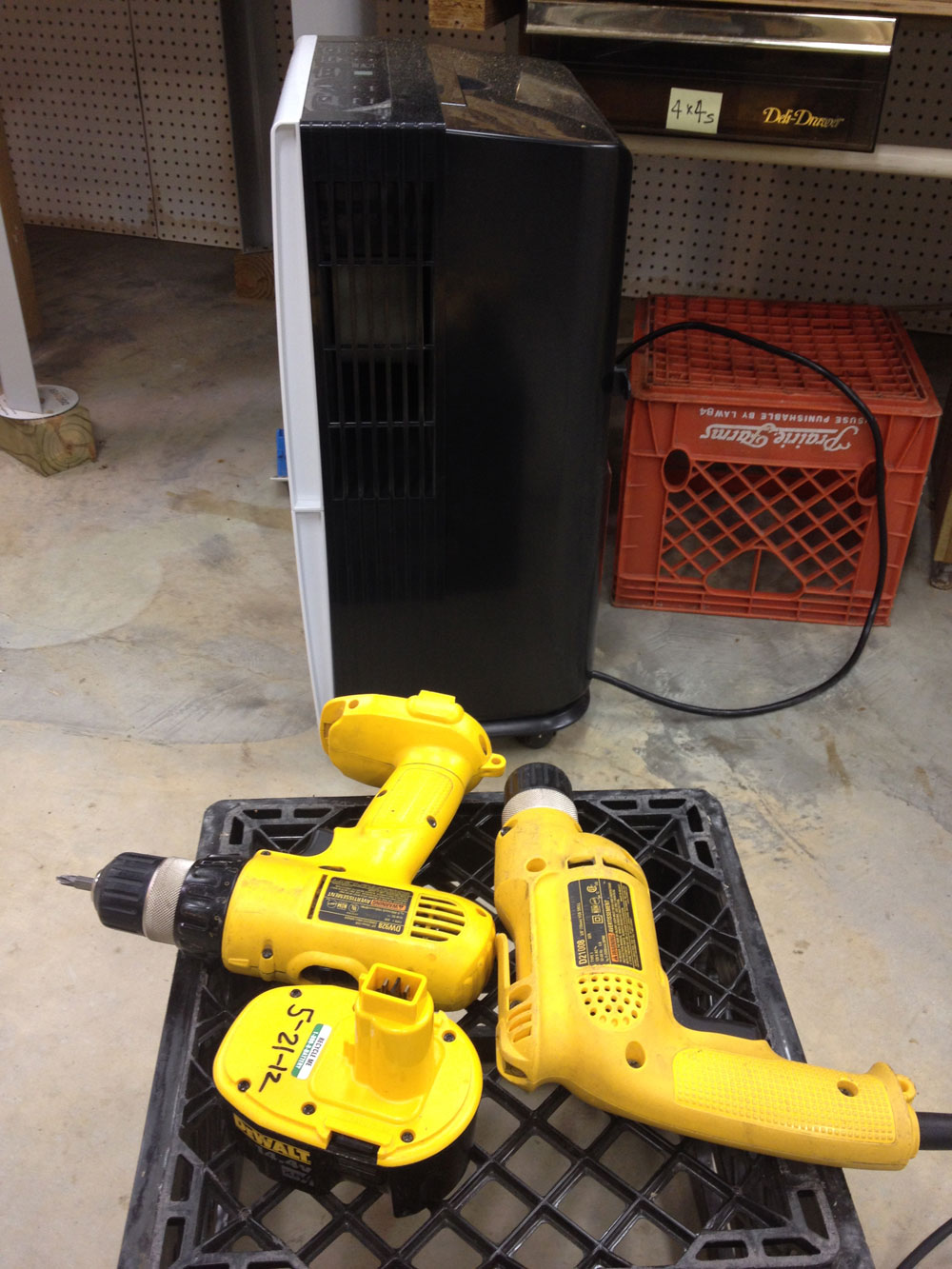
Sometimes I put things I want to dry in the outflow of the dehumidifier. The air is extremely low in moisture, so its drying effect is dramatic.

Sometimes I put things I want to dry in the outflow of the dehumidifier. The air is extremely low in moisture, so its drying effect is dramatic.

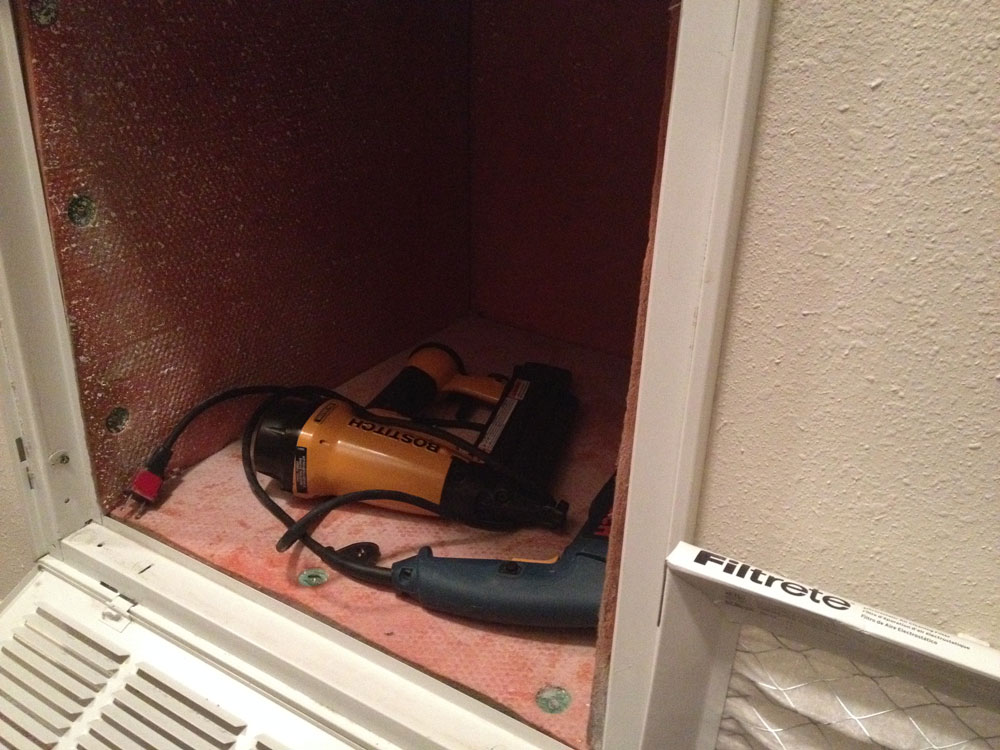
The Bosch drill and the Bostick finish nailer both saw action during the worst downpours, and were the most expensive tools in use.  To dry them thoroughly, I opened the air-conditioner return air plenum and put both inside.  They can sit there until I need them again.
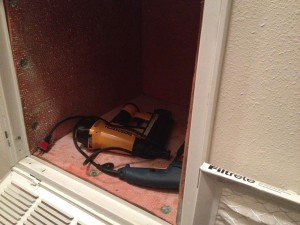
Can’t you just see it? A week goes by before I get back to the handrail, then, “Now, I wonder where I put the drill and the nailer.” At least they will be good and dry by the time the heater gets its annual Fall preventive maintenance. Alan, our AC repair guy, will think he’s hit a bonanza when he takes the filter out!
Can’t you just see it? A week goes by before I get back to the handrail, then, “Now, I wonder where I put the drill and the nailer.” At least they will be good and dry by the time the heater gets its annual Fall preventive maintenance. Alan, our AC repair guy, will think he’s hit a bonanza when he takes the filter out!

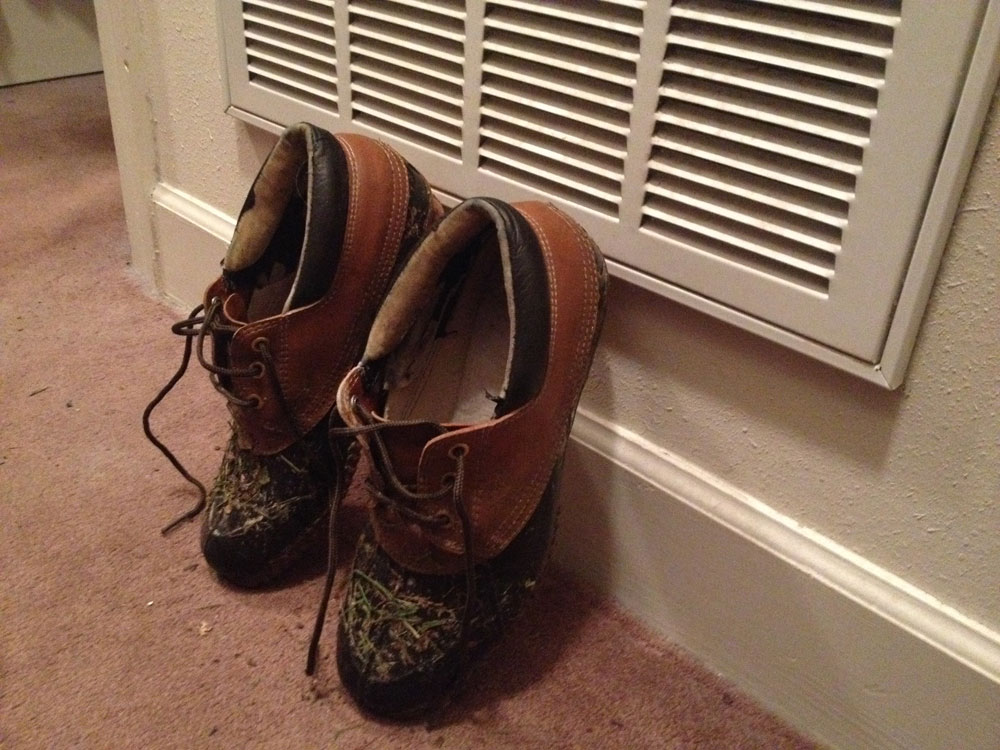
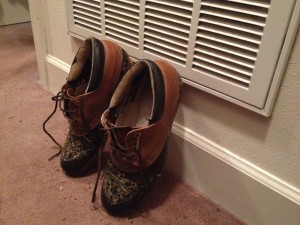
Another free use of the air conditioner plenum: When your shoes get wet, whether from perspiration, rain or flood, lean them up near the return air duct on your AC and they will dry thoroughly. Assuming, of course, that you have more than one pair of shoes.

Another free use of the air conditioner plenum: When your shoes get wet, whether from perspiration, rain or flood, lean them up near the return air duct on your AC and they will dry thoroughly. Assuming, of course, that you have more than one pair of shoes.


Jim Randolph is a veterinarian in Long Beach, Mississippi. His earlier careers as lawn mower, dairy farmer, automobile mechanic, microwave communications electronics instructor and journeyman carpenter all influence his approach to woodworking. His favorite projects are furniture built for his wife, Brenda, and for their children and grandchildren. His and Brenda’s home, nicknamed Sticks-In-The-Mud, is built on pilings (sticks) near the wetlands (mud) on a bayou off Jourdan River. His shop is in the lower level of their home. Questions and comments on woodworking may be written below in the comments section. Questions about pet care should be directed to his blog on pet care, www.MyPetsDoctor.com. We regret that, because of high volume, not all inquiries can be answered personally.

Jun 012015
 

Incorporate your highest standards and best practices into even the roughest of projects.  It’s good practice, it keeps your skills up and prevents falling into bad habits.  If it takes a little longer, it is time well-spent.  For example, I recently built a handrail on my outdoor deck project.

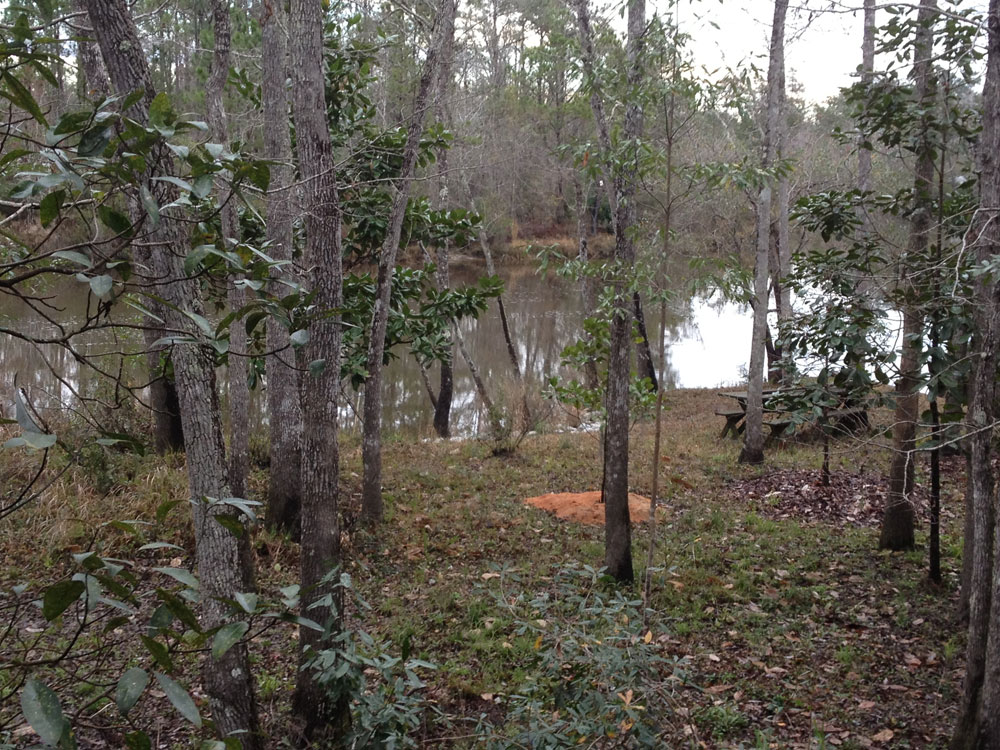
For the first 18 years of our home’s life we had no railing whatsoever on this deck. We like the open view. Recognizing the increasing danger of falling as we age, we decided we should at least have something to grab if we stumbled, yet still maintain the beautiful view.

For the first 18 years of our home’s life we had no railing whatsoever on our deck. We like the open view as seen here. Recognizing the increasing danger of falling as we age, we decided we should at least have something to grab onto if we stumbled, yet still maintain the beautiful view.

It certainly didn’t need to be fancy.  It needed to be splinter-free and strong in case anyone fell against it (it’s about 10 feet down at the high end and close to 20 at the low end.).  As I was working on this, I tried to get my half-laps as tight and flat as possible.  Sure, it makes for a better-looking end product, but it provides the practice to making good-looking joints, too.

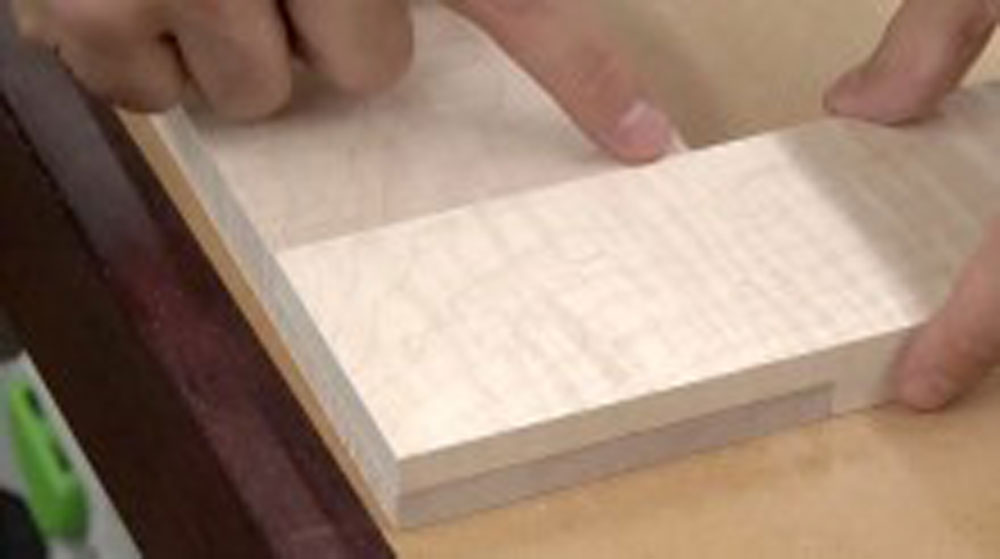
Half-lap joints may usually be thought of as being the stuff of fence rails and hidden structural parts.  It just happened that Marc Spagnuolo published a mirror frame project video while I was working on these handrail half-laps, raising the half-lap to an art form.

This is a beautiful example of half-lap joint at its finest, by Marc Spagnuolo. permission granted

This is a beautiful example of a half-lap joint at its finest, by Marc Spagnuolo (permission granted for reprint)

A half-lap joint is a blowout waiting to happen, with the very high risk of missing chunks of wood existing on all four sides.  One must be careful to either provide a backer-board for each cut, or work toward the inside of the joint.  If the “lap” is too high or too low, the joint is ugly and sloppy-looking.  Ditto if the shoulders aren’t square.  But, it’s all about how much time and care one is willing to invest in a project to have it look as good as it can be.

When visitors lean against my handrail I want them to be able to marvel at the quality of the workmanship.  Even if no one ever came to see us, when I look at the rails I want to be able to be proud of them. The point is not whether I always achieved fine woodworking with my handrail project.  The point is that I strove for it and sought to do my best at every step along the way, keeping my standards high.


Jim Randolph is a veterinarian in Long Beach, Mississippi. His earlier careers as lawn mower, dairy farmer, automobile mechanic, microwave communications electronics instructor and journeyman carpenter all influence his approach to woodworking. His favorite projects are furniture built for his wife, Brenda, and for their children and grandchildren. His and Brenda’s home, nicknamed Sticks-In-The-Mud, is built on pilings (sticks) near the wetlands (mud) on a bayou off Jourdan River. His shop is in the lower level of their home. Questions and comments on woodworking may be written below in the comments section. Questions about pet care should be directed to his blog on pet care, www.MyPetsDoctor.com. We regret that, because of high volume, not all inquiries can be answered personally.

May 212015
 

mayhwtWe’ve hit a milestone with The Highland Woodturner: 50 issues!

This month’s 50th issue focuses on the educational aspect of woodturning with several authors sharing their love of teaching.

This month’s issue includes:

Making a Tapered Reamer– Curtis Turner has begun the journey toward making his own Windsor Chair and to start, he has made his own tapered reamer. In this article he discusses the different steps he took to create this project.

Celebrating Woodturning by Teaching– Temple Blackwood celebrates our 50th issue by sharing his love of teaching. He discusses his teaching process for a first time woodturner and the process of turning a ceremonial gavel.

Show Us Your Woodturning– This month we are sharing the beautifully turned bowls created by Jeff Greenberg. On many of his bowls Jeff incorporates beautiful inlay designs and colors.

Phil’s Turning Tip– This month Phil’s tip is to take a turning class, whether it be at Highland Woodworking, John Campbell Folk School, or get some instruction from your local woodturning guild.

All of this and more in our 50th issue of The Highland Woodturner!

May 202015
 

http://www.highlandwoodworking.com/virtuoso-the-tool-cabinet-and-workbench-of-henry-o-studley.aspx

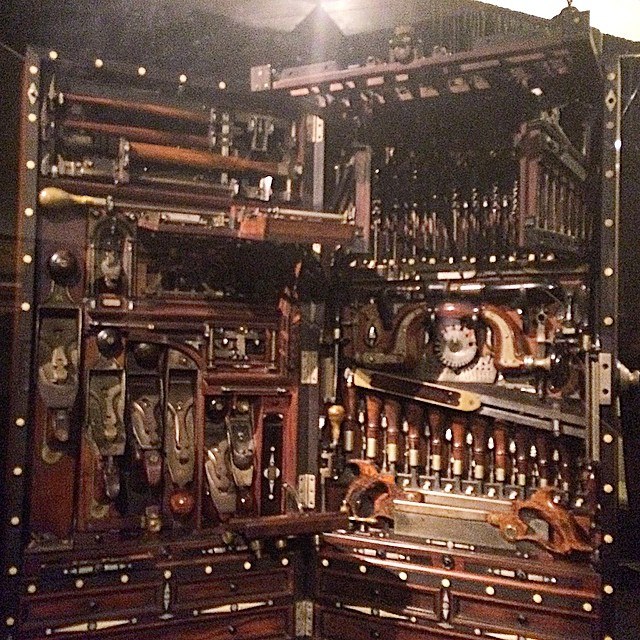
In honor of the recent publication of Virtuoso -The Tool Cabinet and Workbench of Henry O. Studley, an in-depth examination of one of the most beautiful woodworking tool chests ever constructed, we are having  a contest!

For your chance to win a FREE copy of this highly in-demand publication, all you have to do is submit a photo of your own “tool organization system” with a brief description. Now, we understand that not everybody has a tool chest like Studley, or maybe you don’t even have an actual tool chest and that’s okay! For the purposes of this contest, we want you to submit a photo of how you organize your tools. Whether it is in a tool chest like Studley’s, a tool box, a cabinet drawer, your mother’s heirloom dresser, or a plastic storage box, we want to see it!

The H.O. Studley Tool Cabinet

The H.O. Studley Tool Cabinet

The winner will be chosen by our resident blogger, Terry Chapman, so if you need to find ways to impress him, feel free to read any of his past blogs to find out his likes and dislikes.

You can either post your photos as comments on this blog entry, or email them to email@highlandwoodworking.com

Contest ends on May 31st, 2015 at 11:59pm EDT. Let us know if you have any questions and GOOD LUCK!