Highland Staff

Aug 312015
 

Some years ago I tailored the backstop system you see in the photo below to back up workpieces when cutting biscuit slots. Totally independent, they can be clamped as close to or as far from the edge of the workbench as you like. They can also accommodate any length of board just as simply.
62_1

Cut out a couple of “L’s” with your jig saw, grab two clamps of any style, and you’re in business. Notice that I didn’t even bother to make them the same size.

I never found any shortcomings with the technique, but recently I was making a Western red cedar picnic table for our youngest grandchildren, and my stack of boards happened to be next to the front of the table saw. I looked down, and saw the rail that guides the fence, and thought, “Hmm, seems like a perfect shelf for this.”
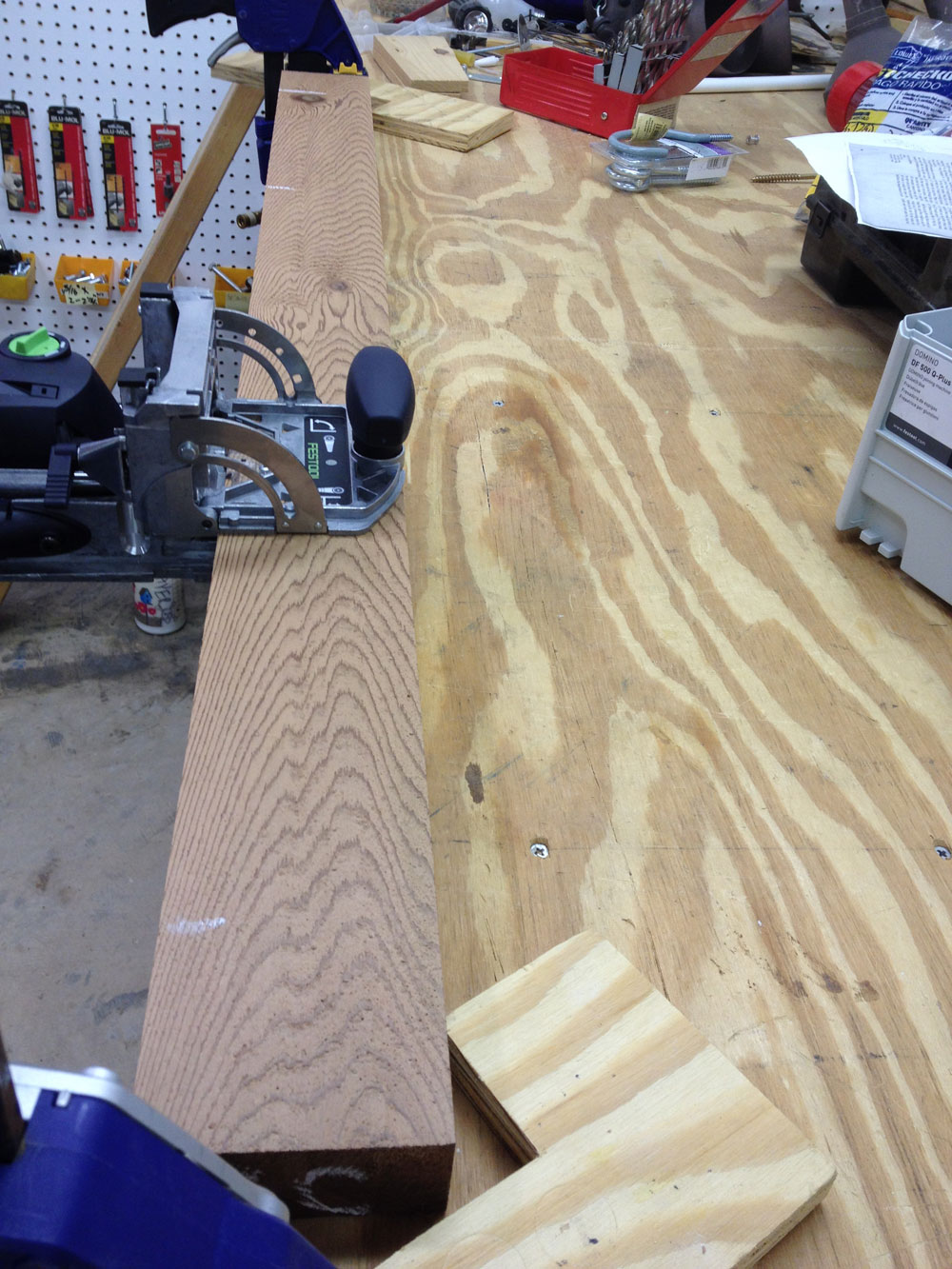
Using the table saw fence rail works great for short, thick, narrow boards like these beauties that started out as roughsawn 2x4s.

Using the table saw fence rail works great for short, thick, narrow boards like these beauties that started out as roughsawn 2x4s.

 A few weeks later I saw a tip in the Woodworker’s Journal E-zine sent in by Joseph Cassinick from Michigan, which involved using the table saw rip fence for a backstop. Certainly that tip offers more versatility, as your table saw can handle workpieces of any width and length up to the size of your tabletop and accessory surfaces. But, for the job I had at the moment, putting Domino slots into a bunch of cedar 2x4s, the rip fence rail was just right.
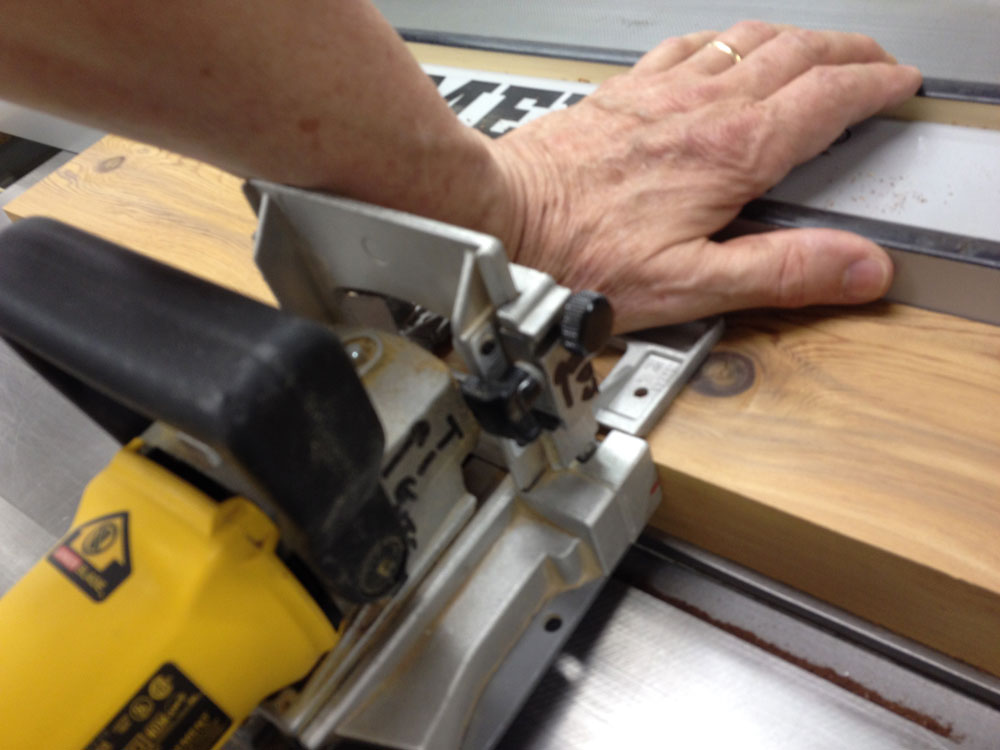
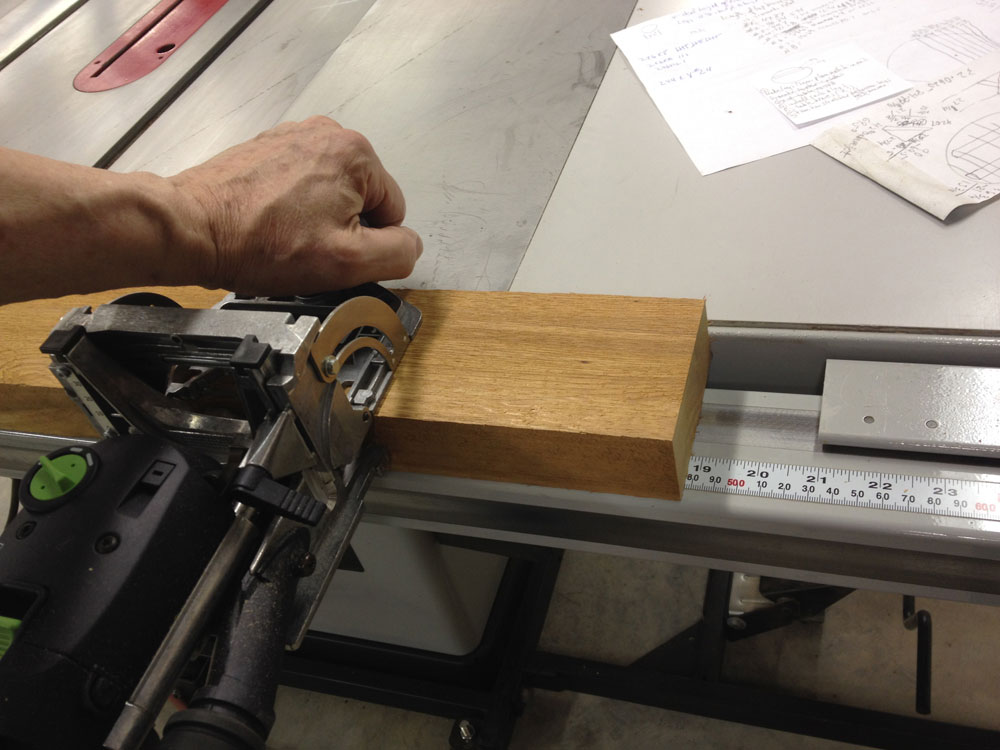
Joe Cassinick’s tip, using the table saw fence as a backstop when cutting biscuit slots or Festool Domino mortises was an excellent one, and I tried it here.

Joe Cassinick’s tip, using the table saw fence as a backstop when cutting biscuit slots or Festool Domino mortises was an excellent one, and I tried it here.

I found only two shortcomings of the rip-fence technique. One, even though these 2x4s were almost 3-3/4″ wide, the Domino fence was a little wider, so it hit the table saw’s rip fence if I put the boards on the table saw one at a time.
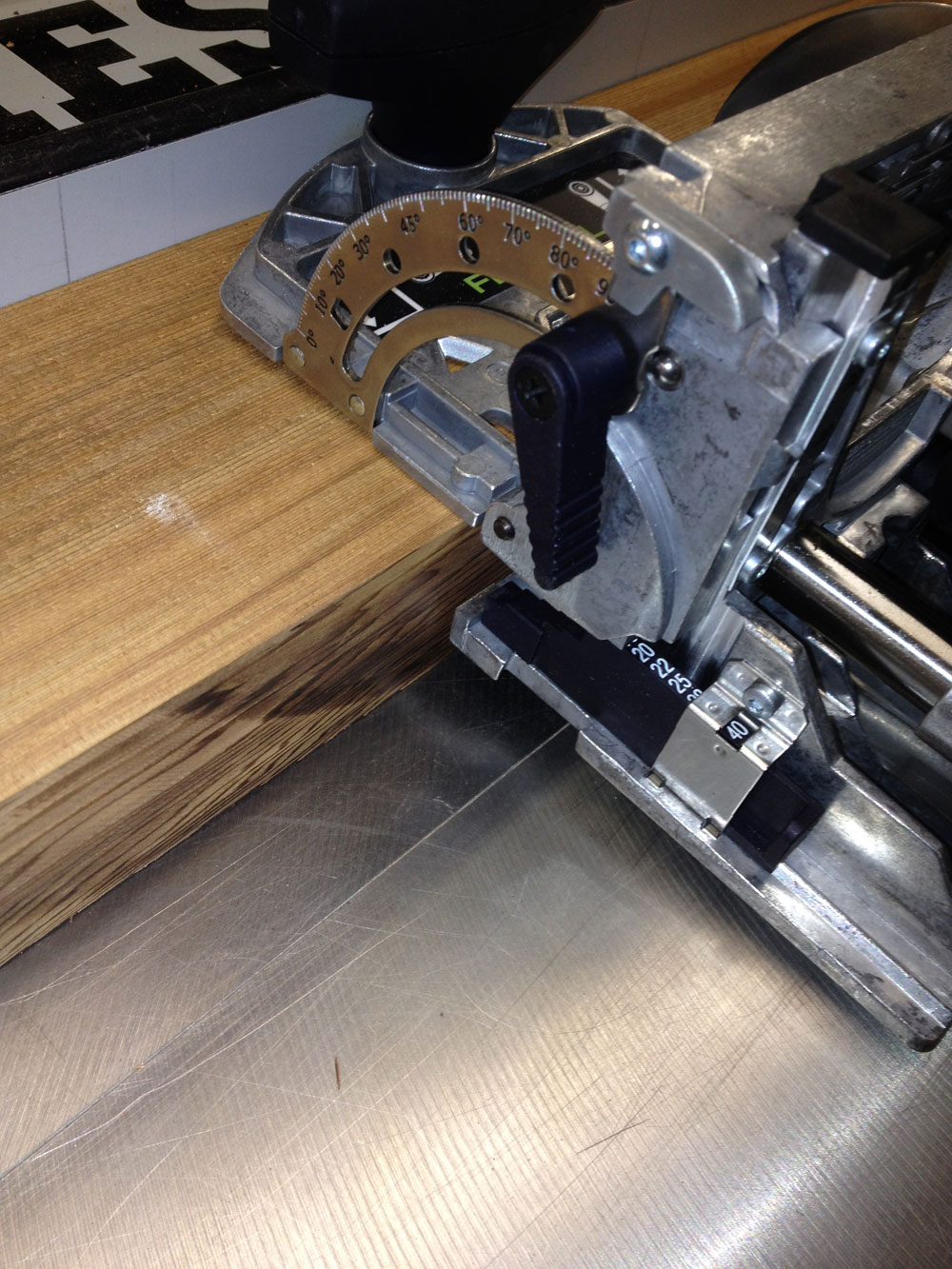
Notice that the Domino’s registration plate is not against the board, which might introduce error for the placement of the Domino tenon

Notice that the Domino’s registration plate is not against the board, which might introduce error for the placement of the Domino tenon.

The second shortcoming was when I added another 2×4 behind the one I was cutting Domino mortises in. If its wide surface had a little bow in it, or if it was a little thicker than the board being bored, the backup board could hold the Domino’s fence subtly off the board being worked on.
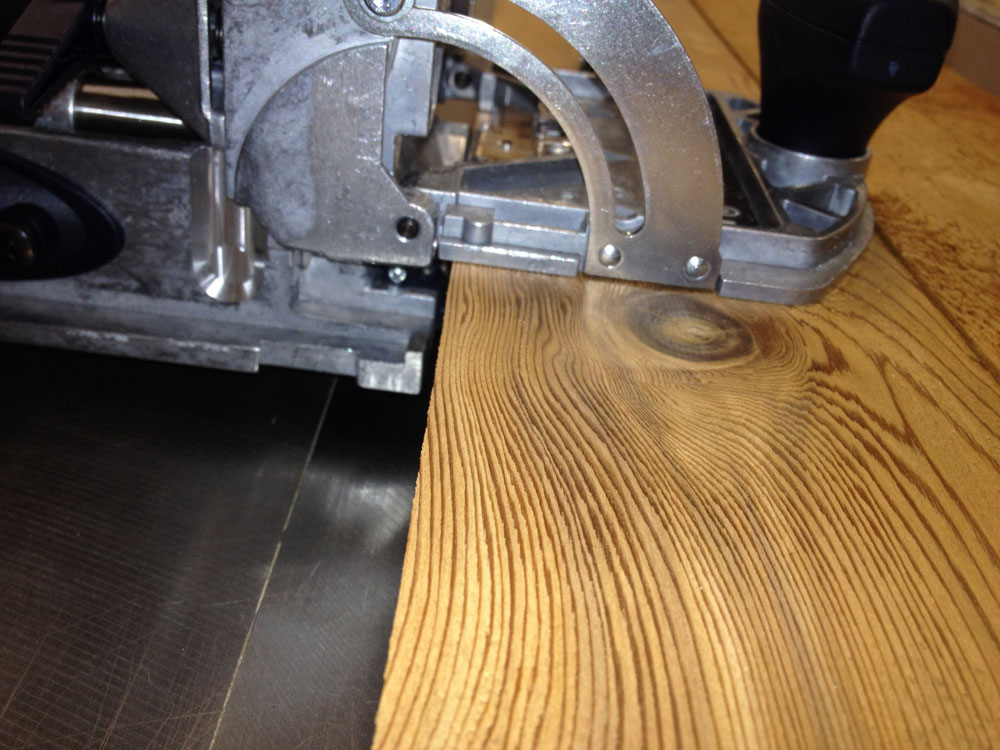
To get the Domino’s fence an adequate distance from the saw’s fence, I placed another board behind the one being mortised. The slight bow in the backup board kept the Domino from reaching the surface it was mortising.

To get the Domino’s fence an adequate distance from the saw’s fence, I placed another board behind the one being mortised. The slight bow in the backup board kept the Domino from reaching the surface it was mortising.

That could lead to the mortise being out of position and even too shallow. Such a problem could be solved by recognizing the problem and being careful to account for it, or by using a thinner 2×4. A too-shallow mortise would lead to a joint not closing, with no external reason visible. That would make you crazy at glue-up time!
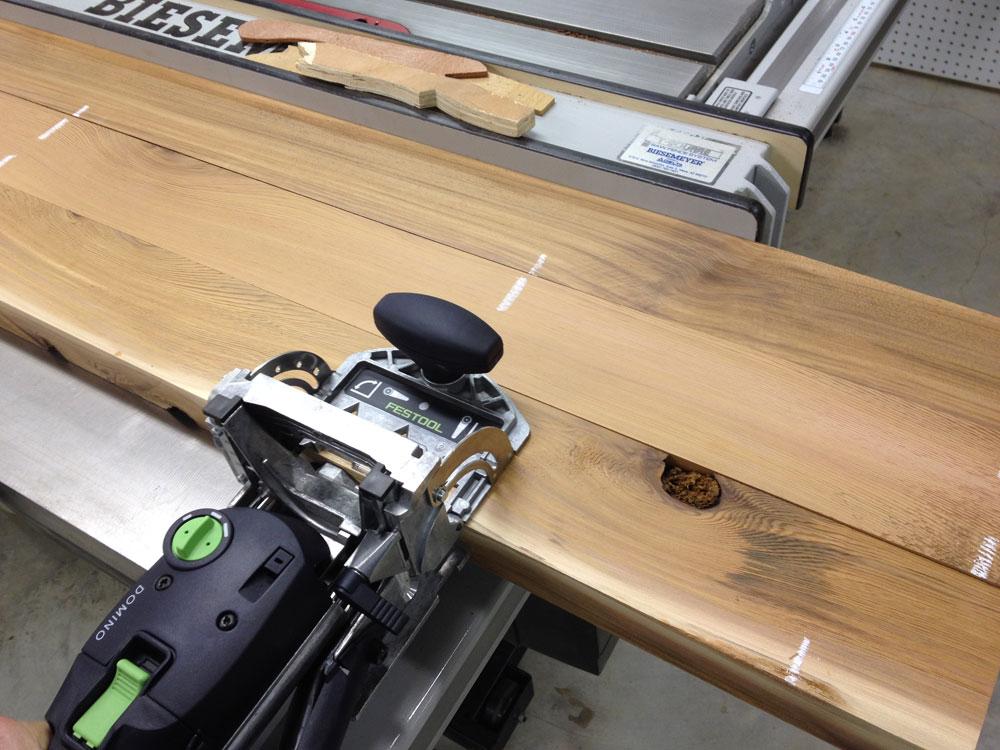
This photo demonstrates several backer boards of the same thickness, allowing the Domino’s fence to be sufficiently far from the Biesemeyer fence and still overlapping the first backer board without being cocked.
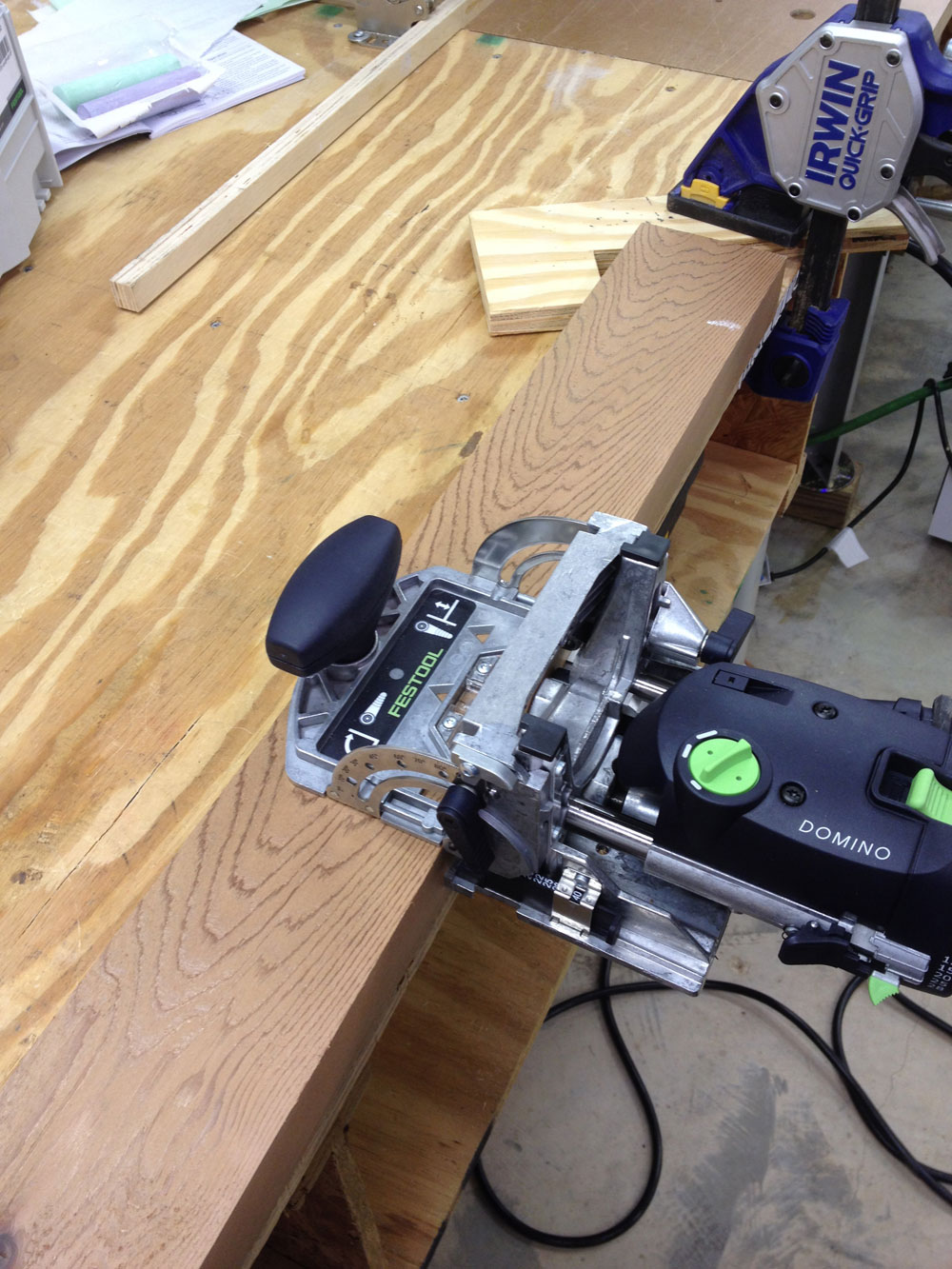
This photo demonstrates several backer boards of the same thickness, allowing the Domino’s fence to be sufficiently far from the Biesemeyer fence and still overlapping the first backer board without being cocked.

The other alternative is to return to my original system, utilizing the L-shaped plywood pieces, where no backer board is needed.

The other alternative is to return to my original system, utilizing the L-shaped plywood pieces, where no backer board is needed.

—-

Jim Randolph is a veterinarian in Long Beach, Mississippi. His earlier careers as lawn mower, dairy farmer, automobile mechanic, microwave communications electronics instructor and journeyman carpenter all influence his approach to woodworking. His favorite projects are furniture built for his wife, Brenda, and for their children and grandchildren. His and Brenda’s home, nicknamed Sticks-In-The-Mud, is built on pilings (sticks) near the wetlands (mud) on a bayou off Jourdan River. His shop is in the lower level of their home. Questions and comments on woodworking may be written below in the comments section. Questions about pet care should be directed to his blog on pet care, www.MyPetsDoctor.com. We regret that, because of high volume, not all inquiries can be answered personally.
Aug 212015
 

wt53This month we’ve got a great issue of The Highland Woodturner, our online newsletter dedicated exclusively to turning.

Our August 2015 issue includes:

Making a Guiro– A Guiro is a Latin-American percussion instrument turned out of a hollow gourd and played with a stick or tines. In this article, Curtis Turner discusses the selection process for the wood, turning the beads, making the handle, and cutting the slot that helps produce the recognized sound of the Guiro.

Topping off a Turning Lesson– Our newest blogger, Mollie Simon, just took Hal Simmons’ Beginning Turning class at Highland, and she has a full report of what she learned in the class and how it is a great class for beginning woodturners!

Show Us Your Woodturning– This month we are featuring the beautiful woodturning projects from by Eldon DeHaan, who makes one-of-a-kind pieces that start off on the lathe and are then embellished, carved, and colored.

Phil’s Turning Tip- Phil has a tip on the benefits of using Foam-Backed Sandpaper.

Our featured turning tools this month include:

The Rikon 8 inch Professional Low Speed Bench Grinder

The Record Power SC3 Geared Scroll Chuck Package

All of this and more in our August 2015 issue of The Highland Woodturner.

Aug 202015
 

The figure in tiger, or curly, maple is a feature of great potential beauty. But how can you finish it to bring out its full loveliness?

You can, of course, give it a clear finish—like General Finishes Arm-R-Seal or a water-based finish such as General Finishes High Performance. This will reveal the curl as a lightly shimmering variation in a tone that adds subtle elegance to a project. To make the figure pop a little more, apply a first coat of General Finishes Seal-A-Cell before completing with Arm-R-Seal.

But what if you want to apply a dye to stain your project a deeper color? In that case, trace coating your project with a dark dye opens up some good possibilities. Trace coating is a process I learned from Charles Neil that involves applying a light coat of dye to the wood before sanding so you can tell when sanding is complete.

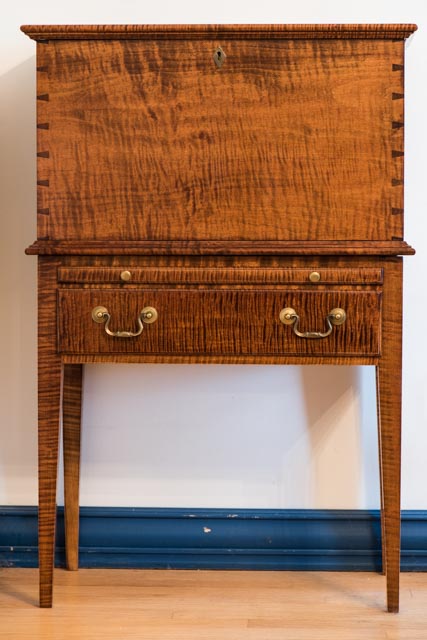
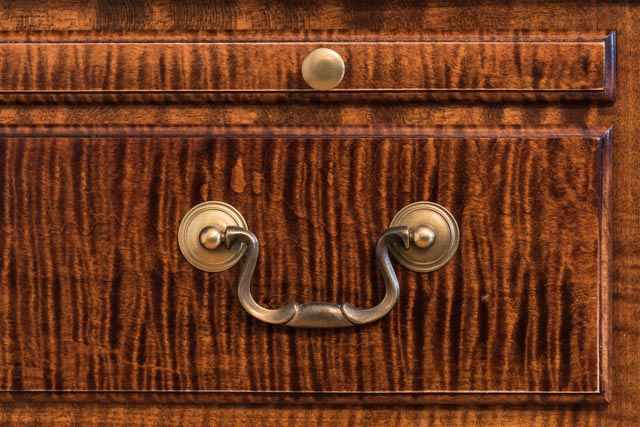
Following Neil’s procedure, I finished a tiger maple sugar chest using the trace coating process. Here’s how I did it. I wiped on a coat of General Finishes Medium Brown Dye Stain—in this case full strength—to the case and other parts. Then I sanded them to 120 grit until much, but not all, of the dye was removed. I wanted the dye to remain in the curl, which is the more absorbent part of the wood. Then I applied a second coat of Medium Brown Dye Stain, this time sanding to 180 grit. Again, I left dark patches in the curl, rather than sanding all of it away, so it looked a bit like a zebra.

Finally, I applied a mixture of General Finishes Orange and Light Brown Dye in a 3:1 ratio, which gave the piece an overall deep orange-brown color but left the curl highlighted in darker brown. I completed my finishing by spraying several coats of General Finishes High Performance Polyurethane Topcoat and then buffing with ultra-fine sanding pads after the finish was dry. The photos show the result, which is especially good for period furniture pieces.

Tiger Maple finish-21148

There are alternatives to this method and you may want to develop your own processes through experimentation, something that’s always recommended before finishing any project. For example, to create even darker curl patterns, consider using Dark Brown or even Black dye for the trace coating, or Light Brown if you want to lighten the shadowing effect. And of course the overall color can be changed by using different mixtures of dyes. In the course of your experimentation, you may come to define your own signature style for coloration of your tiger maple pieces.


Norm Reid is a woodworker, writer, and woodworking instructor living in the Blue Ridge Mountains of Virginia with his wife, a woodshop full of power and hand tools and four cats who think they are cabinetmaker’s assistants. He is the author of the forthcoming book Choosing and Using Handplanes. He can be contacted at nreid@fcc.net.

Aug 182015
 

After seven hours around a lathe, three blocks of wood, a refresher course on angles, and one accidental projectile [no one was harmed in the making of this article], I am excited to have taken my first spin at woodturning.

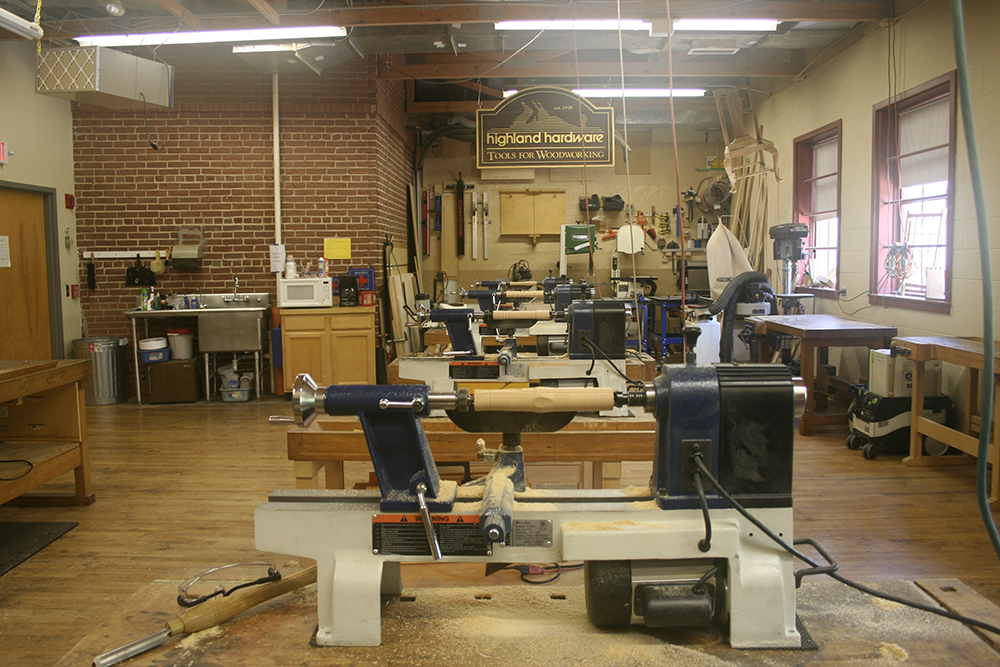
The setting for the course, Beginning Turning, was the shop and classroom situated on the top floor of Highland Woodworking. With wall-to-wall tools, goggles, machines, and examples of woodwork, the room itself makes you want to get your hands busy, which is what we did almost immediately.

Our classroom and shop for the day

Our classroom and shop for the day

Hal Simmons, our instructor for the day, kicked off the class by introducing his own woodworking history. Having taught since the 1990s at Highland and with a background as a Red Cross disaster response volunteer, I felt we were in good hands to safely fire up the power tools.

The first step for us was going over the basics of the lathe, from the different types on the market to how to adjust the speed. Our small class of four included eager students with a variety of backgrounds, from someone interested in getting into pipe making to one who was gearing up for a chair making course. Because of this, we had a range of goals and different experiences, which Hal tried to tailor his turning tips towards.

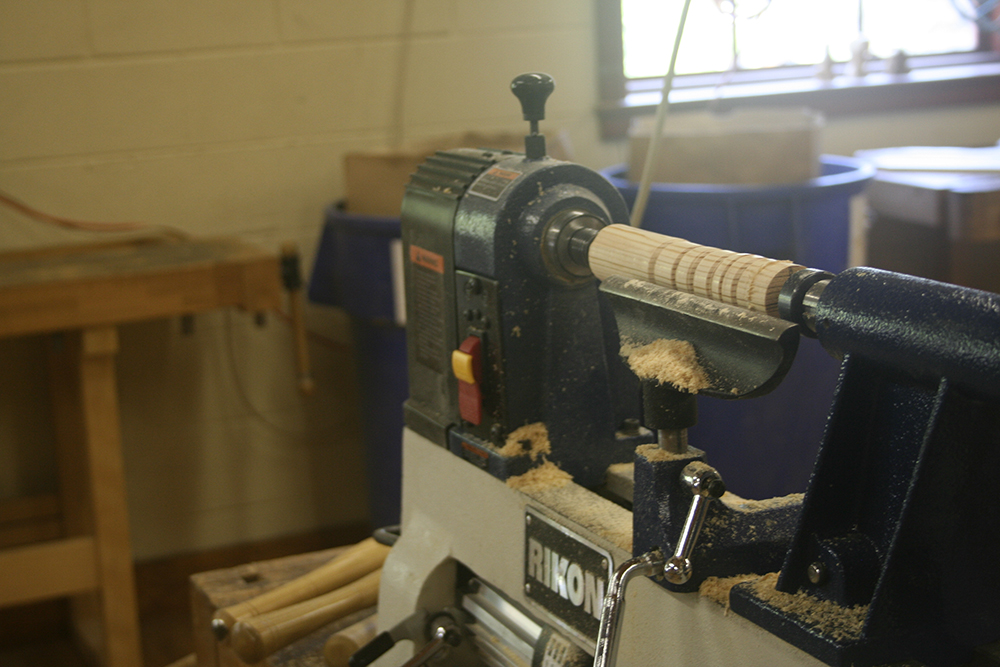
After reviewing tool names and basic safety, particularly with where to position oneself while working on the lathe, we began by setting up blocks of scratch wood and using a spindle roughing gouge to bring them down to workable cylinders. From there, our focus was on learning about the different shapes – coves, beads and planes – that we could create.

Practice piece

Practice piece

For me, one of the lessons that stood out was in how to handle the relationship between the tools and the lathe. Instead of putting in force, Hal described letting the machine do the heavy lifting and being there as a guide. For anyone who has sat with a sewing machine, as I often do, this is a remarkably similar mantra. When you first learn to sew, there is a tendency to push and pull the materials through instead of letting the foot of the sewing machine do its job. While the parallel between the lathe and sewing was a helpful point of reference, it did not necessarily make it easier to train my muscles for the turning tools though!

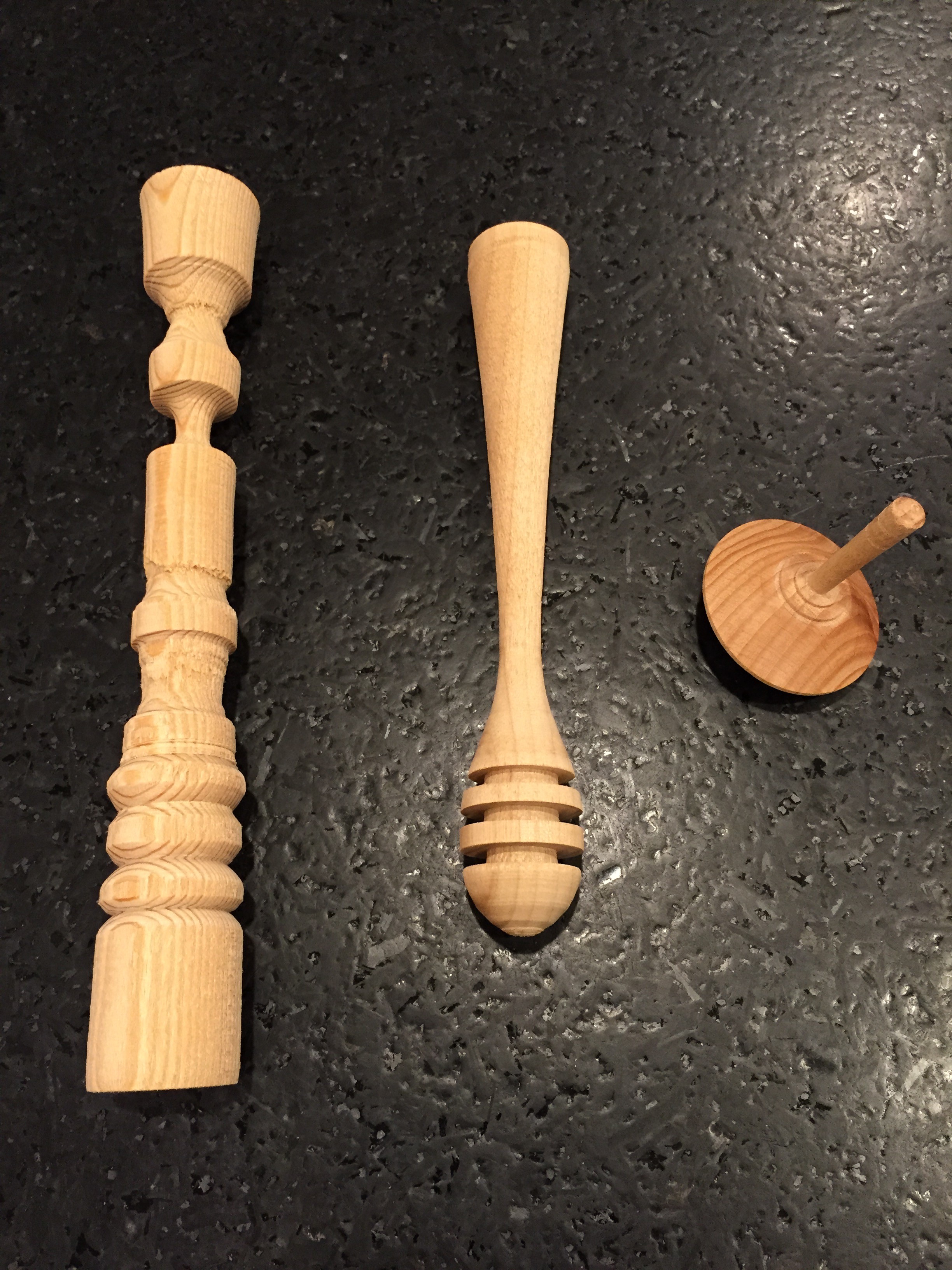
In particular, creating coves (concave shapes), proved difficult for me, but with a class of only four people, I had plenty of help in getting the angle between myself and the tools corrected and adjusted until I was able to work on our projects for the day: turning a honey dipper and then a spinning top.

What I enjoyed about each new step we learned though was the emphasis on a process. Not unlike the work I did with saws in high school, it is nice that there are steps that you need to follow in turning. For example, beads were made by “opening the flute,” “rubbing the bevel,” “engaging the cutting edge,” and then lifting and rolling the tool until the flute appeared closed.

For me, this simple procedure made it easier to tackle than, say, clay sculpting or drawing where a certain amount of disorder is needed before creative pictures or pieces can form. While it takes a bit to see where the end turned product is going, it is nice to be able to have a structure to follow as a complete novice.

Beyond the structure, another advantage to turning as a beginner class is that the machine itself lacks some of the intimidation that can come with a table saw or bandsaw. While just as much care needs to be taken around each, there is less of a fear factor to jumping in with the lathe than in overcoming some of the nerves of having a rotating blade in front of you.

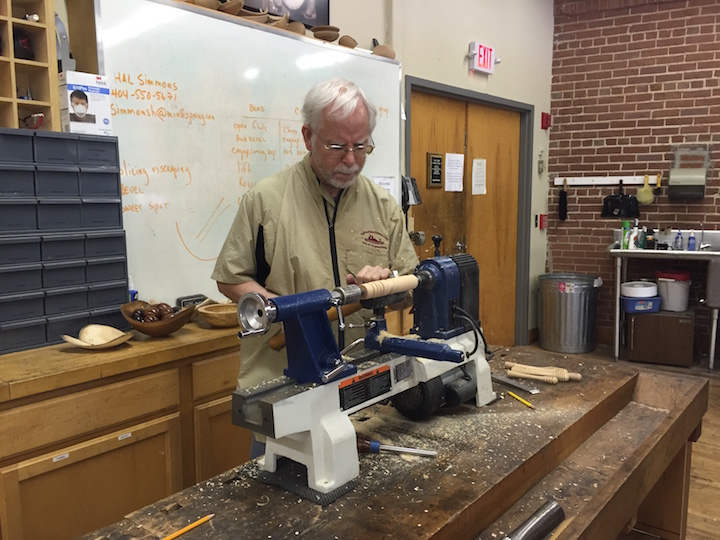
Demonstration

Demonstration

In learning our way around the machine, Hal demonstrated each new cut or process for making an object and then let us take over at our individual paces (my pace being pretty slow) and individual work stations – each equipped with a lathe and tool box. From there, we got the hands-on help needed to go from making wonky cuts to clean looking pieces that began to resemble the elegant samples.

What I did not expect during the day and during the hands on class was a bit of a history lesson along the way. Hal managed to tie that in though, explaining how the 45 degree angle of the skew tool is a descendant of the French guillotine and describing the historical changes to the clutch, which we needed for the small, delicate spinning tops.

I just recently began reading Malcolm Gladwell’s book, Outliers, which discusses the need to put in 10,000 hours of practice to achieve mastery in a field. While seven hours is a fractional step in that direction, it was definitely a great taste of turning, and Hal provided advice on how to take what we learned a step further. His suggested practice is simply taking a piece of wood and forming a line of coves and beads each day to build up the muscle memory for crafting designs.

Completed honey dipper and top alongside practice piece

Completed honey dipper and top alongside practice piece

If you are looking to try some woodworking where you can end with a tangible product and also see the direction in which you can carry the skills, then turning is definitely for you. Even if you may not have a lathe at home or access to one elsewhere, I had the chance to come out with a greater appreciation for how items that have always been around me are made and the work that goes into handcrafted objects. Understanding how to really work with a piece of wood to create something new comes with a sense of gratification not available in an IKEA showroom.

CLICK HERE to read the August 2015 issue of The Highland Woodturner.


Aug 112015
 

EDITOR’S NOTE: We would like to introduce our newest blogger/store reporter, Mollie Simon, a Journalism major at The University of Georgia who has recently begun pursuing her interest in woodworking.


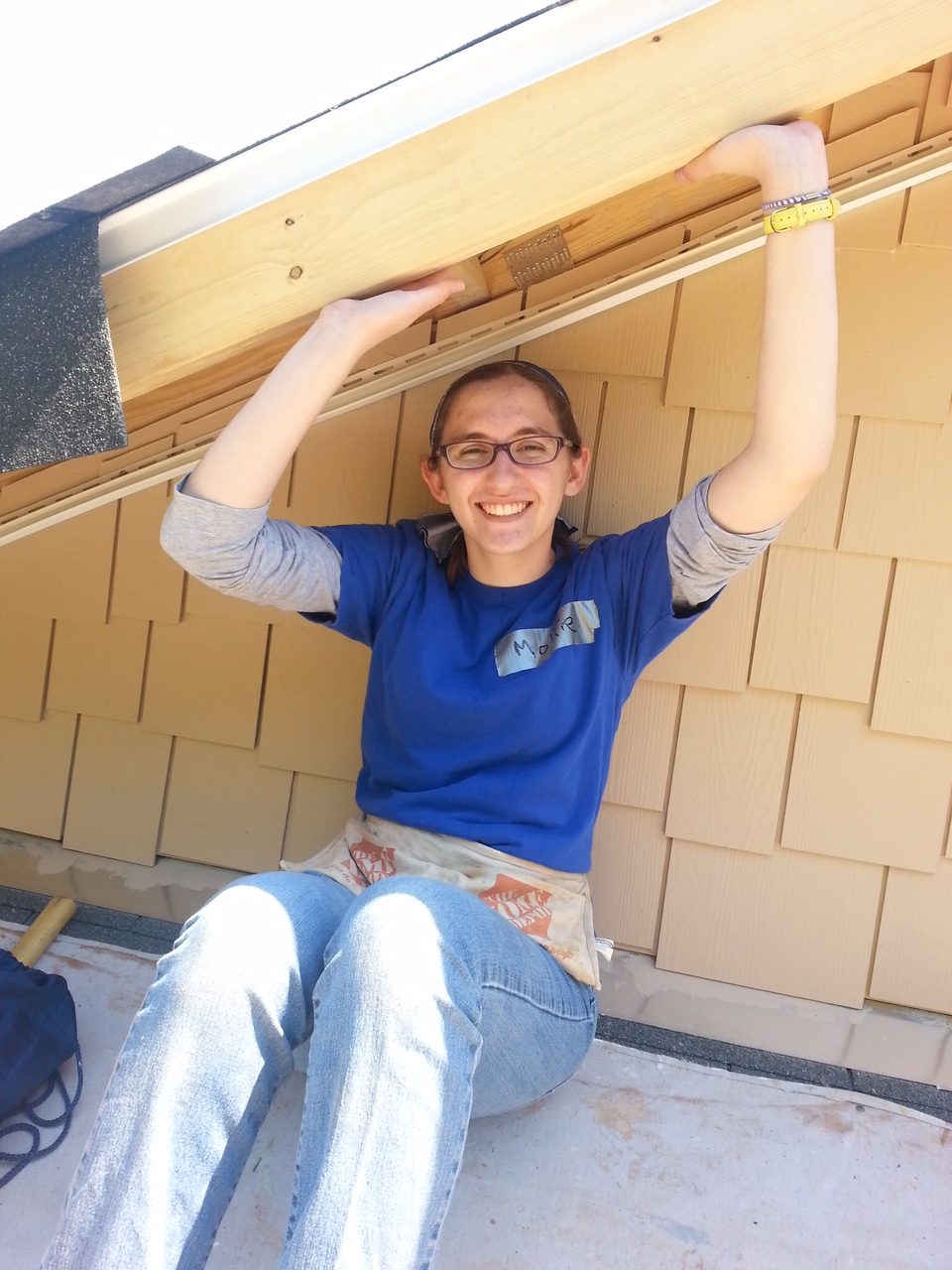
IMG_1036If I were to describe my current woodworking skill-level, I would put it about a half step below symmetrical bird feeder construction and a half step above IKEA shelving assembly. As a sophomore journalism student at the University of Georgia, I tend to build ideas with words more often than with hammers and nails.

Despite that, I am a tinkerer at heart, and am eager to learn my way around a wood shop and figure out how to craft new projects. My dream is to become a journalist and someday own a farm, a bakery, or a bed & breakfast (or maybe a combination!), so I know that the ability to work with wood tools will be handy.

Usually, I spend my free time bent over my sewing and felting machines, seam-ripping my way through fabric and designing zipper-laden bags. I have probably made enough hats, scarves, skirts, quilts and other miscellaneous items that you could stack them up to make a solid set of chairs; but, if you gave me the wood and tools to make a real chair right now… well, you might be sitting on the ground for a while.

Hopefully though, I will soon be graduating from IKEA assembly to bigger, better, and more solidly crafted things as this Saturday, I will be taking my first class at Highland Woodworking. I am excited to have the opportunity to blog about the class, Beginning Turning with Hal Simmons, and share it with my fellow novice woodworking fans through Wood News and The Highland Woodturner.

Having grown up in Atlanta, I remember passing Highland Woodworking many times and am hoping to now combine my interest in woodworking with my love for words by writing about events at Highland and also writing about different classes.

With this first class, my goals are pretty simple: get to know the lathe and progress from mitered corners to learning how curved wooden items are crafted.

While I had the chance to take four years of engineering classes in high school, I never did a great job of working on independent projects at home and moving from merely piecing wood together to piecing it together with style. I got to learn my way around AutoCAD and befriend the miter saw, table saw and bandsaw, but there were endless hand tools and machines I never touched. Fortunately, it is never too late to change that.

What has always drawn me to sewing is what also inspires me about the art of woodworking: the ability to create something new and tangible at the end of a day’s work. I am looking forward to sharing what I can turn out in a day this Saturday!

CLICK HERE to read Mollie’s blog about the actual class.


Aug 072015
 

augustwnWe’re in the last stretch of Summer and woodworking season is just around the corner, but that doesn’t mean you can’t get an early start on your upcoming projects! We’ve just released our August 2015 issue of Wood News Online full of project ideas, woodworking tips, shop ideas, and more!

This month’s issue includes:

Carving a Bernese Mountain Dog– Linda Master specializes in carving miniatures and this month she goes through the process of carving a miniature bernese mountain dog at 1:12 scale, and it even includes the use of alpaca fiber for the fur.

Working with Reclaimed Wood– Thomas Garcia shares a recent woodturning tool stand he made out of reclaimed wood, and also discusses his homemade recipe for wood filler that is great at taking on stains!

Where are all the Girls in the Shop– This month, Anne interviews Andrea Ramsay, who used to have a job in the technology industry before switching to her passion in hand tool woodworking! They discuss a good beginners project for woodworking…making a straight edge.

Festool Video of the Month– In our newest segment of Wood News, we will be highlighting a different Festool Power Tool each month with our product tour videos on YouTube. This month’s video features the Festool Cordless Field Day!

This month’s ‘Show Us’ series includes:

Show Us Your Shop– We take a look at Tim Schnedetz’s new shop building in Creston, OH, which he built with his son-in-law to replace his old barn garage shop that just wasn’t big enough!

Show Us Your Stuff– We have previously featured Jeff Greenberg in our Show Us Your Carving and Show Us Your Woodturning columns, and this month we are featuring his beautiful woodworking projects that feature a water clear epoxy as an added design element.

Show Us Your Carving– Lamar Holland has learned a lot of his carving skills from his friends at the Atlanta Woodworking Club and he has used these skills to create several carvings that have won 1st and 2nd place ribbons in the Georgia National Fair!

Our regular woodworking tip columns include:

The Down to Earth Woodworker– As always, Steve covers a wide variety of woodworking in his column including a behind the scenes look at the Tormek T-4 Sharpening System, Steve’s most frequently asked questions related to his monthly column and videos, working on a level surface in your shop, and lastly he gives a preview of the upcoming prime shop season.

Finishing: Alan Noel– This month, Alan has a list of steps you can take in order to age new brasses to a soft warm glow to become part of your new furniture pieces or old restored pieces.

Tips from Sticks in the Mud– This month Jim has a workaround for those who don’t yet have the new battery-powered impact drill drivers, as well as a money-saving tip on a replacement for knee pads when you have to be working in the shop on your knees.

Ask the Staff– Steve, one of our customers from Lincoln, NE is looking for a product that can be applied to MDF in order to keep water from penetrating it. Our knowledgable staff has the answer!

Two Minute Safety Tip– This month we brought back a popular tip for the summer that advises you to stay hydrated and keep your blood sugar up in these warm working conditions.

This month’s product reviews include:

Book Review: New Woodworker’s Guide to SketchUp– SketchUp is a very useful computer program for woodworkers and this month Norm reviews Bob Lang’s New Woodworker’s Guide to SketchUp which comes as a CD-ROM and can be used as a guide while you are working in SketchUp at the same time.

Tool Review: Beall Wood Buff Kit– Jeff Fleisher gives us a full review and video demo of this great finishing kit for woodturners that can be used with your lathe to apply beautiful finishes to your projects.

And lastly we’ve got some great new products and specials this month including:

The Bad Axe Stiletto Dovetail Saw

Tormek T-4 Sharpening System 

Record Power SC3 Geared Scroll Chuck Package

All of this and more in our August 2015 issue of Wood News Online.

Aug 042015
 

No Southern-fried Southern boy wants to be called a Yankee, but we share the characteristics of shrewdness and thrift.  Thus, each month we include a money-saving tip.  It’s OK if you call me “cheap.”

Woodworkers spend a good bit of time on their knees.  Praying for guidance and safety before each working session in the shop is a good way to get started.  Kneeling to work on the floor or work on the bottom of a piece is a common position too.  Kneepads are a good invention even though they restrict blood flow to the lower legs, are really hot and can pinch the skin behind the knees.

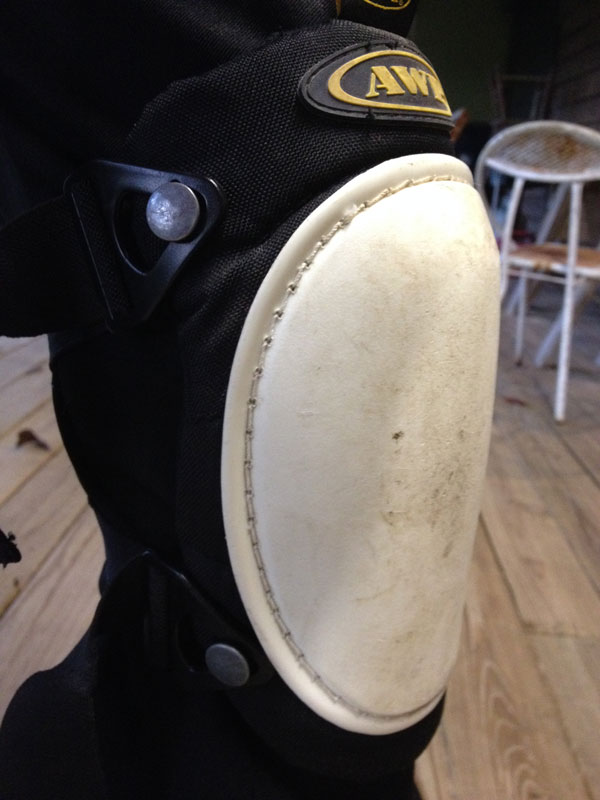
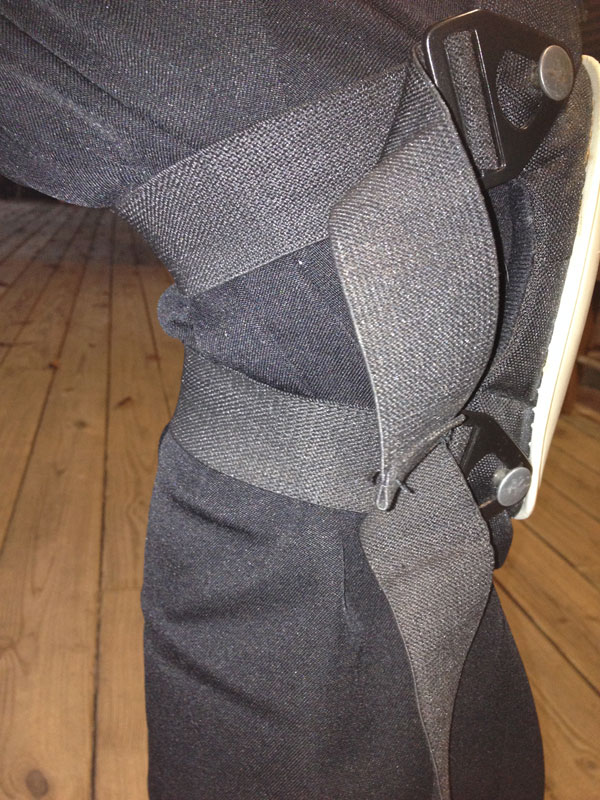
Kneepads are great, especially if you’re working in numerous locations distant from each other. However, they have some drawbacks.

Kneepads are great, especially if you’re working in numerous locations that are distant from each other. However, they have some drawbacks.

Spend much time on the floor with these straps binding behind a flexed knee and you’ll feel them digging in to you.

Spend much time on the floor with these straps binding behind a flexed knee and you’ll feel them digging in to you.

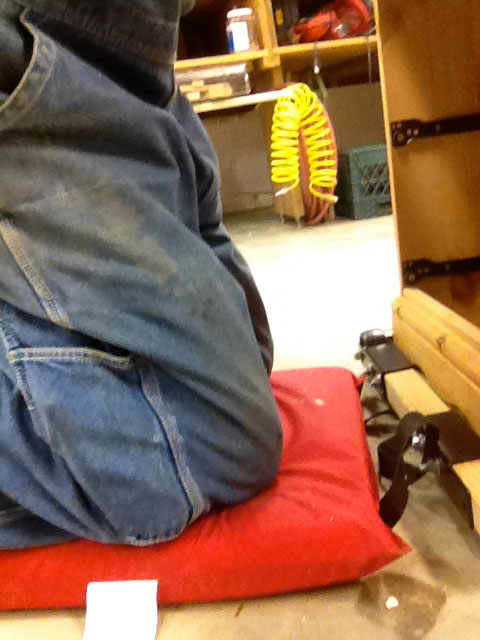
An economical alternative is a throwable PFD (personal flotation device) for kneeling.  It’s thick, soft, durable and withstands getting wet.  It has not one but two handles for hanging when not in use, and is easy to move from one position to another.

A throwable PFD is a comfortable, durable, economical choice that protects the knees while offering a soft, cushioning effect.

A throwable PFD is a comfortable, durable, economical choice that protects the knees, while offering a soft, cushioning effect.

—-

Jim Randolph is a veterinarian in Long Beach, Mississippi. His earlier careers as lawn mower, dairy farmer, automobile mechanic, microwave communications electronics instructor and journeyman carpenter all influence his approach to woodworking. His favorite projects are furniture built for his wife, Brenda, and for their children and grandchildren. His and Brenda’s home, nicknamed Sticks-In-The-Mud, is built on pilings (sticks) near the wetlands (mud) on a bayou off Jourdan River. His shop is in the lower level of their home. Questions and comments on woodworking may be written below in the comments section. Questions about pet care should be directed to his blog on pet care, www.MyPetsDoctor.com. We regret that, because of high volume, not all inquiries can be answered personally.