Highland Staff

May 032016
 
In this month’s Tips column we talk about a project made from some really old pine. How old? At least 100 years.
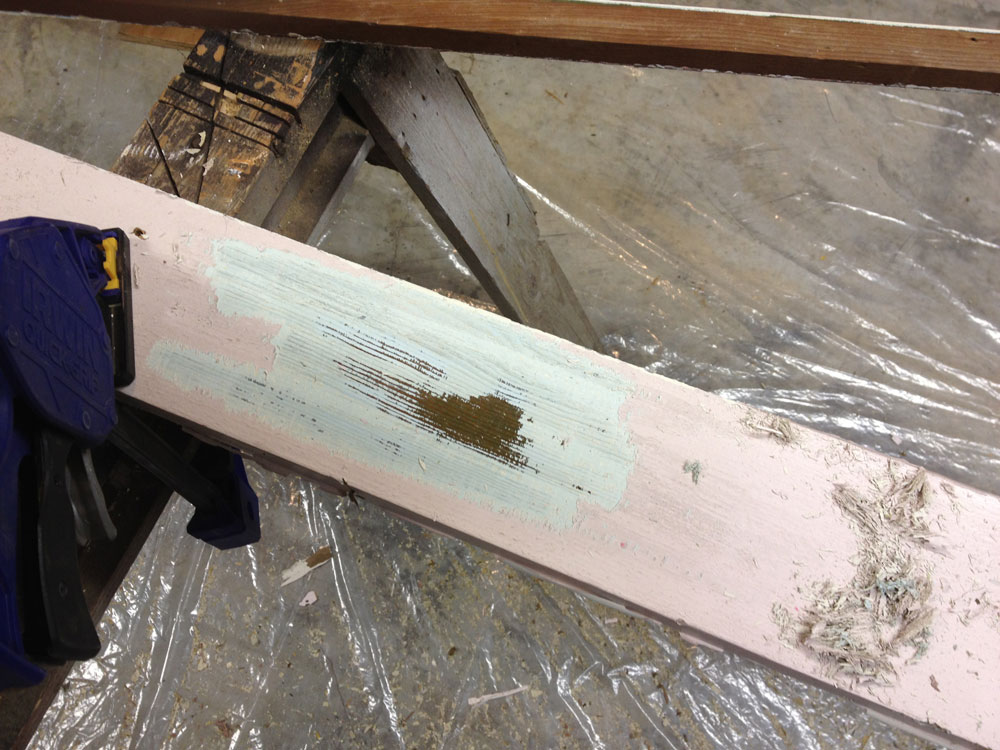
Step one with these 100+-year-old baseboards was getting the years of finish off. There was the pink phase, the white phase and the original varnish phase.
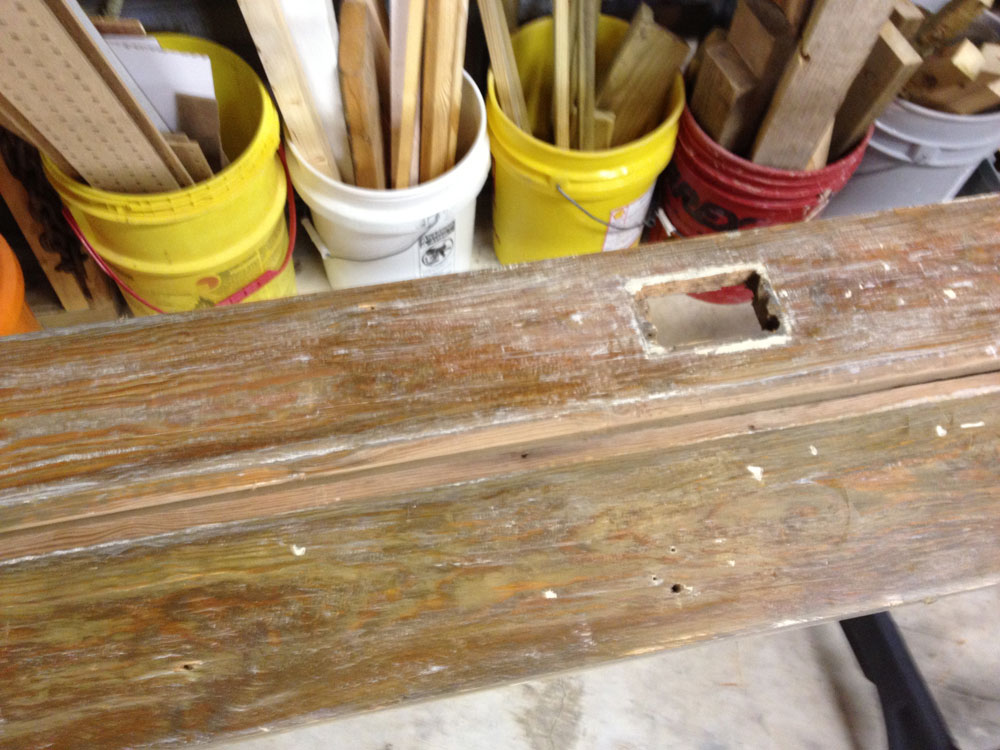
Step one with these 100+-year-old baseboards was getting the years of finish off. There was the pink phase, the white phase and the original varnish phase.

After paint remover and scraping the varnish stood up and said, “I’m here to stay.” To which I replied, “Here planer, planer!”

After paint remover and scraping the varnish stood up and said, “I’m here to stay.” To which I replied, “Here planer, planer!”

One problem that arose was swirls in the wood after sanding. Dust extractor suction turned down? Check! Not pressing down on the sander? Check! Email to Steven Johnson, The Down to Earth Woodworker, for advice? Check!
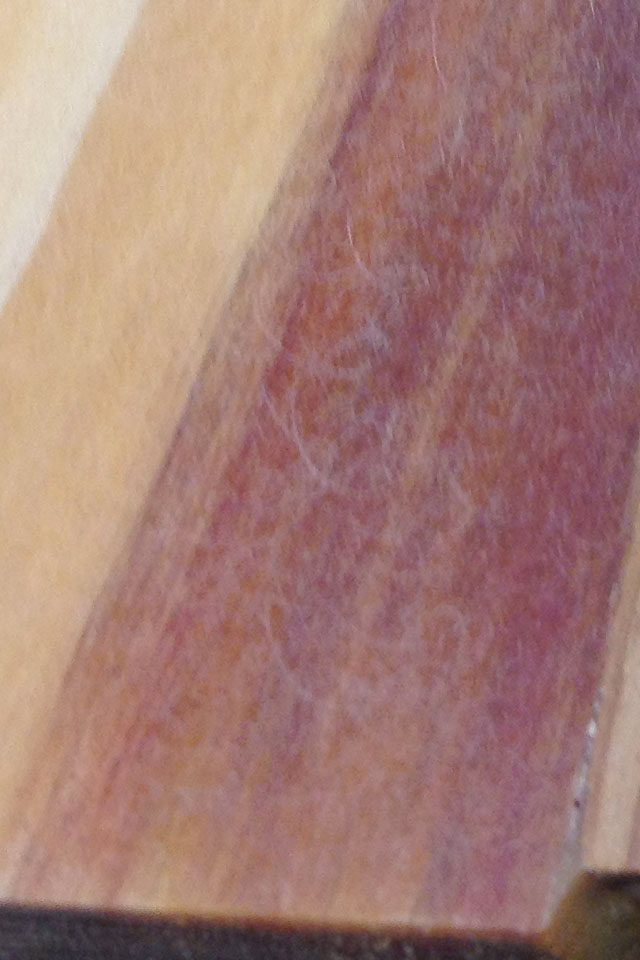
Nasty, annoying swirls. And, no extra time for messing around to find a fix.

Nasty, annoying swirls. And, no extra time for messing around to find a fix.

Steve opined that the resin in the pine was causing the problem, resulting in tiny resin balls in the close-coated sandpaper. Resin balls too small to see with the naked eye, but big enough to make visible scratches.
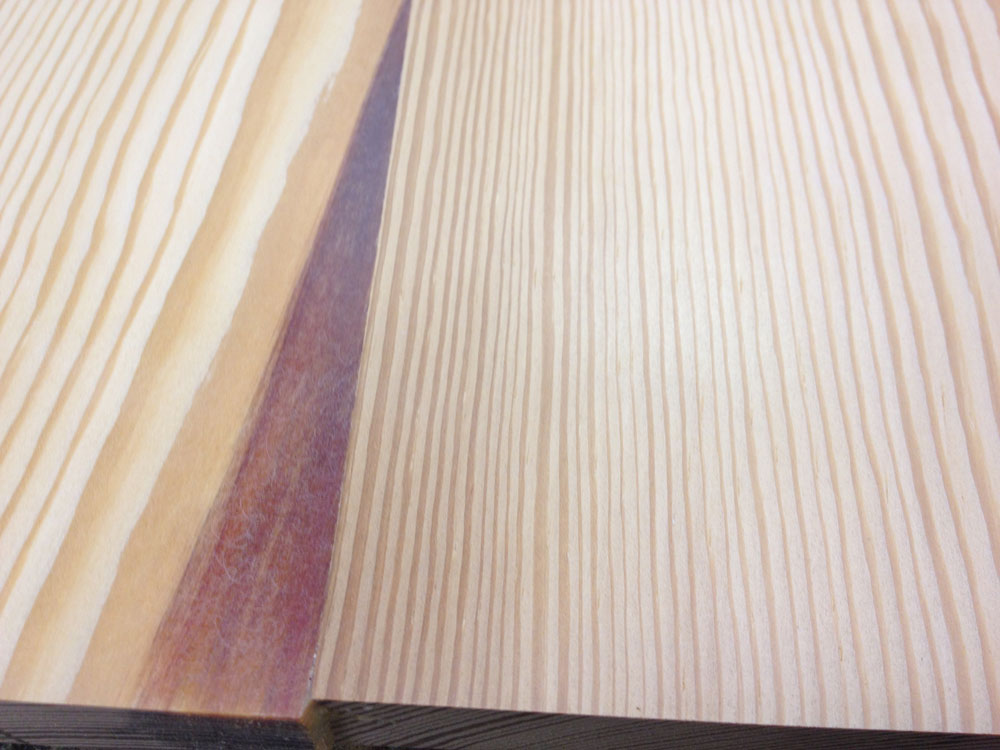
Resin? We’ve got resin to spare!

Resin? We’ve got resin to spare!

I tried going over the already-sanded swirlies with a card scraper and that got rid of the curly-cues, but the wood wasn’t as smooth as I wanted. With a little time and 400 Brilliant sandpaper on the ETS 125, it was much better.
However, what really whipped it into shape was a few minutes with good ol’ 400-grit hand-sanding. Smooth. Scratch-free. Ready for finish.
I had a similar experience a few years ago when I was working with some very busy grain in quartersawn sycamore. Click here to read about it. The wood was beautiful, but it wasn’t going to become smooth with any sort of easy, low-effort technique like random-orbit sanding. Much of the wood was like sanding end grain, so it took a while. Fortunately, the project was small. And, I was in the mood. It was summer. The weather was nice and I was working outdoors. Our back yard is naturally beautiful all year long, so the view was pleasant, too. So, I fit some paper into a sanding block and spent hours just stroking and stroking.
It was very therapeutic. Problem is, with today’s busy lives, how often do we have the luxury of that much time?
Not on this project! It is a birthday present, and the birthday boy is celebrating 7 years on Saturday and today is Tuesday.
And, I’m expected at my “day job” every day this week.
May 022016
 

No Southern-fried Southern boy wants to be called a Yankee, but we share the characteristics of shrewdness and thrift. Thus, each month we include a money-saving tip. It’s OK if you call me “cheap.”

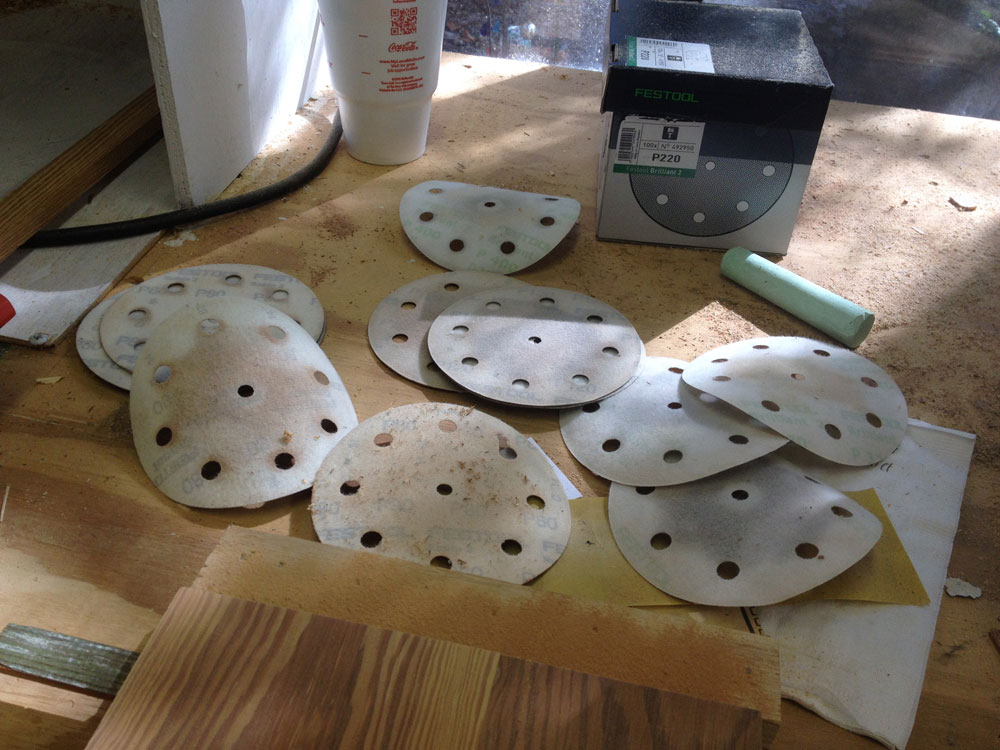
When I first got my Festool Sander, an ETS 125, followed several months later by a 5″ Rotex RO 125 FEQ, I immediately noticed how much longer Festool Abrasives last, compared to other name brands I’ve used.  Because of their longevity, and the associated cost, I hoped to use some again.  However, I was flinging used disks with no particular pattern.

This random orbit disk random flinging technique wasn’t getting it. Some organization was needed.

This random orbit disk random flinging technique wasn’t getting it. Some organization was needed.

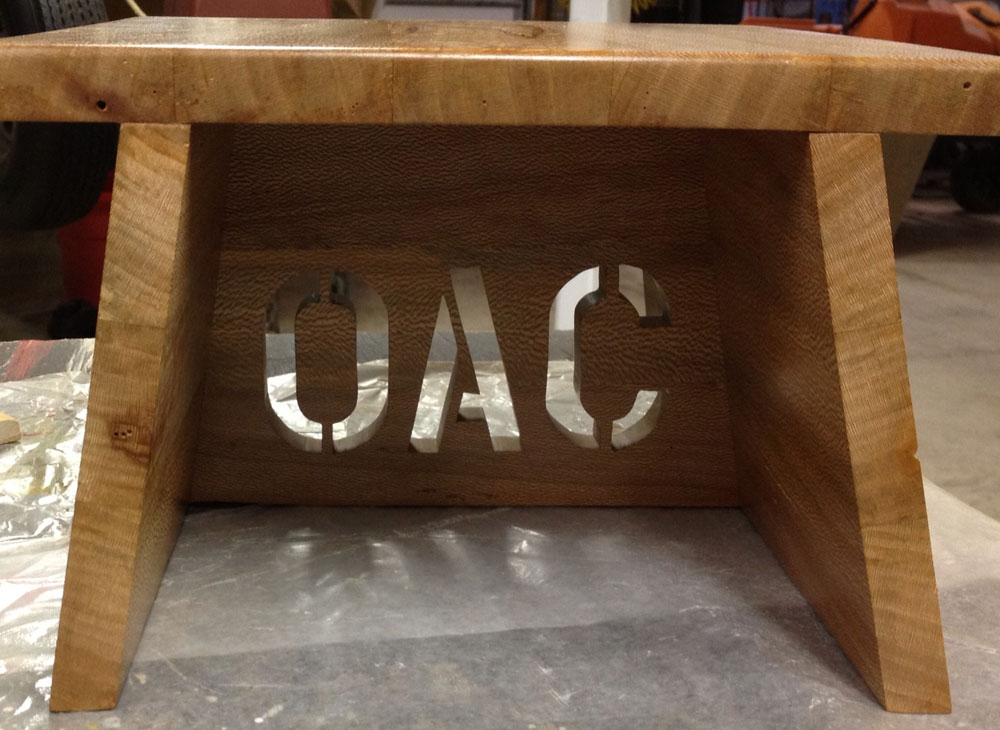
When working on a small project, like this stool, I usually sand all the panels with one grit before moving to a higher number.

When working on a small project, like this stool, I usually sand all the panels with one grit before moving to a higher number.

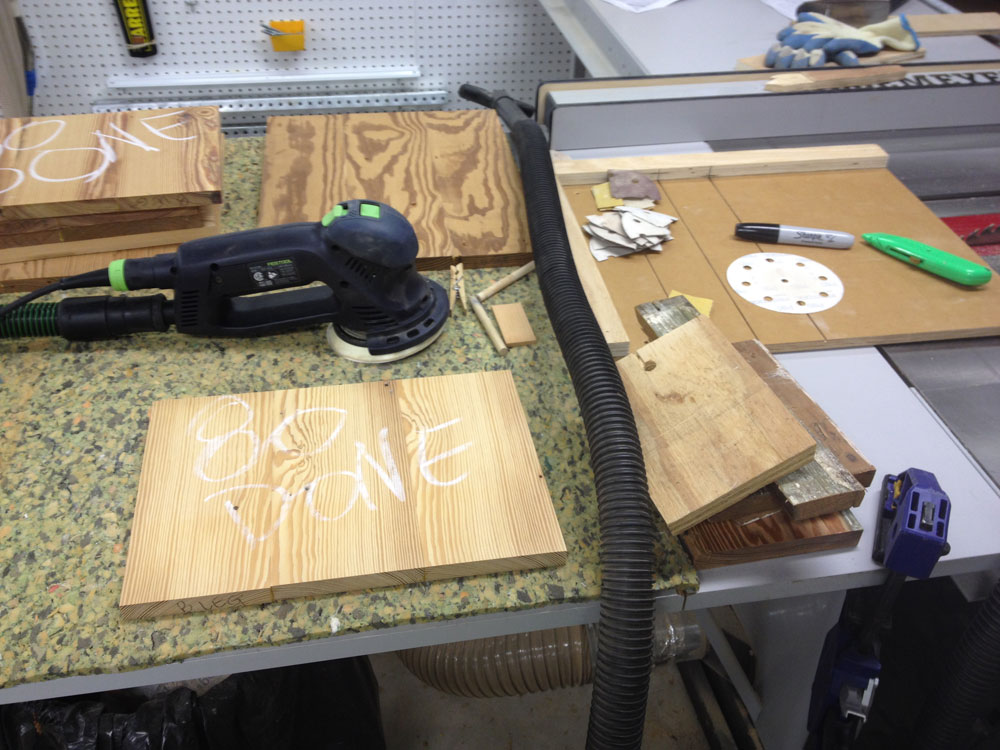
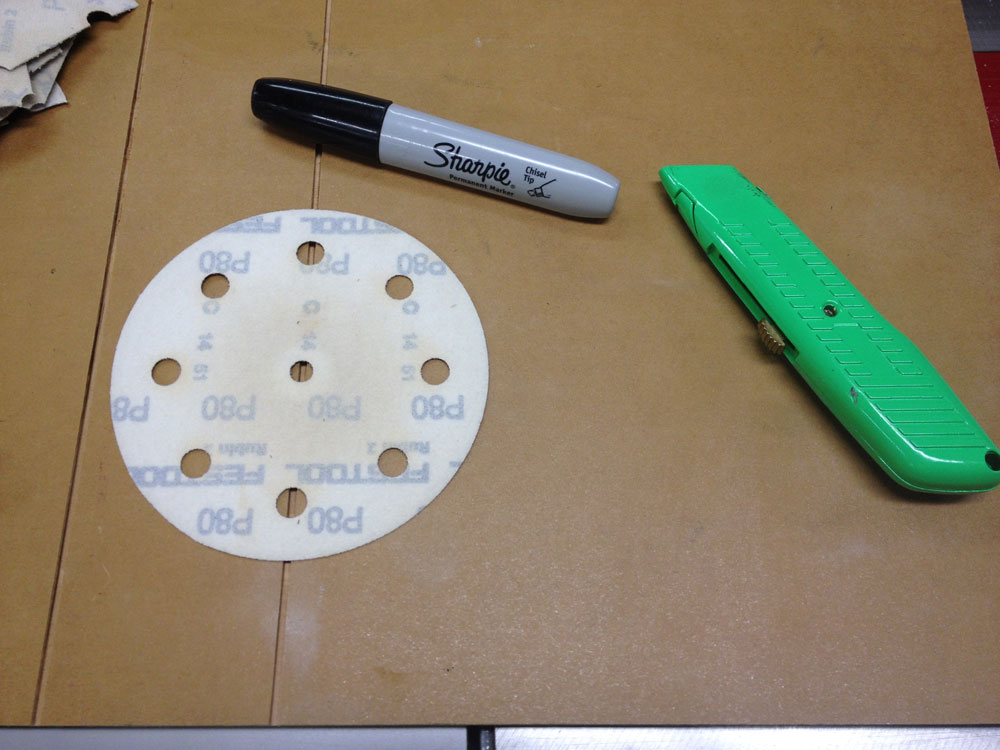
My new routine is to keep one of my sandpaper-slicing jigs handy and, as a disk dies, slap it scratchy-side-down onto the jig with the three middle holes lined up on a scoring groove.

Using the jig you use to cut sandpaper for your quarter-sheet sanding pad, just line it up and follow the dado. Haven’t made that jig yet? Click here to follow the steps.

Using the jig you use to cut sandpaper for your quarter-sheet sanding pad, just line it up and follow the dado. Haven’t made that jig yet? Click here to follow the steps.

Flip out the retractable knife and cut it in half, rotate 90?, cut again and you have four little pieces of sandpaper that can be used for hand-sanding.

If one is too worn out, you’ll know quickly, and you can pitch it.  This technique eliminates using tired, old disks that might otherwise get into your “good, but used” stack.

If one of your cut-up sandpaper remnants doesn’t have the grit imprinted, take a few seconds to jot it on the back. You’ll be glad you did!

If one of your cut-up sandpaper remnants doesn’t have the grit imprinted, take a few seconds to jot it on the back. You’ll be glad you did!


Jim Randolph is a veterinarian in Long Beach, Mississippi. His earlier careers as lawn mower, dairy farmer, automobile mechanic, microwave communications electronics instructor and journeyman carpenter all influence his approach to woodworking. His favorite projects are furniture built for his wife, Brenda, and for their children and grandchildren. His and Brenda’s home, nicknamed Sticks-In-The-Mud, is built on pilings (sticks) near the wetlands (mud) on a bayou off Jourdan River. His shop is in the lower level of their home. Questions and comments on woodworking may be written below in the comments section. Questions about pet care should be directed to his blog on pet care, www.MyPetsDoctor.com. We regret that, because of high volume, not all inquiries can be answered personally.

May 012016
 

Welcome to “Tips From Sticks-In-The-Mud Woodshop.” I am a hobbyist, not a professional, someone who loves woodworking, just like you do. I have found some better ways to accomplish tasks in the workshop and look forward to sharing those with you each month, as well as hearing your problem-solving ideas.

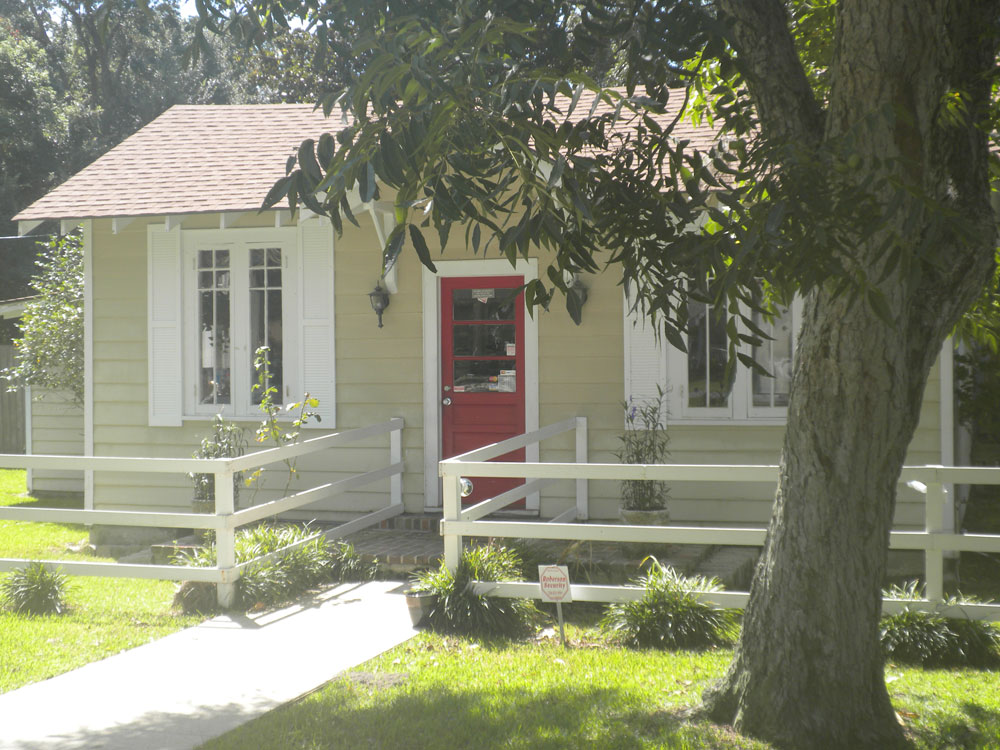
The building in which our clinic is housed is over 125 years old.  That is evident when we climb into the attic, as the framing members are visibly full-dimensioned two-bys.

78_1

At only 824 square feet, we’re not expansive, we’re cozy. Our clients and patients feel right at home when they visit.

During one of the many times I’ve painted in 36 years of ownership, I took up the baseboards and replaced them with new boards.  The varnish on the old boards was simply impossible to clean up, so it was much easier to just start from scratch.  I couldn’t bring myself to throw them out and now I’m using those boards to make children’s stools for the two sons of our receptionist.  I like using wood with a connection to the project.  Their age is exhibited in grain that one cannot buy in today’s pine.

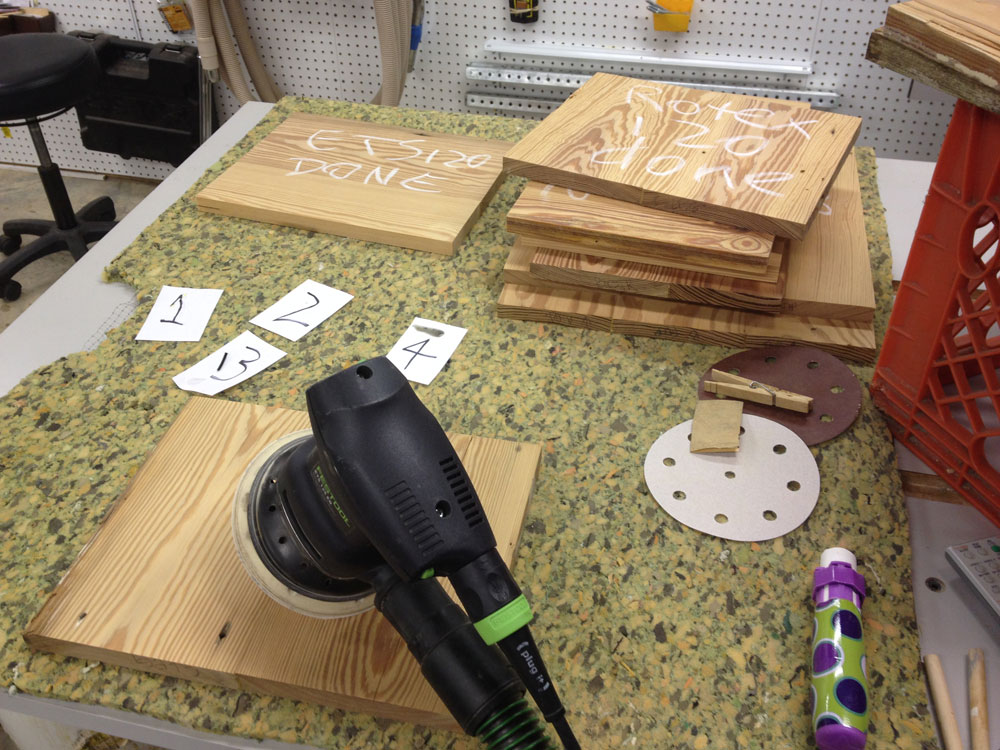
The wood cleaned up beautifully with a little planing, after which I began gluing up panels.  The Festool Domino made panel component alignment simple, after which I began sanding.  I began with Festool Rubin 60 and determined the panels would need four passes on each side, alternating between vertical and horizontal patterns.

Between watching a decidedly un-presidential debate and the evening news, I found the mindlessness of sanding needed just a bit more mindfulness.  I couldn’t seem to remember how many passes I’d made.  To remedy that problem, I found some scratch paper on the table and tore it into four roughly equal-sized pieces, writing on them  “1,” “2,” “3” and “4.” Now all I had to do was remember to flip over a number at the end of a pass.

Or, was it at the beginning of the pass?

Four little scraps of paper. Save ‘em for next time if you’re really cheap, like me. Or, make new ones next time and it’s one less thing to remember where you put them!

Four little scraps of paper. Save ‘em for next time if you’re really cheap, like me. Or, make new ones next time and it’s one less thing to remember where you put them!


Jim Randolph is a veterinarian in Long Beach, Mississippi. His earlier careers as lawn mower, dairy farmer, automobile mechanic, microwave communications electronics instructor and journeyman carpenter all influence his approach to woodworking. His favorite projects are furniture built for his wife, Brenda, and for their children and grandchildren. His and Brenda’s home, nicknamed Sticks-In-The-Mud, is built on pilings (sticks) near the wetlands (mud) on a bayou off Jourdan River. His shop is in the lower level of their home.Questions and comments on woodworking may be written below in the comments section. Questions about pet care should be directed to his blog on pet care, www.MyPetsDoctor.com. We regret that, because of high volume, not all inquiries can be answered personally.

Apr 272016
 

tools

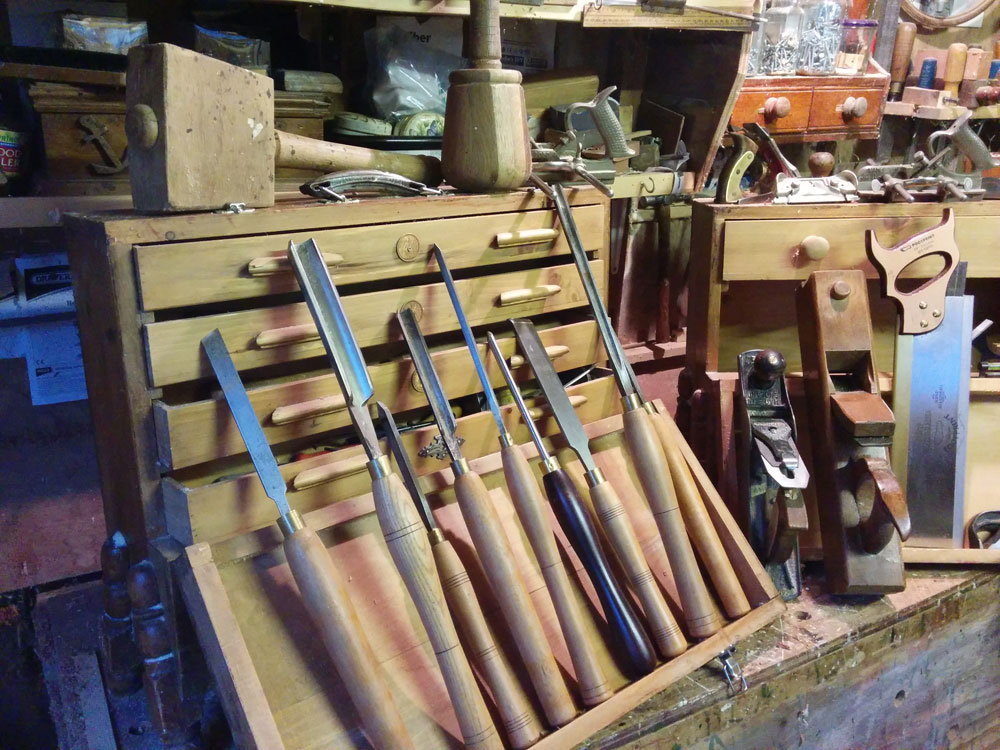
As I have said before, my wife is constantly insisting that I have three of every woodworking tool ever invented. Of course that’s not true. There are many of them that I only have two of. (However, at last count I had 37 different chisels, 28 pairs of pliers and 19 sharpening stones.) Now please understand; I’m not one of those tool- collector guys who own lots of shiny new tools – but hardly ever makes anything with them. I assure you, all of my tools are well used – I usually have about five or six projects going at any one time – and all are kept sharp and ready to use at a moment’s notice.

In addition, I also have a usual complement of power tools – table saw, drill press, lathe, band saw, etc, etc. Not to mention all sorts of sanding, clamping, gluing, and finishing supplies and other goodies.

So what’s the problem?

Well, it’s this.

I was 86 years old on my last birthday in October. I’m still active and going strong and I keep saying that I plan to live forever. (So far, so good.) But I also know that one of these days, those tools will need to be looking for a good home – preferably with someone who will both appreciate them and use them with the care and love that I have.

I figure that my collection is worth somewhere around $30,000 and one option would be for my wife to sell them and enjoy the proceeds. Trouble is, she surely doesn’t know the value of most of them and wouldn’t know their fair market value. And it would make me turn over in my grave to have her sell one of my $45.00 chisels for 25¢ at a garage sale to some guy who would turn around and sell it for $2.00 at a swap meet.

Of course I’m sure someone will ask, “Why not pass the collection along to your children?” Neither of my grown children would be interested. Neither would any of my step-sons.

It has also occurred to me that another perhaps even better idea would be for her to donate the entire lot to some school or organization that would put it to good use training the future woodworkers of America.

I would love to hear from some of my fellow woodworkers out there about their ideas or suggestions for solving my problem. Thanks in advance.

Apr 082016
 

Fig 1 Walking Stick Collection-2 copy_edited-1

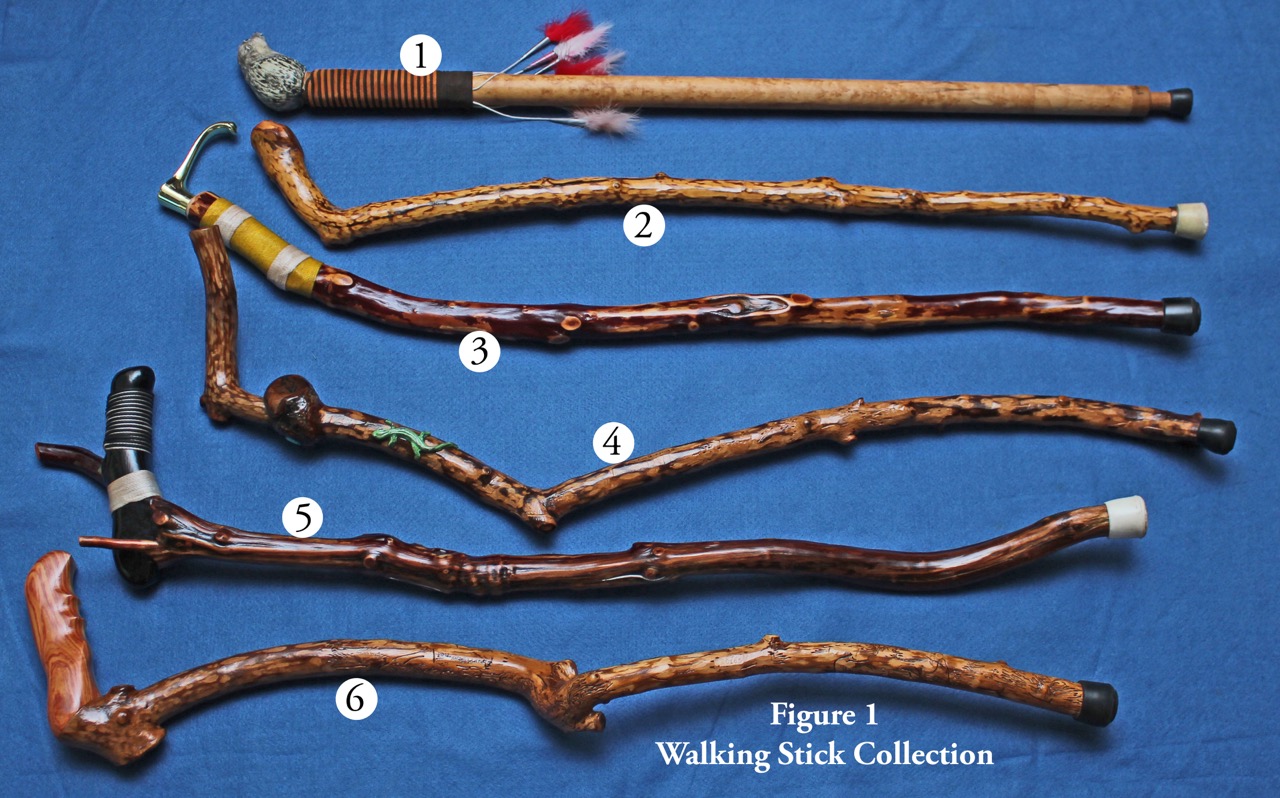
For the past several years I have been forced to start using a walking stick for better balance and stability. When people ask, I tell them that I get unsteady when I drink too much. That usually stops any further questioning. The first one that I made was a salvaged branch from our backyard apricot tree that finally died after years of supplying us with a bountiful supply of apricots. See number 2 in Figure 1. I took it everywhere with me and I was always getting compliments on it. That prompted me to get into the “business” of making walking sticks. I don’t make them for sale; just for my own use.

The next one that I made is number 1 in Figure 1. It is made from a length of 1-1/2″ diameter birds-eye maple Hollowood. Hollowood is 4-ply plywood tubing that I used to sell when I was in the custom branding iron business a few years ago. Sadly, the Hollowood company went out of business several years ago and the material is no longer available. I added a cast replica of a baby seal head and also a series of rawhide windings and some replica Indian feathered bells. The story is that the American Indians would convert the white man’s tin cans into small, cone-shaped “bells” and then decorate them with feathers. They make a nice tinkling sound when I walk with it.

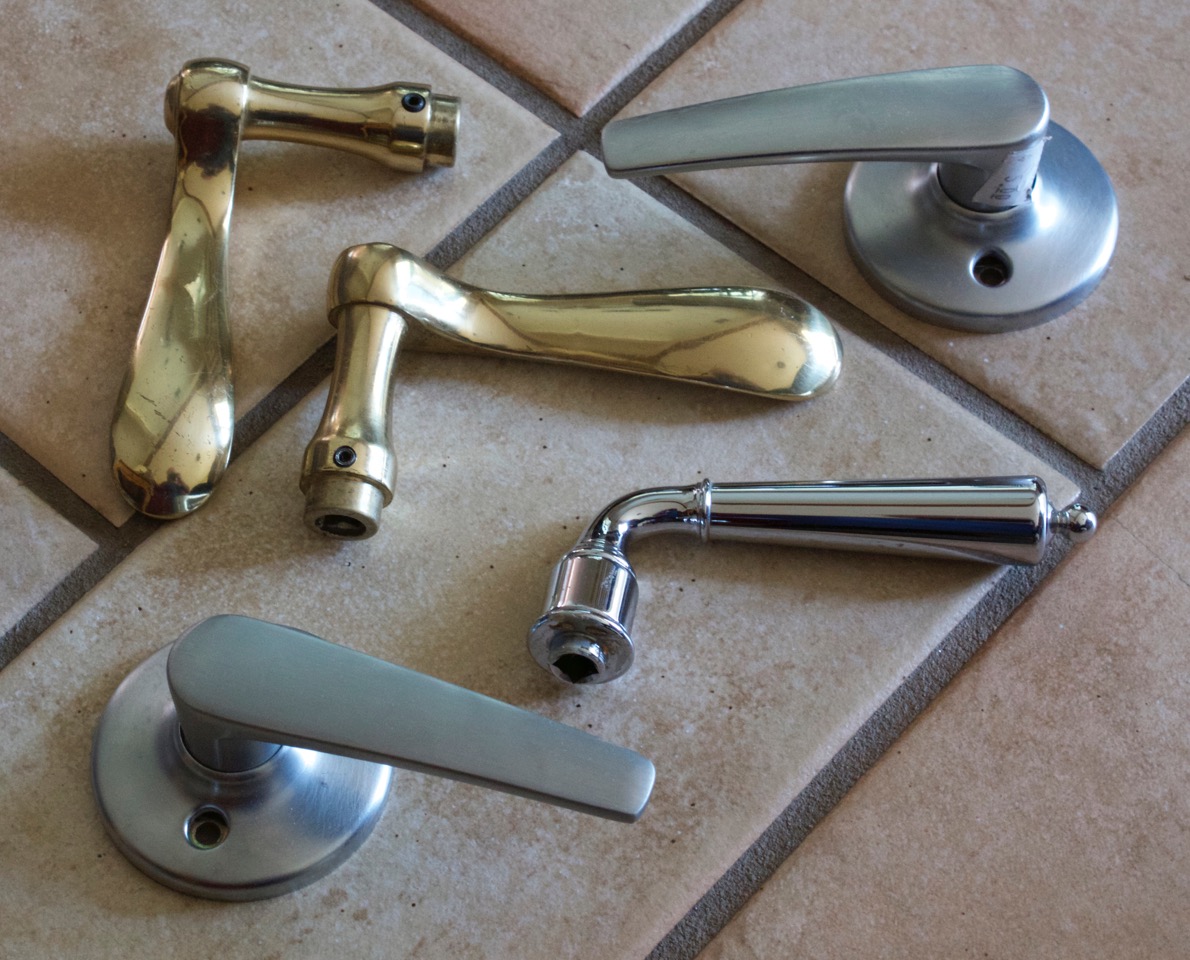
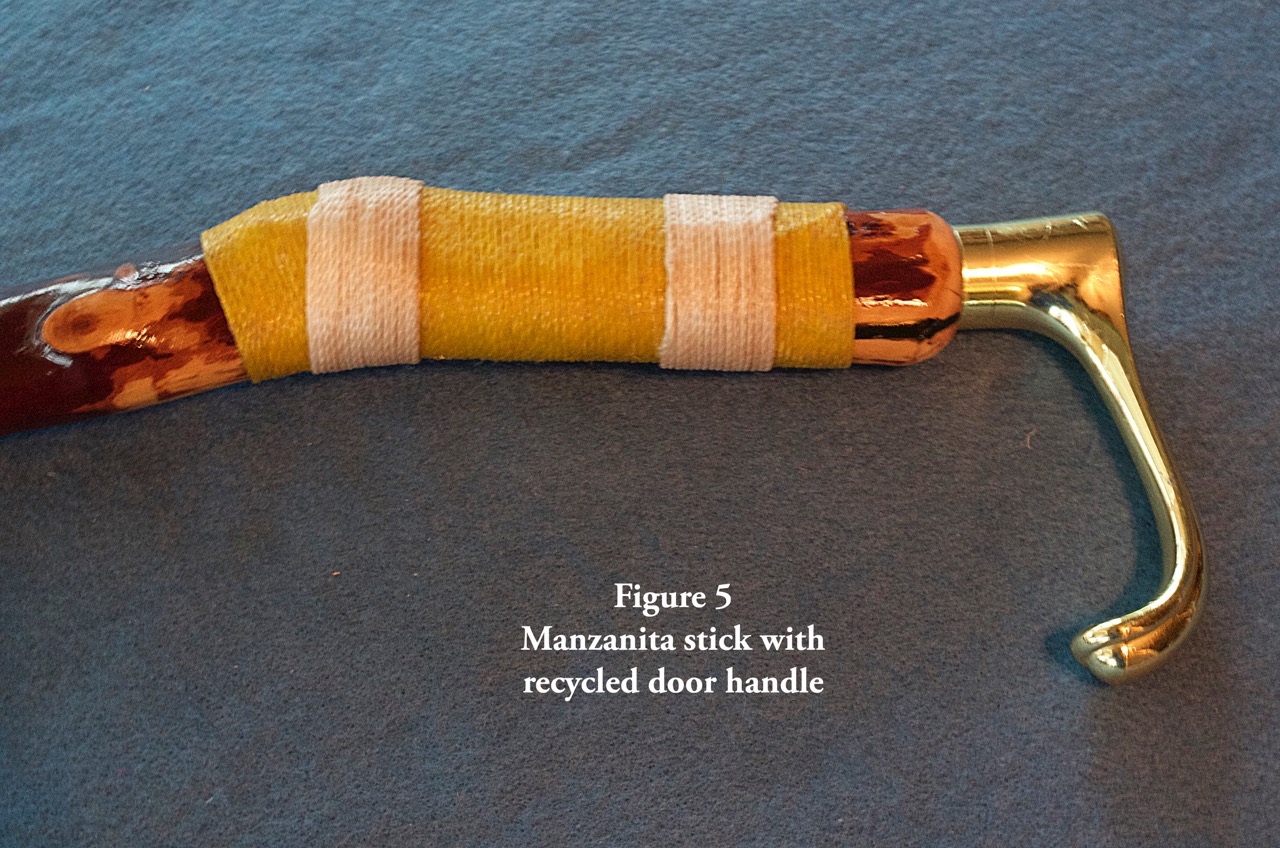
Number 3 in Figure 1 is made from Manzanita to which I added a recycled brass-plated door handle. I think this is a great idea for making walking sticks. You can buy walking stick handles online but most of them are pretty expensive. Instead, I nose around in thrift shops and recycling centers. Many towns have companies that recycle all sorts of good stuff from old buildings. They usually have a good selection of door handles for only a few dollars.

Waiting to become walking sticks

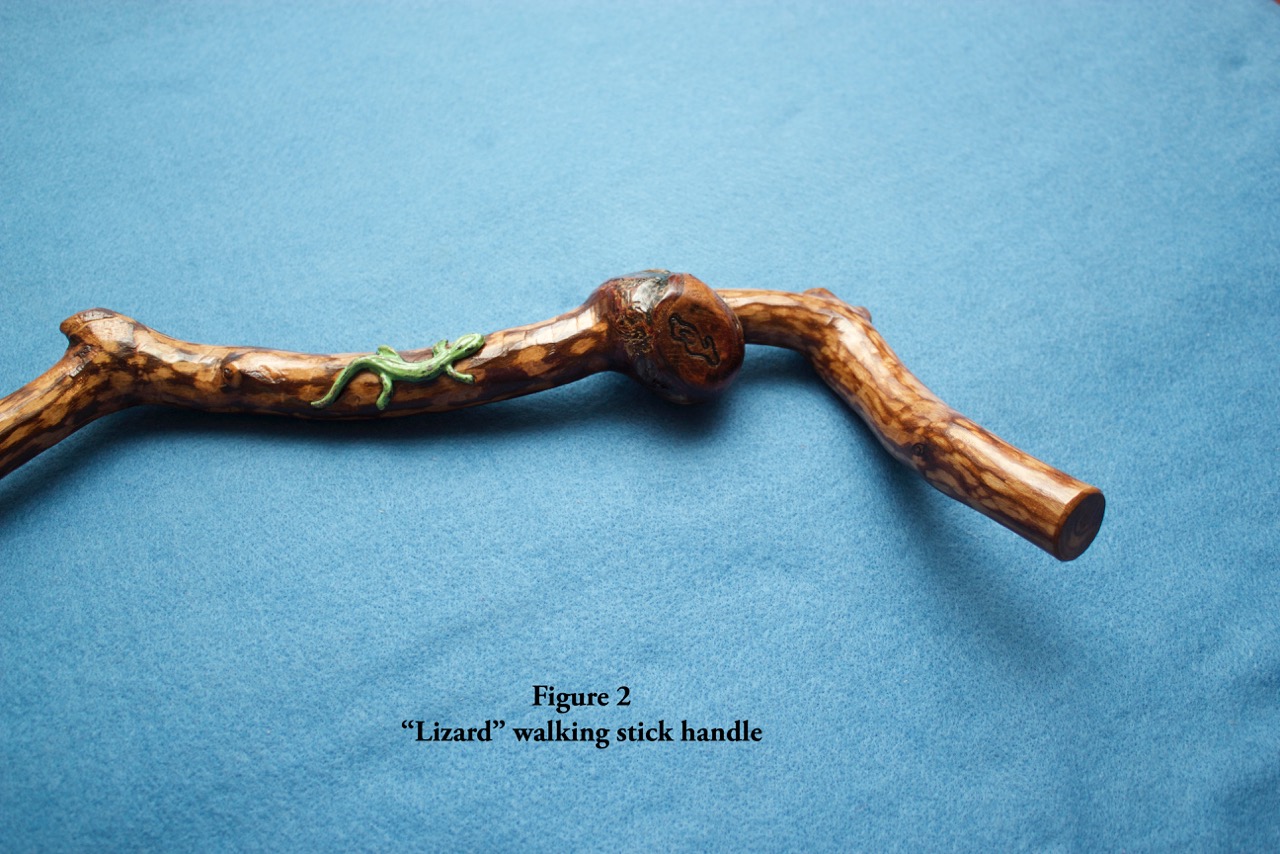
Number 4 in Figure 1 is made from two pieces of unknown wood. The original walking stick ended at the large burl seen at the longer end of the stick. The stick never quite satisfied me and I later modified it by adding the smaller section on the left. I embedded some turquoise here and there and then I bent and formed a cast metal lizard to fit the stick and glued him in place.

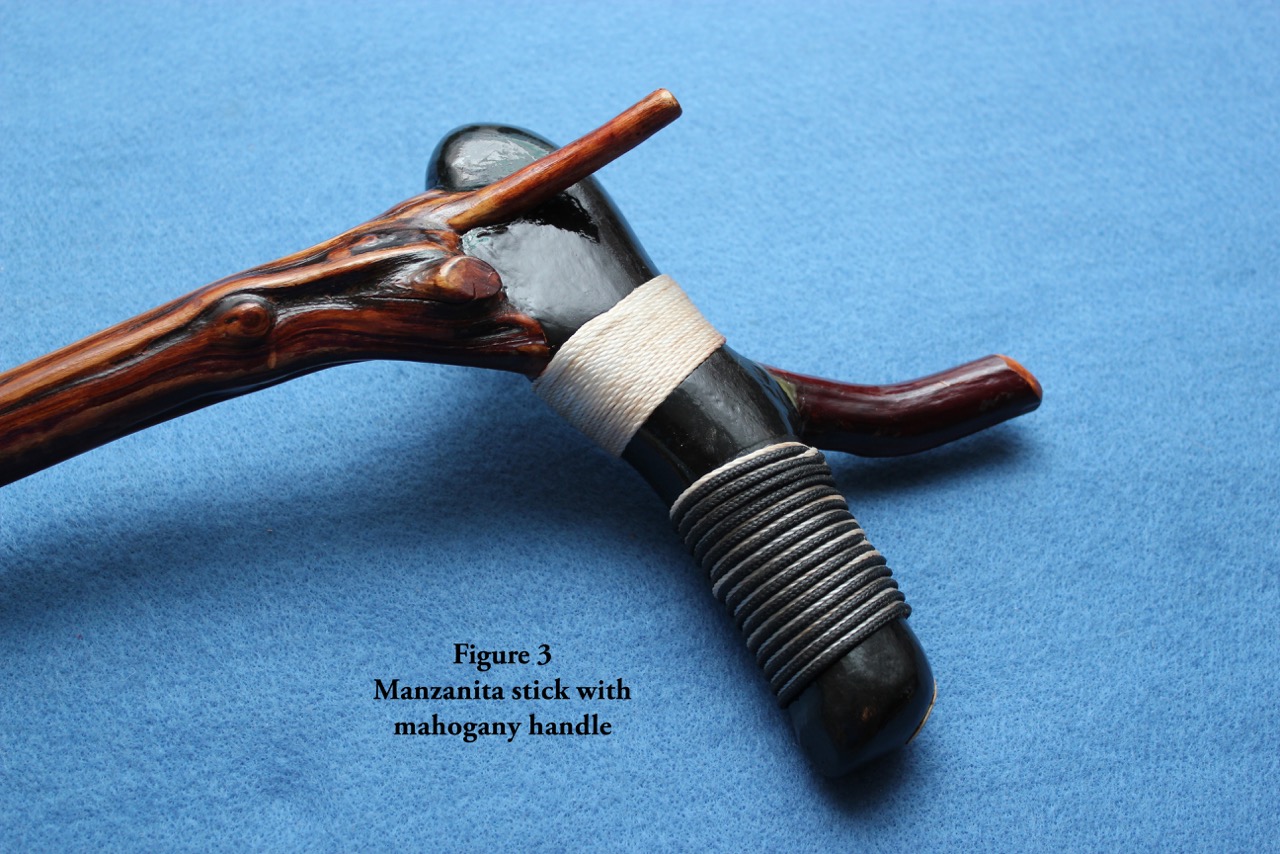
Number 5 in Figure 1 is made of Manzanita and mahogany and probably took me the longest time to complete. I added the mahogany handle at the branch end of the stick. It may not be immediately clear, but there are three branch ends coming out of the handle. (One of them is “buried” inside the custom-carved mahogany handle). The handle itself has seven coats of black lacquer and is wound with alternating rows of black and white polyester cord.

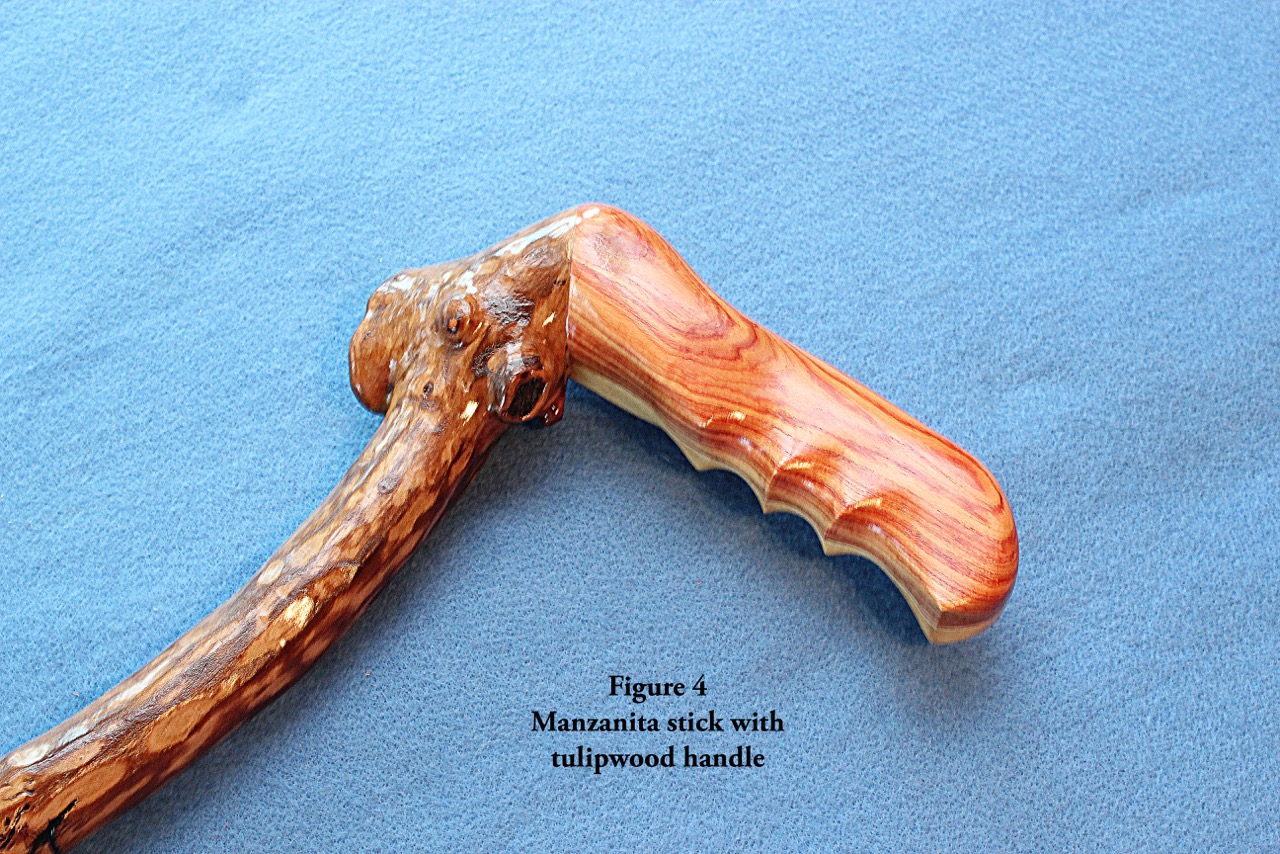
Number 6 in Figure 1 is made of an unknown wood with a custom-fit tulipwood handle. The handle is actually made of three pieces – two pieces of book-matched tulipwood with a thin holly strip between them.

Each of my sticks has some different kind of handle on it. See Figure 2 for the way that I added a supplementary handle to the original stick that ended at the burl-like knob.

Fig 2 lizard handle

Figure 3 shows the detail of the stick with the mahogany handle.

Fig 3 mahog manzanita handle

Figure 4 shows how I used a beautiful piece of book-matched tulipwood to add a handle to the stick.

Figure 4 tulipwood handle

Lastly, see Figure 5 for the way I used a re-cycled brass-plated door handle as a handle for my stick.

Figure 5 Cane Handle

All of the sticks are branded with my personal maker’s mark that I use on all of my work. I also have added my email address to each of them with a pyrography pen hoping that it will be returned if I ever forget it somewhere.

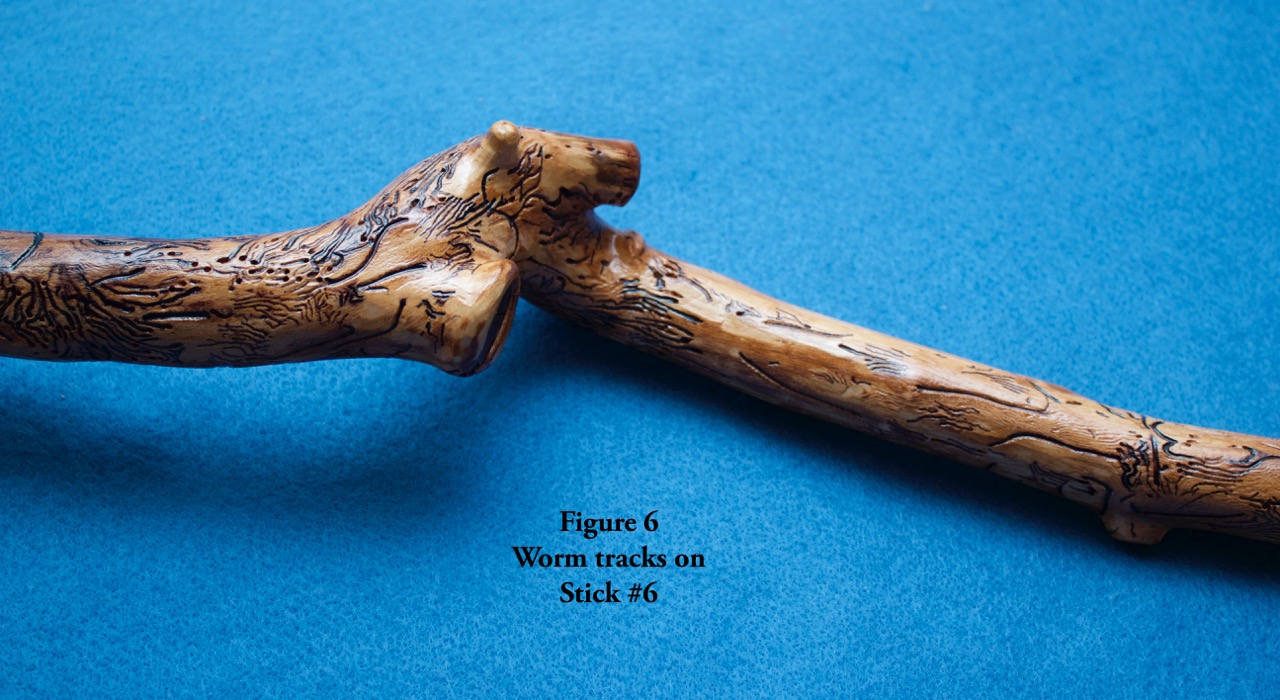
In addition to adding appropriate handles to my sticks, I also try to add some kind of an interesting or unusual touch to each stick. See Figure 6 for how I emphasized the worm tracks I discovered on the stick when I removed the bark.

Fig 6 Worm tracks

If you have any questions or comments, feel free to email Paul at pburri@cox.net

Apr 042016
 

The germ of this post comes from Steven Johnson.  You’ve heard of him.  If not, get to know him by clicking here to learn more about the Down To Earth Woodworker.

Steve wanted to know what music you and I have on our “workshop playlists,” what music puts us in the mood for woodworking and gets us going.

After you answer the poll, leave us a comment and tell us whether you take the term “playlist” literally.  On your phone or MP3 player, do you have a playlist, a set of songs, that you reserve for woodworking music time?

Or, do you, like me, listen to different music at different times?

Though I’m not a trained musician like The Renaissance Woodworker, Shannon Rogers, music has always been hugely important to me.  Growing up in the 50s and 60s, I feel we had some of the greatest music ever written.  There were phases in which I favored Pop/Top 40/Rock and Roll, but I had several country music phases, too.  Back then, I went back and forth.  Today, I’m likely to listen to oldies one day and country the next.

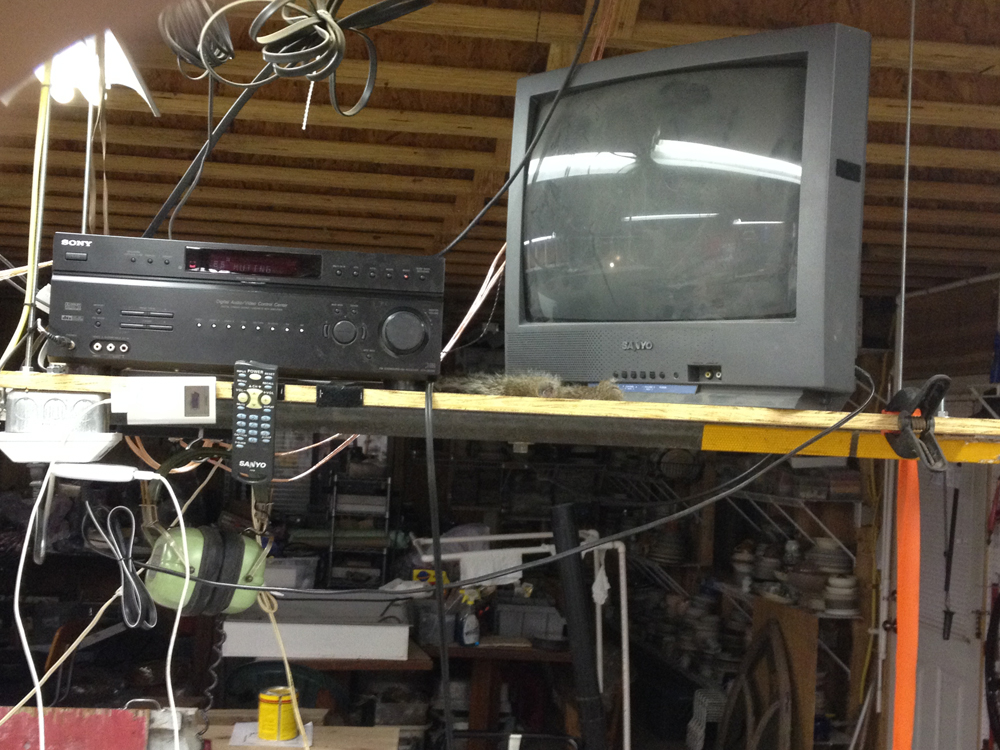
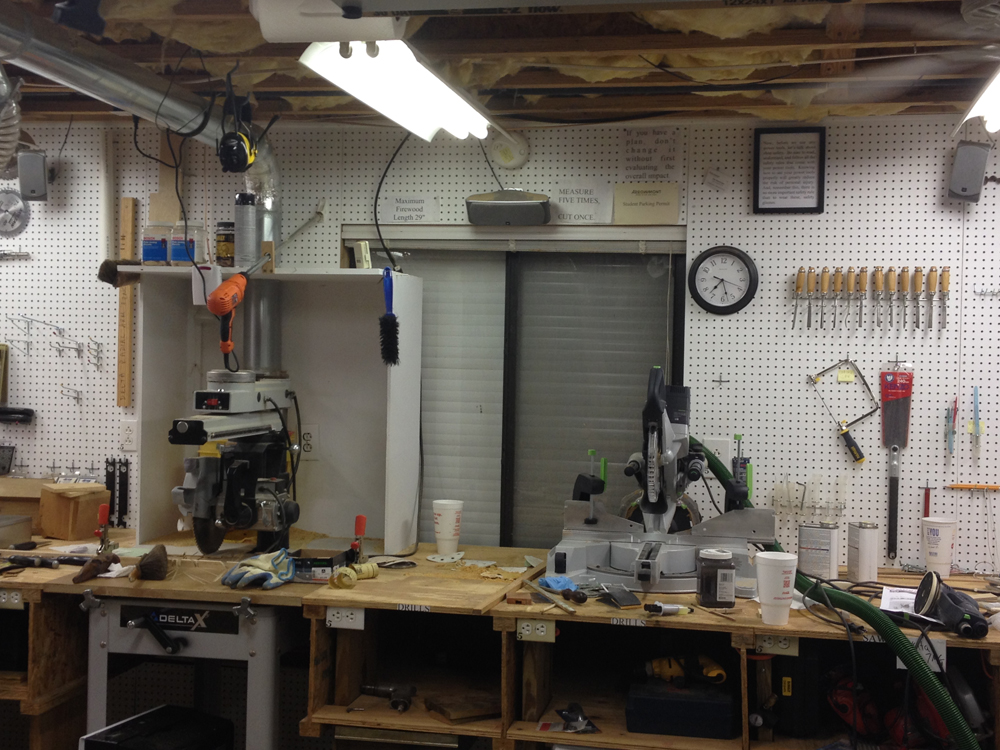
 I built this shelf to get my stereo as far from dust generation as I could, and added the old CRT television when it was replaced upstairs by a flat screen. I like to catch the evening news while I’m working.

I built this shelf to get my stereo as far from dust generation as I could, and added the old CRT television when it was replaced upstairs by a flat screen. I like to catch the evening news while I’m working.

Our kids got me a 7.1 Surround Sound system for my shop, which I love and still use. But, as a child of the 60s who grew up with music that was REALLY LOUD, I just had to have big 3-way speakers to make A LOT of noise.

Our kids got me a 7.1 Surround Sound system for my shop, which I love and still use. But, as a child of the 60s who grew up with music that was REALLY LOUD, I just had to have big 3-way speakers to make A LOT of noise.

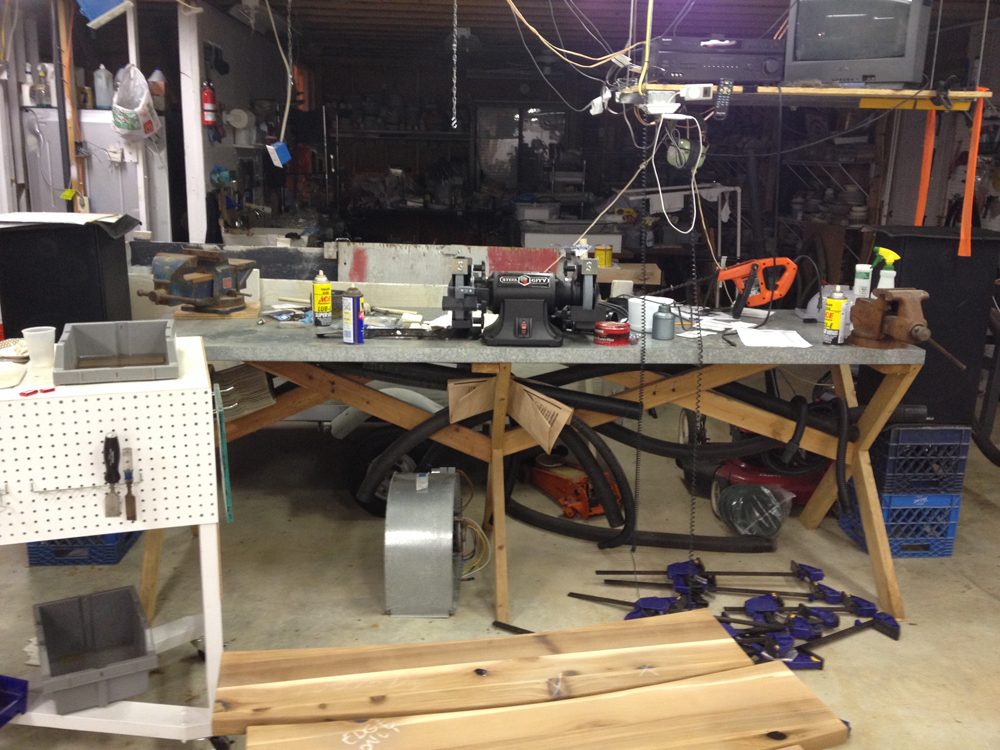
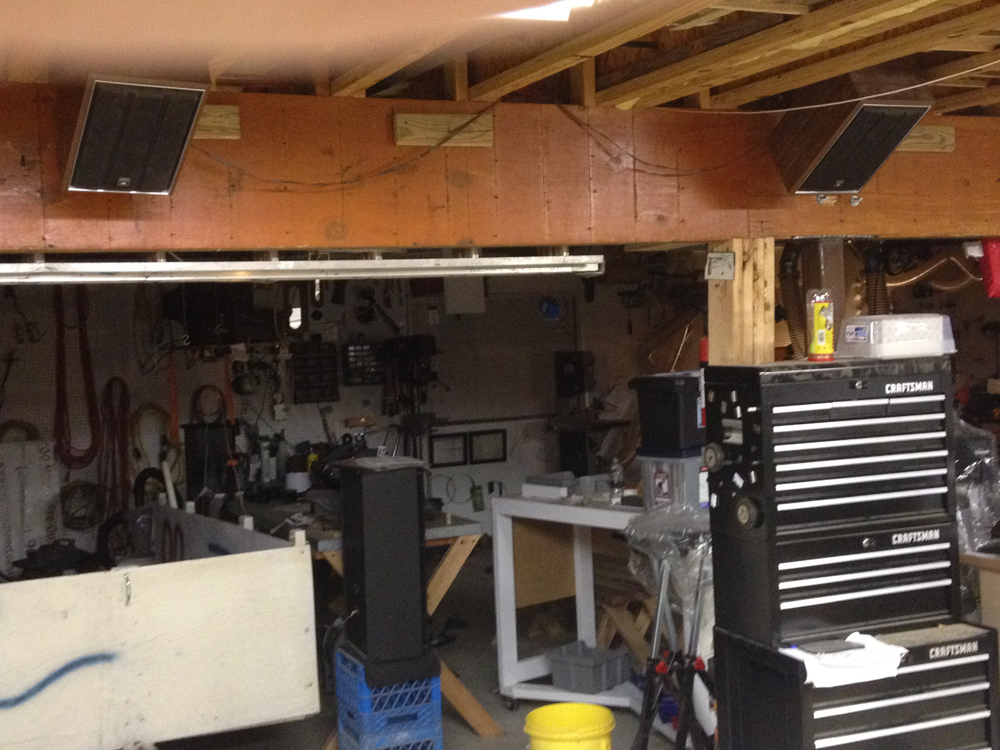
There are no music-less spots in our garage. Even the saw table is surrounded by speakers.

There are no music-less spots in our garage. Even the saw table is surrounded by speakers.

In this area where I usually do finishing work, I found I couldn’t be so far from music, so I dug up these old speakers from storage to soundstage this area, too.

In this area where I usually do finishing work, I found I couldn’t be so far from music, so I dug up these old speakers from storage to soundstage this area, too.

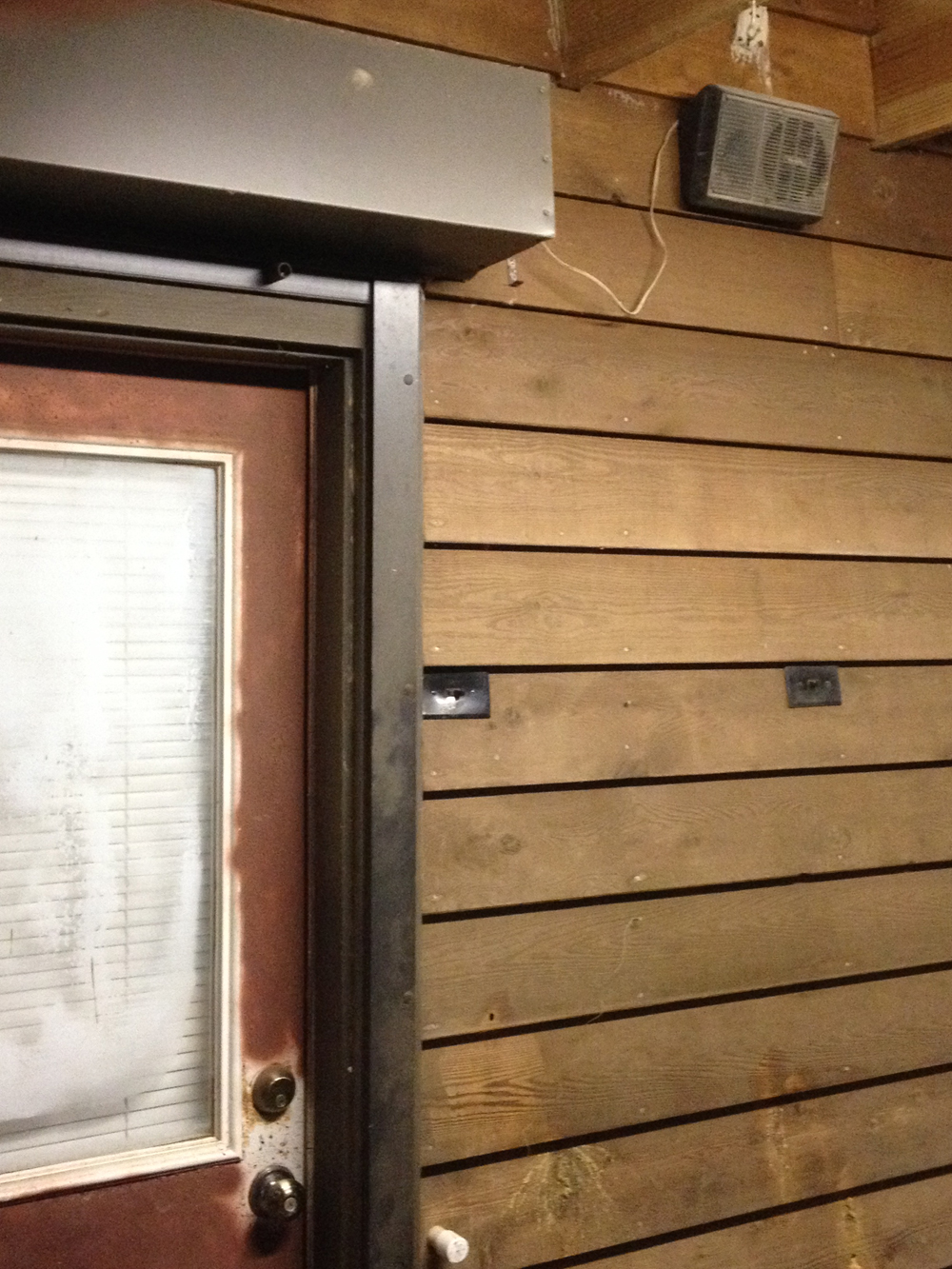
 If I’m enjoying the great outdoors, such as sanding a big project, I have to have music here, too. There is another identical stereo speaker to the left. These are some old Realistic Radio Shack speakers I bought to put in my 1977 Toyota pickup, which is why I don’t mind them staying outdoors. This area is rain-protected by a screened porch above.

If I’m enjoying the great outdoors, such as sanding a big project, I have to have music here, too. There is another identical stereo speaker to the left. These are some old Realistic Radio Shack speakers I bought to put in my 1977 Toyota pickup, which is why I don’t mind them staying outdoors. This area is rain-protected by a screened porch above.

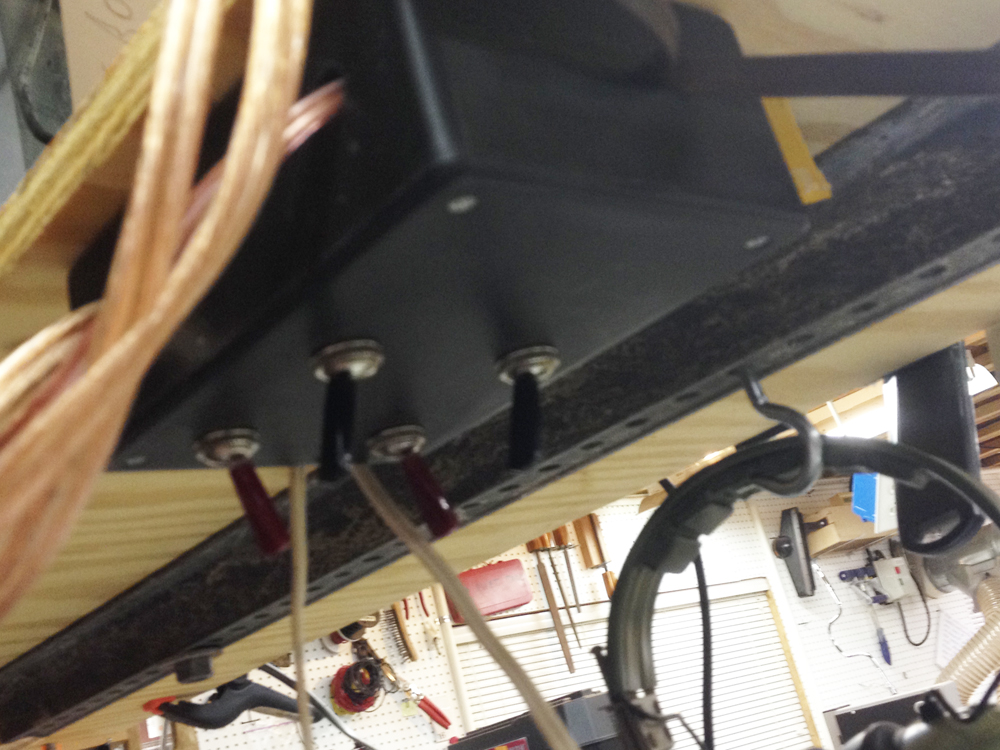
To route the music where I am, I used my US Air Force electronics training to build this and/or gate.

To route the music where I am, I used my US Air Force electronics training to build this and/or gate.

Now, we know what Steve likes, as he expounded on the cultured music he listens to in this post.

Apr 032016
 

No Southern-fried Southern boy wants to be called a Yankee, but we share the characteristics of shrewdness and thrift. Thus, each month we include a money-saving tip. It’s OK if you call me “cheap.”

This is actually a Steven Johnson trick, but I’m pretty sure he gave it to me because he knows I’m constitutionally incapable of throwing anything away.

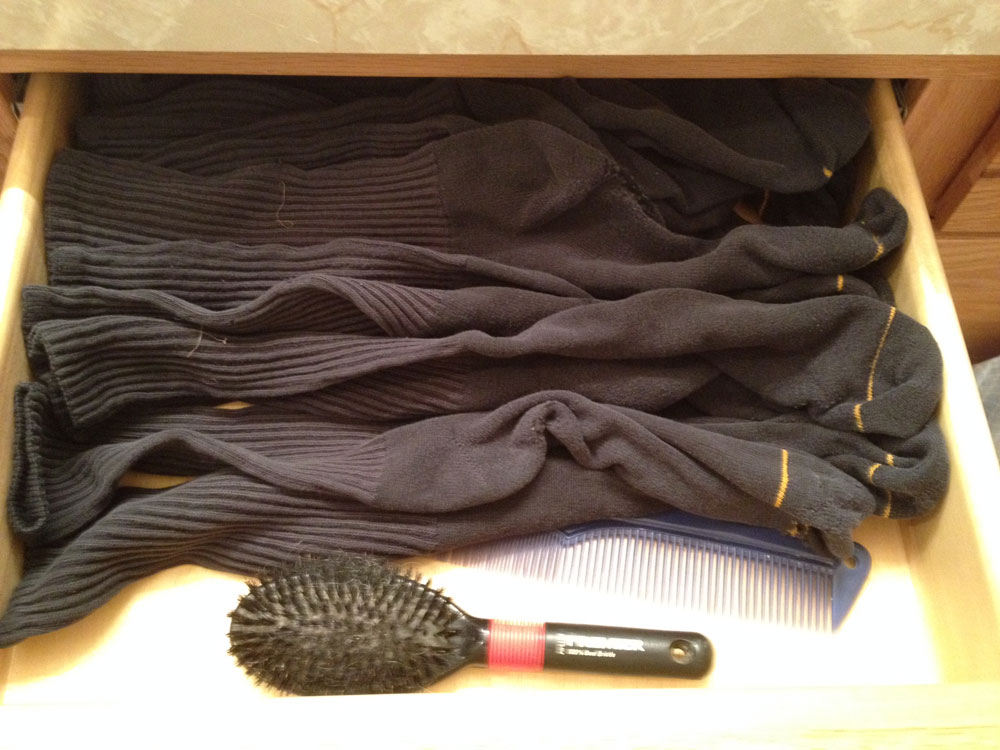
I’m known for quite a few quirks, and one of them is that I want all of the socks in my drawer to match.  That way, I don’t have to worry about pairing them, I just reach in the drawer, grab two, and I’m on my way.  It requires purchasing quite a number of pairs at a time; otherwise they don’t fade at the same rate and thus won’t match.

Grab and run. Every sock in the drawer matches and they all fade and age at the same rate. When the bottom wears out, it becomes a polishing rag, finish application rag, or cleaning aid.

Grab and run. Every sock in the drawer matches and they all fade and age at the same rate. When the bottom wears out, it becomes a polishing rag, finish application rag, or cleaning aid. Rotate your stock,” as they say at the grocery store, and they mostly wear out at the same time, too.

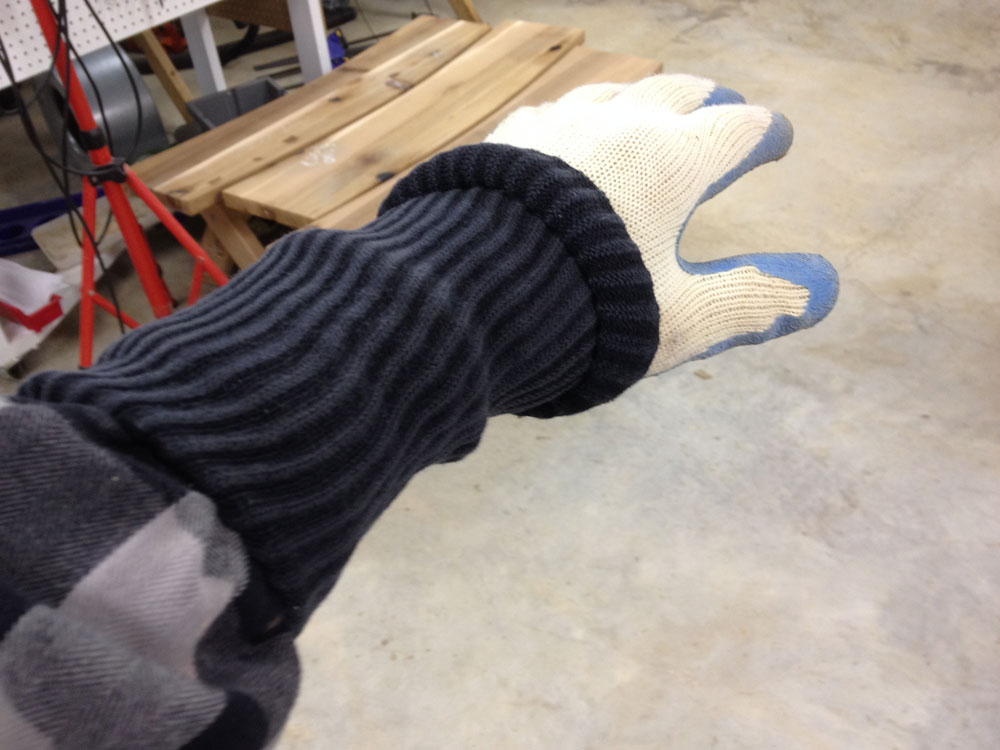
Steve’s sock tip is:  “Cut the elastic upper part of an old sock, put it over your wrists to span the area between a glove and your cuff, especially handy when installing insulation.”

First the shirt, then the roll up the elastic part of the sock, put on the glove. Now, span the connection between the shirt and glove with the sock by rolling it out. Add tape if it makes you feel more secure.

First the shirt, then the roll up the elastic part of the sock, put on the glove. Now, span the connection between the shirt and glove with the sock by rolling it out. Add tape if it makes you feel more secure.

If that boy sticks with me I might be able to teach him something about frugality!


Jim Randolph is a veterinarian in Long Beach, Mississippi. His earlier careers as lawn mower, dairy farmer, automobile mechanic, microwave communications electronics instructor and journeyman carpenter all influence his approach to woodworking. His favorite projects are furniture built for his wife, Brenda, and for their children and grandchildren. His and Brenda’s home, nicknamed Sticks-In-The-Mud, is built on pilings (sticks) near the wetlands (mud) on a bayou off Jourdan River. His shop is in the lower level of their home. Questions and comments on woodworking may be written below in the comments section. Questions about pet care should be directed to his blog on pet care, www.MyPetsDoctor.com. We regret that, because of high volume, not all inquiries can be answered personally.