Highland Staff

Aug 142014
 

Got a new toy in the shop and no, it’s not Festool.  Let me tell you about it.

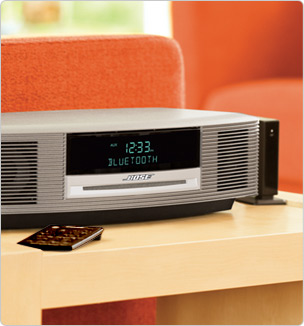
Twenty five years or so ago, I designed sewage lift stations for land developers. One day a salesperson came by with a demonstration pump on a small trailer behind his truck.  All the trailer sides rolled up so we could walk around the pump and get a feel for size and installation issues.  I remember standing there with the distinct impression the pump was running, but there was no electrical connection or generator.  I could hear it running and feel the vibration through the floor of the trailer.  No sewage either, thank goodness.  (It may be sewage to you, but it’s bread and butter to me!)  I searched for a minute to see where the noise and vibration was coming from, and finally realized it was from a Bose radio down in the front of the  trailer playing a recording of a pump running.  I have wanted a Bose radio ever since.

Bose Shop Radio

Bose Shop Radio

Finally sprung for one for my birthday last week.  I ordered the attachment for Bluetooth to go with it.  What that means for you Luddites out there, is that I can play music off my phone and my iPad and it comes through the radio.  It is a radio of course, but it will also play CD’s.  The sound is nothing short of fantastic and will rattle the walls of the shop.  It will drown out almost any power tool in the shop and it may drive bugs out of the sawdust pile, depending on what kind of music I play and how loud I make it.

I spend many hours at the lathe and I can hear my new radio while I am working.  I also listen to podcasts, (look on iTunes — ask your grandchildren to help you! )  and there is one particular podcast I really like called “Stuff You Missed in History Class”.  Excellent discussions on some really arcane subjects (did you know that only five people actually died at the Boston Massacre?), but very well done.  Podcasts typically download automatically once you subscribe and there are thousands out there on hundreds of subjects including many on woodworking.

Get yourself set up with a good radio or a Bluetooth speaker and enjoy music and a whole bunch of other good stuff while you work in the shop.

While you are out there, by the way, go look up Bluetooth and the connection with Hedy Lamar, the famous actress.  What a remarkable woman.

Editor’s Note: Some great woodworking podcasts include: Wood Talk and The Modern Woodworkers Association

Jul 012014
 

Father’s Day is just past and I have thoroughly enjoyed my gift from Highland.  I was cruising around on the web site and I came across a set of DVDs called “Hands”.

Hands have always been a topic of interest to me.  My family had a dairy farm when I was growing up and we did a lot of stuff outside and subjected our hands to a lot of abuse.  When I think of my father, one thing I carry with me that reminds me of my father is that little bit of skin between the thumb and the first finger of my hands.  My Dad’s hands were always worn and cracked and that bit of skin (there’s probably a name for it) was characteristic of him.  When I work outside in cold weather, my hands crack and split as his hands did, and that little connection with him now gone for nearly fifty years, reappears on me.  I show it to people who may remember him as I do.

“Hands” is a series of documentary films made in Ireland during the 1980’s.  They document traditional Irish crafts and craftspeople, some of which have disappeared by now, I’m sure.  There are 37 videos on many different subjects ranging from patchwork and lace to hurl making to bookbinding and bespoke handmade shoes.

220910-1

I have a problem in wanting to do everything I see, and when I watch these films I am checking off the tools to see which ones I don’t already have.  Question is whether it is worth while buying the tools and spending the time it takes to get really good at some of these trades.  These people make it look so easy, probably because they have been doing it for generations.   I mean how long does it take to learn to be a cooper anyway?

One thing which I really enjoyed was how the craftspeople all took the filming so seriously.  I noticed that they all dressed for the occasion.  Even in the one where they are making clay pipe for sewers, which has to be an incredibly dirty process, they all wore a nice tweed jacket — almost as if the boss said, all right we are going to be in the movies tomorrow, be sure you look nice.

All in all, a great series of films.   My favorites so far, coopering, bookbinders, and the shoemaker.  I looked up the shoemaker on line and they are still in business.  You can order your own pair of bespoke handmade shoes for about 200 pounds for the first measurement and custom lasts, and then after that, it will cost you about 500 pounds for a pair of what they say are the best fitting shoes you will ever have.  I’m glad they are still out there.

May 122014
 

If you want to get a “vigorous” conversation going in woodworking, it seems you only need bring up SawStop or dust collection.

It is true that in my reading and research I can find no instance whatsoever of a static spark in a small shop dust collection system causing a fire or explosion. Therefore some folks are adamant that static dissipation is unnecessary. Large shops and other “dust-producing” industries, such as milling flour, grain, etc., are a different game completely, and there have been some devastating (documented) accidents caused by static electricity.

Then there is the group that (I think) live in humid warm locales and since they have never been shocked or had their hair stand on end from the static in their dust collection system, project their micro-environmental situation onto all others and assume static electricity is a hoax or myth.

There is a group that knows static is a real issue (they have been zapped, seen dust clinging to the outside of their pipes, or felt the tingle as they walked by their ductwork) and for comfort and/or safety reasons feel that providing a static dissipation system is just “good insurance.” I fall into this camp, by the way. For the $30 or $40 cost, why not?

You can add to that a group of folks who have suffered damage to sensitive electronics (smart phones, cameras, iPads, etc.) by static. They, too, are comfortable with the “better safe than sorry” approach. Then, on a serious note, there are the folks with pacemakers who will not get within 50 feet of an ungrounded dust collection system.

As one level-headed commenter on my YouTube channel posted, “Whether or not to ground your system comes down to personal choice.” If you do choose to ground your system, here are two frequently asked questions and answers about that.

PVC is a non-conductive material, so how can you ground PVC?

You cannot… it is merely “verbal shorthand” to say something like “grounding the PVC.” Technically, we are providing a conductive path to ground for excess electrons that accumulate as a result of wood chips and sawdust repeatedly contacting the walls of the ductwork. Think of it this way: Buildings are not conductive, but we install lightning rods to provide a path to ground. We are, in a sort of imprecise verbal shorthand, “grounding the building.”

I have heard it is a good idea to run the ground wire inside the pipe. Is this true?

A conductive path should be provided for excess electrons both inside and outside the pipe. The system I describe in my recent Popular Woodworking webinar, “Dust Collection Ductwork” accomplishes this without the struggle of trying to install a wire inside the pipe. Anything inside the pipe adds airflow resistance and creates the potential for a clog.

CLICK HERE to read Steve Johnson’s full Dust Collection System FAQ.

May 012014
 

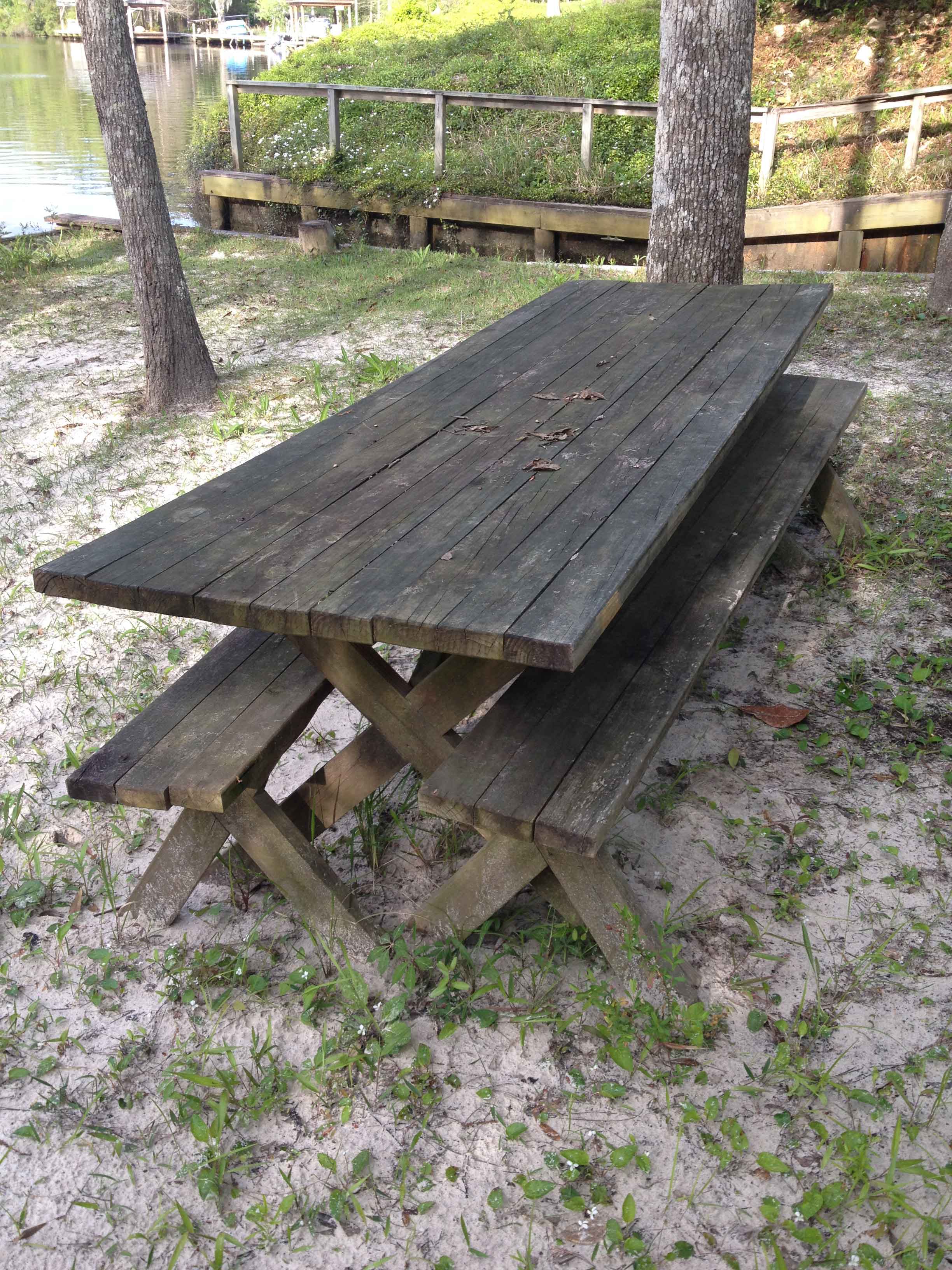
Regular readers of Tips From The Sticks-In-The-Mud Woodshop know that my wife and I live on a bayou in south Mississippi and my woodshop is in the lower level of our home.  One doesn’t live on a watershed waterway for very long before he learns that, in addition to the blessings, there are challenges.  For one, don’t put anything in the back yard that isn’t lashed to a tree.  See this picnic table I built?

We live on Rotten Bayou, a tributary off the Jourdan River in South Mississippi.  Legend says it gets its name because Indians came here to clean their game, and unusable parts went into the water to feed the fish that they would return and catch.  Its native American name is Bayou Beneshewa.

We live on Rotten Bayou, a tributary off the Jourdan River in South Mississippi. Legend says it gets its name because Indians came here to clean their game, and unusable parts went into the water to feed the fish that they would return and catch. Its native American name is Bayou Beneshewa.

This table was twenty feet in the air after Katrina brought thirty-two feet of water to our house.  Thanks to a sturdy chain as its permanent tether, it floated twenty feet  up, but it couldn’t go away. On the other hand, see this picnic table?  Thanks to one of those floods, it left someone else’s back yard and became ours.
This picnic table was on the far side of the bayou from us and a little downstream.  Even treated pine in an outdoor environment maintains its buoyancy, which is how the table left someone else’s yard in a flood.  It floated nicely behind our boat, we drifted it into the boat ramp, onto a waiting trailer and into this spot where it makes a nice catch-all.  Who knows, we might even picnic on it one day!

This picnic table was on the far side of the bayou from us and a little downstream. Even treated pine in an outdoor environment maintains its buoyancy, which is how the table left someone else’s yard in a flood. It floated nicely behind our boat, we drifted it into the boat ramp, onto a waiting trailer and into this spot where it makes a nice catch-all. Who knows, we might even picnic on it one day!

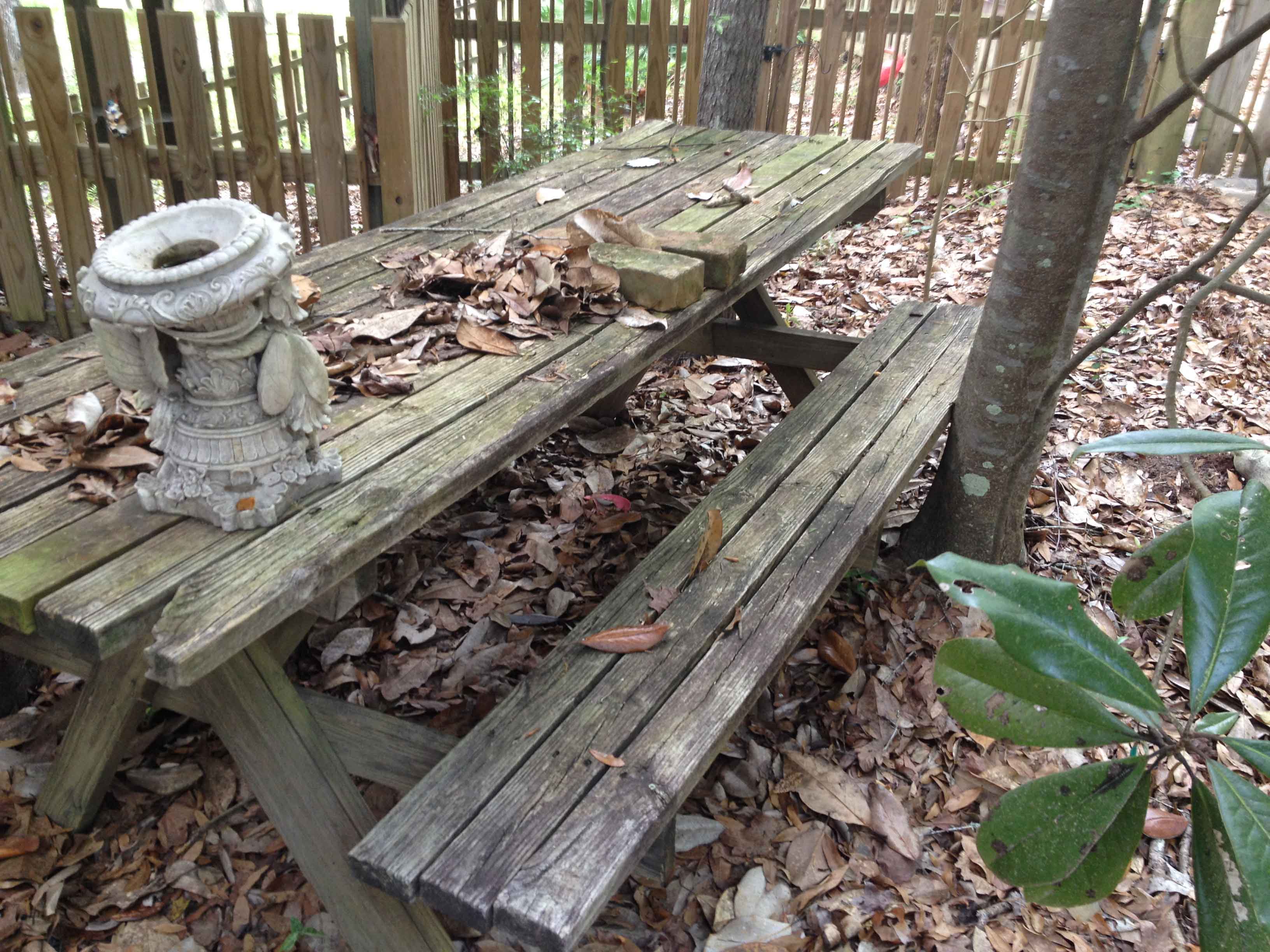
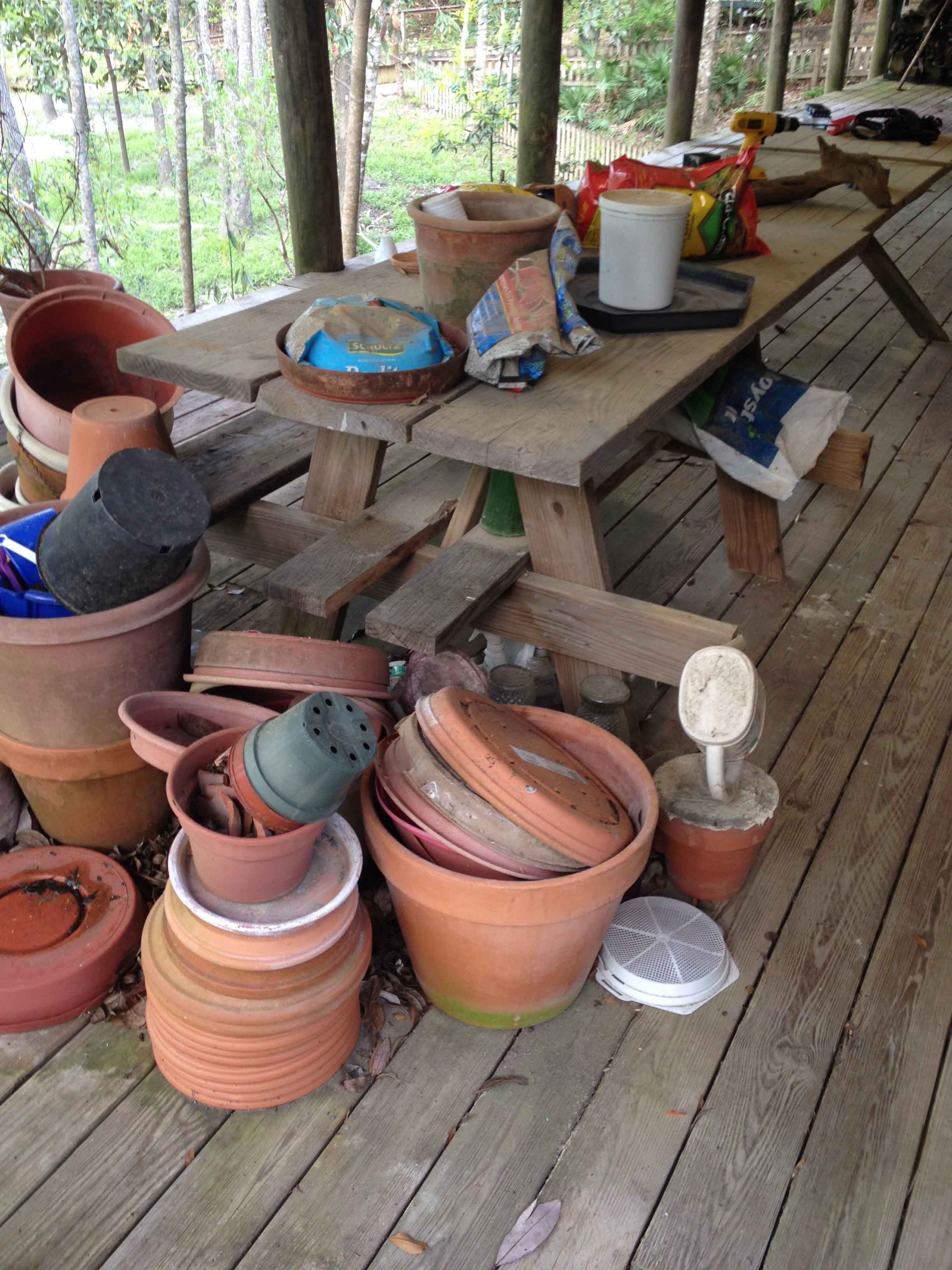
Believe it or not, another picnic table drifted up in a flood, too.

This table was in pretty sorry shape, but good enough for wife Brenda to use for a potting table.

This table was in pretty sorry shape, but good enough for wife Brenda to use for a potting table.

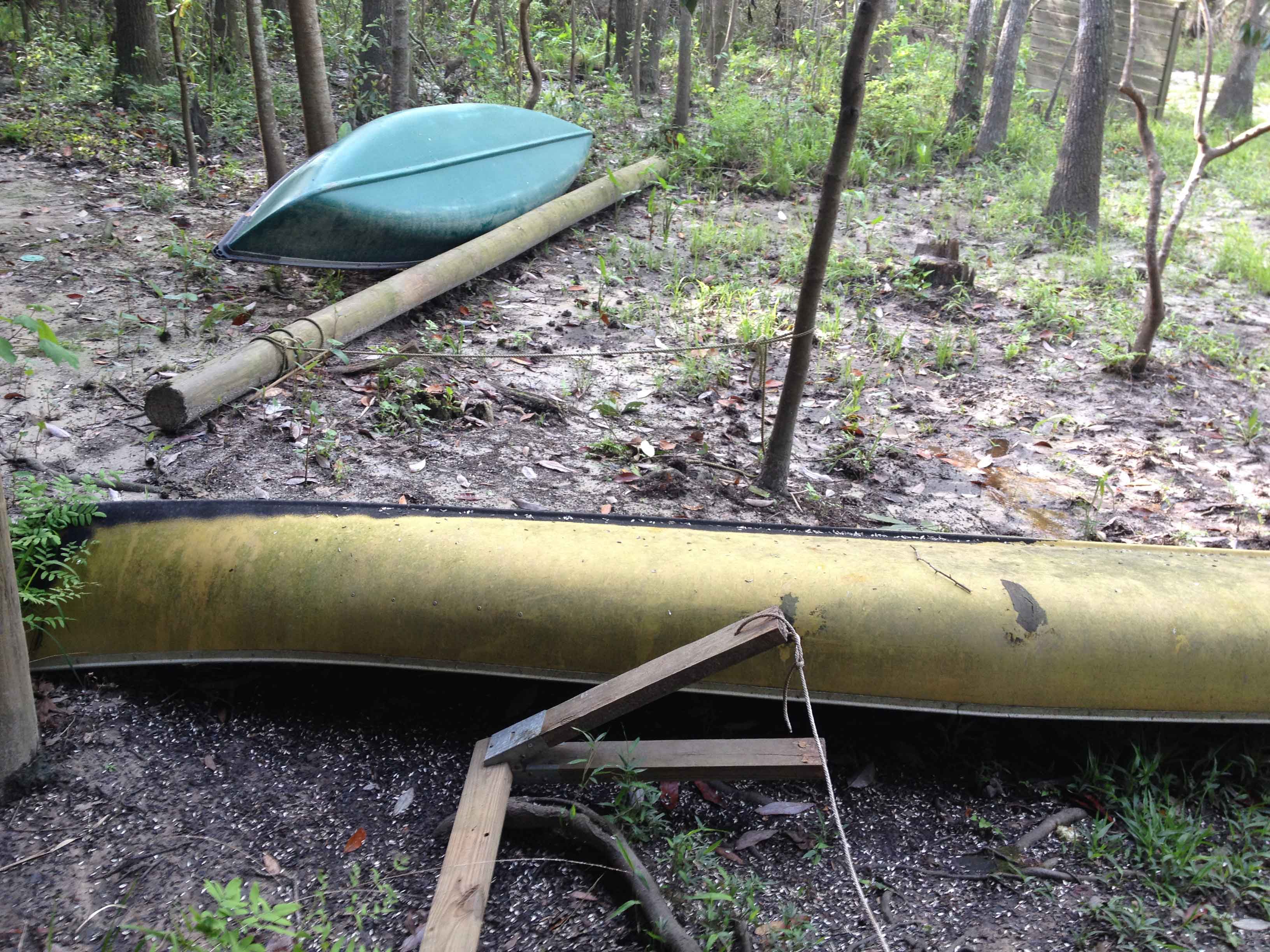
May I interest anyone in a canoe?

While neither of these is an expensive racing canoe, I’m sure someone, somewhere, wishes they were still in his yard.  Just in case anyone comes looking for the refuse that washes in, I always leave it on the bank for a few weeks in case the rightful owner’s search brings him our way.

While neither of these is an expensive racing canoe, I’m sure someone, somewhere, wishes they were still in his yard. Just in case anyone comes looking for the refuse that washes in, I always leave it on the bank for a few weeks in case the rightful owner’s search brings him our way.

Then there was the day that three matching life jackets floated up.

These three life jackets floated down the bayou one day like three little yellow ducklings.  I left them on this tree in case anyone wanted to claim them, but no one came calling.

These three life jackets floated down the bayou one day like three little yellow ducklings. I left them on this tree in case anyone wanted to claim them, but no one came calling.

One flood brought us a pretzel. A ten-foot-long pretzel.

I can’t say what made me want to investigate this board further.  It couldn’t be much uglier from the outside, and it had a huge “barked” area, indicating it was from the outside of its parent tree.  Still, I’m glad I got out the sander that day!

I can’t say what made me want to investigate this board further. It couldn’t be much uglier from the outside, and it had a huge “barked” area, indicating it was from the outside of its parent tree. Still, I’m glad I got out the sander that day!

This twisted 4 by 4 was nothing to look at from the outside. However, as a fan of found treasures, I couldn’t put it in the fencepost pile without a quick sanding of the outside.

I theorized that it might have been part of the support for a load on a 18-wheeler’s flatbed.

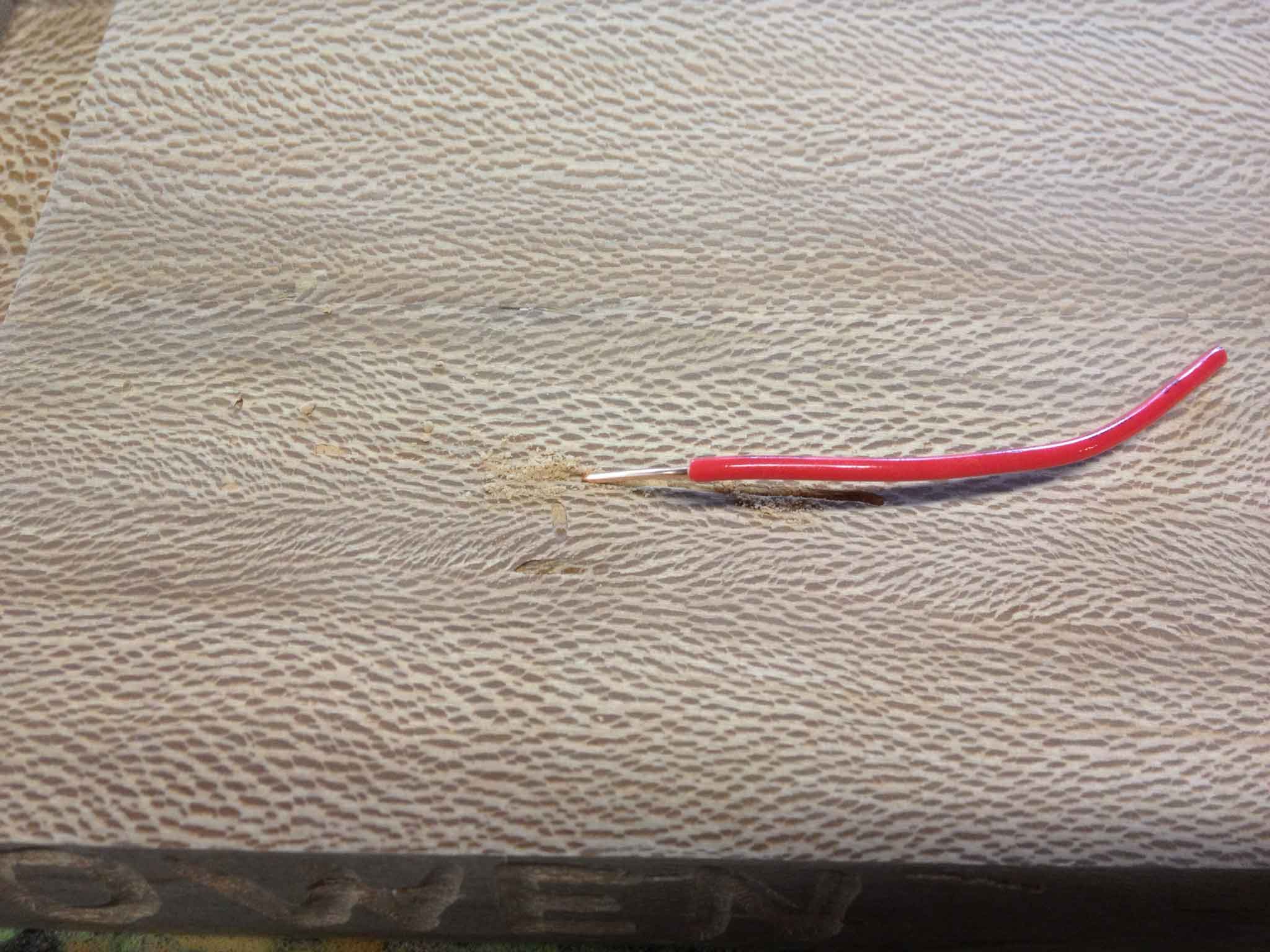
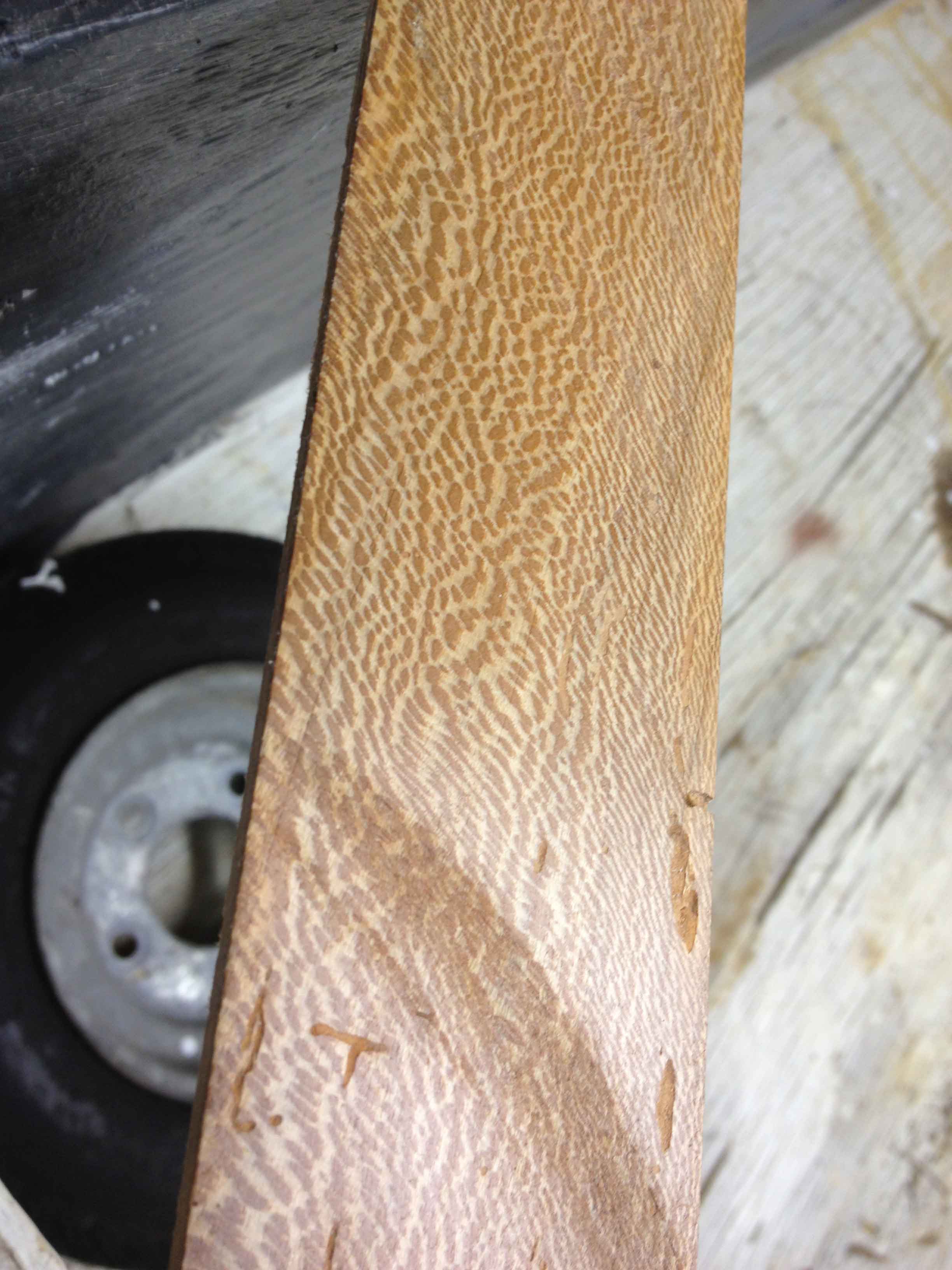
I was unprepared for what the sanding revealed.

jim7

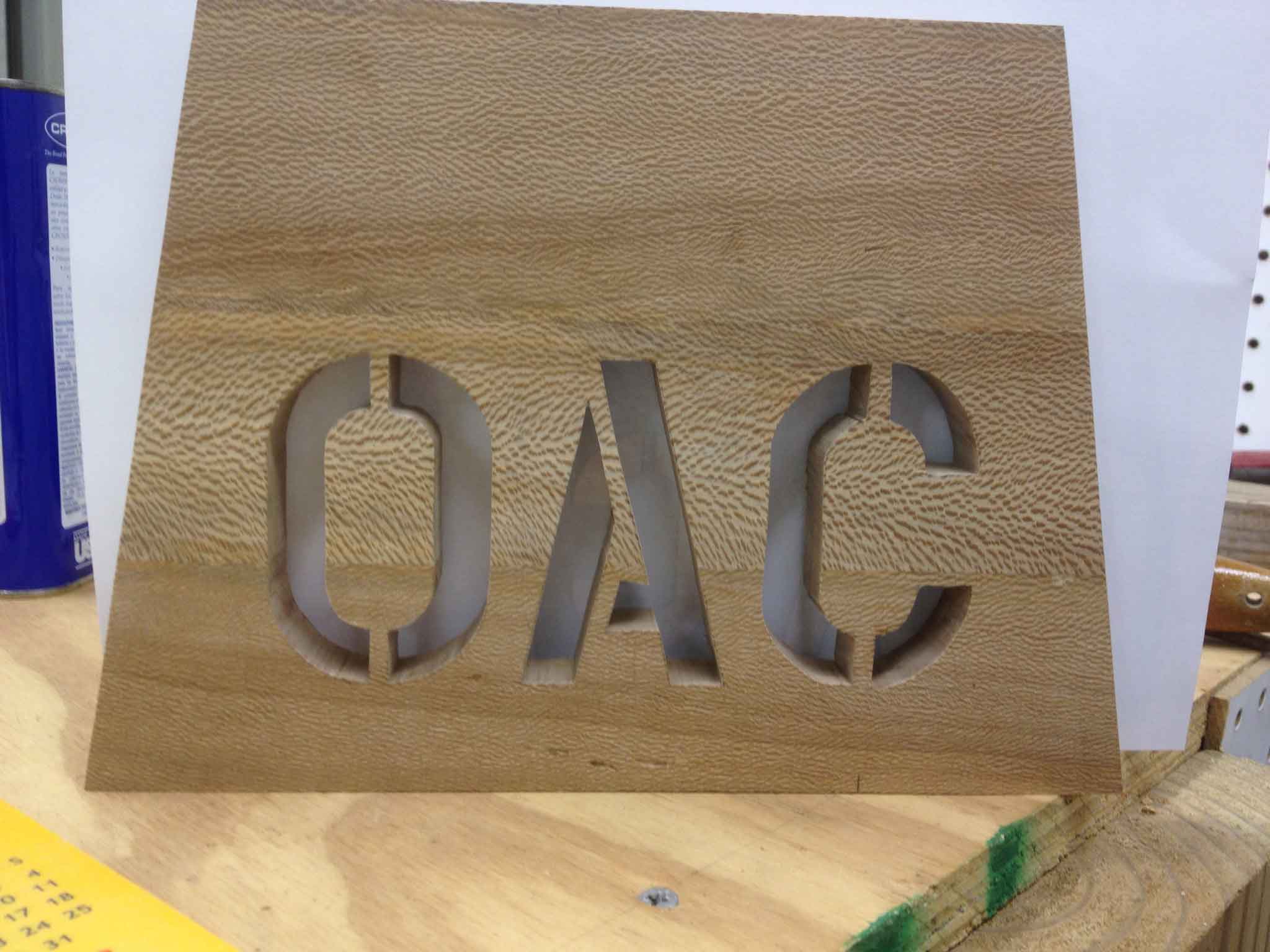
The grain pattern was magnificent.  Beautiful and mysterious.  Having no idea what kind of wood it was, and no thoughts of how to begin to identify it, I cut off a little piece and took it to church with me.

That’s right.  Church.

The gentleman who sits to my left in choir is a retired forester whose title before retirement was wood procurement manager.  I was confident he could identify it for me.

“I’m not sure, Jim,” said Jim Odom.  “It might be quartersawn oak or maple that has a really complicated figure.  Or, it might be a South American exotic.  I’m just not sure.”

It was so pretty that I decided it was going to become part of the “stool series,” regardless of its species.  You see, each of our grandchildren has a kid’s stool with his or her initials, and each has a unique design and is made from wood with a story.  (See next month’s blog post for photos of each stool and its story.)  I didn’t yet know just how much “story” this wood was going to have!

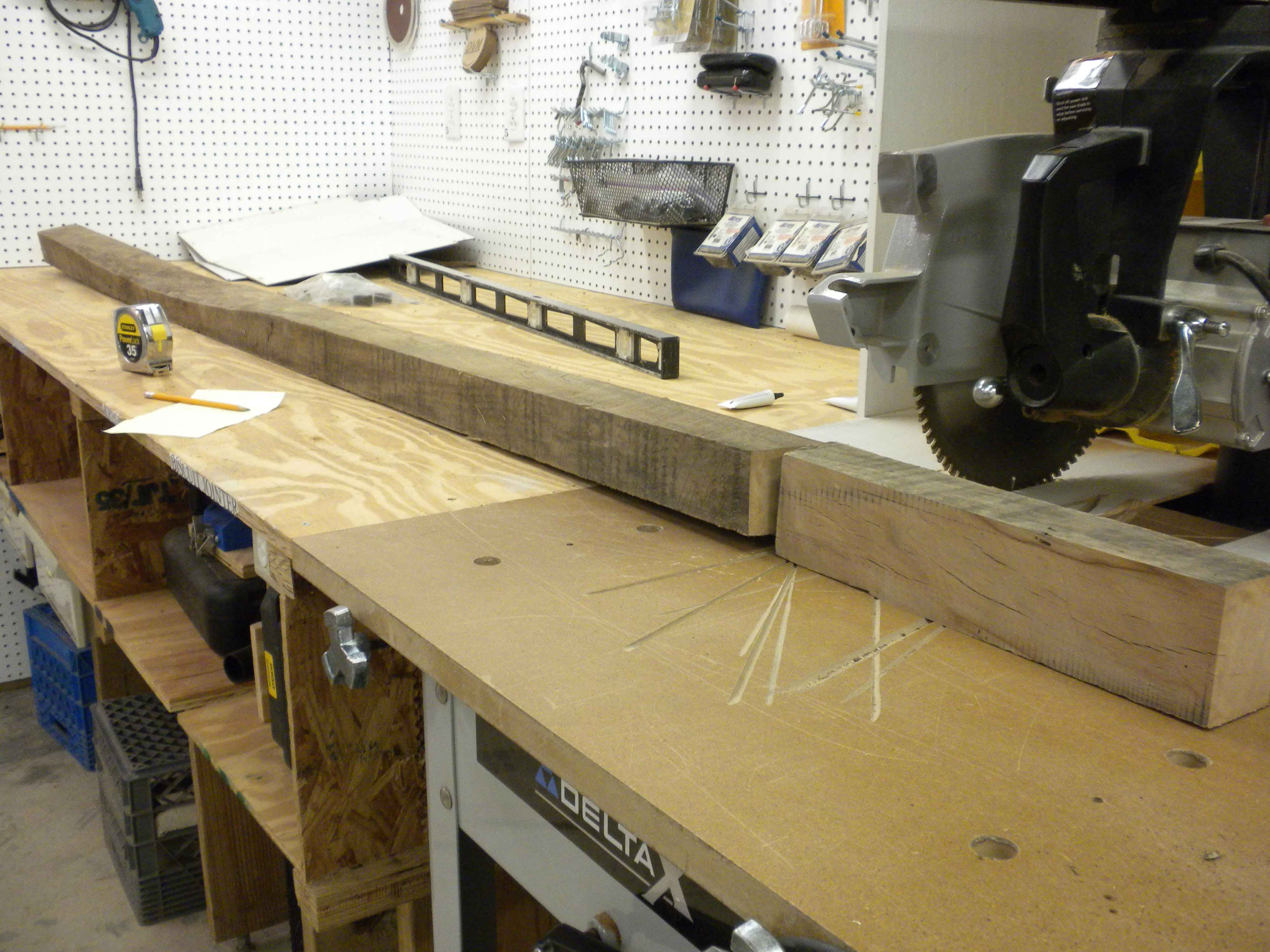
The first step was to get rid of the crookedness; not a small undertaking for a pretzel.  I was able to take a lot of the bend out by using the radial arm saw to cut the 4×4 into pieces.  Each piece was two inches longer than the longest measurement on the stool’s final size.  The jointer did the yeoman’s share of flattening one surface, then the band saw and planer were able to turn out boards that were flat and square.

jim8

Meanwhile, I took photographs of the wood and e-mailed pictures to every woodworker I could think of.  My furniture-restoring pen pal, Alan Noel, looked and confidently said “beech.”  Knowing of my ignorance of wood species’ characteristics, he added, “Beech is a very waxy wood that is used primarily for chair frames and veneering because it does have some interesting figure. When finishing, be sure to wash it with shellac (1lb. cut) to seal in the waxy surface and finish with anything after that.”

Armed with that information, I proceeded to scroll-sawing initials, assembly and final sanding.

jim9

Meanwhile, I had sent out e-mails to other experts at the same time as Alan’s e-mail.  Bert Scarbrough, owner of Peach State Lumber, offered his guess as quartersawn sycamore.  Charles Brock took a look at the same photos and concurred.  Bert also suggested sending a sample to the US Forest Products Laboratory (FPL) in Madison, Wisconsin.  I found their Web site, took note of the sample submission requirements and sent specimens in.  A disclaimer on their homepage says that it may take 4-6 weeks to receive an ID.  No problem; that still put me in a good range to finish Owen’s stool before his second birthday, although it would be close.  Knowing absolutely nothing about shellac, I didn’t know whether to follow Alan’s suggestion and assume the wood was beech and seal with shellac first, or wait for the final identification.

I elected to wait.

Eight weeks came and went.  I called FPL and asked them about the ID.  The very nice lady said she couldn’t even give me a guess about when my wood sample would be identified.

My next step was to contact Alan for advice about progressing with the shellac base before finishing.  “No problem,” was Alan’s response.  “Shellac under polyurethane is safe regardless of what the wood species turns out to be.”  With that confidence, I repeated my “final” sanding, and purchased a can of spray shellac.  The rest of the finishing steps were uneventful, and, after a few days of drying time, I wrapped Owen’s stool in waxed paper, several blankets, and put it in the mail.

The clerk at the post office asked if I wanted insurance.  I told her I didn’t think a million dollars was excessive.  After she told me the fee for that level of coverage, I said maybe a thousand would be OK.

If I had to start this project over, I wanted to be well-compensated!

Fast forward.

Fast forward 11 months.  That’s how long it took to get the ID from FPL.  After a Web site claim of 4-6 weeks!  Of course, we had the federal government on “sequestration” during that time, and, I can’t say enough about how polite and patient the phone receptionist was.

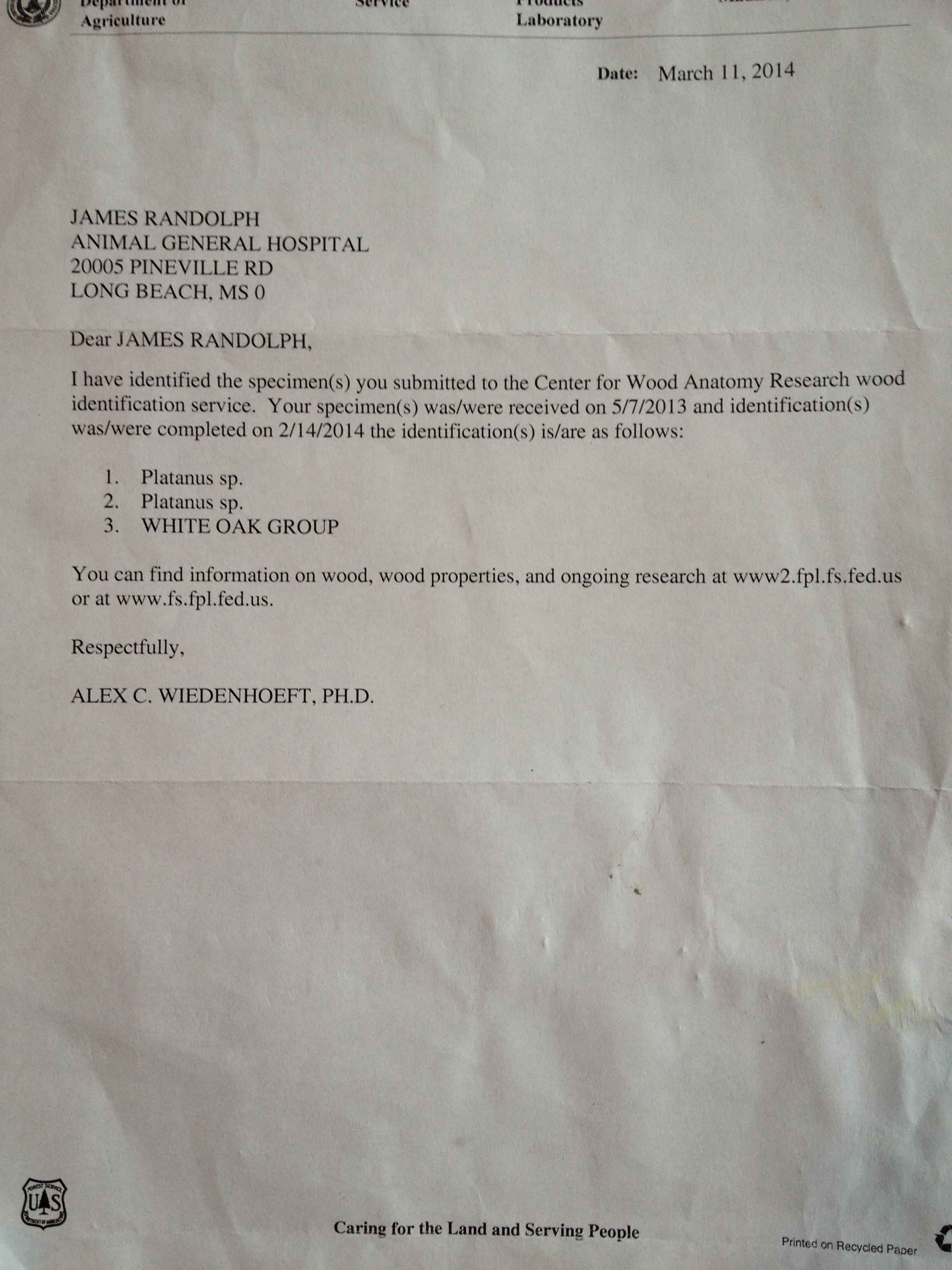
But, there was another area of letdown, too.  Take a look at the report.

jim10

Genus name only!  Nothing else!  My hopes were high that I was going to really “nerd out” on their analysis based on what Bert had said in his initial email:  “ I have used them in the past and they give you more information than you care to know by looking at the sample with a microscope; like the region it grew and the scientific name and maybe how old it is.  It usually takes them a few weeks to get back to you but they will.”

So, hand it to Bert Scarbrough and Chuck Brock; they nailed “sycamore.”  Which is the most likely Platanus(pronounced PLAT-uh-nuss) possibility for pallet lumber in the continental US.  Quartersawn sycamore is sometimes called “lacewood,” but lacewood is properly Cardwellia sublimis, from Australia, and I can’t picture anyone making pallets or tractor-trailer supports out of exotic wood!

The bottom line is that Owen was happy with his stool, and his big sister is happy that he won’t be commandeering hers all the time.  There is the unfortunate side effect, though, that his parents report:  Now he has a tool to reach even more things he has no business getting into!

Mar 312014
 

For those who haven’t read any of my previous articles, I enjoy utilizing both Western as well as Japanese woodworking tools, in my projects. To lay the groundwork, when I was a pre-teen, I had some good friends as next-door neighbors whose mother was Japanese, and the father had a number of Japanese tools, from hammers to saws. I was always very intrigued with these, partially because they seemed so different than anything I’d ever seen, but also since they seemed to have a lot of interesting aspects in their design.

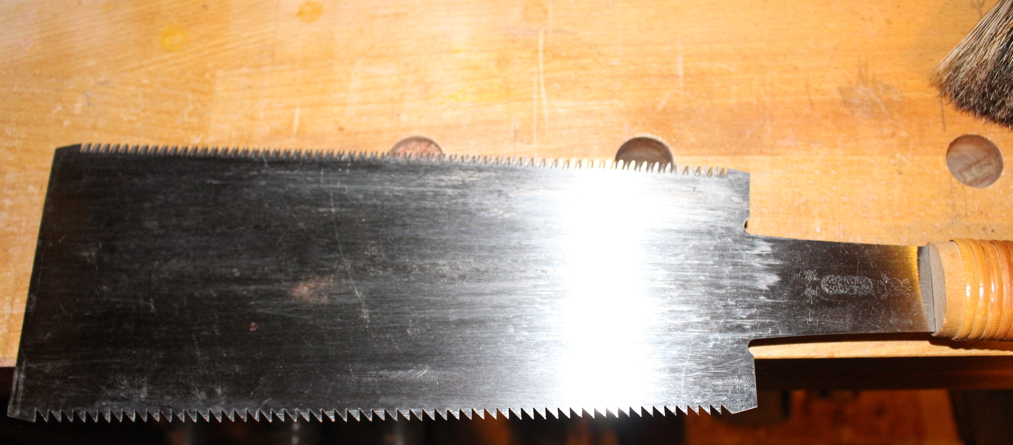
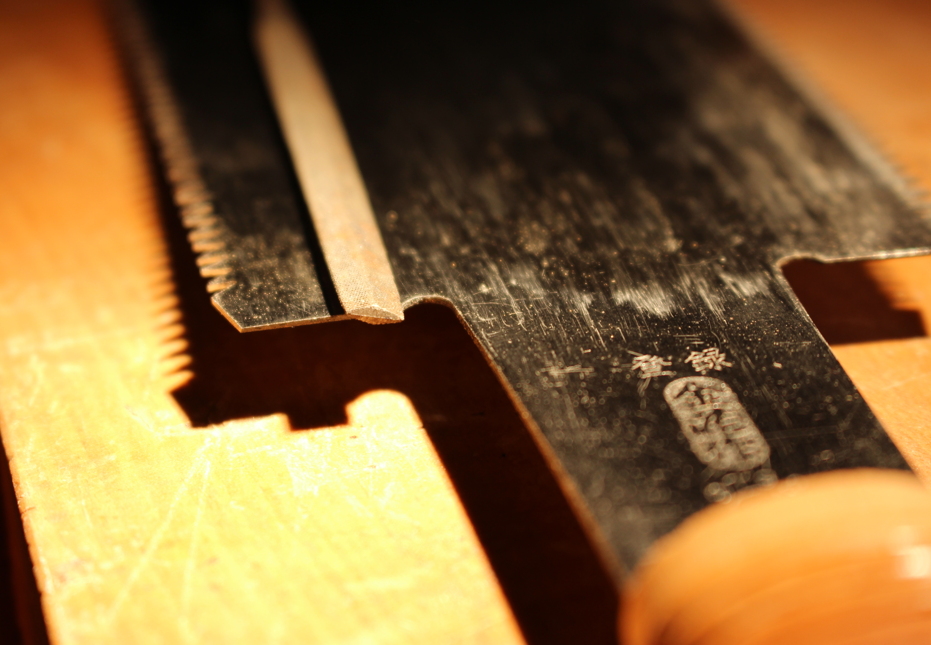
Fast forward 10+ years and my Mother-in-law and Father-in-law went on a trip to visit family in Japan, and were nice enough to ask what I’d like them to pick up for me. As you might imagine, a ton of different tools flooded my mind, but trying to not take advantage of the family, I told them I’d love to have a nice Ryoba saw. The Ryoba is a saw that has rip teeth on one side of the saw-plate and cross-cut teeth on the opposite side. Since there is no stiffener or back on the saw plate, like you would see on a Western back saw or a dozuki, the saw can cut as deep as you need, or that it can reach.

1 Ryoba flat

Since I’ve had my Ryoba well over 20 years, and the saw has seen quite a bit of wood, the rip side of the saw has gradually become somewhat dull. You are probably wondering why I didn’t just sharpen it earlier in it’s life when I first started noticing it was slowing in it’s cutting? As part of the answer, there are basically two generic types of Japanese saws on the market, such as the hand-made saws that are hand-sharpened and set, and the other type that are machine-made with impulse hardened teeth. Since I hadn’t specifically asked my family to get me a high-end saw, I assumed my saw likely had the impulse hardened teeth, where the hardening of the plate makes the steel at the teeth harder than a file, so you can’t re-sharpen it. Another attribute of the impulse hardened teeth is that they will stay sharp longer, which seemed as if it also fit with my saw, since it really was relatively sharp for a long time.

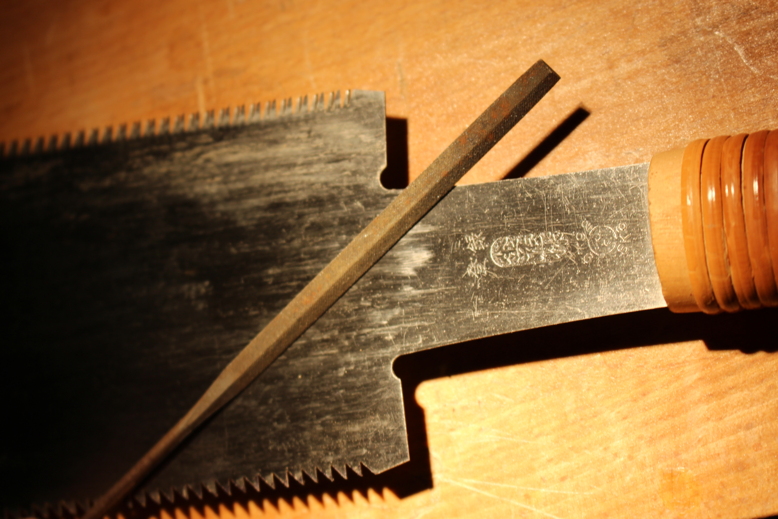
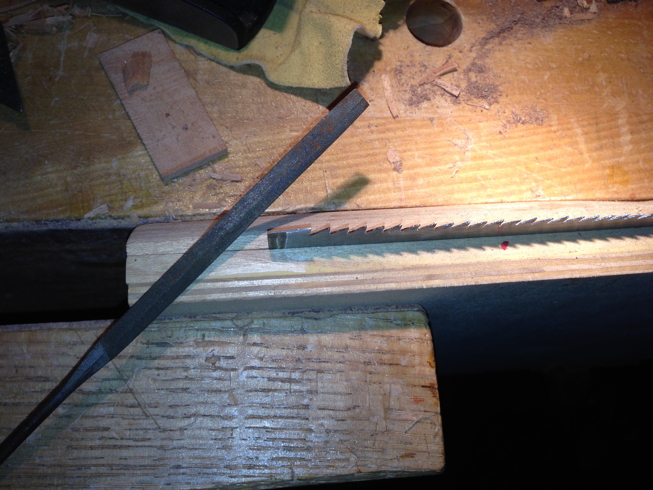
A few days ago, I was cutting some tenons with my Ryoba and it felt like it was just spinning it’s wheels (in a sense), since it was just barely making any progress even after a number of strokes. I knew I didn’t have the feather files that are used to sharpen Japanese saws, as they are a totally different shape than those used to sharpen Western saws, but I remembered that I did have one file that was somewhat similar in shape. My uncle gave me a small bundle of files, that ranged from round, square, triangular, as well as the one that was similar to the feather files. I pulled that file out and was happy to find it fit into the narrow angle that is between each tooth.

2 Ryoba file2 3 Ryoba file xsection 5 Ryoba holder file phone

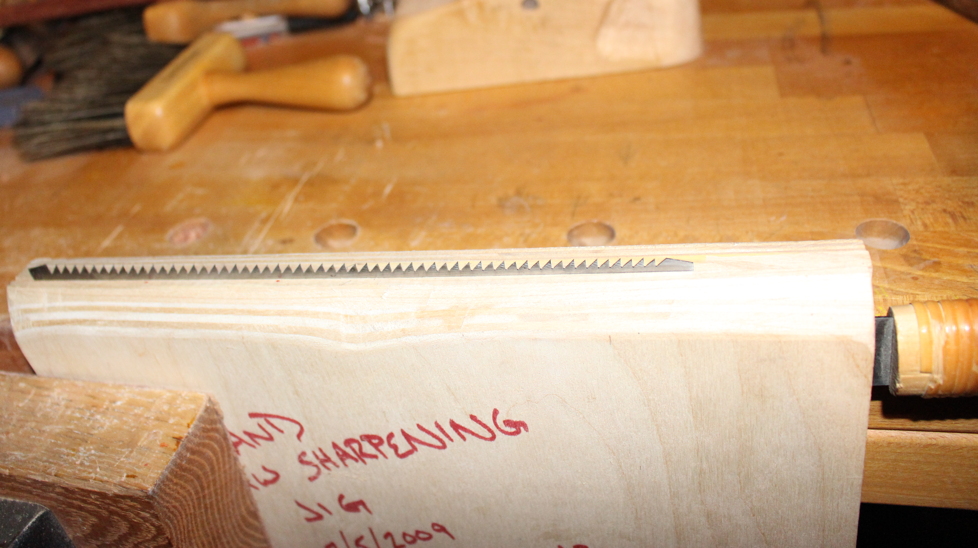
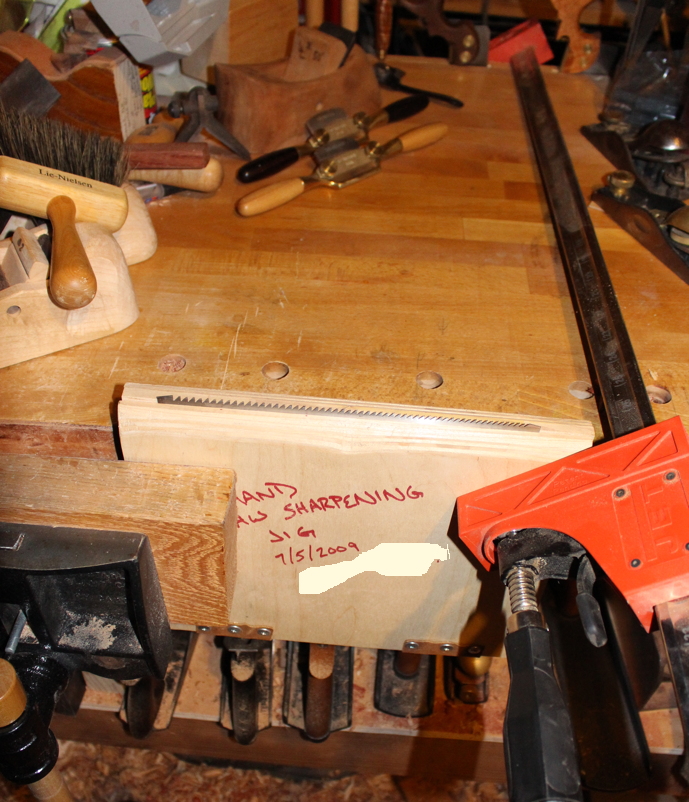
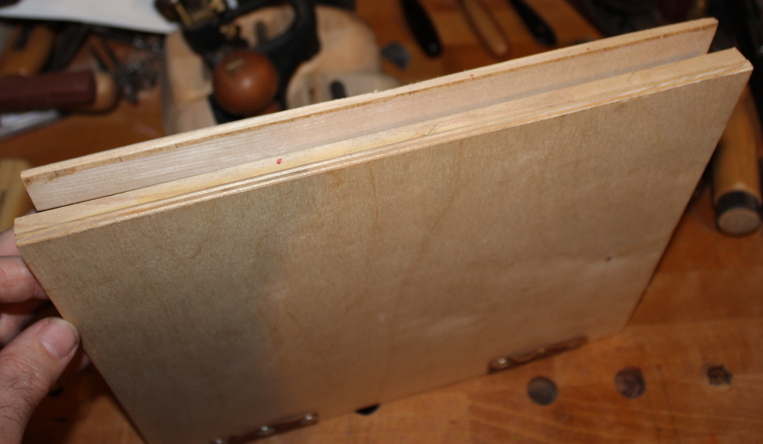
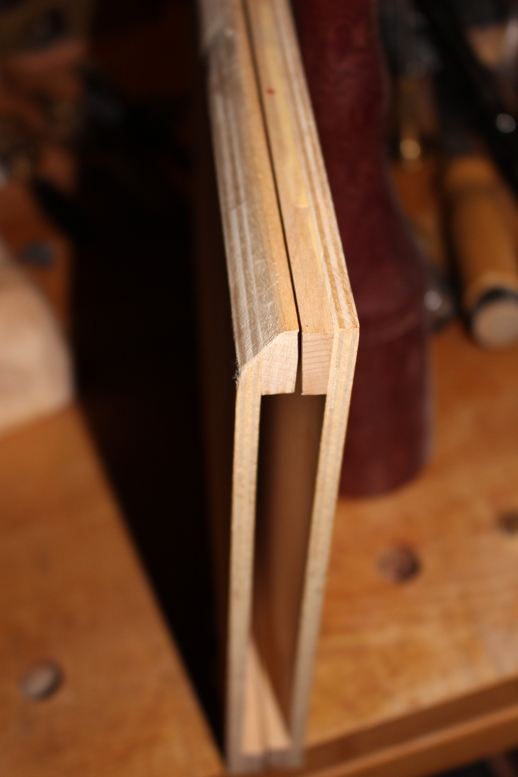
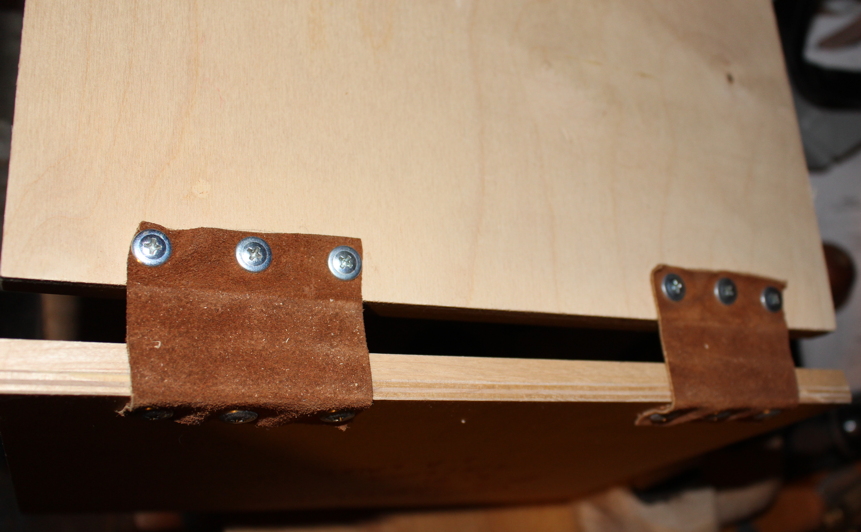
I pulled out a jig (saw holder) that I made about five years ago, that I use to hold my saws when sharpening. The holder is constructed of a couple of pieces of plywood, some hardwood strips, some small pieces of flexible leather used as hinges, and a few screws. When sharpening a saw, I usually put the holder into my dovetailing vise, which applies a good pressure all the way across the holder and onto the saw plate. As I’ve recently rebuilt my dovetailing vise, and it is not 100% complete, I thought I’d show plan “B”. When I put my saw plate into the holder, I position it so it’s teeth are just above the holder’s jaws, enough so the saw’s gullets are accessible without the file making contact with the holder. The closer the gullets are to the holder’s jaws, the better, as this leaves the least amount of tooth out possible, eliminating as much vibration as possible when sharpening. I placed one end of the saw holder into my bench’s face vise and used a long parallel-jaw clamp to hold the jig’s other end, with the other end of the clamp on the other side of my bench. This arrangement allowed me to hold the saw-holder and saw securely, while retaining full access to the saw teeth.

4 Ryoba plate in holder

9 Ryoba jig clamp

6 Holder wide

7 Holder endshot

8 Holder hinge

As with any saw (and sometimes plane irons and chisels), I applied some sharpie to the surfaces of the teeth I planned to try sharpening, as it allows you to verify the critical area at the tooth’s point is contacted by the file. It is also much easier to keep track of which teeth you haven’t yet sharpened, as the marker ink is removed as the file removes the metal from each tooth’s surface.

So now it was time to see what would happen when the file meets the saw. I turned on my overhead light source, grabbed my magni-focuser and file and took a stroke on the first tooth, while subconsciously holding my breath. I really expected the file to feel like it was sliding across the tooth, basically unable to “bite” into the steel and remove material, but it surprisingly felt much like it does when sharpening my other saws. I thought it might just be an odd tooth that didn’t get the “full” treatment of the hardening process, so I moved on to the next couple of teeth. I again took some light file passes on these teeth and they responded exactly the same way, which indicates the steel was not impulse hardened and will accept resharpening. Since the file I have isn’t as large across it’s width as many feather files, it took two strokes to cover the distance from the gullet to tip on one side of the tooth, using one stroke out towards the tip of the tooth and one down towards the gullet. The size of the teeth on the rip side of my Ryoba was almost exactly twice the width of my file, so there wasn’t much  overlap (if any) of the file strokes, so uneven wear in this current sharpening is not a concern. Now that I’ve determined this saw can be re-sharpened, I’ll likely order a couple of feather files, available at Highland Woodworking, for future
sharpenings. While I feel completely comfortable sharpening the rip side of my Ryoba, as well as both rip and cross-cut teeth on Western style saws, the cross-cut side of the Ryoba has teeth with more facets than a high-end diamond (ok, I’m exaggerating a bit), so it would probably be best left to a professional sharpener.

Unlike my Western saws, where the triangular files remove metal from the back of one tooth and the front of the adjacent tooth simultaneously, I had to work each side of every tooth as a separate process. This is due to the fact that my file isn’t made with the same angle between the teeth. This really isn’t that big of a deal, as it just adds a little extra time to the operation. One important detail I want to make sure to mention is how important it is to use consistent pressure and the same number of strokes on each tooth surface. Since my Ryoba had only ever been sharpened at the time it was made, I felt comfortable leaving out a step that very likely would be necessary for any older or second-hand Ryobas you might obtain. The step I’m referencing is jointing the teeth, which is where a flat file is pushed down the teeth along the length of the saw’s plate, with the file perpendicular to the plate of the saw. This, just like sharpening, is best completed with the saw plate held in the same holding jig and vise so the rip teeth all point to the sky. Hold the file so it is parallel with the ground, and lightly push the file from one end of the saw to the other. This will create a very small flat on the tip of all the teeth it touches. After the first pass with the file, check to see how many of the teeth’s tips have a new small flat area. If you see that all of the teeth’s tips have a flat, you are ready to start sharpening. If on the other hand, you have teeth that show no signs of a flat, this indicates those teeth are shorter than those that already have a flat. This uneven height is something that usually occurs over multiple sharpenings, as more pressure is used or more passes are taken on some teeth than on others. Continue to take passes with the jointing file until the tip of all the saw’s teeth have at least a slight flat on them. This is your indication to stop the jointing operation.

When sharpening following jointing, you should take equal passes with the file on each side of each tooth, removing half of each flat from one side of a tooth, and the other half from the opposite side. By working from both sides of a tooth, in an equal manner, it helps to prevent changing the characteristics of the teeth. Make sure to stop the filing process when the flat just disappears. It can seem that additional passes must make the saw that much more sharp, but it will be wasted time, energy and the saw will not last as long.

Another aspect of sharpening that my Ryoba didn’t require was that of setting the teeth. The set is how each alternating tooth is slightly bent to one side and then the next the opposite direction. The amount the tips of the teeth are bent is very minimal, with some saws only adding about .002” of set per side, which helps to create a small amount of room in the kerf so the saw doesn’t bind. It might seem that if a little set is good, then more would be even better, but as more set is added to a saw, it can quickly change from a very easy and controllable saw to one that wanders all over the place and is very difficult to control. As saws are sharpened repeatedly, the saw can start to feel like the kerf is getting more tight, as the tip of the teeth are bent to create the set. As the saw is sharpened, material is removed from the tip, which diminishes a small amount of the set. If the saw feels too tight in it’s kerf, it is likely time to add some set back to the teeth’s tips. Some saws are set with a light strike from a small hammer, while others are set using a tool called…, you guessed it, a Set. It somewhat resembles some of the old label machines, where you’d turn the dial to a letter and squeeze the handle, to impress that letter onto the plastic strip. These set tools are available in both course and fine versions at Highland Woodworking, so make sure you pay attention to the number of points per inch on the saw(s) you intend to set, or at least the range of points as most of these sets are adjustable to a number of different settings.

After I finish the filing on a saw I’ve just sharpened, I like to pull (or push as is appropriate to the saw style) the saw through some scrap wood, like pine or maybe mahogany, to remove any leftover burrs on the teeth. Now the saw is ready to again perform up to it’s full abilities. Go enjoy the freshly sharpened saw and pay attention to how it behaves. When it drifts too far away from this behavior, repeat this process. Each time you sharpen a saw, you’ll get better with your technique and the next one will be even faster.

I hope you enjoyed this article. Please let me know if you have any questions or comments.


Lee Laird has enjoyed woodworking for over 20 years. He is retired from the U.S.P.S. and works for Lie-Nielsen Toolworks as a show staff member, demonstrating tools and training customers. You can email him at lee@lie-nielsen.com or follow him on Twitter at twitter.com/is9582

Mar 052014
 

CLICK HERE to read Part 1 of Lee Laird’s Wooden Square Build.

Now that we’ve created a perfectly fitting half-lap joint, let’s move on.

First we’ll address the shaping of each leg, at the opposite end from the half-lap joints. On my design, I measure from the outside edge of each leg, and mark it at 1/2”. Using a marking gauge, start at this point and mark down the leg about 1 1/2”. Using a small square, draw a line from the last mark, approximately ¼” towards the inside edge of the legs. This is laying out the flat between the two curves that are on the end of the legs. From this line drawn across the leg, measure down an additional 1 ½” and make a small pencil mark on the inside corner of the leg. Take your pencil and draw a curve from the outside corner of the end of the leg, to the outside most portion of the line across the board. This curve should bulge towards the inside edge of the board. The second curve is drawn from the pencil mark on the inside corner of the leg, back to the square line across the board, but meet at the portion closer to the inside edge of the board. The second curve’s bulge is towards the outside edge of the board, or the opposite from the first curve.

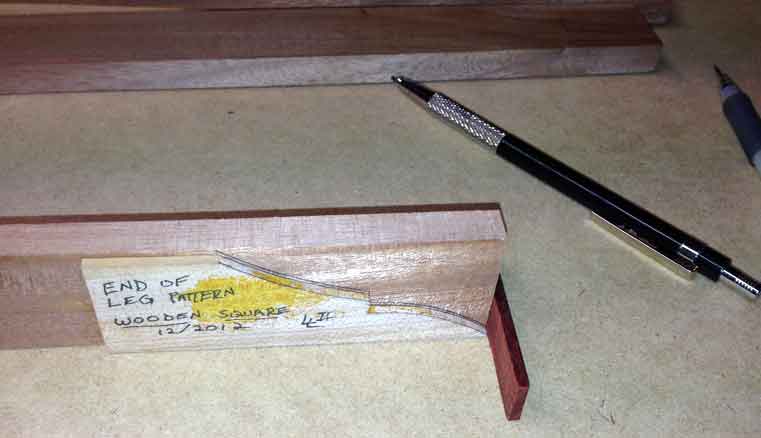
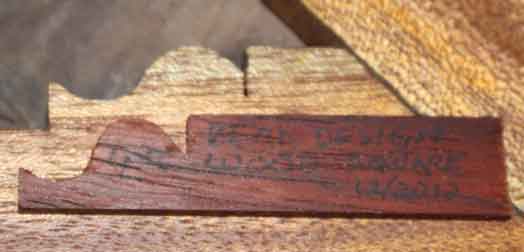
The first cut to make is from the inside edge of the board, along the square line you drew. This makes it easier to cut the curve at the end of the board, and not need to back out after reaching the end of the cut. Next cut the remaining curve from the inside edge of the board. You can make the curved cuts with a band saw, a coping saw or any tool you have that you feel comfortable using. Since I planned to make multiple squares, I made a small wooden template for this double-curved section as well as the upcoming ogee. The ogee template is something I might make, even if I was only making a single square, so all six of the ogees on the square are close to identical.

2015-leg-end-pattern

This is the pattern for the double curve for the end of the legs.

 This is how the curves look on the end of the legs.

This is how the curves look on the end of the legs.

My ogee template on top of the cross member, close to actual ogee. I line up the end with the hook, with the place where the wood steps down, so the template could be longer.

My ogee template on top of the cross member, close to actual ogee. I line up the end with the hook, with the place where the wood steps down, so the template could be longer.

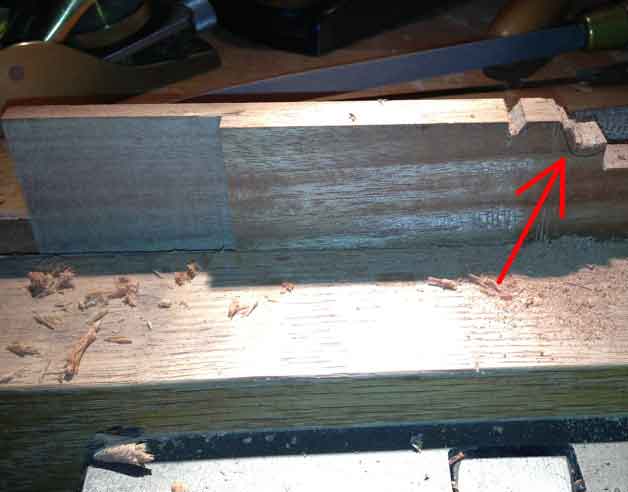
This next portion is to create the ogee on the inside edge of the legs, just before the legs narrow. Measure 1 inch back towards the half-lap joint (and mark it with a pencil) from the step in the leg you created earlier when you removed the 5/8” wide section of wood. (This section is used if you did not create an ogee template.) At this mark, use a square to create a line across the thickness of the board. Using a crosscut saw, cut down approximately ¼” at your line. The ogee begins from this cut and ends at the step. To create this ogee, draw a half-circle up from the bottom of this saw cut to the same surface where the cut began, and back down. The half-circle should have a radius of approximately 3/16”. At the other end of the half-circle, create a smaller half-circle that swings in the opposite direction, or away from the inside edge of the board. The end of this second half-circle should end just short of the step, so the end isn’t overly weak.

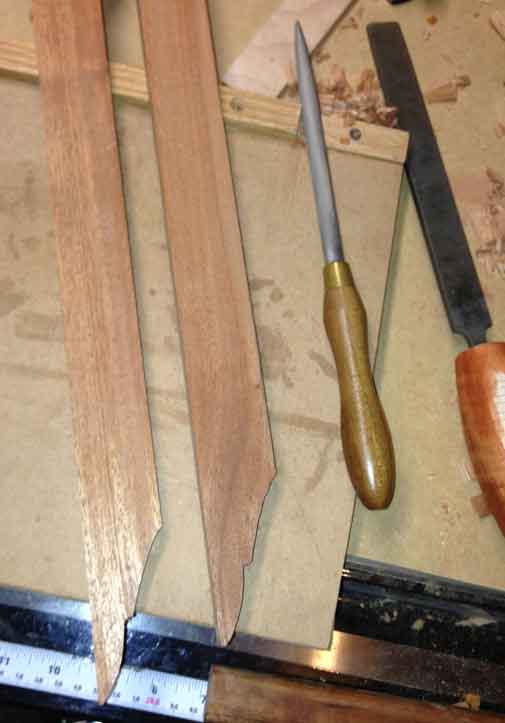
To create the ogee shape you’ve drawn, I like to use a chisel and rasps, but you could cut them with a saw if you’d rather. Place the leg into a vise or clamp with which you can restrain the leg while you work to remove material. The section closest to the saw, cut across the board’s thickness, is where I use the chisel to remove the small corner, beginning the start of the ogee, and then follow that cut with a very fine modeller’s rasp. To help expedite the process, I also cut down to almost the very bottom of the second half-circle with my crosscut saw. A fine rat-tailed rasp and a modeller’s rasp are both very useful at removing remaining wood while providing a good amount of control. Sand the ogee surfaces, with fine grits until you are satisfied with the look/feel. Repeat this process on the other leg’s inside the ogee.

Leg with partially cut ogee, held in bench vise, ready to complete.

Leg with partially cut ogee, held in bench vise, ready to complete.

You probably won’t believe it, but it’s finally time to glue the half-lap joint together. Get your glue, a small brush, a couple of clamps, a rag or two, a cup of water (to use when cleaning any excess glue), and the two small slabs you removed when cutting the half-lap joint. I usually lay down some wax paper or some plastic on the surface where I plan to glue so I don’t have a lot of cleanup after I’ve finished. I also like to apply some paste wax to the faces of the wood slabs so I can use them as cauls without them accidentally getting glued to the project. I pour some glue onto a small paper plate and use a tiny brush to apply it to the joint surfaces. This can help provide a nice level of control over the volume of glue in the joint. After the glue is applied, get the pieces together in the correct orientation (make sure the nice pretty ogees are on the inside edges of the legs), and put the slabs on each side of the joint and apply a little clamp pressure. Since this is such a small joint, it doesn’t take much pressure as you’re really just trying to keep the joint solid and prevent the parts from moving around. Give it one last look to make sure nothing has gone crazy, and if it’s good, set it aside to dry.

The two legs glued and clamped.

The two legs glued and clamped.

Legs after the glue dried, and out of the clamps.

Legs after the glue dried, and out of the clamps.

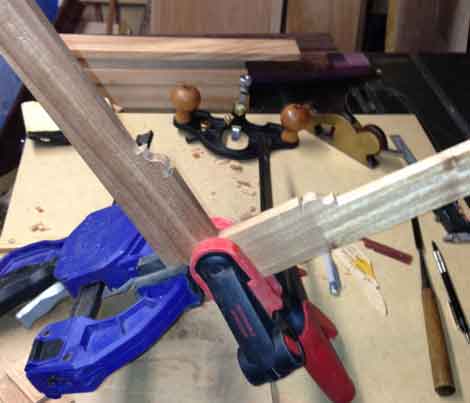
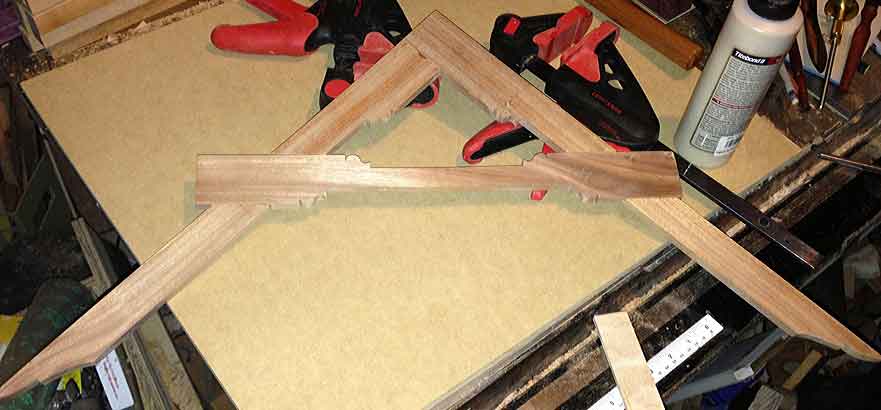
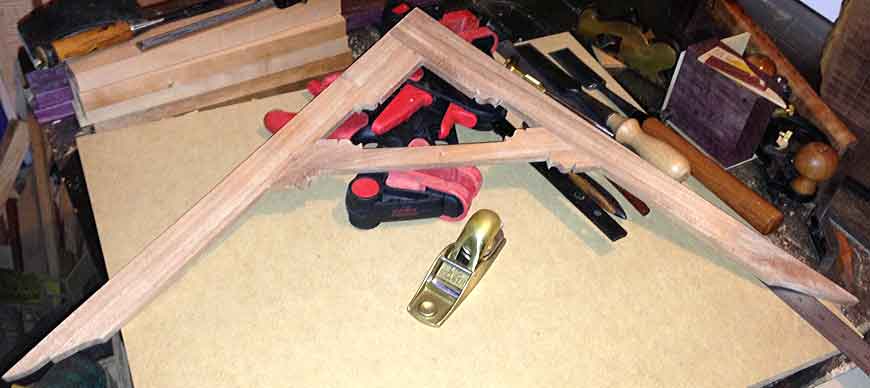
While the legs are clamped together, you can lightly offer the cross member up to them, so you can mark where the inside surfaces of the legs will mate. Once you have those marks, you can proceed to layout and create the ogees on this board (four of them), as well as the narrowing of the center section. If you aren’t in a hurry, you can always do these details later after you’ve cut the angled half-lap joints that mate the three boards together. Waiting isn’t really such a bad idea, as the center section of the cross member does get fairly narrow and with that, it’s strength is reduced. I’d hate to have you snap that board, after spending time creating the ogees and all, while cutting the joints and cleaning them up. I cut the remaining half-lap joints on the few I’ve made before moving on to the ornamentation, but in the end, its up to you. When laying out the ogees on the edge of the cross member that is closest to where the legs join, the saw cut is approximately ¾” in from where this meets the inside edge of the leg board. The overall length of these ogees are the same as those previously created on the legs. The ogees on the lower edge of the cross member are approximately 1” in from the inside edge of the leg boards. At the end of the ogees, make a saw cut across the boards thickness, down approximately 3/16”. The wood between these last cuts will be removed, leaving a lighter feel to the straight line between the ends of the ogees, while also stepped down.

Cross member laid across the legs, to get an idea of correct look.

Cross member laid across the legs, to get an idea of correct look.

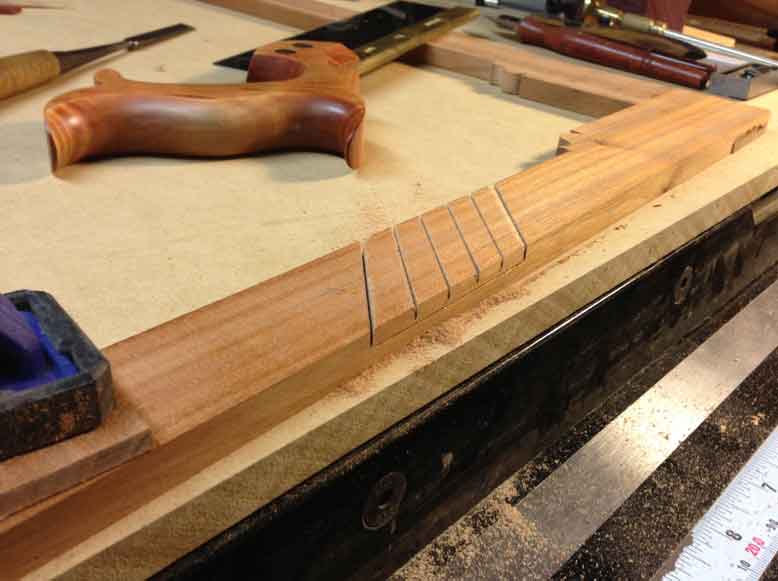
After the  leg joint is dry, offer the cross member up, and when the placement looks good, clamp it in place on both legs. On my squares, I placed them so the top of the cross member was approximately 8” down from the end of the leg (the half-lap end). With the cross member clamped in place, scribe around all sides of the mating pieces. Similarly to the earlier handling of the leg’s half-lap, work the joint surfaces to just shy of fully half thickness on adjoining pieces, and then sneak up on the perfect fit. I used my crosscut saw to make multiple cuts (5-7) in each of the remaining joint areas, cutting close to half the way through the board, and then followed that with my chisels to remove the rough waste.

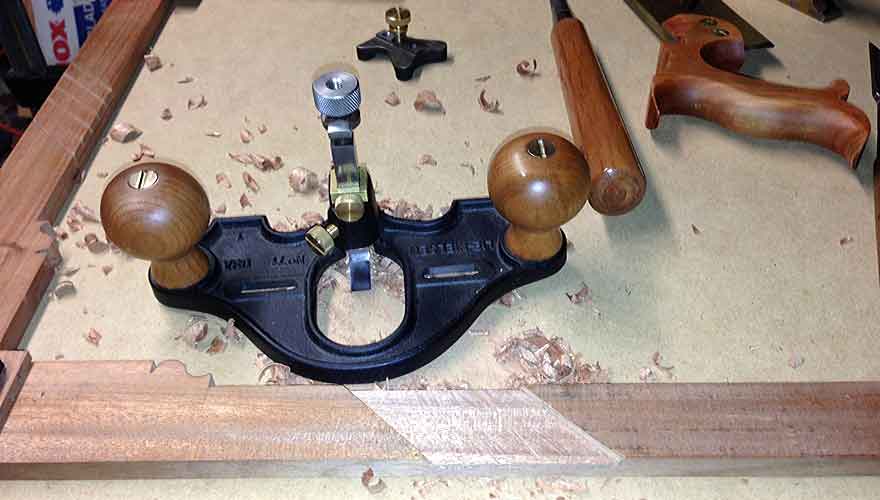
The router plane followed, as it does such a great job of creating a surface parallel with whatever the plane rides on, and if that is an already flat face, the joint surface will also be flat and in the same plane. Leave the cross member at full length until after the square is glued up and dry. Its easy to trim the remaining ends off at that time, and the outside ledges help to hold it together, mainly requiring just a little pressure over the joint. Handle the glueup in the same manner as the leg half-lap and there shouldn’t be any problems.

Saw across the joint before cleanup.

Saw across the joint before cleanup.

Joint cleaned up with the router plane.

Joint cleaned up with the router plane.

Legs and cross member glued up, with “ears” still attached.

Legs and cross member glued up, with “ears” still attached.

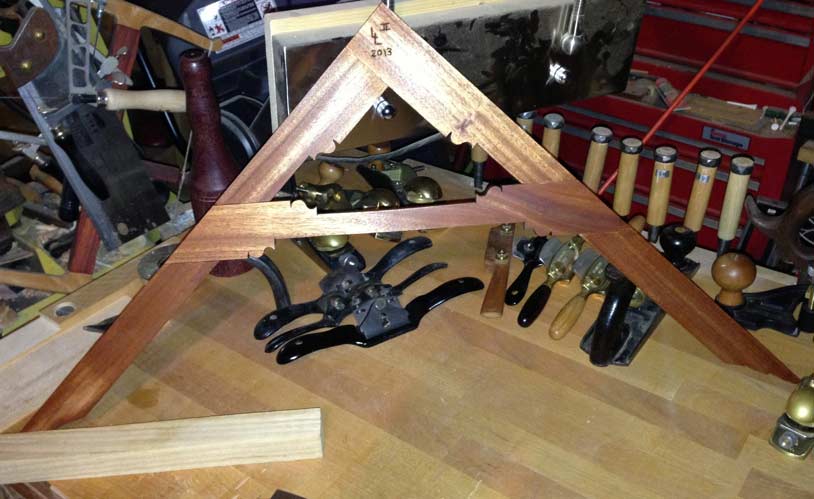
“Ears” trimmed all around. All is complete except for sanding and oiling.

“Ears” trimmed all around. All is complete except for sanding and oiling.

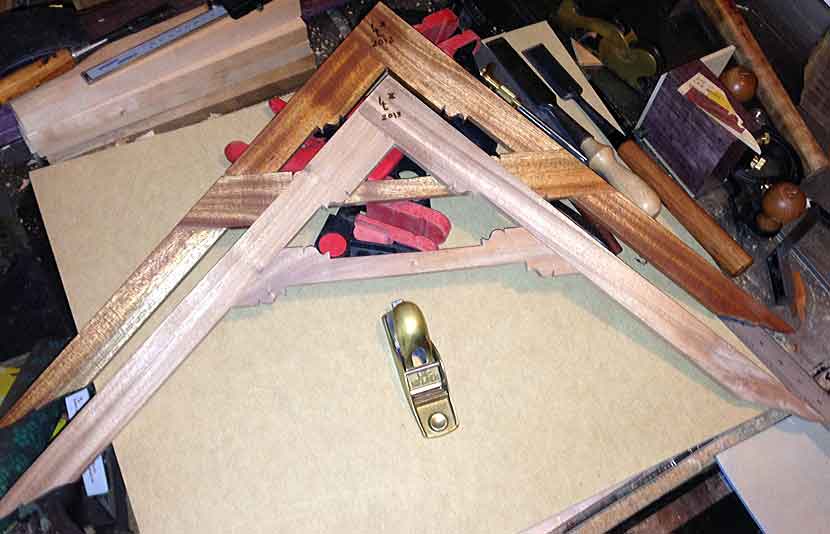
Two completed squares; one with tung oil applied and the other ready for oil.

Two completed squares; one with tung oil applied and the other ready for oil.

After the glue has dried, trim off the excess ends of the cross member, as well as any little excess that protrudes at the leg-to-leg half-lap. Check your square to see that it is truly 90-degrees from one leg’s outside edge to the other. To check this, you can place it inside a known good square, or line up one leg’s outside surface with a known flat surface, like the front of your workbench. Draw a pencil line across the surface using the opposite leg’s outside edge. Flip the square over so the same leg’s outside edge is aligned with the front of the bench, and draw a second line using the outside edge of the same leg. Check to see if the two lines are parallel. If they are, you passed and the square is “Square”!

It’s not the end of the world if this isn’t the case, since you can adjust these to bring them into square. This is one of the nice things about making these from wood. If the angle between the outside edges of the legs is reading less than 90-degrees, a little material should be removed down towards the leg’s joint area on both sides. If the angle is more than 90-degrees, some material from the outside edge near the toe section should be removed. Of course, when removing any of this wood, you’d need to feather the amount removed into the full length of the same edge.

Now you can sand and finish your square in any manner you see fit. I sanded to 320 grit and followed that with some Tung Oil, which really brought the wood to life. I always mark my pieces with my burning tool (I still need to design and order one of the marking tools, so my mark is more consistent) and include at minimum the year, but sometimes the month and year. I think its cool for your family, friends, and customers to look back and recall when a piece was made.

I hope you’ve enjoyed the article and will make at least one wooden square. There are a range of techniques you’ll use during this build and like most things, the more you do, the more proficient you become. Please let me know if you have any question or comments.


Lee Laird has enjoyed woodworking for over 20 years. He is retired  from the U.S.P.S. and works for Lie-Nielsen Toolworks as a show staff member, demonstrating tools and training customers. You can email him at lee@lie-nielsen.com or follow him on Twitter at twitter.com/is9582

Mar 042014
 

Every once in a while I’ll see a tool/project that calls to me. You know, one of those “whatchamacallits” that real people probably don’t really need, but looks so cool? As you might imagine, the majority of THOSE projects never see the light of day in my shop. Luckily, there are also some other projects that REALLY, REALLY, call to me, and just happen to be both cool and useful. This article is about one of these latter types of projects.

Christopher Schwarz, who is a friend of mine, and someone almost everyone in the woodworking community knows, teaches how to make a really cool wooden square. After seeing his, I just had to give it a try. While Chris’ pattern is straight from an old original square (which I believe was inadvertently destroyed when in transit by a package handling company), I created my pattern simply by eye-balling the square Chris showed on Roy Underhill’s “The Woodwright’s Shop”, and extrapolating what dimensions looked right to me.
2108-Square-oil-bench

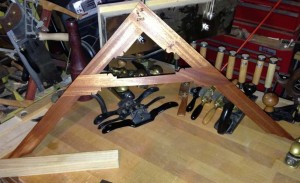
A quick photo of my square in front of some of my tools.

After seeing that the square is made from only three pieces of wood, I figured I’d go spend an hour or two in the shop and have a square. Well, I’d have to say my time estimation and management skills must have been very lacking that week. Ok, it didn’t actually take me a week to make the first one, but the time was certainly adding up. And this was with me already having the necessary wood milled up to 1/2” thick, which I’d originally planned to use on a dovetailed box project. The box will just have to wait!

To start out, I cut two legs 22” long x 2” wide x 1/2” thick, and one cross-member 20” long x 2” wide x 1/2 thick. Before cutting any of the decorative shaping, I hand planed each board, making sure they were both square and flat. Much of the next work is focused on the two “leg” boards, since its only after they are glued into a solid unit, that you can identify exactly where the cross-member will intersect the legs. If you try marking the locations to evacuate for the cross-member, without first gluing the legs, I’d suggest your chances of success would be diminished.

Before marking either of the two “leg” boards, you’ll want to examine them for any imperfections and read through the meat of the project, as it’s possible you just might be able to plan for any problem areas to fall in the region that will be removed as waste. Since the square’s design uses a half-lap joint where the two legs intersect, there is a fair amount of wood removed, which you can also view as an opportunity. If either of your leg boards have any tear-out or other quality type issues in the first 2” of the board, you can orient them so the problem section will reside on the slab of wood you remove when forming the joint. But, before finalizing any cuts or using any cutting tool to mark, I find it’s a good idea to lightly sketch out the complete layout, so you can weigh your options on which areas of wood might create the least amount of extra work. At the minimum, this will at least give you the chance to choose the best orientation for each board. It may just be that the half-lap joint area is of less concern than another area. If you’re really into planning, or end up being lucky, you may also find a similar benefit when positioning the cross-member, but there are only a few ways to orient three boards. You’d may as well take every advantage to eliminate blemishes on your project, especially when it only takes a few moments to flip the boards around, testing for the best orientation.

Now that you’ve looked everything over, its time to get on with the design, which obviously includes the areas you’ll cut away as well as the design features on the legs. To start, I measure down approximately 6 inches from the end of the board that will contain the half-lap joint and place a pencil mark across the board, on what will be the inside edge. This top section of the board will stay full width and includes both the half-lap joint as well as some figurative work before the leg narrows. Measure in 5/8” from the location you just marked, and using a square, run a line to the other end of your leg board away from the half-lap end. This line should be parallel to the edge of your board.

Repeat this process on your other leg board, as the design is identical on both legs.
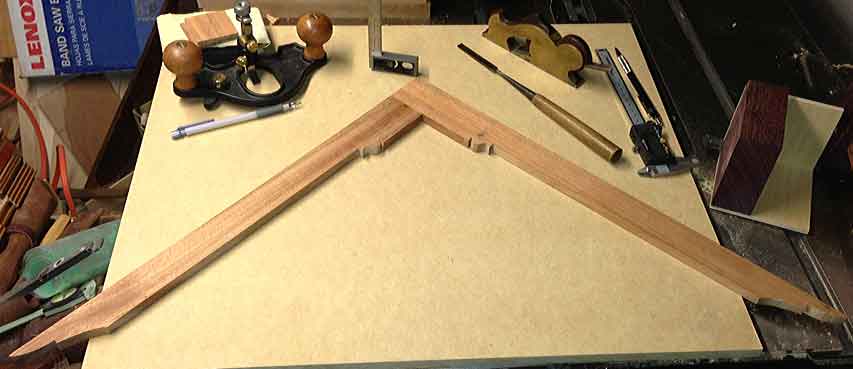
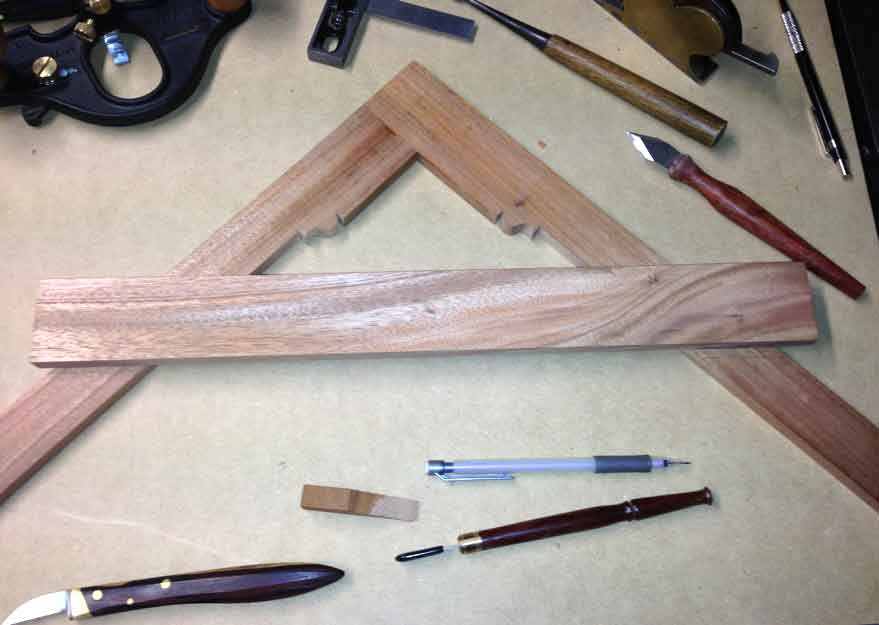
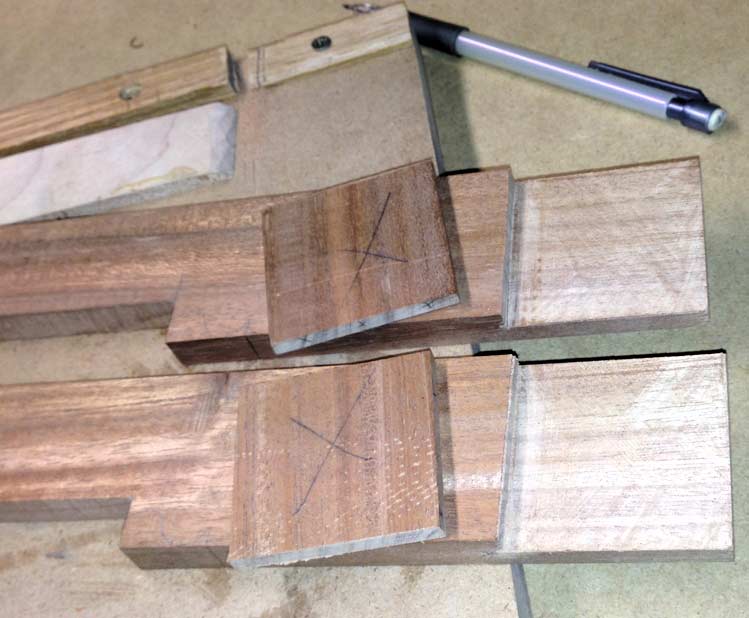
It is approximately 6 inches from the end to the notch just left of the off-cuts, which is from the 5/8” cut. You can also see the large X on the slabs which identified the waste, and the saw marks still on the lap joints before using the router plane.

It is approximately 6 inches from the end to the notch just left of the off-cuts, which is from the 5/8” cut. You can also see the large X on the slabs which identified the waste, and the saw marks still on the lap joints before using the router plane.

Cut the short 5/8” deep cut from the inside edge of the board first, followed by the long cut from the end farthest away from the intended half-lap joints. Making the short cut first is much easier than trying to back out of a long cut. Use whatever saw you have available that can reach this far into the wood, like a band saw, a bow saw or a panel saw. This cut will generate a 5/8” wide piece of wood that is approximately 16” long. (anyone up for making a kite?)

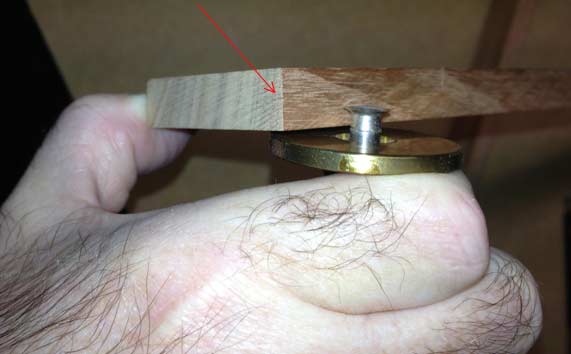
The next step is to mark out for the half-lap joint for the legs. Set your marking gauge directly from the width of the first board, and add a hairs width extra. With the gauge head riding against the end of the second board, lightly mark across the width of the board, which transfers the first board’s dimensions. Make a couple of additional passes, applying a little more pressure on the marking gauge on each pass.Before moving on, take your pencil and make an “X” on the leg above the mark you just made. This will remind you that this is the side from which the wood is removed, which can help prevent errors. Repeat the process for the other board, but remember to set the gauge from the opposite board’s width, just in case they aren’t exactly the same size. Next you’ll mark the center line of the board’s thickness on the end and the sides of the board, down to the line you’ve just marked across one face. I dial in my marking gauge directly from the thickness of the board, by lightly touching the cutting gauge to the board while the head is against one side, and then doing the same from the other side. When the gauge hits the same spot from both sides, you’re there. I still like to add an extra hair’s width, so there is a little extra material to dial in the perfect joint, which I’ll talk about later.

While holding the gauge’s head against the side of your leg that will remain (the side without the big “X”), mark across the end and down both sides, to your line across the leg. If you accidentally reverse the gauge, so the head is against the side you plan to remove, you’ll end up with a joint that’s isn’t as thick as the original leg.
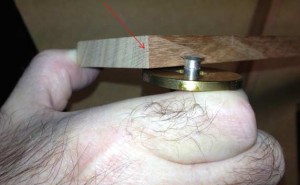
Showing gauge out to depth and red arrow points to centering mark from each side.

Showing gauge out to depth and red arrow points to centering mark from each side.

Now that your leg’s half-lap joint is marked, it’s time to remove the excess wood. The first cut is at your mark across the leg, but I like to give myself the best chance to succeed. Instead of just grabbing my crosscut saw and going for it, I use a razor sharp chisel to carefully pare away a small angled piece of wood, across the width of the board. I do this on the waste side of the marking gauge’s line, to create a small V-shaped path, which helps keep the saw from wandering during the initial strokes. Now use a crosscut saw to carefully saw down, until you just about kiss your gauge lines on both sides, which is very close to half way through the board.

The next operation is to saw down length-wise following the marks made on the sides and end. Since this cut is with the grain, use a fine-toothed rip saw, of which I prefer to use a thin-bladed dovetail saw. Place the first leg board into a vise with it tilted so the top end of the board is just slightly away from you.

This is another good place to apply a helpful tip, which is to remove a small wedge shaped piece of wood at the corner of the board closest to you. With a sharp chisel, place it so the flat back lines up with the mark you’ve made across the end of the board, push the chisel into the wood so it is contacting the corner. Turn the chisel around so it’s back is away from the line and at about a 45-degree angle, push in again, so the two cuts meet. This should pop out a small wedge of wood that will act similar to the cross-cut version earlier, but the starting “V” is not all the way across the end. Start with the toe of the saw raised up slightly, so it is not making contact across the full width of the board’s end. With light, short strokes, let it gradually drop, as you look to make sure you follow your mark. When the saw is down to the point where it is touching across the full width, focus on following the line on the side of the board closest to you, cutting down to the baseline. This ends up being an almost purely diagonal cut, since you are only trying to advance the saw plate on the side you can observe.

Next, remove the board from the vise and flip it around so you have the other side of the board facing you. Again tilt the board so the end is slightly leaning away from you, and again make the same diagonal type cut down to the baseline on this side. Next, it is just a matter of placing the saw into the already created kerf, and while holding the saw so the teeth are parallel to the baseline, cut down through the remaining triangle-shaped section of wood. Be very careful at this stage, especially when you’re getting close, that you don’t cut down below the baseline, which can happen if the saw tilts forward. Since you can’t see the opposite side of the cut, without moving your head around, this is the most common place to over-cut. This will leave you with your basic half-lap shaped end on your leg board.

Repeat these steps on the other leg board. When I make these cuts, I saw so I am cutting really close to the line, but making sure I don’t dip down into it by accident. You can base how close you cut to your lines, on your comfort level with a saw, but remember I’ll share additional techniques that will help create a perfect fit.

Next, we’ll get out the router plane, which is a perfect companion for the upcoming tweaks to the wide mating surfaces of the lap joint. Clamp a leg board so it is sitting with the half-lap portion facing upwards from the bench. Place the other leg on one side of the first leg, and the cross member on the other side of it, so the router plane can ride on two rails of the same thickness. With the router plane on the two flanking boards, lower its iron down until it just grazes the highest point on the lap joint. (It’s also a good idea to check to make sure the iron isn’t below the line that was earlier marked down the side of the leg board, as that could be close to removing too much material.) Move the router plane back and forth so it’s iron travels over all areas of the half-lap, while riding on the two side boards. Gradually advance the iron so a very light shaving is taken from all areas of the joint. Before removing any material below the lines you marked earlier, do the same process to the other leg’s half-lap. Test the two pieces together, to see if the joint is still thicker than either leg, which would indicate additional material is still remaining. Continue to remove very light shavings equally from each surface until the full joint is exactly the same thickness, when compared to the original thickness of either leg.

The last half-lap related assessment for this joint is of the earlier-cut shoulders, across the legs. Check to see if the shoulder is both square across the board and square to the inside faces. If either of these are out of square, they will prevent the two boards from mating properly, with gaps and/or legs that are not 90-degrees from one another. If there are obvious gross adjustments needed, you can use a sharp chisel (or a rasp) to get it close to the proper alignment, but I’d hesitate to use that tool for the final adjustment. The shoulder plane is my tool of choice for this work, as its wide sides register against the earlier flattened faces, creating perfect 90-degree shoulders. Set the shoulder plane for a very fine shaving, and make sure to keep the side of the plane against the reference surface. Also, check to see if there is any grain runout in either direction, as the shoulder plane works equally well on either of its sides. It only requires you to set the iron so its outside edge is in line with the plane’s body. If you cut the earlier shoulders just proud of your marking lines, you can easily bring the excess material down to the line, knowing you’ve reached the stopping point. If you didn’t leave your line, you could always re-mark down about 1/64” (remember to do this on both legs, and reference from the joint end of the board, just so everything stays symmetrical), so you don’t have to guess where to stop. This isn’t super critical for this tool, as long as the shoulder is square in both discussed dimensions, no one will notice if you don’t tell.

Now, before you get excited and decide to glue your perfectly fitting half-lap joint together, remember we still have some more work to do and it is much easier to accomplish while the legs are still separate from each other. We’ll get to this in Part 2, so stay tuned with our Wooden Square Build!

CLICK HERE to go to Part 2 of the Wooden Square Build.


Lee Laird has enjoyed woodworking for over 20 years. He is retired from the U.S.P.S. and works for Lie-Nielsen Toolworks as a show staff member, demonstrating tools and training customers. You can email him at lee@lie-nielsen.com or follow him on Twitter at twitter.com/is9582