Highland Staff

Dec 022014
 

No Southern-fried Southern boy wants to be called a Yankee, but we share the characteristics of shrewdness and thrift.  Thus, each month we include a money-saving tip.  It’s OK if you call me “cheap.” 

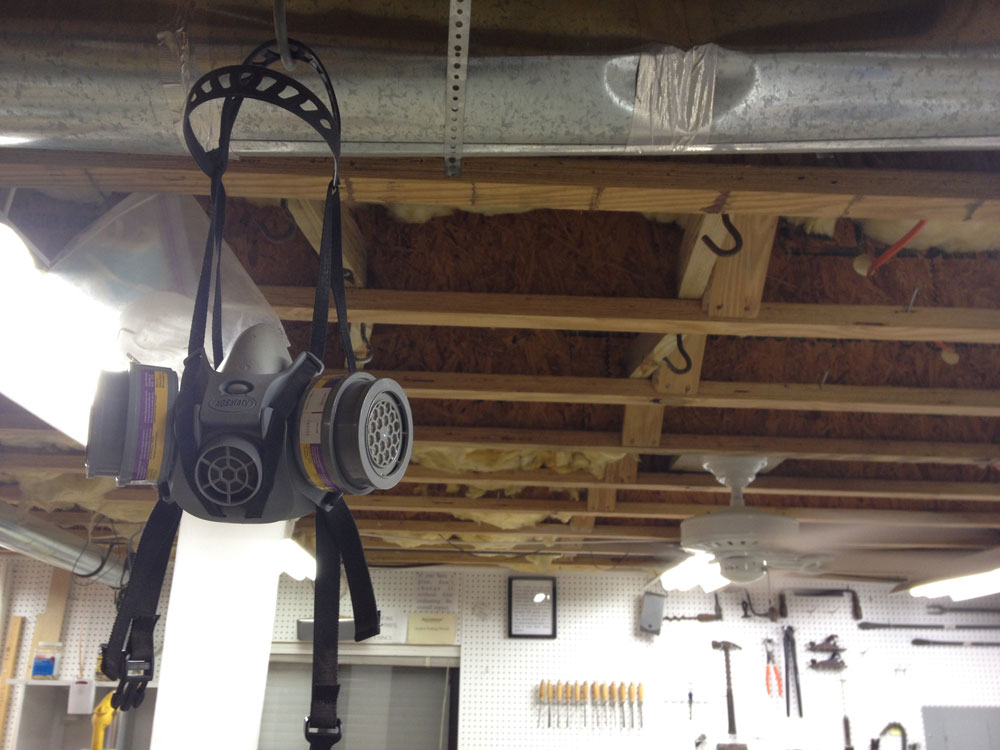
Sticking with the dust theme from Tip #1… The inside of your dust mask can become very wet, owing to the high moisture content of your breath. My tip? Install a hook in front of the outflow side of your ceiling-mounted air filter or air-circulating fan. Hang your mask in front of it with the inside facing the air flow and it will be nice and dry the next time you use it.

44_1A

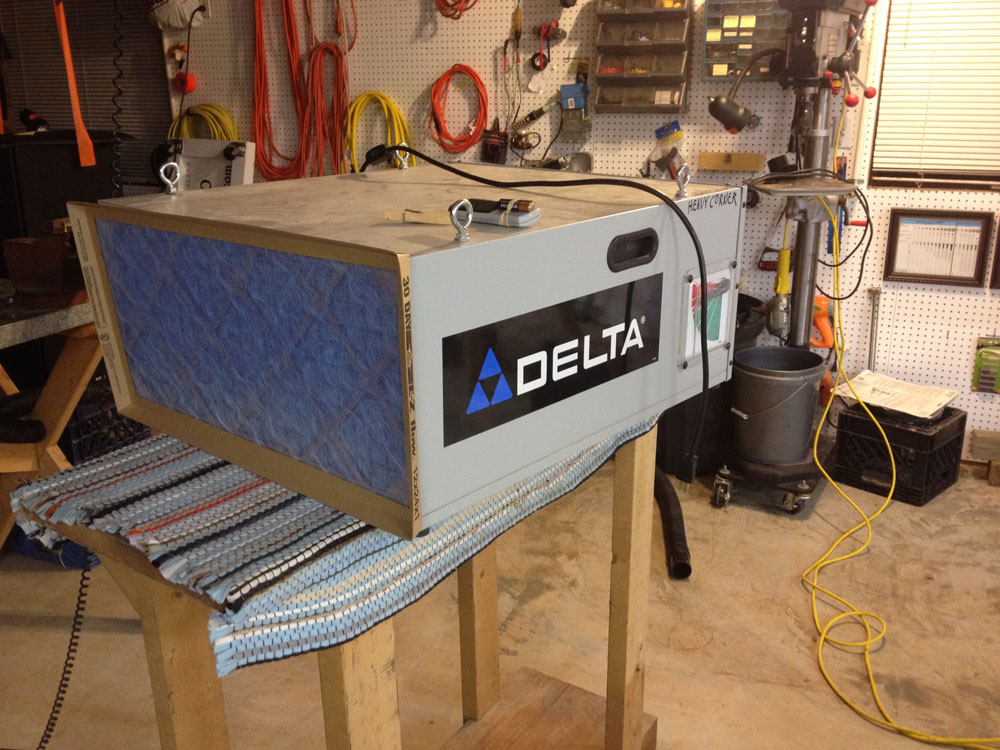
Free mask drying here! Every time you turn on the air filter the moist inside of your mask is dried automatically. You have to use your imagination a bit. This is the mask’s usual hanging place and the filter’s usual mounting place. However, I currently have it on a rolling stand while we’re having new wood floors installed in our living room.

44_1B

I’m thinking of leaving the dust filter on this cart, as it’s now closer to “nose level” and may be more effective. If so, I’ll have to rig a new hanging place for the dust mask.

If the mask develops a sour smell, indicating mold and mildew are growing there, wipe it out with a Clorox Bleach Wipe or a paper towel wetted with vinegar, then allow it to air out thoroughly before reusing.

Clorox wipes have just the right amount of chlorine to kill the smell but not leave chlorine fumes the next time you wear your mask

Clorox wipes have just the right amount of chlorine to kill the smell but not leave chlorine fumes the next time you wear your mask.


Jim Randolph is a veterinarian in Long Beach, Mississippi. His earlier careers as lawn mower, dairy farmer, automobile mechanic, microwave communications electronics instructor and journeyman carpenter all influence his approach to woodworking. His favorite projects are furniture built for his wife, Brenda, and for their children and grandchildren. His and Brenda’s home, nicknamed Sticks-In-The-Mud, is built on pilings (sticks) near the wetlands (mud) on a bayou off Jourdan River. His shop is in the lower level of their home. Questions and comments on woodworking may be written below in the comments section. Questions about pet care should be directed to his blog on pet care, www.MyPetsDoctor.com. We regret that, because of high volume, not all inquiries can be answered personally.

Nov 282014
 

Those of us who write for this Blog crave comments.  We celebrate when one appears and we hold our breath until we see what the reader has to say.  My personal record is the entry I wrote several years ago on The Zombie Apocalypse.  That one got upwards of 160 comments and I was ecstatic, giggling like a girl as they came in.  I don’t know if I will ever match that one.

Highland asks their bloggers to make a wish-list post this time of the year, all designed of course to get you to think about which tools you might want to purchase to add to your collection.

I was looking back over the last few weeks of blogs and the most comments recently went to “The Awesome Responsibility of Being a Woodworking Grandpa”.  I read most of them and there is a common theme.  Everyone remembers the woodworking experiences where someone spent some time in the shop with them.  It didn’t matter what they made, it was the time spent together.  Many people lament the time missed in the workshop with their kids and grandkids and hold out a desperate hope of the kids showing up one day.  Tools passed down through generations are treasured, always with the thought that the old ones are the really good ones.

When I was growing up my Dad had a farm and my brother and I spent many hours with him.  We had quite a hay-baling operation, where Daddy would cut the hay, I would rake it and my brother would run the hay baler.  Then we all hauled the bales to the barn together.  Later we had an egg farm, and picking up and processing eggs by hand several times a day certainly makes for lots of time together.  I suppose my love of woodworking first comes from Daddy’s skill at making slatted wooden bodies for his pickup trucks so he could haul livestock to the markets.  They were made from what I remember as 2-1/2” white oak strips, incredibly strong and bolted together with carriage bolts.  The other thing I remember is that Daddy never had all the tools he needed and sometimes had to borrow tools.  I suppose I was a little gotten off with about that, so now I make sure I have all the tools.  I don’t have to borrow tools but neither do I have any tools handed down from my Father.  I regret that.

My son has no interest in woodworking other than the bowls I make for him to give to the bridal couple when he performs a wedding ceremony.  There are no tools in the shop he wants me to save for him and I hold little hope of him joining me in the shop.  My best hope is apparently going to be some future grandchildren, or some “adopted” children.

So my Wish-List for you and for me for this year is a little different.  I wish for someone to share my skills with.  Someone I can teach to turn bowls and build Windsor chairs.  Someone to spend time with in the shop.  A guy named George summed it up in his comment:  “Recently I made a pretty music box for one of my granddaughters. When I finished it and played it for the first time I cried.”

That’s on my Wish-List for this year.

Nov 252014
 

Welcome to “Tips From Sticks-In-The-Mud Woodshop.” I am a hobbyist, not a professional, someone who loves woodworking, just like you do. I have found some better ways to accomplish tasks in the workshop and look forward to sharing those with you each month, as well as hearing your problem-solving ideas.

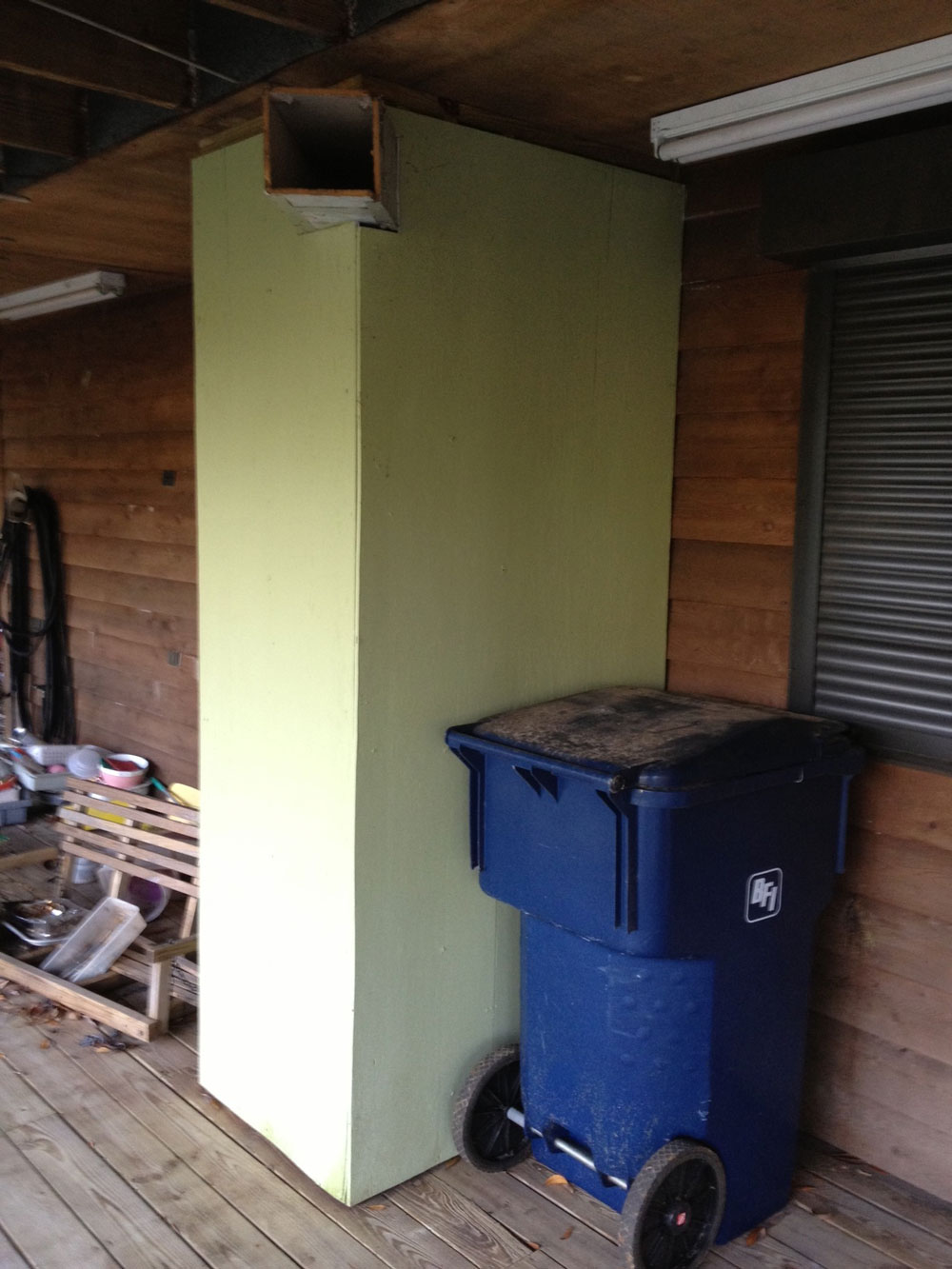
Building a small room (or even a compartment) for your dust-collection cyclone outside your shop provides several advantages.
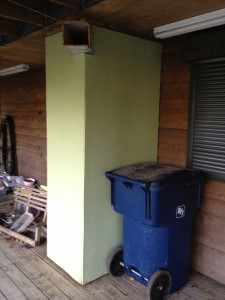
43_1

I built this little shack on the back of our house so the cyclone could be outdoors. Eventually I will side it with cedar, like the rest of the house, but with removable panels for cyclone maintenance. Meanwhile, it’s a big test panel for choosing the color of the house when it’s repainted.

First, all that noise is now outside instead of in your shop. And, that’s a big advantage, because even the quietest cyclone is pretty darn loud. I used my handy-dandy iPhone sound pressure level meter outside the closet, and it read 84 db. It can reasonably be assumed that it would have a similar noise output if inside the shop, except that if it were indoors it would probably not be enclosed and the sound would be even louder.

43_2

How much more pleasant would your shop be if the dust collector noise was gone, or at least reduced? 84 db is pretty loud.

43_3

Just across the wall from the dust collector the reading was 79 db, roughly a 20% sound reduction compared to right next to the collector cabinet outdoors.

We saved 9 dB of noise by just walking across the room!

Meanwhile, stepping over about 12 feet to the table saw the reading was 70 db. We saved 9 dB of noise by just walking across the room!

Second, you’ve gained a little more room in your shop. Who can’t use more room? You may wish to size your new room to include your air compressor too, as Steven Johnson, the Down-To-Earth-Woodworker did.

Third, you may no longer need a filter on the air discharge, eliminating filter cleaning (one more unpleasant job). I just have to be careful that I don’t walk through that discharge area without a dust mask during and shortly after using the cyclone. For me it’s not a problem because it’s not an area I need to be in very often when I’m working. Whatever dust is in the discharge is the finest of the fine, because I never see anything in the air or even settling on that part of the deck. Of course, that really fine dust is also the most dangerous, the dust that can go deepest into your respiratory tree. One limiting factor is that you have to make a hole in the wall, and that hole has to line up perfectly so that your mounting bracket is in exactly the right place.
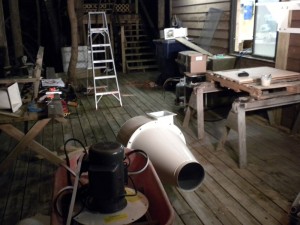
Not trusting myself in a challenge to match a hole to a mounting bracket, I mounted the cyclone first, then cut the hole!

Not trusting myself in a challenge to match a hole to a mounting bracket, I mounted the cyclone first, then cut the hole!

You must provide “makeup air” to prevent pulling carbon monoxide and other products of combustion out of the flue and back into your shop.
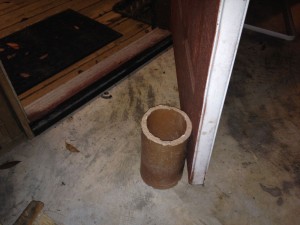
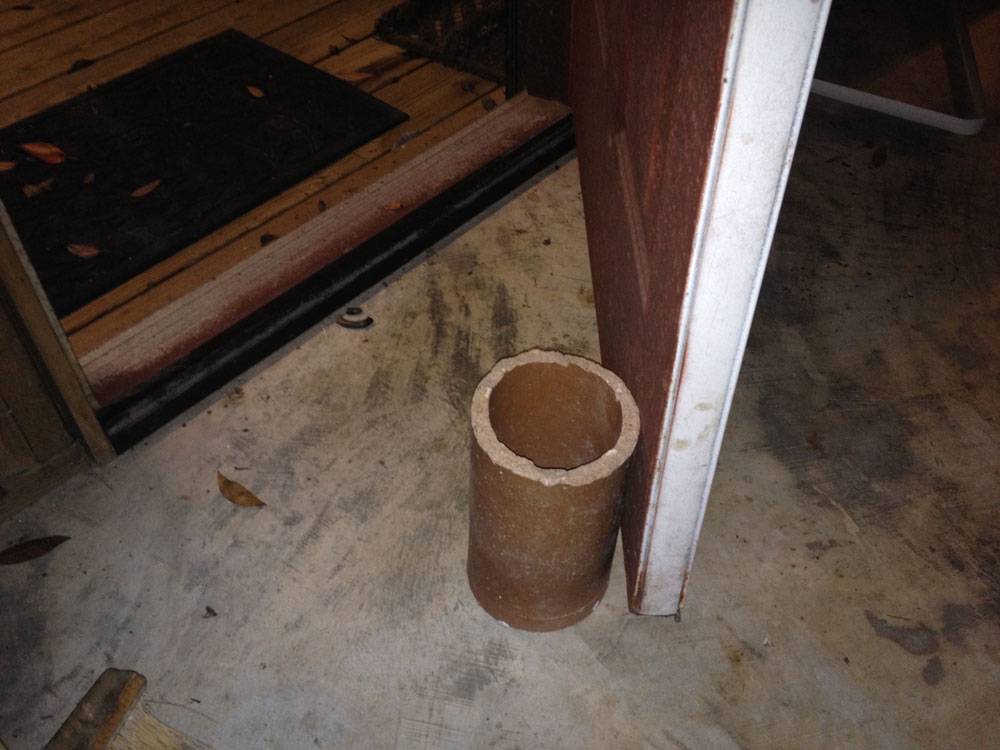
I use this old piece of orangeburg pipe to keep the back door cracked open for “makeup air” when running the cyclone.

I use this old piece of orangeburg pipe to keep the back door cracked open for “makeup air” when running the cyclone.

Funny story:  As it says in the footer, we live in the absolute boondocks. We have more wild animals in our back yard than a zoo. It’s nothing to see snakes on the deck, or even on the second floor. (I want to see one of them climbing the stairs one day.)

One night I had run the dust collector, finished and locked up for the night. The next morning I went down the stairs to leave for work and there was a big pile of smelly poop on a rug. Clearly it wasn’t dog or cat poop because it was full of persimmon seeds. I hurriedly cleaned it up and didn’t give it much more thought, despite the fact that the entire garage was locked up tight. Several days later, on the weekend, I was going around the north wall opening blinds, shutters and windows, when I found even more seed-filled poop. Then more. I decided I needed to look for a source. Now, it’s important to know something about me: I get spooked pretty easily. And, when I get startled, I can scream just like a girl. I armed myself with an old broom handle and began my search. Under the cars, under the boat, under the workbench where my infrequently-used jigs are stored. Nothing. “OK, then,” I thought, “let’s go to the real hiding places, my wife’s clay and pottery-working area.” Still nothing. Talking to myself again, “Maybe a coon got in and got out and just left me some ‘prizes’ while he was here.” I resigned myself to never solving the mystery and went back to work. Cutting a heavy piece of metal with a saber saw, I had Bose noise-canceling headphones on and was playing music pretty loud, when I felt something against my foot. Not thinking of my intruder, I wiggled my foot and continued cutting. I felt something hit my boot again and looked down.

:Insert girl-scream here:

It’s a good thing my wife wasn’t home or she would have thought I’d run the radial arm saw over my wrist. I looked down to see the cutest little baby possum you ever saw! Sure, I didn’t think he was so cute at first, but when my heart rate dropped back below 200 I was able to admire him objectively, I decided he was adorable. Still, he’d be even more adorable if he was back in the swamp where he belonged. Grabbing an empty 5-gallon bucket I scooped him up (did I mention the poop piles really stank?), carried him well away from the house and let him re-join nature. I don’t believe he wants to face the six-foot-tall screaming “monster” again.


Jim Randolph is a veterinarian in Long Beach, Mississippi. His earlier careers as lawn mower, dairy farmer, automobile mechanic, microwave communications electronics instructor and journeyman carpenter all influence his approach to woodworking. His favorite projects are furniture built for his wife, Brenda, and for their children and grandchildren. His and Brenda’s home, nicknamed Sticks-In-The-Mud, is built on pilings (sticks) near the wetlands (mud) on a bayou off Jourdan River. His shop is in the lower level of their home. Questions and comments on woodworking may be written below in the comments section. Questions about pet care should be directed to his blog on pet care, www.MyPetsDoctor.com. We regret that, because of high volume, not all inquiries can be answered personally.

Nov 242014
 

The Holidays are always a time for Woodworkers to shine. Receiving a handmade gift from someone you care about is a wonderful treat, and as a woodworker it shows you are willing to invest time and skill into what you give to that person. I know that as a woodworker, I enjoy giving gifts to my friends and family that I make and I will be doing just that this coming Holiday season.

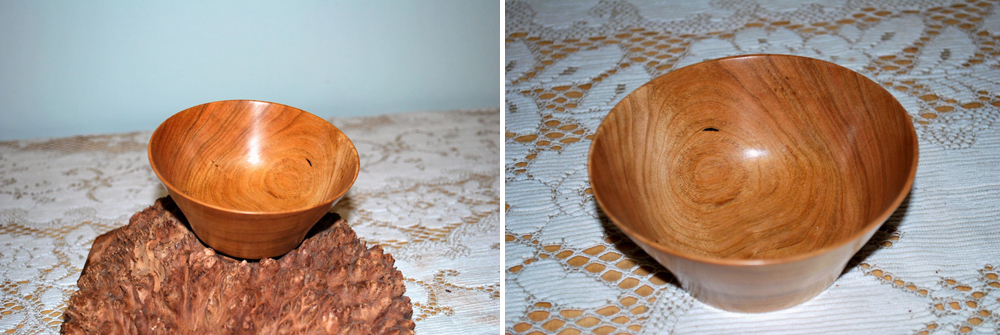
A Bradford Pear bowl I made as a gift.

A Bradford Pear bowl I made as a gift.

As a woodworker there are a couple things you can do in the outset to make your life a bit easier when giving gifts. I like to first determine the number of gifts I am going to be giving out. Then I take a look at that list and see if I want to do a single type of gift for everyone, or if I want to try and change things around. Lastly I like to think about the various people I am giving gifts to and determine if the project I have in mind is right  for that person. Once I have my list set and my projects determined, I can start planning out how I want  to tackle them through the coming months.

A Mawali Burl bowl I made as a gift.

A Mawali Burl bowl I made as a gift.

I find the hardest, but most essential part, is determining what exactly you are going to be making for each person. As a woodturner I tend to stray toward things that I can turn on my lathe, though now as I am branching out into the broader world of woodworking, my project ideas are growing. Another thing that influences my project choices is if the project stretches skills that I want to focus on. As I am growing my woodworking and my various skills I am looking for projects to help me with that. I have some boxes I want to make for friends so that I can work on my joinery skills; I have some casework I want to work on for others, so that I can work on a different set of skills.

With Holiday projects you can test your limits or take it easy, the most important thing is to get out there and make something for the folks you care about.


Matthew York has been a woodturner since 2004 and has been interested in woodworking since he was a teenager. He currently lives in downtown Atlanta and has a small shop in his basement. He is an avid woodworker and is always available to talk about the craft. He can be contacted at fracturedturnings@gmail.com or visit his website at fracturedturnings.com. You can also follow him on twitter at @raen425

Nov 212014
 

Your hobby or vocation is woodworking.  You love it.  You think about it all the time.  Woodworking is almost your “grand obsession.”  You read the Highland Woodworking catalog on the subway, train, or in your car (only at stop lights, please!).  You watch YouTube videos about woodworking at lunch.  You are in your shop every spare minute.  You live, eat, and breathe woodworking.  And you know what gifts people are going to give you over the holidays?  Socks.  A tie.  A gift card to a coffee shop.  A pair of pajamas or a new sweater.  Bah.  Humbug.

Oh, you will, of course, be polite; you’ll ooh and ah, express your gratitude; and as soon as the gift wrap remnants are swept away, you will be back in your shop or deep into your favorite magazine reading… about woodworking.

It may be politically incorrect, but I suggest putting your altruism aside and consider making yourself a gift this year.  Who deserves it more?  Get what you really want!  Maybe a new workbench?  How about a new rack for all your clamps?  Have you been selflessly building projects for others when what you really need is a new router table?  Then damn the torpedoes and full speed ahead… make something for yourself… something for your shop!

Tidy Whities Square
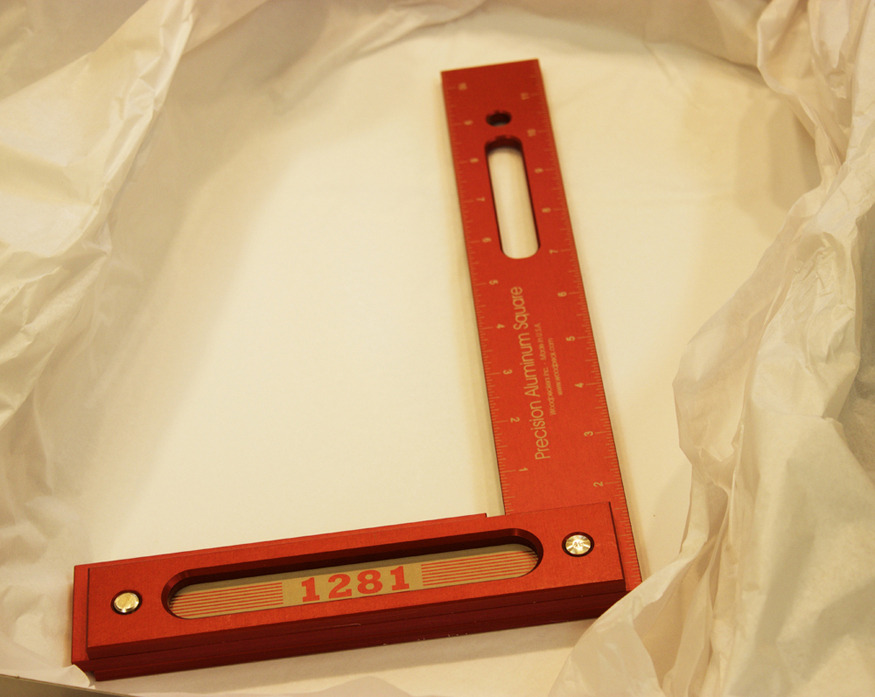
Figure 1 – Tidy Whities? Bah, Humbug! Figure 2 – Now that’s a gift that keeps on giving!

Or perhaps buy something for yourself.  Sound selfish?  Well, it shouldn’t.  Gift wrap it for the full effect.  Try to act surprised when you open it.  Try this… when the spouse and kiddies are away, grab the department store gift box (it is pretty obvious which one) and remove the giftwrap like a surgeon.  Be careful not to tear the paper.  Take the shirt, socks, underwear, or whatever out, toss it or return it, then place that new Woodpeckers Square in the box, re-wrap it, and put it back under the tree.  When you open the gift everyone will be amazed… there really is a magical Santa Claus or philosopher’s stone capable of transforming plaid socks into cool tools!

If you are tempted to feel guilty for what some might consider selfish acts, don’t despair.  The human mind can rationalize almost anything.  A “selfie” gift is actually generous, since you are saving others the torment of trying to figure out what you really want.  Plus, who wants a grumpy woodworker around with piles of useless tchotchkes?  Better you go off to the woodshop to play with your new toys, grinning like a guiltless child.


Steven Johnson is retired from an almost 30-year career selling medical equipment and supplies, and now enjoys improving his shop, his skills, and his designs on a full time basis (although he says home improvement projects and furniture building have been hobbies for most of his adult life).

Steven can be reached directly via email at downtoearthwoodworks@me.com.

Nov 192014
 

Editors Note: This is a continuation of Temple Blackwood’s article from the November 2014 issue of The Highland Woodturner, which you can read by CLICKING HERE.

temple1

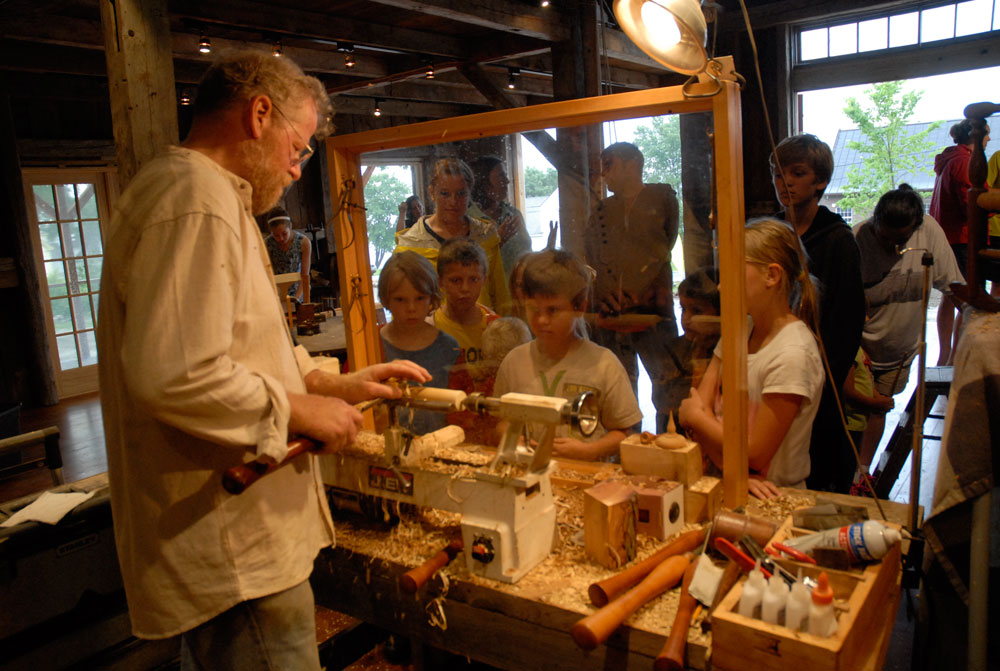
I encourage you to engage in doing regular demonstrations as part of your woodturning service to others, both organizations and individuals, because you will ultimately gain in skill, confidence, knowledge, and reputation. Selecting something like a belaying pin or mini-baseball bat challenges you as a woodturner, while bringing that delightful understanding and surprise to the children of all ages in your audience.

Begin by identifying your audience in age, safety, and experience level:

  • Children
  • Potential Students
  • Experts

Practical preparations:

  • Lathe, wood, tools, projects, time
    • Minimal tools, equipment, and turning blanks
    • Easy-to-mount, safe turning blanks
    • Sharpening vs multiple tools that are sharp
  • Travel, packing, setting up, taking down
    • Wheeled carts and tool-totes
    • Clean-up broom, dustpan and bag for chips and trash
  • Face-mask vs Goggles as potential essential obstacles
    • Your safety and protection
    • Your need to talk and be heard during the demonstration

Cautions

  • Be mindful of how much time you have
  • Be mindful of how much time your project will take
  • Be prepared to give away incomplete pieces
  • Be prepared and practice for failure/breakage/accident
  • Anticipate questions and be prepared to stop and answer them

Critical P’s

  • Plan
  • Practice in advance
  • Prepare “before” and “after” samples
  • Present demo items to a devoted audience member

Other Considerations

  • Noise (yours and others competing in the same area)
  • Dust and chips (yours and others competing in the same area)
  • Splatter management (moisture from wet wood and excess finish)
  • Lighting
  • Workbench or table
  • Time
  • Clean-up and leave the area cleaner than you found it

Why do these demonstrations?

  • Share the passion for working with your hands in wood
  • Offer others the gift of your knowledge and talent
  • Expand your own turning knowledge and experience
  • Welcome others into the community of the American Association of Woodturners (AAW), its regional clubs, and the many woodturning resources for tools, supplies and lessons