Highland Staff

Dec 302014
 

Welcome to “Tips From Sticks-In-The-Mud Woodshop.” I am a hobbyist, not a professional, someone who loves woodworking, just like you do. I have found some better ways to accomplish tasks in the workshop and look forward to sharing those with you each month, as well as hearing your problem-solving ideas.

Tack rags are not the most expensive part of the finishing process, but they aren’t free, either.  It pays to get the most out of them that you can.  When I have a really dusty surface then I don’t want to mess up a brand new tack rag.  No matter how old a cloth gets, it still has some sticky to it.  The “end point” of a rag isn’t usually its loss of dust-collecting ability, but contamination, as we will see in a moment.
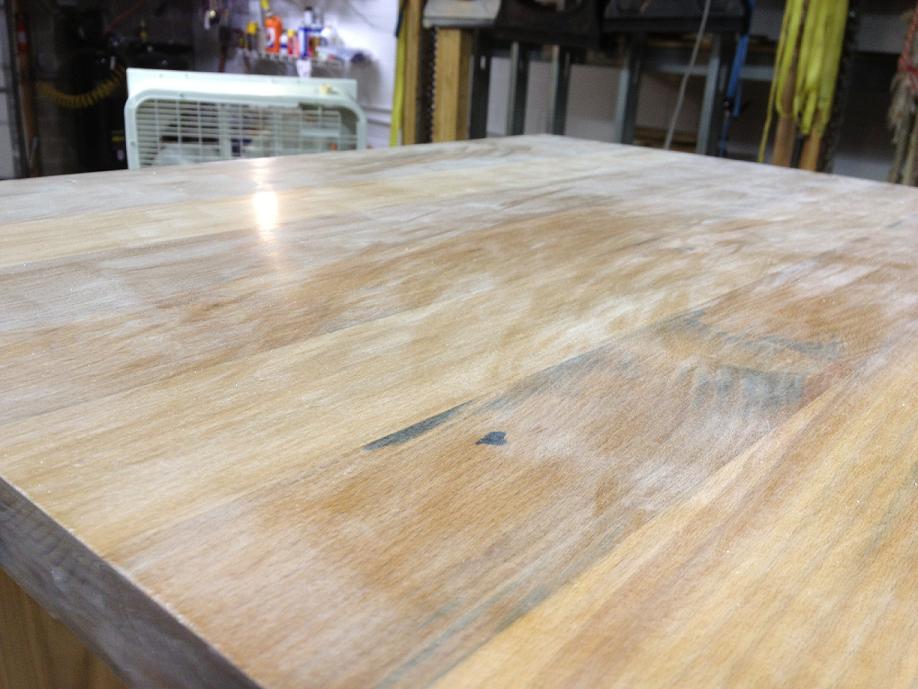
You can blow this dust off with compressed air, but, unless you have a really effective moisture-removal system on your air line, there is the risk that it may “spit” on your wood. Wet wood doesn’t make for a good sanding experience. A very dusty surface this big is going to give up a lot of grime. There is no good reason to clog up a brand new tack rag, when a used one can still hold a lot of dust.

You can blow this dust off with compressed air, but, unless you have a really effective moisture-removal system on your air line, there is the risk that it may “spit” on your wood. Wet wood doesn’t make for a good sanding experience. A very dusty surface this big is going to give up a lot of grime. There is no good reason to clog up a brand new tack rag, when a used one can still hold a lot of dust.

I start by cleaning the bulk of the sanding dust with my oldest rag, then, depending on how much dust is left, I may use a “lightly-used” cloth or go to a brand new one and have the surface ready for finish in one or two more wiping steps.

Red paint contamination was the “end point” for the bottom tack rag. Up to its becoming contaminated, though, it captured a ton of dust.
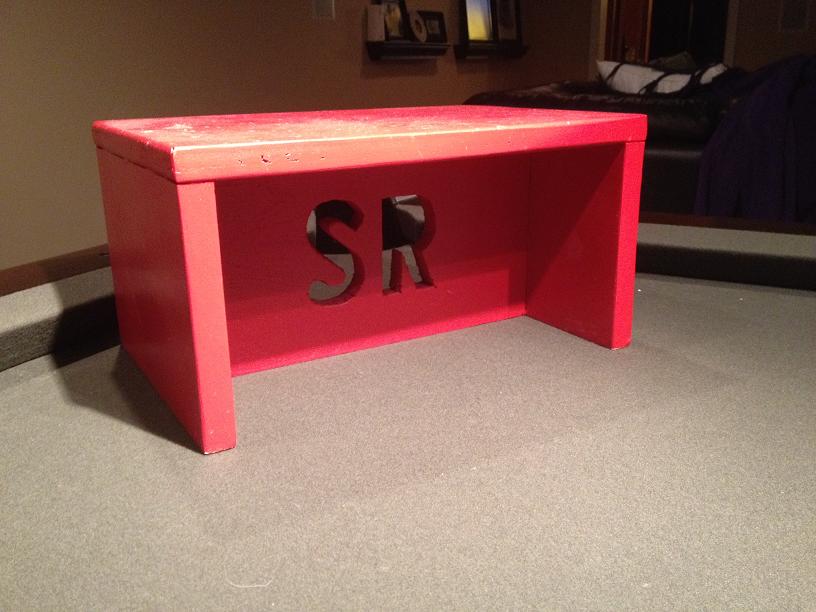
Red paint contamination was the “end point” for the bottom tack rag. Up to its becoming contaminated, though, it captured a ton of dust.

This was our eldest granddaughter’s “temporary” stool until I had time to make her a nice one. Paint can really do in a tack rag.

This was our eldest granddaughter’s “temporary” stool, until I had time to make her a nice one. Paint can really do in a tack rag.

My oldest rag goes in a (used) zipper-locking bag labeled, you guessed it, “oldest.”  It gets used first to remove the bulk of dust and debris, until there is no stickiness left.  After it has done yeoman’s duty, I reach for the bag labeled “second oldest,” and wipe the project down again.  If it is a painted project I stop there, but polyurethane-coated pieces get wiped down with a nearly-new tack rag.  When the oldest rag is ready for tack rag Heaven, the “second oldest” rag graduates to the “oldest” bag, and so forth.  After thoroughly soaking them with water, old rags are disposed of by tying them closed  within the plastic bags that our newspapers come in.  That way, there is no risk of spontaneous combustion.  (To read Steven Johnson’s spontaneous combustion experiment, click here).


Jim Randolph is a veterinarian in Long Beach, Mississippi. His earlier careers as lawn mower, dairy farmer, automobile mechanic, microwave communications electronics instructor and journeyman carpenter all influence his approach to woodworking. His favorite projects are furniture built for his wife, Brenda, and for their children and grandchildren. His and Brenda’s home, nicknamed Sticks-In-The-Mud, is built on pilings (sticks) near the wetlands (mud) on a bayou off Jourdan River. His shop is in the lower level of their home. Questions and comments on woodworking may be written below in the comments section. Questions about pet care should be directed to his blog on pet care, www.MyPetsDoctor.com. We regret that, because of high volume, not all inquiries can be answered personally.

Dec 222014
 

zinsserI wanted to share a brief review and a few tips about using Zinsser Universal Sanding Sealer (100% wax free) Shellac. I know for some people finishing their beloved project can be a bit unsettling. I also know that Shellac is one of those “old” finishing options that gets passed over in favor of newer finishes. Now don’t get me wrong, I use a lot of different finishes, however shellac is my go to finish for most of my indoor wood projects. I have used different brands of shellac over the years, however I have found none better than the products from Zinsser. The quality from lot to lot is very good and I have never run into an issue when using their product from differing lots, even on the same project. So if you’re in the market for a finish for your new project you should give Zinsser shellac some careful consideration.

When using shellac, one thing I really like is that I never clean my brush. I just let it dry and when I am ready to go back to use it again I just let it soak in the shellac for five or ten minutes and it is ready to go. When applying shellac, make sure you work with some speed as it dries very fast. This is another reason I love using it. Once it dries, a light sanding with fine sandpaper or fine steel wool gets it ready for the next coat. One thing you also need to know about using shellac is that each coat dissolves the previous coat so that when you are finished you have one continuous coat of finish. When you put on your first coat it will be evident if you missed cleaning any glue off when getting ready to finish. This is another area where shellac gives you the advantage of easily removing the glue before the next coat.

As I mentioned above, shellac dries very fast so when you come back to re-coat be sure to move along and do not go back over it. If you made a mistake just let it dry and sand out the error. Once the desired number of coats (I usually do at least three) have been applied you are done.  You also have the option to wax the finish with a good quality furniture paste wax. Another really nice way to finish your project using shellac is to use 0000 steel wool to apply the paste furniture wax to give you a great satin finish.

Another use for shellac is as an undercoating for other stains and finishes, especially on woods that tend to be blotchy when finished. It is also a great undercoat for projects that will be painted when finished, and a great finish choice for restoration work.

image1 (1)

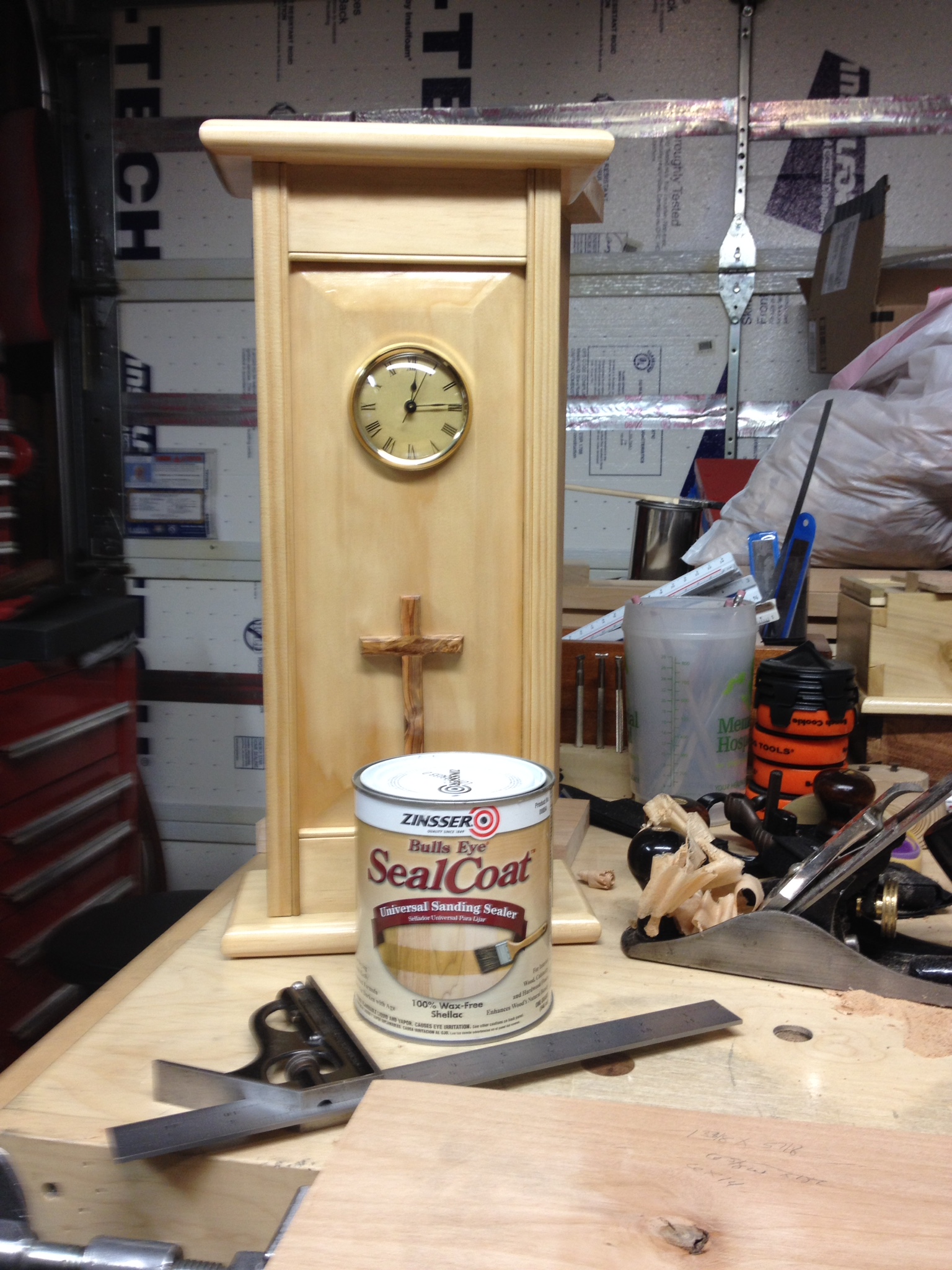
I built this clock for a lady and finished it using the shellac and methods as I have described in this article. So the next time you’re ready to finish a new product, consider using Zinsser shellac. Once you use it you will find that it is a very forgiving finish with many applications.

CLICK HERE to find out more about SealCoat Dewaxed Shellac Sealer and to buy your own.

Dec 152014
 

A conversation between Bob Rummer, Ken Rummer, Don Burnham and Cousin Jane

Every year at Christmas time our Grandpas were busy in the shop.
Thinking about that, how does a Grandpa approach Christmas time and presents? How can you try to treat all your grandkids fairly? Do you just make multiple copies of everything? Do you try and knock it out of the park with an heirloom every Christmas?

Over time, Grandpa R came up with some creative ways to deal with this. Ken and I think there are some tips here as we all approach Christmas.

CLICK HERE to read Bob, Ken, Don and Jane’s reflections on the gifts they got from their own Grandpas:

We would love feedback from you, our readers, on this topic. What handmade gifts did you get from your woodworking grandparents as kids? Do you make gifts for your own kids and grandkids? Add your thoughts to the comments below.

Dec 112014
 

Hello my name is Jim Chrisawn and I am a fourth generation woodworker and have been a woodworker for the past 40 plus years. I have built everything from custom homes to custom furniture during this time.

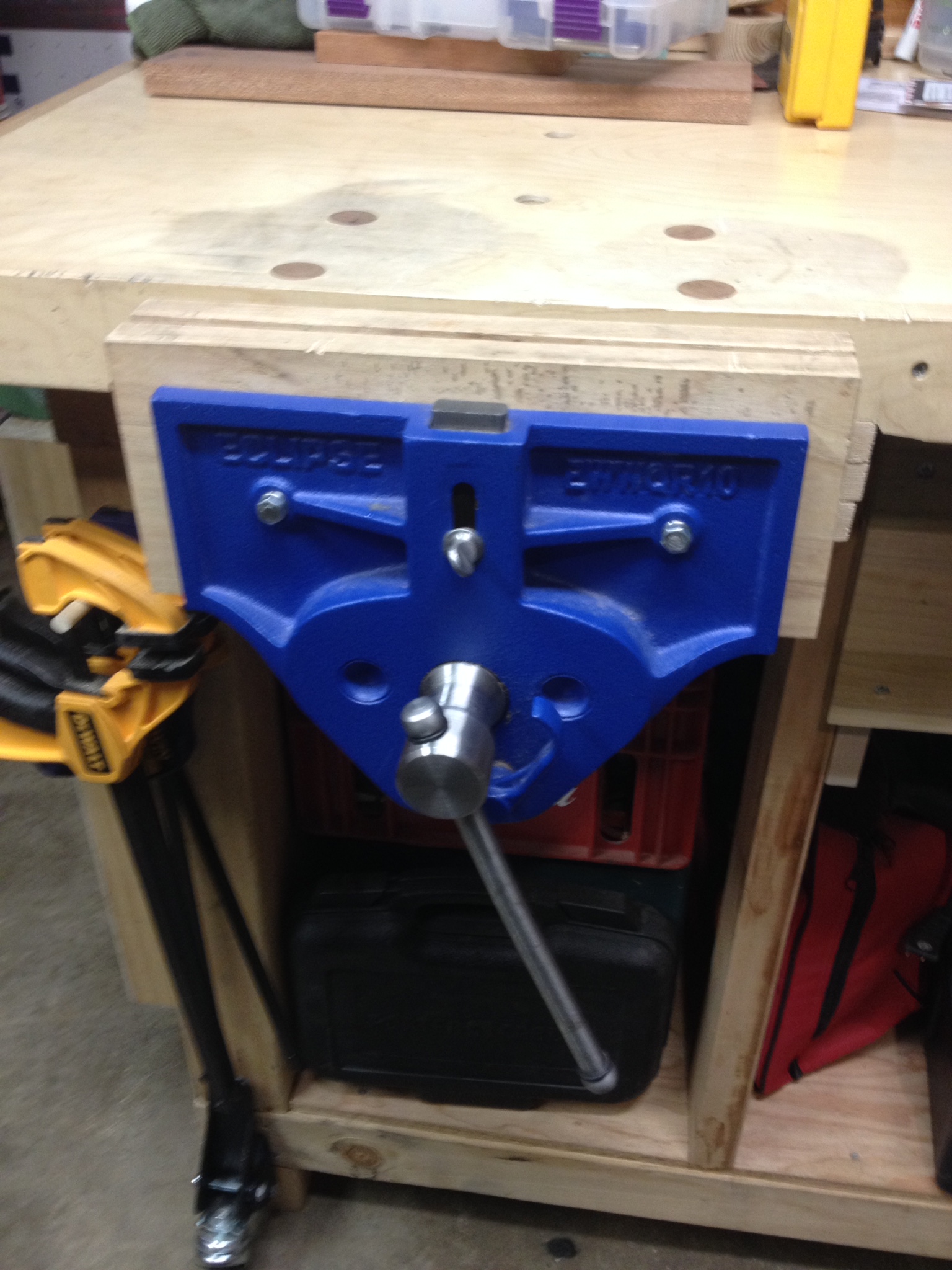
I moved to Wyoming in 2012 and gave away my workbench to a dear friend and woodworker before moving so one of the first things that I needed to do after settling in was to build a new work bench. In this I needed a new vise. I love the old Record 52 vises and found that they were now very expensive and hard to come by as well. I did a lot of research and decided to try the Eclipse 10″ Quick Release Vise from Highland. I ordered the vise and it arrived promptly and well-packaged. Once unpacked, cleaned, and lubricated I set about installing it on my bench. The installation was straight forward, however be warned this is a heavy vise! Once installed I made vise jaw inserts out of some scrap hickory that I had in the shop.

image2
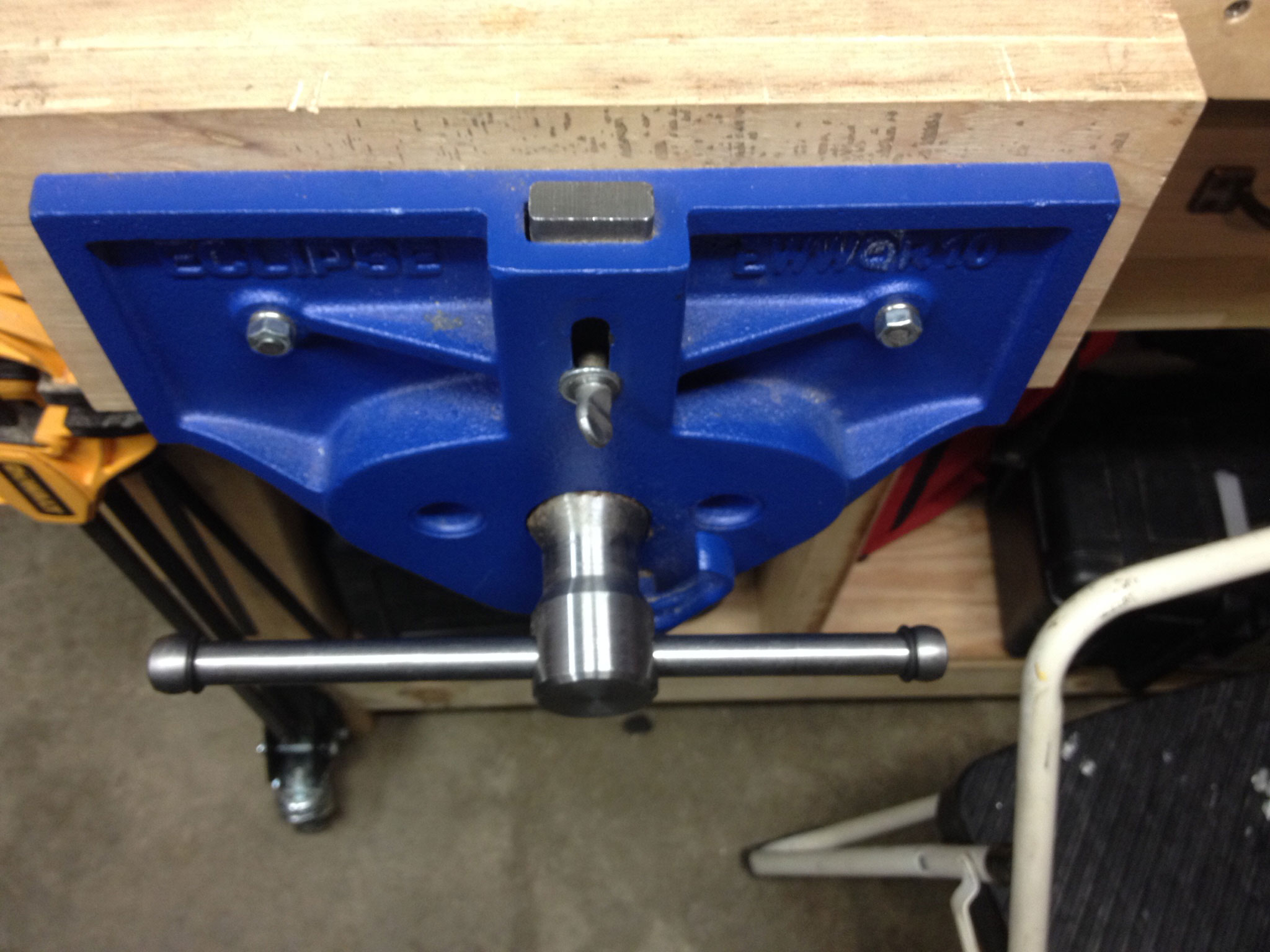
With the 3/4″ inserts installed, the vise opens to a generous 13-1/2″. The quick release lever tension is easily adjusted to suit the user and works great! The jaws close square and secure. Please note that the jaws close at the top first by design. I really like this design feature as it allows me to place the object in the vise, close it, and then make easy adjustments before fully tightening the vise. Once tightened the vise holds the work very securely and squarely. The vise comes with a metal dog that can be lifted into position and held securely with the thumb screw. This is a great addition if you installed bench dogs.

image1
I have found the vise a very well made copy of the Record 52D in almost every way. I have been using the vise now daily for nearly a year with no problems or issues. I did make a modification after reading one of Paul Sellers blogs by adding two o-rings to the ends of the tommy bar so it dampens the metal to metal noise you get using the vise. Overall, I am very pleased with this vise and feel it is a quality product even if it isn’t built in the USA.

CLICK HERE to learn more about the vise and purchase your own.

Dec 092014
 

I just bought the hardware for a new Benchcrafted Glide Leg Vise from Highland and I am working on getting it installed in my workbench. I have a workbench which I made myself out of rock maple about 30 years ago. The plans came from Tage Frid’s books on woodworking and the design is Danish or European style with an L-shaped vise on the right front and a shoulder vise on the left front.

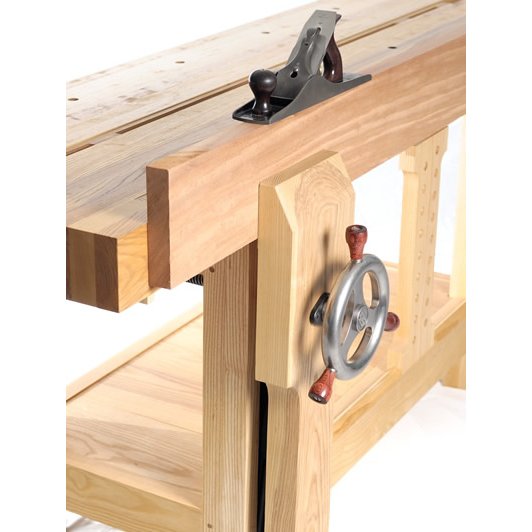
Benchcrafted Leg Vise (With Classic Handle)

Benchcrafted Glide Leg Vise

When I read up on the Benchcrafted Leg Vise and looked at the installation instructions, at first I was going to put it on the right front leg of my bench. I then realized if I put it there, it would always be in the way because that is where I stand about 90% of the time when using the bench. Because of where my bench is located in the shop, I don’t have a lot of flexibility on moving the bench. Note in the pictures the bench is up against the wall at its left end and fairly close to the table saw on the right end. If I move the bench, I will have to rearrange almost the whole shop, and that seems a bit like the tail wagging the dog.

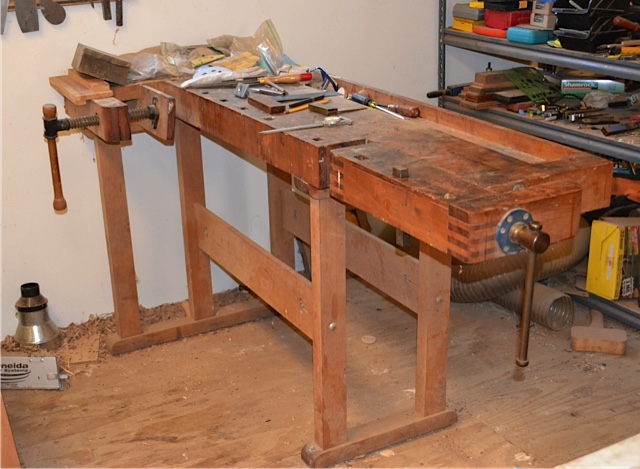
My Existing Workbench

My Existing Workbench

I got to looking at all the mounting options and decided I would mount it on the “rear” of the right end of the bench. That means the vise will be on the outside of the tool tray with an auxiliary leg to allow for the size and thickness requirements of mounting the vise.

As I thought about the vise and searched for information, I began to realize that to call it a bench leg vise is a bit of a misnomer. It could be mounted on a post in the middle of the shop since the only role of the workbench is to keep the vise from falling over. All the clamping is between the back piece (usually the bench leg) and the chop.

I think a little vocabulary lesson is in order here cause I know I struggled with the terminology. Am I the only one who did not know what a “chop” is? What the heck is a chop?! And why do they call it that?

Benchcrafted sells several different vises. Our topic is Leg Vises and there are several options for Leg Vise Hardware.  There is the Classic, the Crisscross where you can get a Classic Crisscross Solo, a Classic Crisscross Retro, or you can buy the Classic Hardware Only. Then there is the Glide M and the Glide C. I almost needed a decision flow chart to figure out which one to buy, but when I went to Highland, they pulled out the one they said I needed and it turned out to be the right one.

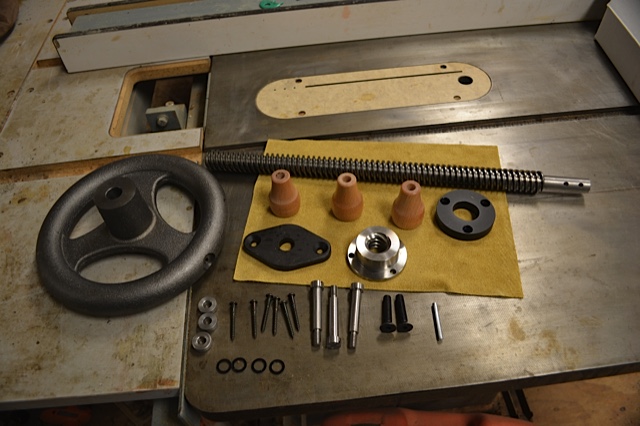
Glide C

Glide C

Let me see if I can simplify for you. The “chop” is the tall outside piece that moves when you clamp something in the leg vise. The chop does not rest on the floor so the weight of the chop is carried by the Crisscross, which is two cast iron pieces hinged in the center like an “X”. There is a Crisscross Solo and a Crisscross Retro. The Solo is generally mounted on a new bench because it has pins at the top which need to be drilled precisely for smooth action and is best done with a drill press. The Retro is more forgiving since it is mounted on two cast brackets set in a mortise in an existing bench leg.

The other part of the leg vise is the screw which moves the chop. You can make your own, buy someone else’s screw, make or buy a wooden screw, or you can buy the one from Benchcrafted. The traditional one from Benchcrafted is the Classic, a fast action screw with a straight bar handle. Old school.

There are two other screw handles besides the straight handle Classic. They are the Glide M and the Glide C, both shaped like a ship’s wheel. The only difference is the “M” is machined and polished with rosewood cocobolo knobs on the outside and the “C” is cast but not polished and has beech knobs. You pay about $70 additional for the polished wheel and rosewood knobs.

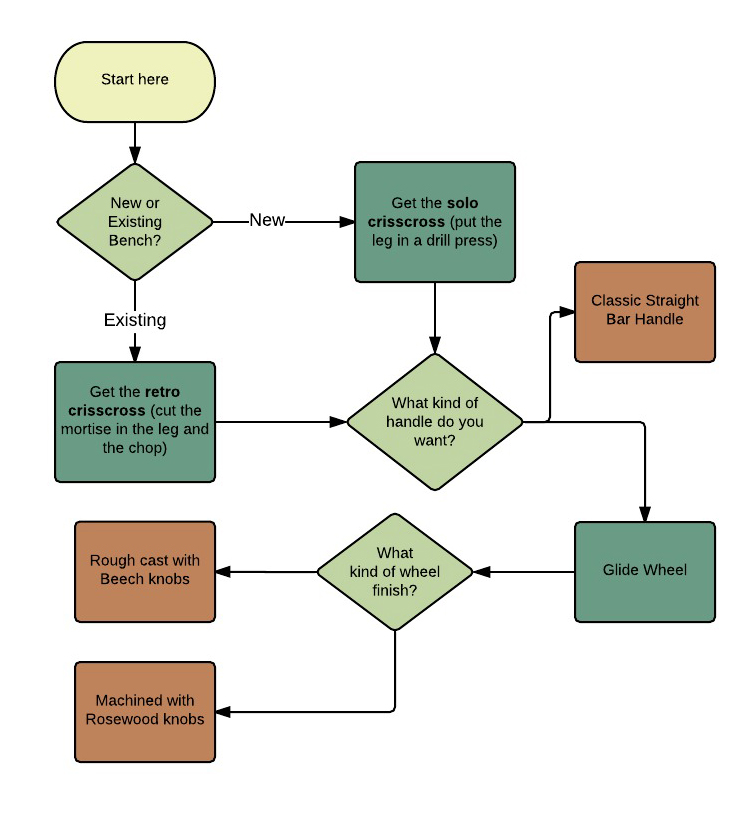
Click to see a larger version

So here is the flow chart: Decide if you are mounting to a new or existing bench. If it is a new bench and you can put the leg in a drill press, then get the Solo Crisscross. If it is going in an existing bench, get the Retro Crisscross and cut the mortise in the leg and the chop.

Then decide if you want a Classic straight bar handle or if you want a Glide wheel. If you want a wheel, decide if you want to pay $70 additional for polish and rosewood.

So there, it sounds so simple once you figure it out, but it took me a few days even with the information on the Benchcrafted Web site, to get it in my head.

We will continue next time as I mount the vise to my bench. There are no directions in the box when you buy the hardware, so you will need to go to their Web site to download the instructions. There are a lot of instructions, they go back and forth and you will need to read them several times to get what is needed to mount your vise. When you do get it mounted, it should be a real joy.

Autographed copies of my flow chart are available.

CLICK HERE to read Part 2

Dec 042014
 

wn112The holiday season is here and with Black Friday, Small Business Saturday, Cyber Monday, and Thankful Tuesday now past us…it is now time for our brand new December 2014 Issue of Wood News Online.

Every December we publish our Holiday Gift Guide within Wood News! This month we’ve got some great gift ideas from books to tools and everything in between. Take a look and don’t forget to get your order in before Friday, December 19th to get it under the tree for Christmas!

Hockey season is upon us and we came across a really cool project submitted by Dan Zehner who creates sitting benches out of broken hockey sticks. Read how Dan collects the sticks and then gets them prepped and ready for bench making material!

We’ve also got updates on a few other projects we’ve been tracking. Scott Stahl has finally finished building his Sawbo Workbench. And Lee Laird is just about to finish up the build of his Electric Bass Guitar with the addition of the frets, bridge, and saddles.

Our Show Us columns include:

Our woodworking tip contributors have some great ideas that will help you save time and money on your next shop or project:

Steve Johnson, the Down to Earth Woodworker shares a variety of woodworking knowledge this month with several projects he has going, as well as a head to head product showdown between two types of paper towels.

We’ve also got reviews of Ron Hock’s The Perfect Edge and a tool review of the Micro-Jig GRR-Rip Block.

And as a bonus we’ve got TWO episodes of our web TV show The Highland Woodworkerincluding a special Holiday Tool Show featuring several of our Highland Woodworking employees discussing their favorite products.

Take a break and read all of this and more in our latest issue of Wood News Online!

Dec 032014
 

A continuation of Adrian Burleigh ‘s Show Us Your Woodworking column from our December 2014 issue of Wood News Online.stuff14sm

This endeavor all started when my neighbor decided to cut down his 80+ year old mahogany tree.

It was early one Saturday morning that I was roused from my morning cup of Joe, the growl of chainsaws breaking the serenity of the neighborhood. My neighbor, although well intentioned, decided that this was the day to make this “Specimen” tree into firewood. He was tired of the litter from the leaves, seed pods, and sap messing up the front of his house and adding to the cleaning chores of keeping his truck immaculate. I think deep down he was afraid of the tree and hurricanes making that tree into a monster.

My concerns for preserving this majestic wonder fell on defiant ears of my neighbor and his co-conspirator, who was also the provider of questionable timbering skills. I then asked just how they planned to tackle this formidable job of felling and bucking a 48 inch diameter hardwood giant. Their reply was “we are gonna cut it from the top down”. Yea RIGHT? The canopy is only about 40 or 50 feet up there. I figured 911 was somewhere in the near future.

When I inquired if he had a permit to remove it from the right of way, his attitude quickly became brisk as I was now the “nosey neighbor” and very unwanted unless I decided to lend a hand in the crime.

After smoothing his feathers for a minute or two I reminded him that this tree survived numerous hurricanes even since “Andrew” in 1992 without much damage and that it sure would be a shame to lose the only good shade tree on the West side of his house. I also asked him how he was planning to remove the stump. It now was looking to be a somewhat more expensive addition to the unforeseen scope in his plan. I then gave him a conservative estimate as I am a retired building contractor, along with a quick mention of the possibility of being tagged by the local code enforcement officials, who are ever present in our fair county of South Dade Florida. Also a secondary mention to the stir that would be brought on by our Department of Environmental Resources Management (DERM). They would most certainly require mitigation if the required permits were to be issued. More cost and aggravation. He was also not aware that I have been the roadway inspector for a local Civil Engineering firm for the past ten years and that I regularly deal in this type of problem. I digress.

How things do get complicated. I then hinted that maybe he would be wiser to consider the size and cost of this enterprise. Noting it might be easier to just trim it a bit and love it a little more for its majestic beauty. Now that he was aware he owned a specimen mahogany tree of great value on his property, that won the debate. I even offered to haul off the heavy cuttings.

This is where the plot thickens, and turns into my next adventure in woodworking.

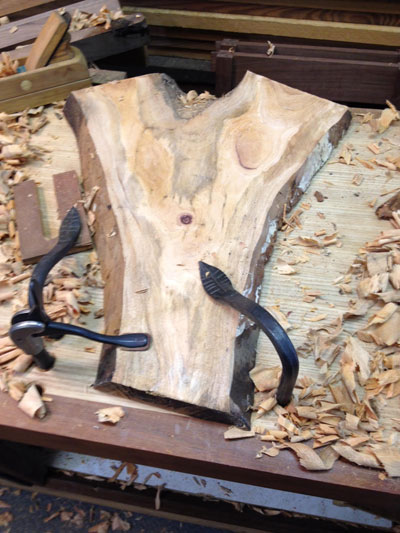
The smallest limbs trimmed from this behemoth were over 8” in diameter and the largest crotch sections were well over 20” in width. My little 14” band saw was out-sized for most of this timber. How was I to manage these logs of nice mahogany into workable boards? Portable saw mills are very scarce in South Florida. Not much interest yet in making use of the local urban tree fall. Although I may spark an interest if this article takes off.

My attempts to find a local sawyer to slice the beautiful crotch sections were futile, and slicing it with a large rented chainsaw was out of the question with too much waste in all respects. Besides the fact of not be able to afford the mobilization cost to have them come to me.

Conclusion, do it myself. In the way it was done before industrialization.

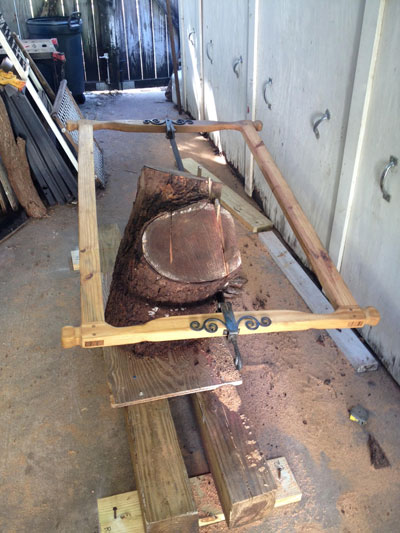
So I proceeded to make a large frame saw, the hand tool to get the job done. I got the idea from Adam Cherubini’s Arts and Mysteries blog and the design from the Renaissance Woodworker. My saw is very much like theirs except just a little wider with some different shaping for the grip. The guide bar is made of white oak with yellow pine for the rest of the frame. Hardware was made by Artisan Iron Designs and the blade blank is from Blackburn Tools.

This one tool can be the answer to the complaint of many overweight woodworkers. One hour of working this beast a day will put the tone back into your saddle for sure. It takes some practice but with steady concentration and determination one can, alone, produce usable lumber from wild giants.

stuff15sm

I was able to make a slice in a 30″ wide crotch section log that was about 36″ long in about an hour, and a couple beers later. Great workout all around – legs, shoulders, back, stomach and forearms.

I highly recommend it for anyone who really wants to get that special piece of timber and lose a few pounds quietly in one’s own backyard.