Highland Staff

Jul 302016
 

Welcome to “Tips From Sticks-In-The-Mud Woodshop.” I am a hobbyist, not a professional, someone who loves woodworking, just like you do. I have found some better ways to accomplish tasks in the workshop and look forward to sharing those with you each month, as well as hearing your problem-solving ideas.

The first time I ever saw a milk crate, those modern, commercial plastic holders for 4 gallon jugs of milk, was in the early 70s. Rummaging around behind a grocery store, they were stacked 10 feet high. There must have been 100 of them. I thought they were there because they were going to be thrown away. I had no idea that they were to be reused by the milk delivery people.

Yes, I was that young and that stupid.

I loaded a dozen or so into the back of my car and took them home.  I made myself a perfectly fine hippyfied music stand with some old 2 x 4’s and proceeded to place on it my hippyfied stereo to play my hippyfied music.

Yes, I was one of those.

Today, I have milk crates, but I can honestly say I came by these legally, having found all of them on the side of the road or in someone’s yard on garbage day.  I mostly use them as little stepstools that are easy to store.  Except for four that hold my stereo speakers.

Old habits are hard to break.
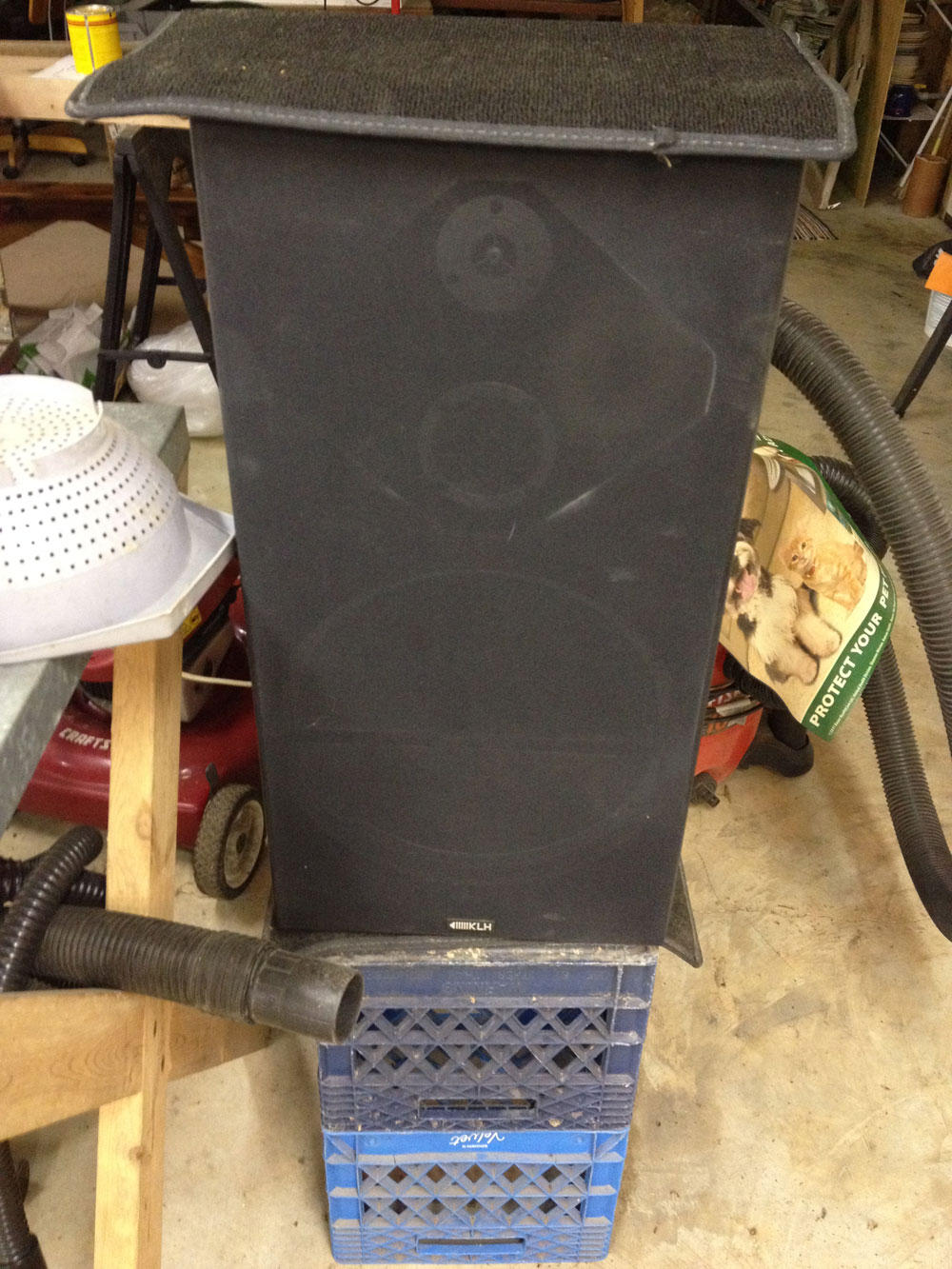
Two milk crates are just the right height for stereo speakers to be off the floor.

Two milk crates are just the right height for stereo speakers to be off the floor.


Some are old and the plastic has become brittle, and brittle is a not a good trait for a stepstool.  Step up on cracking plastic and you could find yourself on the floor, and not in a controlled way!
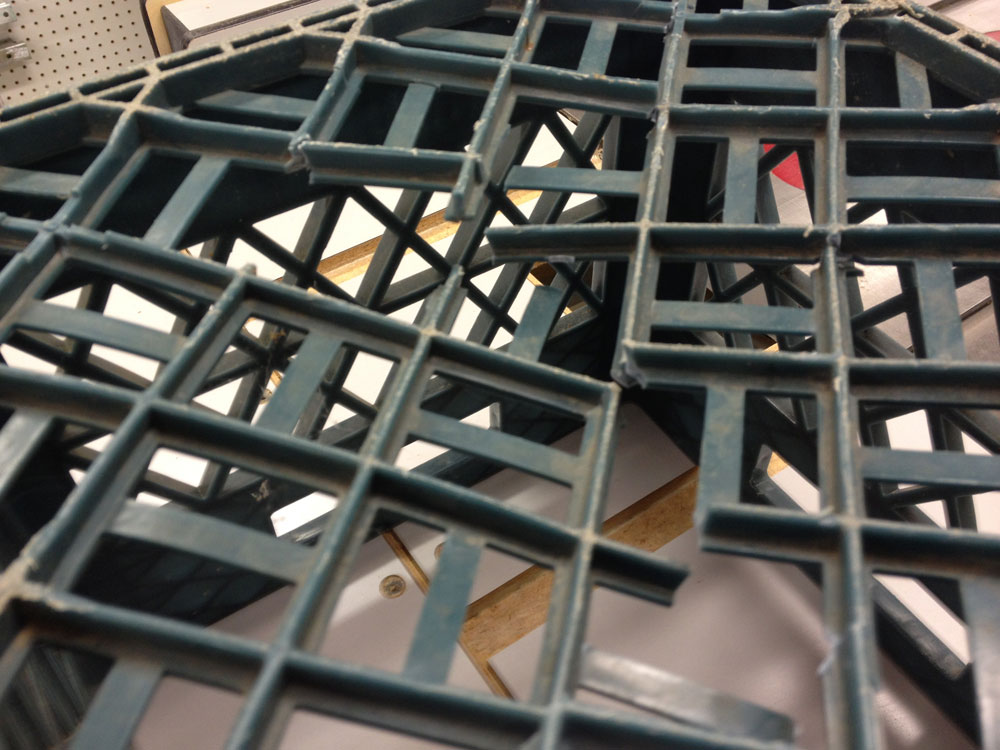
 One day I was on top of this milk crate and heard a “crack.” A very uncomfortable sound that leaves one feeling highly vulnerable.

One day I was on top of this milk crate and heard a “crack.” A very uncomfortable sound that leaves one feeling highly vulnerable.

Alas, there is no need to throw the baby out with the bath.  Simply cut a piece of plywood slightly larger than the outer perimeter of the crate.  Quarter-inch plywood is too flimsy, and won’t add to the safety of this project, defeating its entire purpose.  Three-eighths plywood will probably do.  Half-inch will suit just about everyone.  Three-quarter inch plywood may make your milk crate too heavy, but, if you were ever featured on My 600-Pound Life, go with 3/4″ or even thicker.  Better yet, order an actual heavy duty ladder.  Avoid MDF.  It has little structural strength to begin with and even less if it gets wet.
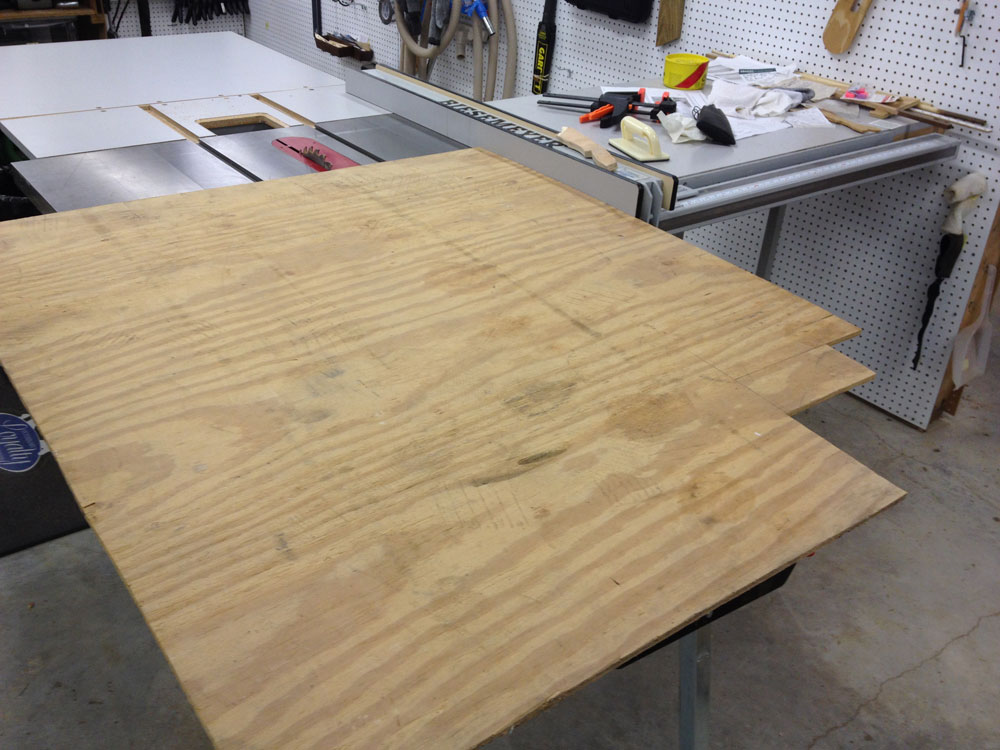
I settled on this scrap of 3/8” plywood and cut a 13½” by 13½” square. Why, yes, now that you mention it, I did save the jagged-edged scrap. You just never know when you might need a jagged-edged piece of plywood!

I settled on this scrap of 3/8” plywood and cut a 13½” by 13½” square. Why, yes, now that you mention it, I did save the jagged-edged scrap. You just never know when you might need a jagged-edged piece of plywood!

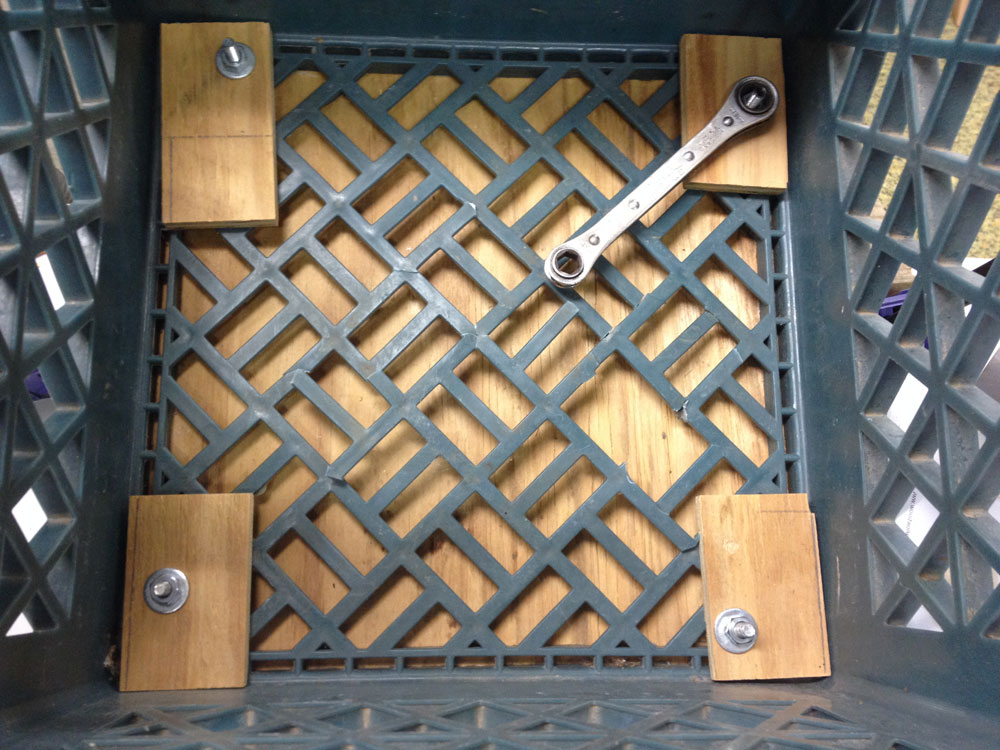
To proceed with milk crate improvement, drill a hole about an inch inboard of each corner.  Drive in a carriage bolt long enough to go through the plywood, through the crate’s web and through something that a nut can tighten to on the inside.  That “something” can be a fender washer or another piece of plywood.
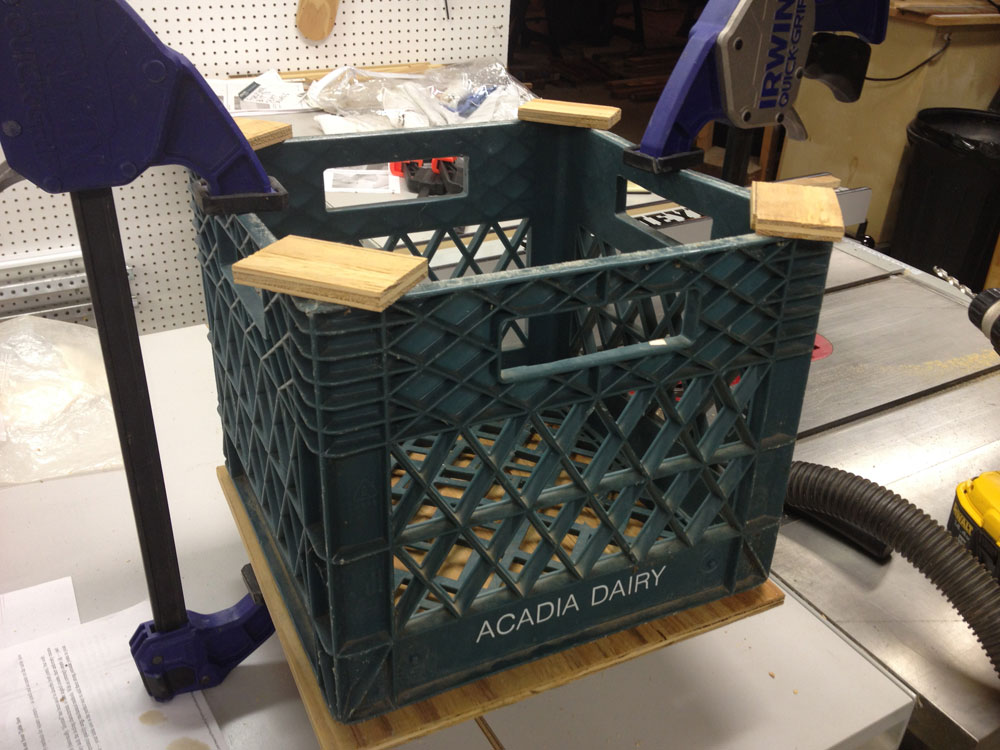
You will have to pay for a fender washer. A 2" x 2" plywood scrap is free. I centered the new plywood top, then marked openings in the web where bolts could go through.
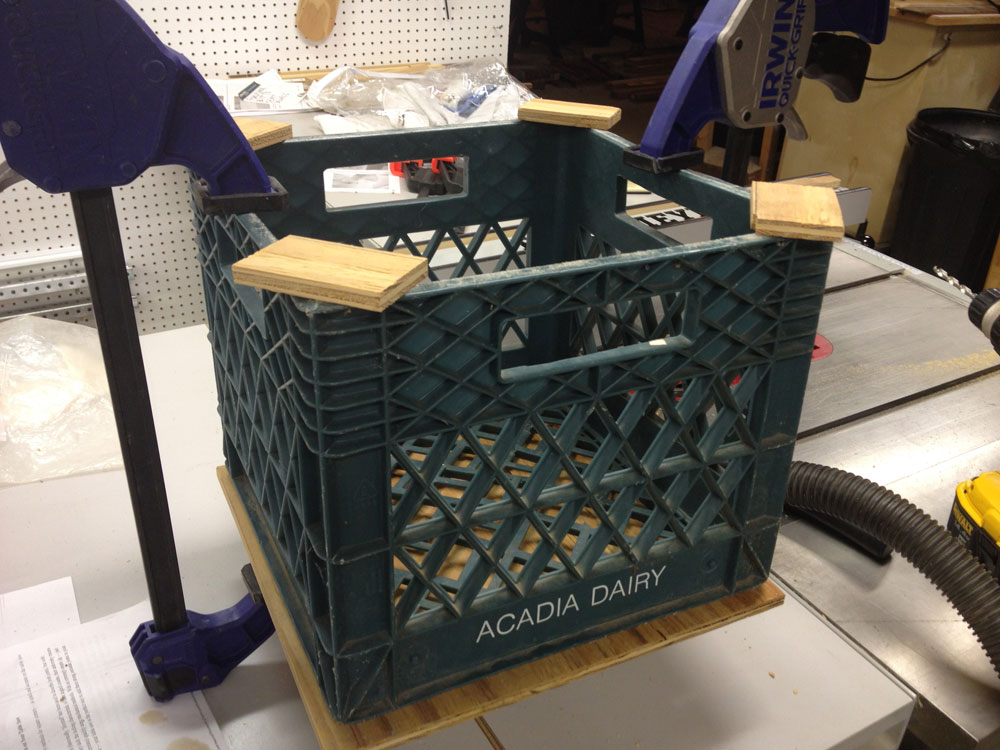
You will have to pay for a fender washer. A 2″ x 2″ plywood scrap is free. I centered the new plywood top, then marked openings in the web where bolts could go through.

84_4

Remember that jagged-edged scrap? Never throw anything away; it pays! I made these 2" x 2" plywood washers from it.

Remember that jagged-edged scrap? Never throw anything away; it pays! I made these 2″ x 2″ plywood washers from it.
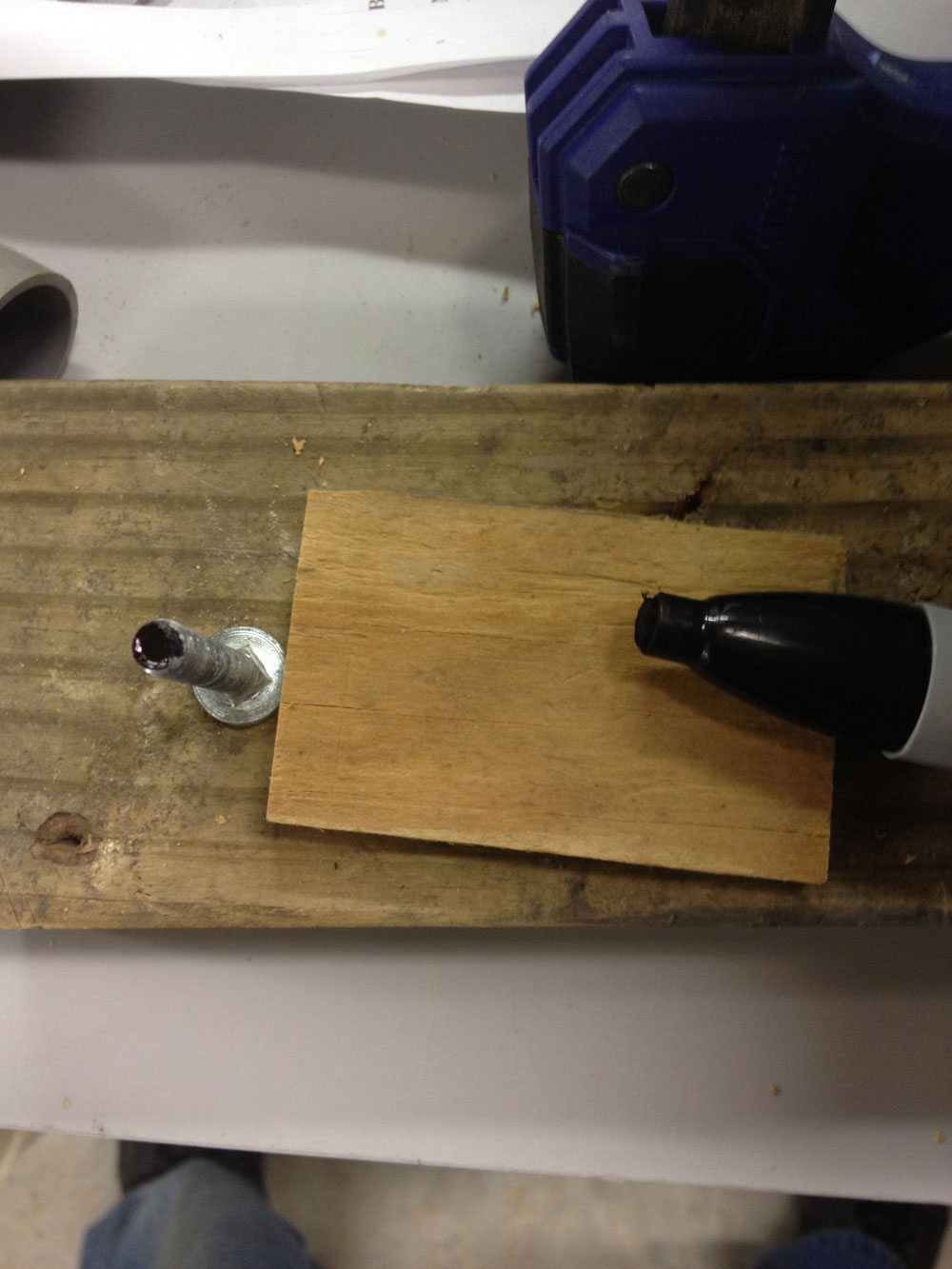
Most of the washers I could mark by simply scratching the plywood with the bolt. Once, I couldn’t see the scratch, so I enhanced it with wet Magic Marker, turning the bolt into a quill.
Most of the washers I could mark by simply scratching the plywood with the bolt. Once, I couldn’t see the scratch, so I enhanced it with wet Magic Marker, turning the bolt into a quill.

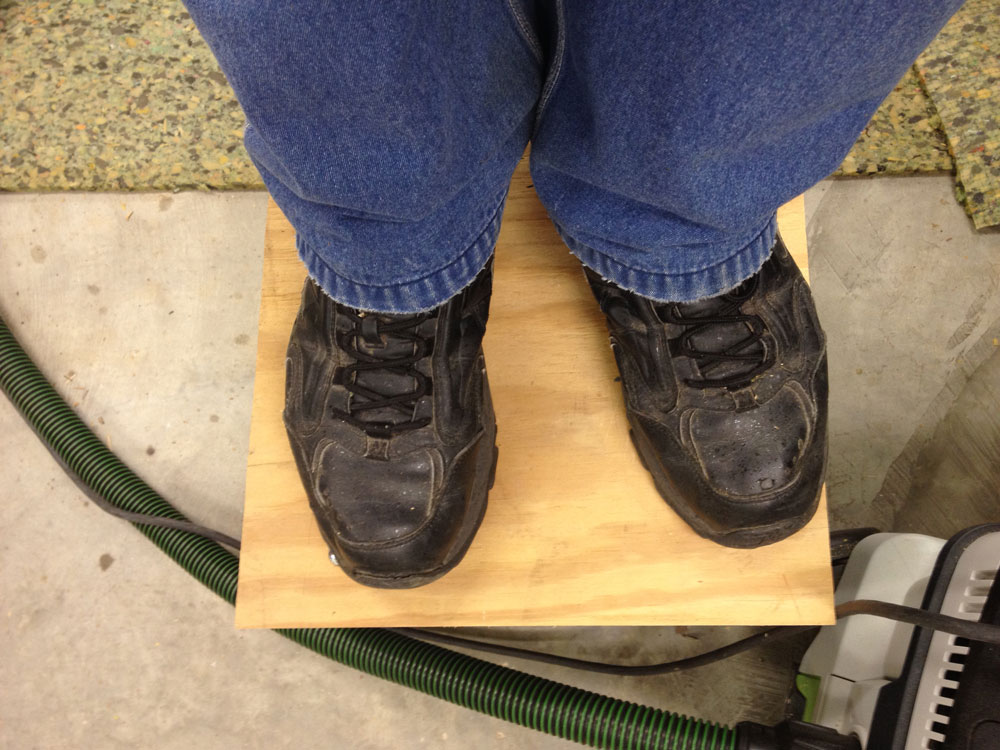
ough for my 189 pounds now.

Sturdy enough for my 189 pounds now.
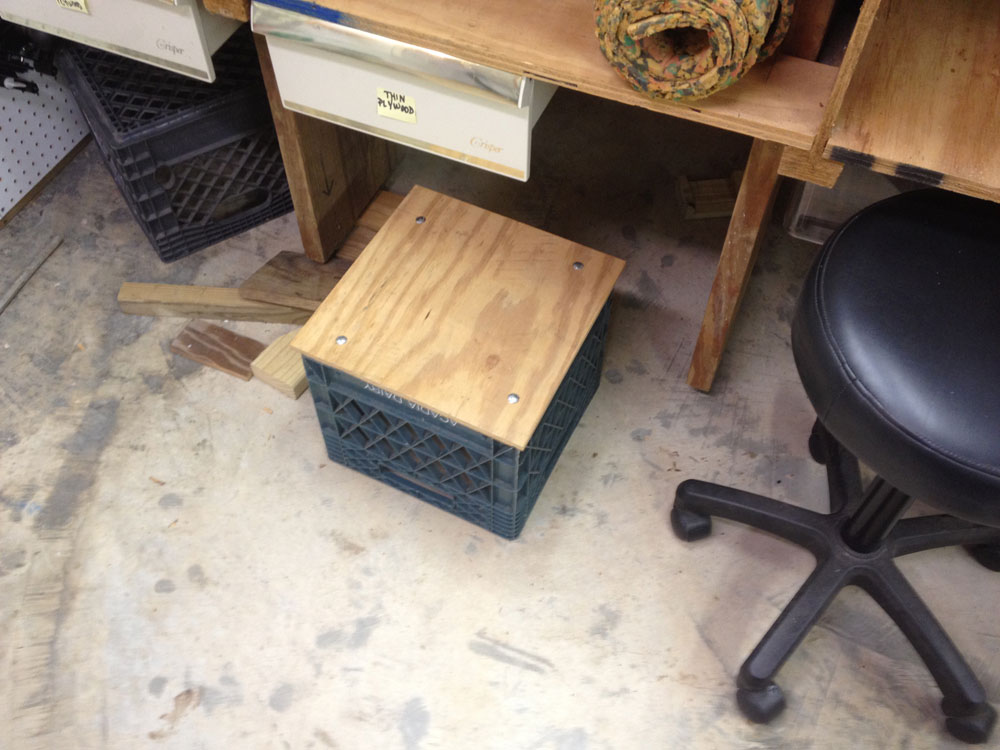
Ready for rugged duty.

Ready for rugged duty.

Drill some finger-holes in the middle of the plywood top for easy pickup, but not so close together that they weaken the plywood.


Jim Randolph is a veterinarian in Long Beach, Mississippi. His earlier careers as lawn mower, dairy farmer, automobile mechanic, microwave communications electronics instructor and journeyman carpenter all influence his approach to woodworking. His favorite projects are furniture built for his wife, Brenda, and for their children and grandchildren. His and Brenda’s home, nicknamed Sticks-In-The-Mud, is built on pilings (sticks) near the wetlands (mud) on a bayou off Jourdan River. His shop is in the lower level of their home.Questions and comments on woodworking may be written below in the comments section. Questions about pet care should be directed to his blog on pet care, www.MyPetsDoctor.com. We regret that, because of high volume, not all inquiries can be answered personally.
Jul 292016
 

There are woodworking apps that will calculate your board feet, calculate your square feet, maybe even calculate your smelly feet.

My favorite woodworking app?

That’s easy!

The TiVo app on my iPhone allows me to watch building shows, woodworking shows, the news, whatever is recorded on any one of our three TiVos while I’m doing mindless things, like sanding.

Having your mind engaged with mentally-stimulating content can help your focus when a task is otherwise not especially capturing your mind.

It’s even easy to listen to music using the TiVo app. Just record an hour, or two, or six of your favorite music channel. Almost every cable lineup has one, and you’ll find everything ranging from music your parents like to tunes that make you cringe, knowing your kids listen to that. Just record the desired length of the desired genre, then listen while you’re working. Run into a song you can’t stand? Fast forward. That old favorite you can’t get enough of? Hit rewind!

And, you’re not stuck listening to the same music over and over: Delete the recording when your session is over and program another block to record while you sleep.

For me, Today’s Homeowner with Danny Lipford, The This Old House Hour, Ask This Old House, and The Woodwright’s Shop with Roy Underhill are all shows I love to watch. Recorded in advance, originally for when the weather takes me off the street for my morning walk and puts me on the treadmill, I will often have several dozen episodes waiting to be viewed.

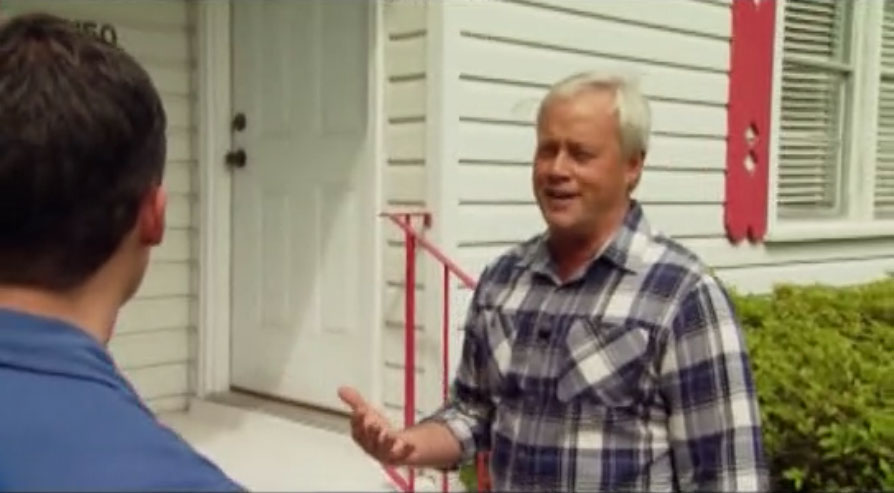
Danny Lipford is shown in this screenshot preparing to turn a 50s-vintage home into a market-ready product. My favorite part of the show? Simple Solutions with Joe Truini.

Danny Lipford is shown in this screenshot preparing to turn a 50s-vintage home into a market-ready product. My favorite part of the show? Simple Solutions with Joe Truini.

Network news is something I watch every day. I’ve watched documentaries, comedies, movies, you name it.

Common sense says you don’t watch a screen when you’re doing something that requires your full attention. However, I’ve never sanded through to my bench while watching the TiVo app!


Jim Randolph is a veterinarian in Long Beach, Mississippi. His earlier careers as lawn mower, dairy farmer, automobile mechanic, microwave communications electronics instructor and journeyman carpenter all influence his approach to woodworking. His favorite projects are furniture built for his wife, Brenda, and for their children and grandchildren. His and Brenda’s home, nicknamed Sticks-In-The-Mud, is built on pilings (sticks) near the wetlands (mud) on a bayou off Jourdan River. His shop is in the lower level of their home. Questions and comments on woodworking may be written below in the comments section. Questions about pet care should be directed to his blog on pet care, www.MyPetsDoctor.com. We regret that, because of high volume, not all inquiries can be answered personally.
Jul 282016
 

This month in Wood News we featured Randy Cordle’s ‘very minimalist’ woodworking shop. Randy says that he prefers working with tool that can be found in the average home shop, and he gets quite a lot done in his shop with a perfectly reasonable inventory of woodworking tools! Take a look at the pictures of his shop below, or click to learn more about Randy Cordle’s shop.

To read about even more shops, click to check out our Shops Gallery.

If you would like to submit your shop, just SEND US PHOTOS of your woodworking shop along with captions and a brief history and description of your woodworking. (Email photos at 800 x 600 resolution.) Receive a $50 store credit redeemable towards merchandise if we show your shop in a future issue.

Jul 262016
 

The Tormek T-8 water cooled sharpener will let you sharpen practically everything in your shop and home. The T-8 uses a unique wet grinding stone that lets you restore your woodworking tool’s edges quickly and precisely, without any risk of destroying the temper of the steel and then uses a leather wheel strop for honing them to a razor sharp edge.

Michael Morton gives an overview of the features of the T-8 sharpening system and shows how the sharpening machine is used to sharpen a chisel.

Jul 182016
 

Are you forgetful? Google “forgetful” some time if you want to see a different photo of me than my profile picture.

Yes, I personify forgetfulness! And it didn’t start when I applied for Medicare, either.

As a child, we lived in the boonies.  Five miles from the nearest paved road.  When we made a trip into town, we had to be sure we got everything we needed, because it was an expensive trip, and not one made frequently.

It’s why my Uncle Sam’s trucks almost never got below half a tank of gasoline.  He would fill up every time we went to town.

But, it didn’t pay for my Aunt Polly to send us together.  She would give us a list, and tell us exactly which stores to go to for each item.  If she didn’t go with us, it was just about a guarantee that we would forget something.  As Forrest Gump would say, “Me and Uncle Sam were like peas and carrots.”

So, I wasn’t surprised when I was running errands last week, got to Walmart, and saw mineral spirits on my list for things to pick up from Lowe’s.  I’d just come from Lowe’s!  And, if that’s not bad enough, mineral spirits was the most important thing I went to Lowe’s to get!

Arrrrgggghhhh!

On that same weekend’s Saturday morning, creativity was flowing as I sat on our house’s screened cedar deck.  Things to write, things to build, things to do, the ideas just kept coming.

Including at least one that made me think, “That’s such a good idea, I know there’s no way I’ll ever forget it.  I don’t need to write that one down.”

Later in the day I was wracking my brain, “Wasn’t there some really good idea I had this morning?”

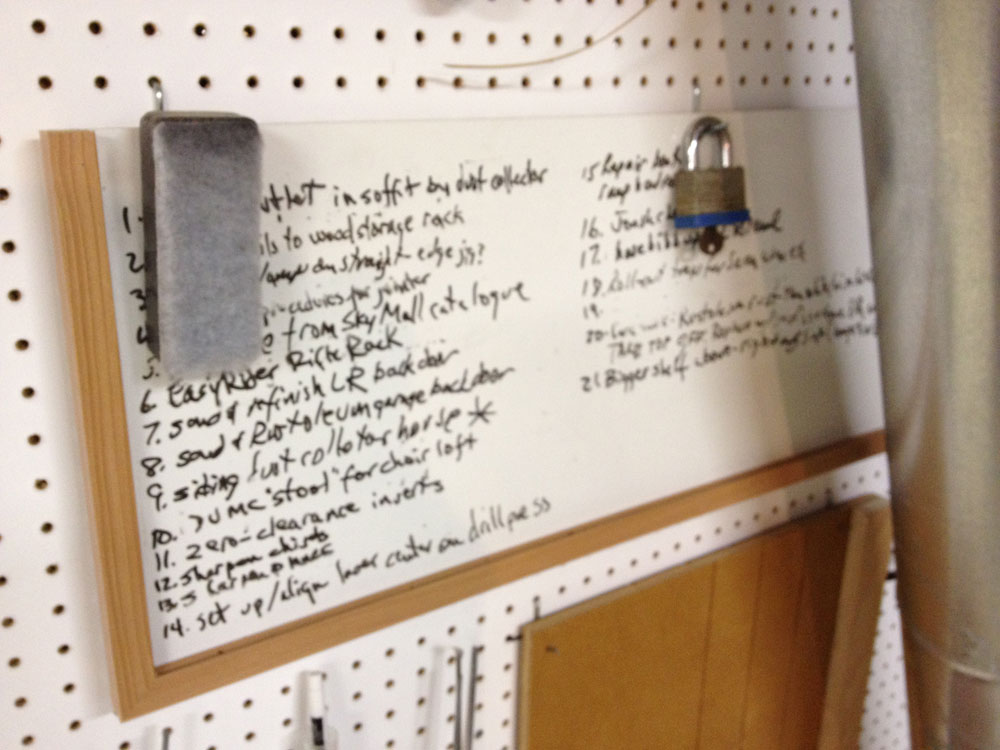
Maybe it works that way for you, too.  I combat the syndrome by writing everything down.  If there are ideas I have for future projects or ways I want to improve the shop, I put them on this whiteboard.

 As regular readers know, I can’t throw anything away. That would be wasteful and my Uncle Sam would roll over in his grave. So, when I needed part of a whiteboard for another place, I used the rest of it here as my project to-do list.
As regular readers know, I can’t throw anything away. That would be wasteful and my Uncle Sam would roll over in his grave. So, when I needed part of a whiteboard for another place, I used the rest of it here as my project to-do list.
Whiteboard for future ideas/to-dos.  Otherwise I’ll forget.  You think you’ll never forget such a great idea, but you can!
The whiteboard isn’t my only remembering tool.  I keep scratch paper in my breast pocket for writing down important tasks and ideas.

And, the Notes app on my iPhone is especially handy because you can use dictation (voice-to-text) to make your entries if you’re not a fast thumb typist.

No paper? No whiteboard? No pen or pencil? No problem! Put it on your Notes app!
Oh, and, yes, the idea finally came back to me and got added to my to-do list.

Jim Randolph is a veterinarian in Long Beach, Mississippi. His earlier careers as lawn mower, dairy farmer, automobile mechanic, microwave communications electronics instructor and journeyman carpenter all influence his approach to woodworking. His favorite projects are furniture built for his wife, Brenda, and for their children and grandchildren. His and Brenda’s home, nicknamed Sticks-In-The-Mud, is built on pilings (sticks) near the wetlands (mud) on a bayou off Jourdan River. His shop is in the lower level of their home.Questions and comments on woodworking may be written below in the comments section. Questions about pet care should be directed to his blog on pet care, www.MyPetsDoctor.com. We regret that, because of high volume, not all inquiries can be answered personally.
Jul 142016
 

We had a fantastic time, yet again, at this year’s Lie-Nielsen Open House. The toolmakers are always so inspiring – we loved walking around in the tent and the workrooms inside to meet and chat with some of our artisan toolmakers such as Peter Galbert, Matt Bickford, Scott Meek, Chris Keuhn of Sterling Toolworks, and many more!

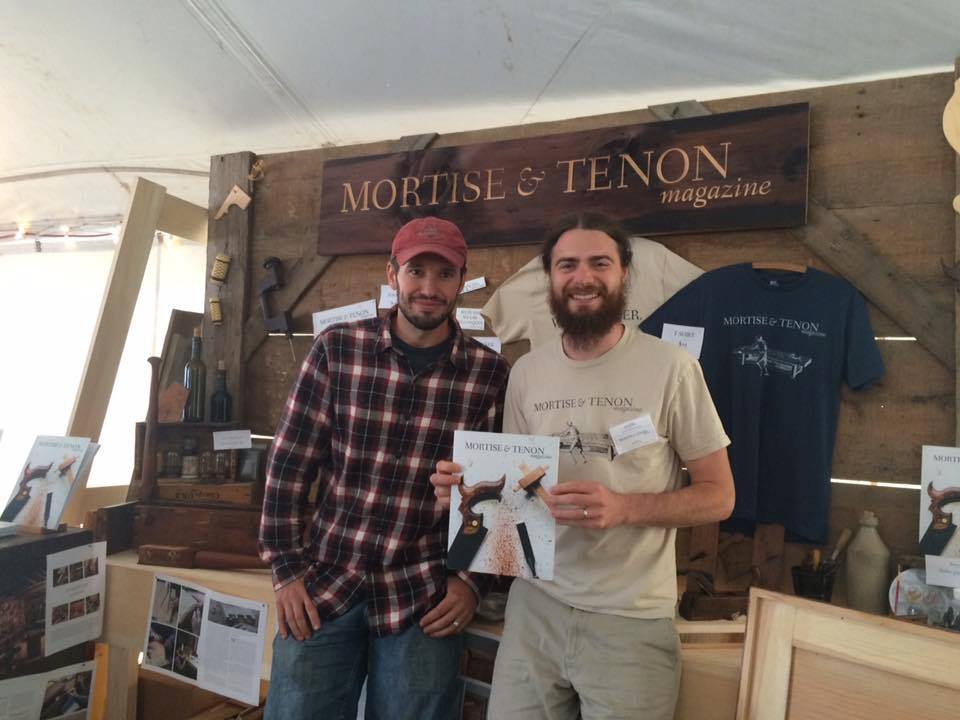
Michael Updegraff and Joshua Klein from Mortise & Tenon Magazine

Michael Updegraff and Joshua Klein from Mortise & Tenon Magazine

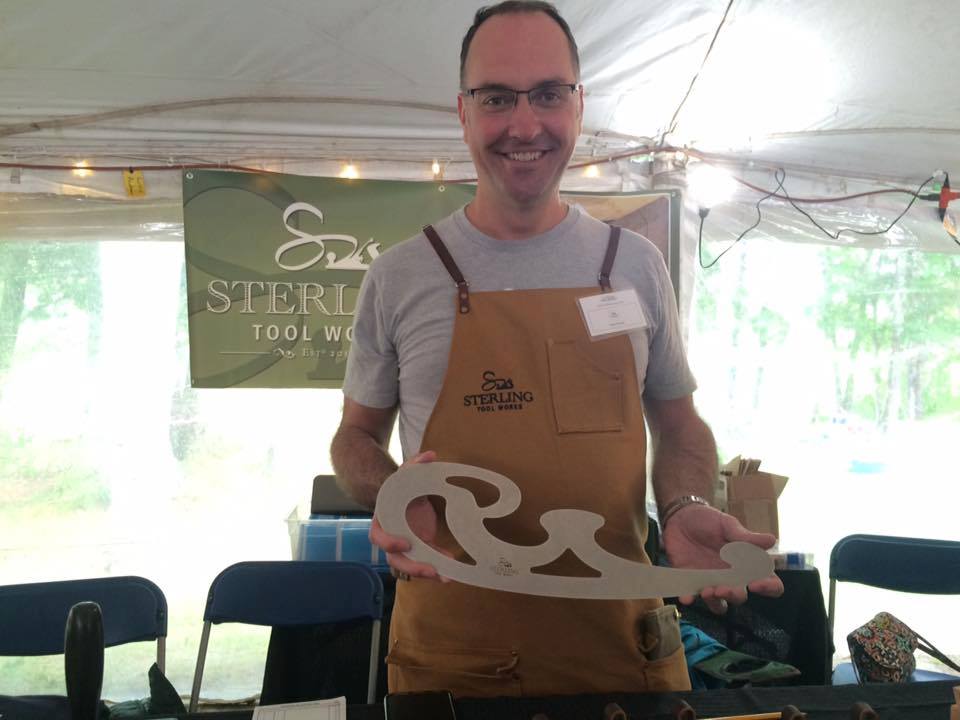
Chris Keuhn showing off the Sterling Tool Works Roubo Curves

Chris Keuhn showing off the Sterling Tool Works Roubo Curves

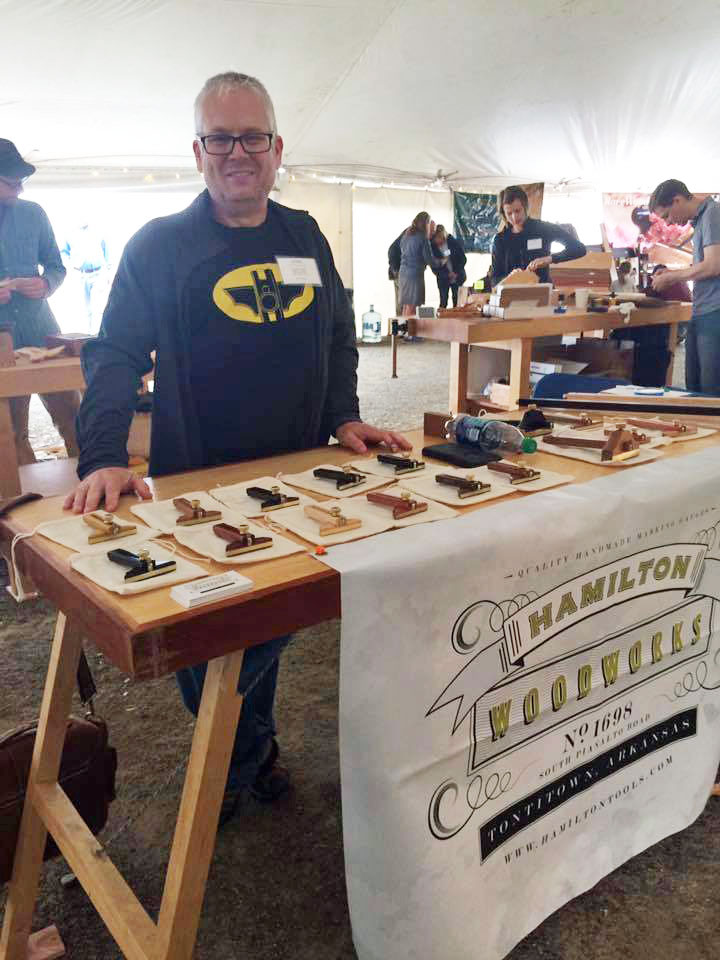
Jeff Hamilton showing off his Hamilton Marking Gauges

Jeff Hamilton showing off his Hamilton Marking Gauges

On both Friday and Saturday the offerings included 3 daily Tool Talks where you could delve a bit deeper into the workings of some of the tools. Tours of the factory left the check-in area every half hour and were led by the always excellent Lie-Nielsen show staff. We got a great tour led by the originator of our Women in Woodworking column, Anne Briggs.

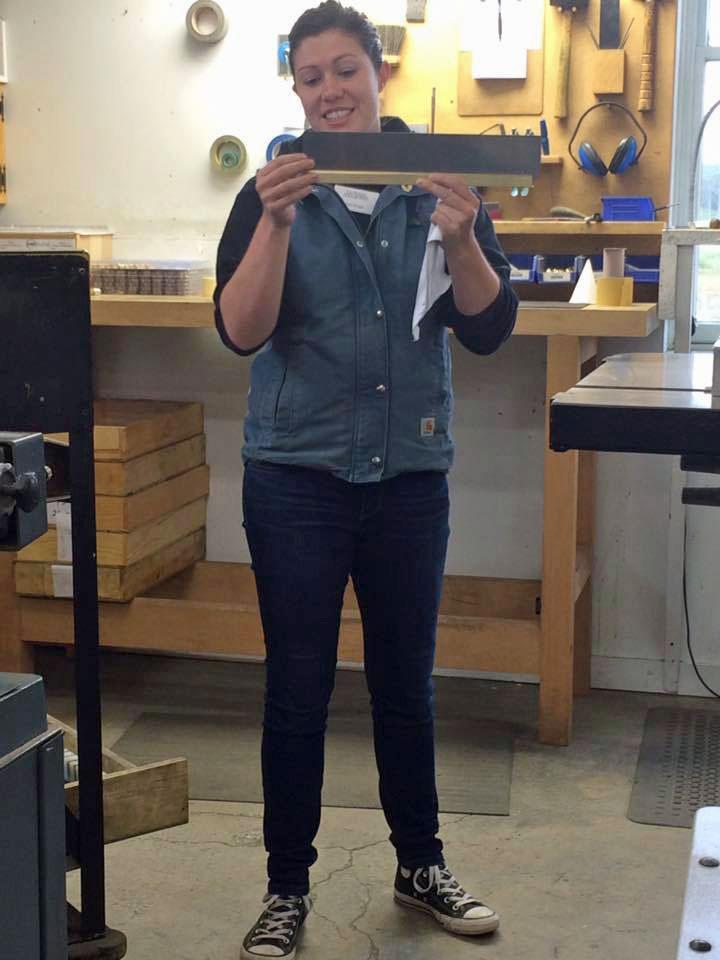
Lie-Nielsen Show Staffer, Anne Briggs, discusses the Lie-Nielsen Hand Saws on the factory tour

Lie-Nielsen Show Staffer, Anne Briggs, discusses the Lie-Nielsen Hand Saws on the factory tour

As the open house portion of the weekend drew to a close on Saturday afternoon, the steamers and bonfires started up for the great Lobster Bake, and it did not disappoint. The lines were long but the lobster was worth the wait. After we ate our fill, we sat back and learned the history of woodworking tool commerce and how Tom Lie-Nielsen got his start from keynote speaker Garry Chinn, who was Tom’s first and last boss at Garrett Wade, and who also had a connection to Highland Woodworking in the early days. The evening concluded with attendees gathered around the bonfire to warm up on an uncharacteristically chilly Maine July evening, before saying goodbye. We’re already looking forward to next year’s Open House!

Jul 112016
 

No Southern-fried Southern boy wants to be called a Yankee, but we share the characteristics of shrewdness and thrift. Thus, each month I share a money-saving tip. It’s OK if you call me “cheap.”

My late mother’s childhood was spent in bayou country, South Louisiana.  As a result, I grew up with some very unusual pronunciations.  That white stuff you spread on your tomato sandwich:  “MY-nezz.”  The bowl you run water in to wash the dinner dishes:  “Zinc.”  A canvas sheet you spread over your trailer to keep your load from blowing out:  “tar-POE-lee-uhn.”  If you went into a store today and asked for the “tarr-POE-lee-uhns” or the “TAR-p?-lins,” you’d probably get a strange look.  Hardly anyone calls them anything but “tarps” today. And, there’s no fabric in it anymore.  It’s plastic on the inside and plastic on the outside. When you first purchase your tarp, it’s conveniently packaged inside a cute plastic bag with a handle.  Good luck getting it back in that bag again!  However, it’s doesn’t have to consume 9′ x 24′ of storage space.  Here’s how to make it smaller, no scissors required.

First, fold the tarp to the approximate outside dimensions that your preferred storage spot demands.

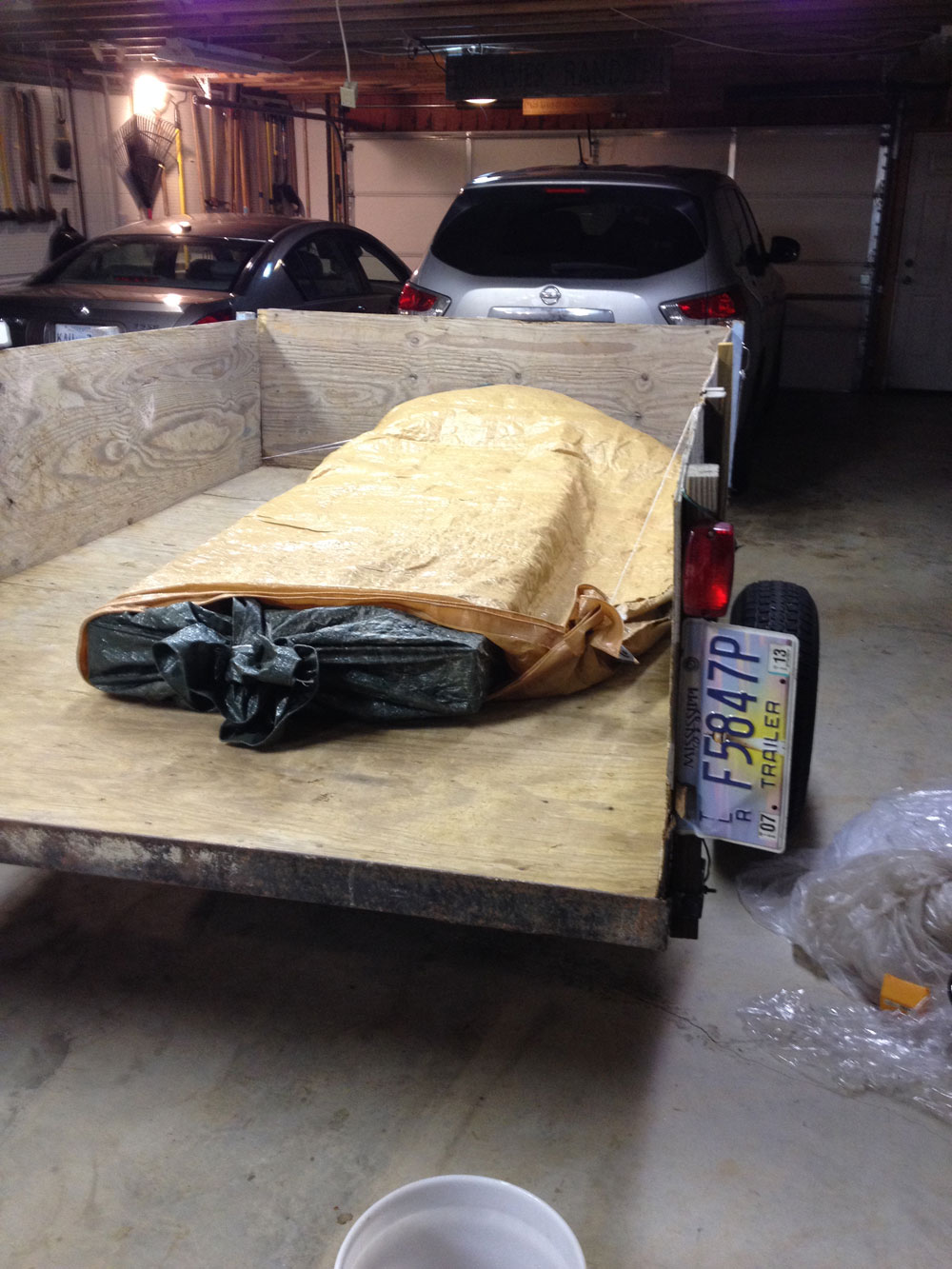
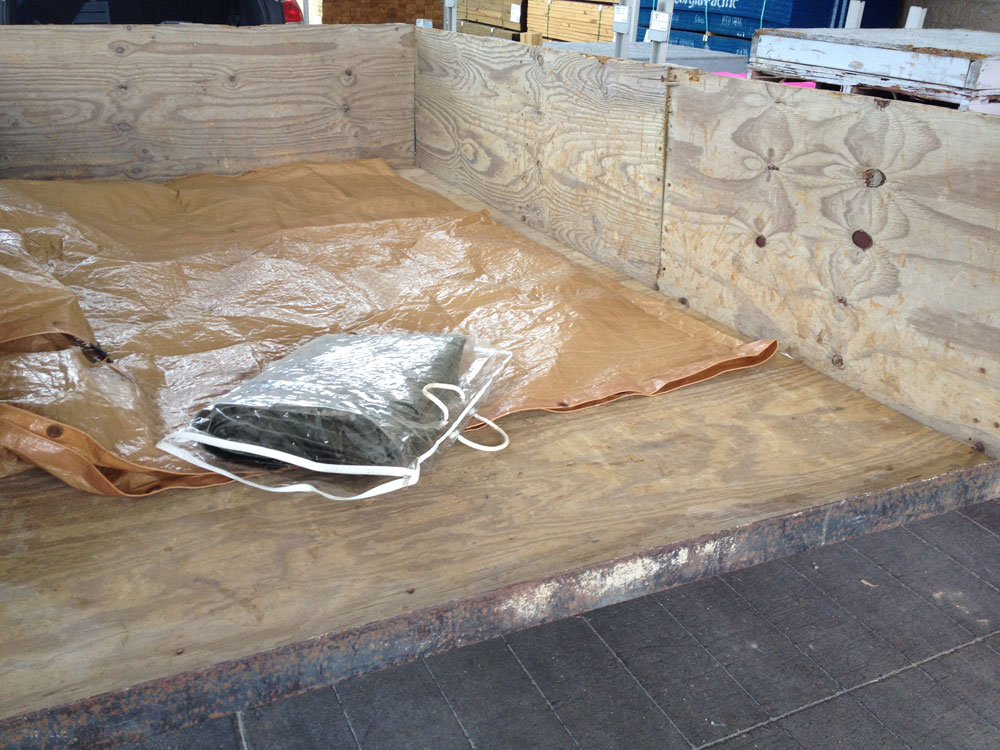
You pay a lot of money for premium lumber. When there is a chance of rain on pickup day, it pays to take the time to wrap it up and keep the moisture content low. Whether you call it a tarp, a tarpaulin or a tar-POH-lee-uhn, it’s the item custom-made for this job.

You pay a lot of money for premium lumber. When there is a chance of rain on pickup day, it pays to take the time to wrap it up and keep the moisture content low. Whether you call it a tarp, a tarpaulin or a tar-POH-lee-uhn, it’s the item custom-made for this job.

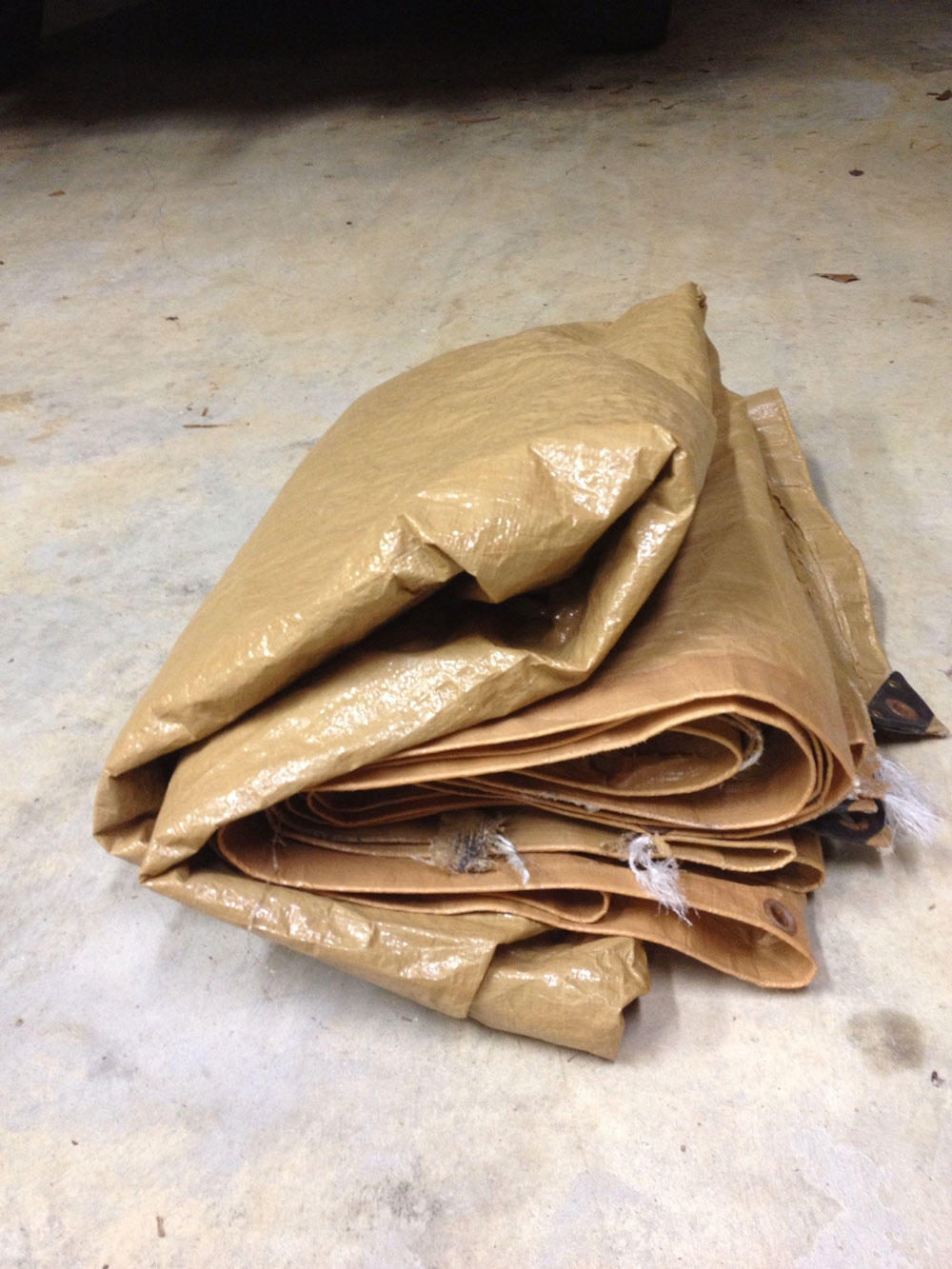
When first folded, this 9' x 12' tarp takes up a good bit of space.

When first folded, this 9′ x 12′ tarp takes up a good bit of space.

Now you need at least one, two might be better, pieces of plywood as big as or a little bigger than the folded tarp.  If you don’t have a smooth concrete floor to do this job, lay your first piece of plywood on the pavement or ground.  Next, center the folded tarp on the plywood, then put your other piece of plywood on top:  Something of a plywood/tarp sandwich.  No mayo.

In our case, the garage floor is smooth enough that we didn’t need a piece of plywood on the bottom. If I’d been doing this in the street, on asphalt, I would have used one to protect the tarp plastic from puncture damage.

In our case, the garage floor is smooth enough that we didn’t need a piece of plywood on the bottom. If I’d been doing this in the street, on asphalt, I would have used one to protect the tarp plastic from puncture damage.

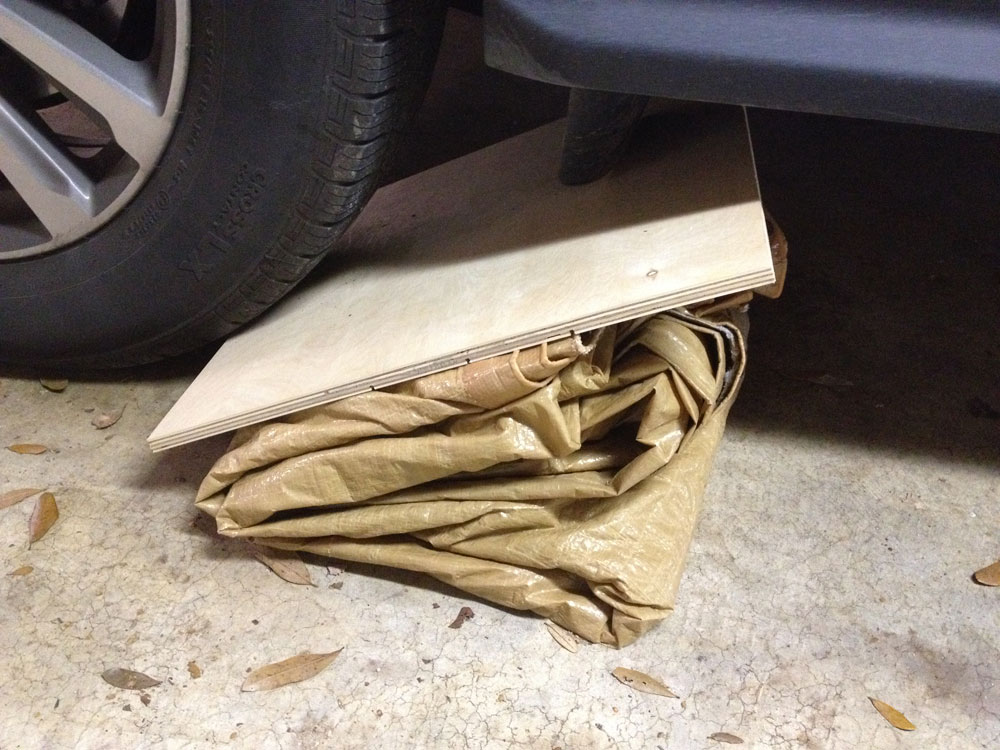
Now, line up your front or rear vehicle tire on the middle of the plywood and carefully drive up until the tire is roughly centered.

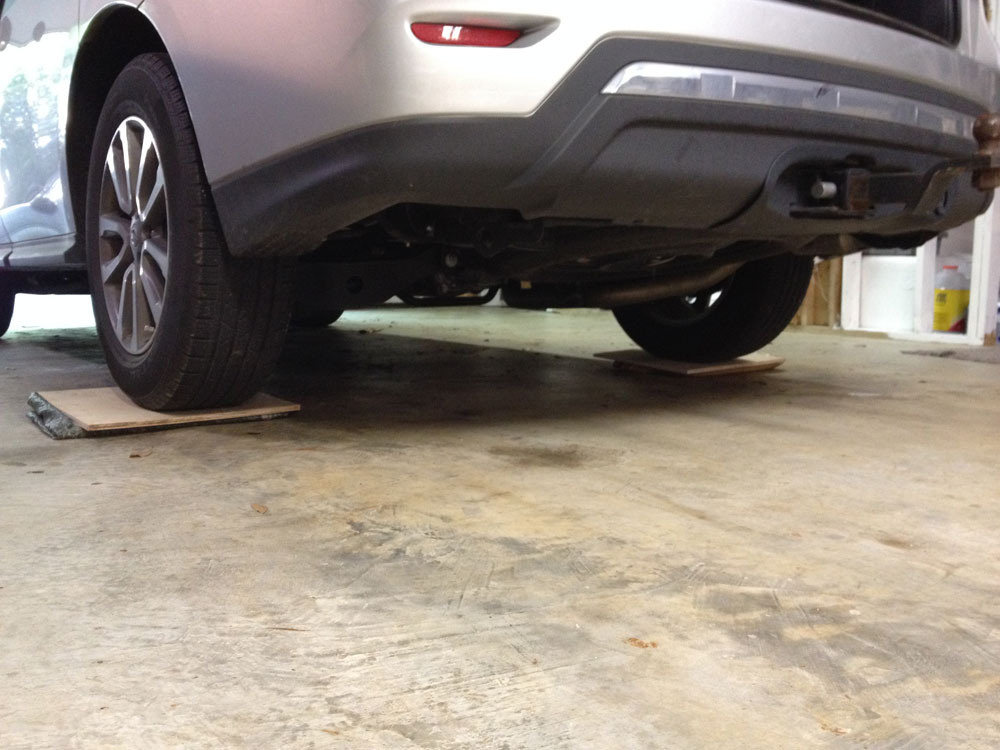
The car’s right rear tire is centered on the plywood/tarp sandwich. Eeeeeaaaazzzzzze up onto the scrap plywood slowly. Too fast and you might overshoot, causing the plywood to lift up in the front, possibly contacting the car.

The car’s right rear tire is centered on the plywood/tarp sandwich. Eeeeeaaaazzzzzze up onto the scrap plywood slowly. Too fast and you might overshoot, causing the plywood to lift up in the front, possibly contacting the car.

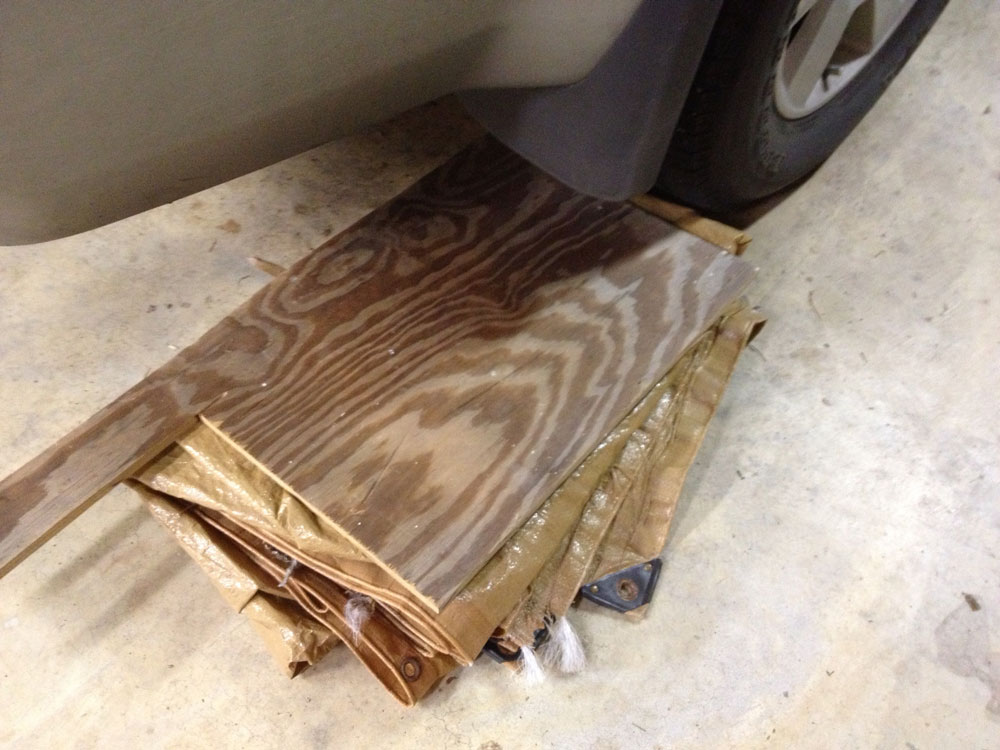
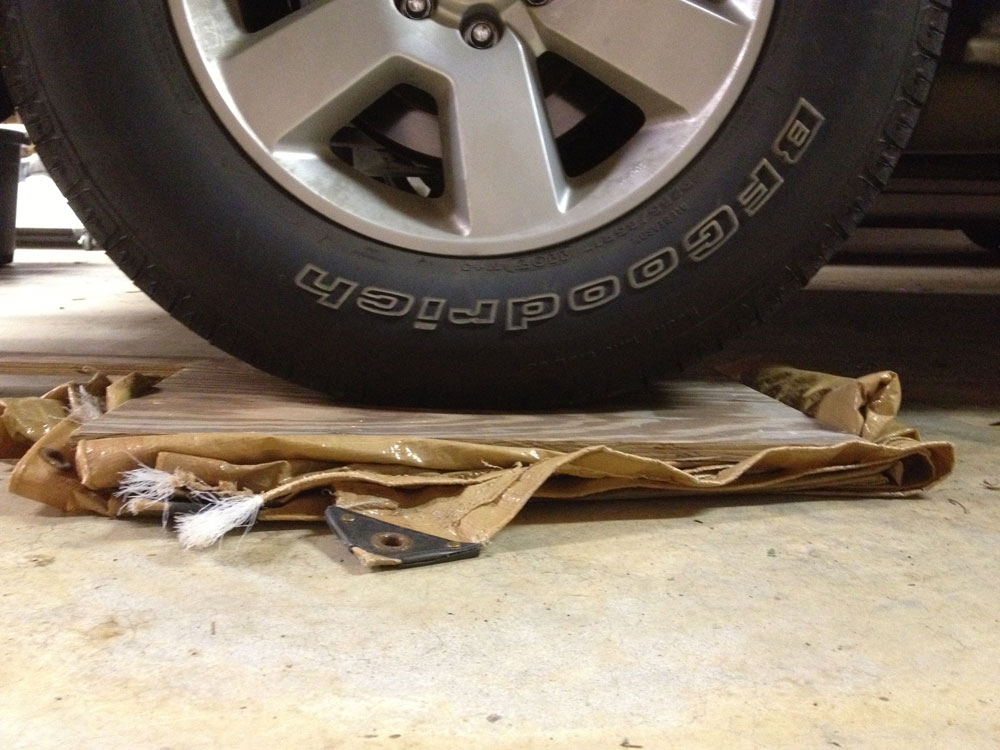
Now the tarp is being compressed and, over time, more and more air will leave the sandwich, making it what my Uncle Sam used to call “packy.”

Now the tarp is being compressed and, over time, more and more air will leave the sandwich, making it what my Uncle Sam used to call “packy.”

This time I chose to compress two tarps at once. Just call me a madman.

This time I chose to compress two tarps at once. Just call me a madman.

I’ve always done this when I can leave the car on top of the sandwich overnight, but I suspect a few hours would do just as well.

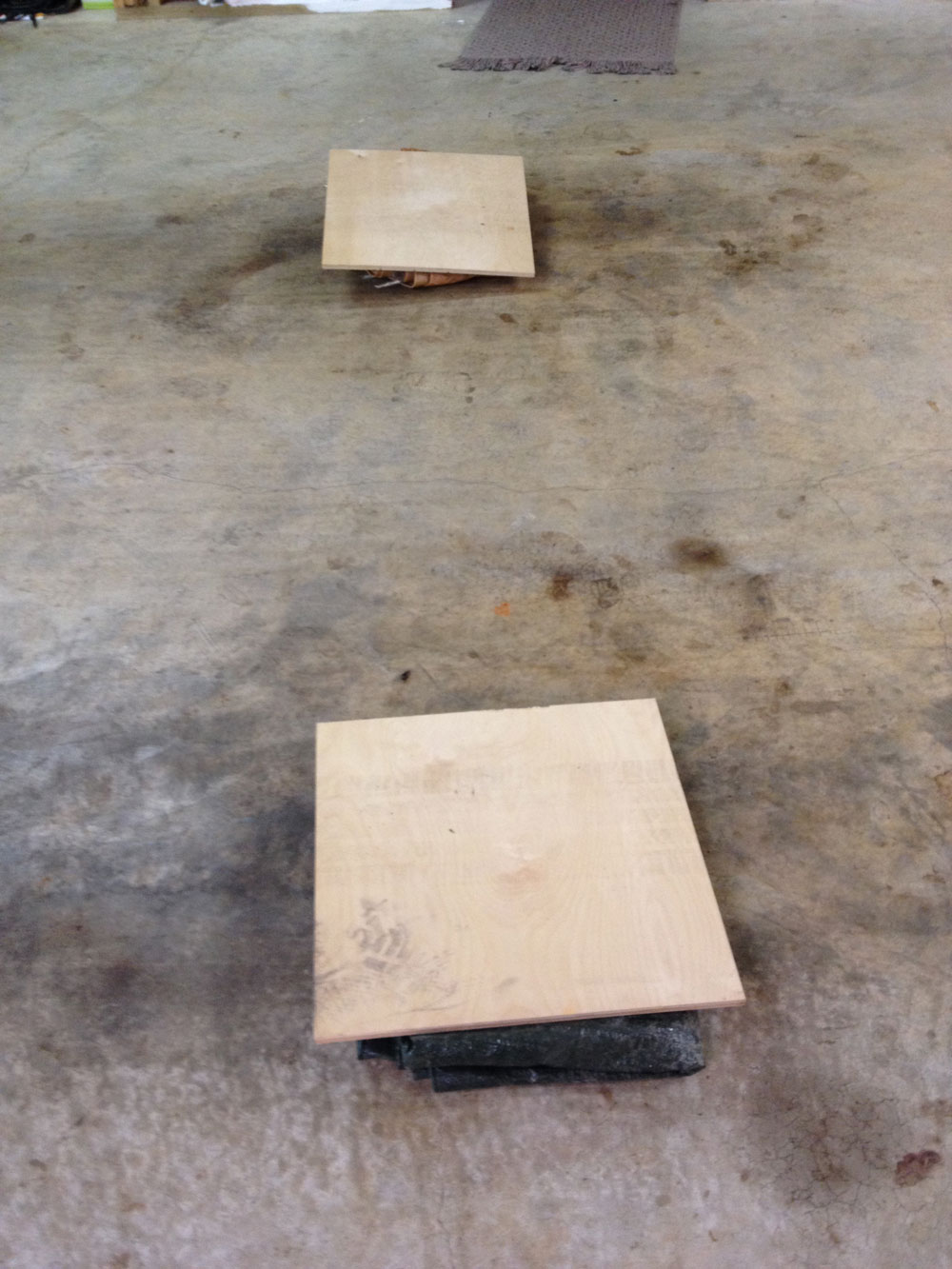
After a sleepover, these two tarps are flat, and staying that way.

After a sleepover, these two tarps are flat, and staying that way.

The idea is to let the plastic take a “set” so it will stay flat while you stuff it into a big Ziploc bag or put it on the appropriate shelf.  Now, your tarp won’t take up nearly so much space until you need it again.

Before and after: Now, the compressed tarp easily fits into this blanket bag (you do save the bags your electric blankets and bedspreads come in, don’t you?

Before and after: Now, the compressed tarp easily fits into this blanket bag (you do save the bags your electric blankets and bedspreads come in, don’t you?) and not take up much room on its shelf.


Jim Randolph is a veterinarian in Long Beach, Mississippi. His earlier careers as lawn mower, dairy farmer, automobile mechanic, microwave communications electronics instructor and journeyman carpenter all influence his approach to woodworking. His favorite projects are furniture built for his wife, Brenda, and for their children and grandchildren. His and Brenda’s home, nicknamed Sticks-In-The-Mud, is built on pilings (sticks) near the wetlands (mud) on a bayou off Jourdan River. His shop is in the lower level of their home. Questions and comments on woodworking may be written below in the comments section. Questions about pet care should be directed to his blog on pet care, www.MyPetsDoctor.com. We regret that, because of high volume, not all inquiries can be answered personally.