Highland Staff

Oct 172016
 

171833

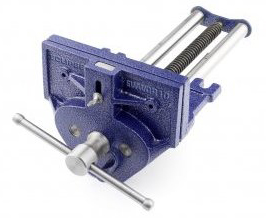
We recently featured an article by new contributor Justin Moon about the Eclipse Bench Vise, and Bench Vises in general.

Justin take a look at different options of bench vise and elaborates on the vise he chose for his own workshop, the Eclipse Quick Release Bench Vise. If you are new to woodworking and trying to decide which tools to purchase first, take a look at Justin’s article:

The bench vise sees constant use throughout every stage of the process from dimensioning to finishing. It is difficult to name a tool that is used more often or one that has a greater impact on the efficiency of other tools in a hand tool shop than the vise.

Read the full Bench Vise article here.

Oct 032016
 

No Southern-fried Southern boy wants to be called a Yankee, but we share the characteristics of shrewdness and thrift. Thus, each month I share a money-saving tip. It’s OK if you call me “cheap.”

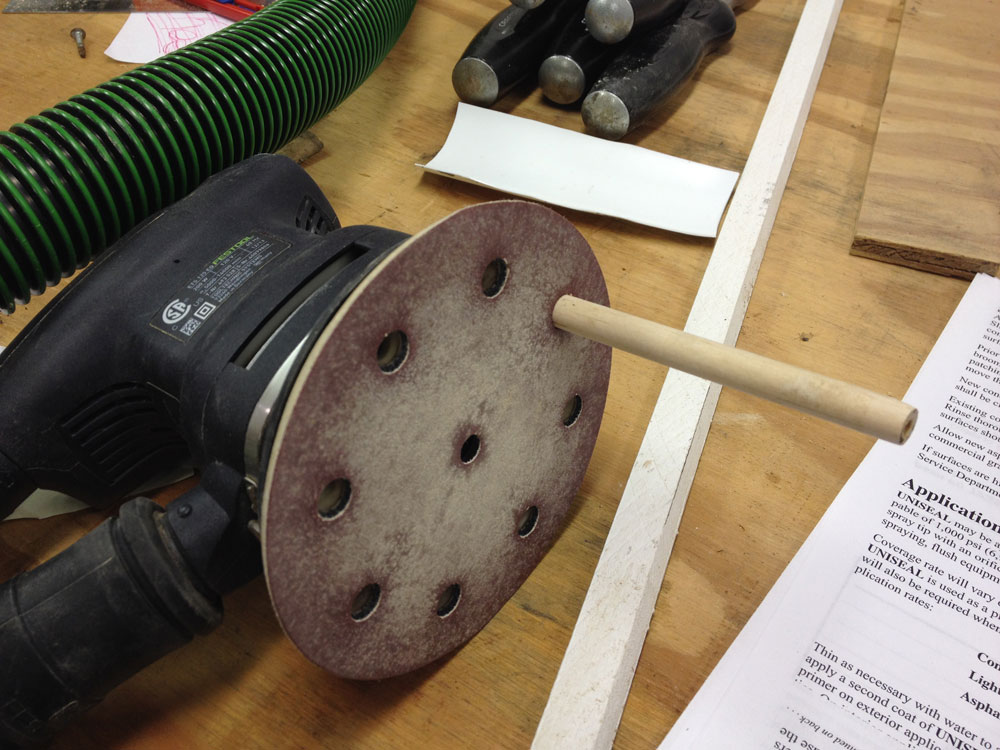
Regular readers already know that I don’t pitch the handles of disposable foam brushes when they are used up. And, we’ve previously discussed using those 3/8″ diameter handles as guides for installing sanding disks onto random-orbit sander pads.

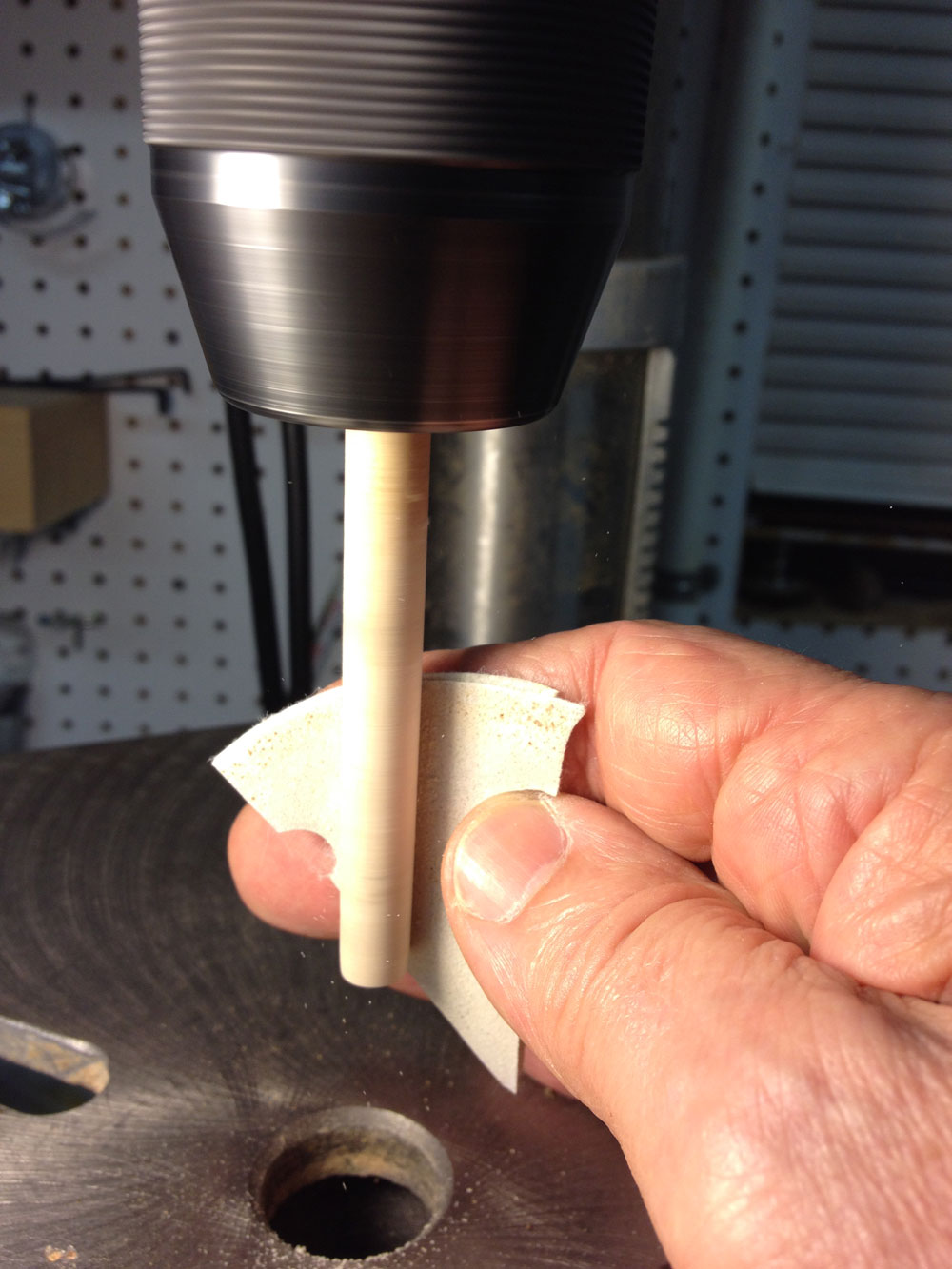
Lately, though, I’ve run into some handles that are a little rough on the outside. I’ve begun to chuck them into the drill press and sand to 400 grit to make the job easier and faster.

Run the speed up pretty high and it will take only a minute or so to get a perfectly smooth surface with a scrap of 400-grit paper. Swap ends and smooth the entire rod. Be conservative with chuck pressure.

Run the speed up pretty high and it will take only a minute or so to get a perfectly smooth surface with a scrap of 400-grit paper. Swap ends and smooth the entire rod. Be conservative with chuck pressure.

The handle slides into the sander’s pad more easily, and the disk glides down into position with less effort, too.

The handle slides into the sander’s pad more easily, and the disk glides down into position with less effort, too.


Jim Randolph is a veterinarian in Long Beach, Mississippi. His earlier careers as lawn mower, dairy farmer, automobile mechanic, microwave communications electronics instructor and journeyman carpenter all influence his approach to woodworking. His favorite projects are furniture built for his wife, Brenda, and for their children and grandchildren. His and Brenda’s home, nicknamed Sticks-In-The-Mud, is built on pilings (sticks) near the wetlands (mud) on a bayou off Jourdan River. His shop is in the lower level of their home.Questions and comments on woodworking may be written below in the comments section. Questions about pet care should be directed to his blog on pet care, www.MyPetsDoctor.com. We regret that, because of high volume, not all inquiries can be answered personally.

Oct 022016
 

Welcome to “Tips From Sticks-In-The-Mud Woodshop.” I am a hobbyist who loves woodworking and writing for those who also love the craft. I have found some ways to accomplish tasks in the workshop that might be helpful to you, and I enjoy hearing your own problem-solving ideas. Please share them in the COMMENTS section of each tip.  If, in the process, I can also make you laugh, I have achieved 100% of my goals.

My wife, Brenda, is an artist, and any artist will tell you the most difficult freehand stroke to execute well is the straight line. That task is difficult for several reasons. First, a straight line is the only absolute that can be compared to a standard. A face, an abdomen, a thigh, a bowl, each curved line is unique.

Second, your arm works in an arc, and therefore your hand moves in an arc. Simply put, it is unnatural to draw a straight line freehand. Speaking of unnatural, there are very few straight lines in nature.

When hand-sanding and applying finish by hand, tools (sandpaper, brushes) usually need to go in line with the grain of the wood and curving motions need to be avoided. Even if your project contains curves, unless your wood is bent, the grain still runs in mostly straight lines.
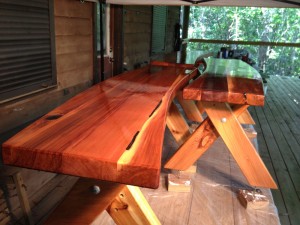
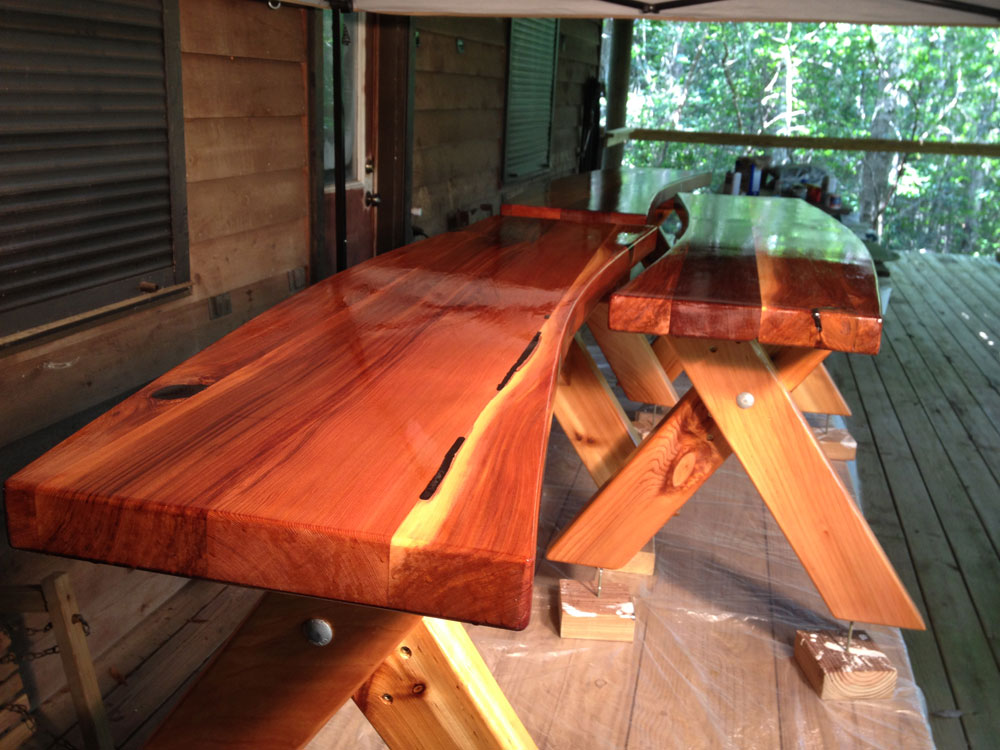
Consider this curved bench. Though it curves on its front and back, it is made from straight boards. Whether scraping, sanding or applying finish, a stroke that does not follow the grain is a stroke that will always show, until it’s corrected.

Consider this curved bench. Though it curves on its front and back, it is made from straight boards. Whether scraping, sanding or applying finish, a stroke that does not follow the grain is a stroke that will always show, until it’s corrected.

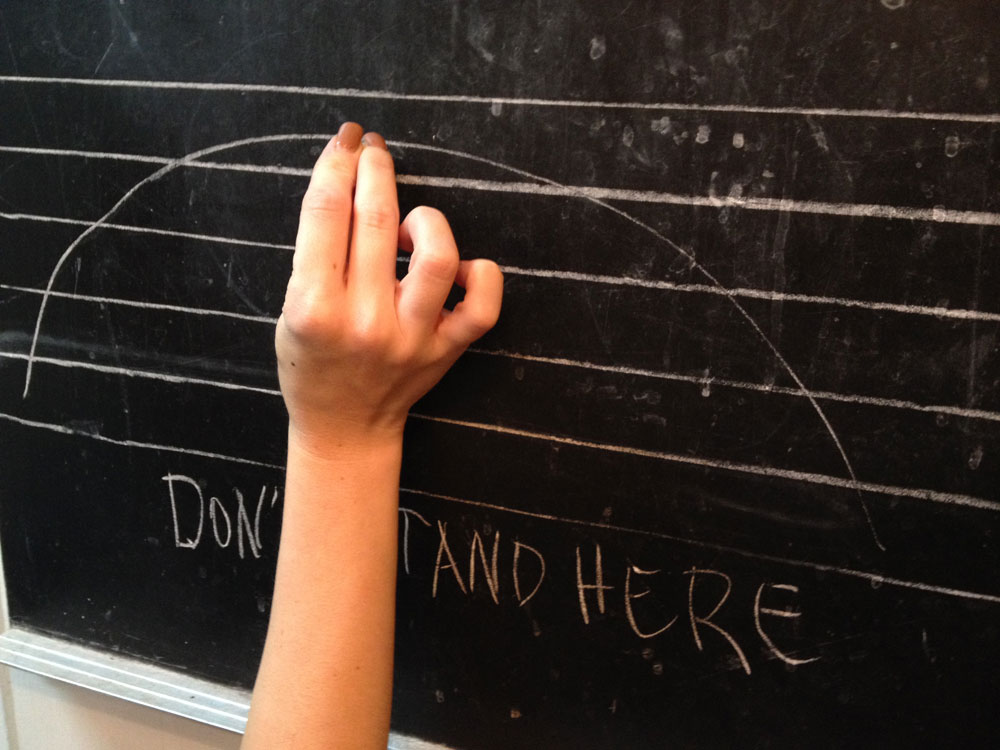
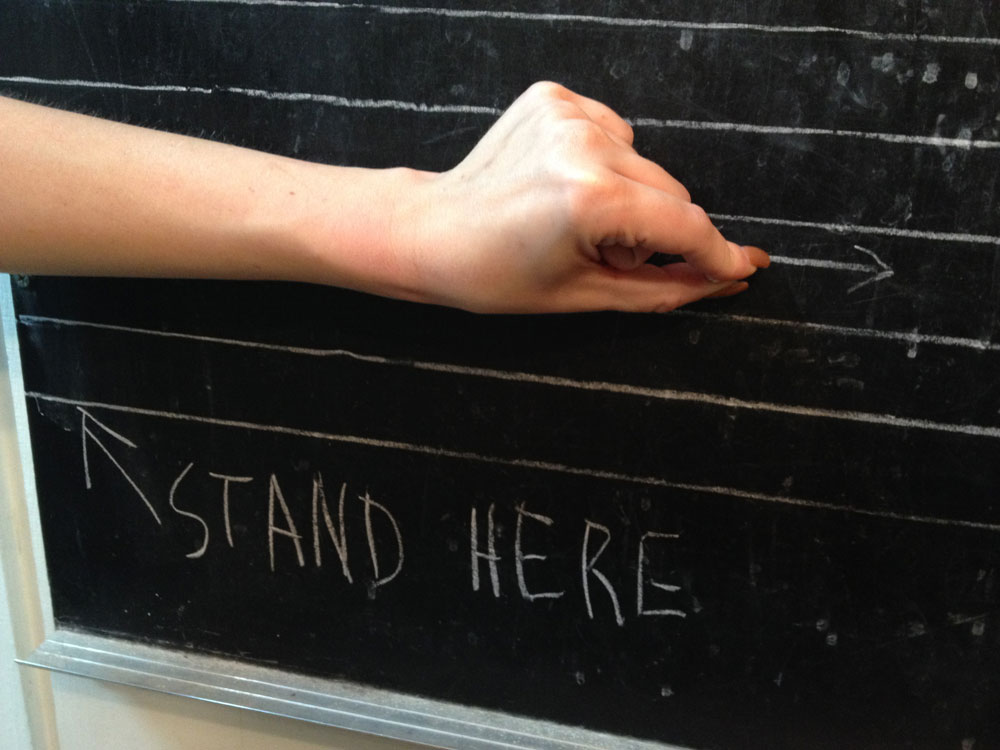
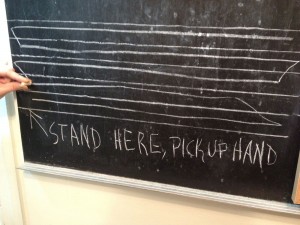
Just as a windshield wiper pivots on the shaft it’s mounted on, our arms pivot on our elbows and/or shoulders. Here, our assistant stands beside the work, perpendicular to the length of the boards and it is nearly impossible to approximate a straight line. While this arc is not perpendicular to the grain, which would yield the most displeasing scratches, it still crosses the grain instead of going with it.

Just as a windshield wiper pivots on the shaft it’s mounted on, our arms pivot on our elbows and/or shoulders. Here, our assistant stands beside the work, perpendicular to the length of the boards and it is nearly impossible to approximate a straight line. While this arc is not perpendicular to the grain, which would yield the most displeasing scratches, it still crosses the grain instead of going with it.

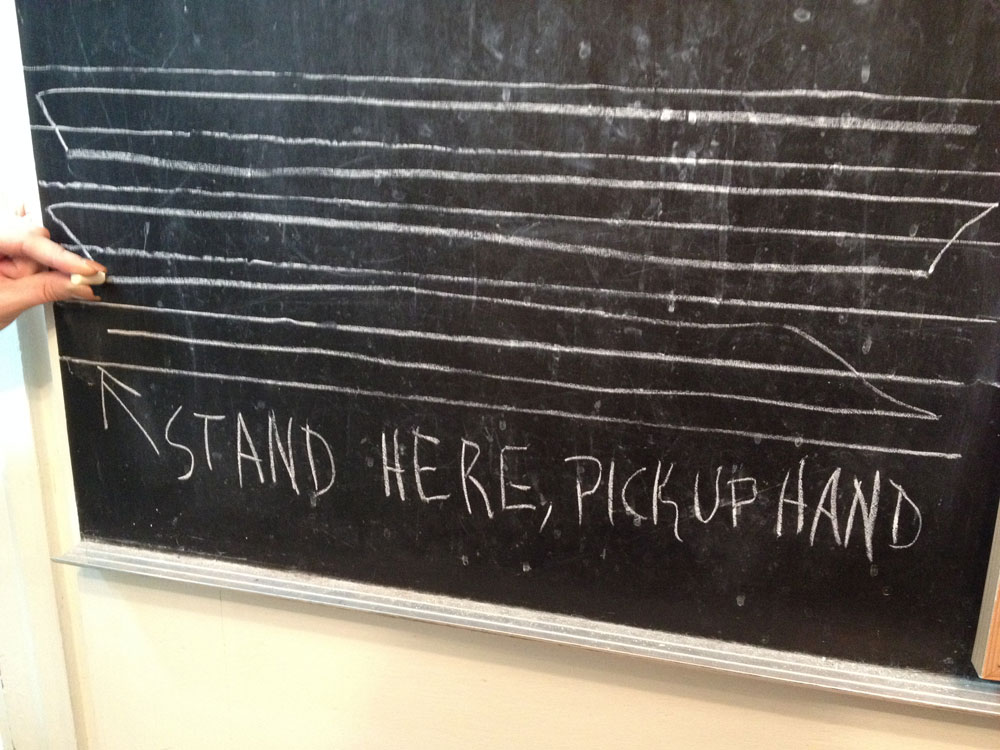
Change your position of attack, looking down the long grain, and you have the opportunity to work parallel to the boards’ edges and thus their grain.

Change your position of attack, looking down the long grain, and you have the opportunity to work parallel to the boards’ edges and thus their grain.

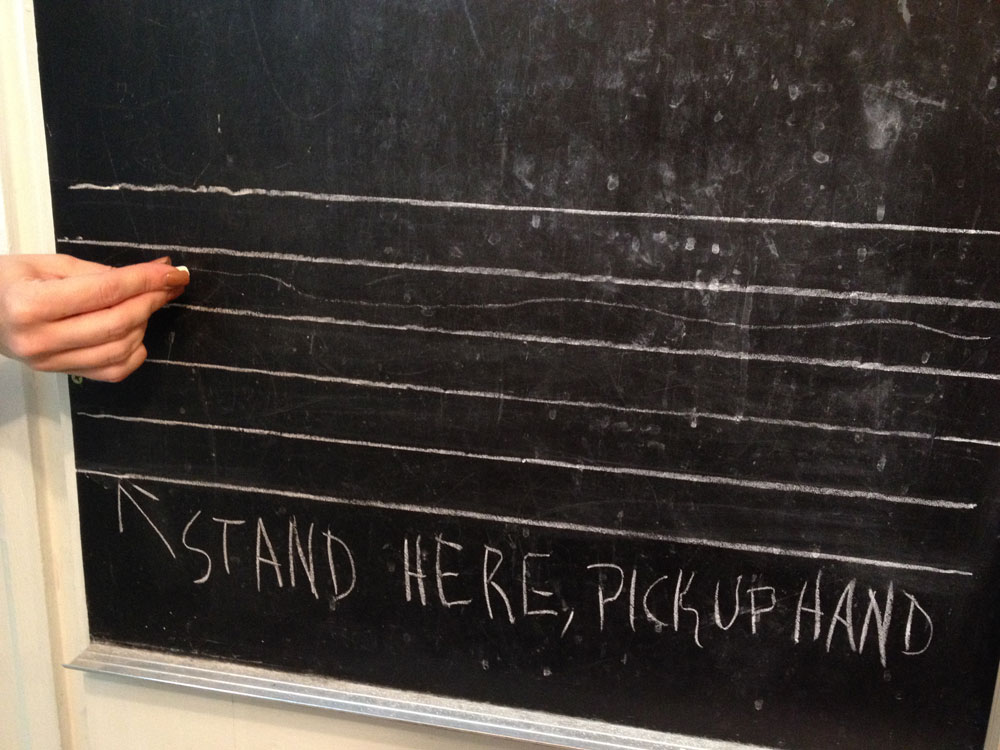
Even when your body is lined up with the grain, you still have to pay attention to your arm’s movements. Consider that any lateral movement crosses the grain. Therefore, that lateral movement needs to occur off the project surface. In other words, you can sand one board, or span the joint of two boards, then lift your hand to move to the next area you want to sand. What you can’t do is keep sanding while making movements to the side.
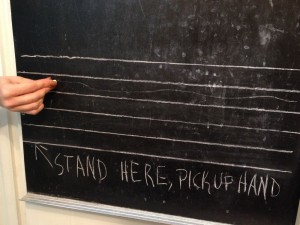
Our natural tendency is to make strokes that are slightly diagonal, but, that partial across-grain movement will impart scratches that are unsightly.

Our natural tendency is to make strokes that are slightly diagonal, but, that partial across-grain movement will impart scratches that are unsightly.

The same goes for application of finish, especially with brushes or pads. Wipe-on finishes tend to be dilute enough that they don’t show your path much. But, with a thicker finish applied with a brush, it is imperative that strokes follow the grain.

Not only is following the length important, stay focused, so that you are not wavering down the length of a board.
It takes a lot of concentration to make one’s arm go perfectly straight along a board’s grain. The difference is worth the effort.

It takes a lot of concentration to make one’s arm go perfectly straight along a board’s grain. The difference is worth the effort.

Try this technique. I’m confident you’ll like the hand-sanding and hand-finishing results you get.


Jim Randolph is a veterinarian in Long Beach, Mississippi. His earlier careers as lawn mower, dairy farmer, automobile mechanic, microwave communications electronics instructor and journeyman carpenter all influence his approach to woodworking. His favorite projects are furniture built for his wife, Brenda, and for their children and grandchildren. His and Brenda’s home, nicknamed Sticks-In-The-Mud, is built on pilings (sticks) near the wetlands (mud) on a bayou off Jourdan River. His shop is in the lower level of their home.Questions and comments on woodworking may be written below in the comments section. Questions about pet care should be directed to his blog on pet care, www.MyPetsDoctor.com. We regret that, because of high volume, not all inquiries can be answered personally.

Oct 012016
 
I had this great idea about shop footwear.  I have terrific Wellington steel-toed boots with non-slip soles that offer fabulous support. They are especially comfortable on my shop’s concrete floor. There is a nearly-zero chance of sliding, even if water or oil gets on the floor.
I love these Wellington boots. I’ve wanted a pair of Wellingtons since I was a little boy; work boots I could slip on and off…no laces! I was about 10 when my Aunt Polly and Uncle Sam gave me my first pair of rubber boots. I felt like I was an official dairy farmer at that point. I had to wait until my 50s to get my first Wellingtons!

I love these Wellington boots. I’ve wanted a pair of Wellingtons since I was a little boy; work boots I could slip on and off…no laces! I was about 10 when my Aunt Polly and Uncle Sam gave me my first pair of rubber boots. I felt like I was an official dairy farmer at that point. I had to wait until my 50s to get my first Wellingtons!

It was a great idea until I started walking around. Those boots are heavy! If there is any danger of dropping something on my feet I’ll still wear them, and I like wearing them for a number of outdoor jobs, especially when I’m working on riprap on our shoreline.
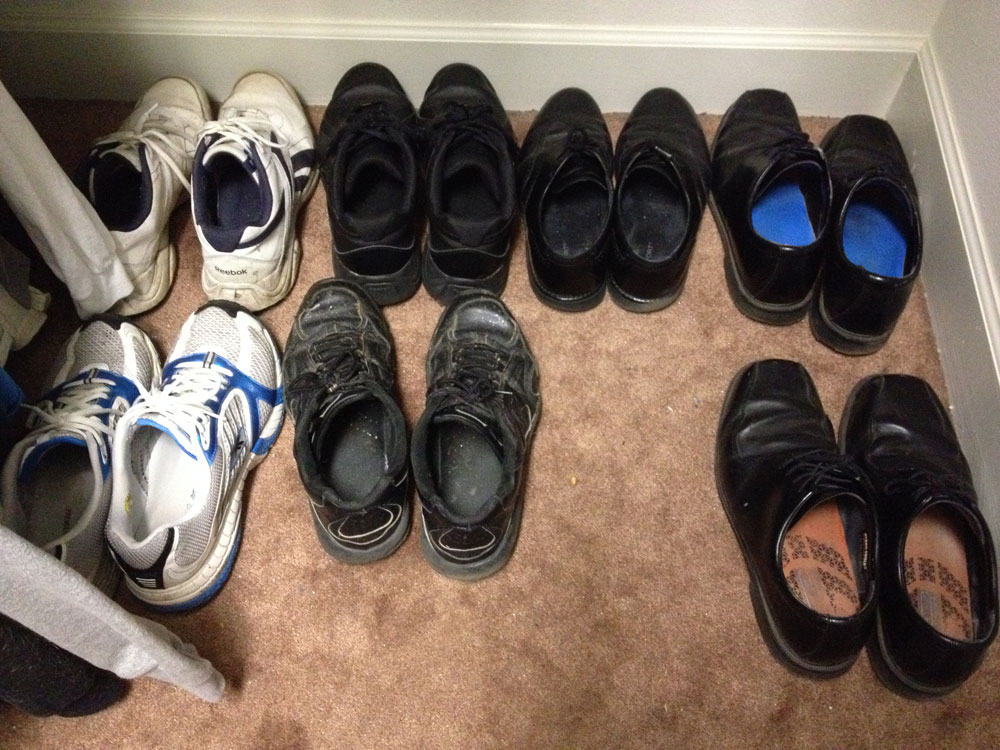
As you can tell by my Imelda Marcos starter kit, I have a shoe for every occasion. Running shoes, walking shoes, good tennis shoes, work tennis shoes, dress shoes for Sunday and dress shoes that alternate working days.

As you can tell by my Imelda Marcos starter kit, I have a shoe for every occasion. Running shoes, walking shoes, good tennis shoes, work tennis shoes, dress shoes for Sunday and dress shoes that alternate working days.

For most occasions in the shop I wear my “everyday” Reeboks. They used to be my good Reeboks, until my last everyday pair was completely worn out. Then, they graduated. For a while the oldest tennis shoes were strictly painting shoes. By then, they were dilapidated and my feet hurt within minutes of standing on concrete. Even I can be convinced to throw things away eventually.
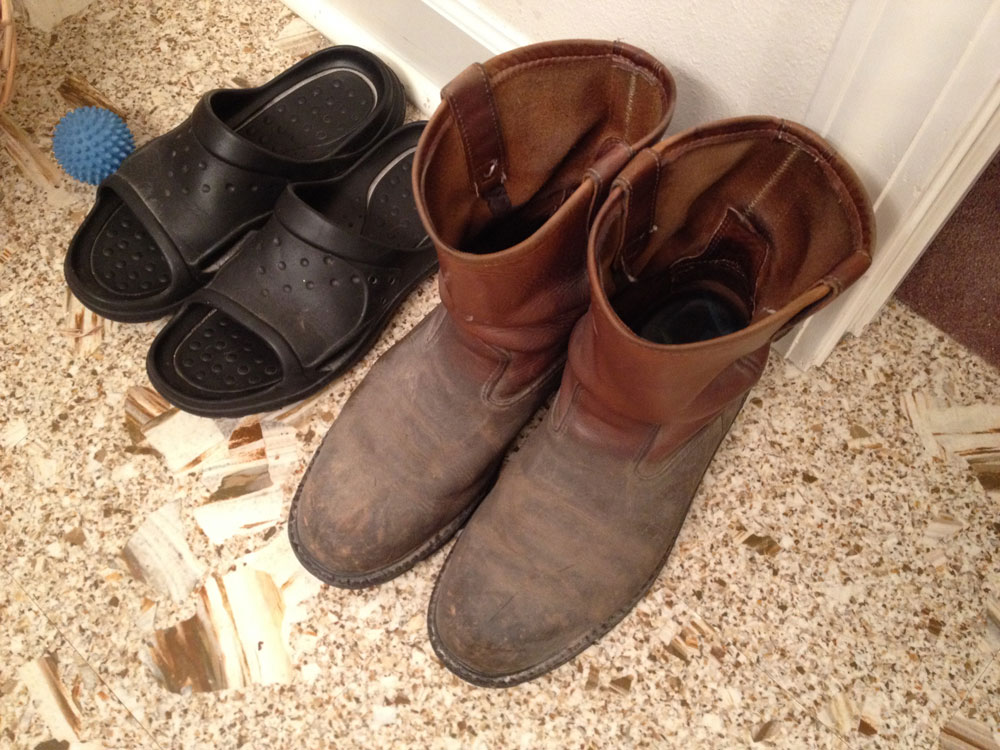
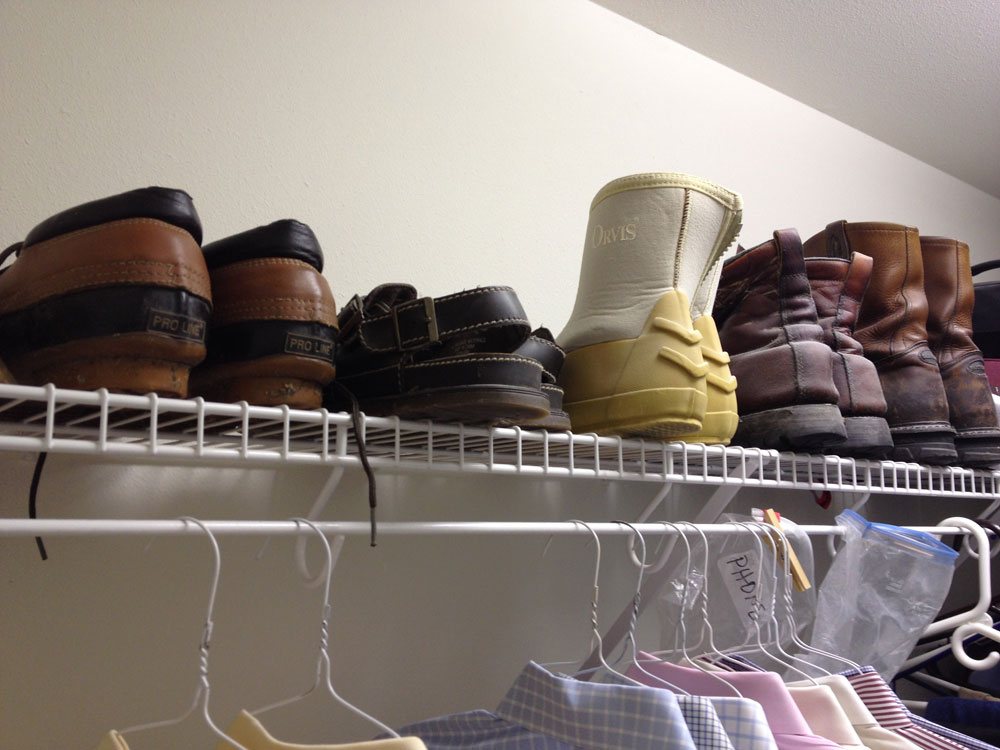
This is my collection of least-used shoes. I used to have a matching pair of duck boots and duck shoes. Not LL Bean, mind you, but cheap knockoffs. No support. Almost no sole. And, no soul whatsoever. The boots died and the shoes became painting shoes, but only for short painting jobs. I still want a real pair of LL Bean duck boots. I hope I don’t have to wait four more decades!

This is my collection of least-used shoes. I used to have a matching pair of duck boots and duck shoes. Not LL Bean, mind you, but cheap knockoffs. No support. Almost no sole. And, no soul whatsoever. The boots died and the shoes became painting shoes, but only for short painting jobs. I still want a real pair of LL Bean duck boots. I hope I don’t have to wait four more decades!

I have a number of things to stand on while I work, but I move around so much that they aren’t much benefit except for sanding, and some finishing jobs, the only times I stand still. Mine aren’t “real” anti-fatigue mats, but you can get some nice ones of those for about $50.
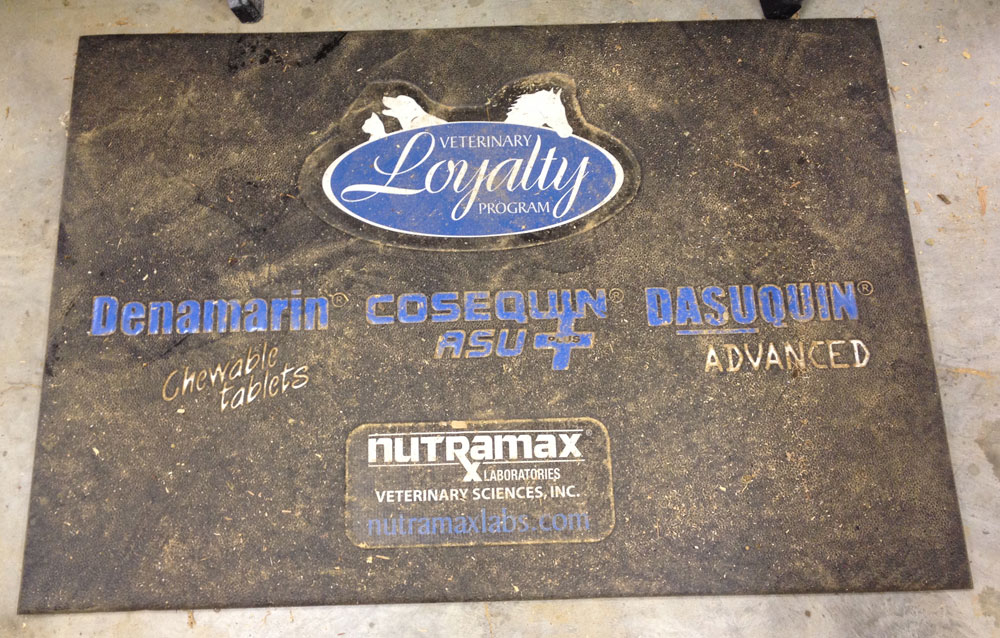
This padded mat came from a drug company representative. I think it’s meant for a dog to stand on, maybe on an examination table. How would you ever sterilize such a thing? It serves the purpose as an anti-fatigue mat.

This padded mat came from a drug company representative. I think it’s meant for a dog to stand on, maybe on an examination table. How would you ever sterilize such a thing? It serves the purpose as an anti-fatigue mat.


Jim Randolph is a veterinarian in Long Beach, Mississippi. His earlier careers as lawn mower, dairy farmer, automobile mechanic, microwave communications electronics instructor and journeyman carpenter all influence his approach to woodworking. His favorite projects are furniture built for his wife, Brenda, and for their children and grandchildren. His and Brenda’s home, nicknamed Sticks-In-The-Mud, is built on pilings (sticks) near the wetlands (mud) on a bayou off Jourdan River. His shop is in the lower level of their home. Questions and comments on woodworking may be written below in the comments section. Questions about pet care should be directed to his blog on pet care, www.MyPetsDoctor.com. We regret that, because of high volume, not all inquiries can be answered personally.
Sep 132016
 

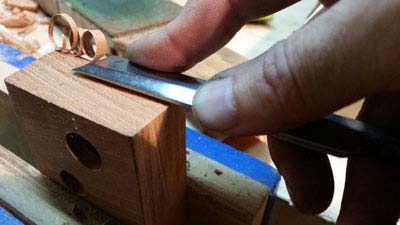
Justin Moon offers his method for sharpening the hand tools in his woodworking shop in this in-depth article. Starting with details of examining the tools and working through each step all the way to using a strop to finish the tool, Justin provides detailed analysis for what you are looking for in the sharpening process, as well as a step-by-step example for how to sharpen a chisel. This method of sharpening applies to just about every edge tool in your shop, from plane irons to draw knives to carving gouges.

Read the article to learn more about sharpening the tools in your shop.

Sep 062016
 
The Highland Woodworking family has discovered a trend:  “Prime Woodworking Season.”  It seems that people get more interested in working in their woodshops in September and October.  There’s no arguing that it’s hot in July and August in the Southeast, especially if your workspace isn’t air conditioned.  Everything combines to make Fall the perfect time to work in wood:  The kids have gone back to school.  Humidity is dropping and moisture range isn’t so extreme, so wood movement is minimized.


Several years ago our  Wood News Online editor asked whether I had a story about my summer woodworking projects. I thought “summer woodworking” was an odd idea. I’ve always had the same concept in mind about woodworking as I do fishing:  When is the best time to go fishing?  Whenever you can! I’m a long way from retiring, so woodworking and fishing have to take a backseat to everything:  work, the house, the yard, and a million other distractions. Most veterinary practices have their busiest times during summer, which translates to minimum time in the shop for me. Hence why my prime woodworking season is whenever I can find the time to get in the shop.


I started a project for our two youngest grandchildren on the unofficial start to summer: Memorial Day weekend, 2015.  I thought to myself, “I have all day Saturday off and all day Monday.  I can probably knock this little job out, or at least be ready for finish by the time the holiday is over.”


You could say I was right on one thing:  When Memorial Day was over I had finish on the table and three benches. Memorial Day, 2016, that is. That’s right, all through the Summer of ‘15, and Fall, Winter, and Spring I worked on it when I had time.  So much for ambitious thinking.


Sep 022016
 

No Southern-fried Southern boy wants to be called a Yankee, but we share the characteristics of shrewdness and thrift. Thus, each month I share a money-saving tip. It’s OK if you call me “cheap.”

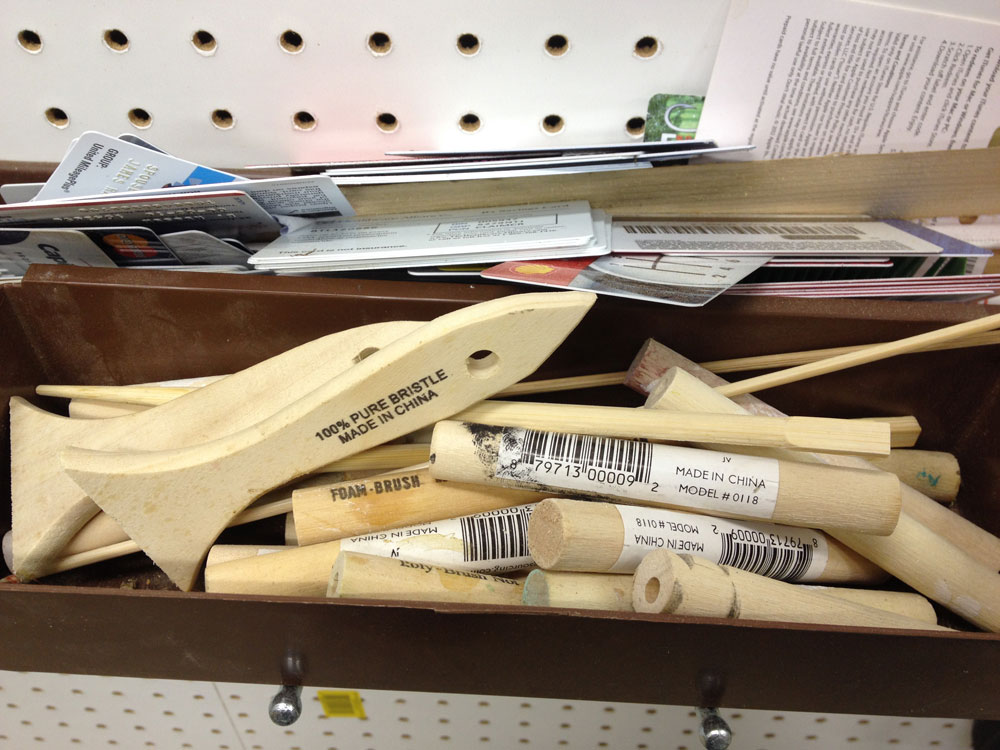
Maybe this doesn’t happen to everyone, but I get credit cards in the mail almost daily.  Unfortunately, they’re nether pre-activated nor pre-loaded!  Still, they’re not worthless.

If I retired tomorrow and worked in the shop every single day I don’t think I could ever use all these credit cards. Lots of woodworkers use them for spreading glue over long or wide surfaces.

If I retired tomorrow and worked in the shop every single day I don’t think I could ever use all these credit cards. Lots of woodworkers use them for spreading glue over long or wide surfaces.

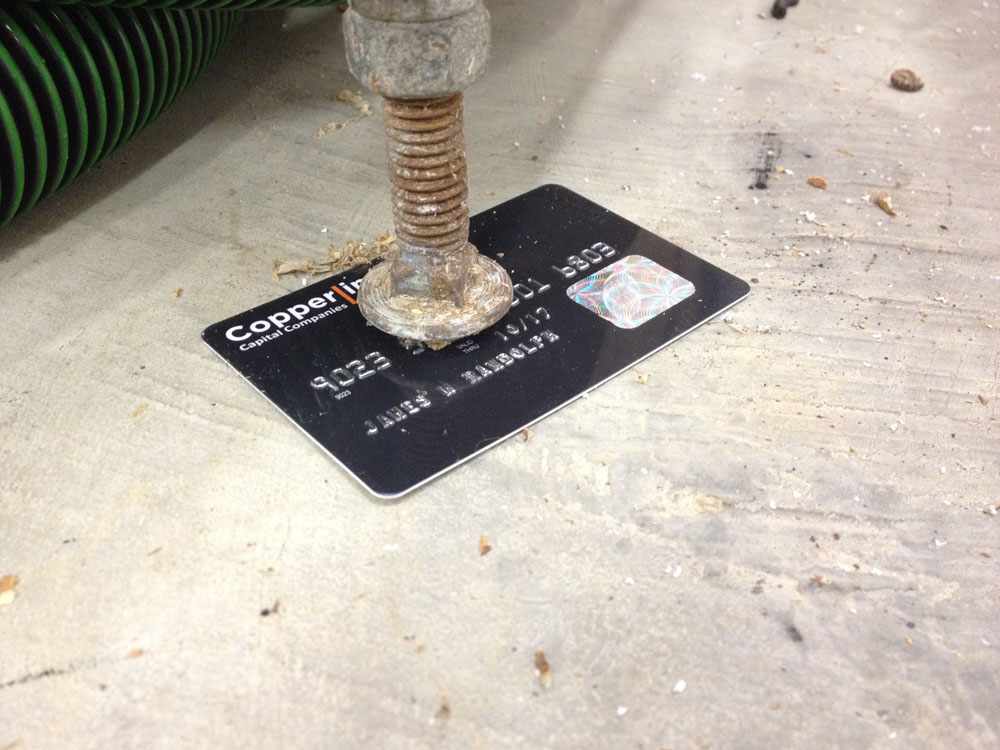
They make great shims when you just need a little boost.

They make great shims when you just need a little boost.

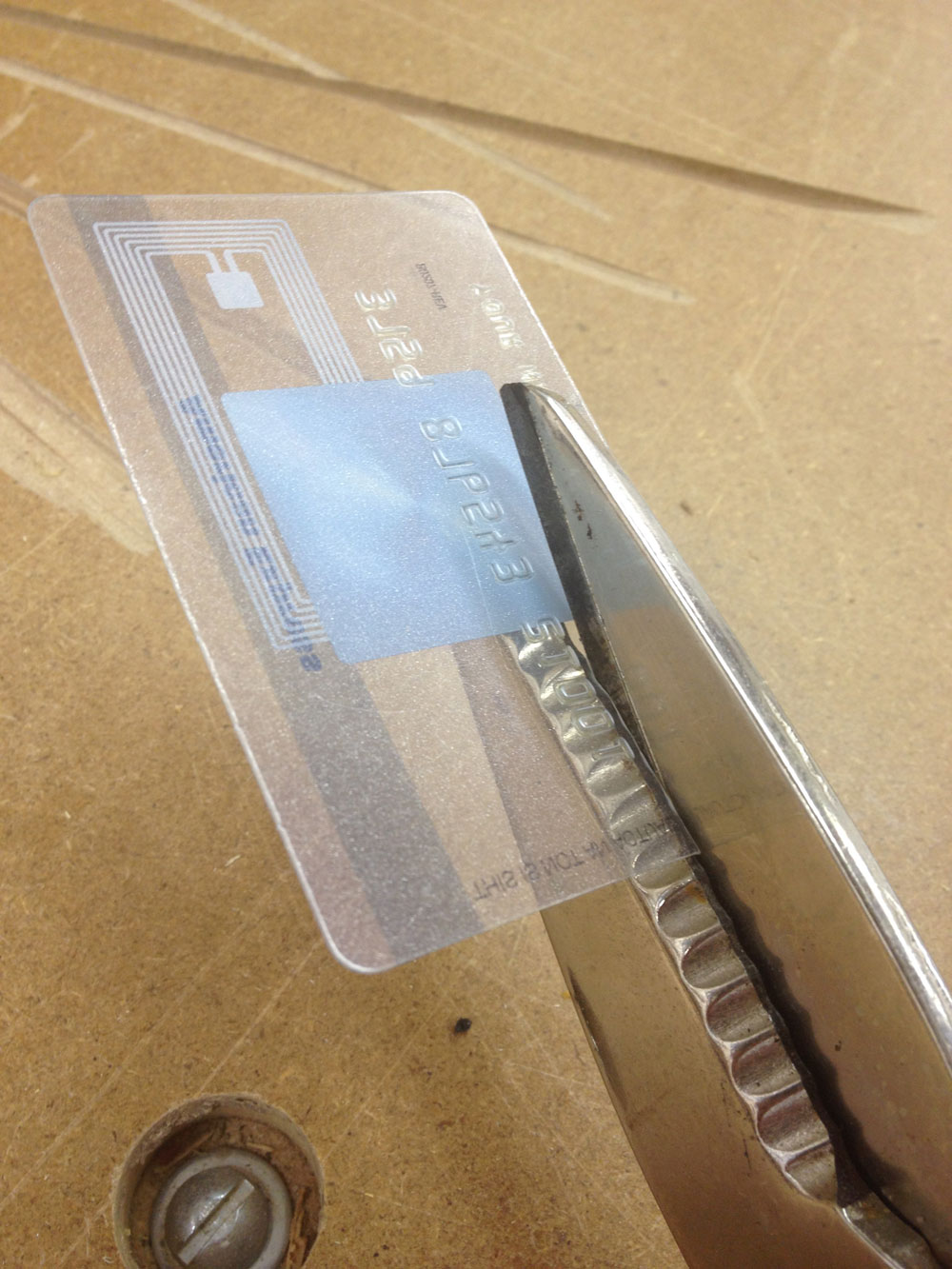
Cut into strips, they make good stirring paddles. Make them any width you need to suit the job at hand.

Cut into strips, they make good stirring paddles. Make them any width you need to suit the job at hand.

They make a good putty knife, spatula or scoop.

They make a good putty knife, spatula or scoop.


Jim Randolph is a veterinarian in Long Beach, Mississippi. His earlier careers as lawn mower, dairy farmer, automobile mechanic, microwave communications electronics instructor and journeyman carpenter all influence his approach to woodworking. His favorite projects are furniture built for his wife, Brenda, and for their children and grandchildren. His and Brenda’s home, nicknamed Sticks-In-The-Mud, is built on pilings (sticks) near the wetlands (mud) on a bayou off Jourdan River. His shop is in the lower level of their home. Questions and comments on woodworking may be written below in the comments section. Questions about pet care should be directed to his blog on pet care, www.MyPetsDoctor.com. We regret that, because of high volume, not all inquiries can be answered personally.