Highland Staff

Oct 272016
 

Welcome to “Tips From Sticks-In-The-Mud Woodshop.” I am a hobbyist who loves woodworking and writing for those who also love the craft. I have found some ways to accomplish tasks in the workshop that might be helpful to you, and I enjoy hearing your own problem-solving ideasPlease share them in the COMMENTS section of each tip.  If, in the process, I can also make you laugh, I have achieved 100% of my goals.

The last time one of our air conditioners had to be replaced, I asked the AC techs to save the old squirrel-cage fan for me. I wanted to make an exhaust fan for the shop, and I had two reasons:

First, I grew up in a time when almost every home had an attic fan to draw ventilation through its windows. As Americans became accustomed to lower humidity levels in our homes and businesses, such fans became relics.

We didn’t have an attic fan down on the farm; those were for rich city folks. We just had a window fan. Not just a box fan stuck in an open window, mind you, but a three-speed, reversible purpose-made window fan. The fan was in my bedroom. That was where I first learned the value of white noise to block out sleep-disturbing sounds.

Since I don’t have air conditioning in the shop, it was completely practical to ventilate a little.

The second reason I needed an exhaust fan is that I’ve been using CPES, Clear Penetrating Epoxy Sealer on a project, and the instructions include the notice, “WARNING: This product is inherently unsafe. It cannot be made safe. That’s why it works so well. We recommend the use of a respirator capable of filtering organic solvent fumes and vinyl gloves during application.” No, I didn’t use it in my garage with our living level right above. I did the bulk of the CPES work outdoors under our First Up tent. However, I did need a little coat on the bottom of the feet, and I’d already moved the entire project back indoors. The finish coat is Epifanes varnish. As many of you know, Epifanes is extremely thick, and some recommend cutting the first coat as much as 3:1 with mineral spirits. That’s a little too much fumes for me, so I took the old fan that had been sitting around the shop for a couple of years and finally made a movable window unit. Here’s how:

I started with an old piece of 3/4″ CDX plywood. You didn’t think I was going to spend actual money on this project, did you? Then, to find out how big the panel could be and still go in and out of a window, I did a series of measurements and test-fits. Clearly, the panel needs to fill the opening, lest breeze move around it, defeating its efforts to create air movement.
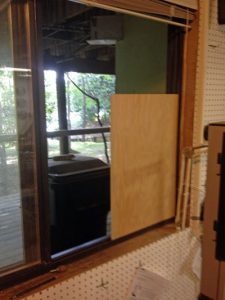
This window near the band saw was the best place to pull fumes from the finishing area. The ultimate plywood size would maximize sealing.

This window near the band saw was the best place to pull fumes from the finishing area. The ultimate plywood size would maximize sealing.

Step two was to determine the best position on the plywood and cut a hole for exhausted air flow.

Step three was to install studs to correspond to the bolt holes in the fan housing. I drilled relief depressions and epoxied the studs so they wouldn’t turn when installing the fan-holding nuts.

After cutting an initial small exhaust hole, I mounted the fan and enlarged the opening everywhere that would improve air flow but not remove important structural support.

Most everyone knows that latex paint rusts steel. Here’s a bonus tip this month: spray all exposed metal with a rusty-metal primer first, and allow it to dry thoroughly before coating with latex primer.
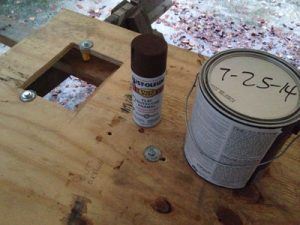
Rust-oleum Rusty Metal Primer will prevent metal parts from being corroded by latex paint, and it dries rapidly, but be sure it’s completely dry before starting to brush on latex primer.

Rust-oleum Rusty Metal Primer will prevent metal parts from being corroded by latex paint, and it dries rapidly, but be sure it’s completely dry before starting to brush on latex primer.

Two coats of primer, then we’re ready for finish paint. This project called for a special-order paint job. I wanted it as inconspicuous as possible on the outside, so it’s the same dark brown as the storm shutters. Inside, I wanted it to reflect as much light as possible, so it’s white.

The edges? Two brown, two white. Of course.

Bonus tip two: I keep balloons in the shop (more on that in a future post), and they were perfect for protecting the threads of the studs from being painted.
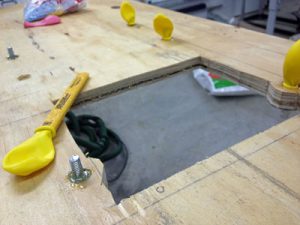
Don't make fun of me because all of the balloons are yellow. It helps me to have inner peace! Some of you understand.)
Don’t make fun of me because all of the balloons are yellow. It helps me to have inner peace! Some of you understand.)

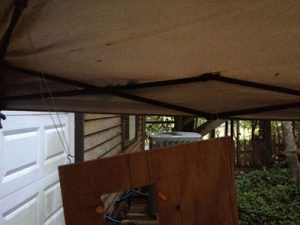
Hanging the plywood under the tent allows me to get to all surfaces for a quick paint job, rain or shine.
Hanging the plywood under the tent allows me to get to all surfaces for a quick paint job, rain or shine.

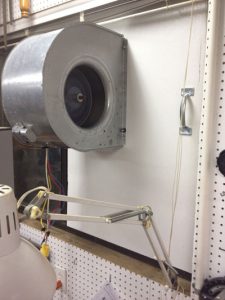
The final product has two big handles and can easily be picked up and inserted into the window opening. It takes 2:04 to install and 1:36 to remove.
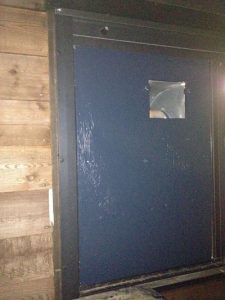
The final product has two big handles and can easily be picked up and inserted into the window opening. It takes 2:04 to install and 1:36 to remove.

Even wired to the highest speed, it won’t create a hurricane, but there is plenty of air movement to evacuate fumes, and I can control where the air moves through the shop by which windows I open. For safety, the exhaust port needs a screen or grille.)

Even wired to the highest speed, it won’t create a hurricane, but there is plenty of air movement to evacuate fumes, and I can control where the air moves through the shop by which windows I open. For safety, the exhaust port needs a screen or grille.)

Word of caution: this fan is not spark-free and is not intended to be used in an environment where fumes might be combustible. Be safe!


Jim Randolph is a veterinarian in Long Beach, Mississippi. His earlier careers as lawn mower, dairy farmer, automobile mechanic, microwave communications electronics instructor and journeyman carpenter all influence his approach to woodworking. His favorite projects are furniture built for his wife, Brenda, and for their children and grandchildren. His and Brenda’s home, nicknamed Sticks-In-The-Mud, is built on pilings (sticks) near the wetlands (mud) on a bayou off Jourdan River. His shop is in the lower level of their home.Questions and comments on woodworking may be written below in the comments section. Questions about pet care should be directed to his blog on pet care, www.MyPetsDoctor.com. We regret that, because of high volume, not all inquiries can be answered personally.
Oct 262016
 

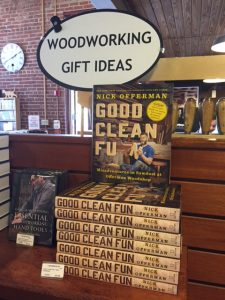
img_4062We were very excited to listen to Popular Woodworking’s Megan Fitzpatrick interviewing Nick Offerman last week. Among the many topics they discussed were Peter Galbert’s mean turkey stew, the similarities between building boats and building acoustic instruments, Nick’s shop in Los Angeles, and of course, his new book: Good Clean Fun, on sale now at Highland Woodworking.


On the topic of why he is a woodworker, Nick said:

I can feel the health coursing through my soul by getting to my bench and saying “Okay, how can I mess up this piece of walnut.”

And Megan is right – his chuckle is absolutely infectious. Well worth a listen.

The original article

Not long after the Popular Woodworking article came out, we were excited to receive an in-person visit from Nick at our store in Atlanta. Like many of our visitors, Nick described visiting Highland Woodworking “like being a kid in a candy store” after he took a tour of the store including our woodworking classroom.

Thank you for making our day with your visit, Nick. And for representing our craft in such an entertaining way.


Oct 252016
 

Generating gifts for others on special occasions and holidays can be a challenge that offers endless opportunities for creativity and imagination while adding a tension of uncertainty that comes from trying to guess what will delight someone else on a specific occasion, particularly if you wish to make it. While I prefer to make gifts rather than purchase them (the Scot in me, perhaps), I also enjoy the process of thinking about what a recipient might like or need and typically hope to add an element of surprise and delight.

Three of the people who are close to me present a particularly significant challenge because when I miss the mark, I can see that my gift is headed for the back shelf, re-gift drawer, or worse – a painful experience that I work hard to avoid. When I hit the mark with these folks, the gifting is particularly rewarding.

One gifting effort that has been successful for me over the years is to make a puzzle or game to give as a gift. Doing this solves both the gifting desire while inviting others to either play the game or in the case of a puzzle to compete or contribute in attempts to solve it. When the recipient unwraps one of these gifts, there is a clear invitation to others to join in and play.

Games as Gifts

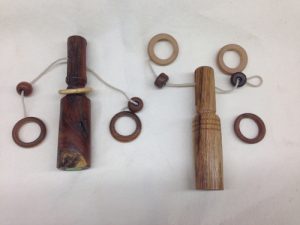
1-puzzleIn October 2015, Highland Woodturner published my directions to make the fascinating Ring ‘n String turned puzzle (Issue #55). This delightful puzzle offers a significant challenge to many people, satisfaction to those who master its easy solution, and an opportunity for the turner to choose design and wood that make it a beautiful piece of artistic display. I will also rate it high as a woodturning skill-builder for the variety of spindle techniques and tools.

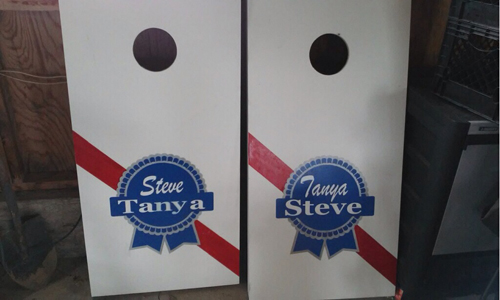
2-cornholegiftAnother favorite gift-game that allows a broader sense of creativity and group fun is “Corn Hole” – popular especially with my sons and grandchildren. The photo at left is of a wedding gift set that my oldest son recently made for his friends Tanya and Steve, and it was well-used at their recent all-day field/tent based wedding reception.

How to build a Cornhole Set

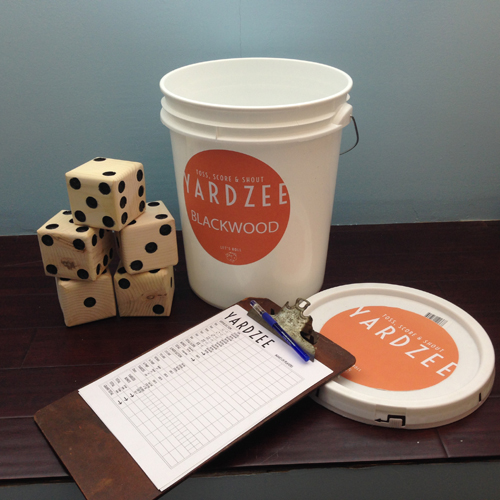
3-yardzeeA similarly enjoyable and party-playable group yard game is “Yardzee,” a large-scale adaptation of the famous Yahtzee, a complex game of five dice that adds an element of strategy, tactics, and scoring similar to card games like poker and canasta.

There are several excellent sources on-line for making a set for Yardzee that include printable templates for setting the dice holes and printing the graphics and scorecards.

Rules for Yahtzee

How to build a Yardzee set

Not everyone is right for a puzzle or game gift, and because I am quite dedicated to woodturning, I have explored a wide variety of gifts over the years that seem to be gifts that people value and keep, my own criteria of success.

More practical gifts

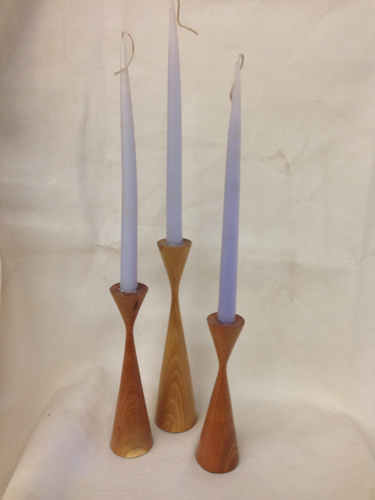
4-candlesticksBlending beauty in color, texture, shape, and form with an utilitarian Osolnik design candlesticks, an admirably beautiful gift, challenges the many woodturners who struggle with the magic skew chisel. In stepped collections of three, five, or seven candlesticks of a naturally beautiful wood like black cherry, walnut, ash, or locust, this gift is a sure winner with every hostess and decorator because of the unique beauty of the wood used, the variety of arrangements that can be created with these as a core element, and the opportunity to match the wood with a limitless assortment of flavors and colors of wax candles.

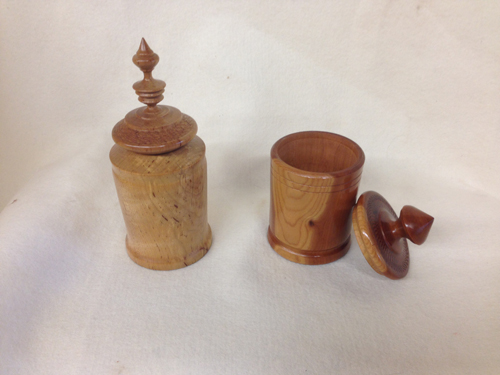
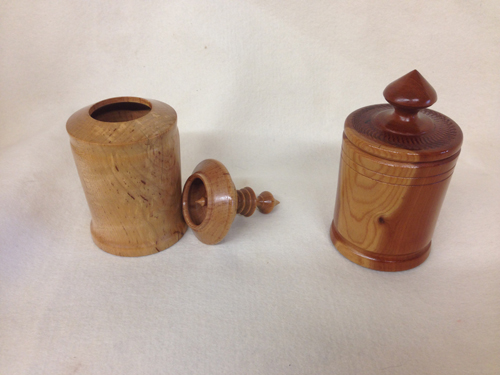
A similarly useful and potentially beautiful gift is a turned lidded box. Over the years, I have turned boxes for people in my life who have a treasured possession to care for, for a beautiful piece of wood/art that they can admire and use for different purposes, and once in a while to contain a letter, symbol, or gift certificate additional gift that was late being completed, too large to put in a box to wrap, and once for a wife’s surprise new-car key!

5-boxes 5-boxes1

The best part of these types of gifts is that they give many times – naturally at the time the gift is made, but also at the giver’s inspiration and personal reward designing, making, polishing, and anticipating the act of giving.

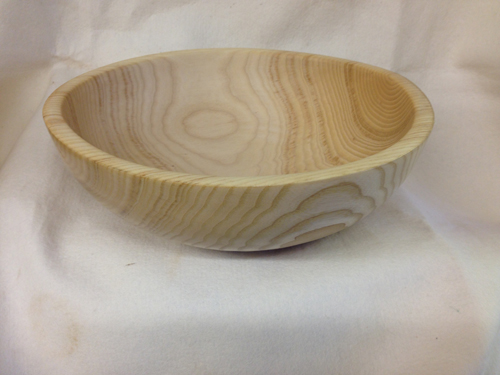
6-bowlAnother rewarding gift, reliable, useful, and potentially lovely is the gift of a hand-turned salad bowl of white ash. Like the earlier gift choices, this gift allows the turner to meditate on the recipient during the design and execution phase, anticipation during the drying and finishing phase, and deep shared pleasure when the gift is delivered and then put to use at a family or community meal.

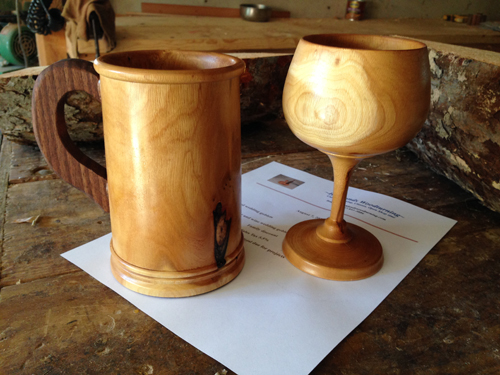
7-gobletandmugLast summer, my middle son asked me to make his friends a wedding present of a beer stein and wine goblet, which I did from some local apple wood I had on hand. This type of gift, like the other useful gifts that bring the warmth of wood to the deeper relationship of people, gives multiple times. While I do not know his friends, I do know he would only ask me to do so for special friends in his life. I was honored that he asked me to join their relationship that way, and perhaps at some point I will meet the newly joined couple. The task (fastening the handle was my challenge) was worthy, and I copied a pewter beer mug given to me by my father on my 21st birthday to make the beer mug look authentic. Somehow that seemed a significant recognition of this couple’s special anniversary day and my part in providing it.

But all of this aside, I believe I am naturally biased toward gift giving (creation) above gift receiving. In this blog last December, I shared my most treasured gift, the “gift of time” in a blog entry called “Resolutions” which I will invite you to read and reflect upon.

That gift succeeded with unexpected benefits and partners. I do, in fact, know what to gift more specifically this year as a follow-up and have already begun my preparations.

Oct 242016
 

The Holidays are upon us and I think many wood workers are looking for things to make as gifts. One thing I like to make and which can be done quickly and easily is a wooden pen.

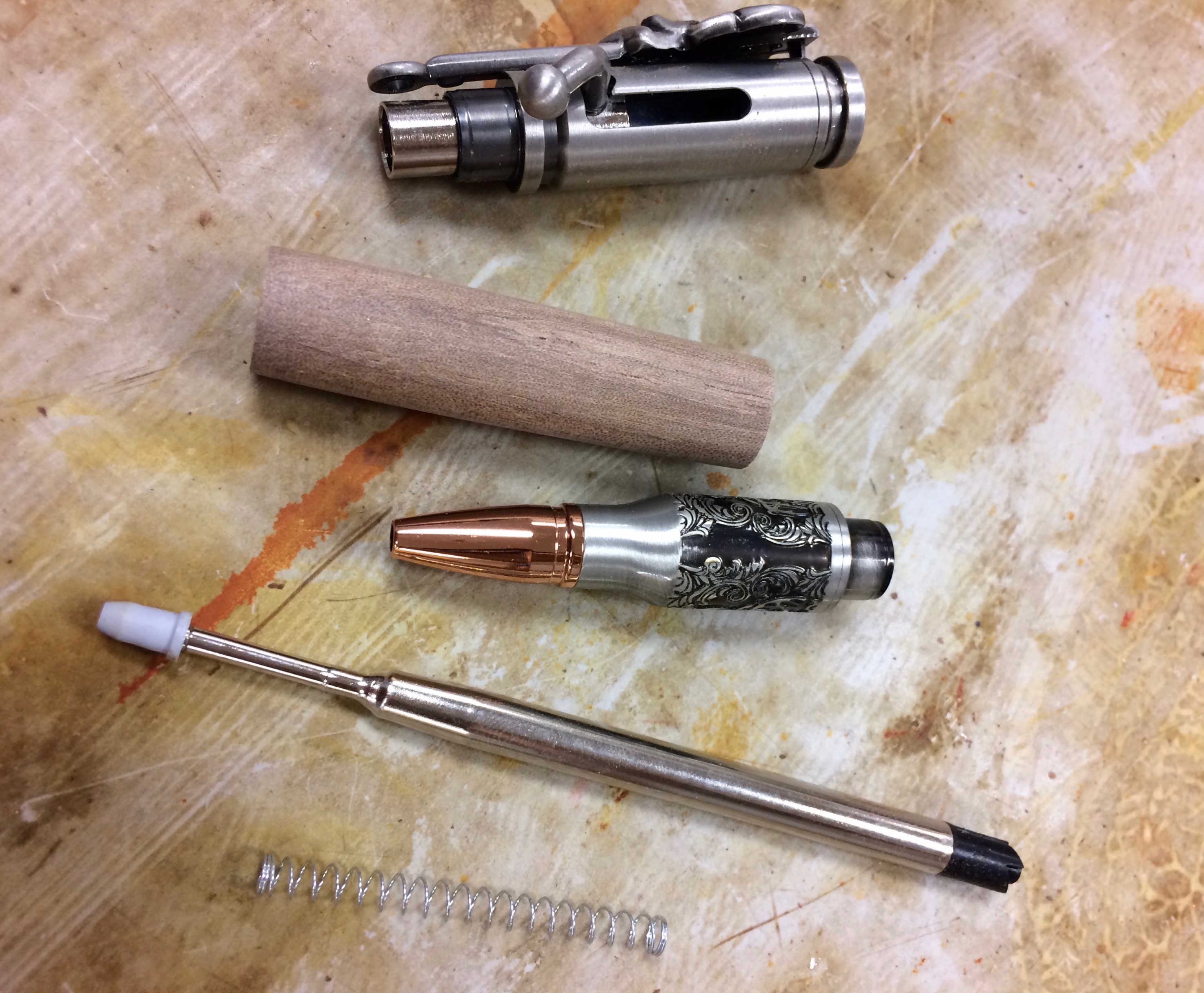
All the Pieces

All the Pieces

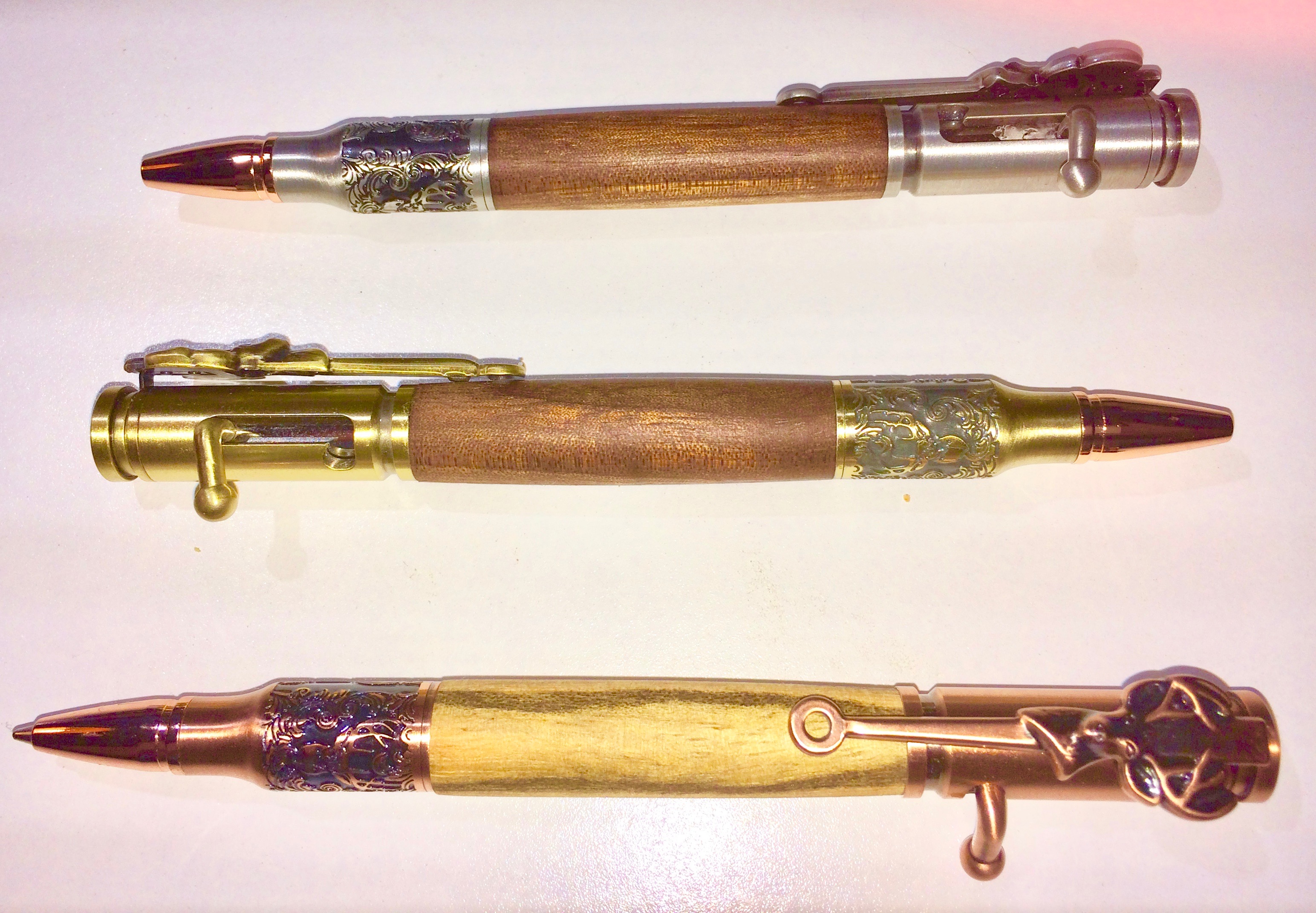
My favorite this year is the “bolt action” pen.  As you might infer from the name,  the point is extended by a small sliding rifle type bolt near the clip of the pen. The bolt handle locks the pen point in place while you write and then snaps back to hide the point. It is remarkable in its action and appearance.

Wooden pen blanks are easily available for a few dollars for a five inch piece, enough for two pens, or you can use any scraps lying around the shop.  Pen kits can be had for under ten bucks and with a few specialized tools, making a pen is quick and easy. If I focus on what I am doing I can make a pen in about 30 minutes, start to finish.

Pens make a nice gift. You can add a wooden case for a few dollars, and for the bolt action pen, there is even a small gun case available. Typically, wooden pens sell for upwards of $30 and I have a friend who bought a bolt action for a Christmas present last year and paid over $50 for it.

You are going to need a lathe of course, and a couple of other special tools, but not too many things.  Pens are quick and easy and make nice gifts.  Give them a try.

Finished Pens

Finished Pens

Want more information on pen turning? Check out this penturning article and a video on how to turn a pen.


Terry Chapman is a Professional Engineer (Civil) and Land Surveyor who lives south of Atlanta. He has done woodworking for many years and particularly enjoys bowl turning and making Windsor Chairs. He currently works as Site Development Manager for a local affiliate of Habitat for Humanity and has one son who pastors a Church in Connecticut. You can email him at cdeinc@mindspring.com.

Oct 202016
 

Christmas gifts can cause a fair level of uncertainty, possibly even leaning towards angst, on the part of the giver. Are we sure whatever it is that we are looking at is something that will really  “fit” the intended recipient? Someone on a list out there (family/friends/significant others) might even fall into the category of “extremely difficult to buy for”. So what to do?

(**Spoiler alert for family members reading beyond this point in the article before Christmas!)

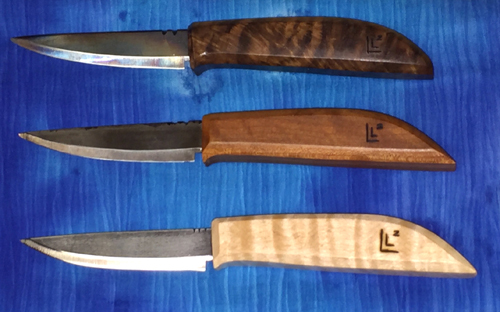
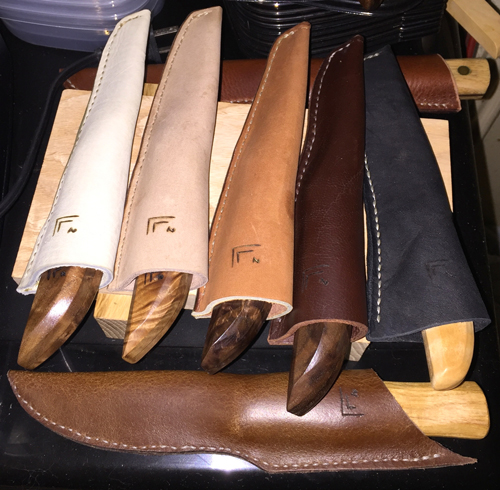
We decided earlier in the year that we would make gifts for everyone on our list this Christmas, some of which will blend woodworking, leatherworking as well as metalworking. I’ve been honing my knife making skills (some may have seen a few of these on my Instagram  account @LeeLairdWoodworking, or my personal blog) which is tying together woodworking and metalworking, and since a knife needs a protective sheath, the leatherworking. I created a pattern for both blade and handle that was pleasing to my eyes and felt good in the hands, and started each knife with just a blank of wood and a rectangular piece of metal.

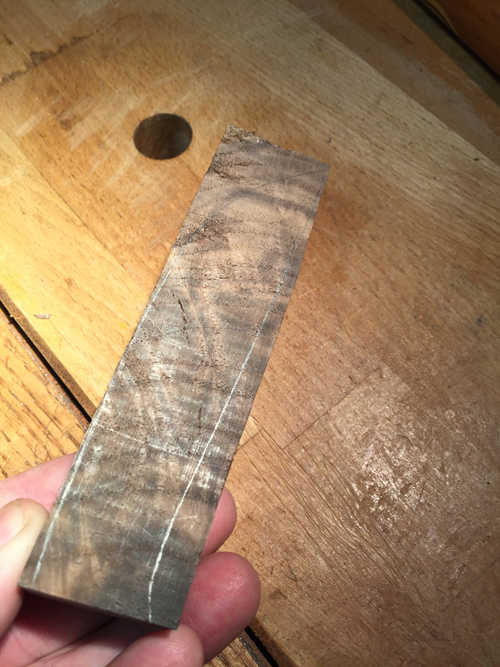
1-handle-blank-w-only-outline

A blank of Claro Walnut, with the outline from my handle pattern, drawn on to show the intended grain orientation I wanted.

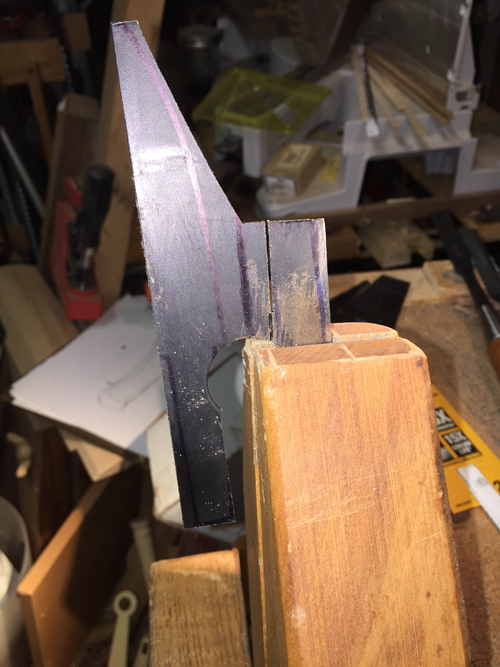
2-initial-cutting-of-blade

Here I am cutting the knife blade out and used a hacksaw to make the major cuts.

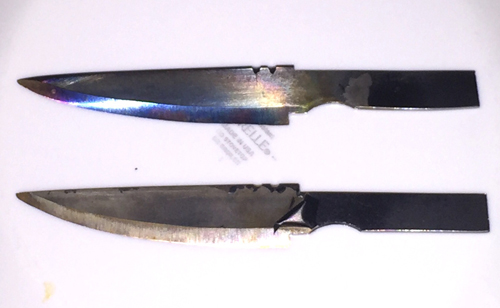
3-blades-treated-sans-handle

Two blades after heat treating.

4-curly-maple-w-cherry-n-walnut

Three knives, in Cherry, Curly Maple and Claro Walnut.

5-knives-in-leather

Knives in their leather sheaths.

Most of the work I performed with these different mediums was with hand tools, other than using my powered grinder for the initial bevels on the blades. As you might imagine, there is a fair amount of time and sweat involved in working these materials from the rough blanks to the finished and functional knives. Perhaps some of this time and effort will show through to each recipient, increasing the perceived value or just making it that much more special.

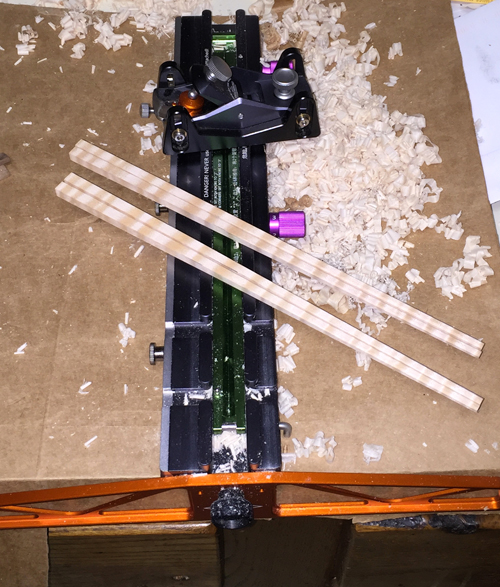
My wife is also making Christmas gifts this year, and they are a blend of media as well. She created chopsticks for her recipients, choosing and working with different types of woods, as well as making embroidered carry pouches. I got her a Bridge City Chopstick Master last Christmas (by her request) and this helps facilitate the process, but don’t think for a moment that you won’t need to apply your effort and sweat to have a great set of chopsticks!

6-chopsticks-on-chopstick-master

Two sets of finished chopsticks on top of the Chopstick Master, with the included hand plane towards the back.

We’ve imbued lots of work and love into our gifts. I hope everyone has a wonderful and safe Christmas!


Lee Laird has enjoyed woodworking for over 30 years. He is retired from the U.S.P.S. and worked for Lie-Nielsen Toolworks as a show staff member, demonstrating tools and training customers. You can email him at LeeLairdWoodworking@gmail.com or follow him on Twitter at twitter.com/LeeLairdWW

Oct 192016
 

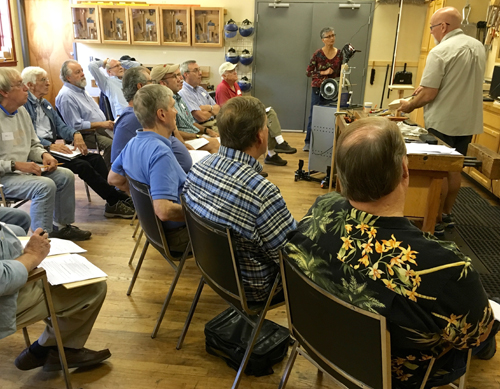
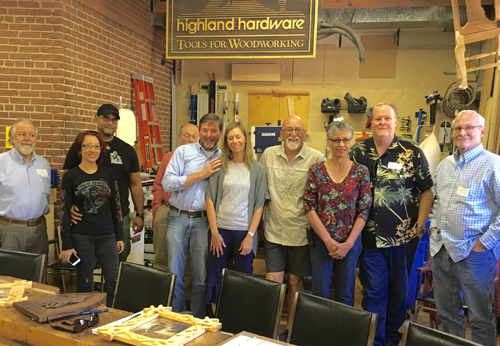
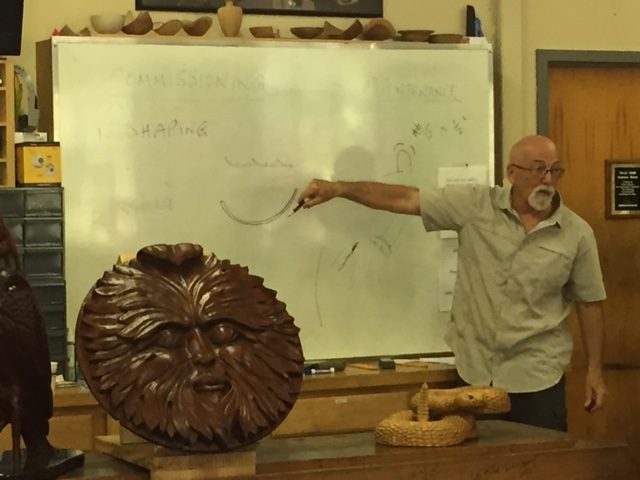
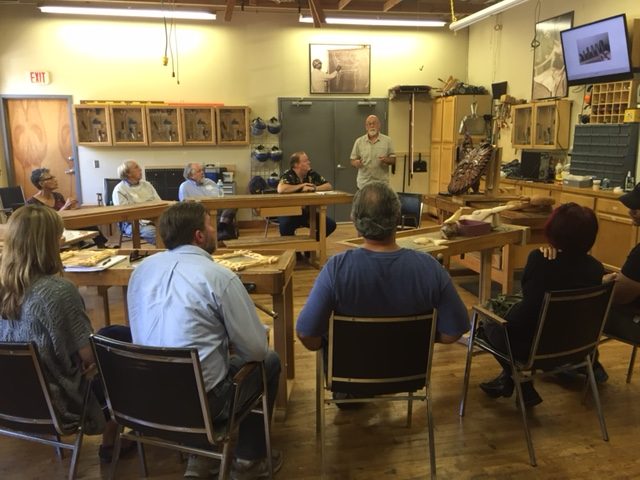
We were honored to have a visit from renowned carver Chris Pye a few weeks ago. Chris taught a 3-hour sharpening seminar in the morning to a roomful of enthusiastic carvers, and the demonstration was filled with entertaining anecdotes and carving references. We were very impressed with Chris’s ability to make good fun out of a sharpening demo.

img_0806

img_0803

14711252_10154214157364024_732273404629833545_o

14681948_10154214157339024_6123130643066807931_o

14543699_10154214157154024_4982696083523001649_o

In the afternoon, Chris opened up the classroom and welcomed all carvers to come in to discuss all things woodcarving in an open house forum. Attendees were urged to bring in their own work to show off or ask technique questions, and a wonderful afternoon was had by all.

img_0843

img_4002

img_4004

Thank you to Chris and Carrie Pye for making the journey to Highland – sharing talent like yours to our woodworking community is a very special opportunity for us and we always appreciate it.

Keep an eye out for our in-depth interview with Chris Pye, coming to this blog very soon!

In the meantime, you can learn more about Chris Pye and even sign up for online carving lessons at his website: www.chrispye-woodcarving.com

Oct 182016
 

Benchcrafted is well-known for their exceptional vise hardware. In this video, Matt Cremona offers a tour of the Glide Leg Vise and the Tail Vise, showing off this extremely well machined hardware: how to install it and how smoothly it operates. Check out all the work holding capabilities with his bench and why these vises are superb.

Find more information and buy yours from Highland Woodworking:
Benchcrafted Leg Vise
Benchcrafted Tail Vise