Highland Staff

Dec 032010
 

Ever since I overheard my Dad say he was going to cut down the old Magnolia tree by our house, I was excited as only a small boy can be. The thought of my father swinging his giant double blade axe, chips flying, and that giant tree crashing to the ground while I yelled “timber” at the top of my lungs, filled my daydreams.

Saturday finally came, and my Dad led me to the tool shed where he put a new sharp edge on both sides of the axe. Then we walked out to the tree, but rather than starting to chop, he sat with his back to the trunk in the long morning shade and patted the ground next to him and said “Sit.”

“When are you going to cut it down, Dad?”

“Oh, maybe in a little bit. You know, I’ve seen you climbing this old tree before. Aren’t you going to miss it?”

“There’s lots of other trees I can climb.”

“Yeah… but none just like this one. You know, son, I’ll bet this old tree is close to a hundred years old.”

“You think so, Dad?”

“I suspect so. You know, if it’s a hundred years old, it was here during the Civil War. It was here at the turn of the century. It would have been here before your Granddaddy was born.” He paused to let that information sink in then continued, “You know, if we left it alone it might live another hundred years.”

Even at six years old, I was starting to have second thoughts. “You think we should leave it?”

“Well, son, you know its roots have been growing into our sewer line. I’ve been paying a plumber to come out here every six months or so to clean out the pipe. I can’t afford it anymore. It’s kind of come down to me or the tree.”

“Yeah, I guess so.”

“But, I’ve been giving this a lot of thought. Much as I hate to cut it down, we won’t let any of it go to waste. We’ll cut some nice lumber out of it, maybe make something pretty for your Mom. We’ll use some of it for firewood, too. But I’m not sure that’s enough.”

“What do you mean, Dad?”

“It just seems to me that if we cut this tree down, we ought to plant another tree someplace to replace it.”

“Hey, that seems like a great idea!”

“You think so? Then that’s what we will do. This old tree will be sacrificed, but we’ll put it to good use, and we’ll plant another tree to make up for it.”

It was quiet for a few minutes. I guess we were both lost in thought, but I remember asking, “So how old do you really think it is?”

For two hours, we talked. He explained how we would soon know exactly how old the tree was, by counting the growth rings. We talked about the Civil War, the invention of the cotton gin, penicillin, the Great Depression, and more. My Dad spun stories about cowboys tying their horses to the tree and young boys carving their initials in its bark. He wondered whether or not he might cut into an old fence wire that was nailed to the tree in some distant farm past, and whether or not the wood would smell as sweet as the Magnolia blossoms.

Finally, my Dad said, “Son, I think it’s time. You still think we should cut it down?”

Hesitantly I said, “Daddy, we can’t afford the plumber, remember?”

True to his word, a couple of weeks later my father came home from work with not just one, but a dozen, sapling trees in the back of his truck. We dug holes, planted, and watered the trees. I climbed other trees, had other exciting adventures, and forgot all about the big Magnolia. But a few years ago, I had a chance to go back to my childhood house. Those trees we planted are fifty years old now, and probably as big as the big Magnolia was in its day. Those trees are beautiful, the blossoms are sweet, and I’m sure some young boy has climbed them all.

It was, it turns out, my father’s trademark… and his legacy. Not just to leave every place a little better than he found it, but also to leave a young boy with a lasting memory and a lifetime appreciation for history, nature, trees, wood, and the things we make from wood… to sometimes take what we need, but to always give back, with interest… to slow down sometimes… to talk, to listen, and to think. I hope, that among many other things, you were thankful this Thanksgiving for whatever, or whoever, got you started in woodworking. I know I was. Thanks Dad!

This story is excerpted from The Down to Earth Woodworking column, published monthly in Wood News. Click here to read this month’s entire column.
Nov 292010
 

Wow, I have had a busy week between chair making and Thanksgiving.

Early in the week I went for a visit with the people who make the chair kit.  Their building is about three miles from my shop and I wanted to meet with them to gather any information I could about the shape of the chair.  They gave me a prototype of an accessory kit of plywood patterns, plus some new finishing materials.  We had a long talk about a concept I am just beginning to grasp.  It is this — there is a core of essential construction at the center of this kit and after that, it is up to you.  You can call it artistic license, you can call it sculpting, you can call it imitation, you can call it sanding and smoothing, you can call it Ralph Kramden, but once you get the chair together, then you are free!  You can shape it any way you want and chances are it will be lovely.  Well, pretty good chances, anyway.

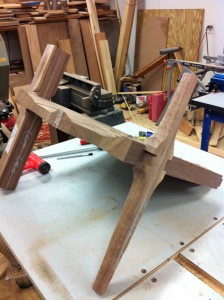
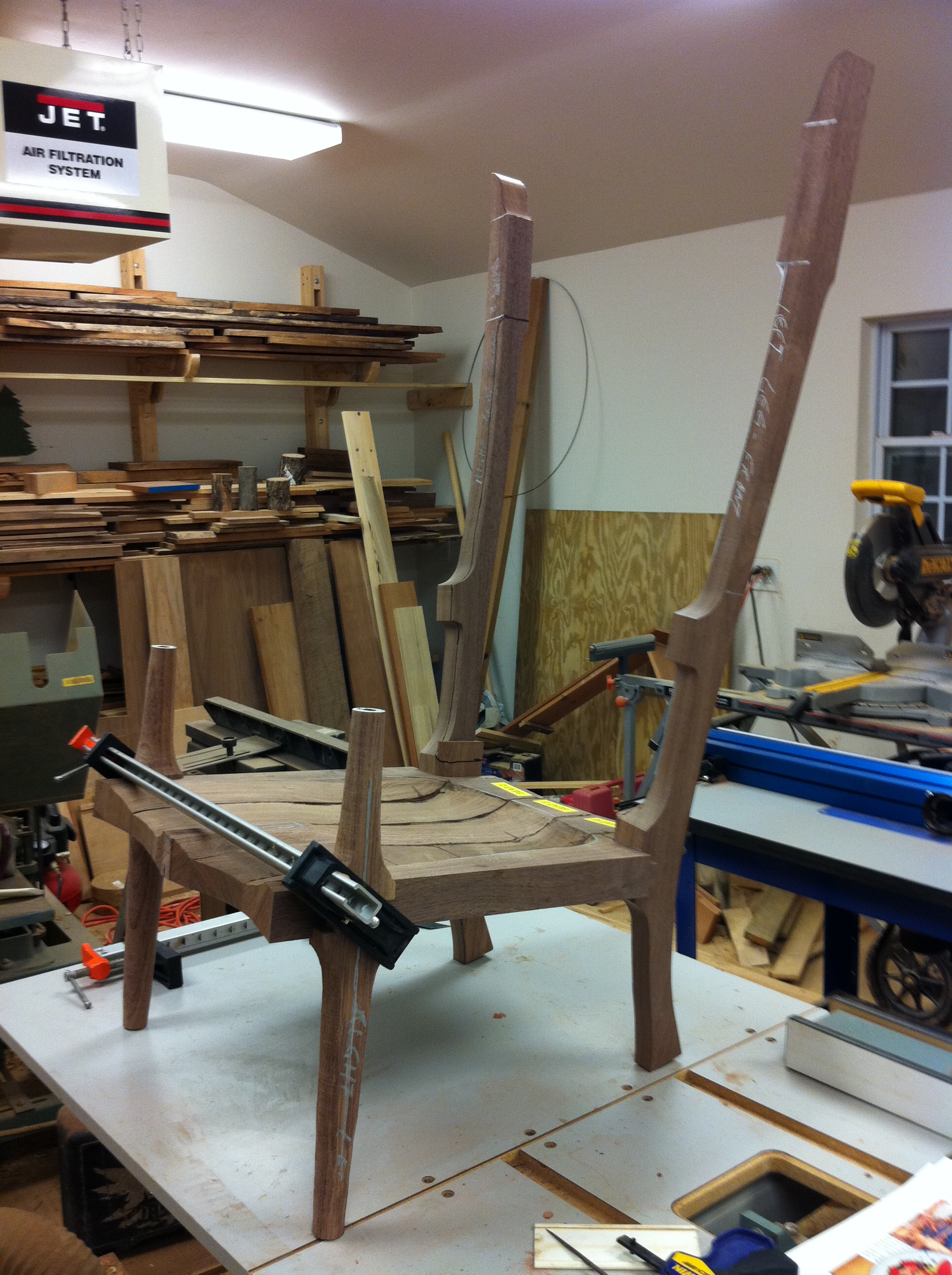
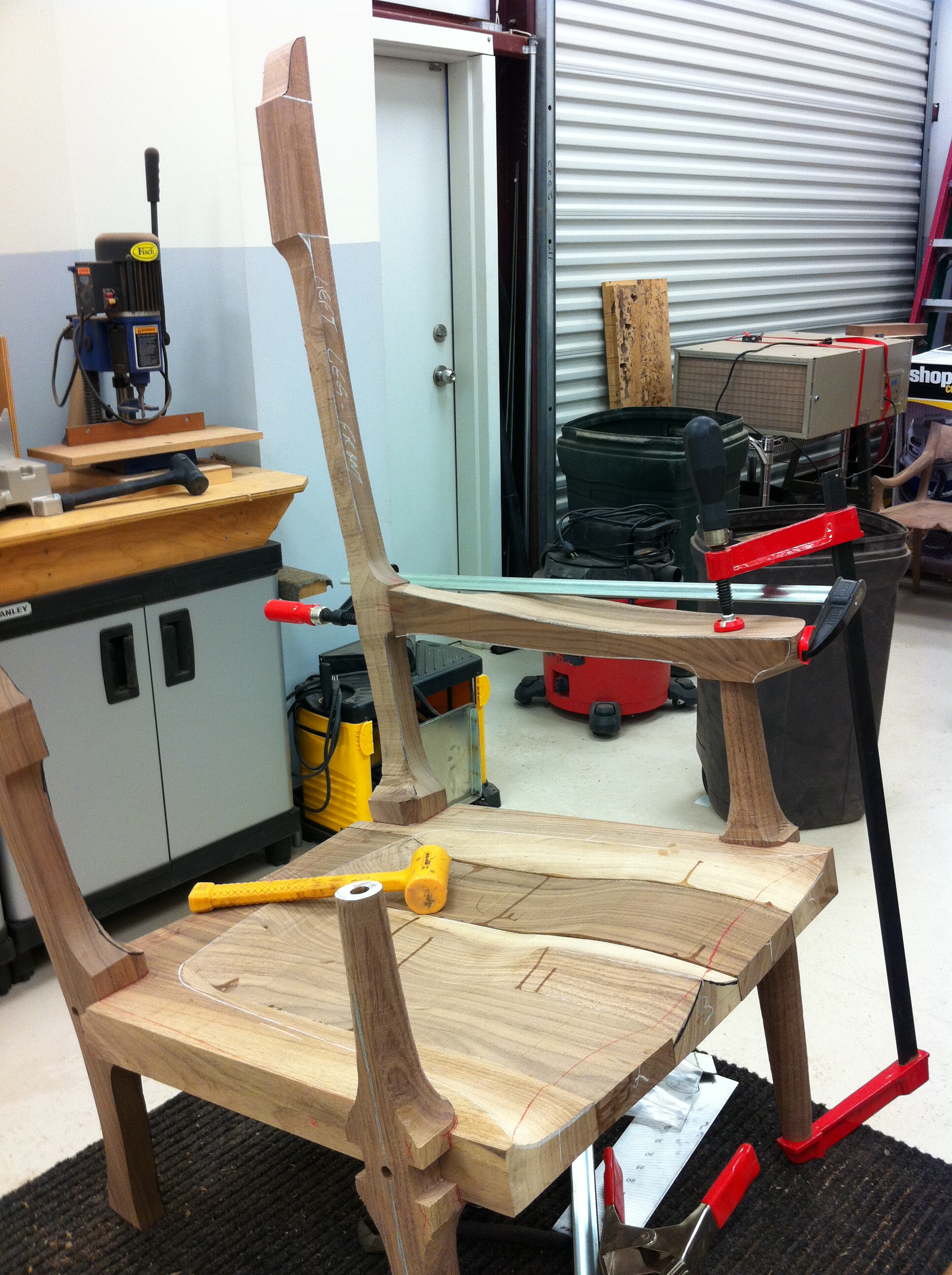
All Four Legs Mounted

Then last Saturday Charles (Chuck) Brock invited me to his studio to get my hands on an actual chair.  Since I had never actually seen a finished chair, I was anxious to touch one and get a feel for the shape of the completed product.  The word of concern I hear most often is “clunky”.  I can’t tell you exactly what clunky means, but I know what clunky looks like when I see it, and I don’t want people to think clunky when they see my chair.

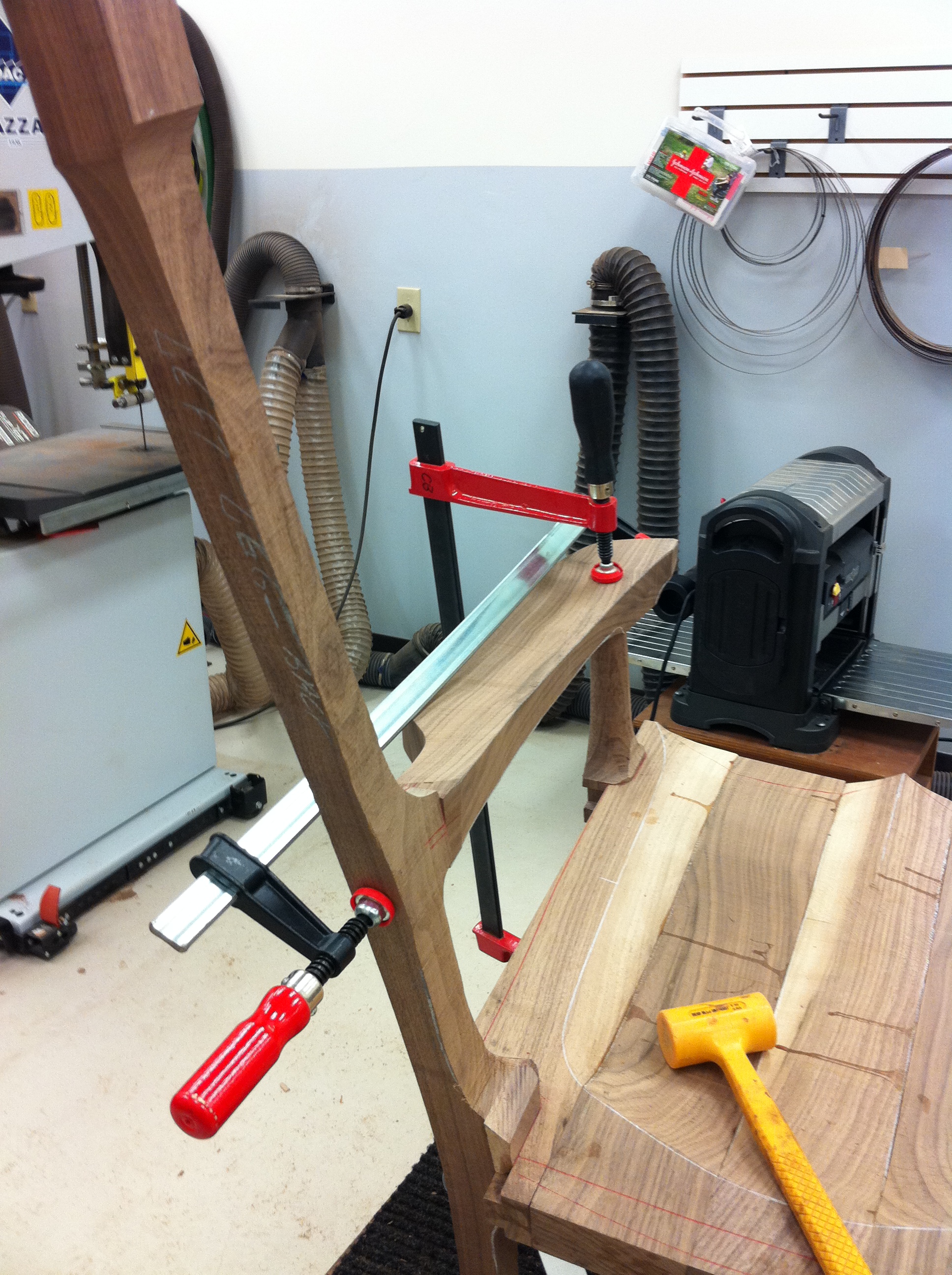
Left Arm in Place. Looks Like a Chair

Chuck asked me to bring my chair with me since he is making a new video of the finishing and shaping process.  My next step was drilling and screwing the legs on, but I had hesitated since drilling that beautiful wood is a serious matter.  We spent some time getting the legs and one of the arms attached and getting the headrest properly fitted – nothing really difficult, but exacting.  When we finished, I watched as Chuck and his crew started filming the shaping and carving of one of the arms of the chair.  (That’s me coughing in the background from the dust.  Maybe they can cut that out.)   The video will soon be complete and will be helpful as you make your own chair.

CLICK HERE to advance to Terry’s next post on building the rocker kit.

Total time so far:
14 hours plus 10 hour visit with Chuck last week.

Tools so far:  Angle Grinder $50

Dowel-It Jig  $55

Miller Drill Bit $19

Dowel Centers $3

Nov 232010
 

With the long weekend coming up, we thought it might be a good idea to reprint this section of The Down to Earth Woodworker – might be a good excuse to spend a little time in your shop, even with all the family visiting! And who knows, maybe while you are taking inventory, you’ll discover all the tools you still need, and can add them to your wishlist just in time for holiday shopping!

Time to Take a Workshop Inventory

Killjoy, buzz-kill, party-pooper? Me? Never! But I am a pragmatist. We all need to occasionally contemplate the unthinkable, if for no other reason to be prepared. “What would happen if my shop burned to the ground, was burglarized, or flooded?”

Put that chilling thought aside and conduct this simple experiment now. Go into your shop, pick one cabinet or drawer, and without opening it, make a list of everything in it. Try to remember everything. Done? Now compare the list to what is actually in the cabinet or drawer. How close did you get? Did you miss anything?

In the event of a catastrophic loss, would you be able to list everything in your shop for insurance purposes? I know I couldn’t. I tried the experiment above and missed almost half the stuff in one drawer!

Most homeowner’s insurance policies provide for replacement of articles at “actual cash value” (ACV) or “replacement cost.” But if you are unable to identify all items and provide substantiation for the value of each, you may not be reimbursed fairly or accurately. Documenting your workshop inventory does not have to be an overwhelming or unsavory task. Here’s how to make it easy…

Take a Workshop Inventory

First, if you are not already practicing “5S” to keep your shop neat, clean, organized, and safe, re-read the article 5S Your Workshop. Once your shop is organized and you have shed the tools and supplies you never use, creating an inventory list will be easier.

Rename and label photos.
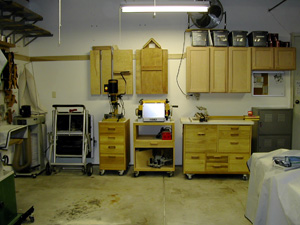
This one is "North Wall.jpg"


Use a digital camera and take a minimum of four pictures from the center of the space. If you cannot capture the whole shop in four pictures, take more. The idea is to create a virtual 360-degree panorama of the space.

Make the names descriptive.
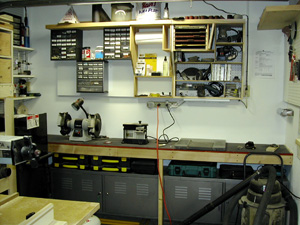
This one is "West Wall Alcove.jpg"

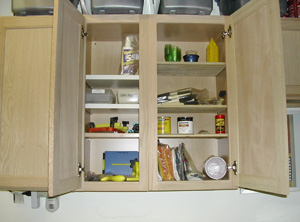
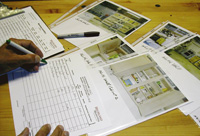
Before going any further, transfer the pictures to your computer and/or print them (best to do both), and name/label them, for example: North Wall, West Wall, West Wall Alcove, etc. With pictures in hand, go back to the shop and start with one photo/view. Are there cabinets, drawers, or other concealed spaces? Zoom in and take more pictures, capturing details. Open drawers and cabinets and photograph what is inside. “NW Cab 2” would be a good label for the North Wall photo, second cabinet from the left.

Take detail photos of the insides of cabinets. Name them so they tie to the main pictures, like "NW Cab 2.jpg"

Continue this process until you have created a complete photo “album” of your shop. Work methodically, transferring a few pictures at a time to your computer, printing as you go. Just remember, if you spread this task over a few days and stop in the meantime to build a cat house or a cabinet, make sure you put everything back where it was when you started — you do not want to duplicate, or worse, miss an important or expensive tool when you resume your inventory.

When all the photographs are done, fill in an inventory form. Your insurance company may provide one (check their web site), you can create your own in Excel, or just download the free form we have provided (click here to download). However you choose to proceed, make sure to include at minimum the information we have provided for on our form.

Be sure to match each item’s location to the photographic record (the downloadable form includes additional hints and instructions). If you cannot remember the purchase date of an item, estimate. If you cannot remember where you acquired a tool, find a current seller. If the exact item is no longer available, find as close a match as possible. Fill in the actual or estimated cost to replace. Attach receipts wherever possible.

If you have built anything in your shop (jigs, cabinets, shooting boards, benches, etc.) indicate “self” as the source under “Where Acquired” and enter a number in the box labeled “sub-schedule.” Using the sub-schedule form, calculate the cost to replace the item. The form will guide you, but don’t forget things like hardware, finish, and especially your own labor when calculating the cost of an item. Be accurate. No insurance company will believe that your three-board bench hook is worth a thousand dollars just because you are such a talented woodworker!

Use the other sub-schedule form provided to list the contents of cabinets, drawers, or other “hidden” areas. Organize your inventory into a file or a binder. Transparent sheet protectors are useful for storing the inventory forms, receipts, and other documentation.

Soon you will have a record that will save you time and money should a catastrophe ever occur. Remember to store a copy of your shop inventory list somewhere off-site (a safe deposit box, a fire-resistant safe, your daughter’s house — anywhere besides in the shop!). Keep your inventory up to date. Each new addition to your shop will only take a minute to photograph and add to the inventory list. While you are at it, call your insurance agent and do a little “check-up” on your policy. Make sure you have adequate coverage for your growing tool collection. Now, go build something! Peace of mind is priceless!

Nov 192010
 

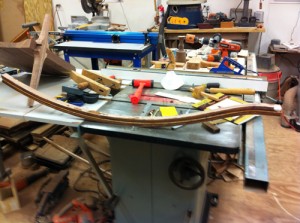
Rocker Strips and Rocker Glue Form

I am so linear — it is my training and background as an engineer.  Duh!!  It finally occurred to me yesterday that I don’t have to do everything in exactly the order that Charles Brock does it on the DVD.  It was such a relief finally to realize that I could actually make the gluing form for the rockers before I was ready to shape the front legs.

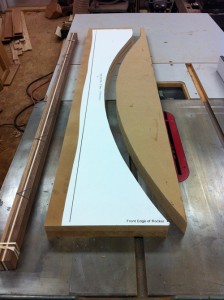
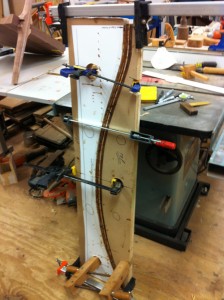
I made the form from a double layer of three quarter inch MDF using the outline included in the plan sheets.  I glued the rocker strips together with very little trouble and left them overnight and the rocker turned out really well.  I took it out of the form this afternoon and it looks just like it is supposed to look.

Left Leg Shaped

I have gotten the left front leg pretty much in shape.  I cut it to the pattern using my bandsaw and then put it on the lathe and rounded it off and drilled a hole in each end according to the instructions.  I think it looks good, but I did hit the first minor snag with the kit.  The legs are supposed to be a full two inches thick but they are actually less than 1 7/8 inches.  When I measured for the center turning point on the end of the leg, the book says to come in 7/8 from the outside.  It didn’t look right so I went back and looked at the DVD again, and in there the center point is measured from the inside.  I did not have enough room to make it add up so I adjusted to the outside and moved ahead.  I will make sure the other leg matches the first.  I think it looks good and I will take a hint from Charles, chalk it up to artistic license, and make the chair my own.

Rocker Strips in Glue Form

Glued Up Rocker (In foreground)

I stuck all the legs onto the seat this morning just to get the scale of it.  This chair is big!  Looking forward to continuing on the other front leg, gluing up the other rocker and moving to the rear legs.  We may see the legs attached next week!

Total time so far:
9.5 hours

Click here to read about Terry’s next step in building the Maloof Inspired Rocker.

Nov 182010
 

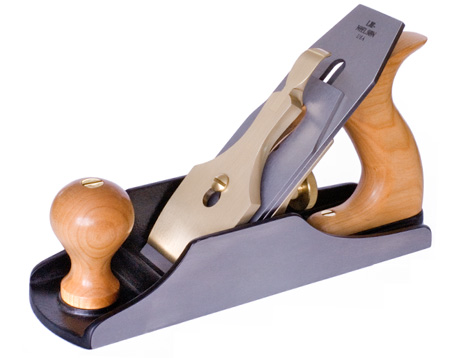
I know that many woodworkers, both those new to the craft and even some who have been around for a while, might like to have some subtle instruction to improve their results when using a smoothing plane.

Anyone who has visited the Lie Nielsen booth at a woodworking show has likely both heard us describe the necessity of a sharp blade as well as watched as we demonstrate a very simple sharpening technique.  I won’t go into this technique here, but for those that would like more information, you may watch our video on plane sharpening below:

After setting up the sharp blade, many would think the remaining aspects of plane use would be without issue.  From my experience, this is not always the case.  Through time spent demonstrating and talking with other woodworkers, certain issues are common and recurring, so perhaps I can provide assistance.  At many shows, I’ll set up a plane to take a shaving that is somewhere between 1 and 2 thousands of an inch, in order to demonstrate just how sharp the blade is.  After I take some shavings, I’ll hand the tool to one of the attendees and let them see how it feels to use a sharp tool. What I’ve noticed is they often push the plane across the same board and the blade barely touches the wood, if at all.  This tempts them to adjust the blade so that it is protruding further than necessary.

The reason this is happening is the subtle pressure difference between what I was applying in a downward fashion, and the lack of pressure applied to the plane by the attendee.  I will actually utilize this pressure control when planing a board or panel.  I find I can set the blade for a relatively light cut and adjust to either a slightly thicker shaving or a lighter shaving simply by adjusting the pressure I apply to the plane.  The lightest shaving is obtained with the majority of the force applied across the board as if I’m making the plane just slide on top of the board.  To take a slightly thicker bite, the pressure is about half way between the light shaving and full force downward. You could think about this as if you were drawing a line starting from the edge of the board and going down and away at a 45 degree angle.  This is the direction I envision applying the force for the thicker shaving, as if I were following the line down the line at 45 degrees.

One other issue relating to setting up the plane’s blade.  If you can see the blade, when sighting down the sole, there is a good chance the blade is not sharp enough (a sharp edge is the intersection of two surfaces at a point, which will reflect no light) or will be very difficult to use, as it will take a very thick shaving. When we set up the smoothing plane’s blade at our shows, we are normally setting it for a very light shaving, using a small piece of wood to engage the blade.  It’s surprising how little blade is actually protruding when the blade is set.  Most of the people I’ve dealt with at our shows can not even see the blade, including myself, when sighting down the sole.

I hope this helps increase your enjoyment when using a smoothing plane.

Highland Woodworking’s full selection of Lie-Nielsen hand tools.


Lee Laird has enjoyed woodworking for over 20 years. He is retired from the U.S.P.S. and works for Lie-Nielsen Toolworks as a show staff member, demonstrating tools and training customers.

Nov 162010
 

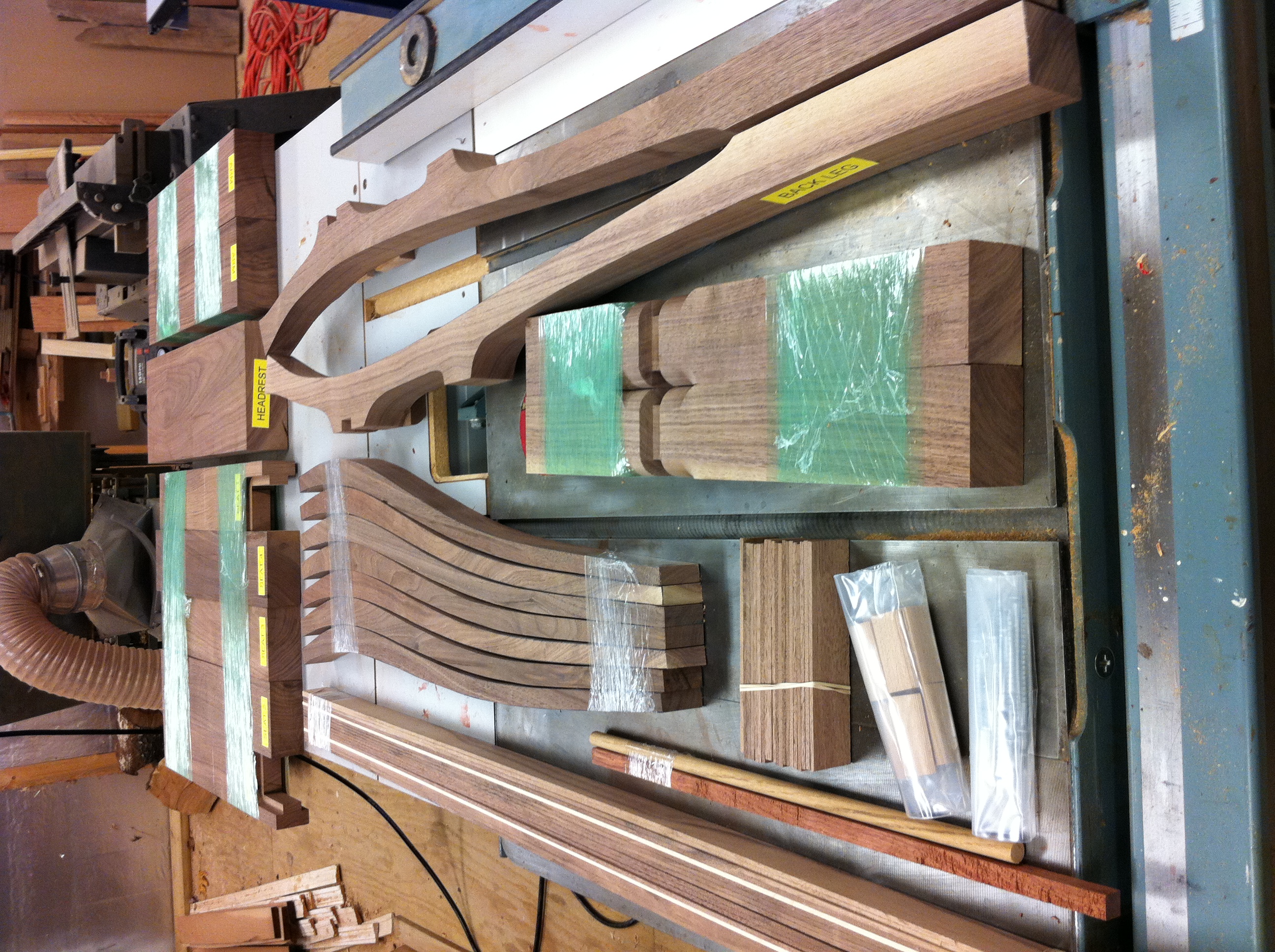
All the Pieces

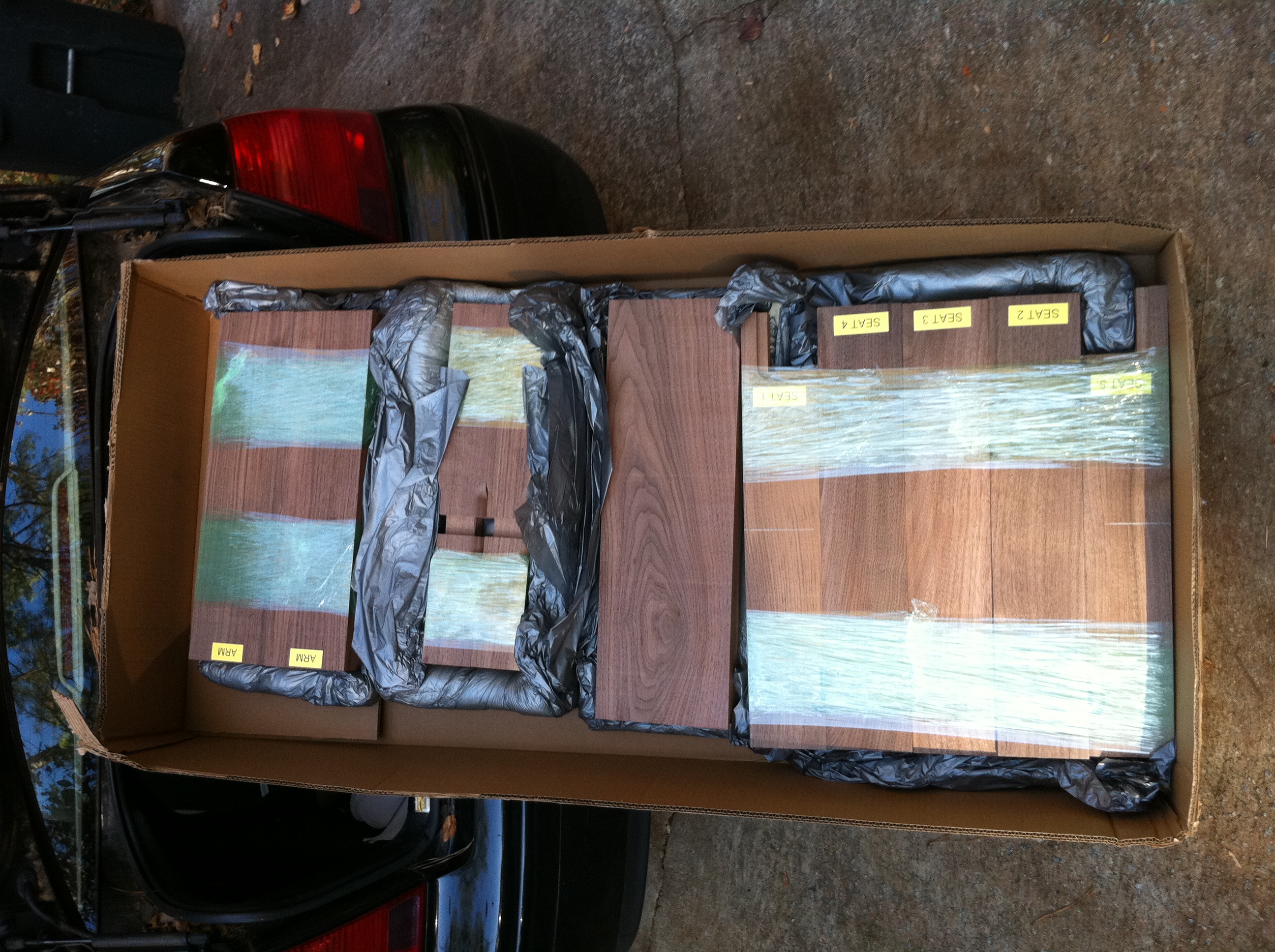
Original Packing Box

Working on Charles Brock’s Maloof-inspired walnut rocking chair kit from Highland Woodworking. Since I picked it up from the store last week, I got it home and started pulling the pieces out of the package. We had to stuff it into my small car and when I got home, it was too heavy (shipping weight is about 70 pounds) and awkward to get out by myself. I opened it up and took it out one piece at a time. It took me a while because I spent a lot of time admiring the wood. Seldom do most woodworkers get a chance to see walnut this thick and pretty. It is beautiful!

The kit comes in a box with fitted foam sections to protect the wood. The wood is packed in two layers and some groups are shrink-wrapped together and labeled to match the instructions. I picked up a set of instructions including a book and the DVD Charles Brock has put together. Over the weekend, I read the book and watched the video a couple of times to get a feel for the whole process. There is also a smaller set of instructions packaged with the wood that is specific to the kit –sort of a subset of the DVD instructions. I found after I watched the video and got ready to start on the kit that the things, which initially looked the most difficult in the video, were already done. The tenons on the seat rear and shaping of the legs, front and rear, for example, are completed.

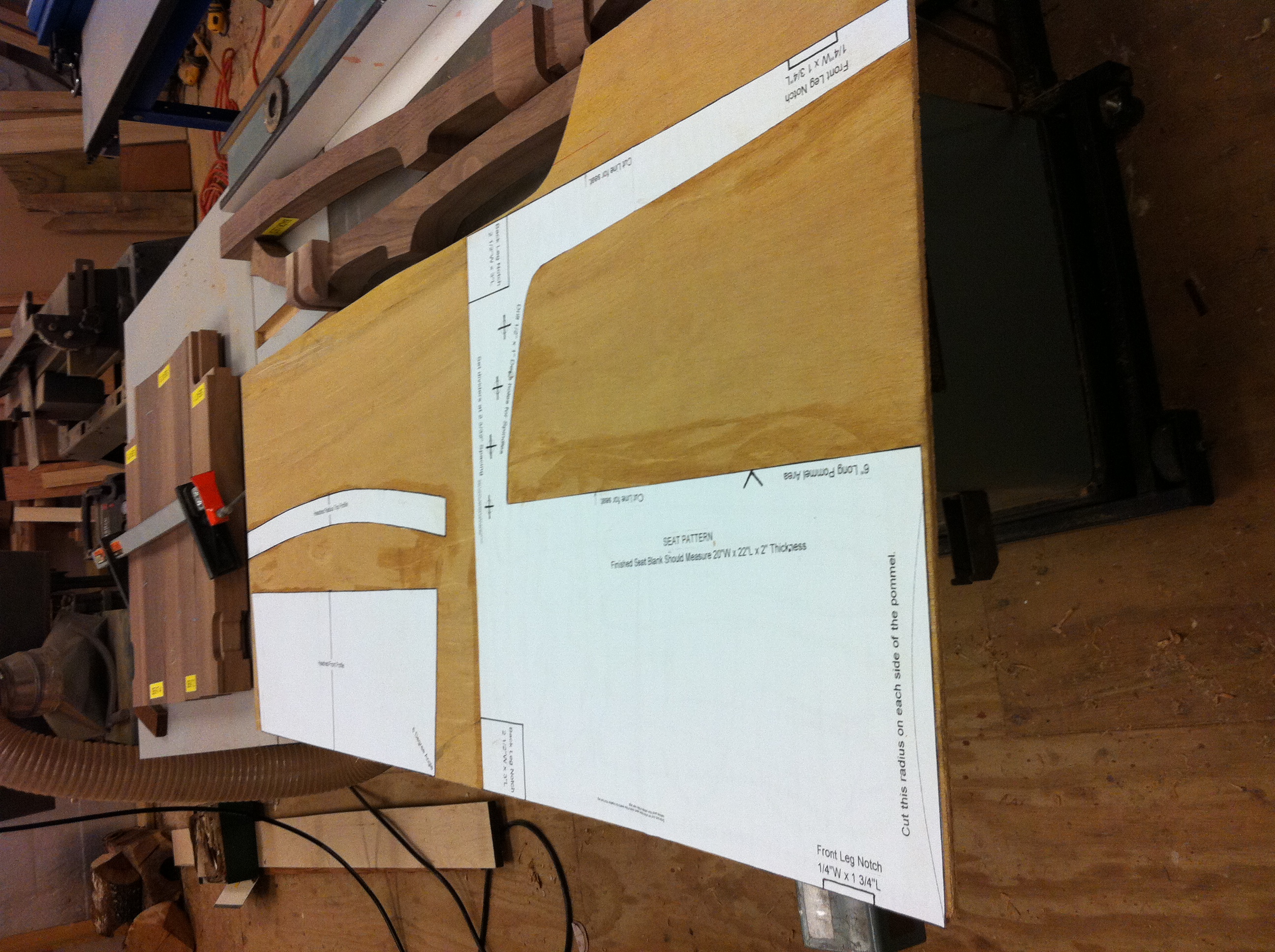
Patterns on Plywood

I started with the seat as instructed. I first cut out the patterns from the plan sheets, glued them to some eighth inch ply, and used them to mark the seat. I could not help being a little apprehensive when I started sawing that beautiful walnut.

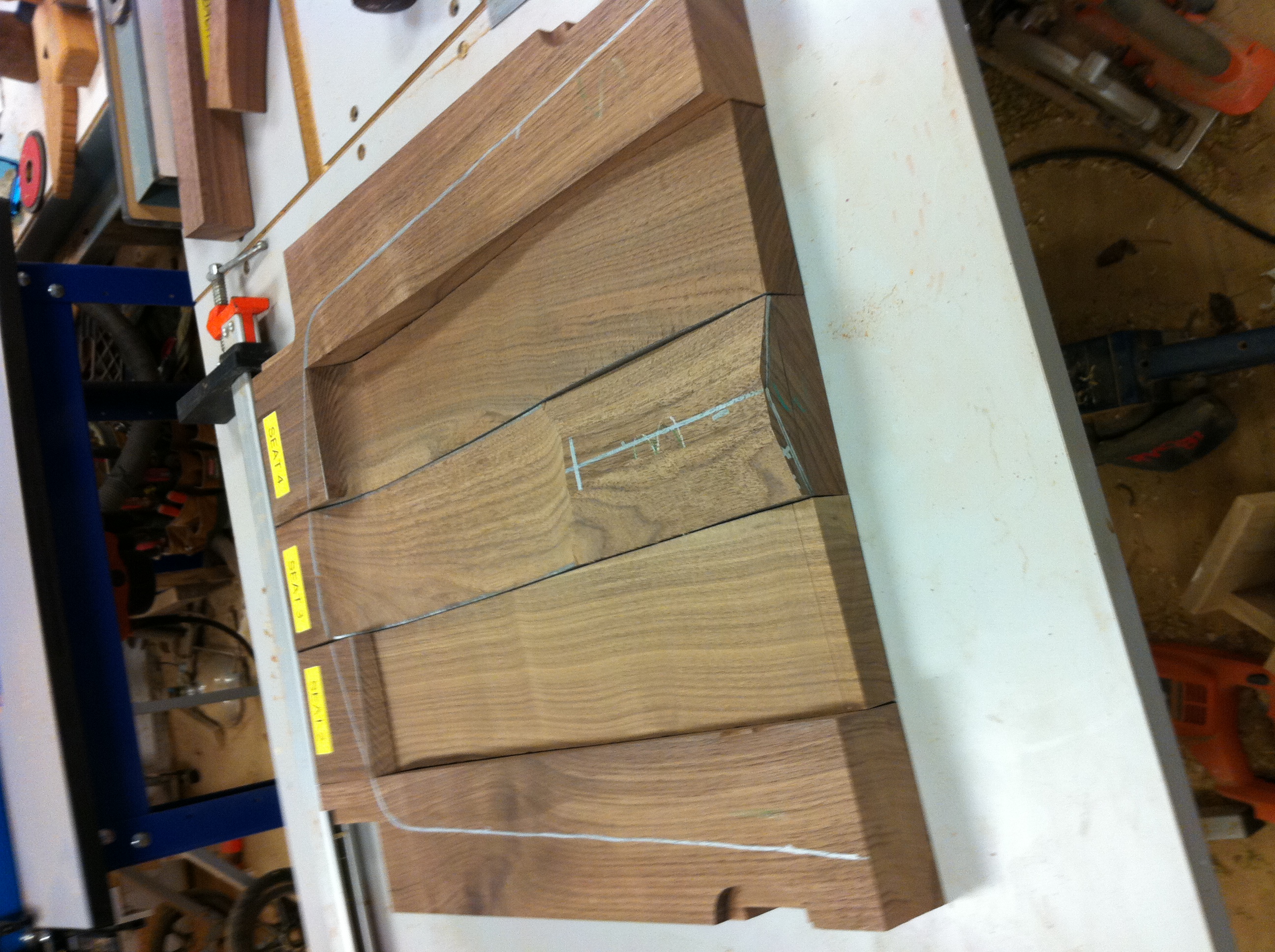
I followed the video instructions to saw the pieces of the seat and my next step is to glue the seat together and start shaping it. I had to buy a right angle grinder and some 30-grit sandpaper. (When’s the last time you used 30-grit for anything?)

Seat Ready to Glue and Shape

Here’s what I have learned so far:

  1. This kit has absolutely beautiful wood.
  2. Watch the video carefully all the way through and then when you start working, you will have to sort out the parts of the video you need.
  3. Before you start any step, go watch the video, read the book, and the instructions again, and then do the next piece.
  4. I never saw anybody mark up wood this way. He draws all over everything and since none of it is a finished surface until the very end, it doesn’t matter. I’m doing it too.
  5. This is better done listening to Mozart than the Beach Boys. Sets a more appropriate mood.

Time and materials so far:

  1. 6 hours including watching video.
  2. $50 for right angle grinder and sandpaper and white pens.

Check out how to get one of these kits

Click here to read about Terry’s next step in building the Maloof Inspired Rocker.

Nov 132010
 

You can call me the “Chair” man. Maybe we can go with “Chair Man of the Walnut Board”; or we could shorten it to Chairman of the Board. We already discussed my Windsor Chair with Mike Dunbar last summer, and then last month I did the Chair class with Peter Galbert at Highland. Now I get to do a Charles Brock Maloof style rocker. You can call me “Mr.” Chairman.

You may have seen that Highland is offering a Maloof style Rocker in a kit form and the first kits came to the store today. I am going by tomorrow (if you really want to be the first to get one, you better be there before me) and pick one up so I can get started . Charles Brock is teaching a class these days on building this beautiful rocker from scratch. He has set up to sell kits with all the wood you need, some pieces already shaped to fit, and the High has them on hand.

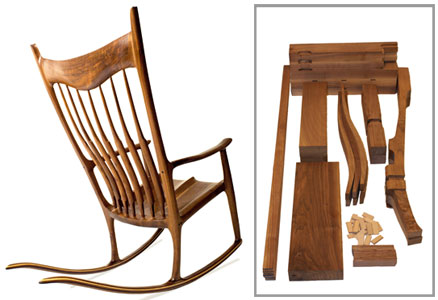
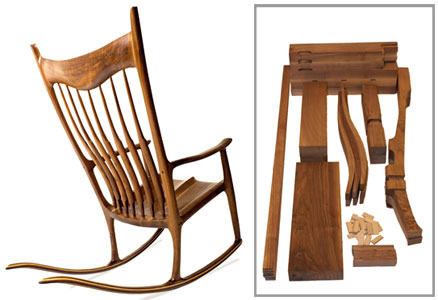
Chair and the Kit

I am going to pick up my kit tomorrow and start to work on it. I will write about it as I move through the process and you can follow me at the Highland Blog. I will keep a log of my time and tell you all the snags and all the good stuff. This is going to be fun!!

Click here to read about Terry’s next step in building the Maloof Inspired Rocker.

  •  November 13, 2010
  •  Posted by at 3:16 pm
  •   Comments Off on From the Chair-man: Building Charles Brock’s Maloof-inspired Rocker Kit
  •   All, Woodworking Tips