Highland Staff

Jan 192011
 

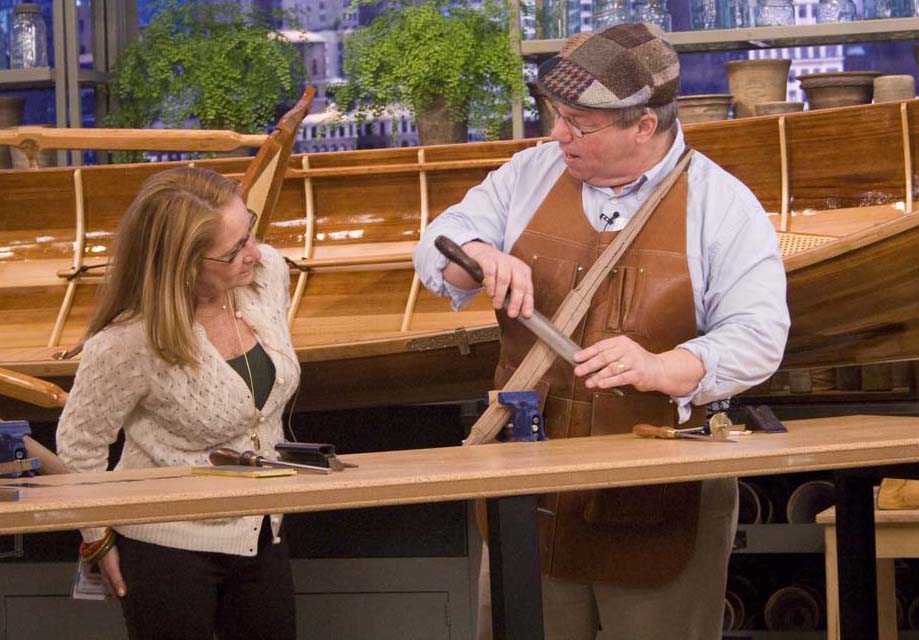
Chuck rehearses with one of Martha Stewart’s producers, Barbara Fight.

UPDATE: The Martha Stewart show website promises an online video of Chuck’s Maloof Inspired Rocker segment within the next few days.

CLICK HERE to see if it’s available yet.

Charles Brock of Maloof Inspired Rocking Chair fame heads to New York this week to appear on the Martha Stewart Show. Chuck sent a newsletter this week telling friends and fans of his upcoming appearance. Since he has a self-professed “face for radio”, he admits it will be quite an adventure. One of his students from the New York area (who happens to be Martha’s brother Eric) is coming to help him demonstrate shaping, and they plan to carve a spindle on the show. If you have ever watched Martha Stewart, then you know she will be right in the middle of it all and the entire show is all woodworking. The segment will be shot on the 19th in New York City and it will be broadcast on January 21st at 10 am and 2 pm and again on January 24th at 1pm, all on the Hallmark channel. Should be fun to watch and I know Chuck will be full of stories when he gets home. Can’t wait to hear how it went.

Chair Kit

Watch the show and you will see what an amazing kit Chuck has produced. You can buy the DVD and instruction book, or buy the kit with all the pieces ready for you to make your own rocking chair.

Jan 142011
 

I received a question recently relating to the restoration of an old plane.  We’ll focus on the iron bodied bench planes for now. There are times when we find, or are given, an old plane that we’d like to put back into use.  How the plane was stored will directly affect the condition and magnitude of work required to ultimately use it as it was intended.

If the plane was stored in a damp environment, without proper precautions, then it is likely to have rust on much of the body and blade. If I find a plane that is very rusty, then I usually try to weigh the importance or uniqueness of the plane. If it is either important or unique, then I’ll likely go forward with the restoration and work that goes along with that.  If on the other hand, it is an every day type of ubiquitous plane, I will normally just move on to another plane.  While the techniques and processes for restoration are valuable to possess and practice, ultimately a person’s time is worth something as well, and the decision must be made how much time to spend on a basic plane.

Once I’ve decided to go forward with a restoration, I’ll usually start with the sole of the plane.  If the sole is rusty, too, then I’ll use some 220 grit sand paper on a known flat surface.  This flat surface is usually a granite precision surface, a thick plate of glass or one of my shop surfaces (table saw top, jointer beds, …)  When I’m going to flatten a sole, I’ll put all the pieces together as if I was ready to plane wood, then back the blade up so there is no way it will make contact with the sand paper. This keeps the plane body with normal stress, so if there is any flexing, it will be the same as during use. After making a few passes over the sand paper, I’ll check the sole to see the progress.  All of the shiny areas are the portions that touched the sand paper.  I will continue with this until the complete sole is shiny.  I’ll use one of the SandFlex hand blocks to remove rust from the remaining external areas of the body. There are three different grits available, and it just depends on how much rust is present as to which grit level is appropriate. Before moving on, I’ll spray some Camellia Oil or Jojoba Oil onto a rag and wipe a light film over the areas we’ve completed.

Once I get the external body rust under control, I’ll remove the lever cap, blade/chip breaker, tote and knob. Next I’ll remove the screws holding the frog in place. Now the plane body is completely bare, I’ll check to make sure the area where the frog sits is in good condition.  It should be flat and make good contact with the frog. If there is any old grunge, clean it up and again apply a light layer of Camellia Oil or Jojoba Oil, and re-install the frog.

Next we’ll take apart the blade and chip breaker.  Usually the blade is what requires the most work to restore, but the chip breaker can have problems, too.  If the blade is rusty, use sand paper on a flat surface to work it back to shiny steel on the back of the blade. The bevel section of the blade is best worked while it is in a blade holder, so the correct base angle is established. At Lie-Nielsen, we begin with a base angle of 25 degrees on our blades. Depending on the shape of the bevel, and what angle it presently has, use 80 grit to completely re-establish the bevel. If the bevel is in decent shape and is already 25 degrees, you might choose to use 180 or even 220.  Follow this with sharpening at 1000 and then 8000 grit at a 30 degree micro bevel.  Once the work is complete on both the back and the bevel, apply a light layer of Camellia Oil or Jojoba Oil.  Put the chip breaker back onto the blade.  Check to make sure the chip breaker has no gaps between it and the blade.  If it does, it will likely allow shavings to gather and prevent the plane from working properly.  If there is a gap, we can either modify the front edge of the chip breaker or look for a replacement.  Many of the new chip breakers are more substantial and do a better job.  Still, restoring the original is an option.  If you decide to work on the original, make sure material removed is from the inside edge. The important section is the outer most edge, so that the chip breaker compresses and there are no gaps when it is tightened.

The next part is optional, and is primarily cosmetic. This includes cleaning the other interior surfaces of the plane body and the tote and knob.  Much of this can be cleaned with regular surface cleaners, assuming their original surface has not been compromised with rust onset.  Once clean, just reinstall the tote and knob, making sure they are snug, but don’t tighten to the point of damage.

The remainder of the restoration is setup.  Put the blade/chip breaker on the frog with the lever cap.  (I set my lever cap so it holds the blade while working, but still allows me to adjust the blade without releasing)  Make sure the blade fits through the mouth of the plane, when the blade is advanced. If the blade makes contact with the mouth, and won’t come through, remove the cap, blade/breaker and move the frog rearward (that is unless you have a plane where the frog’s to/fro adjustment can occur while the blade is in place). Tighten down the frog and try again.  Once you have the frog set so the blade is through the sole and the opening is appropriate for the shavings, then it’s just a matter of fine-tuning the settings to set the plane for operation.

Keep in mind that this is a how-to relating to bench planes. There can be slight differences in restoration for other types of planes.

I always enjoy seeing an older plane still working like they were intended. Good luck with your restoration and feel free to ask any questions in the comments.


Lee Laird has enjoyed woodworking for over 20 years. He is retired from the U.S.P.S. and works for Lie-Nielsen Toolworks as a show staff member, demonstrating tools and training customers.

Jan 042011
 

This month in the January Wood News I wrote about a few of “My Favorite Things” in the Down to Earth Workshop.

Some of these things are not necessarily the things you might imagine – my band saw and my No. 4 smoothing plane are critical components to the shop, but my electric cup warmer and my old wooden stool are main stays as well, and I use them every day to keep my ever-present coffee hot and my posterior dutifully accommodated.

So what are your favorite things? No rules, but let’s see how many non-traditional woodworking things show up…things you would not normally find in a woodworking store. Leave a list of your favorite things in the comments, and let’s compare!

Jan 022011
 

I have been sanding and shaping on my chair for the last couple of weeks.  It’s going a little bit slow what with Christmas shopping and the holidays, but progress continues.

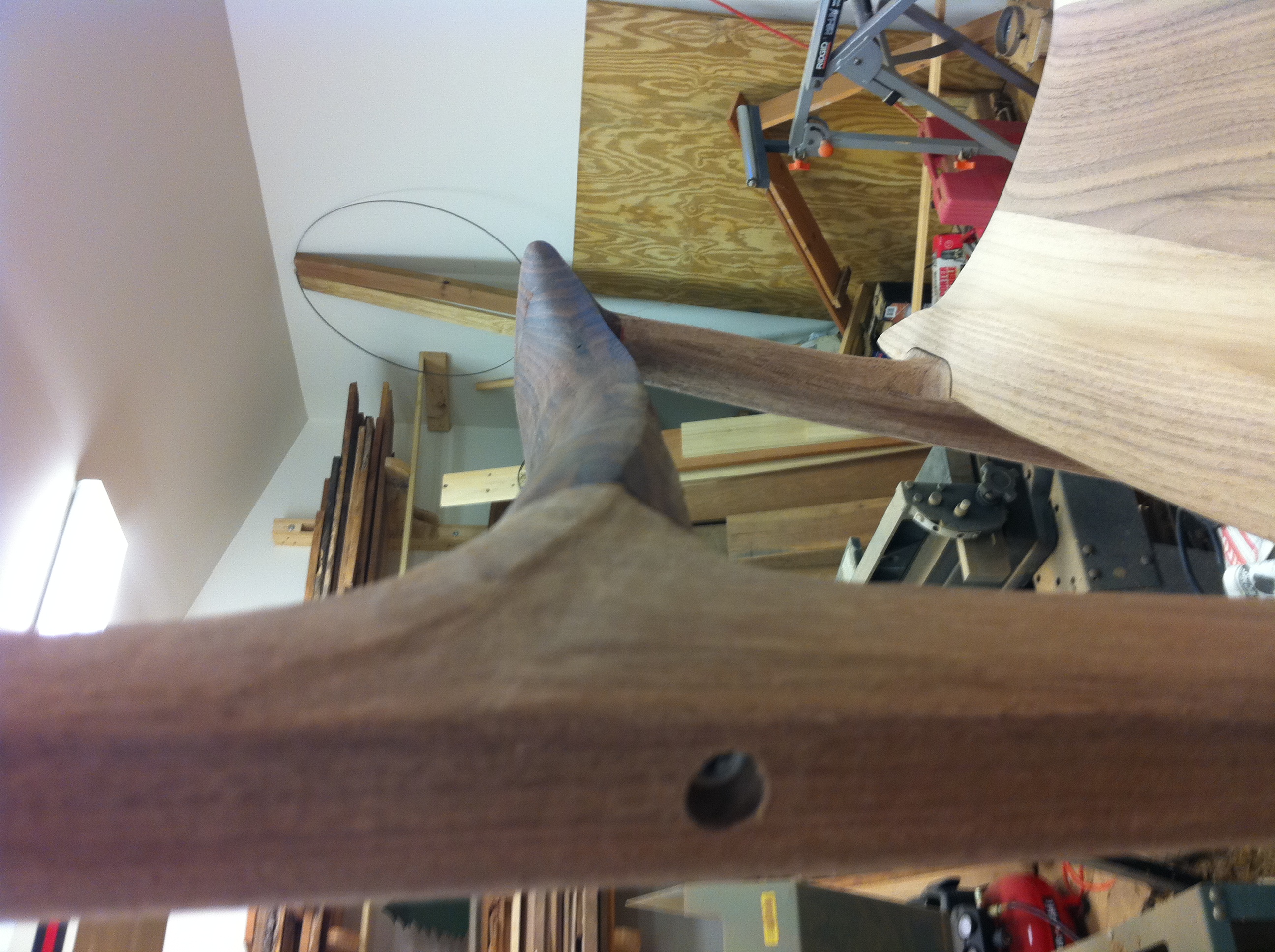
I think I finally have in my head what Chuck Brock is talking about when he refers to hard lines and soft lines.  A hard line is what you end up seeing when a flat meets a round for instance, and you make sure that the junction line between the two surfaces is well defined and visible.

Hard Line at Rear Leg and Arm

You should be able to run your finger along the line and have a reason for it being there.  It is difficult to keep these lines even and consistent, and then when you get the shaping done and start the sanding process, you have to be careful not to sand the line away.  It takes a lot of sanding and shaping to get all of this right.  These lines are subtle, unexpected, and delightful to find in the chair.

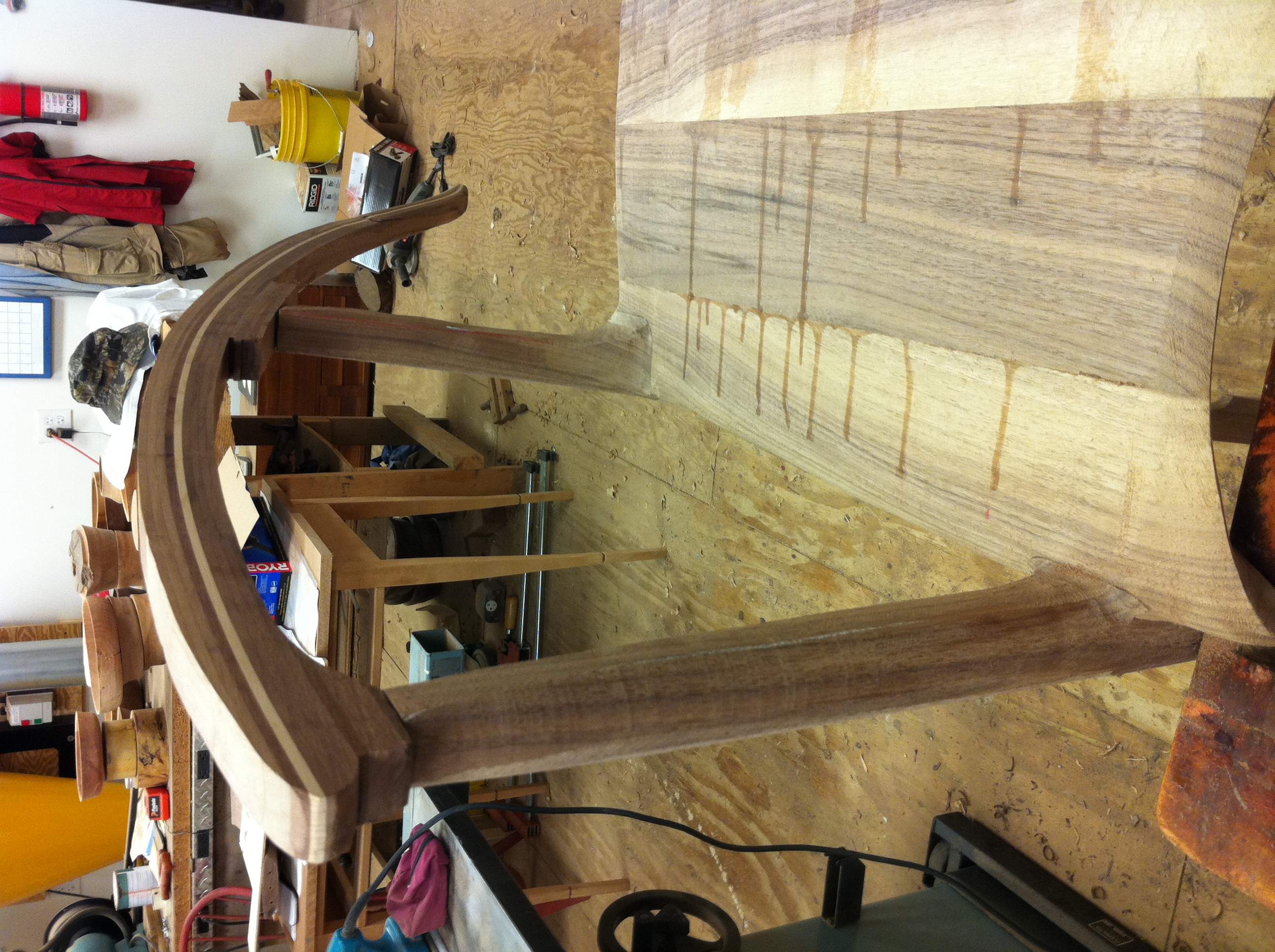
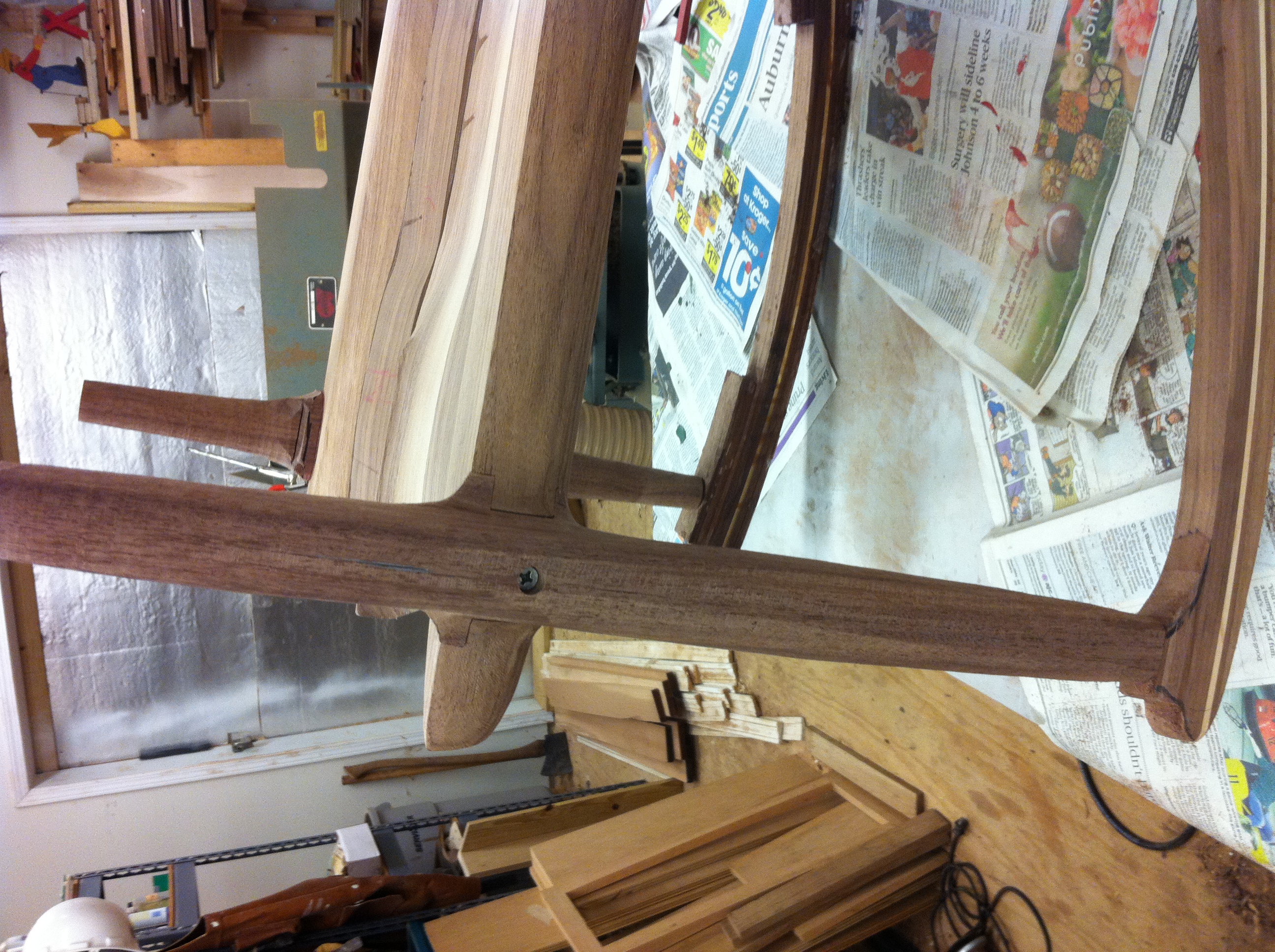
I am also in the process of shaping the left rocker.  Again, this shape is much more subtle than it first appears.  I started to work on the back end of the rocker and it appears I have a lot of material to remove to make it turn out graceful and delicate.  I drilled the hole in the rocker and put in the dowel to connect the rocker to the front leg.  There is a lot of shaping required at the intersection of the two parts and you can see from my pictures that I have only begun to make it right.  Course the other side of this coin is that there are two sides of everything and they need to match.  I think the hardest part of sculptural projects like this is to make each side match the other.  Most anybody can make one side and call it good, but the real test is to make the other side match.  I mean look at your sideburns when you shave (or your eyebrows if you pluck them).

Roughing in the Rocker

I went by Highland this week and picked up some finishing materials.  Chuck recommends the Waterlox Original Sealer Finish and the Waterlox Satin Finish. This stuff is expensive, but I really like the results and it is so easy to use.  Chuck particularly likes this material because it builds up quickly to make a lovely finish coat.  The process is to trim the pieces from the kit and shape with the power grinder and rasps, smooth all the joints and connections, sand with 120 grit, sand with 180 grit, sand with 220 grit, sand with 320 grit, smooth with a green non-woven cloth, and final polish with a white non-woven cloth. Then you can put on the first coat of finish. Smooth or sand as required, fix any places you missed or that still need work, and then put on at least two more coats of finish.  It takes a while, but the result on this beautiful walnut lumber is extraordinary—feels like glass.  (By the way, get some Bloxygen to spray in the top of the can of finish.  Don’t let your expensive finishes skim over and ruin.)

Next up – I will continue to sand, finish, and shape the intersections of all the pieces.  It is looking more and more like a chair.  When I get the left half completely done, we’ll set it up at Highland Woodworking for you to drop by and see.

Rocker in the Right Place

Total time so far:

24 hours plus three visits to Chuck’s Studio plus Chuck doing some of the work as part of filming a video

Tools:

Auriou Rasps – Borrowed

Tenon Cutters $55

Angle Grinder $50

Dowel-It Jig $55

Miller Drill Bit $19

Dowel Centers $3

Bloxygen $9.99

Waterlox Sealer Finish $35.99

Waterlox Satin Finish $43.99

Claritin for Walnut Dust  $ 18.00

Dec 302010
 

I have a lot of customers who want to discuss which one of our planes will ultimately leave the best final finish on flat wood.  Most of them are anticipating the comparison of our Low Angle Block plane v. our Low Angle Jack plane v. our 4 1/2. Many are surprised when I bring out one of our Scraping Planes.  I think part of the surprise is that the visual of the Scraping plane is completely different from most of the usual planes which have a blade that lays back towards the user.  Now with the scraping planes, the blade is angled forward, on the other side of 90 degrees, compared to the regular bench/block planes.

Many woodworkers will follow a smoothing plane with a hand-held scraper, which can leave an exquisite surface, depending on the skill of the user. Unfortunately, on the other end of the spectrum, it can leave scallops and other surface irregularities in the hands of the less proficient. This is where I see the scraping plane excelling, especially when working on flat surfaces.  Since the scraper (scraping blade) is carried in a plane body, it is much easier to end work with this tool without the fear of negative surface consequences.

So how do we set up one of these scraping planes?  Since it looks so different from the bench/block plane, it can seem like a completely foreign tool.  In actuality, it can be one of the easiest planes to set up for great results.  One of the first aspects of setup is the blade. The blade can seem strange for those who have previously used a hand-held scraper, and are familiar with the sharpening techniques for that tool.  On the scraping plane, the blade comes with a 45 degree bevel, which when honed is completely sufficient for finishing cuts. That’s right. Without needing to create a hook. Sounds a little bit different than the usual hand-held scraper, doesn’t it? If you don’t yet own a scraper plane, and would like to see just how effective this can be, take one of your widest bench chisels.  Hold it with the blade pointing straight down, with one hand on each side, and lightly pull the chisel across the wood, like you would a hand-held scraper.  You can adjust the angle of the chisel, similarly to the adjustment of the scraper plane, to get the best results. Amazing what it can do without the hook.  Some may still wish to apply a hook, which can make the plane a bit more aggressive. If you do this, you might have to play around with the angle of the blade so the hook engages properly, just like you do with a hand-held scraper. Now back to the setup of this plane: The blade is inserted into the mouth (some prefer to feed it up through the bottom to prevent any damage to the blade) with the bevel facing towards the rear of the plane. Just lightly snug up the thumb screw, to prevent the blade from slipping out and damaging the plane or yourself! With the blade in place, we can work on the angle of the blade.  We’ve found that 15 degrees forward of 90 degrees, towards the front of the plane is what works best for most situations.  Once the angle is set, place the plane on a flat wooden surface (which could be your workbench). Slightly loosen the pressure of the thumb screw, while holding the plane flat on whatever it is resting on, put a finger’s pressure on the middle of the dull end of the blade. This will just so slightly make the blade proud of the bottom of the plane.  Now, while holding the pressure on the blade, tighten the thumb screw.  You have successfully set up the scraping plane for nice fine final shavings, such that it can follow after a smoothing plane and leave a wonderfully smooth finish to the wood.

In my opinion, the Small Bronze Scraper Plane leaves one of the best surfaces one could ever hope to get.

I hope to see some of you at our events across the country.  Feel free to come up and say hello.


Lee Laird has enjoyed woodworking for over 20 years. He is retired from the U.S.P.S. and works for Lie-Nielsen Toolworks as a show staff member, demonstrating tools and training customers.
Dec 142010
 

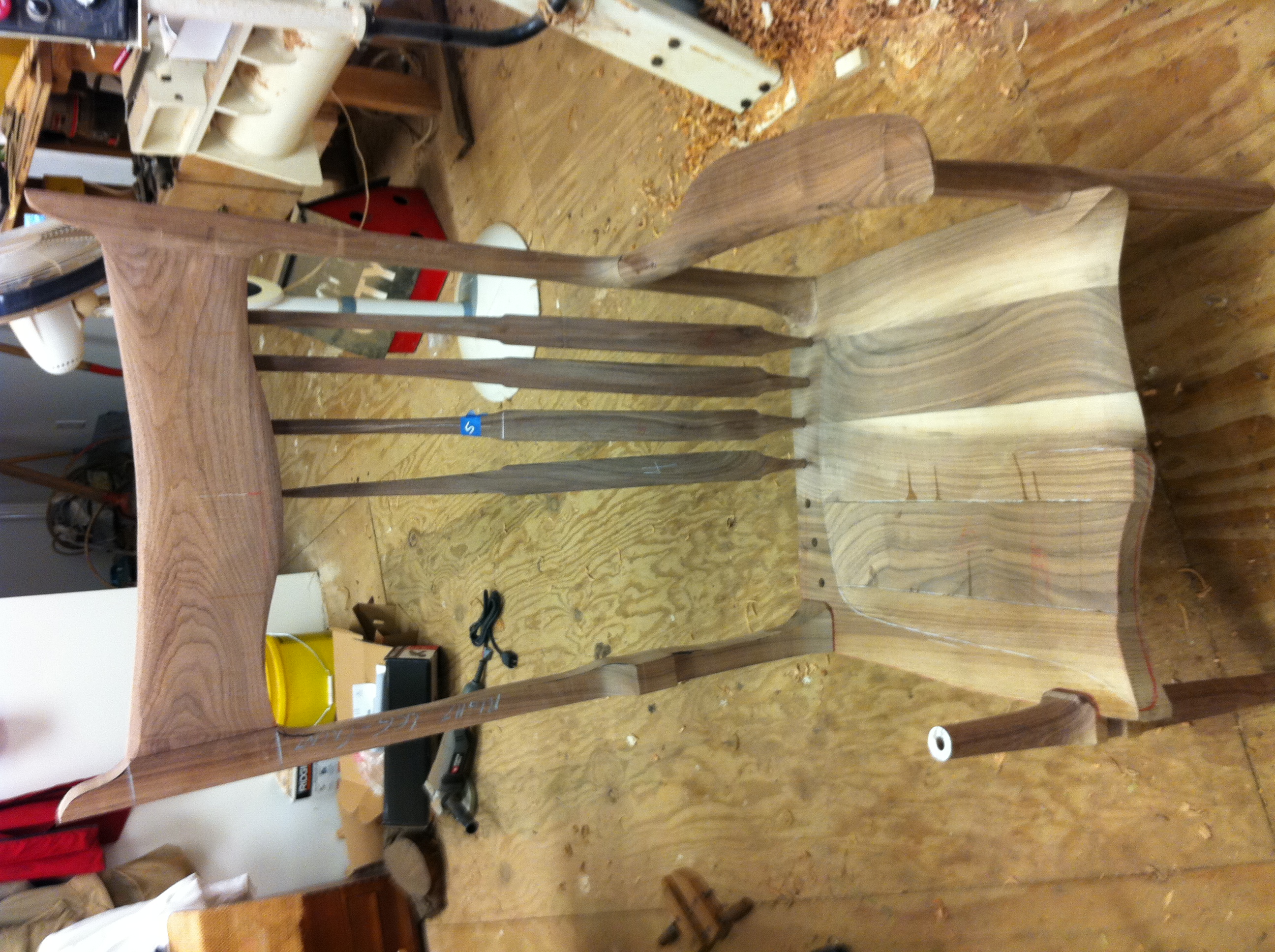
Well my Maloof-inspired rocking chair is coming along.  With some helpful input from Chuck Brock, a few tools bought, and a few tools borrowed, I can see a chair beginning to emerge.  I am reminded of those partially completed statues (by Michelangelo, I think) where there is a figure trying to free itself from a block of marble.

Spindles and Left Arm Shaped and Set in Place

Our plan right now is to go ahead and completely finish the left side of the chair, but leave the right side in the squared blocks the way they come in the kit.  It is difficult to visualize the finished chair if you have never actually seen or touched one, and the contrast between the kit pieces and the finished chair is astounding.  I think the contrast will be even more striking on opposite sides of the same chair.  We’re going to display it in the store for a few months so you can come by and see it if you’re coming through Atlanta and are maybe thinking about buying either the walnut parts kit, or just the rocking chair plan bundle.

Hand tools are a joy.  Now I know you have probably heard this your whole woodworking life (I know I have), and generally you probably took the same attitude I did, i.e. “Yeah, right!”  The key I have found is the correct tool properly sharpened, and then the work is simply a joy.  No face mask, no dust mask, no hearing protection, and that perfect little scraping or cutting noise all join to make a new (old) way of working wood.

A Beautiful Rasp

With that in mind, I’m buying the Auriou rasps. Highland loaned me a couple to try out for a few weeks so I could work on the spindles and legs and these things are unbelievable.  Chuck recommends the nine inch #10 Cabinet Maker’s Rasp and the seven-inch #13 Modeler’s Rasp.  Both of these are flat on one side and round on the other, and you can do a lot of work with either one.  These things are better than a router, so you need to be careful that you do not remove too much wood.  Did you get that?  Here is a hand tool where you have to be careful you don’t remove wood too fast.

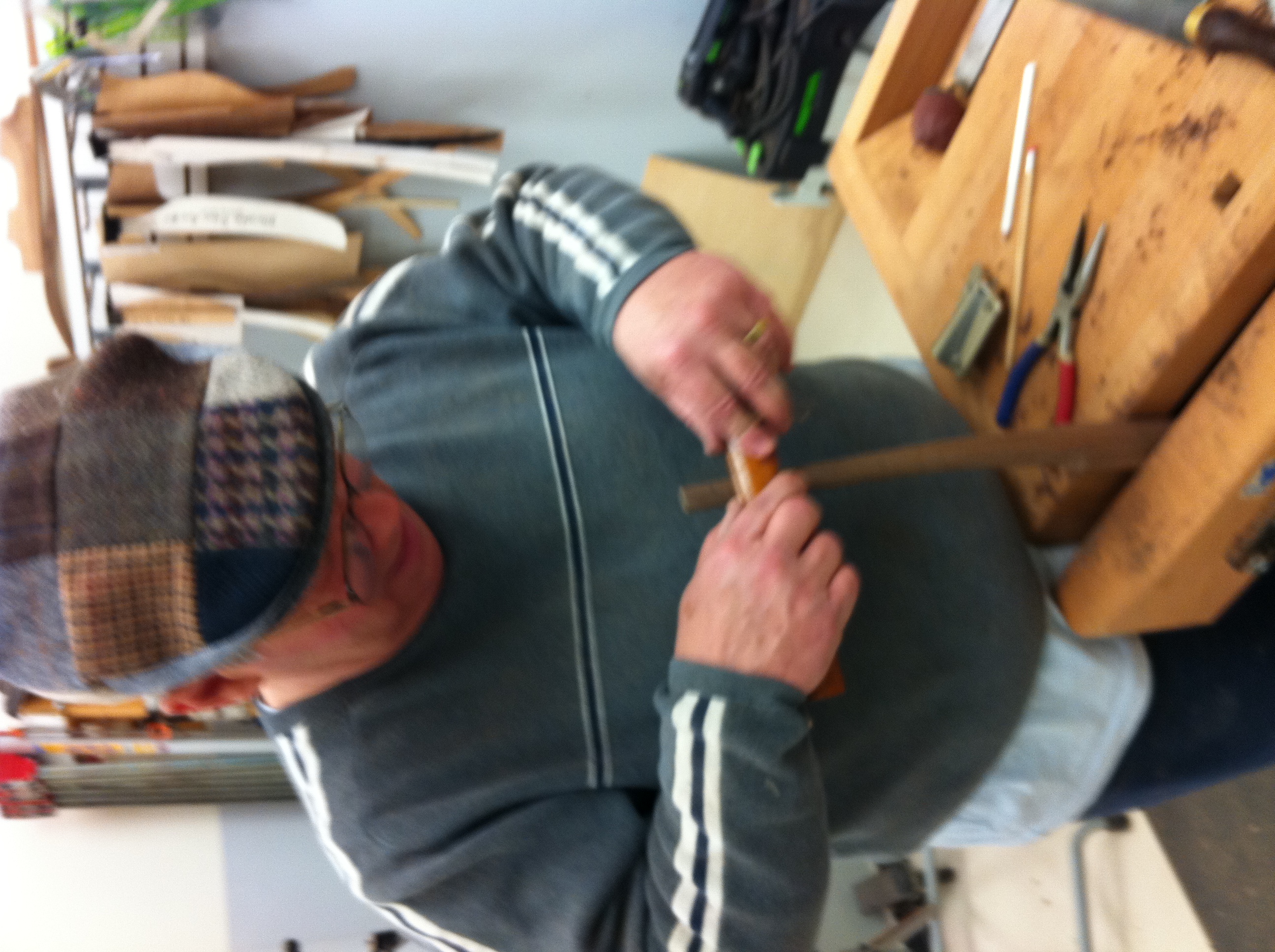
Last summer when I took the Windsor Chair class in New Hampshire, I bought a beautiful little handcrafted spokeshave.  I love that thing and I have been using it on the spindles in my chair kit.  Since this wood is dry and sawn, as opposed to the green and rived wood on the Windsor, it is more difficult to shape using a spokeshave.  Following the grain is critical, and you must change the direction of your stroke in order to cut downhill.  It’s a lot like stroking a cat –if you rub a cat the wrong way, you get bit.  Same thing here.  But when you pay attention and hit it right, it is lovely.

Chuck with a Spoke Shave on the Spindle

So far I have four of the seven spindles done and fitted to the chair.  They are beautiful, if I do say so.  I cut the rough shape of the spindles to the pattern in the kit plan with my band saw, and then used the spokeshave and the rasps to blend it all together.  I used my new tenon cutters to make the correct size tenons on the ends of the spindles and mounted them (temporarily) to the chair.  Half the seat is almost completed, and the left arm is close to completion.  It’s beginning to look more and more like a chair.

Next up, rockers and sanding, sanding, sanding.

Total time so far:

18 hours plus three visits to Chuck’s Studio plus Chuck doing some of the work as part of filming a video

Tools:

Auriou Rasps – Borrowed

Tenon Cutters $55

Angle Grinder $50

Dowel-It Jig $55

Miller Drill Bit $19

Dowel Centers $3

CLICK HERE to read Terry’s next post on building the rocker kit.

Dec 092010
 

A question I hear from customers at many of our shows regarding bench planes is: “Why are there so many different plane sizes and do/will I need ALL of them?”

In this article, I’ll talk about the range of bench planes, their sizes and purposes.

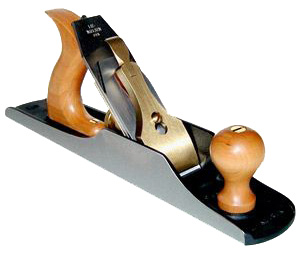
All of the bench planes (those that range from a #1 up through a #8) get split up into three basic categories: Smoothing planes, Jack planes and Jointer planes.  Each of these categories perform specific functions, but can ultimately cover ground outside of the primary function.

No. 3 Smooth Plane

Starting with the smallest (and smallest numbers) are the Smoothing planes.  This encompasses the #1 through the #4 1/2, and the primary differences are the size and weight. The Smoothing planes are used for, well, smoothing a surface. These are usually setup for use with an extremely sharp blade just barely protruding and a very small mouth opening. This setup is ideal for taking a very fine shaving from a piece of wood that is already flattened, which ultimately can leave one of the best surfaces a piece of wood can ever hope to have.

No. 5 Jack Plane

The next group is the Jack planes. These are the # 5 & # 6. Size and weight are the primary differences between these two planes. The Jack planes are usually setup to deal with initial stock removal (when the job isn’t so severe as to warrant using a scrub plane, which we’ll touch on in a later segment), which will deal with rough surfaced wood that may have a multitude of negative characteristics (twist, wind, bow, etc…) that are between you and a flat, square piece of lumber. Since the wood the Jack plane is used on is not usually flat and square, this plane is often setup with the blade protruding deeper and the mouth set much wider (to handle the thicker shaving created by the further advanced blade). These settings allow the plane to rapidly remove material, but will normally require additional work.

No. 8 Jointer Plane

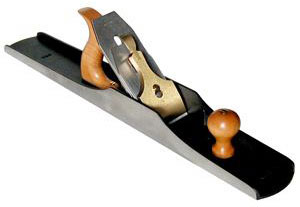
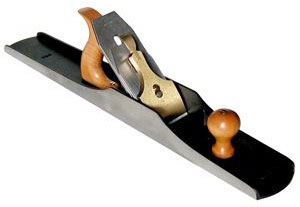
The last of the bench planes are the Jointer planes. These are the #7 & #8. Size and weight are the primary differences between these two planes. The Jointer plane setup is somewhere between the Smoothing plane and the Jack plane, but usually much closer to that of the Smoother.  The Jointer plane’s primary purpose is to flatten wood.


Always remember that even though a bench plane size is normally used for a specific function, many can be used in other ways.  An example would be using a Jack plane with the blade opening closed up and the blade projection reduced, so it could function as a Smoother.

So now that you know how the planes sort out, the question is whether someone needs one of every size. Part of that depends on whether the end-user works with a wide range of sized projects. If the answer is yes, then it becomes a personal decision. I personally would recommend starting with one bench plane in each group and then expanding your set if/when it is necessary or desired.

Now that we’ve covered all the bench planes, you may be wondering about block planes. We’ll be talking about those in a later post, so check back again later.

Highland Woodworking’s full selection of Lie-Nielsen hand tools.


Lee Laird has enjoyed woodworking for over 20 years. He is retired from the U.S.P.S. and works for Lie-Nielsen Toolworks as a show staff member, demonstrating tools and training customers.