Highland Staff

Jan 012013
 

13 For 2013… New Years Resolutions From the Down To Earth Woodworker

For many years I had a hard time coming up with New Years Resolutions. Either I was smugly (and falsely) pleased with myself or as I get older I am discovering more and more opportunities for improvement. This year the problem was not in coming up with resolutions, but rather containing the size of the list. So here are some things I would like to do in 2013…

#1 – Read more… In 2012 I read only 43 books. In 2010 I read 52. The steadily declining number can only be attributed to alternate activities. So, let’s see, I am not going to spend less time in the shop. Oh! I know… I will cut down on TV.

#2 – Less TV… In order of insignificance, eliminate TV by genre. I have already given up all network programming. Next, no more news. I’m sure I will be happier. After that, I will wean myself from the oldies. I’ve seen every M*A*S*H show like a hundred times anyway… likewise for Seinfeld, Raymond, and Dick van Dyke. I will miss Antiques Roadshow though. I still miss Norm.

#3 – More Music… Music hath charms, you know, but all my music listening is done in the shop and my wife already says, “You might as well just live out there”…hmmmm… I’m getting project ideas. How about a convertible workbench/cot? Wait! Maybe a Murphy bed… tool storage when folded up, comfy bed when folded down. I’m getting jazzed…

#4 – Coffee… My second (or is it third? Fourth?) grand obsession is coffee. I have learned dozens of ways to make it, but have yet to figure out how to work coffee into a Wood News column. How to stain with coffee? How to remove a coffee stain? Build a barista station? A coffee-serving tray?

#5 – More Time Outdoors… What better way to spend time in the fresh air thanbuilding some outdoor projects? I would like a pergola… just love the name…pergola. A teak table by the grill would be great. A custom gate for the fence. Oh yeah, and build the fence. So many projects, so little time. I’ve got to give up something else…

#6 – Less Sleep… Edison, Napoleon, and Michelangelo got by on 4 hours a night. I’m going for 3.

#7 – Less Shopping… An inordinate amount of time is spent shopping for unimportant things like food, clothing, and toiletries. Eliminating these tasks will allow more time for tool shopping.

#8 – More Efficiency… More shop time by being more efficient. Learn to sand with both hands. Never lose anything, put my tools back as I use them, keep my wood organized, use story-sticks more.

#9 – Go Metric… Sixteenths and thirty-seconds, inches and feet… very inefficient. This is the year to finally make the big switcheroo to millimeters. At least I will learn to use my Festool equipment the right way!

#10 – Go Green… My truck gets only 6 kilometers per liter (wow, my mental metric makeover is working already!), so hunt for an electric truck. Of course it will not make it to the lumberyard and back on a single charge. I wonder if they will let me plug in and sleep over?

#11 – Recycle… I’m going to learn to make fireplace logs from sawdust and maybe make my own particle board. Use coffee grounds in the garden, wood chips for mulch, and make progressively smaller and smaller projects from progressively smaller leftover pieces of wood.

#12 – Be Patient… A low threshold of boredom has me thinking about the next project before I am halfway through the current project. I rush through applying the finish when I know it is just as important as the build (sometimes more important when there is a little flaw or two to hide).

#13 – Fall Down… North country lore has it that everyone falls down once every winter. I would like to get it out of the way early. The surprise of the fall is one of the things I like least. And I would like to fall someplace soft… fluffy snow over a bed of pine needles sounds nice. And somewhere isolated. No one to laugh at me, no one to hear me cry. I think I’ll go take a walk in the woods.

What are YOUR New Years Resolutions for 2013?
To read more woodworking resolutions for 2013, CLICK HERE

Dec 282012
 

If you’re anything like me, you’ve probably at least had thoughts of trying your hand at a woodworking project that breaks away from the square/rectangular form. You may have even gone so far as to buy an old used spokeshave, only to find an ill-fitting replacement blade, or even more likely, a mouth as wide as the Grand Canyon. Ok, maybe not quite that wide, but it behaves like that is the case.

I’ve been there and done that as well. I have a number of old spokeshaves still hanging around from years gone by, where some had bits of odd replacement parts, a super wide mouth, and just never worked very well. Enter Lie-Nielsen’s collaboration with Brian Boggs on spokeshaves. There are three distinct versions (Flat, Curved & Concave) of these spokeshaves, but I will focus on the Flat spokeshave in this article.

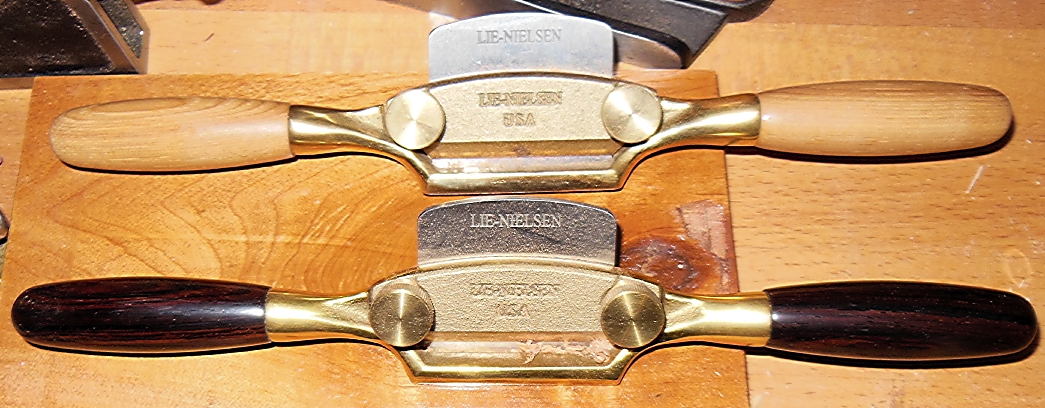
The Boggs Flat spokeshave is a truly awesome tool that not only works wonderfully, but is also both beautiful and balanced in the hands. Amazingly, while this tool is 10” long, it weighs in at only 12 ounces. This is mainly due to the bronze body and cap. The iron in this spokeshave is A2 tool steel, comes with a 25-degree bevel from the factory, and is bedded at 40 degrees with the bevel down. The handles are made from hickory, but cocobolo is sometimes available (I upgraded my Flat spokeshave to cocobolo, so I could tell the curved sole from the flat version with a quick glance), at an additional charge. The mouth of the spokeshave is extremely fine and set up to handle a shaving in the .008” – .010” range.

My Flat Boggs with cocobolo handles and the curved sole Boggs with hickory

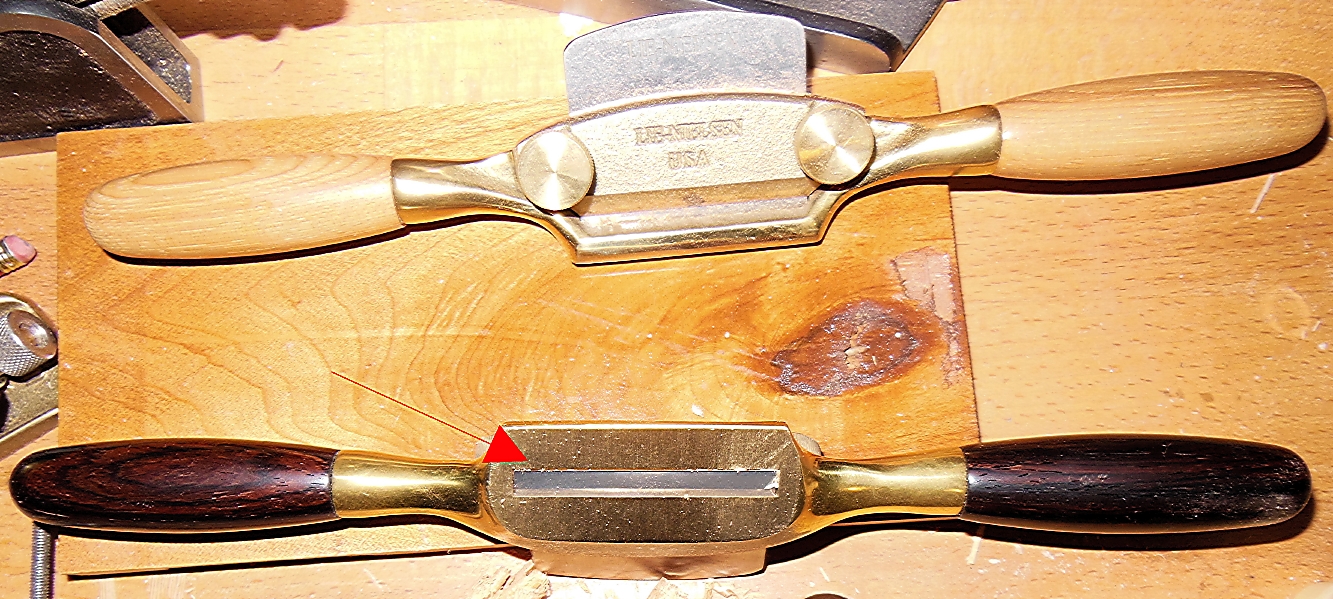
When I first received my Boggs spokeshaves, I was amazed at just how tiny the mouth-size looked when compared to any of my old “beaters”. If I hadn’t already known the tool was set up, I’d have thought the mouth was too tight. That is, until I put it to work. This truly is a perfect sized mouth for really fine work.

Here is a look at the mouth, with the blade at cutting depth. Is that tight, or what?

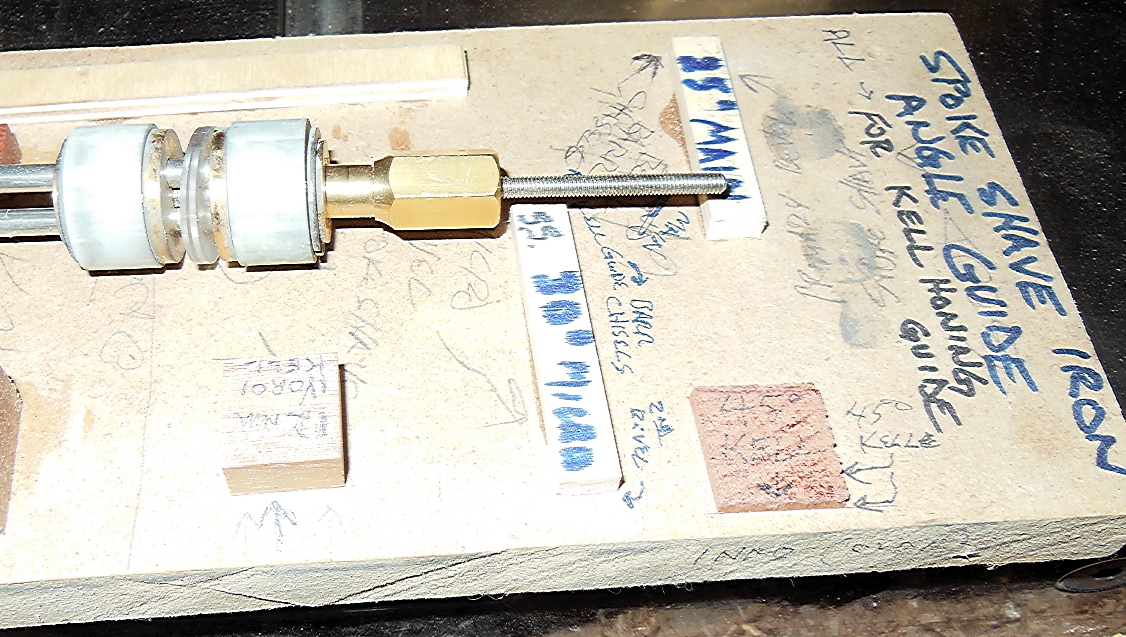
The spokeshave’s A2 iron, with its short edge-to-back stature, can cause sharpening troubles for some. I use my Kell jig, which readily clamps onto the sides of the iron, while still projecting the proper amount of iron. I also made a Kell sharpening setup jig, based along the lines of the Lie-Nielsen plane/chisel angle setting jig, designed by Deneb Puchalski. Different brands of honing guides have different amounts of iron projection needed, to end up with the same honing angle. I made two stops on this jig for the Lie-Nielsen spokeshave irons. One so I can apply a 10-degree micro-bevel, and the other to refresh the 25-degree baseline bevel, after the micro-bevel has grown too large to be efficient.

Once the iron is sharpened, it is extremely easy to set up the spokeshave for work. I carefully feed the iron up through the bottom of the sole, so I’m less likely to ding the just-sharpened edge. Once the iron is up in the spokeshave body, I hold the iron while I set the sole on a piece of wood I know to be flat. I hold the sole down while putting very light pressure on the center-back portion of the iron. I then snug up the two thumbscrews, to hold the iron in place. It’s not necessary to put a lot of force on these, as you just need it to keep the iron in place during use. I would certainly avoid using any wrench or pliers to tighten these down. Now it’s time to see how the spokeshave performs. If you want a completely even depth of cut across the iron, you can lightly tap the iron laterally, as needed. Depending on the thickness of the material I’m working (if the material is fairly thick, I prefer to keep the iron set for an equal depth of cut all the way across), I will adjust the iron so one side projects out further than the other. When doing this, I aim for a very light cut on one side, and a slightly deeper cut on the other. Remember, the max depth of cut is only about .010”. This still allows me to quickly remove wood from an area that needs a bit more taken off, while coming back in with the other side of the iron and taking final finish shavings.

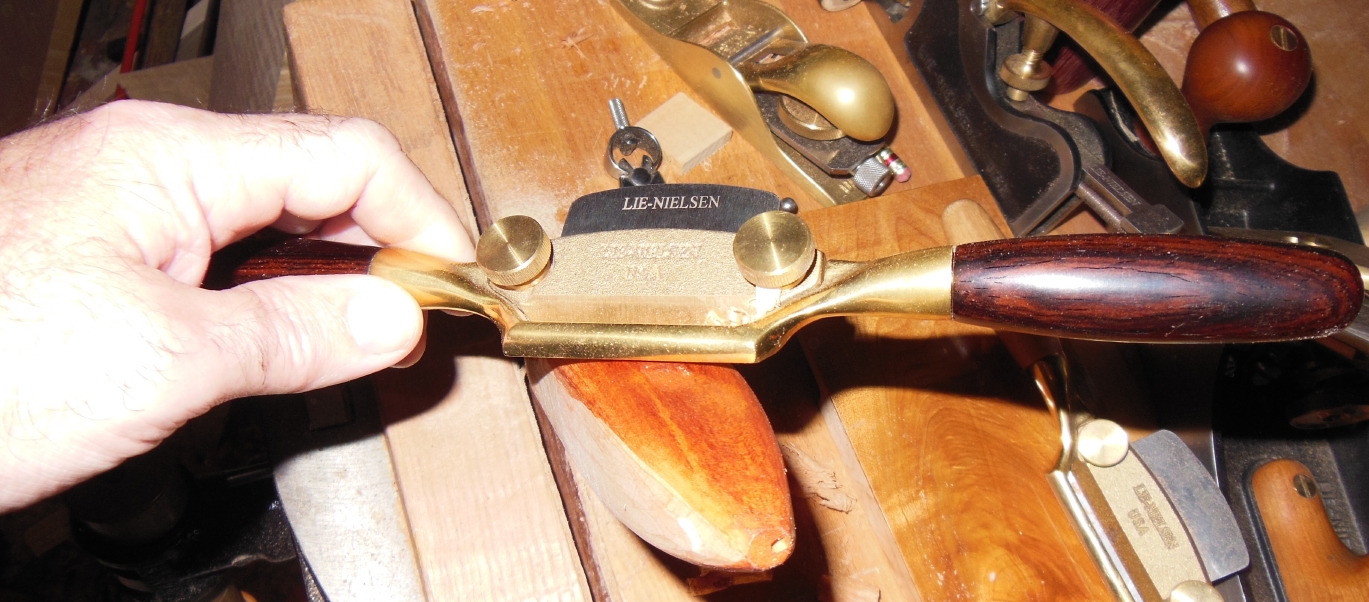
The Boggs Flat spokeshave is primarily used on the outside of curves, or when you need to take a straight square piece to round or oval.

Since the sole is only 1” deep, you CAN get into some very shallow inside curves, but the curved version is better geared for this work. Even with the tight mouth opening, I still try to work with the grain, but some woods can still be a bit cantankerous. If this is the case, some skewing of the spokeshave will usually help create better results. I also find a light touch with the spokeshave works much better than applying too much pressure. When the iron is nice and sharp, the spokeshave’s own weight is sufficient to obtain the best surface, and control.

I hope you enjoyed the article, and let me know if you have any questions.

Click to take a closer look at the Lie-Nielsen Boggs Flat Spokeshave.

Click to see Highland Woodworking’s entire selection of Lie-Nielsen hand tools.


Lee Laird has enjoyed woodworking for over 20 years. He is retired from the U.S.P.S. and works for Lie-Nielsen Toolworks as a show staff member, demonstrating tools and training customers. You can email him at lee@lie-nielsen.com or follow him on Twitter at twitter.com/is9582

Dec 272012
 

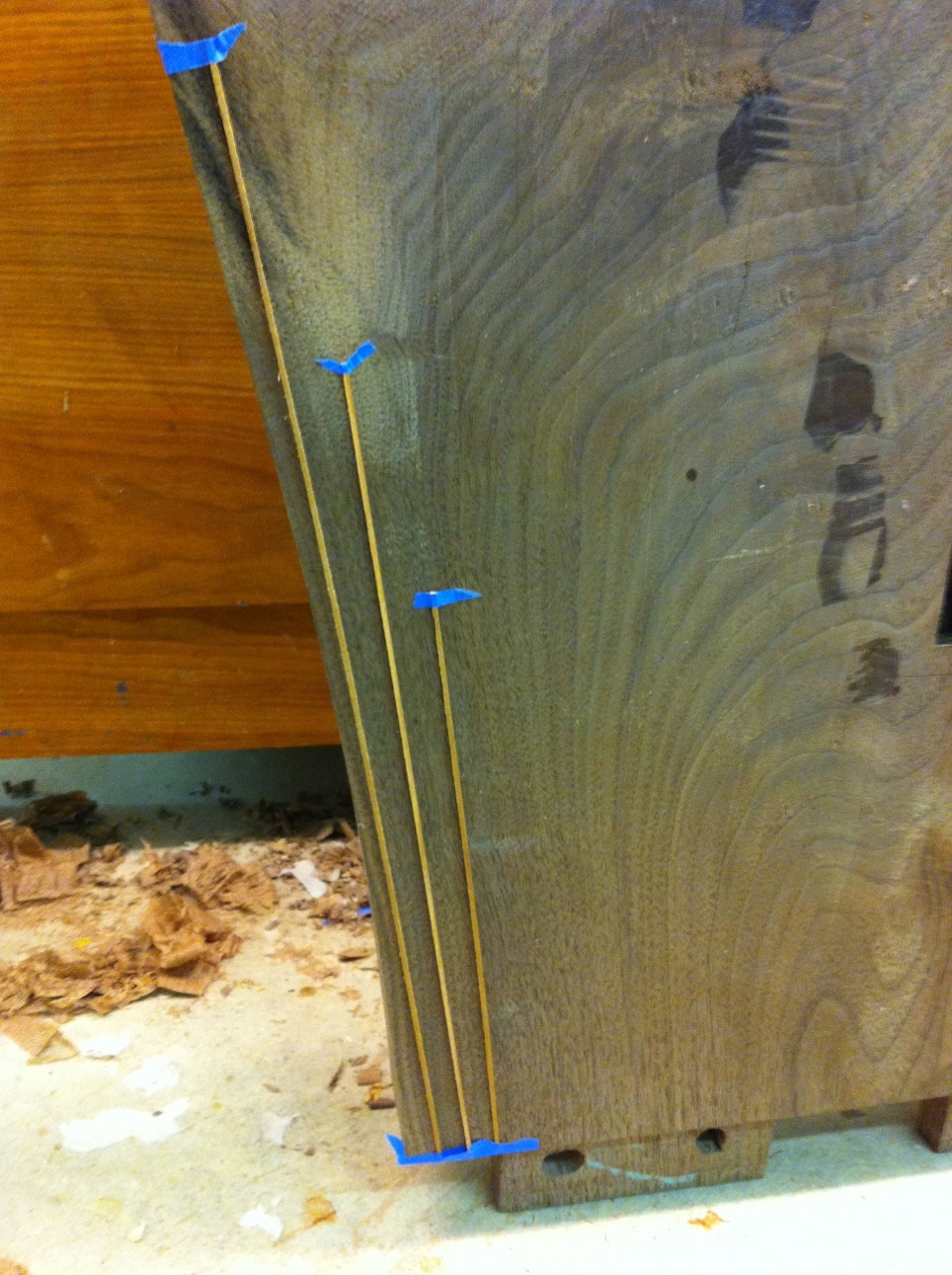
The top design calls for inlay around the edges.  I want to add some complimentary inlay to the legs in order to help tie the piece together.

I start with some inlay strips taped to the leg to try out a couple of different designs.  This is fast and easy to see designs in realtime – from various angles.

Taping inlay to the leg to see the initial design.

Taping inlay to the leg to see the initial design.

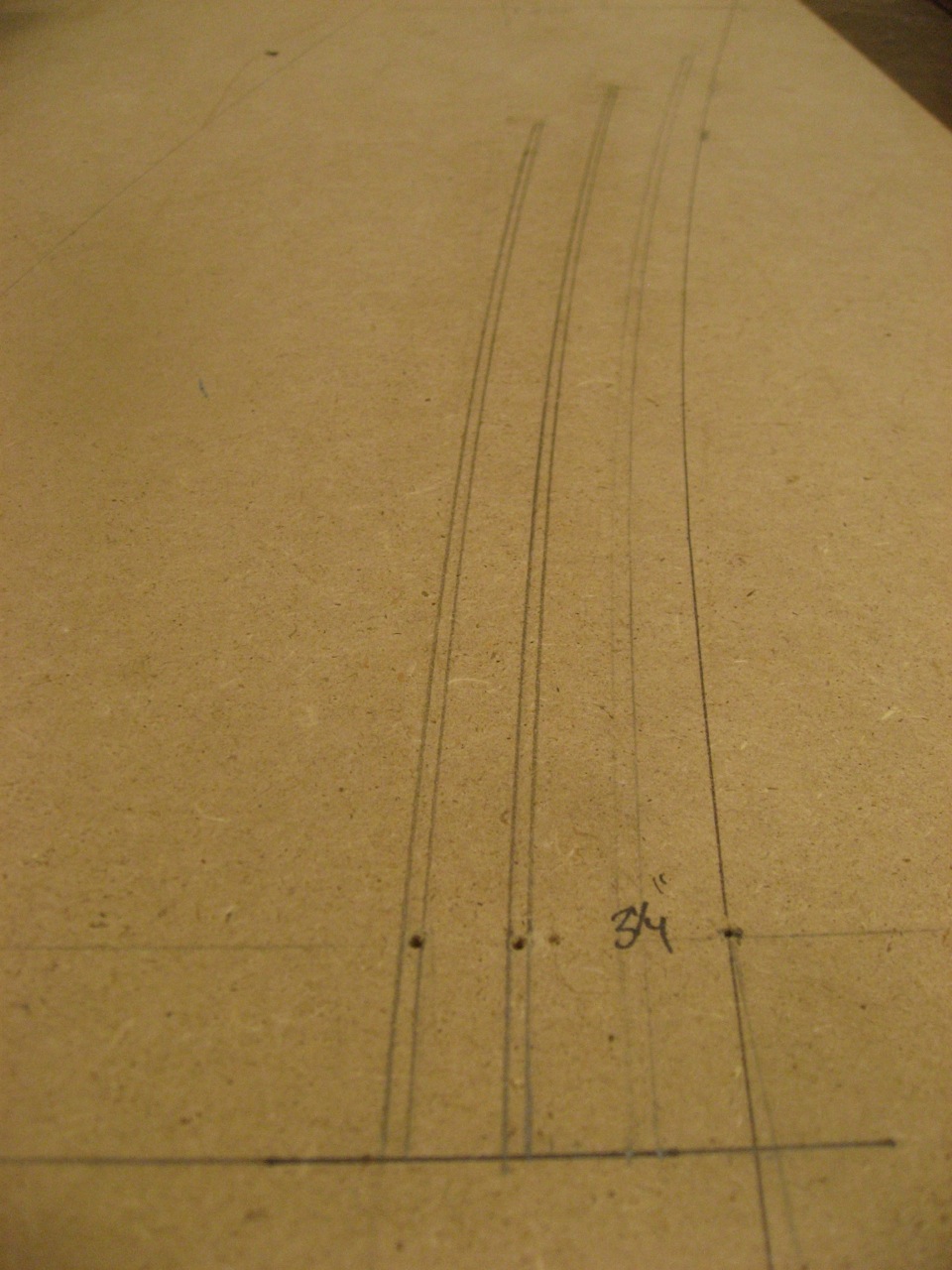
Once again I use a bending strip, around nails, to make the templates for the router.  I love my woodpeckers 12″ precision T-square for laying out measurements.

Once the templates are made, I use them to trace out the final design onto some MDF to confirm my choices.

Inlay drawn off the actual templates to confirm final design

Inlay drawn off the actual templates to confirm final design

Dec 202012
 

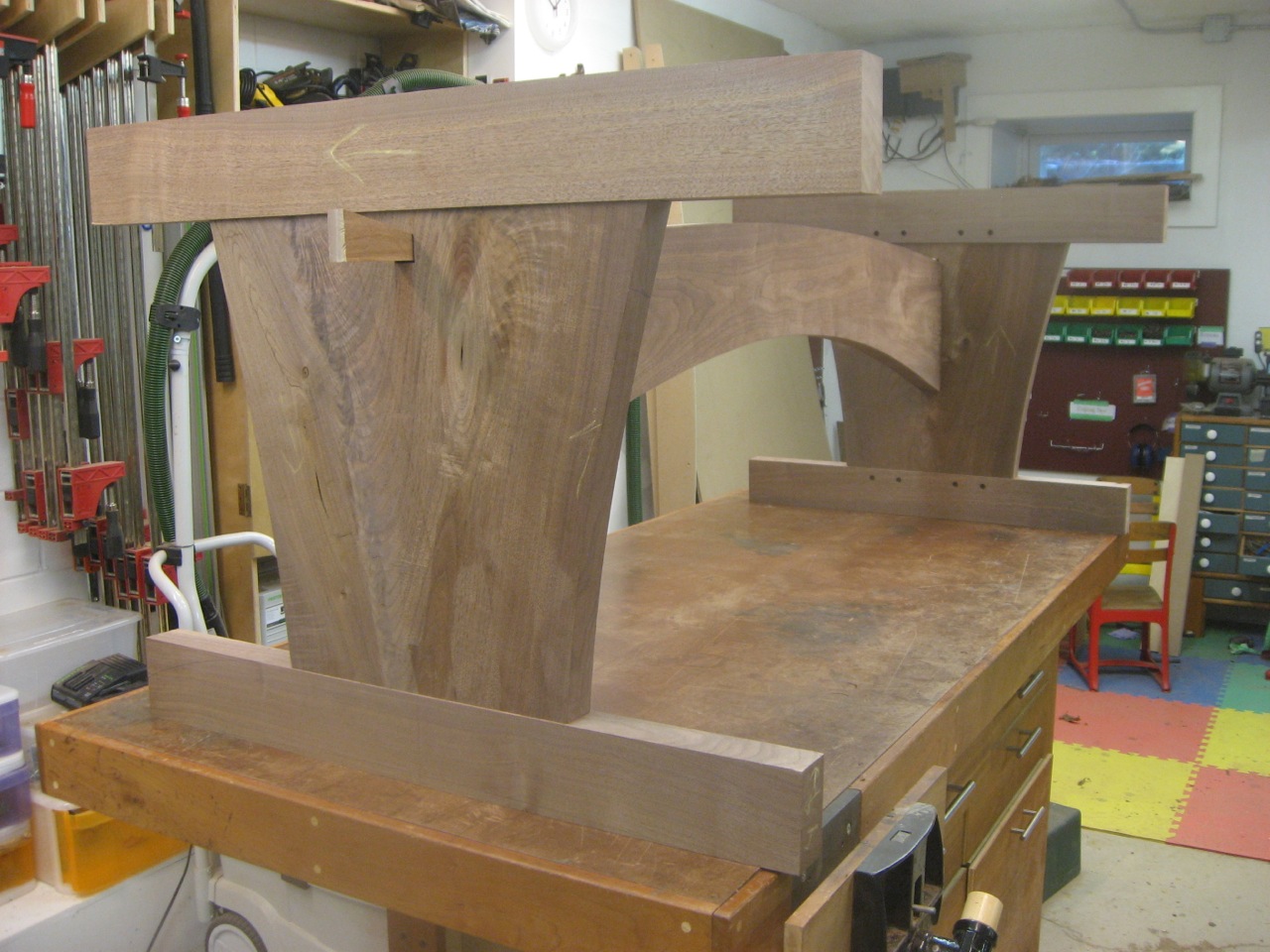
I created all the joinery while my pieces were flat and square.  That’s some blocky header and footer!

The bast is dry fit with wedges inserted

The bast is dry fit with wedges inserted

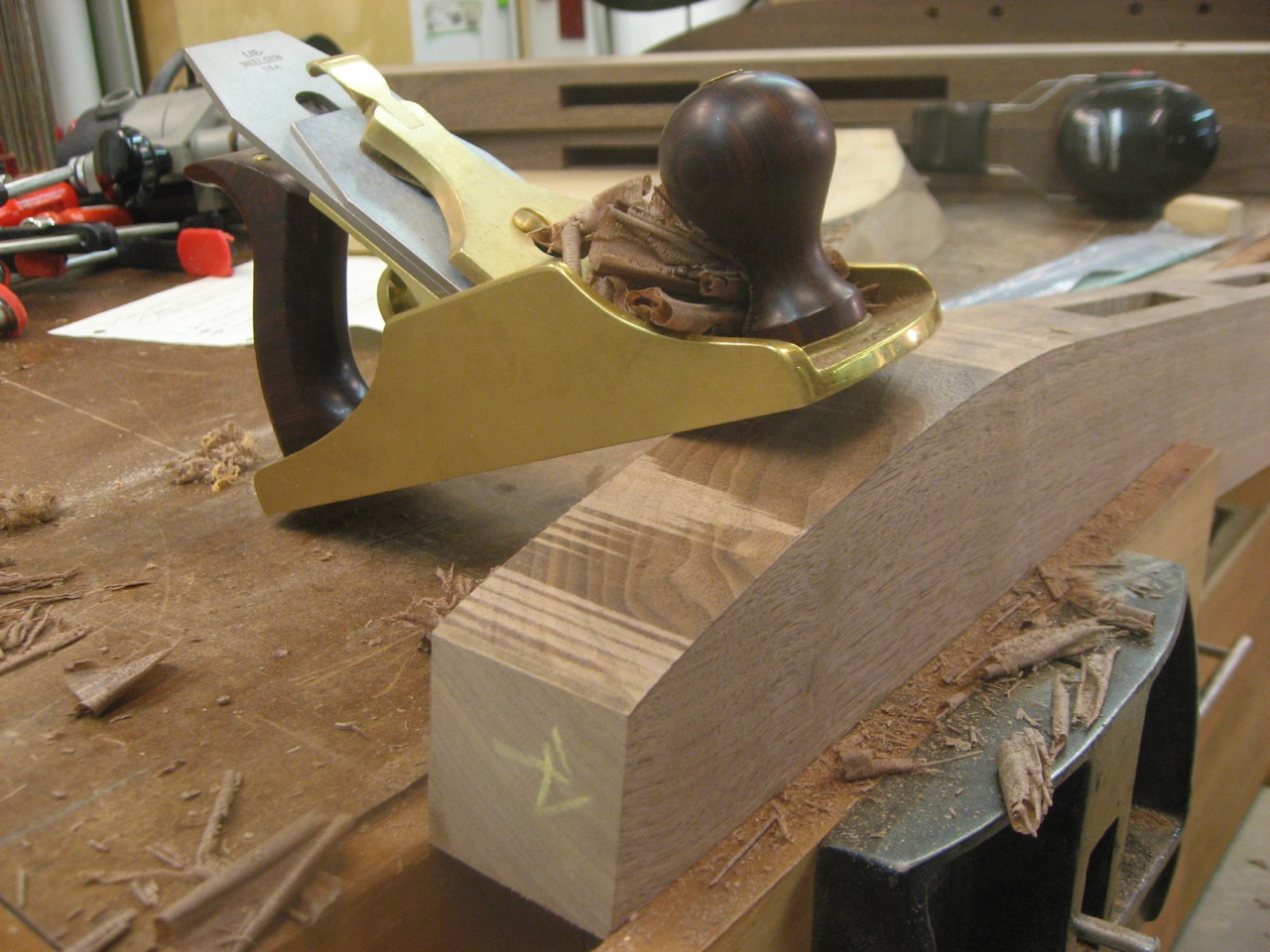
So now it’s time to final shape the header and footer before assembly.  I cut the shape on the bandsaw and then started cleaning the convex curves with my Lie-Nielsen #4 1/2 handplane.

I use a Lie-Nielsen # 4 1/2 to smooth the convex curves

I use a Lie-Nielsen # 4 1/2 to smooth the convex curves

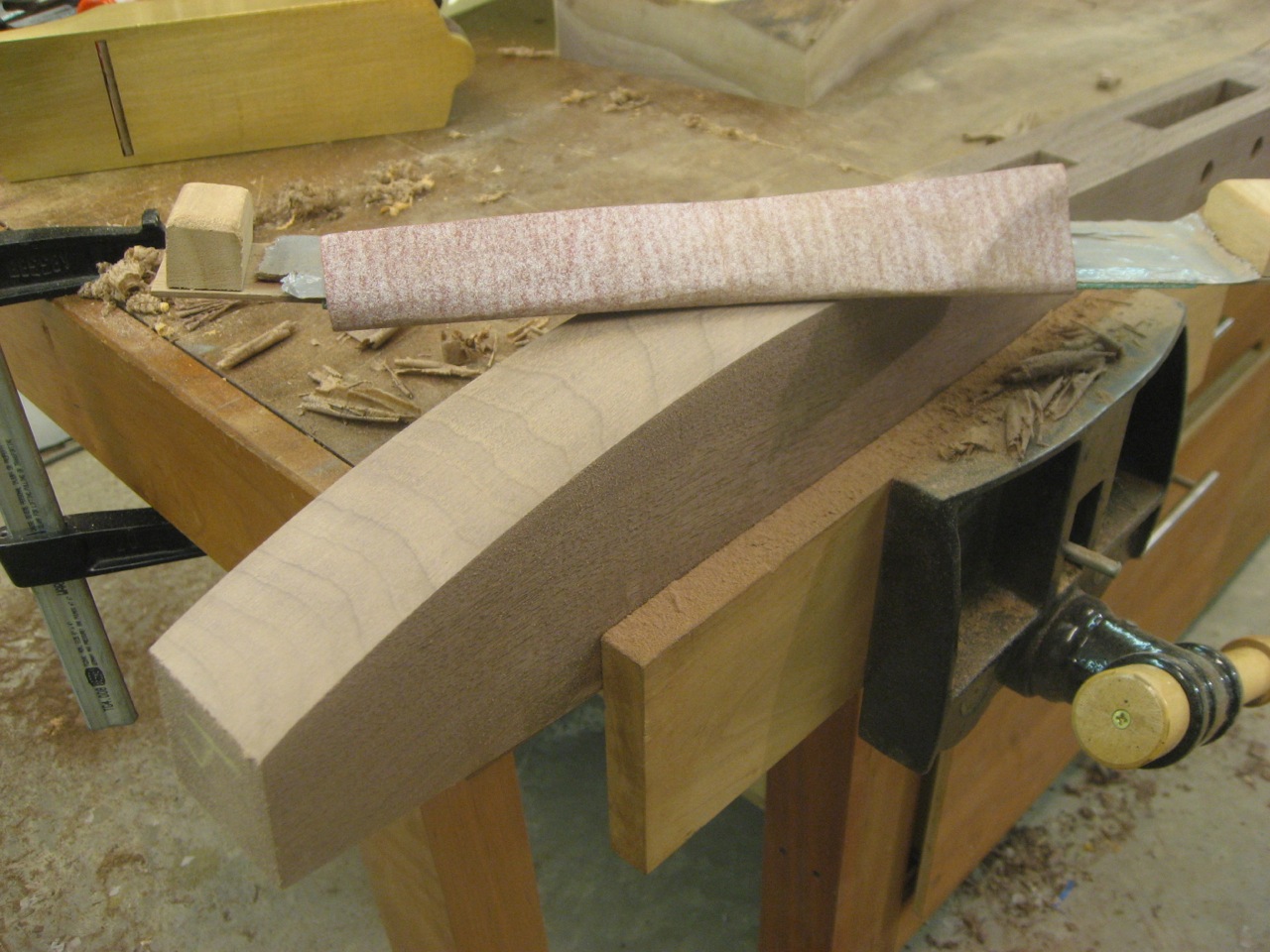
A little sanding with a flexible strip is all it takes to smooth out the curve.

A flexible sanding strip does the final smoothing

A flexible sanding strip does the final smoothing

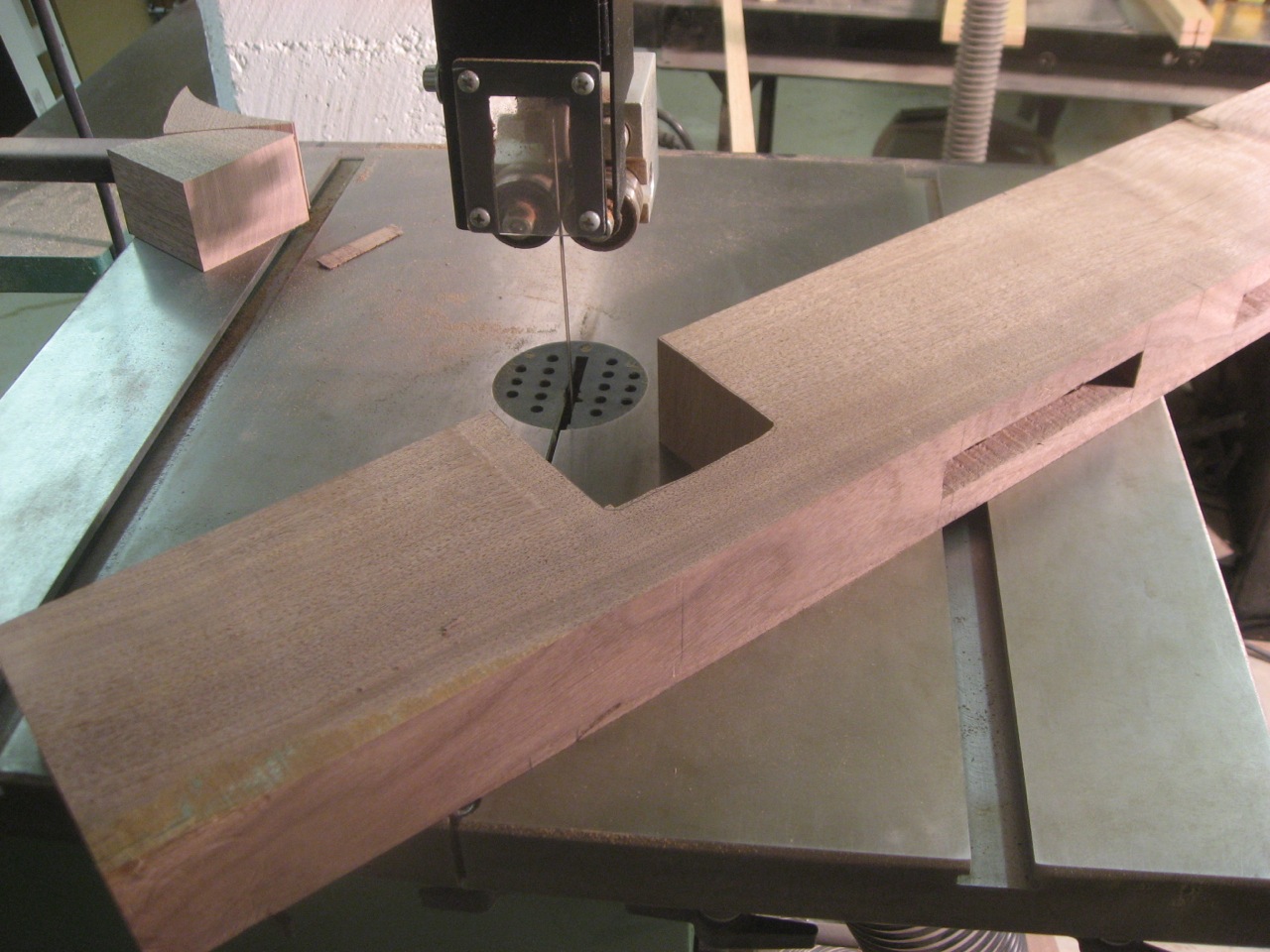
The header needs two cut-outs to allow the table slides to come through the leg, out the end, and support the leaf. These come out quick on the bandsaw.

I use the bandsaw to make the cutout for the table slides.

I use the bandsaw to make the cutout for the table slides.

A little more shaping on the header and we’re ready to cleanup and assemble!

Dec 182012
 

I like to make “buttons” to attach a floating top to the base of my tables.  The button slips into slots in the legs (or aprons on other tables) and then screws to the underside of the top.  As long as the slot is wider than the button, these allow for the top’s movement relative to the base.

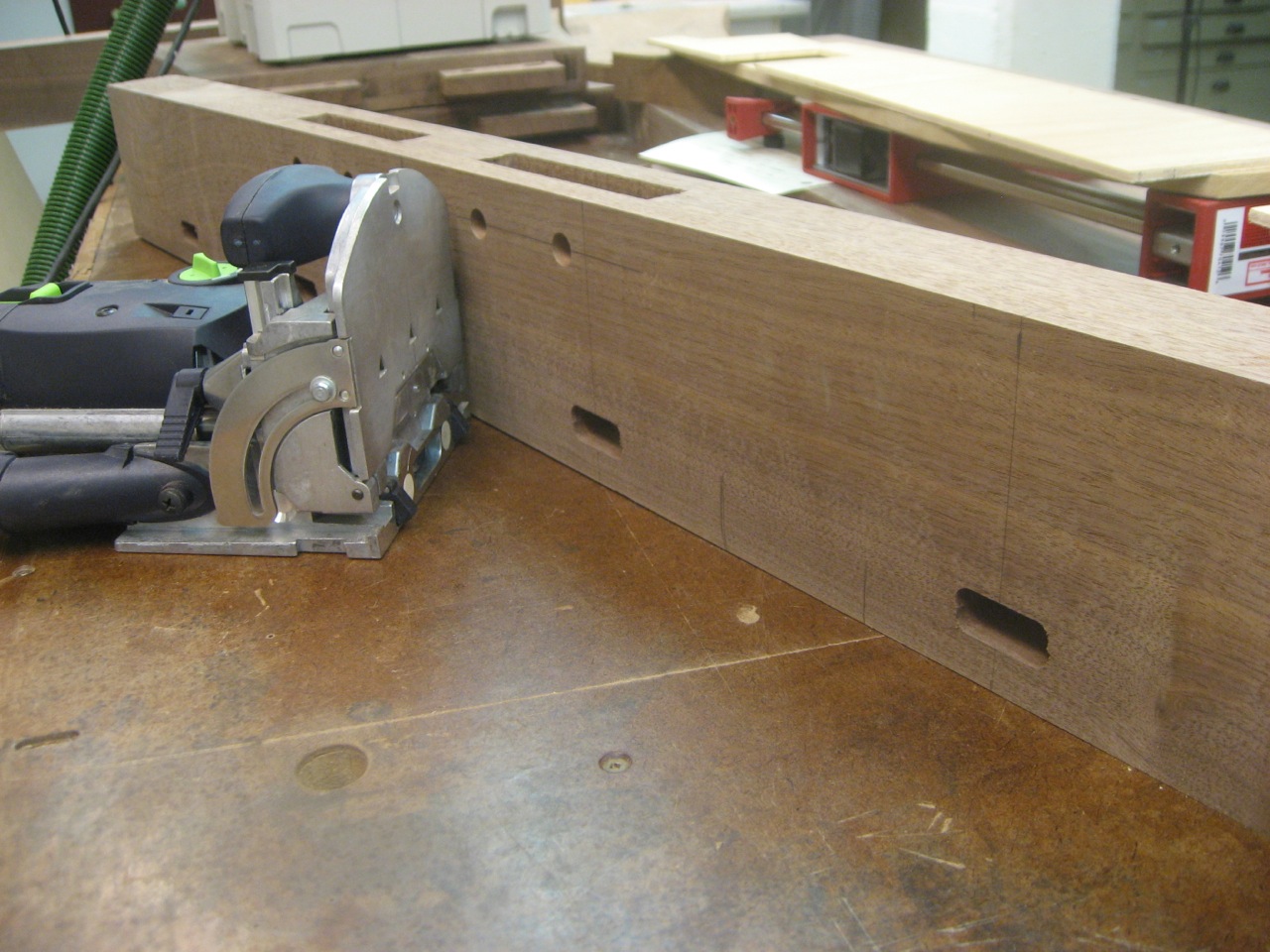
The slots in the legs can be made by hand, with a mortise machine or as I recently discovered: a Festool Domino.  Fast and Easy.

The Festool Domino cut the slots in the leg.

The Festool Domino cut the slots in the leg.

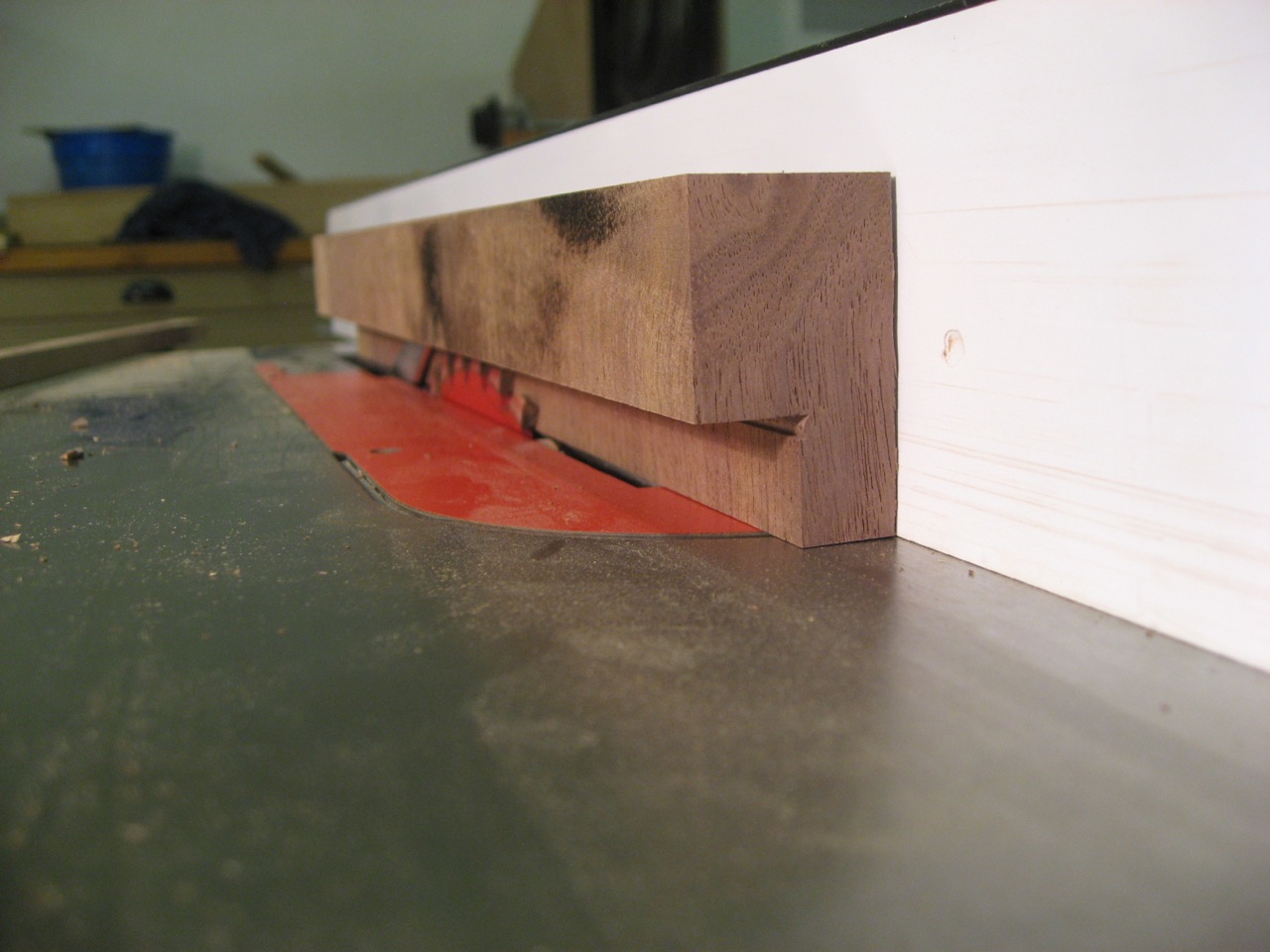
I found a long piece of short-grain wood.  Two passes on the table saw created the button shape.  I could then cut it apart into the 10 final buttons on the chopsaw.

Two passes on the table saw to cut the button shape.

Two passes on the table saw to cut the button shape.

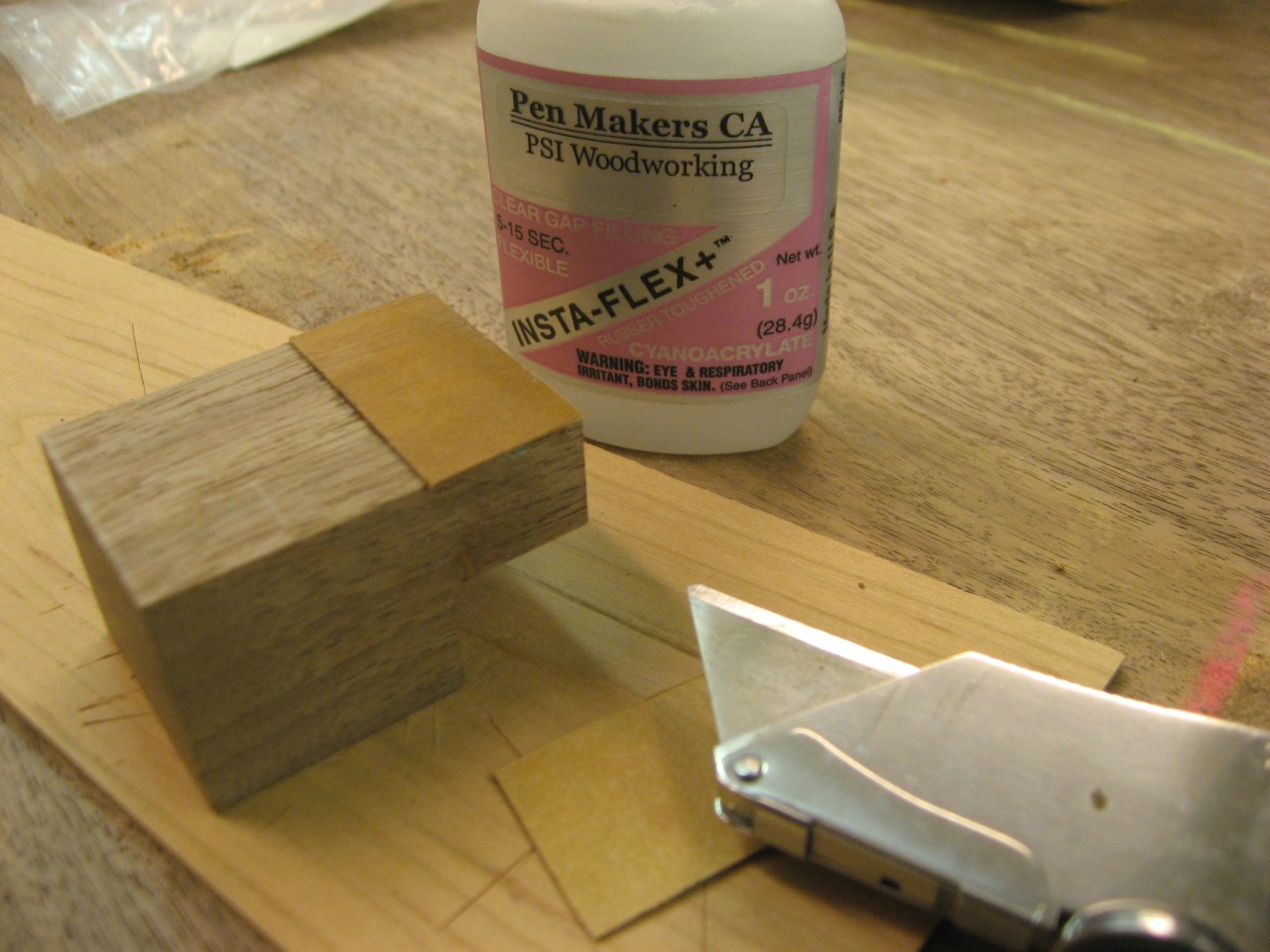
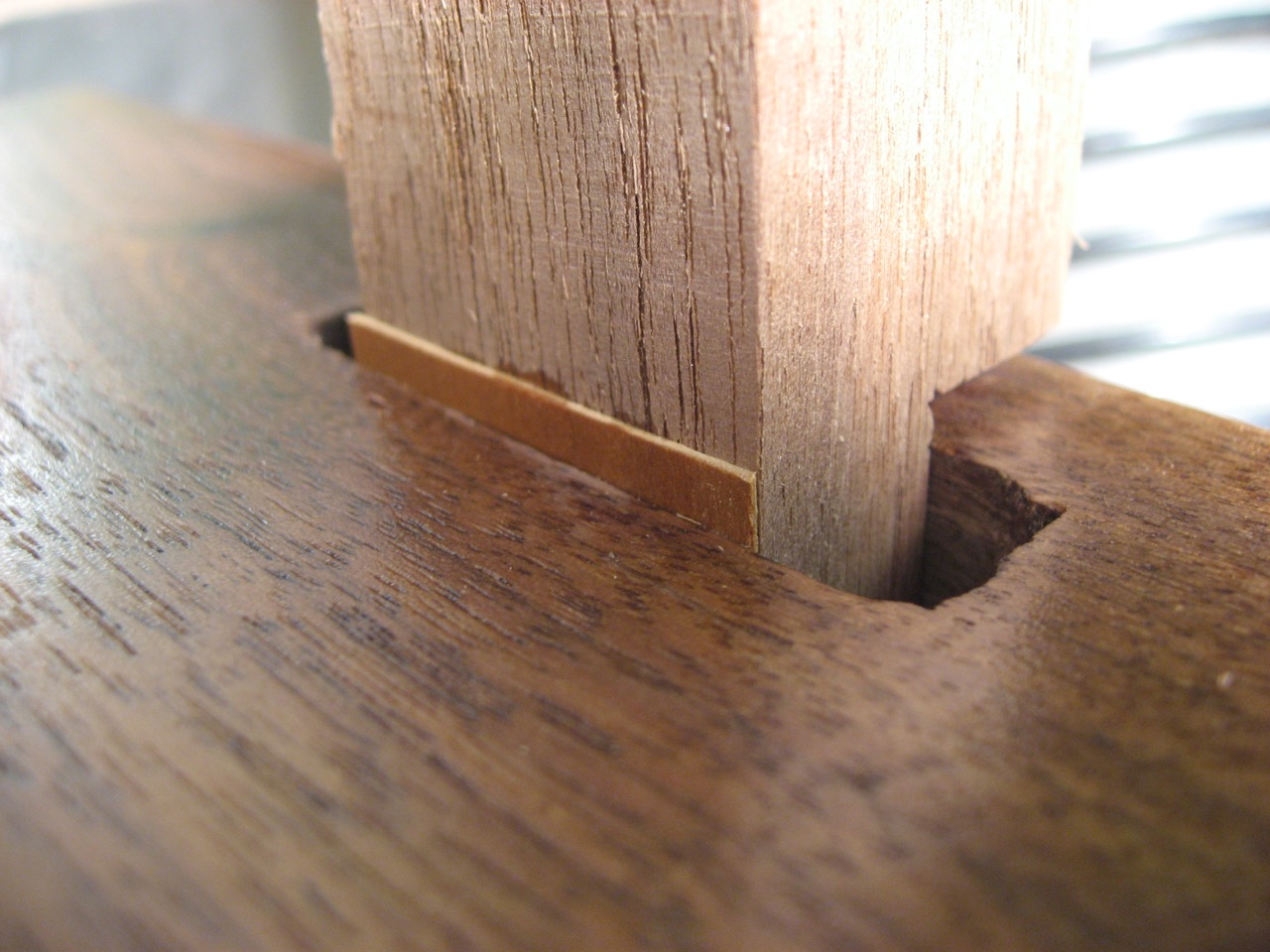
The buttons ended up a little small: they were loose in the slots, to various degrees.  So I custom fit each one to its slot by adding a piece of veneer if necessary (some took 0, 1 or 2 pieces).

Each button was final-fit into its slot by adding veneer if necessary.

Each button was final-fit into its slot by adding veneer if necessary.

I want a nice tight fit in the slot and also to have the button just about flush (slightly under) the top of the leg.  This helps pull the top down flush to the leg.

I went for a nice tight fit, but can still wiggle in and out.

I went for a nice tight fit, but can still wiggle in and out.

Dec 172012
 

I’ve been in the process of building an electric guitar (a Les Paul copy), for, well, do I have to really tell you how long?? Ok, something like two years! Ok, ok, I said it. All right, let me see if I can get myself back on topic.

Currently, I’ve been working to create the cavities where the two pickups sit into the body of the guitar. Most of it is fairly straightforward, as in marking out where I want each pickup to live. Also, I initially drilled out the majority of the waste wood, and followed it up with my router and a pattern maker’s bit.

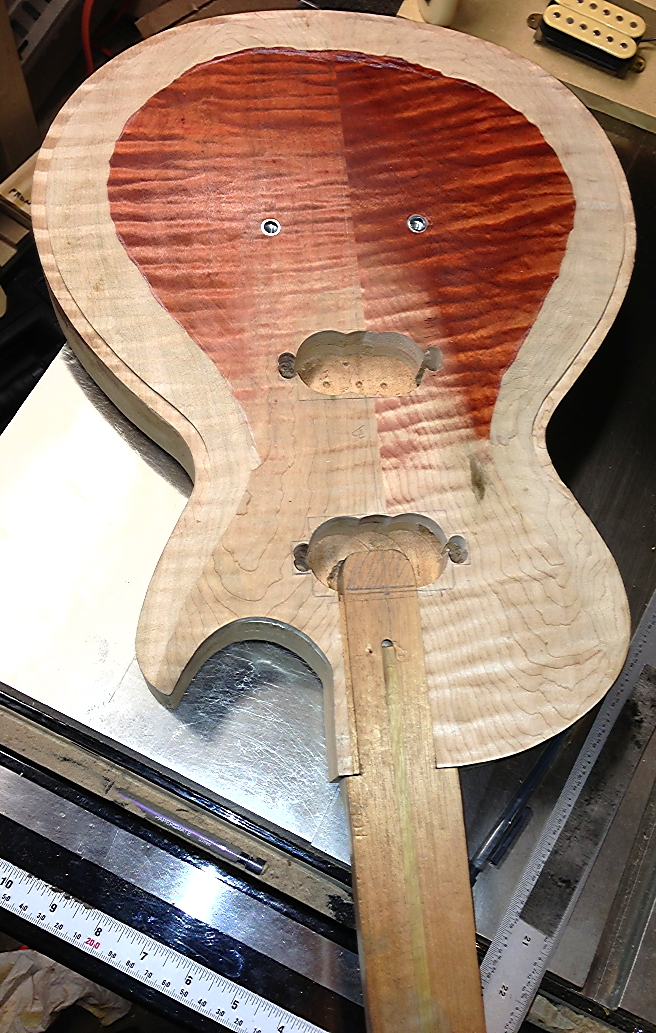
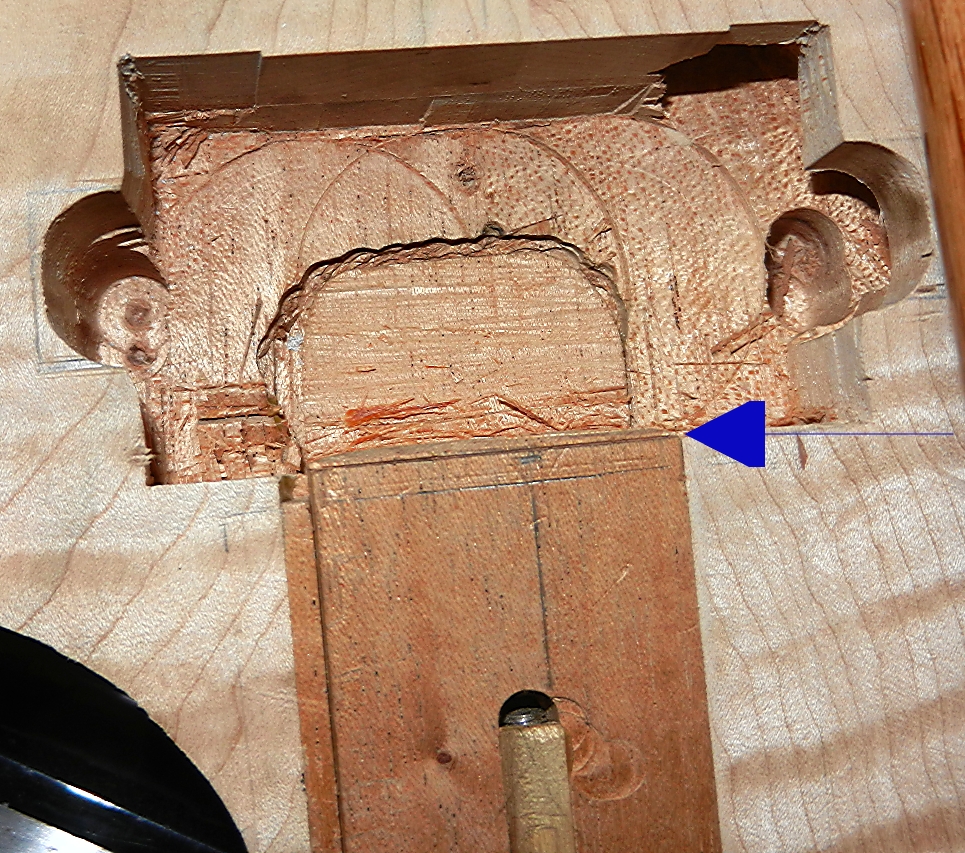
Unfortunately, there was one more piece to the puzzle with this build, relating to making the cavities complete. There are basically two different styles of Les Paul designs. The first has a short tenon on the end of the neck that is glued into the body, and doesn’t interfere with anything else in the build. The second design has a longer tenon, and it actually crosses paths with the neck pickup cavity. So, even though I’d completely routed the body for the neck pickup, I still had to remove the wood from the neck tenon that would otherwise block a good majority of that same space.

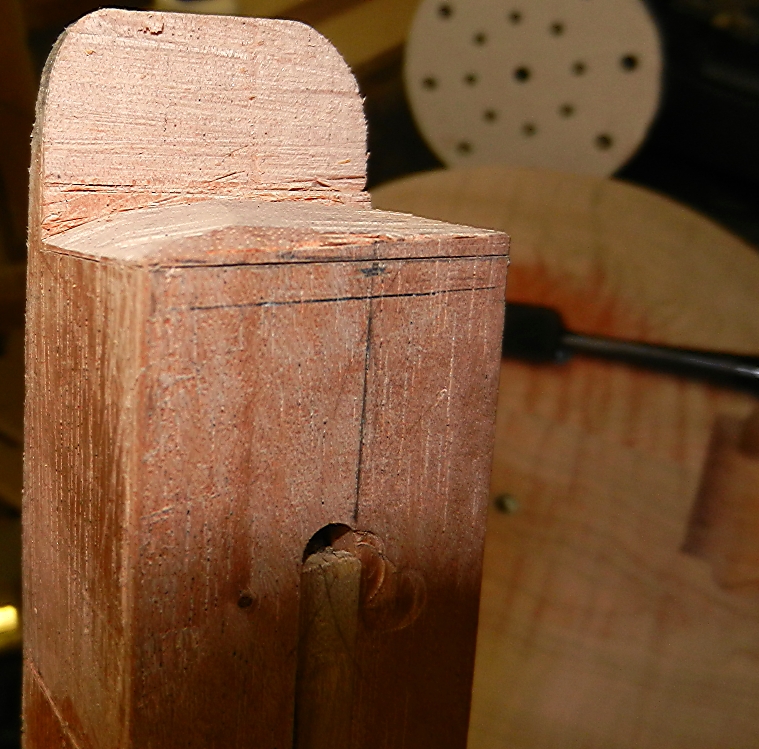
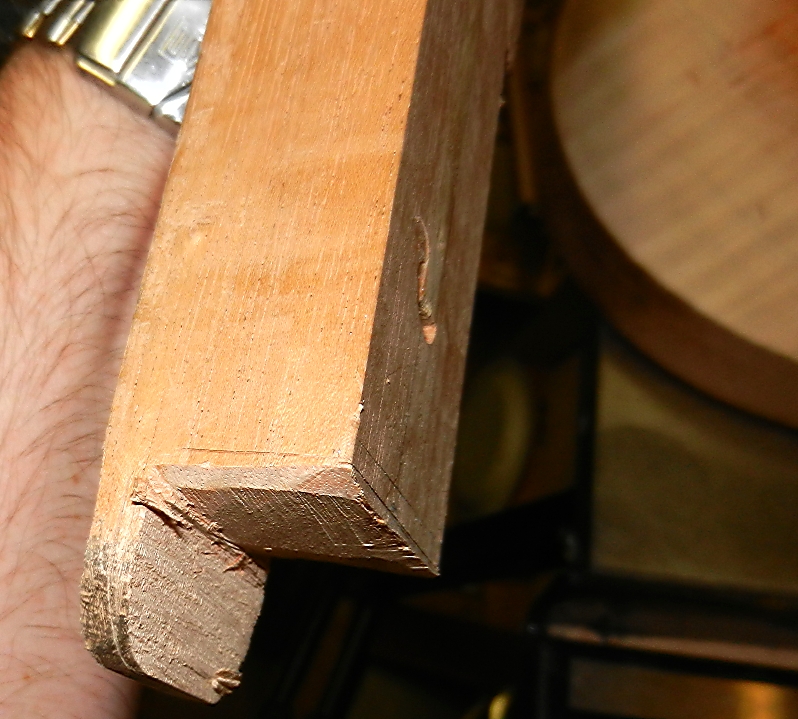
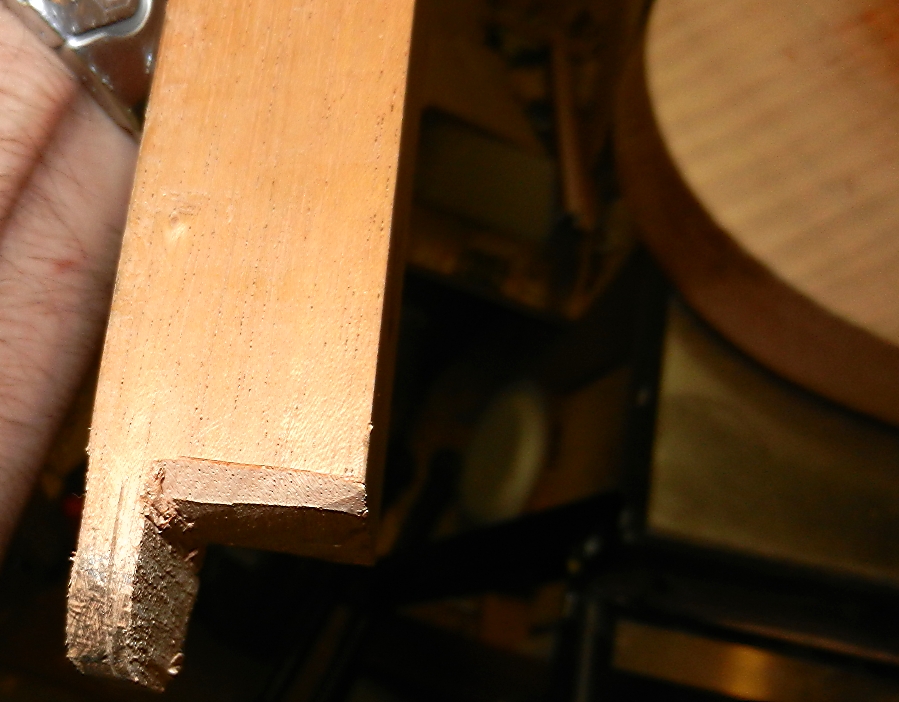
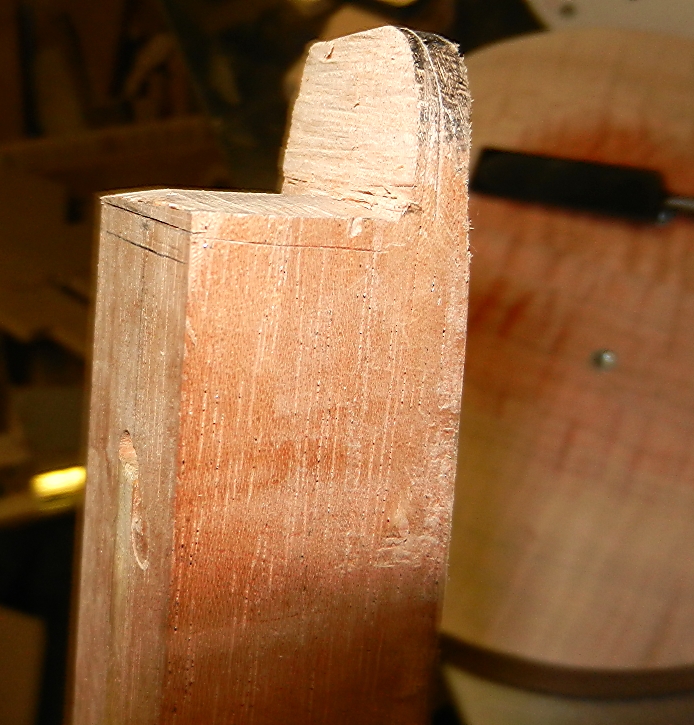
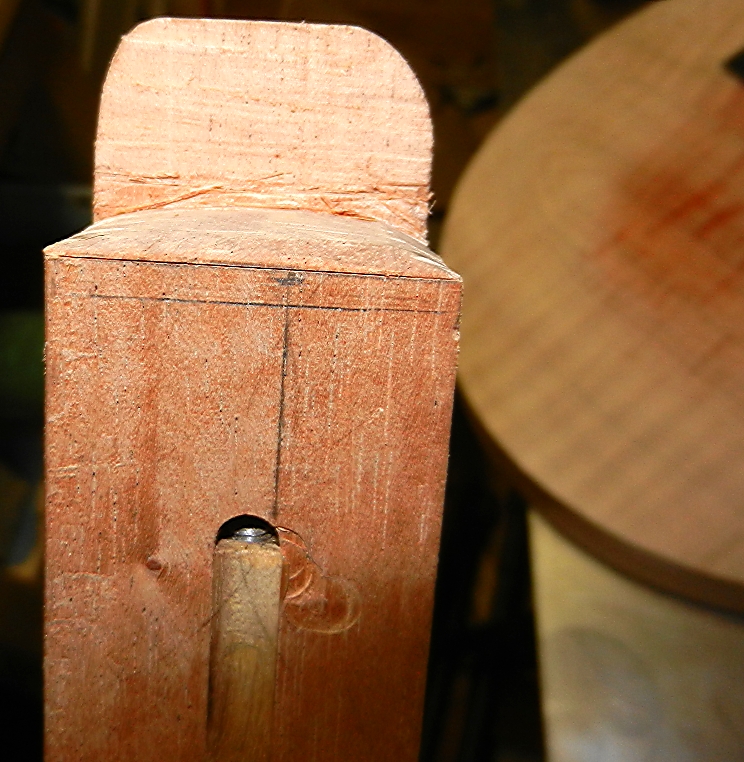
I’m not yet to the point where I want to glue in my neck, so I went about removing the excess wood from the neck tenon, using hand tools rather than just routing it at the same time as the body. I started out by marking a basic area I wanted to remove. I didn’t want to try to hit the perfect mark on the first try. So, I sawed out the material that got me to a much closer fit, but still had to finalize to a perfect fit.

Paring to the knife line on the neck pickup

Paring the other side - first cut

Paring the other side against the line

Paring to the knife line on the other side

End from the top - both angled corners

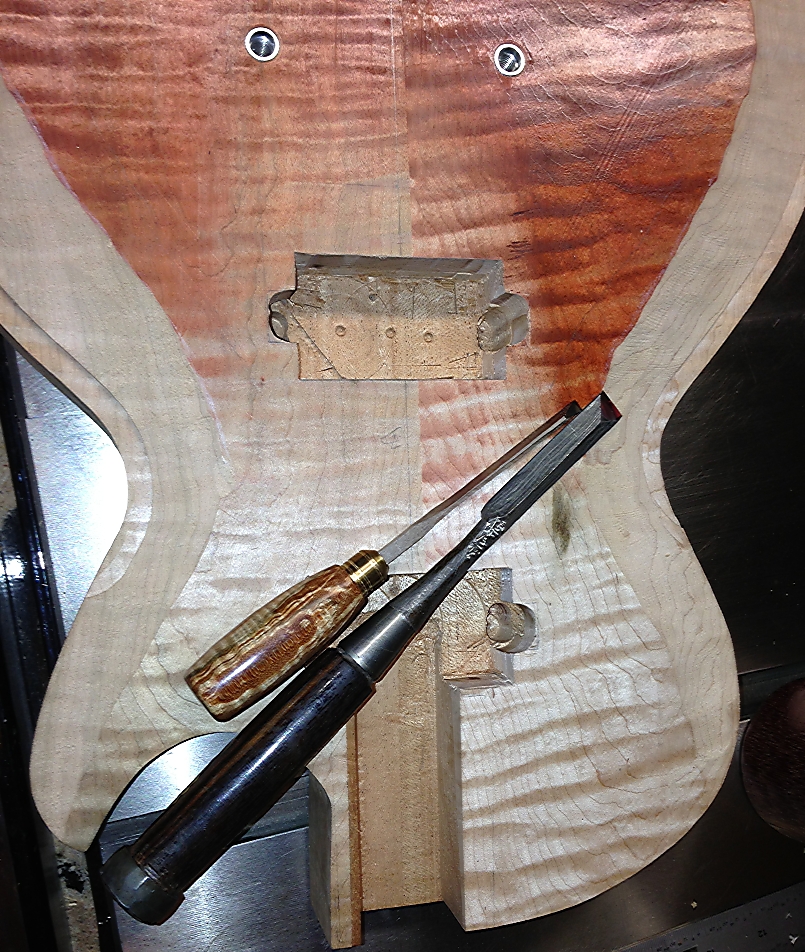
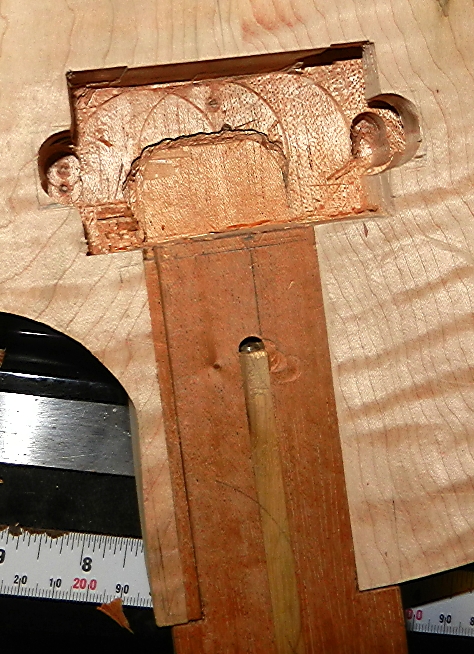
After placing the neck tenon back into the body, I used a metal ruler across the neck, lining up exactly where I wanted the tenon to end. Using a sharp knife, I lightly scored across the grain, for about three or four light passes. After this, I marked up both sides of the neck’s tenon, using the previously routed walls as guides. Rather than pulling out a saw, I thought I’d use one of my paring chisels to fit this section. I start out by taking some material off of both corners, taking multiple passes, until I was down very close to my knife lines on the sides of the tenon. Since the lower section of the tenon remains full length, I did the same procedure from the two sides, and the front (top) of the tenon. After sneaking up on the knife lines, the raised section between these lines is pared away. I have a Japanese chisel that is extremely sharp that I used for this process. It holds an edge almost forever, and has some size to it, so it’s easy to control.

Neck in body showing excess material

Enough removed for the pickup to fit

Just remember to take it methodically. This isn’t the type of operation where you want to rush it, or you’ll likely create a problem.

Please let me know if you have any questions relating to this process.


Lee Laird has enjoyed woodworking for over 20 years. He is retired from the U.S.P.S. and works for Lie-Nielsen Toolworks as a show staff member, demonstrating tools and training customers. You can email him at lee@lie-nielsen.com or follow him on Twitter at twitter.com/is9582

Dec 142012
 

I’ve written a number of blog articles that include sections on sharpening, but in this article I’ll focus on one aspect that can make a huge difference in your results. Even though I’ll talk specifically about this technique for water stones, it is equally important on other sharpening media.

When I first started woodworking, I didn’t have a mentor to show me the ropes, and the Internet was still a glimmer in [whom ever you believe initiated the internet]’s eye. I had a small set of chisels that were so dull, it’s amazing they’d even scare the wood. I’d read an article about Japanese water stones functioning well, so I decided to invest in three stones. I soaked the two coarse stones in water and then started sharpening. I worked and worked, only to start seeing something happening to the ends of my chisels. For lack of a better description, it almost looked like the chisels were grinning at me. What I didn’t know, starting out, was the stones are made so the media breaks down with use. This continues to present fresh sharpening material, allowing the stones to continue to remove metal. I was working primarily toward the central area of the stones, since I was afraid I’d slip off an edge, and the center was the area that was breaking down. Ultimately, it made a dished area, and this made it so the next chisel would touch on the outside edges, but not the center, until enough material was removed from the chisel so it could reach the center. Hence, the nice smile-looking shape on the end of my chisels.

So what did I learn? It’s important to work as evenly as possible on the full surface of sharpening stones, and even more critically, flatten the sharpening stones regularly.

There are a number of ways to flatten water stones (Norton, Shapton, King, …), including sandpaper on a known flat surface such as plate glass, a granite plate, or even on a Table Saw or Jointer table. Another choice, which I prefer, is a diamond impregnated precision metal plate. Specifically, the DMT Dia-Flat Lapping Plate, which is certified flat to a tolerance of .0005” across its surface. This level of flatness is likely more flat than any of the previously mentioned “flat” surfaces. I’ve owned other diamond flattening plates in the past, and when used to flatten sharpening stones, they had a somewhat short life expectancy. Specifically, I have a 400 grit plate that transitioned into something closer to what I believe would be a 1200 grit, due to the diamonds losing their bond when used to flatten water stones. The new Dia-Flat plate has a new proprietary coating that will minimize this degradation, creating a longer lasting precision tool.

I’ve used one of the new Dia-Flat plates for over a year, and it’s still going strong. I can tell that it has a slightly less aggressive bite now, but I’m extremely happy with the present state, with all of the stones it has flattened. I’ve shared this plate amongst my peers, during training sessions this last year, so I’d likely equate this usage to 2 – 5 years worth of time in a one-person shop or possibly more for the hobbyist. Almost 100% of this usage was on Norton 1000/8000 grit water stones. The Dia-Flat Lapping Plate also excels at prepping tools not yet ready for water stones. The diamonds can remove the gross material much quicker and more efficiently than dropping down to a super coarse water stone like a 220 grit, and there is no need to flatten the Lapping Plate.

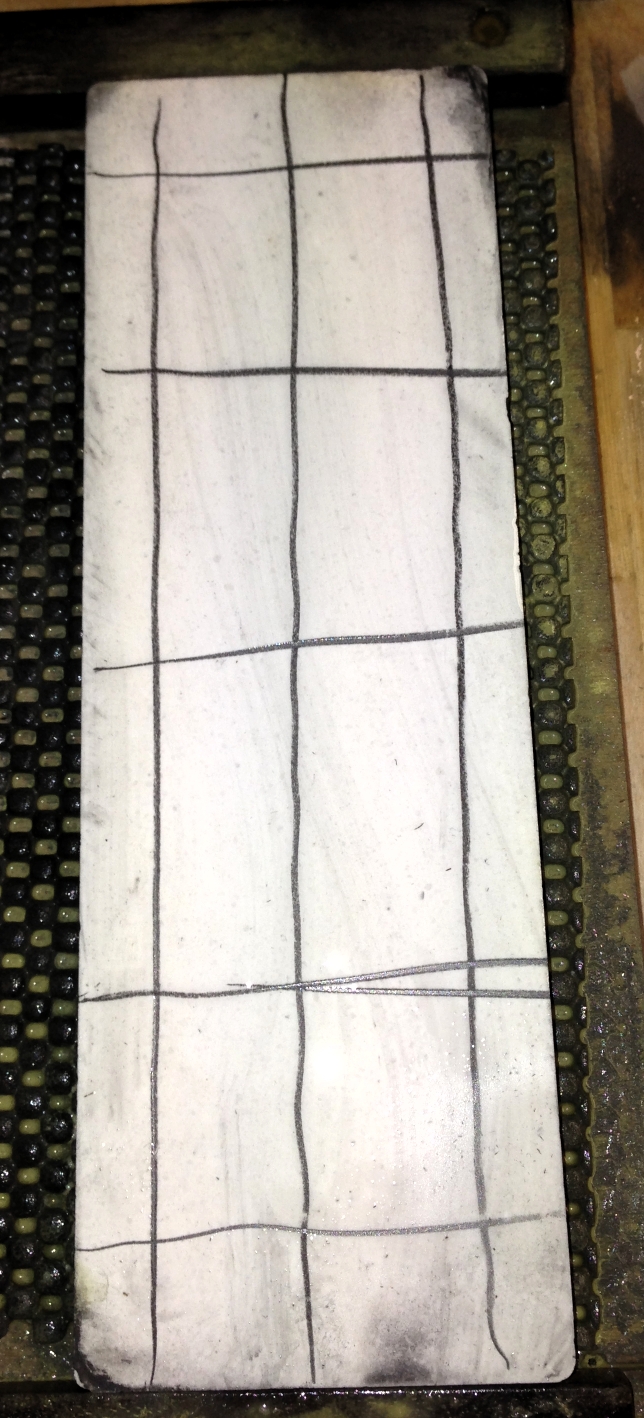
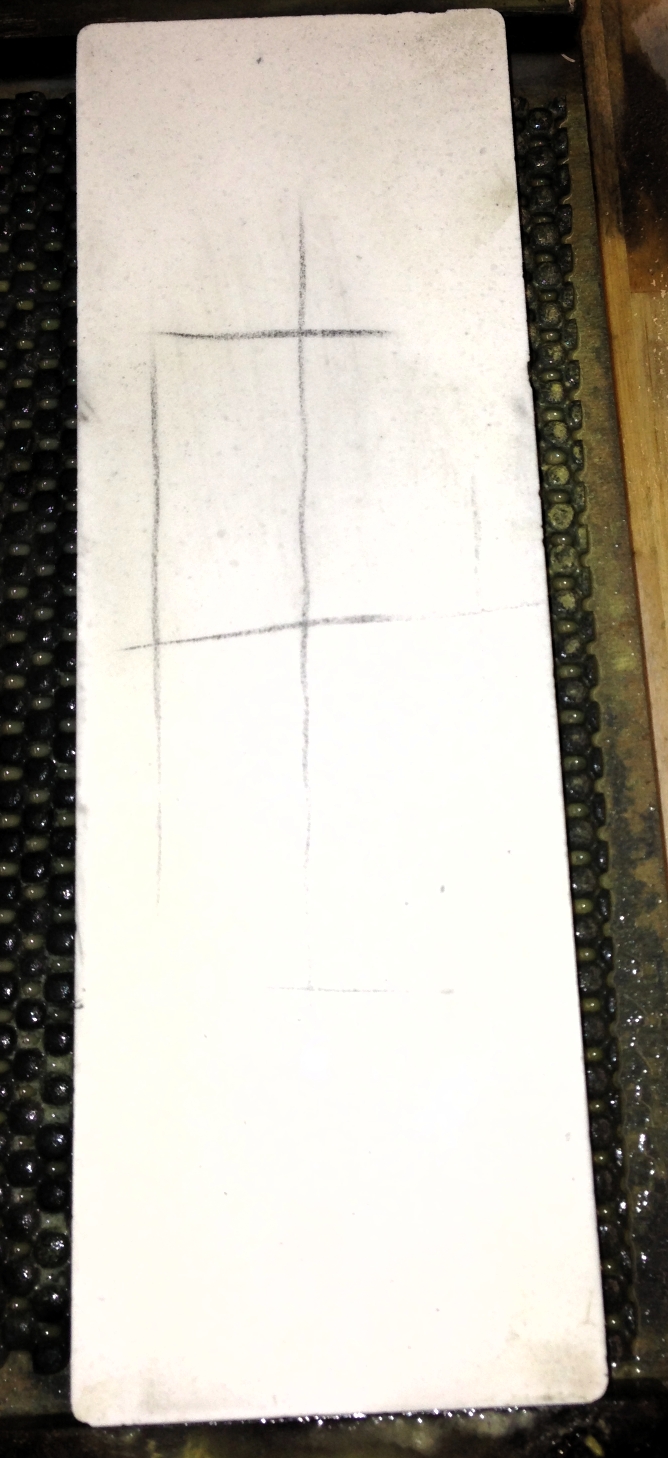
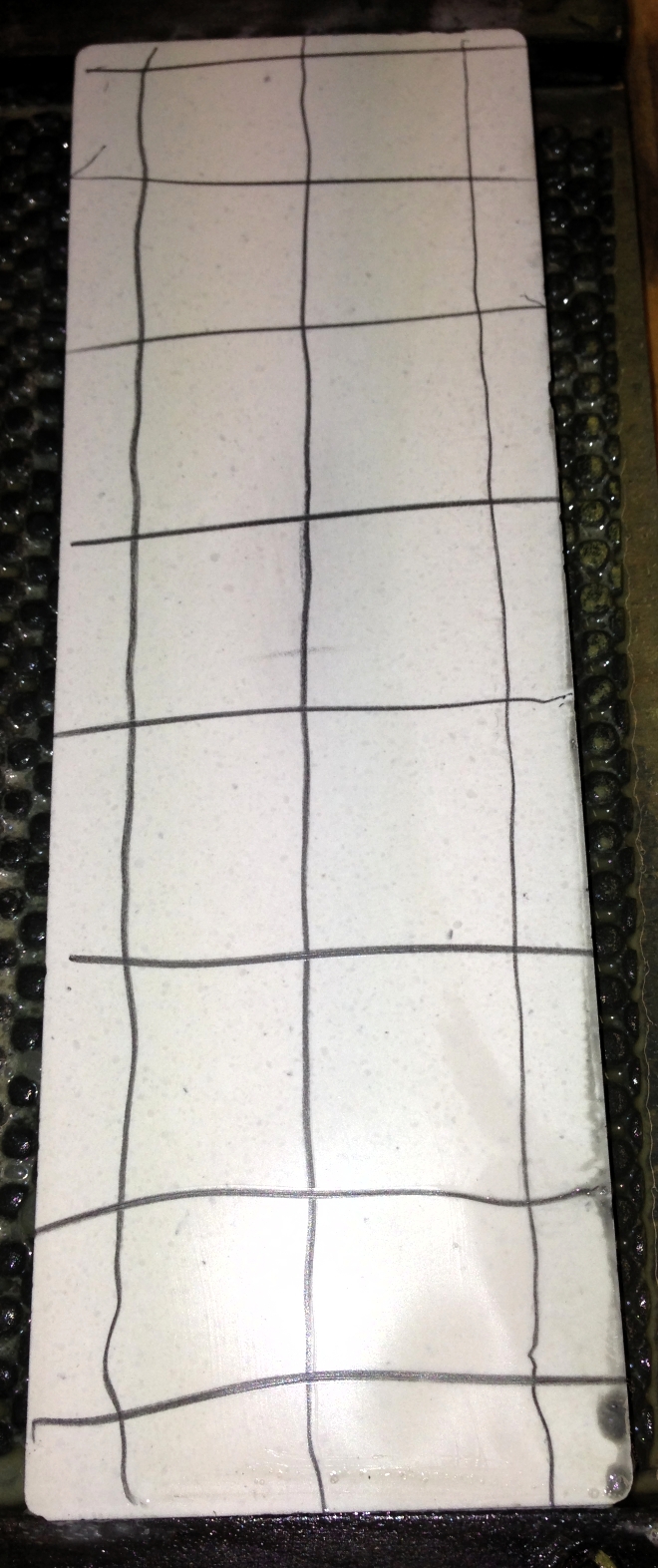
When I flatten a water stone, I take a #2 pencil, and draw a grid across the face of the stone, that has water just like I’d use it to sharpen.


After a couple of passes, I look to see if any of the grid lines are remaining.


If the outside edges of the stone are clean, but the middle area still has some of the grid lines, this indicates the stone has a hollow. Depending on the stone, the pencil lines can also degrade, from the water in the stone. Depending on how dramatic the hollow, I may re-apply the grid a couple of times.


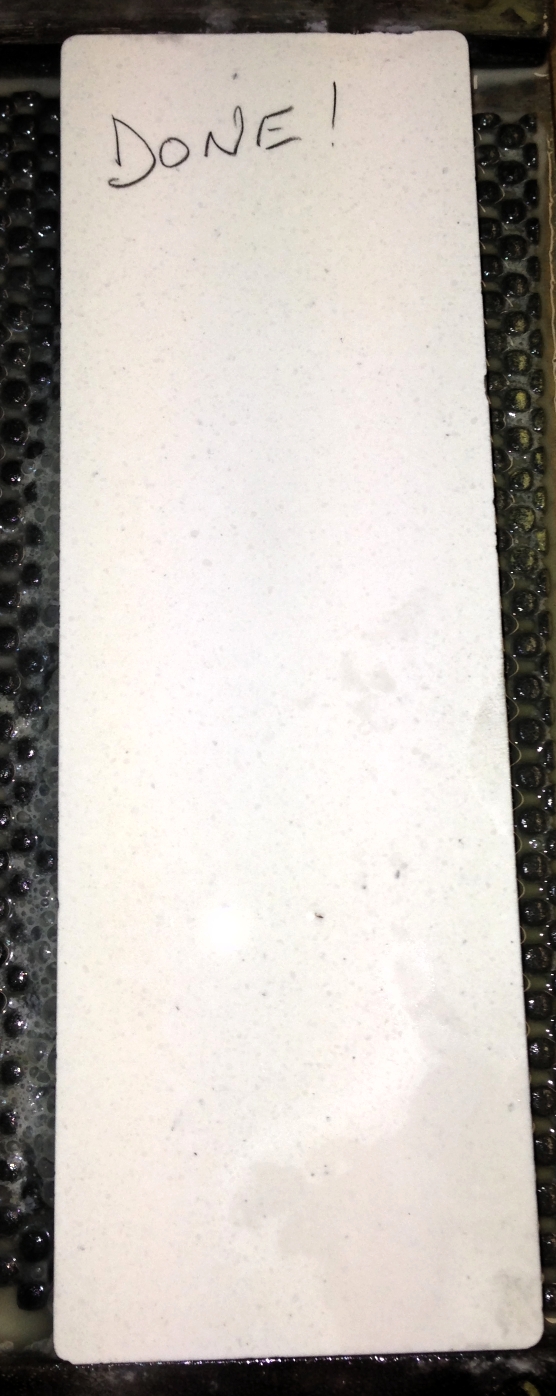
Also, pay attention to the look of the stone during this process. The stone that has made contact with the diamond plate will have a slightly different color, more dominantly in some stones than others, than the area not yet flattened. So, if the grid is all gone, but an area in the center isn’t consistent looking with the outer area, I’d re-apply the grid and just take one test swipe across the diamond plate. If the grid is gone in the center, you’re golden. If not, continue to work until the stone is truly flat. This quick visual makes it very easy to verify when the stone is flat.


You’ll end up spending much less time sharpening, and have a much better result if you flatten your sharpening stones regularly. I know this information would have helped me early on in my woodworking career. I hope it helps you as well.

Please let me know if you have any questions I may have missed.


Lee Laird has enjoyed woodworking for over 20 years. He is retired from the U.S.P.S. and works for Lie-Nielsen Toolworks as a show staff member, demonstrating tools and training customers. You can email him at lee@lie-nielsen.com or follow him on Twitter at twitter.com/is9582