Highland Staff

Nov 032015
 

No Southern-fried Southern boy wants to be called a Yankee, but we share the characteristics of shrewdness and thrift.  Thus, each month we include a money-saving tip.  It’s OK if you call me “cheap.”

Wooden handles for foam paintbrushes have lots of uses, and we’ve extolled those uses before.  Click here to revisit that post.  Here is one more.  When the foam part of the brush has given its all, and the plastic “blade” is broken off, if the wooden part is 3/8” diameter, it makes a great guide for installing new sanding discs on your random orbit sander’s pad.  The 3/8” size “dowel” is a tight fit in the holes of the sanding pad.  Put a stick in the diagonally-opposite sides of the pad and slide the new disc down and into place.
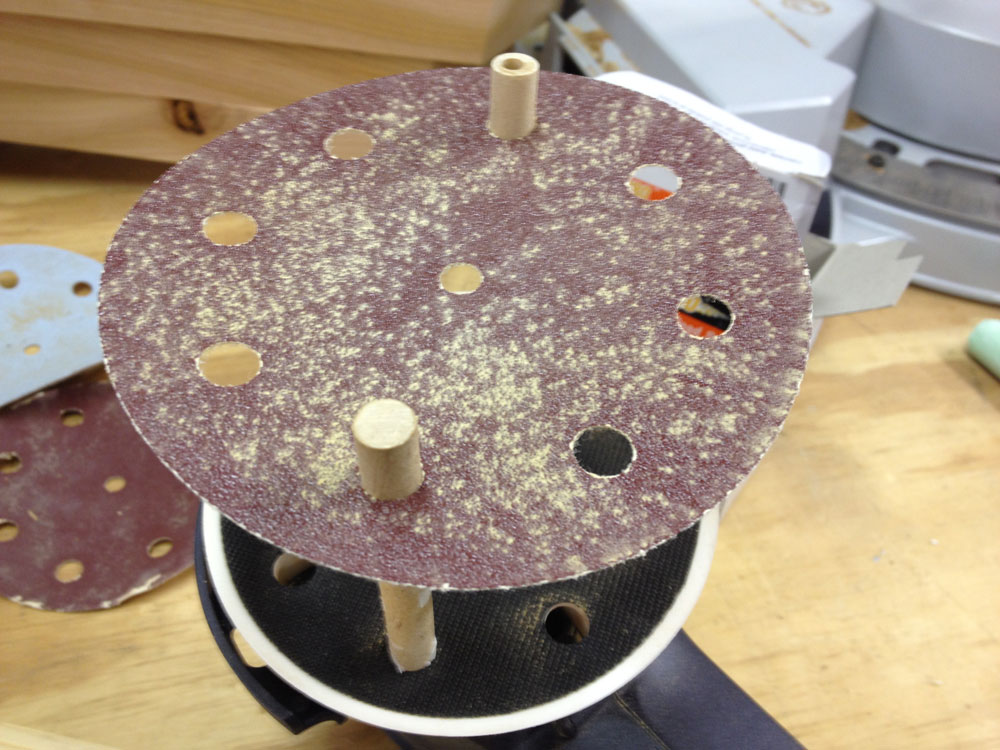
YOU PAID WHAT? These 3/8" dowels were free, salvaged from many-times-reused “disposable” sponge finish applicators. The snug fit means your hole alignment will be perfect. Just slide the loops down to the hooks.

YOU PAID WHAT? These 3/8″ dowels were free, salvaged from many-times-reused “disposable” sponge finish applicators. The snug fit means your hole alignment will be perfect. Just slide the loops down to the hooks.

You will have perfect alignment for the dust extractor to remove the maximum amount of swarf as you work.  I like to keep two dowels in each grit of sandpaper.  That way, no matter which sander I’m using, the alignment devices will be handy.
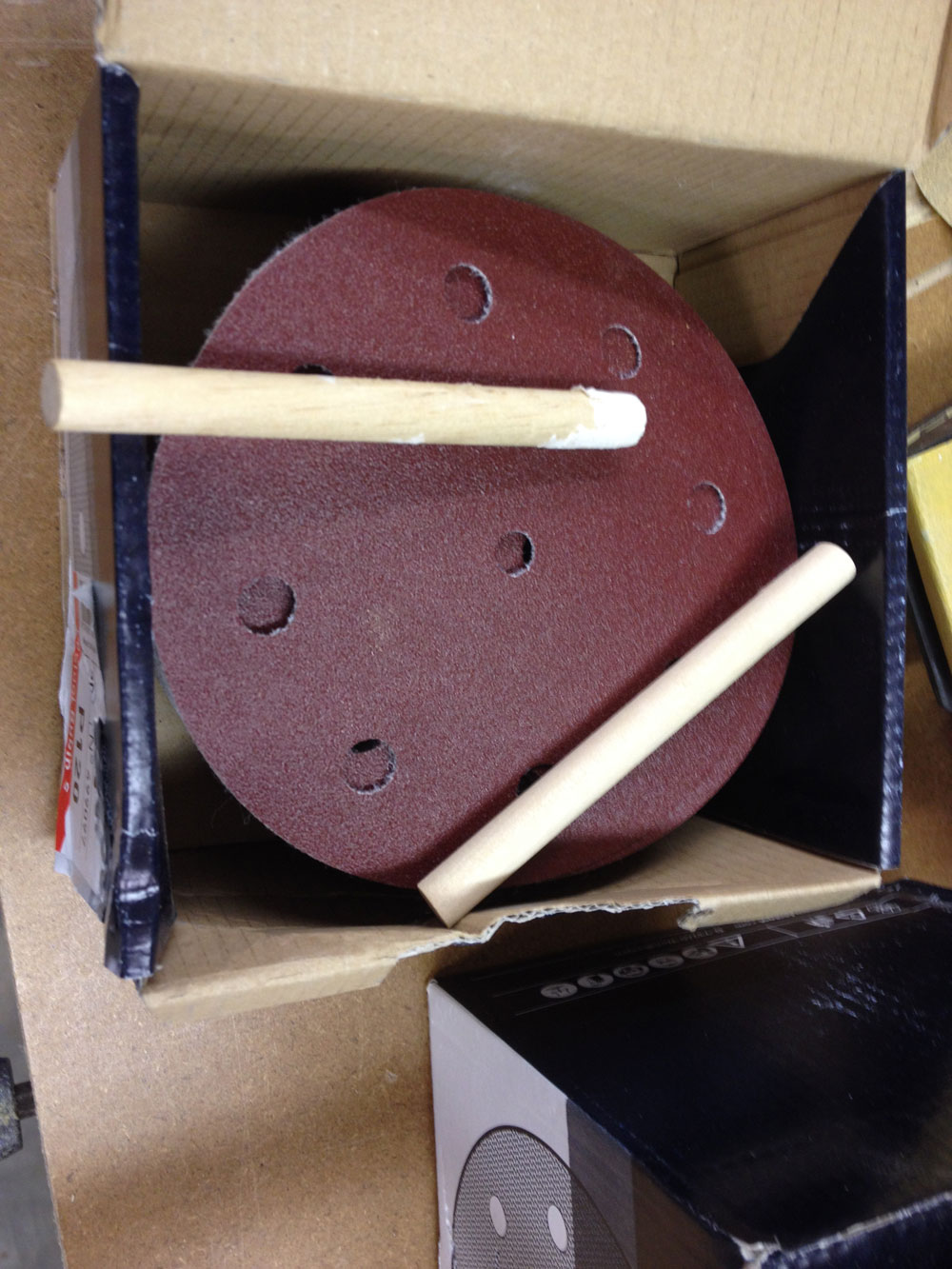
Two brush handles in each grit of sanding discs means quick, easy (and, did I mention free?) alignment.

Two brush handles in each grit of sanding discs means quick, easy (and, did I mention free?) alignment.

—-

Jim Randolph is a veterinarian in Long Beach, Mississippi. His earlier careers as lawn mower, dairy farmer, automobile mechanic, microwave communications electronics instructor and journeyman carpenter all influence his approach to woodworking. His favorite projects are furniture built for his wife, Brenda, and for their children and grandchildren. His and Brenda’s home, nicknamed Sticks-In-The-Mud, is built on pilings (sticks) near the wetlands (mud) on a bayou off Jourdan River. His shop is in the lower level of their home. Questions and comments on woodworking may be written below in the comments section. Questions about pet care should be directed to his blog on pet care, www.MyPetsDoctor.com. We regret that, because of high volume, not all inquiries can be answered personally.
Nov 012015
 

Everyone knows that a pilot hole in a piece of wood can be a game changer.

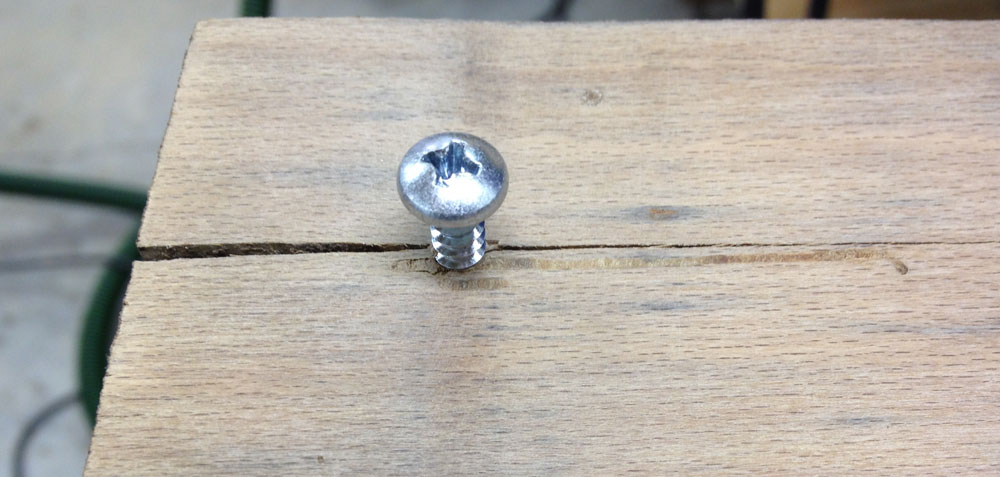
With a pilot hole, this split might not have happened, and this part of the project might not have required being made over again.

With a pilot hole, this split might not have happened and this part of the project might not have required being made over again.

Making a path for a screw might prevent your ruining an important piece of a project, a split in a board (especially at the end), a broken-off screw, or strained muscles from hand-driving a screw through dense wood fibers.

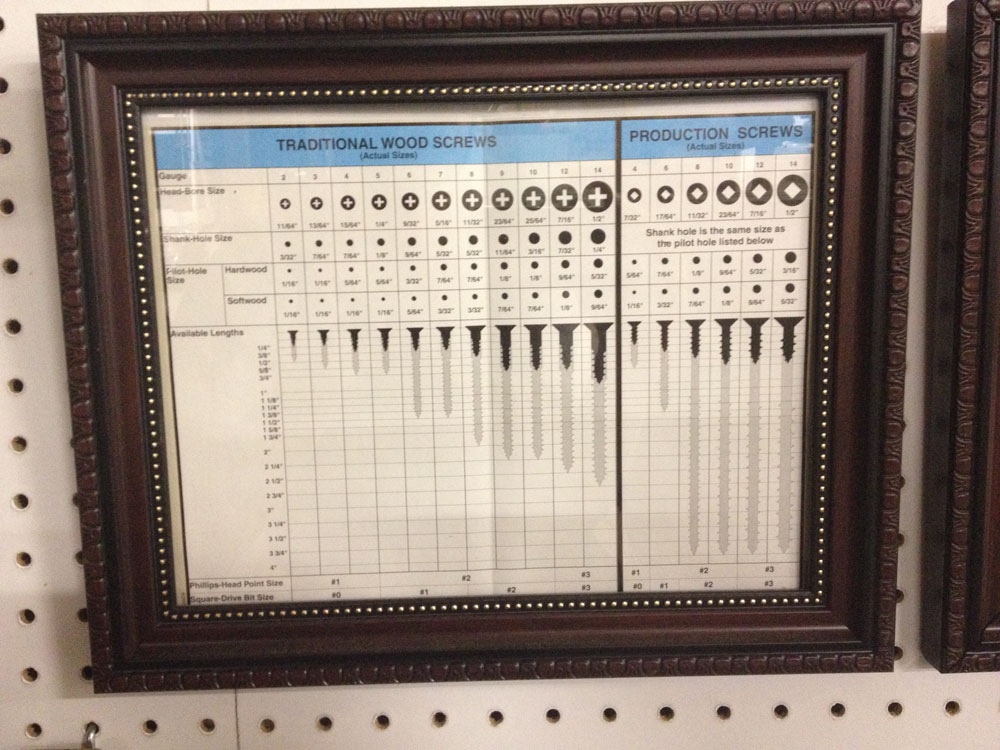
Charts exist to guide you on the proper pilot hole size for a variety of screw types in various materials.

These charts are very helpful, but not very mobile. Pilot hole charts can be photographed and stored on your phone, or pulled up on the Internet.

These charts are very helpful, but not very mobile. Pilot hole charts can be photographed and stored on your phone, or pulled up on the Internet.

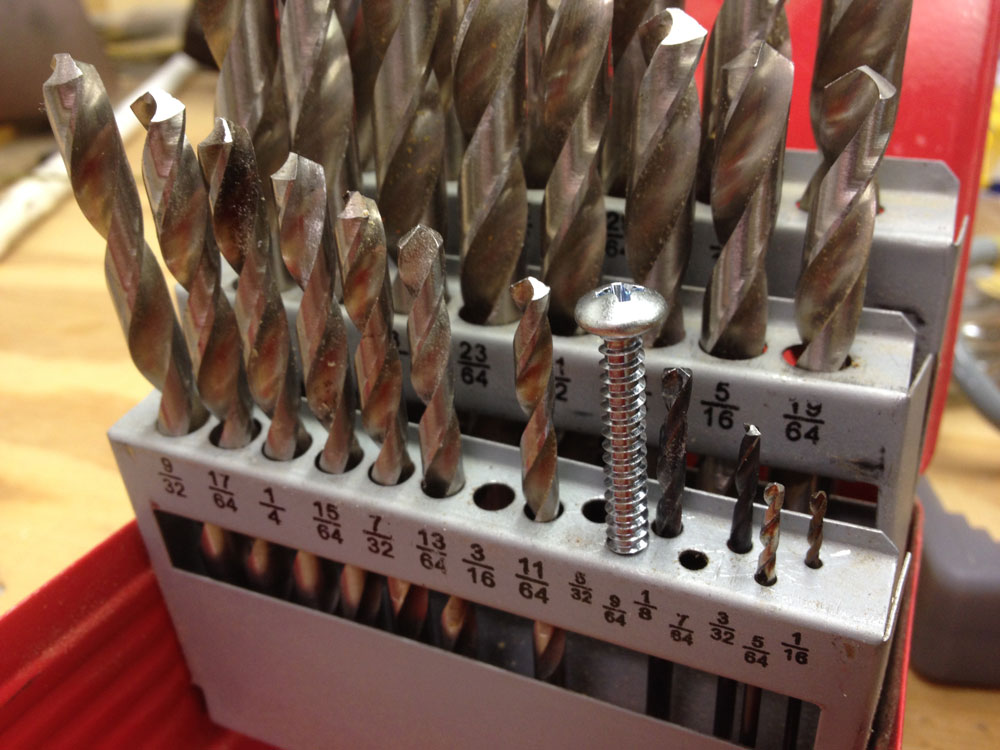
However, if you find yourself away from the shop and needing a pilot hole, your drill index can help.  The hole each bit resides in is a snug fit.  Remove the bit and find the smallest hole the threads of your screw will go into with just finger force.  That bit will give you a perfect pilot hole in most hardwoods.

For soft woods like spruce, cypress and pine, experiment with the next smaller size bit for the pilot hole.  The soft fibers will grip the wood more tightly and reduce the likelihood of fastening failure.

If I have to pay extra for drill bits to get them in an indexed box, I will. It’s that valuable. If I’m putting this screw into a hardwood, like oak, I’ll use a 9/64" bit for the pilot hole. If it’s going into spruce, I’ll drop back one size for a tighter fit, to 1/8".

If I have to pay extra for drill bits to get them in an indexed box, I will. It’s that valuable. If I’m putting this screw into a hardwood, like oak, I’ll use a 9/64″ bit for the pilot hole. If it’s going into spruce, I’ll drop back one size for a tighter fit, to 1/8″.

—-

Jim Randolph is a veterinarian in Long Beach, Mississippi. His earlier careers as lawn mower, dairy farmer, automobile mechanic, microwave communications electronics instructor and journeyman carpenter all influence his approach to woodworking. His favorite projects are furniture built for his wife, Brenda, and for their children and grandchildren. His and Brenda’s home, nicknamed Sticks-In-The-Mud, is built on pilings (sticks) near the wetlands (mud) on a bayou off Jourdan River. His shop is in the lower level of their home. Questions and comments on woodworking may be written below in the comments section. Questions about pet care should be directed to his blog on pet care, www.MyPetsDoctor.com. We regret that, because of high volume, not all inquiries can be answered personally.
Oct 292015
 

Sometimes I hear woodworkers talk about avoiding repair jobs around the house and it makes me wonder, “Aren’t most woodworkers also do-it-yourselfers?”

My first introduction to woodworking was in Wood Shop class in junior high school.  No one in our family worked in wood, built furniture, or anything remotely associated with what we call woodworking today.  However, every male member of the family was “handy” and self-sufficient.

I got into home construction after the Air Force and, as much as I enjoyed it, I didn’t want to make a career of it.  Still, I stayed with it long enough to approximate journeyman status, and the skills I learned there I apply to nearly every session in the shop.  Germane to the present conversation, though, is the fact that, with the exception of a flooring installer (actually, Brent Wilson should be called an artist!), we’ve never had a carpenter or wood-oriented repairman come to our home in 30 years of marriage.

If something needs to be fixed, Brenda says, “Sweet Baaaaaaaabeeeeeeee, can you put a shelf here for me?” Or something similar.  Sweet-talk gets me every time!  When we moved into the new house, 19 years ago this Thanksgiving, I set up a rudimentary shop in the lowest level and trekked up and down two flights of stairs until her art studio was completely outfitted.  It was only after that when I got to begin formalizing my own work area.

A list of well-known do-it-yourselfers:

  • Steven Johnson renovated his Down To Earth Woodshop.  Click here to read Steve’s story and his trials with the legacy of the unhandy homeowner.
  • Michael Smith built his own shop in a series on Highland Woodworking.  Click here to read Michael’s story and the trials of being one’s own contractor.
  • The Wood Talk podcast crew (Marc, Matt and Shannon) even weigh-in on the topic.  Click here to listen to the episode they discussed DIY in detail.

(Respondents are encouraged to make comments below the post.)

Jim Randolph is a veterinarian in Long Beach, Mississippi. His earlier careers as lawn mower, dairy farmer, automobile mechanic, microwave communications electronics instructor and journeyman carpenter all influence his approach to woodworking. His favorite projects are furniture built for his wife, Brenda, and for their children and grandchildren. His and Brenda’s home, nicknamed Sticks-In-The-Mud, is built on pilings (sticks) near the wetlands (mud) on a bayou off Jourdan River. His shop is in the lower level of their home. Questions and comments on woodworking may be written below in the comments section. Questions about pet care should be directed to his blog on pet care, www.MyPetsDoctor.com. We regret that, because of high volume, not all inquiries can be answered personally.
Oct 262015
 

Well, I just “binge watched” fourteen episodes of “The Woodwright’s Shop” and it was pretty spectacular. Roy Underhill has such an easy manner about him that he is almost able to make the show come alive, as if he is right in the room with you…. Oh wait, he was in the room. Bad jokes (dogwood, the tree you can tell by its bark!), frenetic energy, hand tools and mystery dovetails galore. The only thing he did not do was cut his hand.

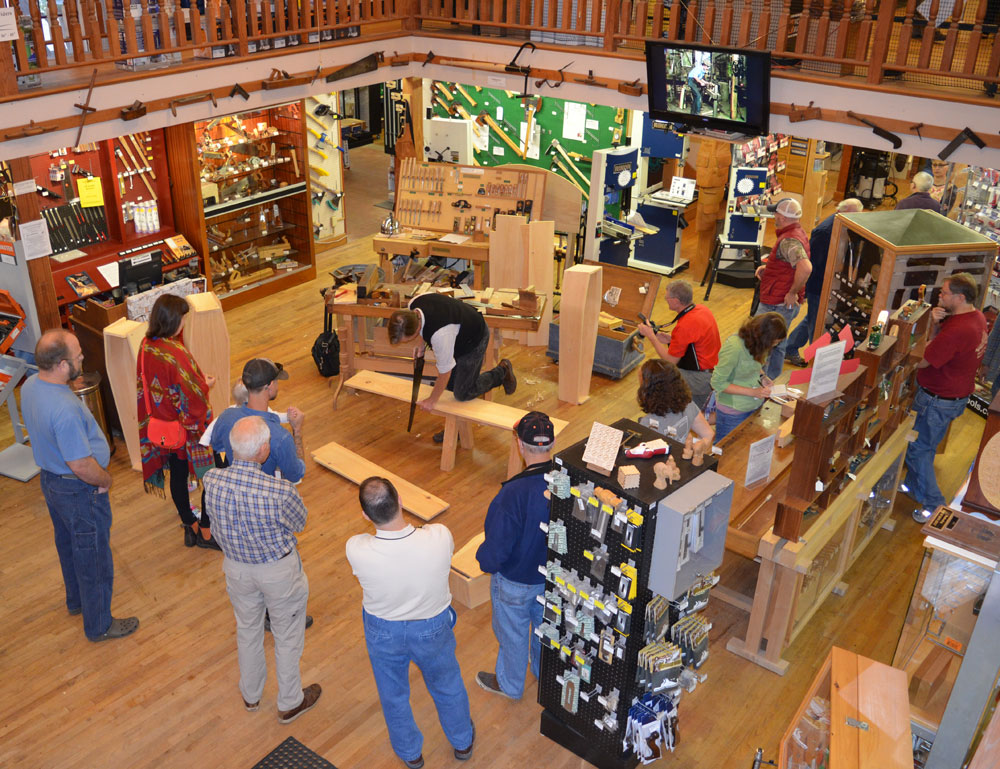
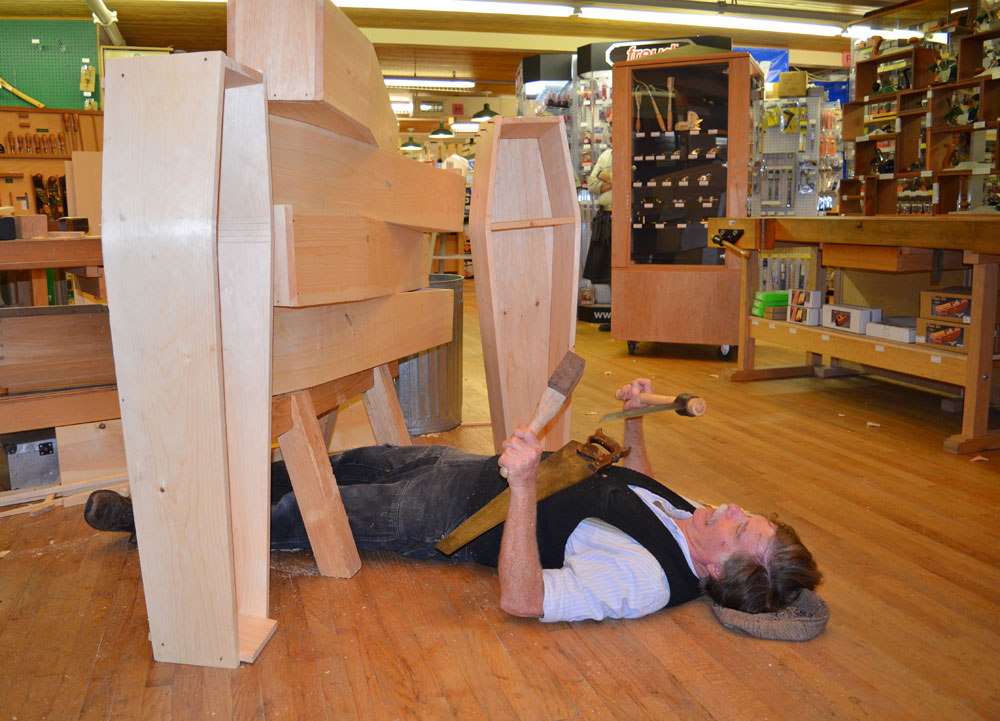
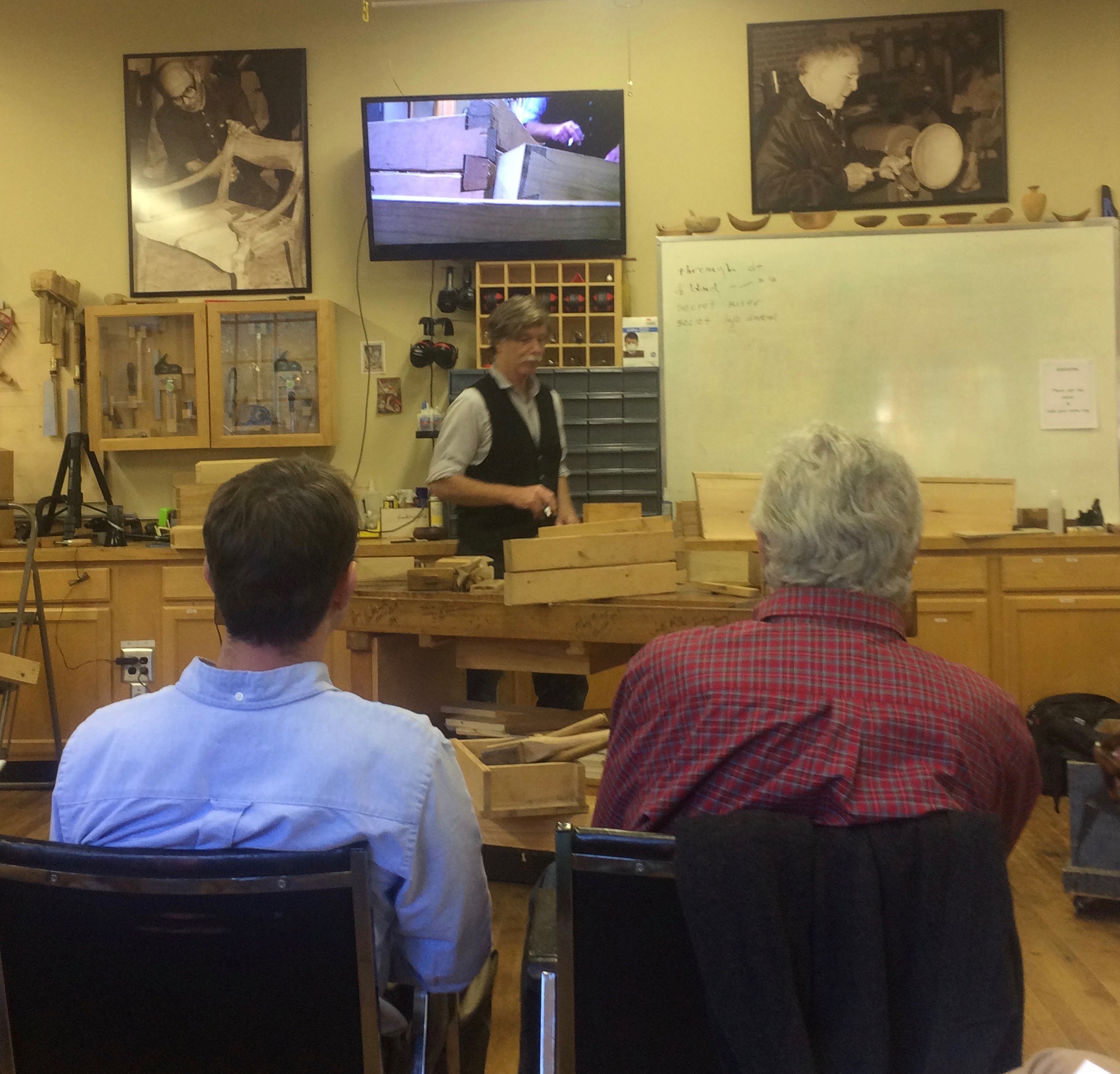
What a lovely place --masters above, Roy at the front, tool cabinets, and the bench signed by all the great instructors.

What a lovely place –masters above, Roy at the front, tool cabinets, and the bench signed by all the great instructors. Note the coffin to the right front.

Roy came to Highland for the weekend and taught a daylong class on Sunday to about 30 fans and hand woodworking enthusiasts. It was a joy. I have been watching his show for almost as many years as he has been making it (though usually not fourteen at a time) and I still enjoy it. If you see Roy in person, as on the show, you begin to realize there is a large intellect in there despite the dumb jokes. For instance, every now and then he lapses into French and seems very comfortable doing so. Occasionally you catch an obscure historical reference indicating a widely read, well-educated man.

Class members started out taking notes like they were in college, but it soon became apparent this is not your Mama’s college class. We jumped from why the screw handle on a bevel gauge was made all wrong (bad English tools as revenge for loss of the colonies), to the dovetailed log cabin at Shakespeare’s birthplace as prelude to American log cabins.

Of course, our subject for the day was the dovetail joint with numerous variations. We covered them all and Roy made most of them during the class. I don’t think he messed one up all day, at least where any of us could tell. The standard dovetail he made looked to me to be a little bit tight and I thought he would never get it put together. He did get it to close up tight and it was lovely. We all got a laugh when he pulled that Lie-Nielsen Dovetail Saw with the three foot blade out of a coffin (thats right, a coffin) he made on Saturday at the store demonstration. He really did cut a pin with one stroke of that thing.

I suspected many of my classmates had never heard a perfectly tuned and sharpened hand plane make that distinctive “snick” sound. It was many years into my woodworking career before I recognized the sound because I was not capable of sharpening and tuning my planes well enough to make that sound. It is always lovely to hear and of course, Roy is a master of that particular skill.

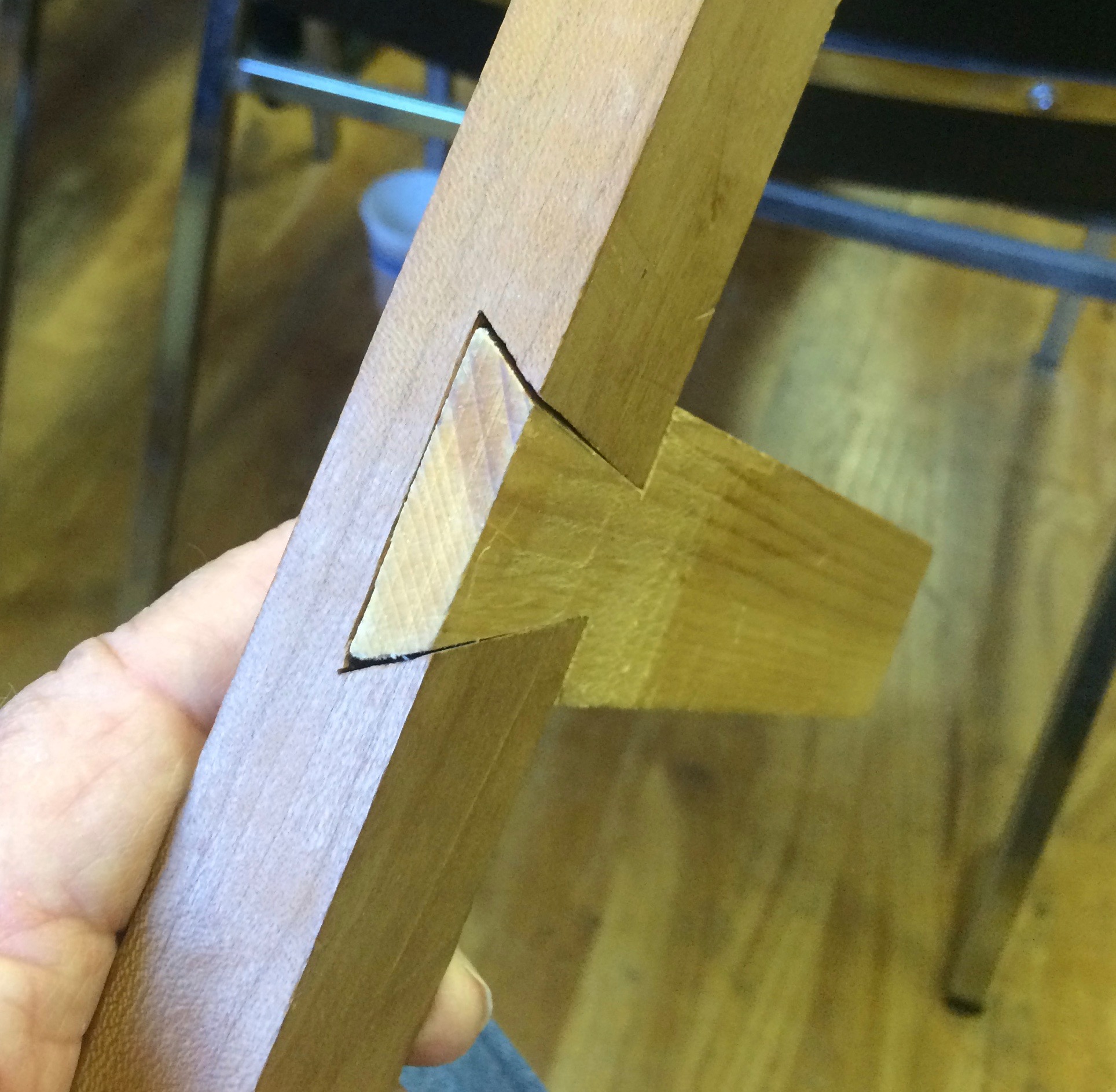
I want to show you just one dovetail and this is a test. See if you can figure out how this one comes apart:

A Dovetail you cannot put together or take apart.

A Dovetail you cannot put together or take apart.

It was a great day. If you get a chance to go to a class with Roy, by all means do so. Even better, he runs a school in North Carolina and you can find the class schedule here.

Check out the Highland class schedule here and come on down. By the way, you will look a long time for a dovetailed log cabin at Stratford on Avon.  Log cabins did not exist in England.

And send a comment note if you want to see how that dovetail in the picture comes apart.

Oct 222015
 

HWT55This month, we’ve got a great new issue of The Highland Woodturner with 2 project ideas, some great woodturning tools, and more!

This month’s issue includes:

Turning Beads– Curtis Turner teaches us how to turn small beads that you can either use to keep strings together on a lanyard, or you can turn a bunch of them and make a beautiful piece of jewelry for that special someone.

Turning a String ‘n Ring Puzzle– If you’ve ever been a fan of wooden mind puzzles or know of someone who is, you should check out this project article from Temple Blackwood, who goes over the step-by-step directions of how to make your own!

Show Us Your Woodturning– This month we’re featuring the woodturning projects of Dave Morgan, including several turned bowls, urns, and ornaments.

Phil’s Woodturning Tip– This month Phil has a tip on how you can recondition your drive centers if you notice they have been damaged.

We’ve also got some great turning products being featured this month, including the Tormek Bench Grind Mount as well as a a sale on the Tormek Universal Gouge Jig.

And if you’re in the Atlanta area and want to improve your turning skills (or learn some new ones), make sure you check out our upcoming turning classes!

Check out all of this and more in our October 2015 issue of The Highland Woodturner!

Oct 192015
 

roy1“Customers are dying for this product,” Roy Underhill said on Saturday during Highland Woodworking’s Fall Open House and Sale.

Just in time for Halloween, Roy spent the morning showing customers how to construct a coffin, throwing in puns while demonstrating how to make kerfs and how to steam and shape wood.

Roy has been the host of The Woodwright’s Shop on PBS for over 35 years and knows how to mix craftsmanship with theater.

In cutting the wood to size, Roy pulled out his favorite “R.I.P.” saw (known as a rip saw to the rest of us) and snapped into a solid Transylvanian accent while making a coffin “to die for.”

roy2

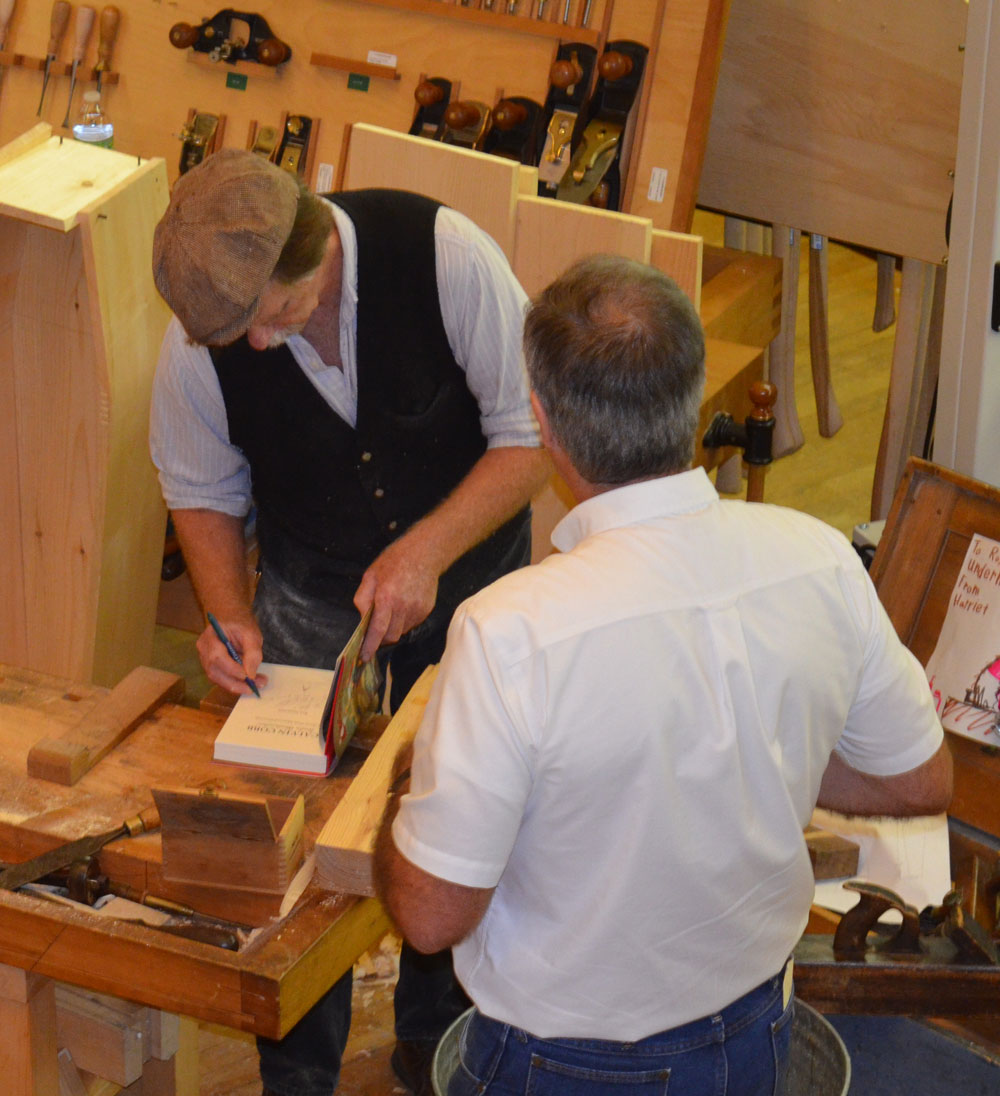
Roy autographing his novel, Calvin Cobb – Radio Woodworker

“You have to be careful not to make a grave mistake, or it will come back to haunt you later,” Underhill said while emphasizing how to cut the proper angles and how to plane the edges.

Fans from his show came and had his novel, Calvin Cobb: Radio Woodworker, autographed during the demo and even got in on the action with some sawing. 

Roy works exclusively with hand tools; the only “power tool” used for the demonstration was the tea-kettle needed to boil water.

Grant Lutz, who was demonstrating green woodworking with a three-legged stool during the open house, also showed the power of working by hand.

Lutz teaches at Highland and began the stool demonstration by first splitting a piece of wood and then slowly forming blanks for the legs.

To do this, he had to carefully watch the grain of the wood and take it down one layer at a time.

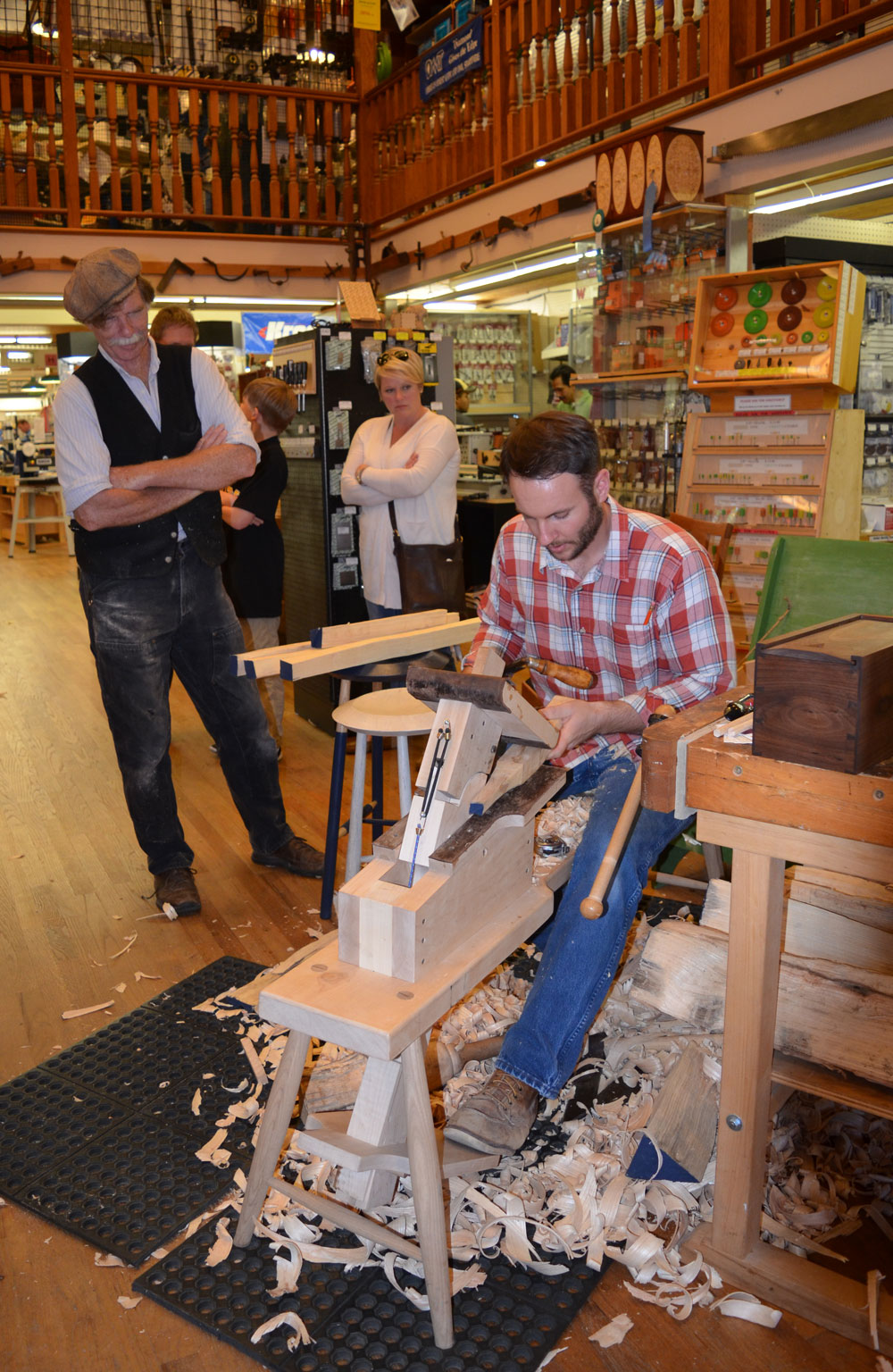
Roy watching Grant Lutz demonstrate green woodworking

Roy watching Grant Lutz demonstrate green woodworking

“Green woodwork has a warm quality and a lot of depth to it,” Lutz said. “I like that it is organic, and you let the wood dictate what happens.”

Lutz said he chose to demonstrate a stool because it is a good beginner project.

“If you just want to learn how the tools work, a spoon is also a great place to start,” Lutz said.

The morning also included demonstrations of Easy Wood Tools and the new SawStop JobSite Table Saw.

Many people are familiar with the idea of the SawStop: it is supposed to halt immediately if it comes across a finger.

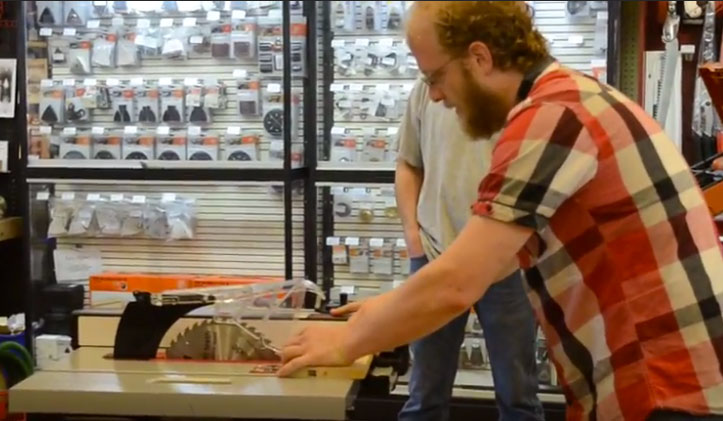
While hearing this in theory is comforting, seeing it in practice is a different experience. To demonstrate the stopping device in action, Ben Arthur tested the SawStop with a hotdog, which is conductive like a finger.

Ben Arthur demonstrates the SawStop JobSite Table Saw

Ben Arthur demonstrates the SawStop JobSite Table Saw

Immediately upon contact with the hotdog, the blade dropped down below the table out of harm’s way and the braking mechanism instantaneously stopped the blade’s rotation. This left the hotdog entirely unscathed.

According to SawStop FAQ, “When the safety system activates, it will sometimes damage one or more teeth on the blade. Some users discard and replace the blade, while others choose to have their blades inspected/repaired by a qualified specialist.” So you can either discard the blade, like Ben usually does, or have it repaired.

The brake cartridge into which the blade cuts when it drops can be plugged in for research by SawStop so they can look at the exact signal and moment when it was stopped.

But, while the SawStop can save fingers, Roy joked during his demonstration that he uses the original brake on his hand tools: he stops moving his arms.

RIP (saw) Roy

RIP (saw) Roy

CLICK HERE to see more photos from the Fall Highland Woodworking Open House with Roy Underhill.

Oct 092015
 

wn122We just published our new October 2015 issue of Wood News Online full of some great woodworking tips, projects, and product reviews.

This month’s issue includes:

Roy Underhill and the Highland Woodworking Open House– This month we have our big open house at our Atlanta store with special guest, Roy Underhill. The event will run on Saturday, October 17th from 9am-4:30pm and will feature Roy giving “Coffin-Making” demonstrations (it was Roy’s idea). Also on October 18th, Roy will be teaching a full day class on The Dovetail Variations, featuring a full day of dovetails. There are still a few spots available in the class, which costs $95 and can be reserved online.

An Evolution in Light– Neil Murphy discusses his longterm project of combining hardwoods with contemporary lighting and the results are beautiful!

Build an Improved Marking/Cutting Gauge– Chris Black discusses how to make your own marking/cutting gauge, which is one of the most essential tools that a woodworker needs.

Woodworking in America 2015– A few of us from Highland Woodworking attended WIA 2015 in Kansas City, MO a few weeks ago and we wanted to share our experiences, pictures, and videos with our readers and customers.

Show Us Your Shop– This month our most popular column features Oliver Apitius’ shop in Shelburne, Ontario, Canada. Oliver is a mandolin maker who just recently built a new shop in 2014 after his financial circumstances turned around and he was able to build a shop with some great special features.

Show Us Your Woodworking– This month we’re sharing the woodworking projects of Frank Zemberi, a 70 year old woodworker born in Slovakia, who specializes in Grandfather clocks and Santa/Reindeer figurines.

Show Us Your Woodcarving– This month we’re featuring the Marvin the Martian carvings made by Blair Swing, who just had his carvings and turnings featured in the Texas State Fair.

As always, Wood News features several different woodworking tip columns, including:

The Down to Earth Woodworker– Steve has a variety of tips this month, which include:

  • Using dust as a lubricant in your shop.
  • The advantages of micro-fiber cloths over tack cloths.
  • How people watching in a furniture store can help determine how good the furniture is.
  • How multi-tasking in the shop can lead to epic stupidity.

Finishing with Alan Noel– This month Alan shares 10 tips on how to remove mold from your finely crafted furniture.

Tips From Sticks-In-The-Mud– Jim has some note leaving tips, including note reminders in the shop and letting the sanitation crew (and yourself) know when a trash can contains glass or other hazardous materials.

2 Minute Safety Tip– This month’s reader contributed safety tip comes from Bob Clement, who says to make sure the blades on all of your tools are sharpened before using them, especially on power tools!

Ask the Staff– This month we received an Ask the Staff question asking if it is okay to apply pure or polymerized tung oil over an existing, fully cured oil finish. Check out the answer HERE.

We’ve also got reviews on the Earlex Sprayport and Andre Roubo’s L’Art du Menuisier (The Book of Plates)in addition to several new products, including the Vesper Double Square, Festool Brushless Sanders, Virtuoso DVD, and By Hound & Eye (the workbook companion to By Hand & Eye).

All of this and more in our October 2015 issue of Wood News Online.