Highland Staff

Sep 052019
 

Welcome to “Tips From Sticks-In-The-Mud Woodshop.” I am a hobbyist who loves woodworking and writing for those who also love the craft. I have found some ways to accomplish tasks in the workshop that might be helpful to you, and I enjoy hearing your own problem-solving ideasPlease share them in the COMMENTS section of each tip.  If, in the process, I can also make you laugh, I have achieved 100% of my goals.

Are you adventurous in finishing? Not me. I’m a wipe-on poly kind of guy, mostly.
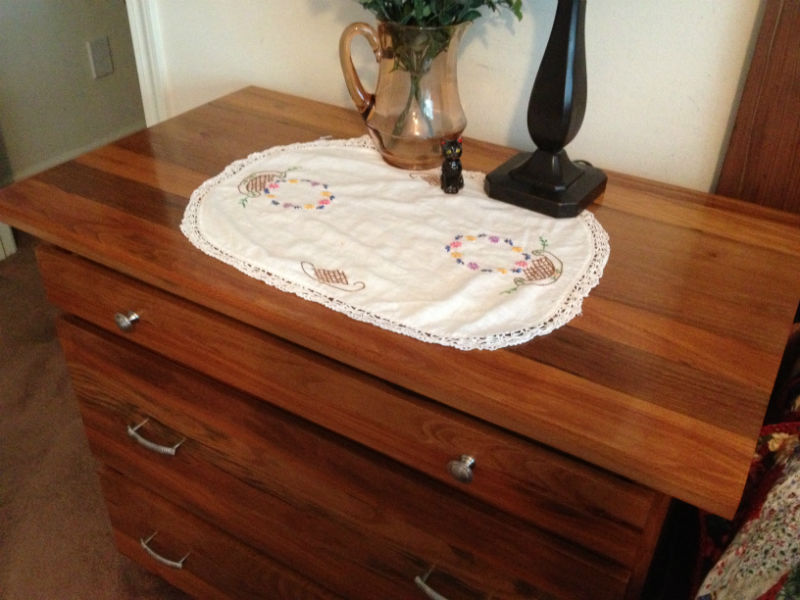
I didn’t inquire of the boss before I finished these bedside tables (that wasn’t a tip, readers, you’re always wise to consult the significant other when a project impacts him or her). I wanted a natural-wood look and put coat after coat of wiping polyurethane on this project.

But, every once in a while, I decide to venture out.

Or, as in the case of this mantle, I get instructed to venture out. Brenda said, “I don’t want natural oak, and I don’t want it to match the floors, or any other wood in the living room.”

As you’ve probably figured out by now, I’m not prone to experimentation or boldness. But, I let my hair down and went to work. I had some scraps of this same oak from the same tree and began applying straight stains and mixed stain intensities, even applying more stain when the first coat dried.

I took the resulting samples up to the living room for Brenda’s analysis. She rated them, recognizing that their look could change when finish was applied, which I did next.

As long as I was being adventurous, I decided to switch finishes, too.

I went with General Finishes Arm-R-Seal, which, yes, I recognize, is a urethane finish, but sometimes branching out is about baby steps. I applied two coats of high gloss, followed by a final coat of satin to knock down the shine just a bit. Below, I’ve pictured the result.
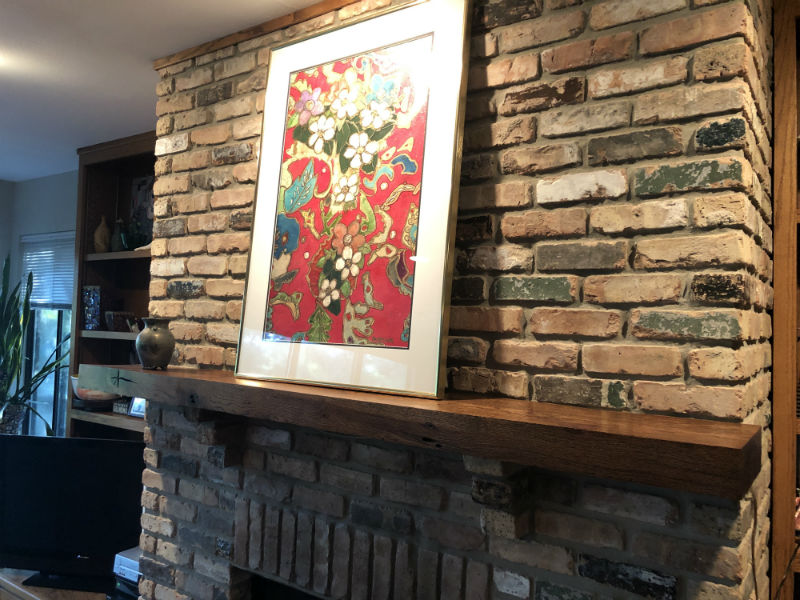
I would probably be happy if I never stained anything, as I like the look of natural wood. When you’re married to an artist, you go with the artistic advice.

One time I got really brave and, for an outdoor piece, applied a penetrating epoxy finish. Now, that took courage. I knew if it wasn’t good it would be nearly impossible to remove. Fortunately, I liked it. I covered it with three coats of Arm-R-Seal high gloss and one coat of satin. OK, so I wasn’t being adventurous using something I’d used before.
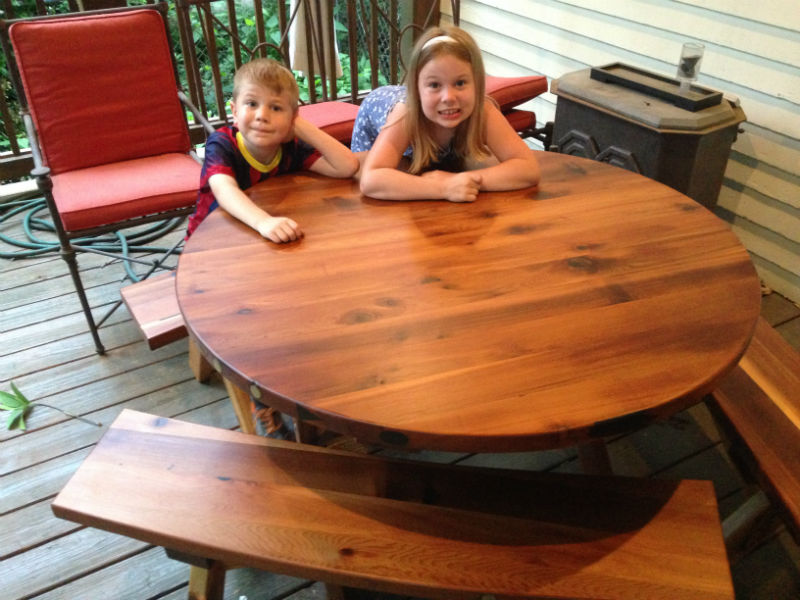
These grandkids couldn’t care less what the finish is, they loved their new round picnic table with curved benches.

Then, there was the time I needed to refinish the back door to our house. It was literally beginning to rot away. I got in touch with Alan Noel and he said, after I sanded and cleaned thoroughly, to use a marine spar varnish on it. I did, and it came out great.
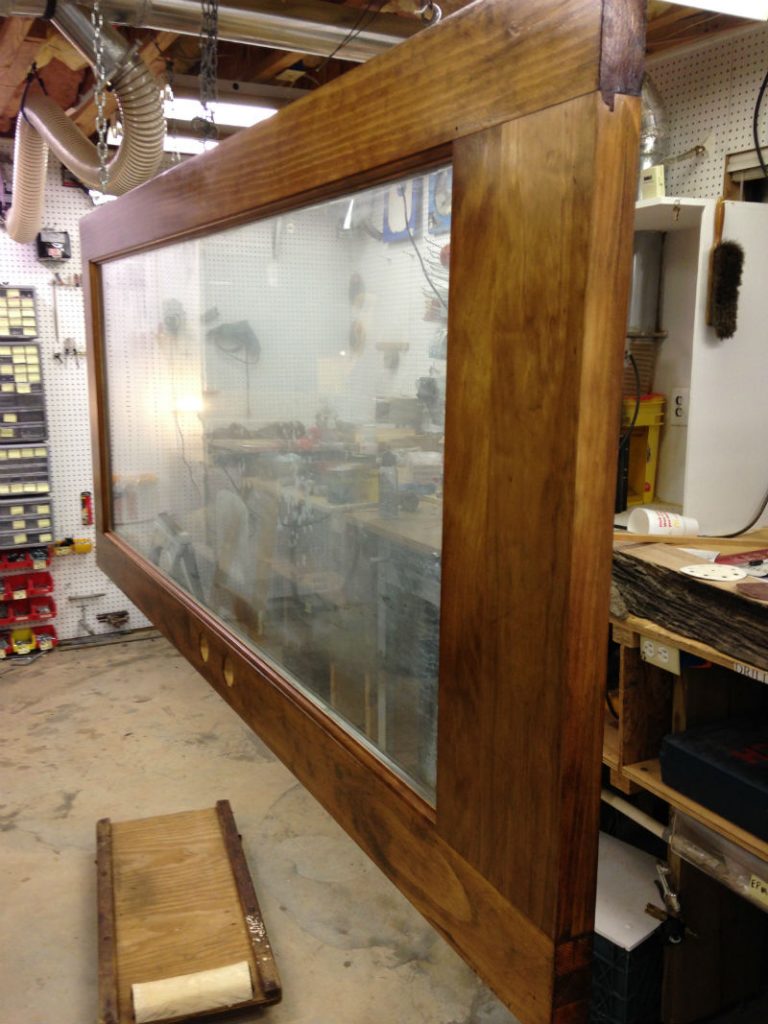
Following Alan Noel’s advice, the back door turned out great and it’s again resisting the weather on the north side of our home.

I’ve used the spar varnish on a couple of other outdoor projects since.

See? It’s not so hard to branch out. Take a deep breath and a big first step.


Jim Randolph is a veterinarian in Long Beach, Mississippi. His earlier careers as lawn mower, dairy farmer, automobile mechanic, microwave communications electronics instructor and journeyman carpenter all influence his approach to woodworking. His favorite projects are furniture built for his wife, Brenda, and for their children and grandchildren. His and Brenda’s home, nicknamed Sticks-In-The-Mud, is built on pilings (sticks) near the wetlands (mud) on a bayou off Jourdan River. His shop is in the lower level of their home.Questions and comments on woodworking may be written below in the comments section. Questions about pet care should be directed to his blog on pet care, www.MyPetsDoctor.com. We regret that, because of high volume, not all inquiries can be answered personally.
Sep 042019
 

“Honey, I’m feeling a little down. I think I’ll go buy a new dress.”

I believe it’s a universal cure. My grandfather on my father’s side loved to buy gadgets.

Because we lived out in the country, a trip to town was a big deal, and didn’t happen very often. If he came back with a little goodie for himself, he would slip in the back door and put it in his bedroom. I’m not sure my grandmother would have objected; maybe it was just a little game. I also don’t know that he was ever depressed, or even down, but again and again I saw the delight in his face when he got a new “toy.”

I have to admit to having inherited that gene. I, too, get a real pick-me-up when a new tool arrives.

Which is not the only reason I buy tools. After Katrina, I had to replace a lot of tools, almost everything in the shop. Power tools don’t even like water, much less the incredibly salty water that invaded our garage.

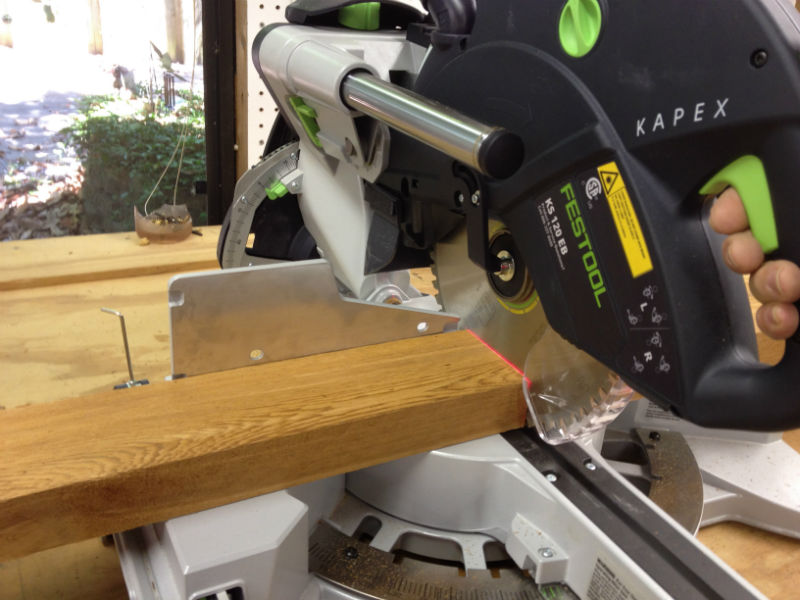
Sometimes you just need a replacement. Or an upgrade. I didn’t have to replace my DeWalt power miter box, but the new Kapex Compound Miter Saw is an incredible machine that does things in ways the DeWalt never would have. Click here to watch the Steven Johnson video about the Kapex.

The Kapex is more than you ever thought a miter saw could be.

Jim Randolph is a veterinarian in Long Beach, Mississippi. His earlier careers as lawn mower, dairy farmer, automobile mechanic, microwave communications electronics instructor and journeyman carpenter all influence his approach to woodworking. His favorite projects are furniture built for his wife, Brenda, and for their children and grandchildren. His and Brenda’s home, nicknamed Sticks-In-The-Mud, is built on pilings (sticks) near the wetlands (mud) on a bayou off Jourdan River. His shop is in the lower level of their home.Questions and comments on woodworking may be written below in the comments section. Questions about pet care should be directed to his blog on pet care, www.MyPetsDoctor.com. We regret that, because of high volume, not all inquiries can be answered personally.

Sep 022019
 

No Southern-fried Southern boy wants to be called a Yankee, but we share the characteristics of shrewdness and thrift. Thus, each month we include a money-saving tip from Sticks in the Mud woodworker, Jim Randolph. It’s OK if you call him “cheap.”

How did I come to use Arm-R-Seal on the mantle project? Because I’m cheap, and I had it on hand.

How did I have it on hand and it not be ruined? Because I’m cheap, and I took great care when I put the can away.

First, I cleaned the rim really well so neither the lid nor the can would be deformed when opening and closing the container.

Then, using a displacer, Bloxygen is one, designed to displace oxygen in the air in the container with a non-reactive gas to prevent curing, I stored the can in a cool, dry place in my shop.

After I had used about 1/3 of what remained, I decanted to a smaller container, leaving even less space for cure-inducing oxygen to damage the material.

Also, Bloxygen says that one can provides about 75 two-second blasts. The smaller the space you need to evacuate, the less Bloxygen you use. But, at $11 per can, even a cheapskate like me doesn’t mind springing for it.


Jim Randolph is a veterinarian in Long Beach, Mississippi. His earlier careers as lawn mower, dairy farmer, automobile mechanic, microwave communications electronics instructor and journeyman carpenter all influence his approach to woodworking. His favorite projects are furniture built for his wife, Brenda, and for their children and grandchildren. His and Brenda’s home, nicknamed Sticks-In-The-Mud, is built on pilings (sticks) near the wetlands (mud) on a bayou off Jourdan River. His shop is in the lower level of their home.Questions and comments on woodworking may be written below in the comments section. Questions about pet care should be directed to his blog on pet care, www.MyPetsDoctor.com. We regret that, because of high volume, not all inquiries can be answered personally.

Aug 302019
 

If your shop feels too small for a standard tablesaw but you would still like the safety afforded by a SawStop, take a closer look at the newly updated SawStop Jobsite PRO Tablesaw.

In the short video below, Jim Dillon shows off the features of the Jobsite PRO, demonstrating its easy portability, its many capabilities and the improvements made from the original Jobsite Saw.

Aug 222019
 

We hear from a lot of customers who find the Festool sandpaper options downright confusing. So we asked our friend Steve Johnson, the Down to Earth Woodworker, to help us understand which Festool Sandpaper to buy.

In the video below, Steve explains the best sandpaper options for general sanding, raw wood, finishing, shaping and more. He also creates an easy guide so you can remember Festool Sandpaper types and uses:

Aug 202019
 

Festool’s line of Rotex Sanders are perfect if you are looking to get into the world of Festool Sanding and you want the most versatility you can buy in a sander.

Matthew Morris discusses the different options and uses of Festool Rotex Sanders in this short video:

Aug 152019
 

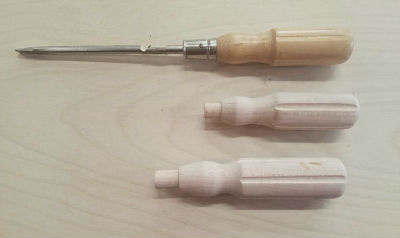
In the August 2019 issue of Wood News, Jeff Fleisher tells the story of how a little imagination made a large project (making 200 copies of the same wooden handle!) more efficient and less tedious.

A well thought out design and skilled craftsmanship are the hallmarks to a quality piece of woodworking. As a custom woodworker you normally have as much time as you need to design and create your ‘masterpiece’. However, if you are in a situtation where you need to mass produce a large quantity of a wooden item then there is a third element that factors into the equation…efficiency.

Click here to learn what tricks he used