Highland Staff

Jun 132012
 

I have been tied up pretty good the last few weeks coordinating a large project for my Habitat Chapter. We are building five town home condominiums just south of Atlanta, all sponsored by a major corporate donor who sends many volunteers to the site to help with construction. We sub-contract all the trades and use volunteer amateurs to do everything else we can. It makes for a very interesting situation, but the enthusiasm and joy from the volunteers is what makes it really fun.

My current Habitat project.

This construction brings up two thoughts for wood workers. The first is about tolerances. One of the hardest lessons I had to learn as a newbie engineer many moons ago, was how many decimal places were required in a calculation. If the first decimal place cost ten dollars to calculate, the next one was a hundred dollars and the third one a thousand dollars, how much is the answer worth to you? When you are just starting out, that is not a simple question, but must be learned by hard experience and practice.

Sometimes I just want to work to the nearest inch, you know, sledge hammer type work. I was showing someone today how to read a tape measure (yes, there are people on site who cannot read a tape measure). I explained the inch, the half inch, the quarter inch, and the eighth inch marks and then told her that on this site today, you will not need to use marks smaller than the eighth inch marks. Even my experienced people on site sometimes over think things and spend too much time getting something to a 16th when a half will do.

Now, when I am making furniture, I am such a perfectionist that a 32nd or a 64th of an inch crack will haunt me every time I walk by the piece. And that brings up the next thought. Look over to the right of this missive and check out that square box of squiggly stuff. Do you know what that is? It is called a QR code, which stands for “Quick Response” code. It’s used like the bar code (I once knew a zebra named “Bar Code”) on your groceries to transmit information. If you have a smart phone, you can download an app (that’s an “application” for you Luddites) which will read the QR and act on the information contained in it. In the case of the one to the upper right, it sends you to the Highland Woodworking blog site on your smart phone so you can read about Highland any time any place. Maybe even buy some tools.

I have embedded a QR code in this blog for you to try. Ask your kids or grandkids to help you with it — they already know. See if you can figure it out. This same one hangs on my office door at Habitat and I have actually become quite well known for it. It combines the two thoughts above as to what tolerance is required on any project and is the distillation of many years of engineering experience and practice and of working on at least 85 Habitat homes. I think it sums it up pretty well. See what you think and let me know. Write your answer on the back of a twenty dollar bill and send it to me in care of Highland.

Jun 052012
 

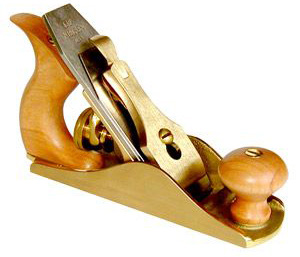
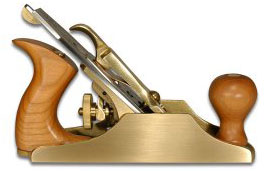
The Lie-Nielsen #1 and #2 are the smallest of the bench planes, with the lower number being smaller in size. As bench planes, the iron rests on a frog (45 degrees in these two sizes) and is used in a bevel down configuration. Both the #1 and #2 are only offered in Bronze, which is heavier than the same plane would be in Iron, and has the added benefit that the body will not rust. One difference in the #1, compared to the rest of the line of Lie-Nielsen bench planes, is the fact that the body is not modeled along the Stanley Bedrock design. The #2 does follow the Bedrock design, and is offered both in Bronze. Both the #1 and #2 planes come with the A2 iron, and are set up like other bench planes.

With the size of the #1, many ask how they should hold it, since it is very compact. While I don’t have the largest of hands, I still tend to hold it a bit differently than most other bench planes. I’ll cup my rear hand around the handle, with my hand in sort of a U shape, and grip it similarly to a block plane. My front hand holds the knob, as you would expect, and makes for a more comfortable long term grip for me compared to the same time with a block plane. Now that I have this way of working with it, there are times I’ll grab my #1 instead of one of my block planes.

The #2, while small, is a fair amount larger than the #1. The #2’s size is such that some will feel comfortable using the grip I described for the #1 above, while others will hold it with a standard (although a bit more cramped) grip. I accomplish my standard grip by holding the handle with my lower three fingers, and pointing my index finger forward, very much like holding a saw. With the Bronze body, remember you should still apply some rust preventative on the blade, like Jojoba Oil or Camellia Oil. There are also silicone-treated sacks available for storage.

A question I get quite often is why someone would use these smallest bench planes. Even though I recognize the smallest Lie-Nielsen planes are very cute, they all work just as well as their larger brothers (or sisters). I find the scale of work helps me decide which size bench plane to choose for a given project. For instance, I find it easier to use a smallish plane when cleaning up the edges of 1/4” thick boards I use for the sides of some of my dovetailed boxes, rather than trying to balance my #8 jointer on the very thin edges. Another good reason to have a smaller (and shorter) bench plane in your arsenal is when you need to work a small area of a board that doesn’t need to be dead flat, but you still want to finish it with a plane. As you likely know, the longer the plane bed, the more flat is required to take a full length shaving, since the bed rides on top of any crests that might exist. The iron takes material off of the top of the crest, but can’t reach down into the valley. With a shorter plane, and depending on how far apart any crests might be, you can work down into the valley without the need to completely flatten the board first. This way you will still have a planed surface, instead of scraping or moving to sandpaper.

I find the #1 and #2 are both extremely functional and quite flexible. Either would be a nice addition to your kit.

Now go make some shavings! Let me know if you have any questions or suggestions for future articles.


Click the links to take a closer look at the Lie Nielsen #1 bench plane , #2 bronze bench plane and #2 cast ductile iron bench plane.

To see Highland Woodworking’s entire selection of Lie-Nielsen hand tools, click here.


Lee Laird has enjoyed woodworking for over 20 years. He is retired from the U.S.P.S. and works for Lie-Nielsen Toolworks as a show staff member, demonstrating tools and training customers.

May 082012
 

Recently, I wrote an article primarily focusing on using free-hand scrapers. In this article I’ll talk about the other main scraper category, Scraper Planes, where the scraper rides in a plane body. In the Scraper Plane category, there are multiple types, but the commonality rests with most excelling at retaining a flat surface. The free-handed style scrapers require more focus and skill to obtain similar results. In this article I’ll focus on two specific scraper planes.

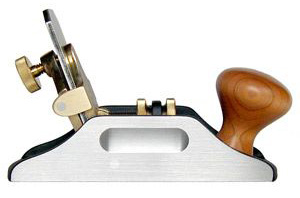
The first scraper plane is the model 212-Iron scraping plane, which is based on the Stanley No. 212. This is a small format scraper plane, and the Lie-Nielsen version has a plane body made of ductile cast iron. The blade is 1/8” thick A2 steel, which is thicker than the original Stanley irons, and helps minimize chatter. The iron’s adjuster, on this plane, allows the user to change the angle at which the iron sits in the plane, and dial in the sweet spot. I set my iron so it leans forward (away from the wooden handle) approximately 15 degrees, which seems to be the optimum angle. If the wood I’m working doesn’t cut well with the normal setting, I’ll carefully take the iron out of the body. I always remove the iron through the sole of the plane, to reduce chances of dinging the sharp iron. By holding the iron as if it were a card scraper, I can quickly find the angle where the wood cuts best. There are three options I’ve used to transfer the new angle to the plane. While holding the iron at the new angle, I can either: move the plane body up beside the iron and adjust the frog so it matches this angle; grab my protractor, so I know the angle that works with this wood; or instead, put a piece of light colored scrap wood against the edge of the iron, and draw a line I can again reference when I replace the iron in the body. To replace the iron in the body, I always come up through the sole of the plane body, again working towards saving my sharp edge. I choose the No. 212 when I’m working small flat pieces, like one might expect in boxes, picture frames or even small tables. There is nothing to prevent one from using the No. 212 on a larger flat surface, like a large table, but it would just take more passes with the smaller width of this iron. There is something about this sized scraper plane that just feels good in the hand, much like reaching for that favorite block plane.

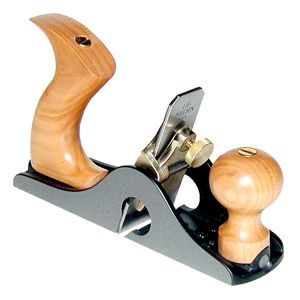
The other scraper plane is the model 85, which again is based on an original Stanley model; The No. 85 Cabinet Maker’s Scraper. This plane body is also made of ductile cast iron, which strengthens the body, and will likely save the tool from the accidental fall to the floor. The iron again is 1/8” thick A2 steel, but it is shaped somewhat like an upside down “T”. There are some unique features in the No. 85. First, this plane has a full width iron, so it can work against an adjacent vertical surface. Another unique feature, which dovetails with the first, is the handle adjustability. Both the front and rear handles can rotate (after loosening) either left or right, to help prevent the user’s knuckles from contacting adjacent wood. The No. 85 does not have the angle adjuster for the iron, and with the iron’s angle hardwired, can be a bit easier to set up.

The irons on both of these scraper planes are quite a bit easier for most beginners to sharpen, at least compared with the hand-held scrapers. This is due to almost identical techniques as are used to sharpen a regular hand plane’s iron, and a light camber is also an option on both. As a matter of fact, the primary difference between the scraper iron and the hand plane iron is the angle of the bevel. Most scraper planes have a primary bevel angle of 45 degrees, and as I do when sharpening my bench plane irons, I use an additional 5 degree micro bevel, to expedite the sharpening process. In order to allow the honing guide the ability to reach these higher angles, it is important to modify a section of its body. A quick suggestion, when working a bevel with this high of an angle, is to only use pull strokes on the water stones. You might get away with a light push stroke, if you already have great skills and a light touch, but I find it’s not worth the chance of digging into the stone. User beware! I prepare the back of the iron exactly the same as when I prepare a hand plane iron, using  David Charlesworth’s ruler trick to hone out at the very tip of the iron, rather than spending unnecessary time honing a large section of the back. I hone both the bevel and back of the iron to 8000 grit. I get questions from someone at almost every training session, as to why I’m not turning a burr on the scraper’s iron. I find the scraper planes are aggressive enough as is, without the addition of a burr, but this is ultimately up to the end user. Besides that, the lack of what I tend to describe as an inconsistent burr reduces any tweaking needed between sharpenings, to again find the sweet spot.

To set the shaving thickness, I place the plane body on a known flat wooden surface, which for many may be your workbench. I loosen the thumb screw, disengaging the iron. While holding the plane body flat on the bench top, I apply light to firm pressure to the midpoint of the iron’s back, and while holding this pressure, re-tighten the thumb screw. Similar to the method used when setting the iron in a bench plane, I test the iron’s setting on scrap wood, prior to using the scraper plane on my project wood. If the iron needs some tweaking, laterally or deeper, I tap the iron very lightly with a small hammer. This usually works easier if I just slightly reduce the pressure on the thumb screw. Once I find my setting, I’ll again snug up the thumb screw. As a reference, I am usually looking for a very wispy shaving from my scraper planes. If I’m working (or fighting) some difficult wood, I find most will give up their best surfaces when stressed the least.

Now go make some shavings! Let me know if you have any questions or suggestions for future articles.


Take a closer look at the Lie Nielsen #85 Cabinetmaker’s Scraper and the Small Cast Ductile Iron Scraping Plane.

To see Highland Woodworking’s entire selection of Lie Nielsen hand tools, click here.


Lee Laird has enjoyed woodworking for over 20 years. He is retired from the U.S.P.S. and works for Lie-Nielsen Toolworks as a show staff member, demonstrating tools and training customers.

May 042012
 

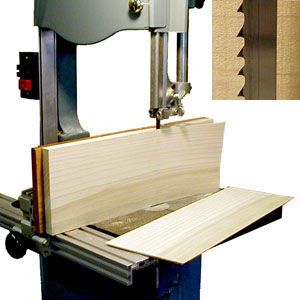
Over the years, I’ve owned a couple of band saws, but getting the saws to work at their best was always questionable. I started with a Delta 14” from the around 1990, new in the box. It worked ok, but it didn’t quite do what I’d both expected nor truly wanted. I started out going through all of the setup processes, to make sure the saw itself was tuned properly. After that, I tried different types/brands of blades, in an attempt to find the missing piece to my puzzle. Some of the blades were better than others, but even the best I’d tried was still not providing what I was after. I transitioned towards working with some larger pieces of wood, and finally decided to move up to a larger capacity saw.  My new saw had the ability to properly tension all the way up to a 1” blade, which was completely different than my old Delta.

The blade that came with my MiniMax was just something to allow it to cut, but wasn’t providing super results. After trying a number of blades, I happened to be in Atlanta for one of our events, so we stopped at the Highland Woodworking store. Wow, what an amazing store, and a huge selection of band saw blades. I spoke with one of the folks working at Highland and asked for their recommendation on a band saw blade. After finding how I was intending to use my saw, they suggested I try one of the Wood Slicer blades. I had read about this brand of blade, but since I’d never used one, I decided I’d just get a single blade to try it out. I picked up a 1/2” blade with a 3/4 teeth configuration, which would allow multipurpose use. I wanted this for both some curved work (not like a scroll blade, think more like the gentle curves on a guitar), as well as taking small log sections and cutting them into bowl blanks.

When I got back home, I set the new blade to the side, as I was doing some ripping operations and my 1” blade was doing OK. Well, that didn’t last too long. My 1” blade is the one that came with my saw. It was cutting very similar to how it had always cut, since I’d purchased the saw. All of a sudden, there was a bang, and the blade was gone from sight. I’d actually broken it. After pulling the old blade from my saw, I made sure there was no damage to the saw and especially the tires. Luckily, all was fine. Time to try out my new Wood Slicer blade. After installing the blade, and tensioning it properly, I was ready to finish up the ripping. As soon as the blade touched the wood, I knew I’d received some great counseling from Highland’s staff. This Wood Slicer was completely amazing. I was cutting some 8/4 maple and then some 6/4 oak, both of which the blade treated as if it was cutting butter. Seriously. I was completely dumbfounded. I’d never experienced anything like this on either my 14” or my 16”, no matter what blade I’d used. I was having one of those moments, when I sit back and wonder where a tool has been all of my life. This Wood Slicer blade absolutely fit into one of those moments.

There is no doubt I’ll continue to buy the Wood Slicer blades for my saw, for all but possible super specialized cutting. I wish I’d tried one of these in my Delta, as I’m sure it would have elevated its results as well. Just in case someone reading this article also has a MiniMax 16, the info on the blade wrapper is as follows: 154 1/2 022 3/4T HP #51004002.

I hope to see some of you at our upcoming events, listed on the Lie-Nielsen website. Feel free to come up and say hi. Also, feel free to contact me if you have any questions, or if you have suggestions for future articles you would like to see.

Apr 272012
 

Some things don’t need fixing. Witness “New Coke” in Atlanta about 25 years ago — somebody thought they could fix Coca-Cola. Duh!! How would you improve a ’57 Chevy? Did anybody give Elvis singing lessons? Who would have stopped Fred Astaire and Ginger Rogers and said “Wait, you’re doing that all wrong: you dance backwards and let her dance forward, and by the way, lose the top hat and cane.”?

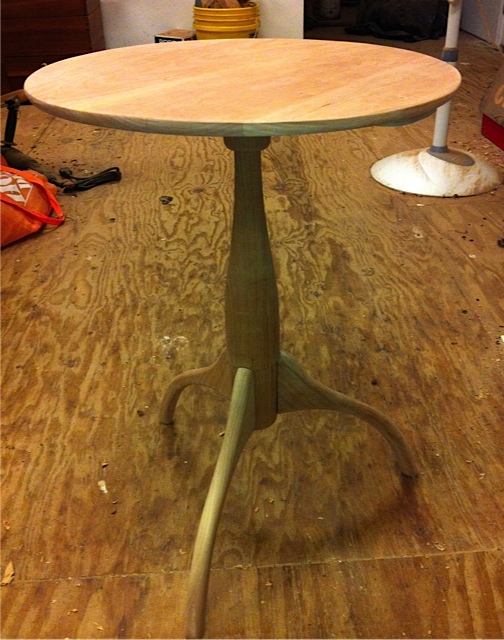
I have been working on a Shaker Candle Stand the last few days and I Googled it for some reason. Do you know how many people think they can improve on the original? Listen, Homer, it is done. It is completed. Do not sit down and say, “I think I will re-design the Shaker Candle Stand — I can do better.”

My Candle Stand

You cannot add ball and claw feet to this thing. You cannot carve deep philosophical thoughts into the top of it. Do not add fancy gingerbread brackets to the underside of the table. If you simply cannot resist, then go carve clown faces in your hope chest. The candle stand was completed 200 years ago and it is done. I don’t have a problem with trying to improve your technique, make the dovetails better, upgrade your skew skills on the post, that sort of thing. But nobody has improved on it in 200 years and I can tell you, Ralph, you are not going to help it.

Go watch the Roy Underhill video on making one of these babies and listen to St. Roy expound on the shape of that marvelous center post. I love this little table, it is probably my favorite thing to try to make and I have parts of one going nearly all the time in my shop. The dovetails are difficult for me, but I will get better.

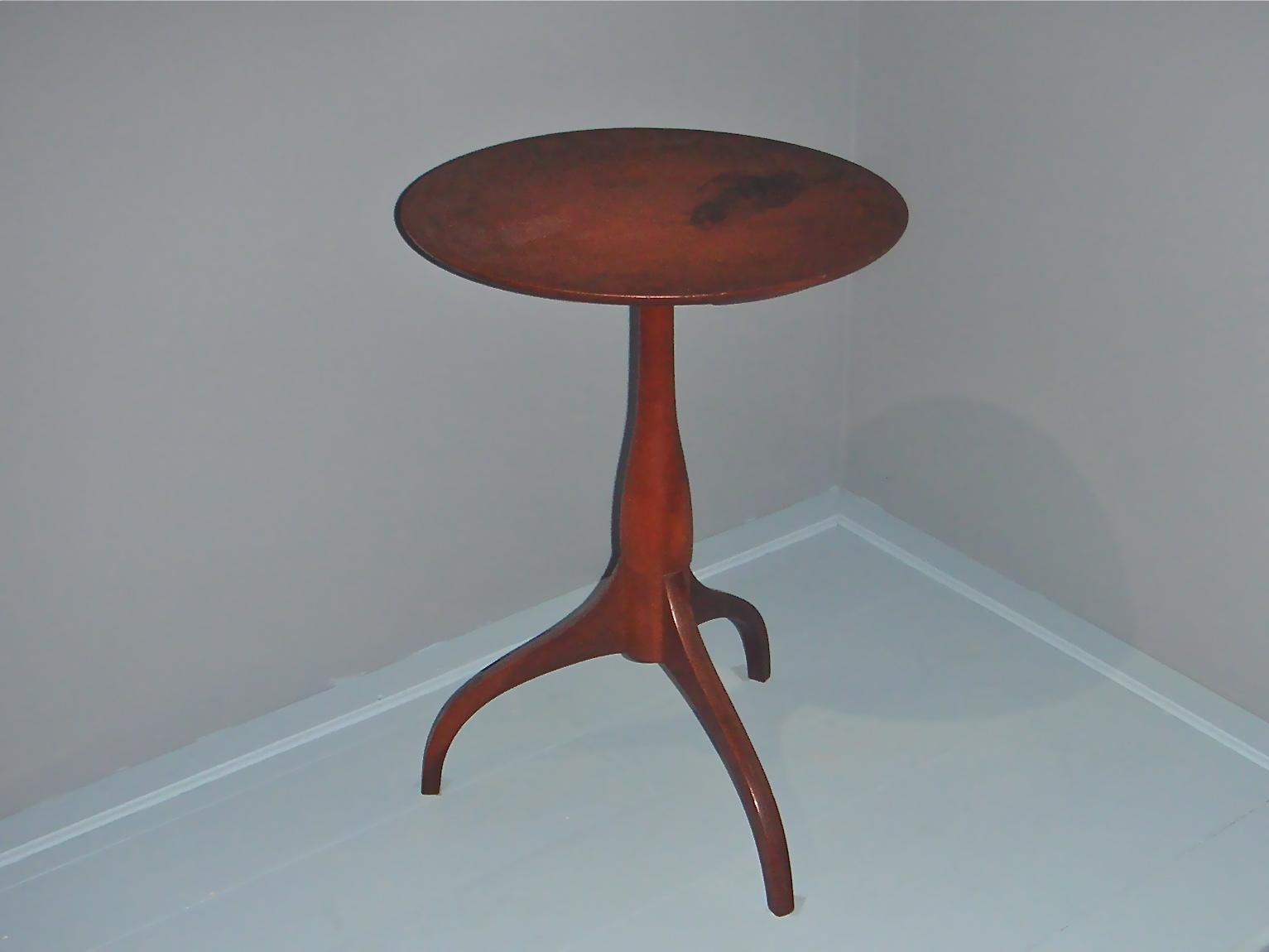
Hancock Shaker Village Table

A couple of years ago I went to New England to take a class and

Translucent seen transformed it while there I went by the Hancock Shaker Village for a tour. They have a beautiful Candle Stand there and it is the one I try to make each time. If my effort does not match this beautiful example, it is a lack of skill on my part, not because I think I can improve on it.

What do you think? Let me hear from you.

Apr 032012
 

For the woodworker who has built items in wood with reversing grain, or super figured woods, it might seem that sandpaper is the only real option to tame the beast. It doesn’t seem to matter how long someone has been woodworking, as I’ve met both those who have been woodworking longer than I’ve been able to wipe my own nose, to those just starting out. When I start to talk about scrapers as a potential fix, I’ve received such a range of looks, from insanity, to coolness, to just complete disbelief. There are those, though, who specifically ask for scraper setup, usage, and information. Many of these woodworkers already own some form or fashion of scraper, but are frustrated with the actual results from their tool. I believe it is similar to using a well-tuned hand plane: some folks have never had the opportunity to use their scraper both sharpened and tuned so it could do more than make dust. When I bought my first personal hand plane back in the early ‘80s, I worked and worked “sharpening” it, and still the negative results relegated it to a drawer for quite some time. Point being that I didn’t have the tools to recognize just how sharp was needed, nor anything to which I could compare it. This along with the very limited sources of shared information at that time, was enough to keep me guessing and stop my progress. I hope the following information will can help some of you succeed with your scrapers.
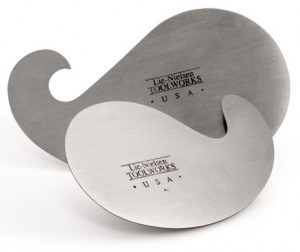
Lie-Nielsen offers two different sets of card scrapers, made out of high carbon Swedish Tool Steel, and hardened to Rockwell 49-51. These include a two-pack Hand Scraper Set and a four-pack Gooseneck Scraper Set. The scrapers in the two-pack Hand Scraper Set are both rectangular. One scraper is .032” thick and the other .020” thick. I like to choose the thinner scraper when I’m planning some super-light finesse type removal, even though I know I could still get the aggressiveness needed out of both.  The scrapers in the four-pack Gooseneck Scraper Set are comprised of one large and one small, with one each in the same plate thicknesses of .032” and .020”, as the rectangular versions. The different sizes afford different curves and shapes, to cover even more woodworking territory.

Before I proceed, let me answer the basic question: What is a scraper? I bet most people would likely imagine a card scraper. I know that was the case for me for a long time, although there are certainly other types. Ultimately, I define a scraper as a tool that removes material, in a manner other than via a knife type cutting action. Whether we are talking about a card scraper (rectangular or goose necked), a scraper plane, or anything else in the category, I’ll try to provide some useful tips and info.

One of the first things I do, when I get a scraper, is to spend time sharpening the tool. To lay some groundwork, both the narrow edges and face edges of a card scraper must both be honed to a high level. If either of these is overlooked or not worked to the same level, it will be the limiting factor of your final tool. Personally I work these surfaces up through my 8000 grit water stone, but some still hone to a higher grit. It is a great idea to have a 10X-magnifying loop, so you can SEE your work, rather than guessing a certain number of strokes automatically equals finished. Now, if it is the first sharpening, I expect to spend more time than on the subsequent trips to the sharpening bench. This may seem odd, but most new scrapers come with at least some mill marks, which you only need to remove the first time.

When I begin sharpening a rectangular card scraper, I first work the narrow edges with a fine file, which is a quick method to both verify a 90-degree juncture and that the narrow edge surface is without dips from end-to-end. The handle on this tool is what I call a thick oval, which helps me in the filing portion of this task. I clamp the scraper in my vise, so its height matches what is needed to keep the file flat and parallel, while the handle physically rides on the bench. This ultimately acts somewhat like a jig that can never get lost. With the fact that it is somewhat easy to negatively modify the scraper’s edge shape when using a file free handed, I think it wise to at least explore a jig at first. If you are using a file that is flat, you can cut a slot that is 90-degrees to the face into a piece of wood. Put the file into the slot, and then work the narrow edge against the file, while holding the face so it stays flush to the wood.

After removing any heavy mill marks with the file on both of the narrow edges, its time to move to the stones. When working the edges, I hold the scraper against a purpose-made 90-degree block of wood, on the water stone. This allows me to remove material while retaining the proper square orientation of the edge to the face. Just squeeze the scraper to the wood, and let both ride together over the stone. I push them straight up and down the stone, but with both wood and scraper rotated so they look like I would travel diagonally, so there is less chance of carving tracks into the stone. Check the progress until the scraper edge is a consistently flat matte grey. Depending on your setup, you can decide to move directly to a 8000 grit water stone, or if you have an intermediate like a 4000 grit, you can work through all three. Just let your eyes and loop guide when you’ve finished. After the 8000 grit stone, your narrow edge surface should look similar to a mirror, with no discolored areas.

The next step is to hone the faces of the scraper. From experience, this portion can go from good to bad in a heartbeat. What I mean is there is usually enthusiasm when first starting this phase, but that can turn into disgust quite rapidly when checking the progress. For those who have never sharpened the faces, you’ll usually see certain areas showing signs of your work, and others that will be completely devoid of contact, almost without regard for time spent. Part of this issue is related to unequal pressure along the face while honing. If you are just using finger pressure on the scraper plate, I’ve found no way to totally prevent the off/on contact points consistently. This is where David Charlesworth’s ruler trick, that I also employ when sharpening all of my plane irons, can play a role in the scraper sharpening. When using his trick in the sharpening of the backs of plane irons, it focuses the work out at the very edge, rather than spending time to polish the full back surface of the iron. Similarly, we can use it to focus on the face surface where it meets the previously polished narrow edges, since the edge/face combo is the only area that will interact with your wood. To make this work, the other component I use is a piece of 3/4” MDF that is about 2/3 as wide as my scraper. I try to have the MDF about the same length as the scraper, but it can be a little longer without causing problems. While the Charlesworth trick does an excellent job of focusing the honing work out towards an edge, the importance of the MDF in this application rises as the flexibility of the scraper increases. I used some thin double-sided carpet tape to apply the MDF flush to one narrow edge on my scraper. I place a thin ruler along the long edge of my 1000 grit water stone, which is held in place by water tension. To orient properly, the scraper portion left unexposed by the MDF will be on the opposite side of the stone from the ruler. This allows it to flex slightly and work from the edge in towards the centerline of the scraper. The movement is just front and back, as there are no thin edges to gouge the stone. It will produce a narrow surfaced area likely less than 1/8”, so don’t expect it to be very wide, and don’t worry if it is not. A consistent thin area is all that you need. Same as before, you can choose to work it on an intermediate stone, prior to the 8000 stone, or not. Let your results (and your loop) guide you.

Before moving to the next stage of preparation, I wanted to include some information that I hope users might both find interesting and useful, or at least expand their thoughts of scrapers. Recently, while building a very figured electric guitar, I had an area on the top where none of my scrapers “fit”, to resolve an issue. I recalled using a tool that many would think classified at the far end away from scrapers, once upon a time, that might just work. I picked up one of my recently sharpened bevel-edged chisels, that is about 3/16” wide. Without changing any sharpening aspect, nor apply a burr/hook, I stood the chisel upright, leaned it so the flat back was a bit towards the direction I meant to travel, and took a couple of light passes. It took some very controlled super light type shavings, and left a wonderful result. This obviously doesn’t work only with narrow chisels, but finding a tool that fits your needs is the main point. Beyond that, hopefully it points out that while there are times to use a burr/hook on a scraper, it is not always a necessity. Without the added burr/hook, a scraper is less aggressive, but this can be a good thing. If using a scraper to blend or finalize, I find it easier to remove exactly what I want. Another positive, and one I relish when using a scraper plane, is how I can set the cutting angle one time, and quickly have the same great results, without the need to dial in after each sharpening. If I added a burr/hook, there are much greater chances I’d spend extra time re-obtaining the sweet spot each time, but let your work dictate using a burr/hook or not. In the scope of a job, I find the setup operations are just part of woodworking. Keep your options open.

When applying a burr/hook to the prepared card scraper, make sure your burnishing tool is harder than the scraper. In the past this was much easier to accomplish, as many of the scrapers were pretty soft, but some of the newer scrapers are hardened to a higher degree, which while upping the ante for preparation, will help the edge last longer, too. Another important aspect relating to burnishers is their level of polish. The surface of the burnisher, where it contacts with the scraper, should have no scratches. I’m sure it’s easy to visualize that scratches on a hard tool will easily transfer over to the less hard tool. Before using my burnisher on a scraper, I like to apply a little Camellia or Jojoba oil to both. You can get by without, but the reduction in friction helps it work more smoothly. I start with the card scraper flat on my bench, with the narrow edge I’m working just inside the bench top edge so it doesn’t hang off. I take my burnisher and keeping it flat on the face edge of the scraper, move the burnisher from end to end, with just a small amount of pressure. After doing this for no more than 30 seconds, I’ll do the other three similar face edges. I look at this as minutely moving the metal towards the narrow edge of the scraper, setting up for the burr/hook.

One of the first times I was successful in creating a burr/hook, I handled the next step slightly different than I do now. That time, I’d placed the scraper into my tail vise at this point, to hold while I turned the burr/hook. I’d just installed a new light receptacle above the vise (totally coincidentally) and had the light on. I took my burnisher, and with it almost completely parallel to the narrow edge, ran it lightly over the scraper. My second pass is what caught my eye. I lowered the angle by a couple to maybe five degrees, and made a second light pass. With the light directly above the working area, I saw a very thin gleam grow across the scraper, behind the burnisher on that second pass. I felt the edge and the burr/hook was quite small, but consistent all the way across. I took the scraper out of the vise, so I could verify whether what I was seeing was truly usable feedback. It worked wonderfully, and lasted much longer than any I’d ever created before. I think this makes sense, as a longer burr/hook would seem to weaken quicker and easier, as length increases flexibility. Now that I knew the amount of pressure required to create the burr/hook was almost minimal, I regularly just hold the card scraper in my left hand, applying light pressure with the burnisher with my right, rather than placing it in a vise.

The goose neck scrapers have quite a bit of similarity to the rectangular card scrapers, but require a couple of different tools to handle similar issues. For the mill mark removal, some of the outside curved edges can still be worked with a straight file, but if you need to use the inside curved surfaces to work on small cylindrical pieces or similar, then I use a small round file. I try to make sure to use a file with either no taper in the section I’m using, or as little as possible. This helps keep the narrow edge at 90 degrees to the outside faces. Small cylindrical ceramic slips in different grits can allow this same section to get close to the results obtained on the rectangular scrapers, where you would use a water stone. When I’m ready to work the face edges of the gooseneck scrapers, I still utilize the Charlesworth trick, but I find it is a bit more piecemeal, due to the fact I’m working around a curve. Similarly, following up on the burr/hook requires more patience, and a smaller burnisher can be a necessity in certain areas. All in all, the gooseneck scrapers do require a bit more touch and finesse, but achievable results are within reach and are so very useful.

Scrapers will always have a place in my kit, as they can certainly save the day. Hopefully, you’ll give them a try and find they are a good addition to your present methods, providing some valuable options. Feel free to contact me at leelairdwoodworking@gmail.com if you have any questions, or if you have suggestions for future articles you would like to see.


To take a closer look at the Lie Nielsen scrapers, click here.

To see Highland Woodworking’s entire selection of Lie-Nielsen hand tools, click here.

To return to the August 2015 issue of Wood News Online, click here.


Lee Laird has enjoyed woodworking for over 25 years. He is retired from the U.S.P.S. and worked for Lie-Nielsen Toolworks as a show staff member, demonstrating tools and training customers. You can email him at LeeLairdWoodworking@gmail.com or follow him on Twitter at twitter.com/LLWW

Mar 262012
 

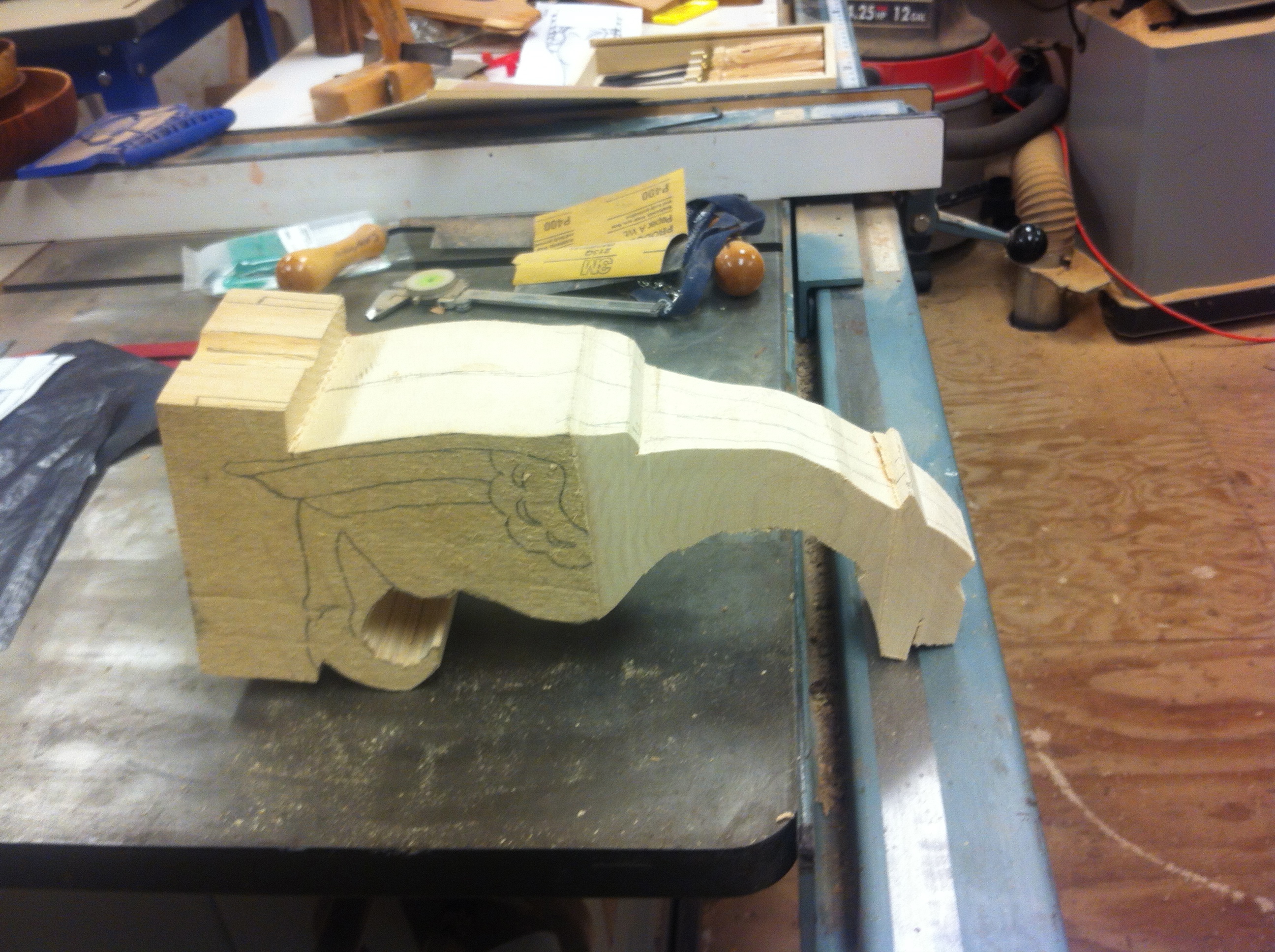
Everybody needs their own gargoyle.

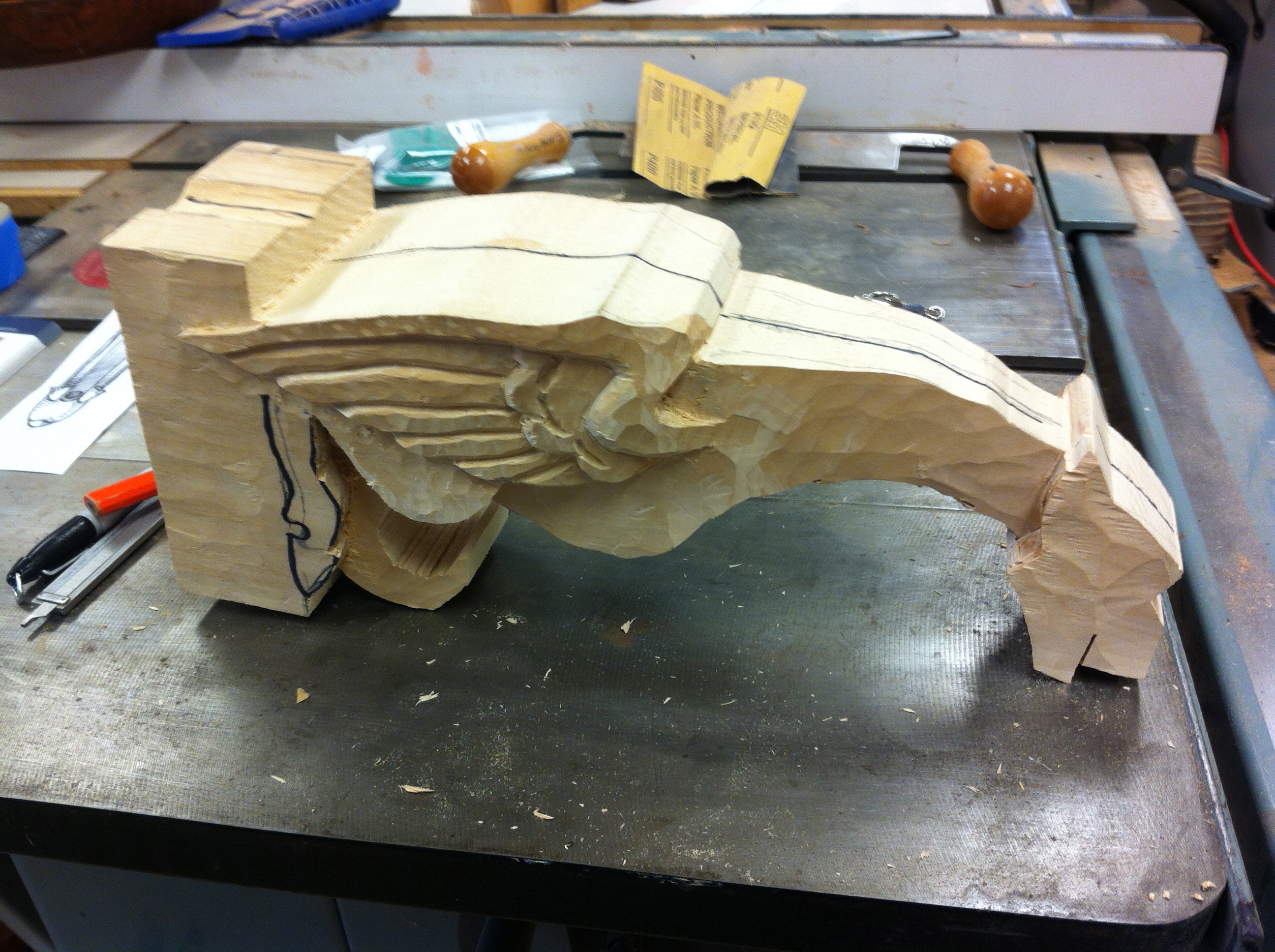
I bought some basswood at the wood store a few months ago and about two weeks ago, went to the High and got a six piece set of Flexcut carving tools. I found a pattern I like in a book and decided to go after it. After roughing it out on the band saw, I went after it with the carving tools. I really like it.

Just off the Band Saw – what do you think?

Still a ways to go, but not too bad for the first gargoyle. Least it’s not rock.

One Side Roughed Out