Highland Staff

Apr 162020
 

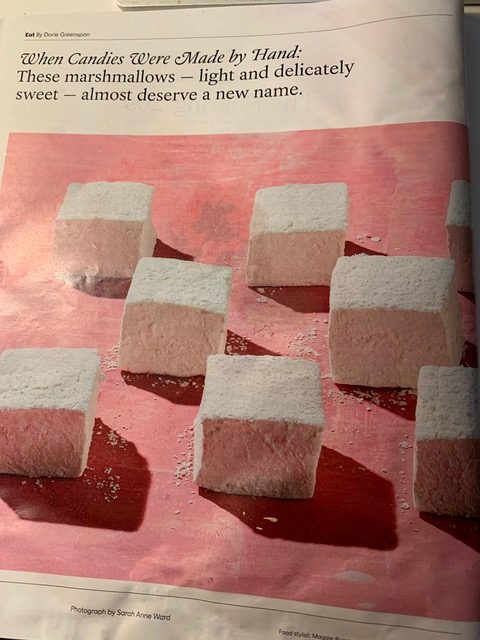
I subscribe to the New York Times (All the News That’s Fit to Print) Sunday only. It comes to my driveway and it is my habit to sit in the truck and read for about three hours. In the winter time, the seat is heated and in the summer it is cooled and I can listen to the radio if I want to. It’s actually the best seat in my house. About five weeks ago they published in the magazine section a recipe for making marshmallows at home.
New York Times Magazine

It seems homemade marshmallows are a thing — who knew?? You can flavor them up differently and some shops sell them at a premium along with custom cupcakes. I made up a batch, don’t ask me why, and they are delicious. Tender and much better than the bought kind, and well worth the trouble. If you never knew, they are made of sugar, corn syrup and gelatin. At the end you coat them with cornstarch and powdered sugar and they look just like the bought kind except they are bigger and square and overly tender. Highly recommended.

While I have been sitting out the virus at home with very little to do for the last week, I have been listening to W. Patrick Edwards on his blog. He is an expert furniture conservator and has made his living for many years in the field.  His work is impressive to say the least. He manufactures and sells Old Brown Glue, sold at Highland. For the last week or so, he has been reviewing videos he posted for Fine Woodworking Magazine on hide glue and its proper use.

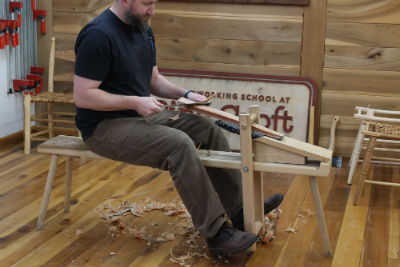
Now, I have a Glue Pot and some Hide Glue granules I bought a few years ago, but I really did not know how to use the stuff. I knew the theory of being able to release a hide glue joint with hot water because of my reading on violin making, a youthful dream. I bought a bottle of Edwards’ Old Brown Glue, a ready made hide glue for those without a glue pot. I finally broke it out the other week and actually heated the bottle in my glue pot. I used it to glue a piece of leather (irony?) onto my new shaving horse (more irony?!?). But here’s the connection to the marshmallows above. I began to get the same odor from the glue pot that I got from the marshmallow recipe. It’s the same stuff.

I started to do a little more research and it turns out that gelatin, (Jello, hey??) and hide glue are related. They are both animal proteins, one more purified than the other, of course, but still animal proteins. Edwards says that animal proteins have been used as glue for a documented 8,000 years. No clamps needed, rubbed joints, remove and clean up with a hot wet cloth, never let go, how can you beat it. Turns out there is one company left in the U.S. that still makes hide glue and if you want to buy 200 pounds of hide glue granules, they are the one to call. The company is Milligan and Higgins in Johnstown, NY and thankfully there appear to be two different departments — one which sells Hide Glues/Bone Glues/Industrial Gelatins, and another to sell Edible/Technical Gelatins.
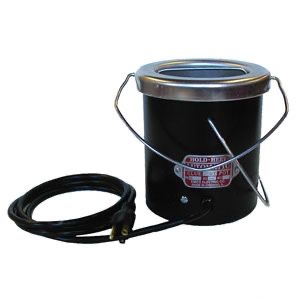
Glue Pot

Give a try to Hide Glues if you’ve never used them. They are very easy to use and easy to remove if you need to redo a joint. Cleanup is a snap with a hot wet cloth. Edwards has a series of videos linked to his site and goes over the whole process and preparation for using hide glue. You can buy Old Brown Glue prepared by Edwards at Highland, and you will find it extremely easy to use. No glue pot required.

And if you want to try the marshmallows, then search marshmallow recipes online. They are very easy to make and delicious. Do not tell your spouse about the connection between hide glue and gelatin.
Apr 092020
 

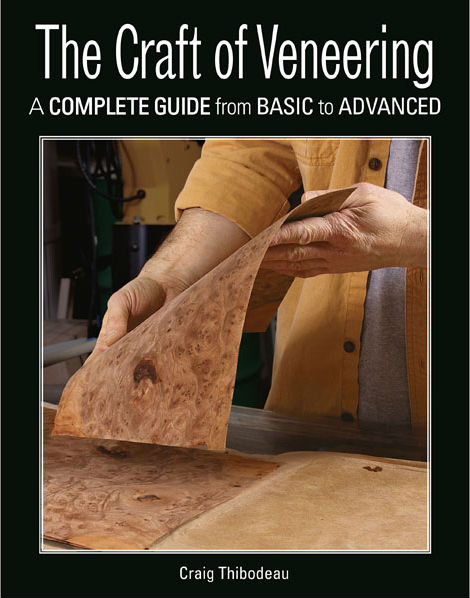
For the April 2020 issue of Wood News Online, Norm Reid reviewed Craig Thibodeau’s excellent guide, The Craft of Veneering:

I’ve recently become interested in delving into the practice of incorporating veneer into some of my projects. To get started in this, I’ve read several books on veneering. While each has its strong points, none, in my opinion, is as complete an introduction to veneering as The Craft of Veneering by Craig Thibodeau.

Read the rest of the review

Purchase your own copy of The Craft of Veneering

Click this link for more great woodworking books to read

Apr 072020
 

In his new column in the April 2020 issue of Wood News, Bob Rummer shares how woodworking can affect four key dimensions of our mental health and well-being.

I have written about some of the psychological benefits of woodworking before, how shop time can help us manage anxiety and stress and contribute to a more positive outlook on life. As I think about our current situation let me share how woodworking can affect four key dimensions of our mental health and well-being.

Click here to read more about woodworking can affect your mental health

Apr 032020
 

First of all, we would like to thank everyone who is working in the medical fields, trucking, retail sales, manufacturing, delivery, sanitation and every other essential worker out there for all of their services they are continuing to provide during these times.

A lot of us, who aren’t in these fields, have more than likely found some extra time on our hands that we would normally be using commuting to work, socializing with friends and family, or attending sports practice. For a lot of people, this has been newfound time to start a new hobby or get better at something you have already been pursuing….like woodworking.

Is the shop calling?

There are also those of us who have kids and are now doing double duty as both parents and teachers. Now could be a good time to add shop class into your child’s schedule. Not only is it teaching them new skills but it gets you into the shop!

This month we want to ask how are you spending your time around the house? And if it’s not listed in the poll, feel free to comment on this blog post!

Mar 132020
 

In the March 2020 issue of Wood News, we featured an article by first time Wood News writer Andy Glenn, all about the Drawknife. How to sharpen it, how to use it, and more:

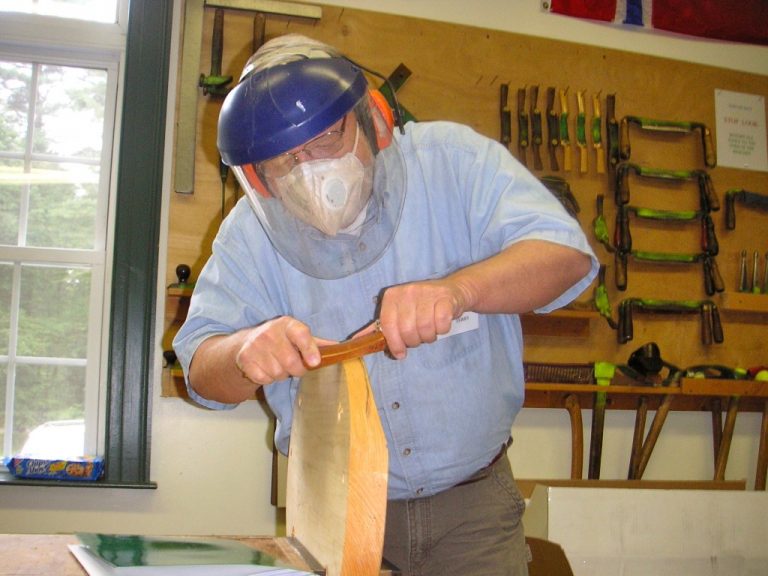
Of all the hand tools, I think the drawknife can be the most intimidating – especially if you’ve never picked one up before. There’s something about the simplicity of the tool that makes it appear so challenging. It’s just a blade with two handles. There are no added controls, adjustments, knobs, buttons, batteries or lasers – it’s just the blade and your skill that make it work.

Click here to read more

Mar 112020
 

You might have heard of National Dog Day, National Margarita Day, National Pizza Day, but did you know there is also a National Worship of Tools Day? And it just happens to be today, March 11th. The ‘National Day Calendar’ describes this holiday as “a day to go out into the garage, the tool shed, the storage closet or wherever it is you keep your tools. You can clean them, reorganize them, make something new with them or maybe go to the store and buy a new one.”

Terry Chapman took the time to tell us what he thinks of this national holiday, and how he thinks it would be best spent.

Read his article here

Mar 052020
 

After finally deciding to get a SawStop Table Saw, Steve tackles the next set of challenges opportunities that come with having the new saw in his shop. First up: building ‘the ultimate’ outfeed table that will double as an assembly and glue-up table.

Watch the whole series below: