blair

Dec 292015
 

Welcome to our 2016 Woodworking Resolutions blogger series. Every year we invite our bloggers to share their resolutions specific to their woodworking goals for the new year. Click each link below to read our bloggers’ resolutions!

As the New Year approaches, it is really good to take a step back and look at your past year. Woodwork is not really a subject that can ever be “mastered.” There is always a new avenue to be taken, a new skill that can be learned, a different technique to be practiced. No two pieces of wood are the same, no two projects end with the exact same result. With that in mind, I never want my growth in this craft to become stagnant, so at the end of the year, I like to ask myself “what did I learn this year? Of what project am I most proud? What were my greatest successes and failures?” “How do I want to learn and grow next year? Is there a specific task I want to get better at? How can I get the most out of the time I have in the shop?” Goals and aspirations are great, but my favorite professor in business school once told me something that really stuck: Don’t just think and talk about the things you want to accomplish, or you won’t actually accomplish them. Write down measurable, achievable goals and put the paper somewhere you will see it every day. Then you’ll be constantly reminded about and motivated toward the accomplishment of those goals and will be able to hold yourself accountable.

To that end, I’ve written down my “new year’s shop resolutions” and posted them on the door that leads into our laundry room (aka my postage stamp sized handtool workshop in our house). I see it every time I walk into the bathroom, every time I check on my laundry, every time I go out the back door, and you guessed it, every time I walk into my shop. I chose 4 goals that are entirely achievable, but will still grow and challenge me as a woodworker in the coming year.
1. Spend 10 minutes sharpening every day
2. Build at least 1 major project per quarter in 2016
3. Create at least 1 tangible object every week
4. Spend at least 1 hour each week practicing joinery techniques

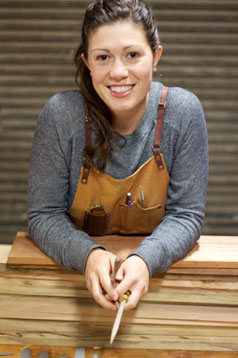
Anne Briggs Bohnett is a 26 year old woodworker out of Seattle, Washington. She and her husband Adam own and operate a small farm aimed at teaching youngsters about animal husbandry, traditional woodwork, and it’s also where their food comes from! Anne has been seriously pursuing woodwork with a focus on handtool use for three years and is passionate about the preservation of traditional methods and skills and building community.

Anne can be reached directly via email at briggs.anne@gmail.com and you can check out her website at www.anneofalltrades.com.
Dec 282015
 

Welcome to our 2016 Woodworking Resolutions blogger series. Every year we invite our bloggers to share their resolutions specific to their woodworking goals for the new year. Click each link below to read our bloggers’ resolutions!

First, I want to wish you good health and happiness for the New Year.

The act of writing out my objectives, as it relates to my craft, forces me to distill all the things I would like to do into to a short list of priorities.

1. Consistently post high quality content on Instagram. If you have not already noticed, Instagram has experienced exponential growth in the woodworking and woodturning community. One can find amazing photographs, helpful tips and inspiration. An IG account is free to set up and maintain. Search on #woodturning, #woodworking and of course #highlandwoodworking. You can follow someone by searching on their name like @highlandwoodworking or @tx_planes(that’s me). Give it a try.

2. Finish a few projects that are underway. A Windsor stool is my most interesting but incomplete project. I also have many partially turned “demonstration” bowls leftover from classes. These bowls need to be completed so they can find new homes.

3. I hope to use more Milk Paint on turnings. I have enjoyed experimenting with milk paint. This is a good solution for spicing up an average looking bowl. Now, I need to add a few more colors!

4. Build a Dutch tool chest with my son. I am looking forward to this project, as it will be his first major woodworking project.

5. I would like to find ways to include metal as a decorative element into my turnings. I do not have anything specific in mind. This is more of a self-challenge to think outside the box.

After reflecting on 2015, I am comfortable with my achievements towards my resolutions, however, I know I can do better. In 2015, I gave metal spinning an honest try. The process lacks the feel of wood.

It just does not captivate me like turning wood. I did turn a few projects just for the fun of it for example, turned beads, rebuilt a favorite screwdriver and made a guiro. I did use the sandblaster for a few projects but not on a turned box as planned. Also, I have yet to try using a vacuum to refine a turned sphere. I did make good on my commitment to donate a few pieces. Also, I am keeping a cleaner shop!


Curtis was the 2012 President of Central Texas Woodturners, a member of the American Association of Woodturners, and a member of Fine Woodworkers of Austin. Curtis teaches and demonstrates nationally for Lie-Nielsen Toolworks. He also owns a studio where he teaches and works. Curtis lives and works in Central Texas with his wife and four young children. Take a look at his website at www.curtisturnerstudio.com

Nov 222015
 

As Christmas rolls around, woodworkers’ loved ones often worry about what to get their favorite woodworker. To help ease that struggle, here is a list of what I feel are the absolute essentials for any woodworker. You can confidently take this list into any woodworking store or website and leave with a gift any woodworker would covet. If you’re looking to buy new items, there are basically two main brands that put out a consistently quality product: Veritas and Lie-Nielsen. As you buy, remember, you get what you pay for. Some of these higher end tools have a steep entry point, but if you amortize out it’s initial cost over a lifetime of use (because these tools truly will last a lifetime) you are only spending pennies per day. And, if your favorite woodworker wants to resell quality tools, they hold their value and can be resold at near retail value. Buying cheaper tools upfront just means added costs and frustration in the long run.


Anne Briggs Bohnett is a 26 year old woodworker out of Seattle, Washington. She and her husband Adam own and operate a small farm aimed at teaching youngsters about animal husbandry, traditional woodwork, and it’s also where their food comes from! Anne has been seriously pursuing woodwork with a focus on handtool use for three years and is passionate about the preservation of traditional methods and skills and building community.

Anne can be reached directly via email at briggs.anne@gmail.com and you can check out her website at www.anneofalltrades.com.
Nov 192015
 

Some of our bloggers are still working on their 2015 Holiday Woodworking Tool Wish Lists. Just in case you are still working on yours (or haven’t even started yet!), here are some ideas to get you going. And don’t forget to create your own woodworking wish list on our website by CLICKING HERE.

Today we’ve got a wish list from Highland Woodturner contributor, Curtis Turner:

  1. Oneway Wolverine Mini-Platform Assembly
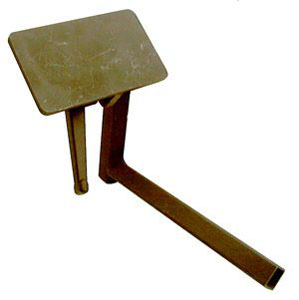
    There are times when I want to sharpen smaller tools on my grinder. The larger (standard) Wolverine platform can make it difficult to maneuver small tools. The mini-platform is 3-1/4″ x 2-1/4″ and has a curved front edge for easier access with short tools. This platform fits in the Wolverine base.
  2. Old-Fashioned Milk Paint Barn Red – Quart
    I have been working more with milk paints and want to try out this particular color. Milk paints are water based. The paint can be mixed in small batches. The paint is a power that can be mixed with other colors to create your own unique color. Milk paint can completely transform the appearance of any project.
  3. Auriou Riffler 6” flat V and rectangular in 14 grain
    I recently purchased an Auriou 10” knife and spoon riffler in 10 grain. I have found it to be very useful. For example, I have used it to remove the nub on the bottom of bowls. This worked perfectly! I think a smaller riffler with a finer grain would be a perfect follow up to my 10” riffler. Auriou rasps are graded by grain. The higher the grain number the finer the surface left by the tool.
  4. Double Outside Caliper – 4 inch
    This double caliper helps to determine the wall thickness for bowls and other similar items. These help ensure a consistent wall thickness. This looks like the perfect size for small bowls. I have a giant double caliper. It is so large that I do not often use it on smaller items.
  5. Earlex Steam Generator
    I want to try my hand at making a Windsor chair. This generator will allow me to steam wood for bending the back or bent arms of a Windsor chair. This is a small 8″ x 12″ unit and uses a 120v current. The manufacture states “Providing plenty of steam for a small to medium homemade steam box, our tests with this unit had it making steam in just 23 minutes & then heating up our homemade 6″ diameter x 62″ long PVC steam box (tube) to 212° in another 10 minutes.”

Curtis was the 2012 President of Central Texas Woodturners, a member of the American Association of Woodturners, and a member of Fine Woodworkers of Austin. Curtis teaches and demonstrates nationally for Lie-Nielsen Toolworks. He also owns a studio where he teaches and works. Curtis lives and works in Central Texas with his wife and four young children. Take a look at his website at www.curtisturnerstudio.com.

Sep 032015
 

The change in seasons will soon bring cooler weather. That means the start of turning season for many parts of the country.

Now is a good time to take care of a few shop maintenance chores. Last week, I accomplished the following:

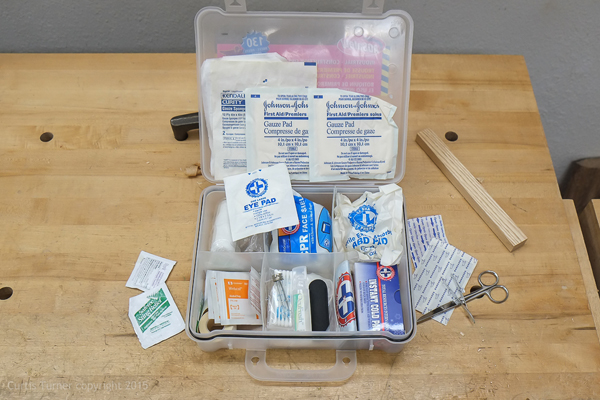
curtis1

1. Restocked the first aid kit. Fortunately, I only needed to replace a few band aids. I think it is important to have a good first kit in the shop, even if your shop is in the garage. Also, the kit should be visible and/or your frequent visitors should know where the kit is located.

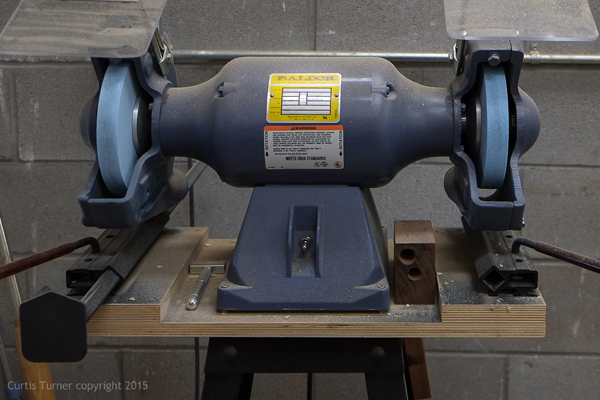
curtis5

2. The second most used machine in my shop is the grinder. (The first being a lathe.) I tend to neglect this important machine. The grinder gets covered in wood and metal dust. The clean-up for me was a quick once over with a shop vac.

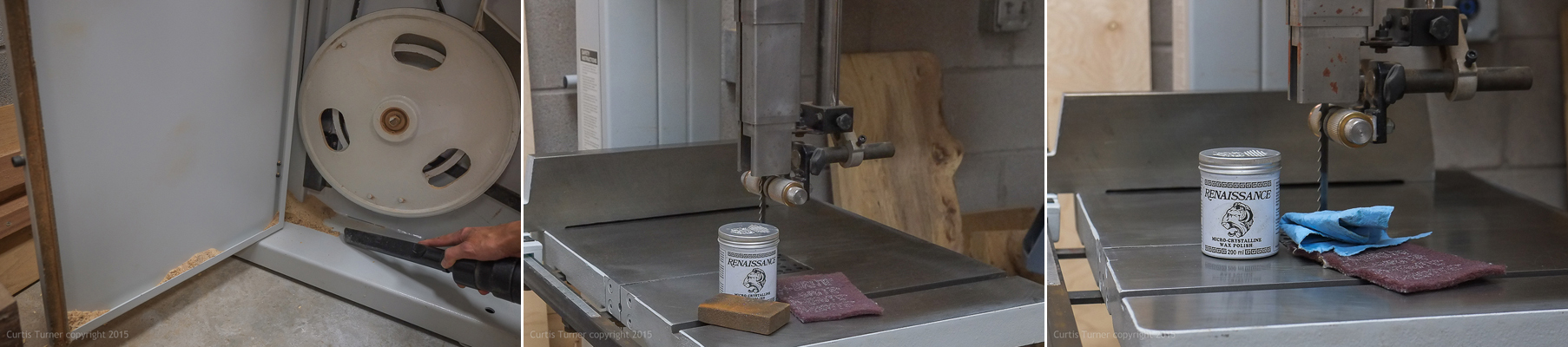
curtistriple

3. The third most used machine in my shop is the bandsaw. This required a little more effort to clean. However, the time is well spent to protect this investment. I started by vacuuming off the exterior and interior top to bottom. Then I readjusted for the drift. Next, I waxed the table and ensured the guides operated properly. Unfortunately, I noticed rust forming on the blade guard. I used a Scotch Brite pad and Sandflex medium grit block to remove most of the rust. I found the Sandflex block worked the best. You can see the difference in the photos. I then waxed the blade guard to help prevent more rust from forming.

4. This is a reminder for those with heaters in the shop. It is wise to vacuum off any dust that has accumulated on the heater since last year. Wood shavings make for great tinder.

Sep 022015
 

Though Summer is far and away my favorite season, as fall approaches, I am getting really excited to transition from long days working outside on our farm back into the shop. My fall transition this year will be very different than it has been any year prior, however, as two pretty major life changes have come about since last fall: my husband and I sold our house with my shop and bought an old farm with an old shop that needs lots of work, and I’ve just been hired on as the Wood Studio Manager at Pratt Fine Arts Center here in downtown Seattle.

Last fall, I had just obtained my Washington State Business License. I’d quit my job and was ready to commit to learning more about woodwork and doing projects full time. I had a fully outfitted, “perfectly” set up shop that was ready to go to work. I’d just been invited to attend my first woodworking conference, Woodworking in America 2014, and I had no idea how my life was going to change in the coming months. I left WIA with a job writing for Furniture & Cabinetmaking Magazine and offers to write regularly for several other publications. I had been offered the opportunity to take my Community Tool Chest idea on the road to several other woodworking conferences around the country. Along the way we found out we had to sell our old house with my perfect shop and would have the opportunity to buy the farm I’d been dreaming of having since I was a little girl.

The farm has a 1000 sq ft shop, something that was originally a big selling point when we were buyers looking at the property. I had grand intentions of spending all my time and money fixing it up and turning it into the dream I have for it, but I’m beginning to realize there might just be too much there to bite off – at least to be ready for work this year. There are five pretty major projects on the docket in the shop to get it up and running: replacing the very leaky roof, adding a retaining wall to support the new roof, installing windows, adding a wood floor, and insulating/sealing off the hand tool area of the shop so it can be kept at a more consistent temperature and be sealed off from the dust from my power tools. Each one of these projects is a pretty huge undertaking in and of itself, but I’m confident that with the right group of helpers, everything will get done in due time.

Though the dream for the home shop has been put off, I am extremely fortunate to have ample workspace in the shop at Pratt. The opportunities for community, relationship, and gaining skill and confidence as a woodworker abound at Pratt. And I’m incredibly fortunate to be able to call something I love so much my “job.” So preparations for fall woodworking look like… I have no idea. But I’m really enjoying the ride.


Anne Briggs Bohnett is a 26 year old woodworker out of Seattle, Washington. She and her husband Adam own and operate a small farm aimed at teaching youngsters about animal husbandry, traditional woodwork, and it’s also where their food comes from! Anne has been seriously pursuing woodwork with a focus on handtool use for three years and is passionate about the preservation of traditional methods and skills and building community.

Anne can be reached directly via email at briggs.anne@gmail.com and you can check out her website at www.anneofalltrades.com.
Jul 222015
 

We asked our bloggers which books they are looking forward to reading this summer, and they provided us with some great answers. Curtis Turner took a different tactic from the others, and told us quite a lot about the book he is most excited to read this summer. Now we are ready to start reading this one too!

Chairmaker’s Notebook by Peter Galbert

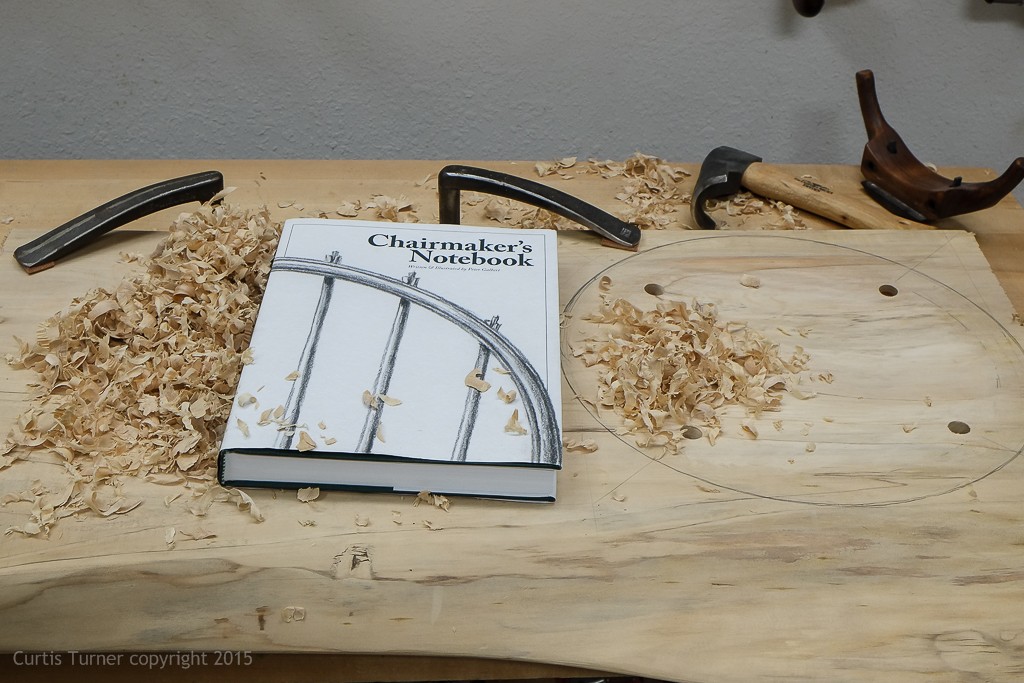
The much anticipated book Chairmaker’s Notebook by Peter Galbert had me watching the web to see when it would be in stock. I am not often excited about a book release. However, I was eagerly awaiting this one. I knew this book would represent many years of experience in the craft of Windsor chair making. The hype prior to the release did not disappoint.

Highland Chairmaker's Notebook web-2

I found this book to be fascinating. Of course, this 400 page book is well written and artfully illustrated. Peter’s ability to match descriptions with his hand drawn illustrations make for a powerful book. It has a relaxed feel; it is not preachy nor assumes you a skilled woodworker. This is the work of a confident teacher and craftsman.

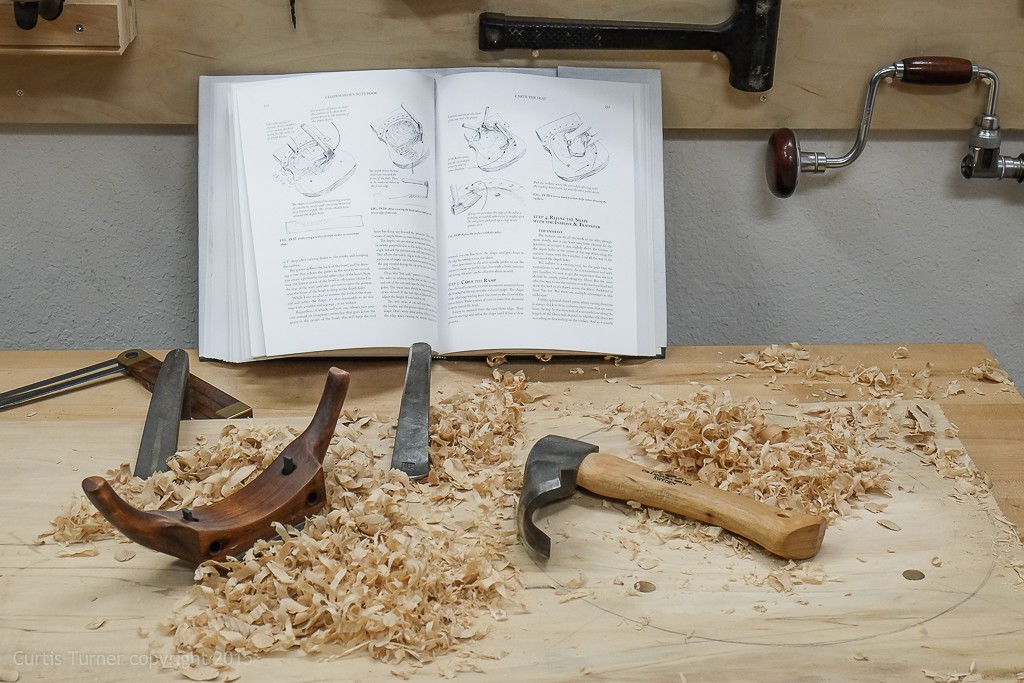
I would consider this a textbook for anyone interested in making chairs. However, this book will be helpful to those just starting to learn about green woodworking. Peter guides the reader through understanding how to use a wide range of tools including esoteric items like the travisher, scorp or the tapered reamer. He explains and illustrates how to harvest a log, process, build and finish a chair. While the focus is on Windsor style chairs, much of the content applies to other styles and types of furniture. I have found the information on joinery to be most educational.

Highland Helpful accessories web 1

I initially was hesitant to take this beautiful book into my shop. But then I found it too useful to leave it at home. Now it frequently makes its home on my work bench.

Inspired by Peter and others, I am in the process of making a Windsor style stool. While a stool is not the subject of the book, I am using his methods and adapting them to suit my needs. I am certain you will find this book an important resource in your shop. It is sure to become a legendary book and a source of inspiration to future generations of woodworkers.


Curtis was the 2012 President of Central Texas Woodturners, a member of the American Association of Woodturners, and a member of Fine Woodworkers of Austin. Curtis teaches and demonstrates nationally for Lie-Nielsen Toolworks. He also owns a studio where he teaches and works. Curtis lives and works in Central Texas with his wife and four young children. Take a look at his website at www.curtisturnerstudio.com