
Our contributor and prolific woodturner Temple Blackwood is being featured in a very cool online gallery, courtesy of the Witherle Memorial Library in his hometown of Castine, Maine. Take a look and prepare to be inspired!

Our contributor and prolific woodturner Temple Blackwood is being featured in a very cool online gallery, courtesy of the Witherle Memorial Library in his hometown of Castine, Maine. Take a look and prepare to be inspired!
As seems often to happen, I received an email from a stranger asking if I might be able to replicate a small a chess piece for a miniature set to replace a missing queen for his girl friend’s birthday. Apparently the unusually small chess set was a favorite of hers that had been missing the dark queen for quite some time but fortunately still had the light queen, from which I could make a copy in black walnut.
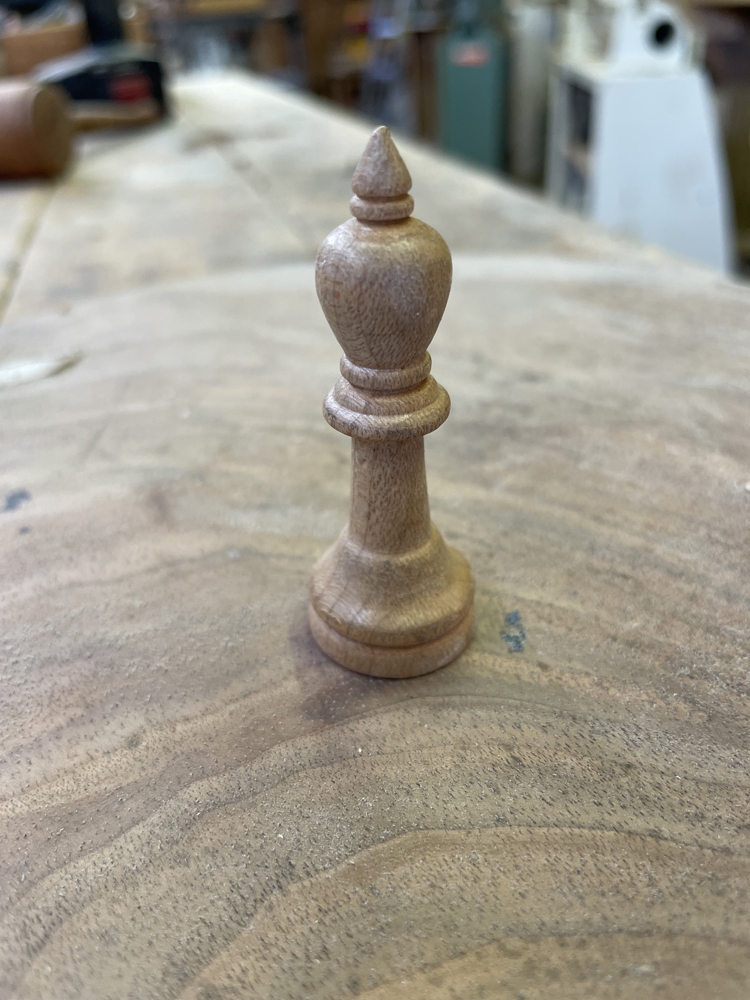
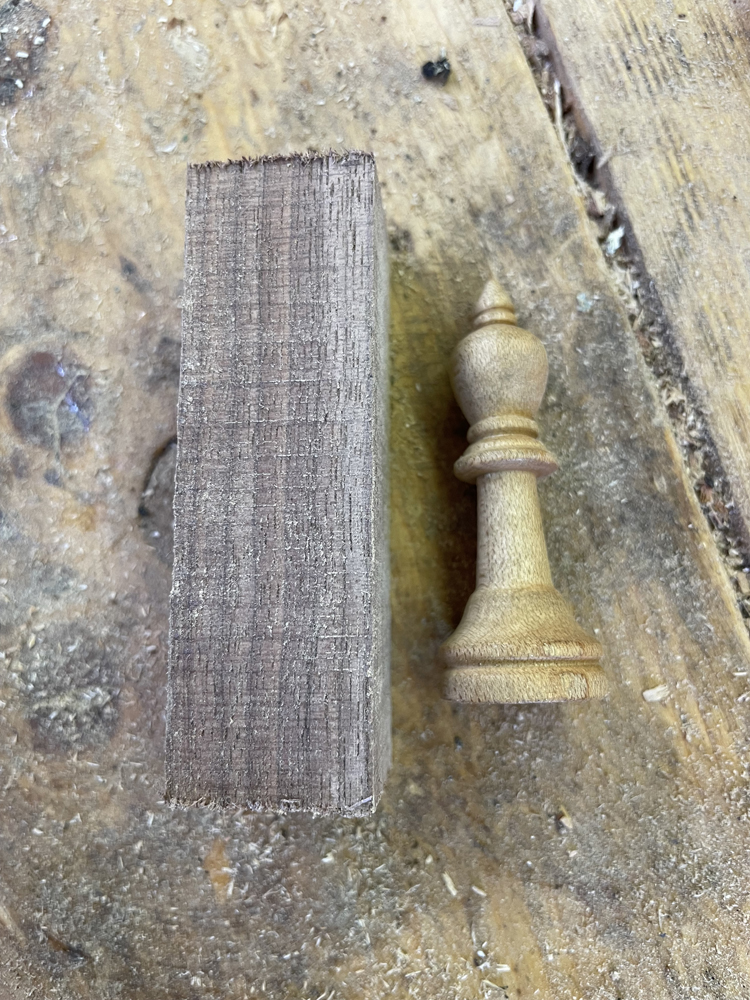
Once I acquired the sample queen, I cut a slightly oversized walnut blank for turning.
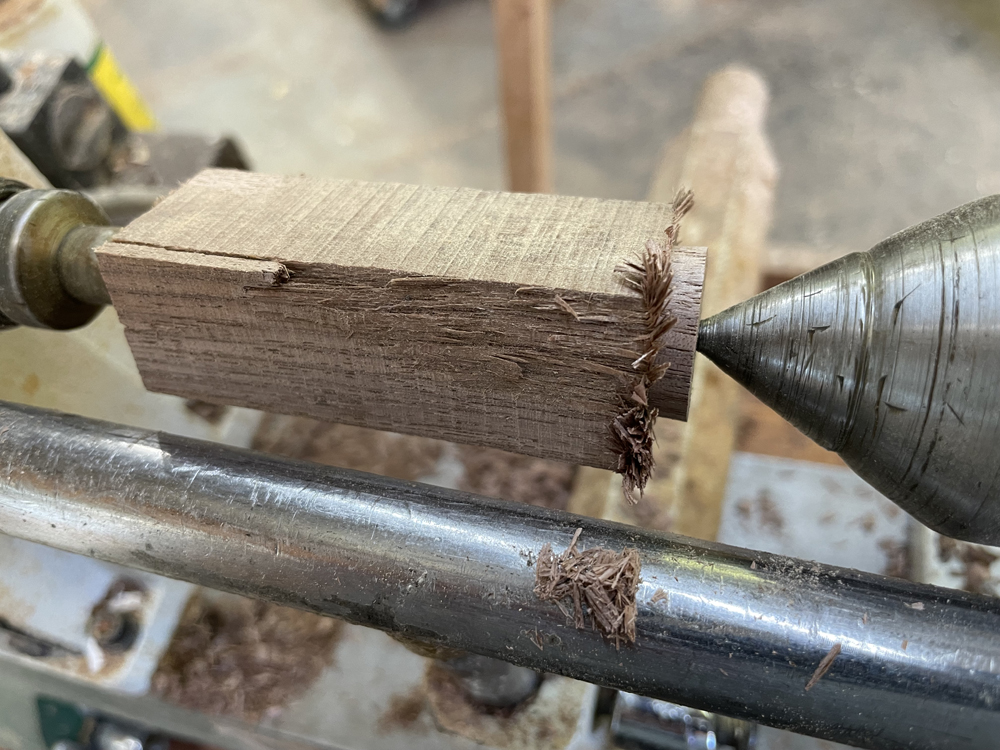
After mounting the piece between centers, I turned a tenon, which I then used to mount the blank in a four-jaw chuck.
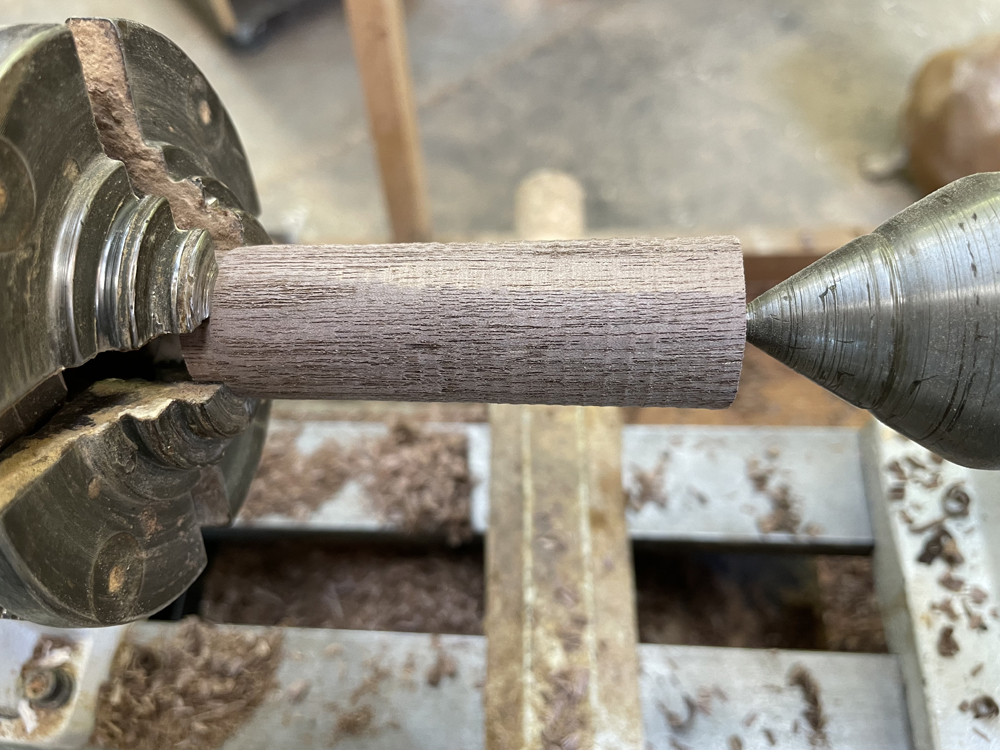
Using the original light queen as a story-stick, I marked the critical points.
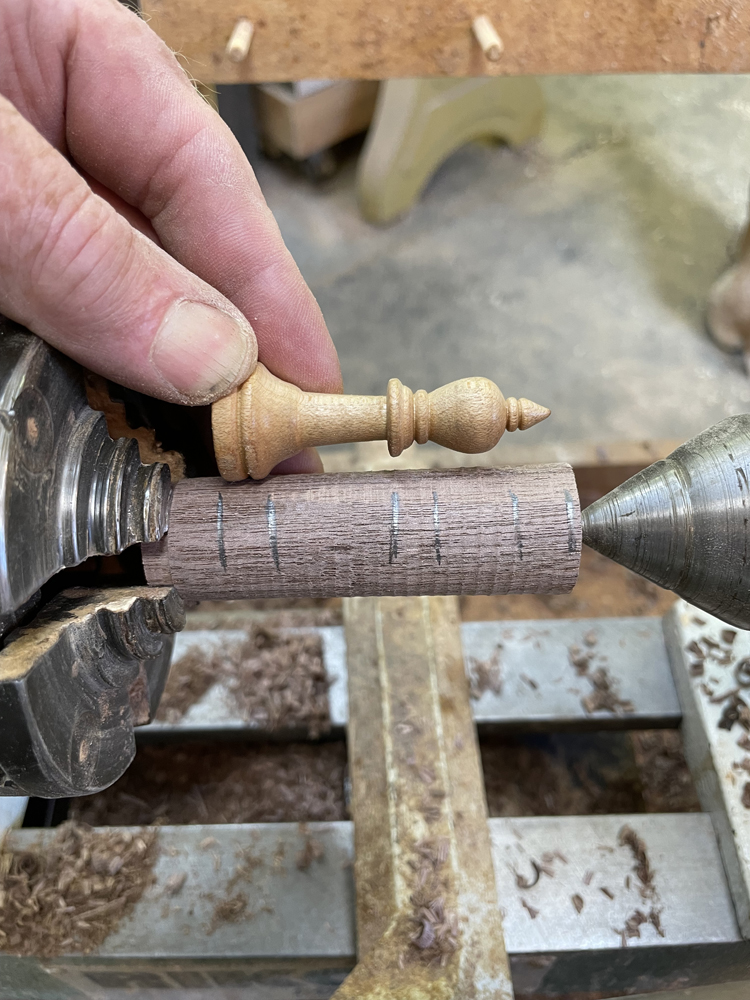
The tricky part of this copying, especially on such a small scale, it to get the various diameters right for each of the points while balancing the physics of turning each detail on the right (tailstock) at a given diameter before committing to turn the next (left) detail.
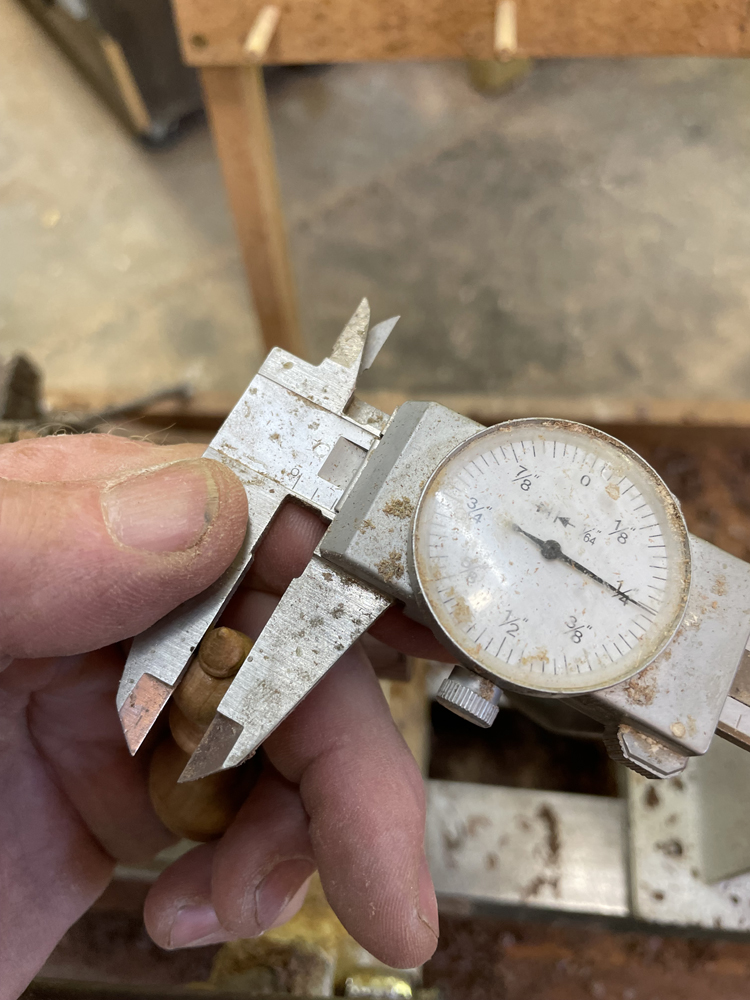
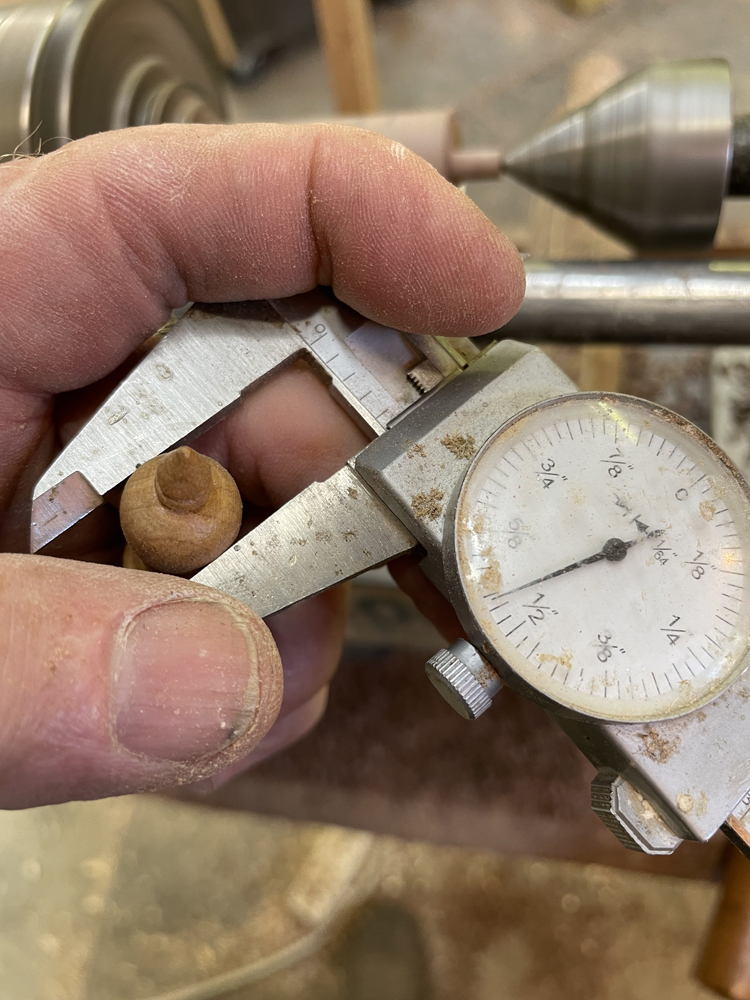
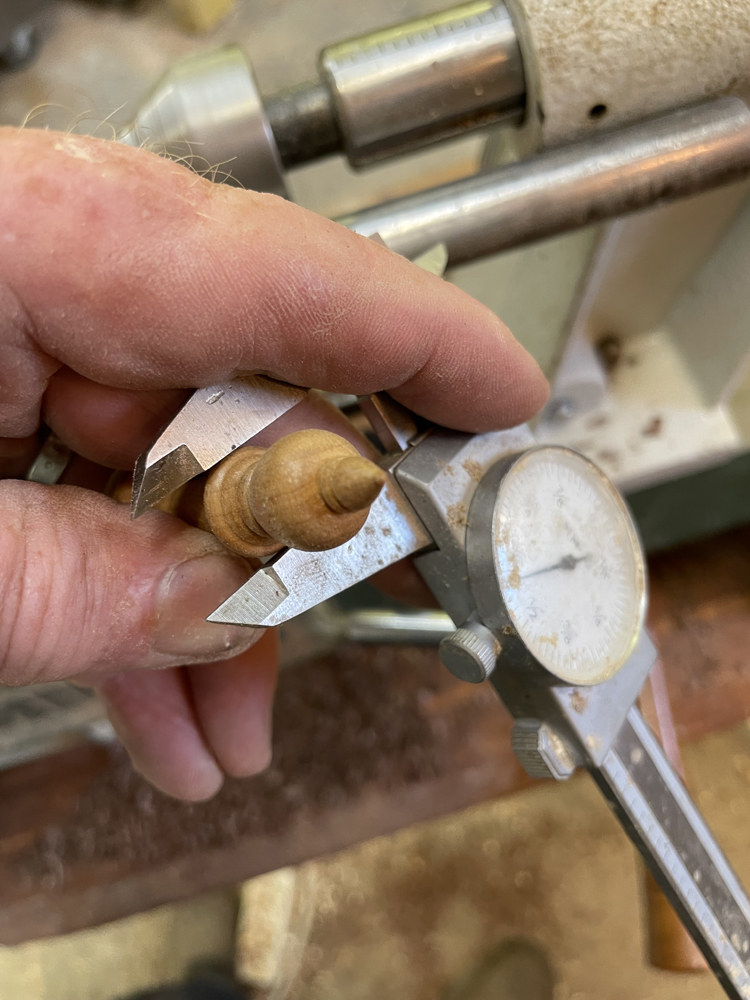
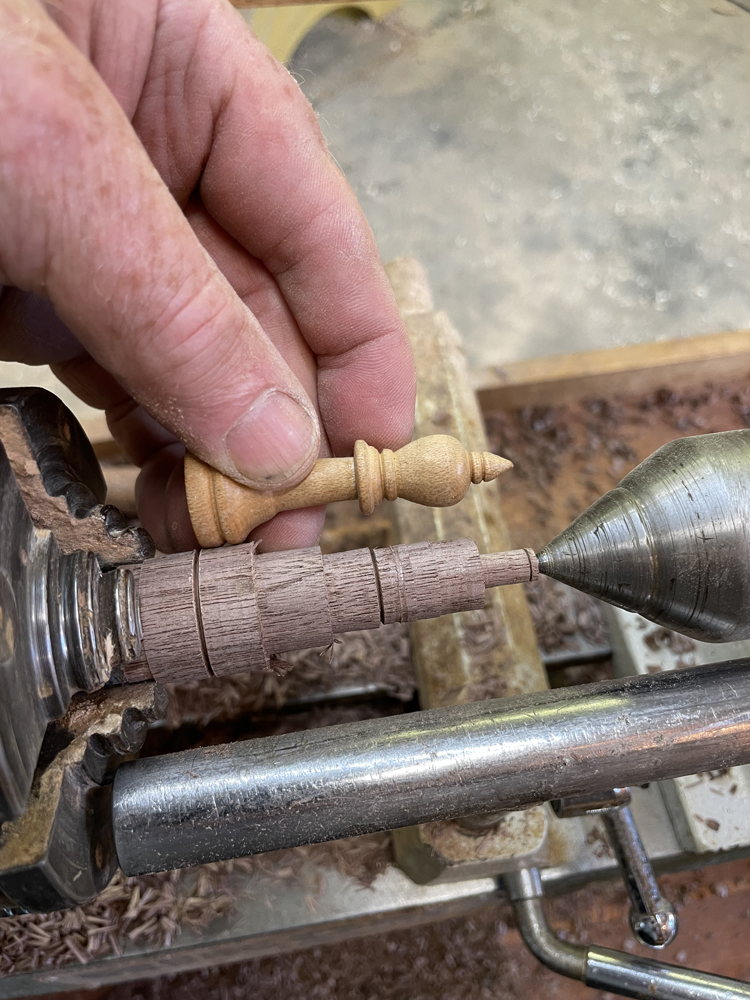
With the bulk of the waste wood removed, copying each of the major details precisely from right (tailstock) toward left (headstock) with the detailed attention to curves, swells, and tapers that distinguish each point while maintaining the precise diameter of that aspect and its relationship to the adjacent detail creates a need for constant comparison followed by minuscule recutting until the profile is as near same as possible.
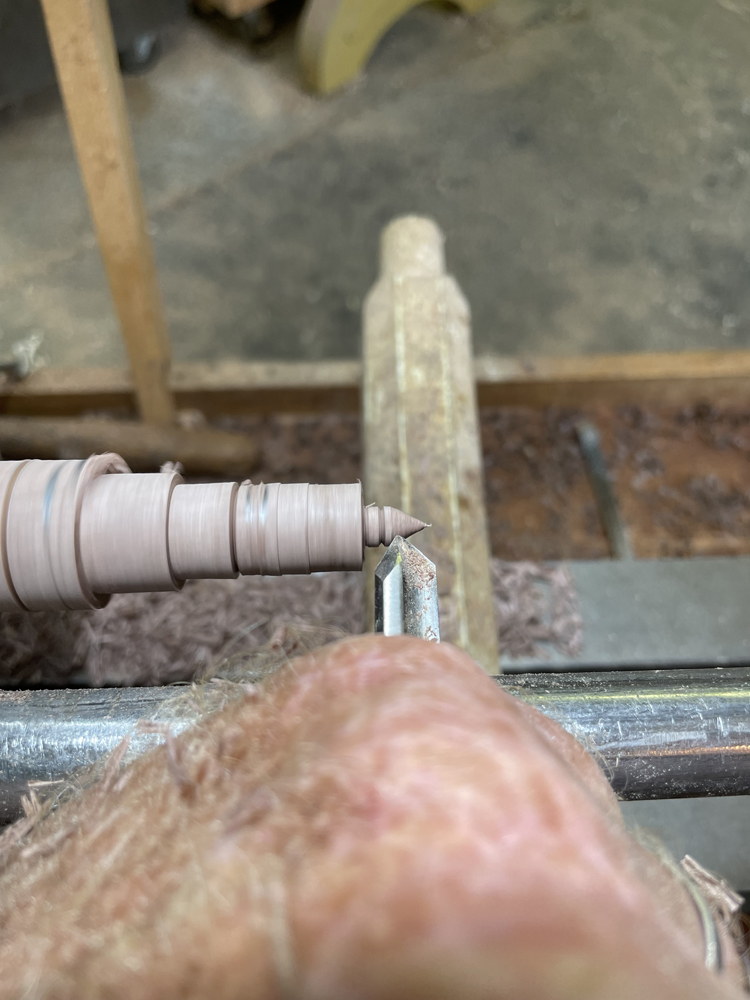
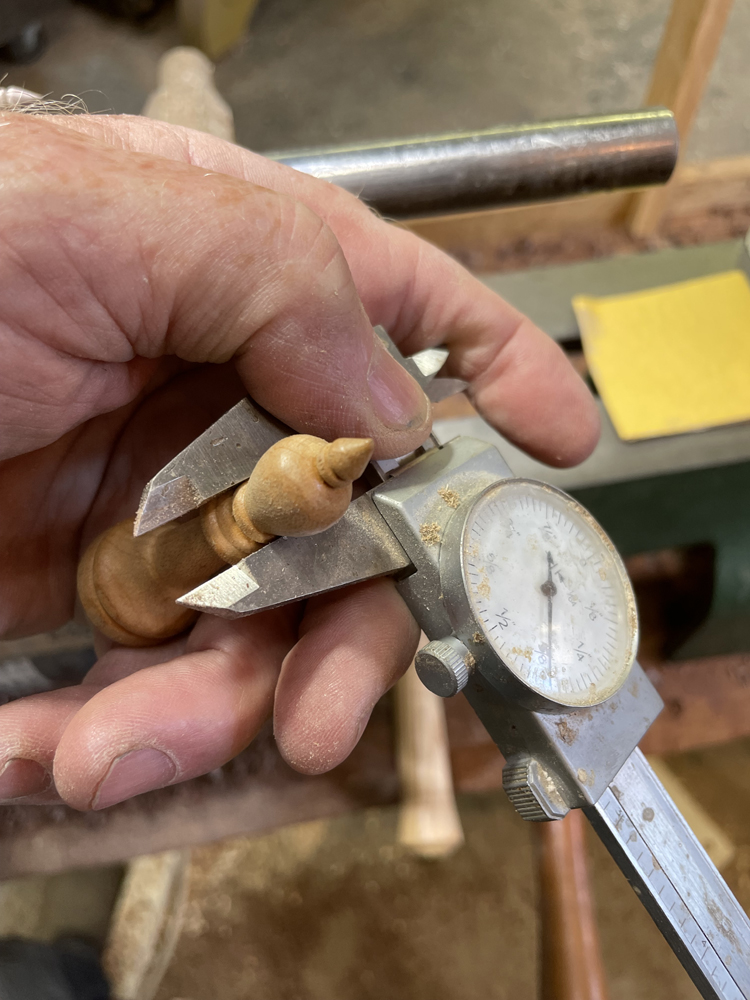
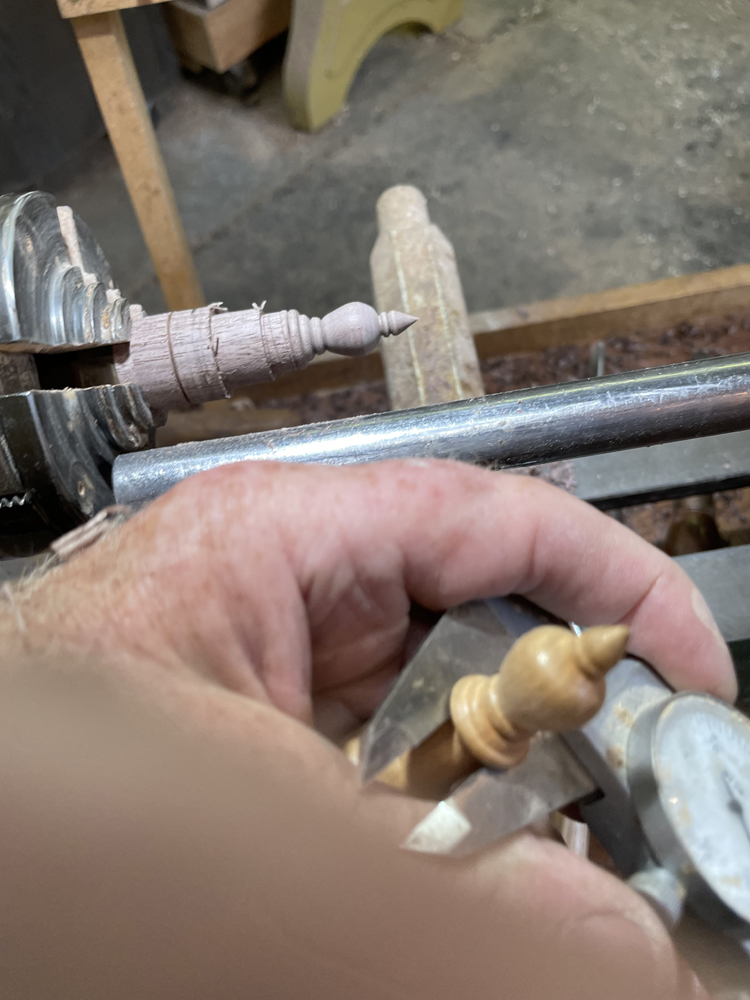
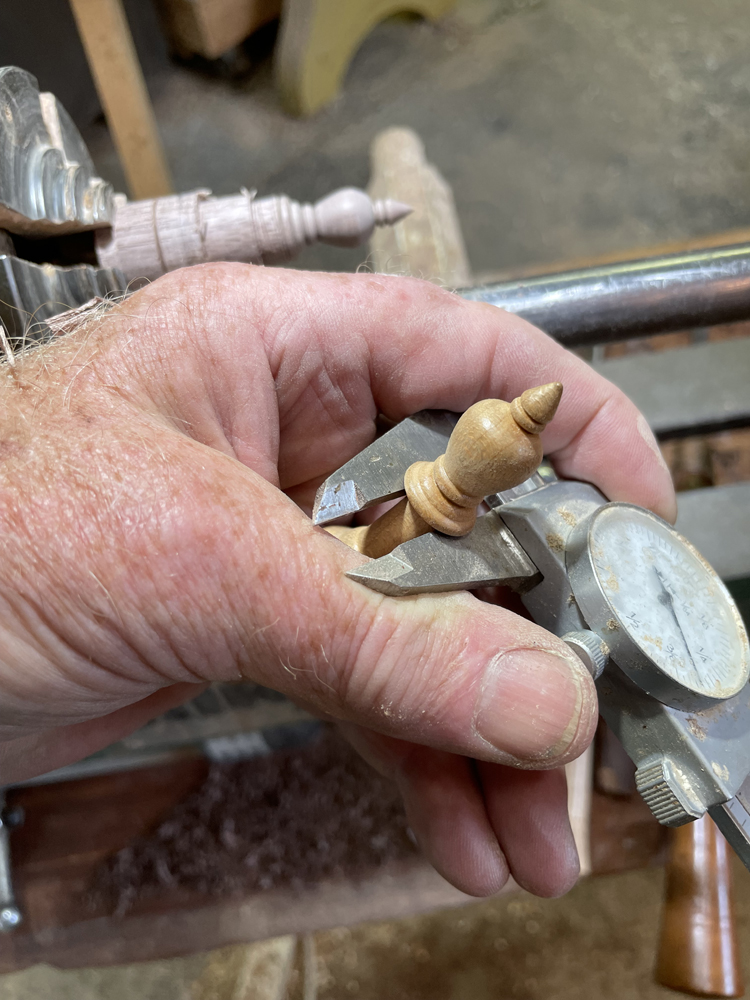
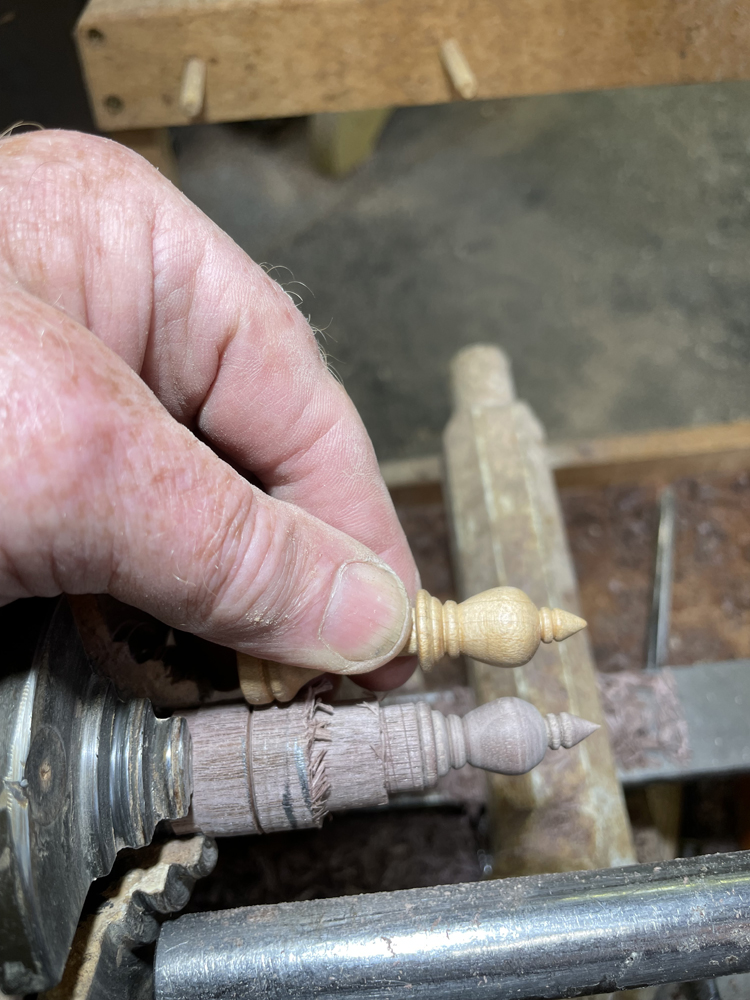
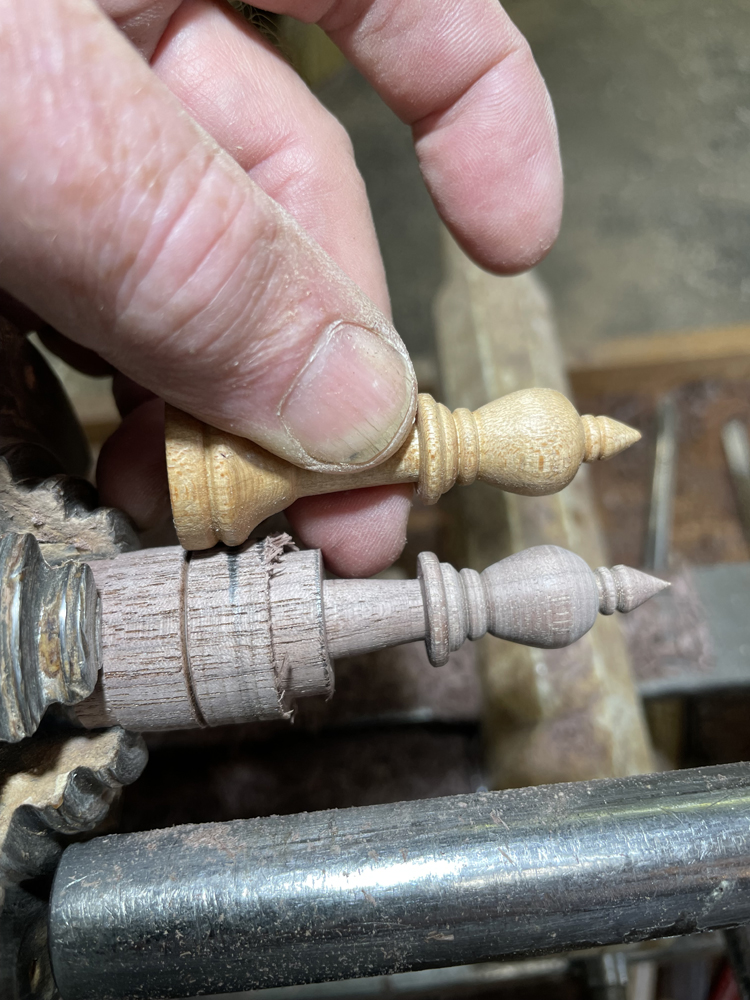
Once the profile of that detail is suitable, it is time to move on to the next (left) detail.
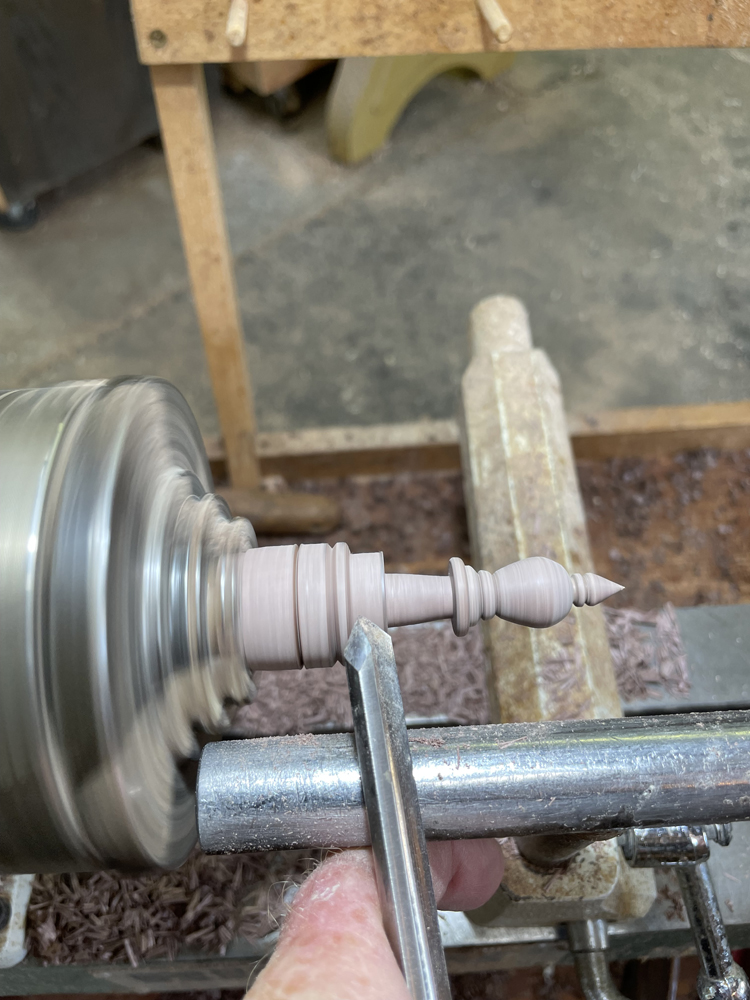
When turning “multiples” of a profile as in many balusters or finials, the turner gains efficiencies through experience, muscle-memory, and the challenge of improving the process.
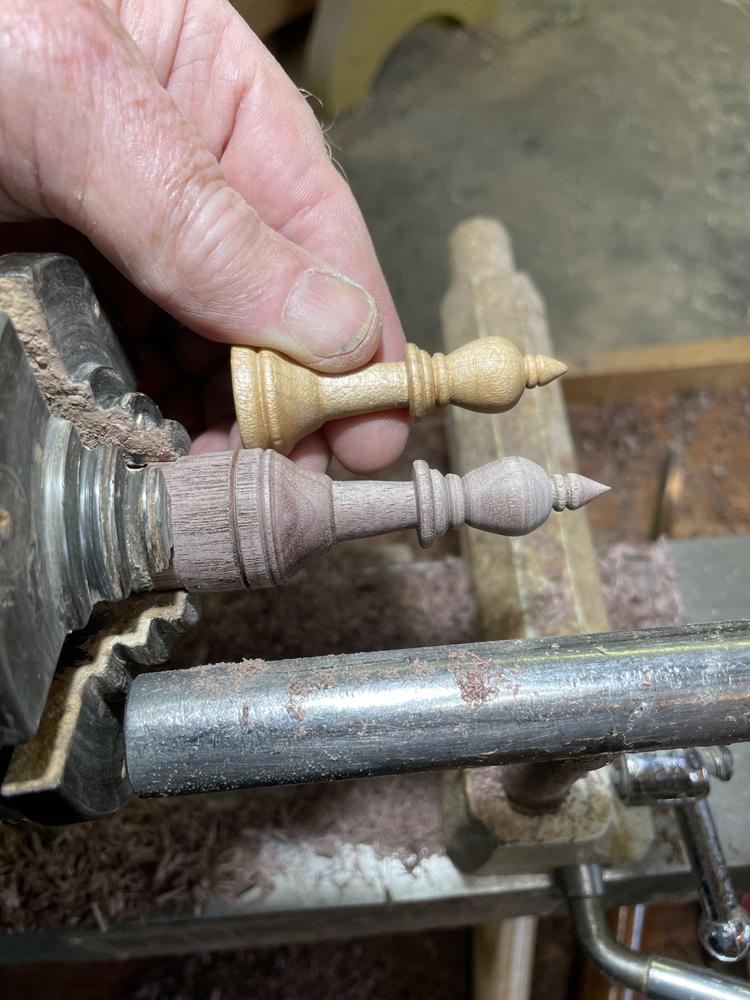
Turning only one or two copies of an existing item – especially in an atmosphere of something as exacting and precise as chess – presents the challenge of taking a different piece of wood and cutting it to appear to be identical, except, of course, by color.
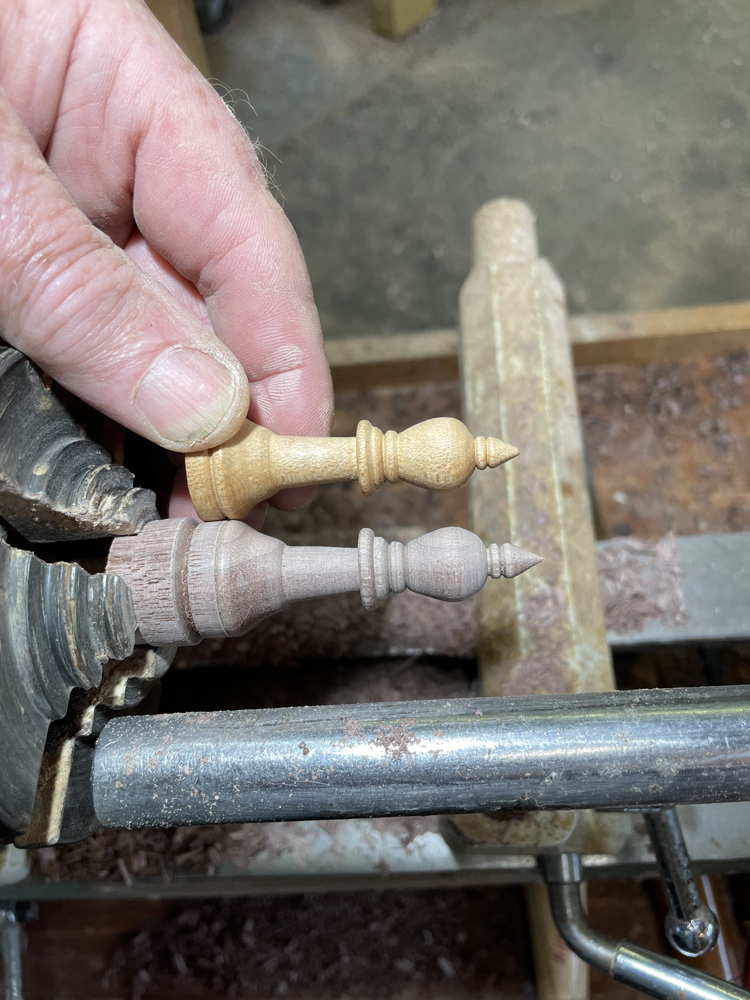
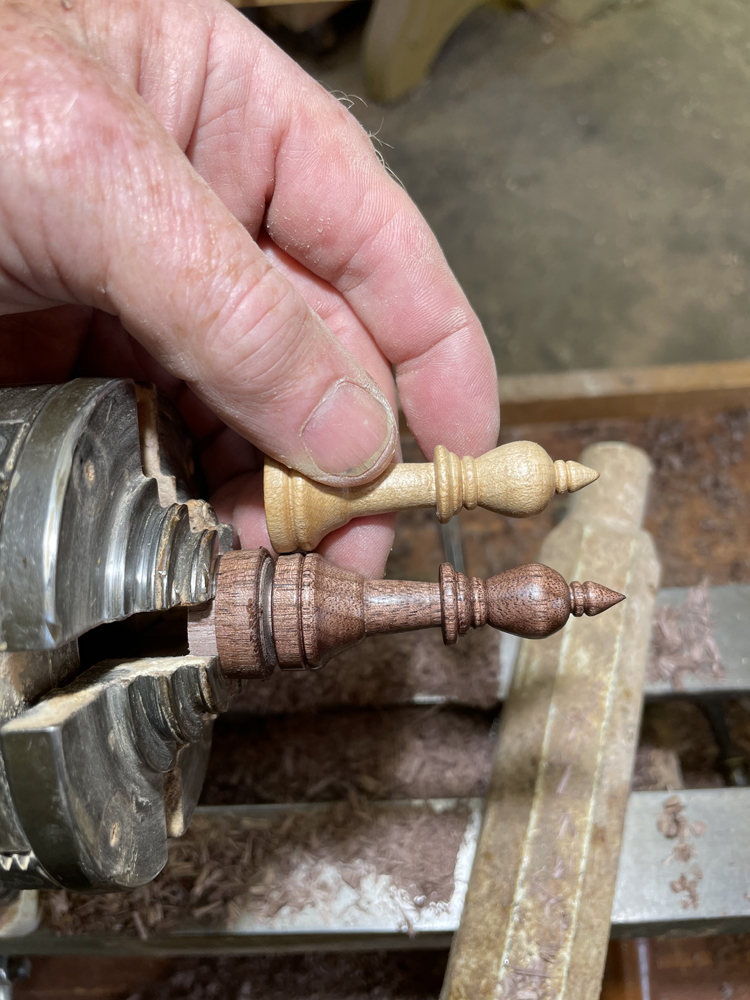
At the end of about an hour and one-half, I achieved a close-enough replica queen. There are some subtle differences, but when the fellow came to pick up his two queens in time for the birthday, he was delighted.
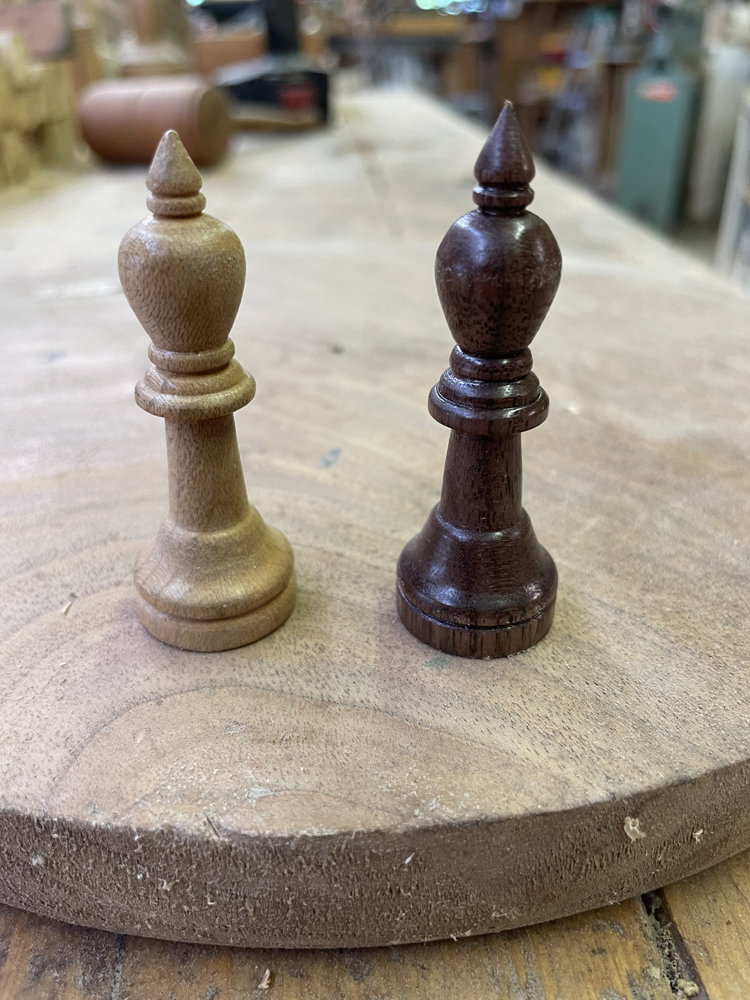
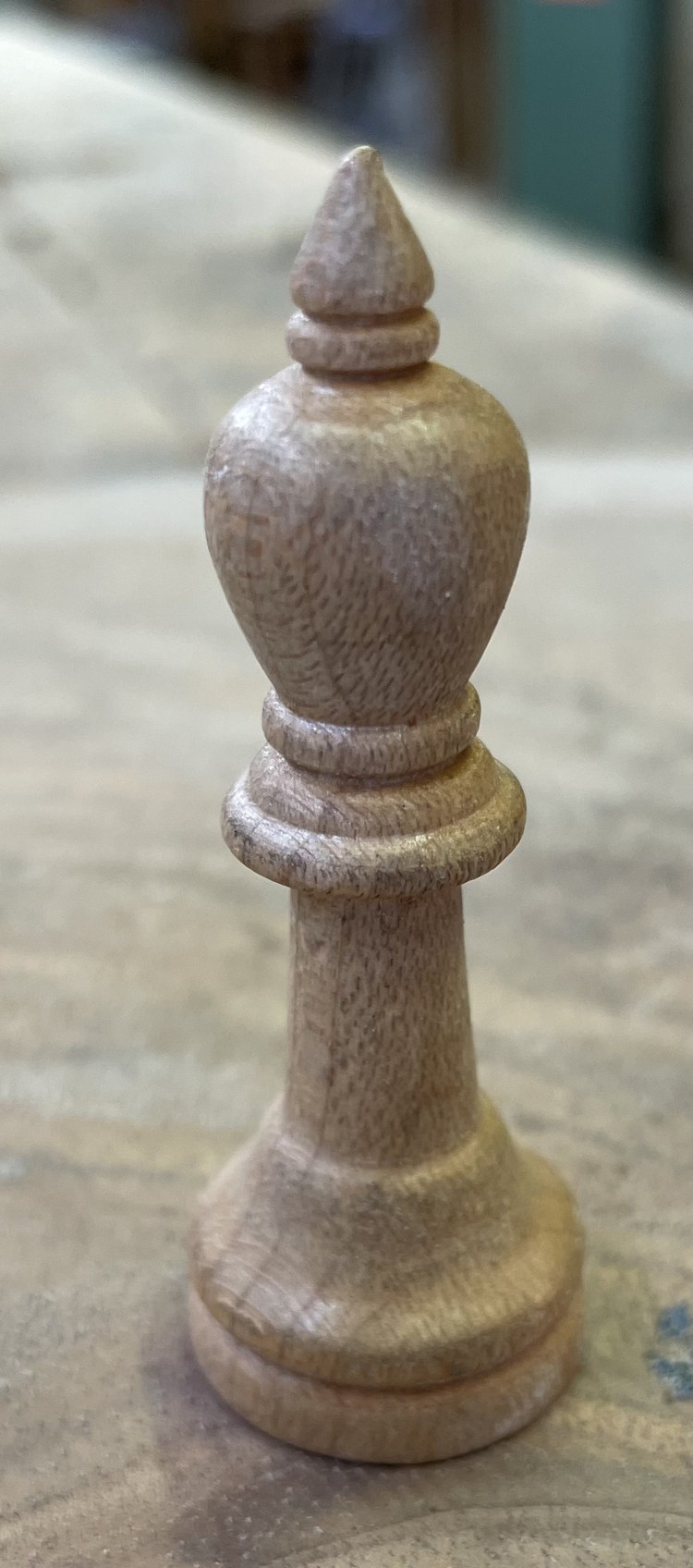
With the result of his planning, my turning, and his surprise gift for his girlfriend’s birthday. A later email from him confirmed our success.
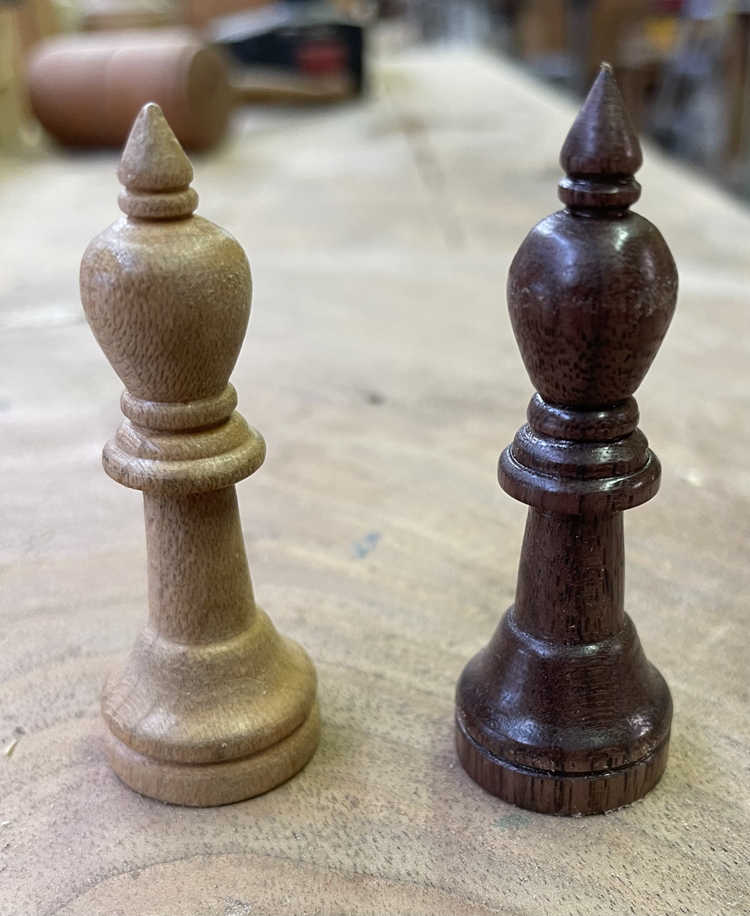
One of my most admired local friends retired last fall from her 50 year career working for and running an amazing museum of global artifacts and colonial living history program. Soon after retiring, she realized that there were parts of her life she did not want to leave behind. As a result, she started up her own early morning (7:30AM) “Free Fresh Donut Tuesday” program and now finds herself and her own kitchen crowded with eager, hungry admirers each week. Her community of followers smoothly followed her into her “retirement,” and she happily focuses on letting no visitor leave either hungry or without a brown bag of gifts for others and a cheerful dose of positive community.
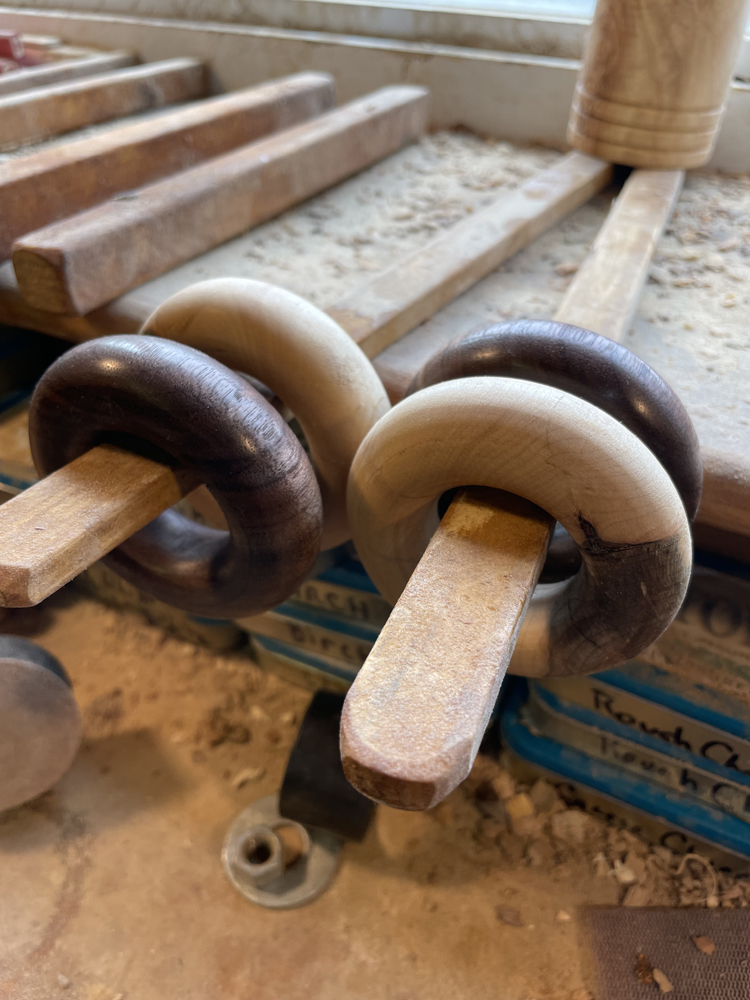
Several weeks ago, when I visited to share in the rich flavors of her cooking (she regularly uses a white oak donut hook that I made for her) I realized that while I have turned many kinds of otherwise eatables – apples, pears, eggs, grapes – and in real time even potatoes to make potato-fries, I had never tried to turn a donut. Turning to the Internet, I discovered that a number of folks had been turning donuts with some success, but all of the methods that I found seemed unnecessarily complicated. This led me, of course, to figure out how I might simplify the process and turn up a half-dozen or so to take in a brown paper bag to my next Tuesday morning visit.
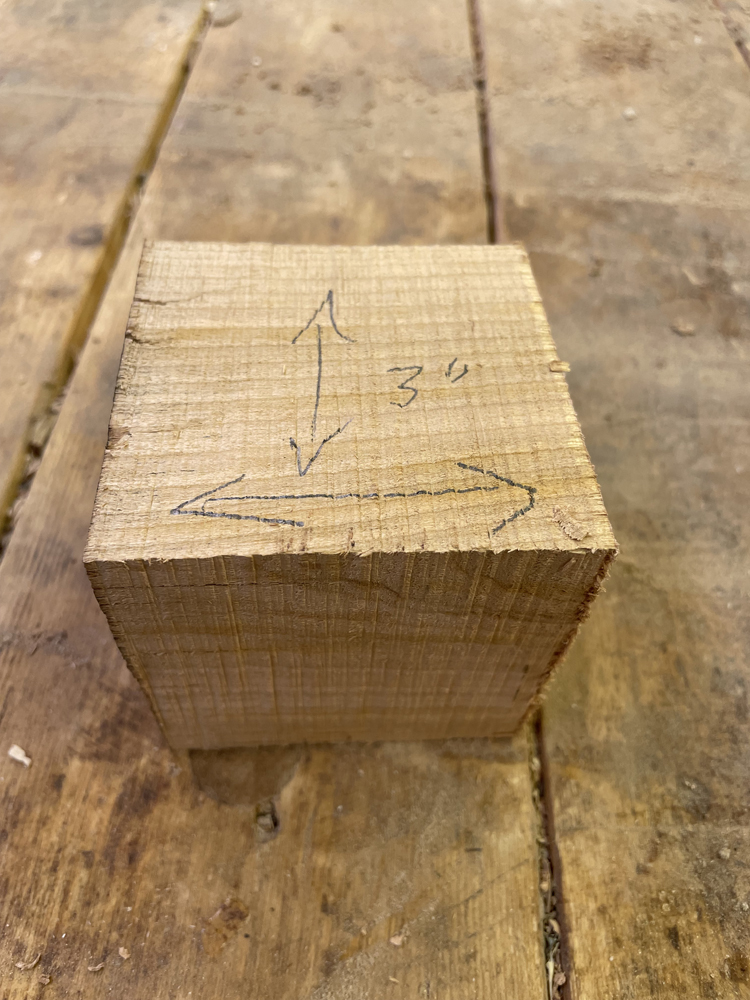
Choosing my wood from the firewood stack, I milled a small piece of black cherry scrap to a 3” cube, mounted it between centers to round, rounded it, and created a tenon.
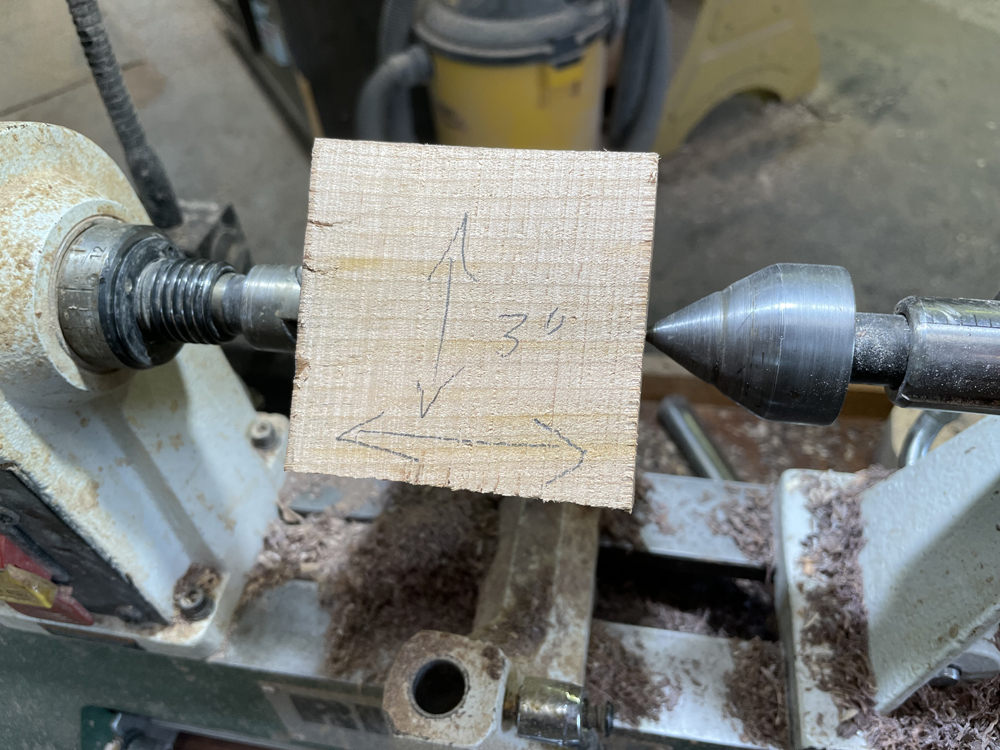
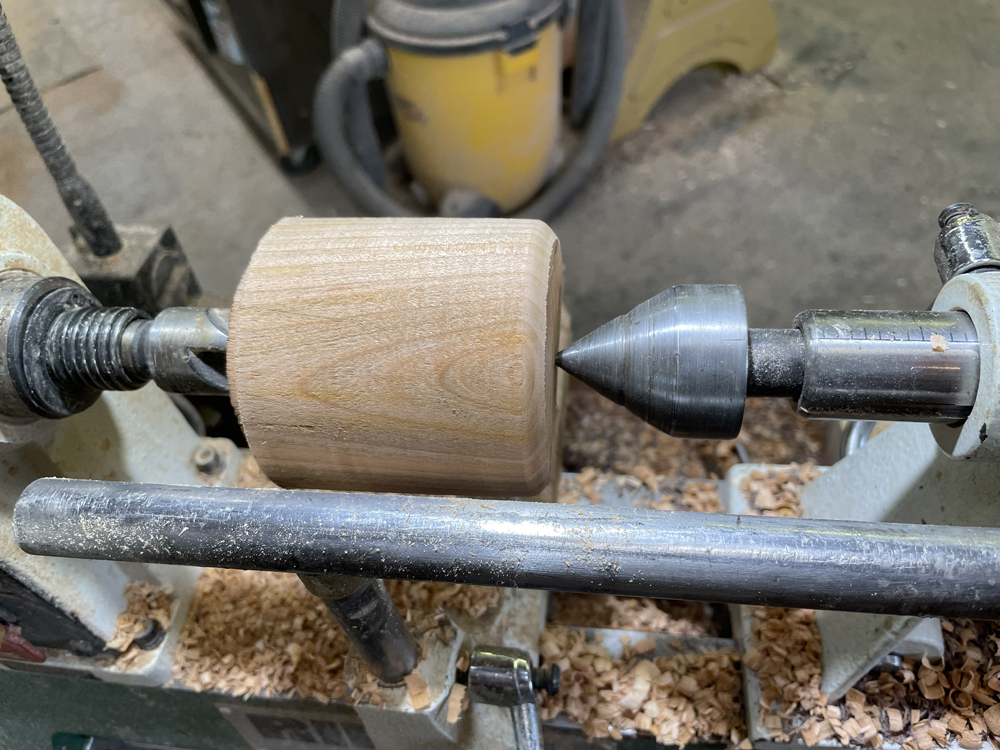
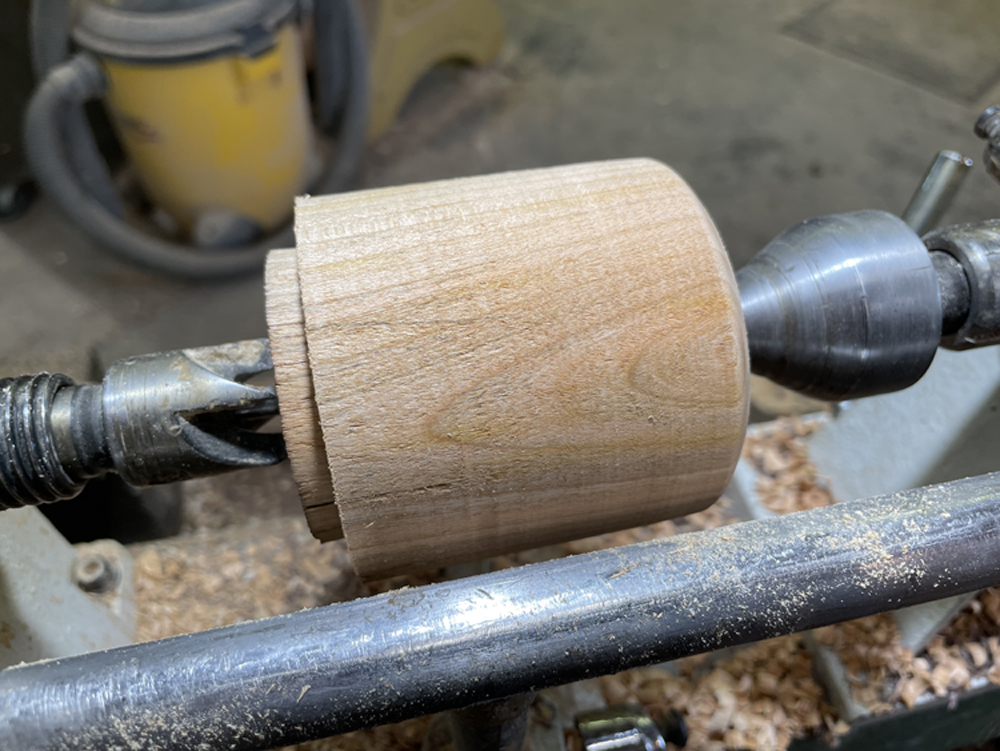
Remounting the blank on a 4-jaw chuck using the new tenon and purposefully bringing up the tailstock to mark the out-side center creates a secure work-platform while allowing me to safely sculpt the new donut by eye and hand with the 8 mm (~3/8”) finger-nail grind spindle gouge.
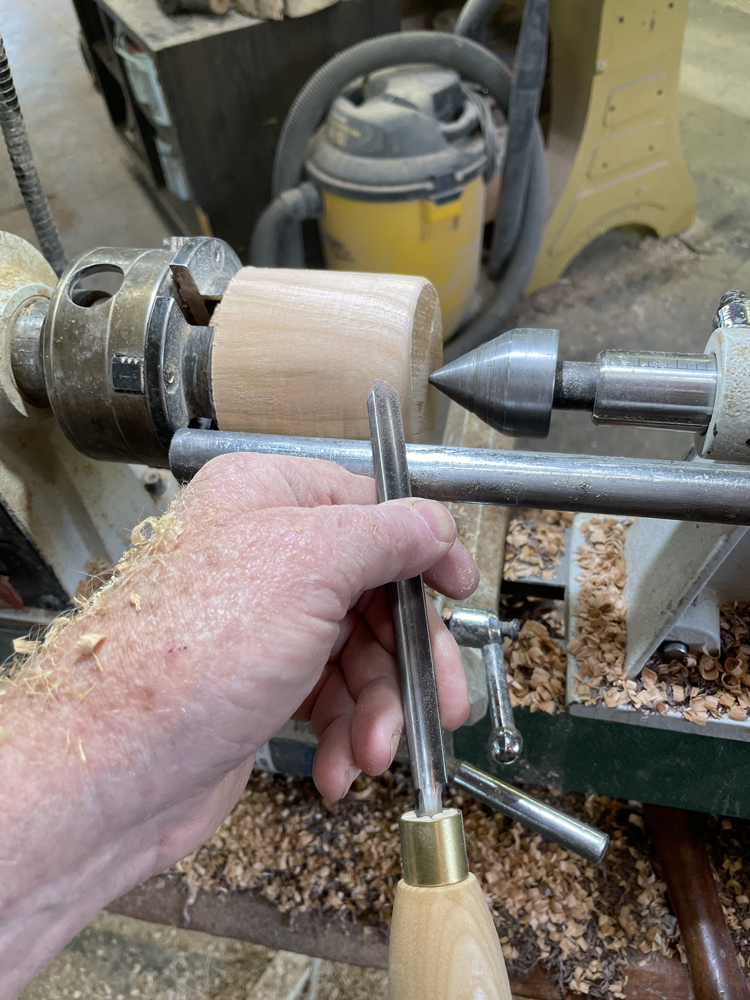
As spindle-turners know, that small finger-nail ground gouge can move significant quantities of wood quickly and efficiently while leaving a smooth surface, especially when undercutting to open up the donut’s hole.
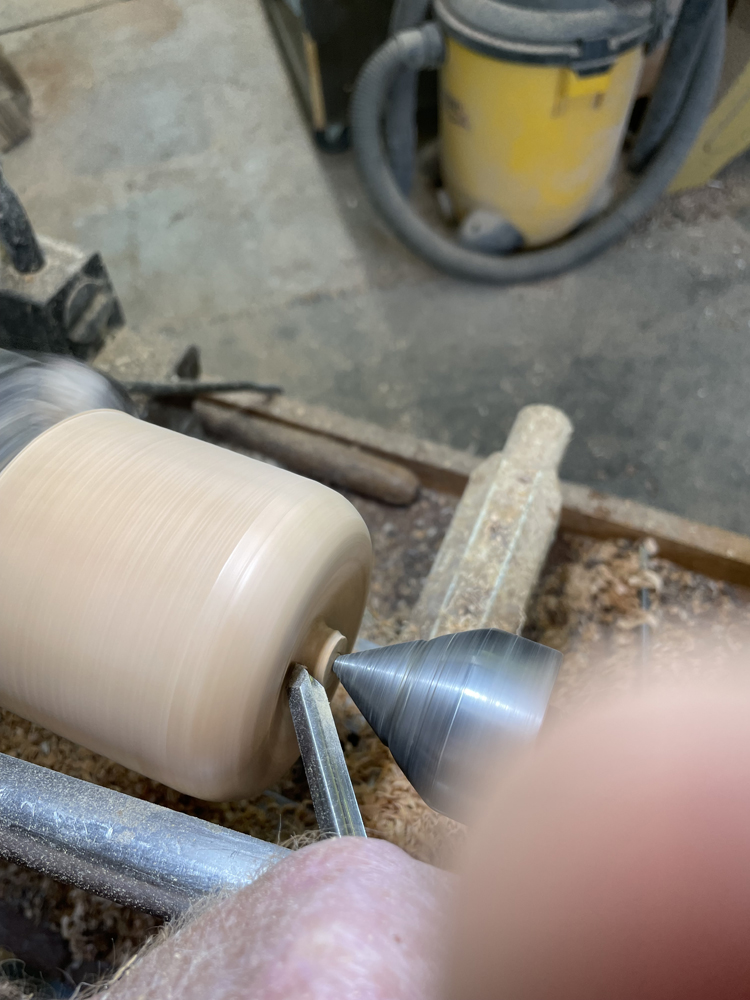
Similarly, rolling the gouge from the center to round the other side of the donut is an opportunity to round the blank fully to a realistic, mouth-watering fullness.
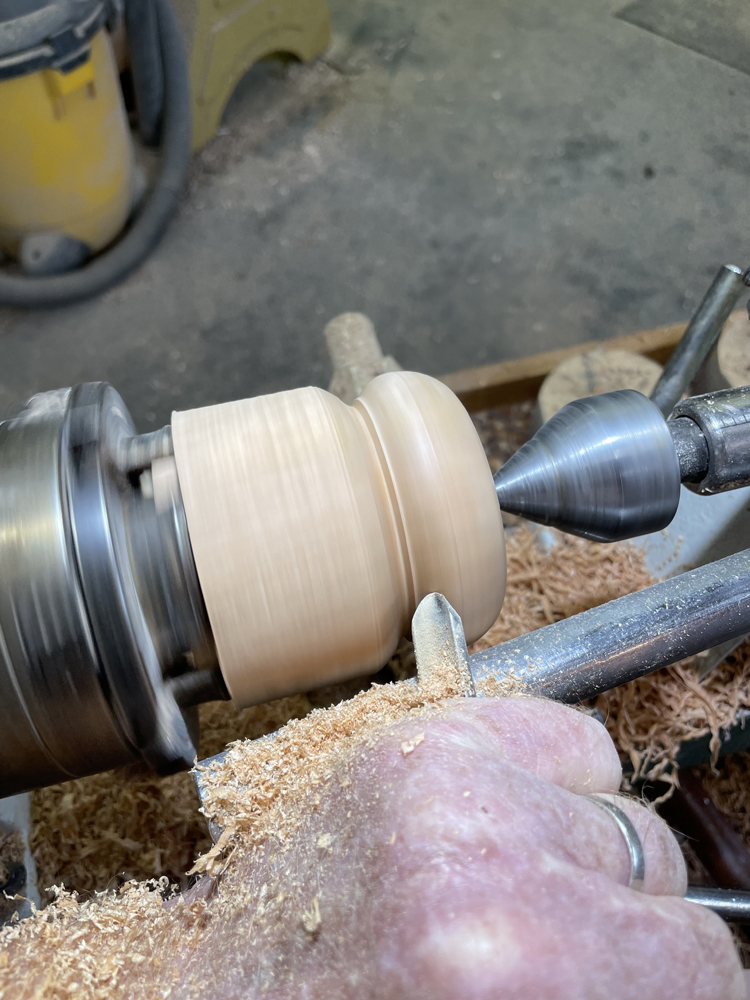
Working further to open up the interior hole while keeping the roundness of the profile requires a bit of patience and is critical to keeping the natural look.
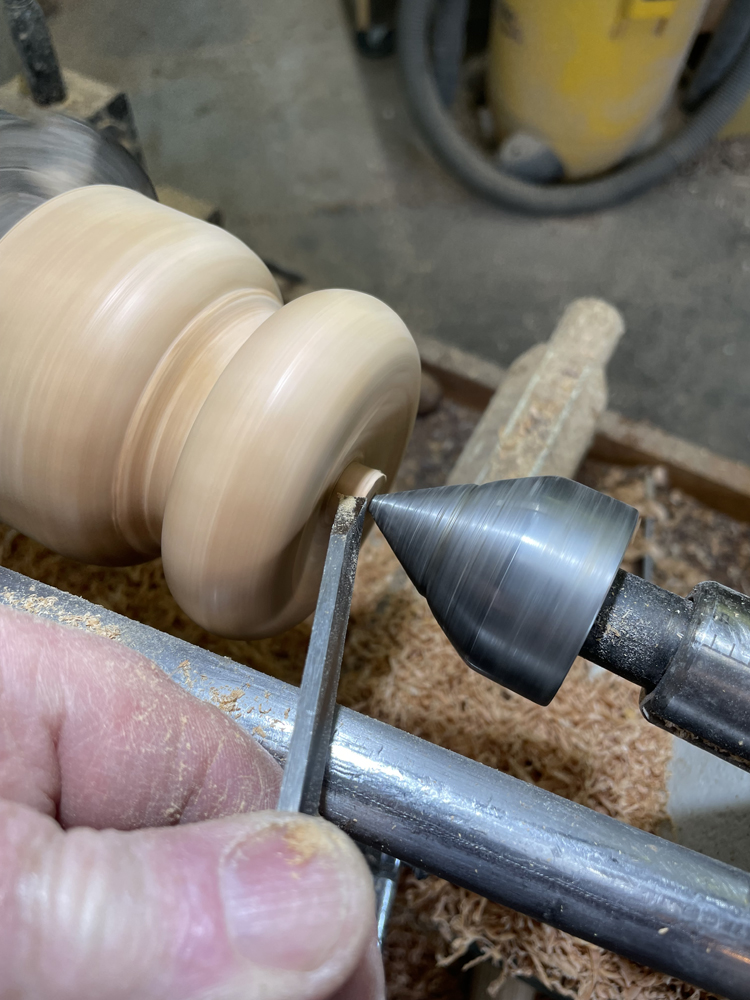
Using a parting tool to open up working space, the full width of the donut is revealed and undercut as far as possible on the inside leaving a small tenon (spigot) for later remounting before parting off.
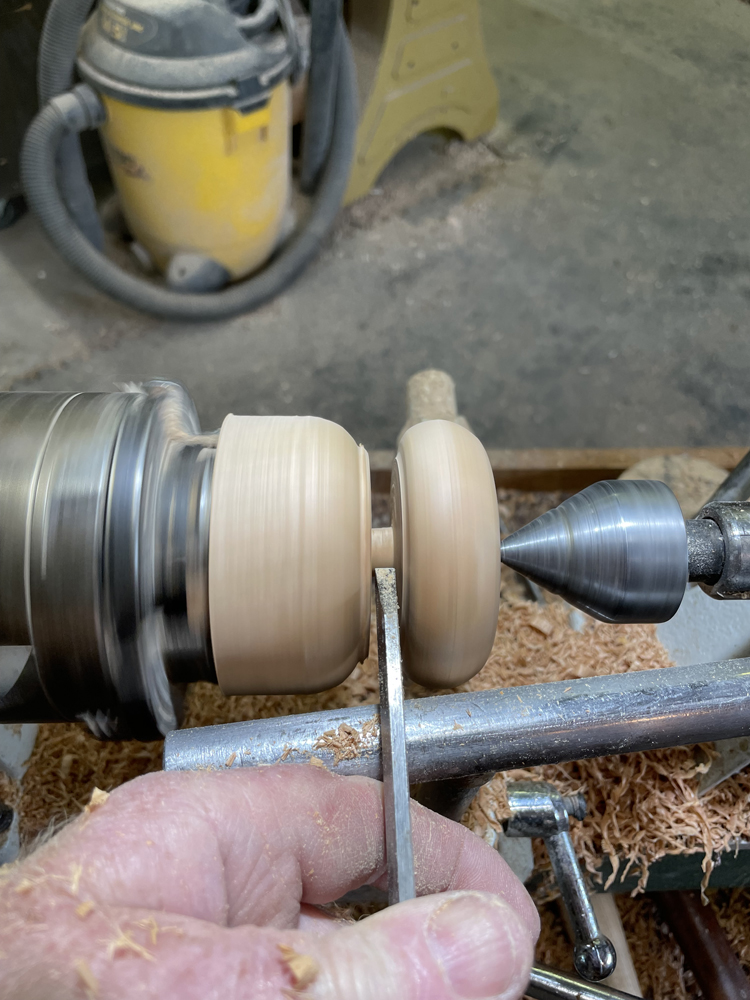
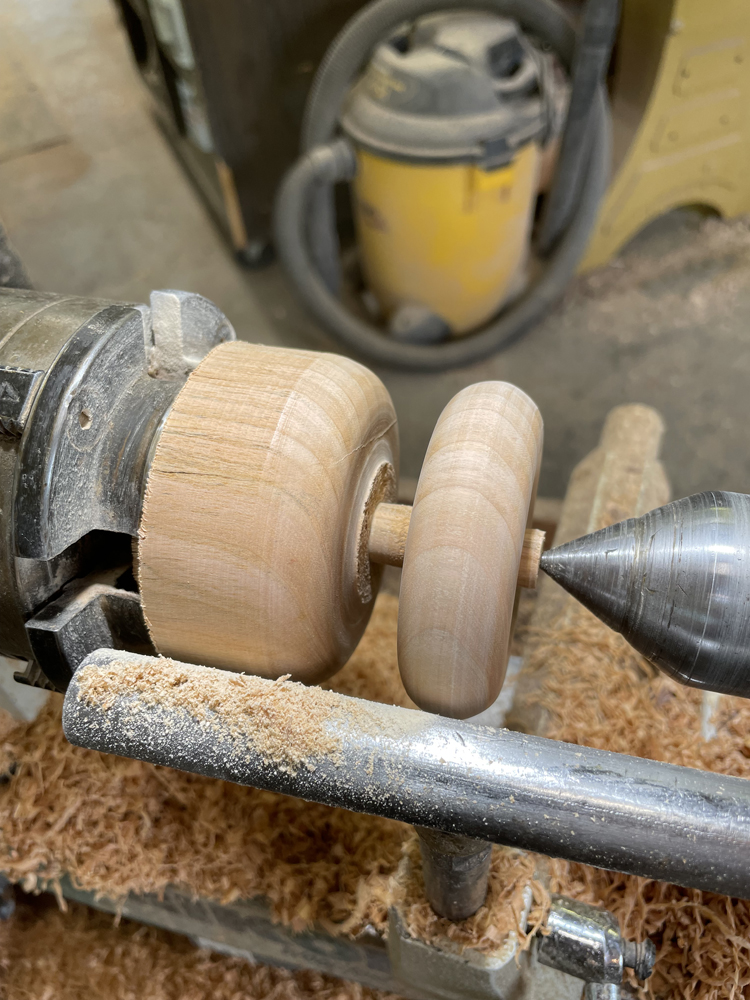
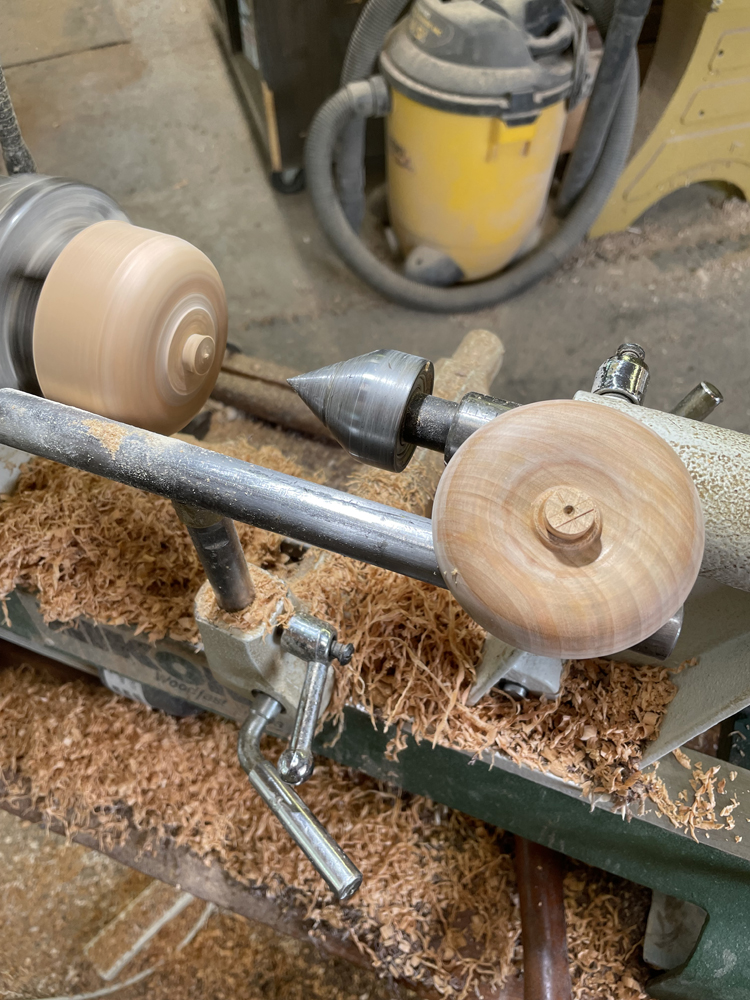
Given the already mounted blank, a second donut can be sculpted leaving another tenon formed for remounting. Production turning is a constant search for improving efficiencies while upgrading the skills necessary to create “body” and a full diameter in the roundness of turning beads, spheres, jars, and tapers.
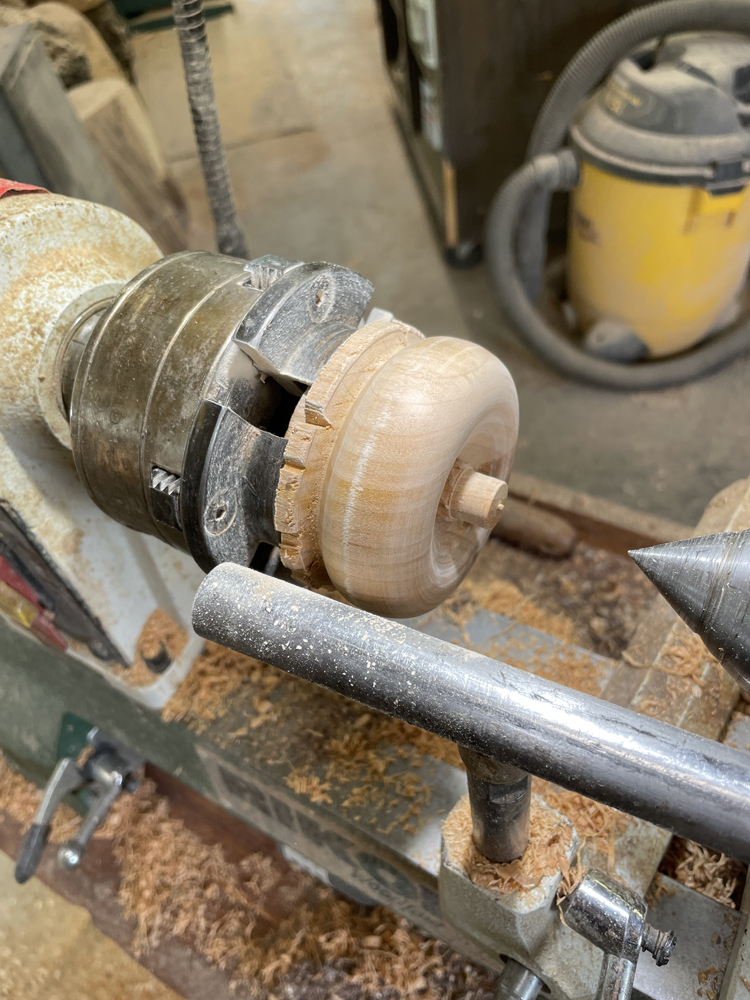
This time, the remounted blank can be turned nearly to finish.
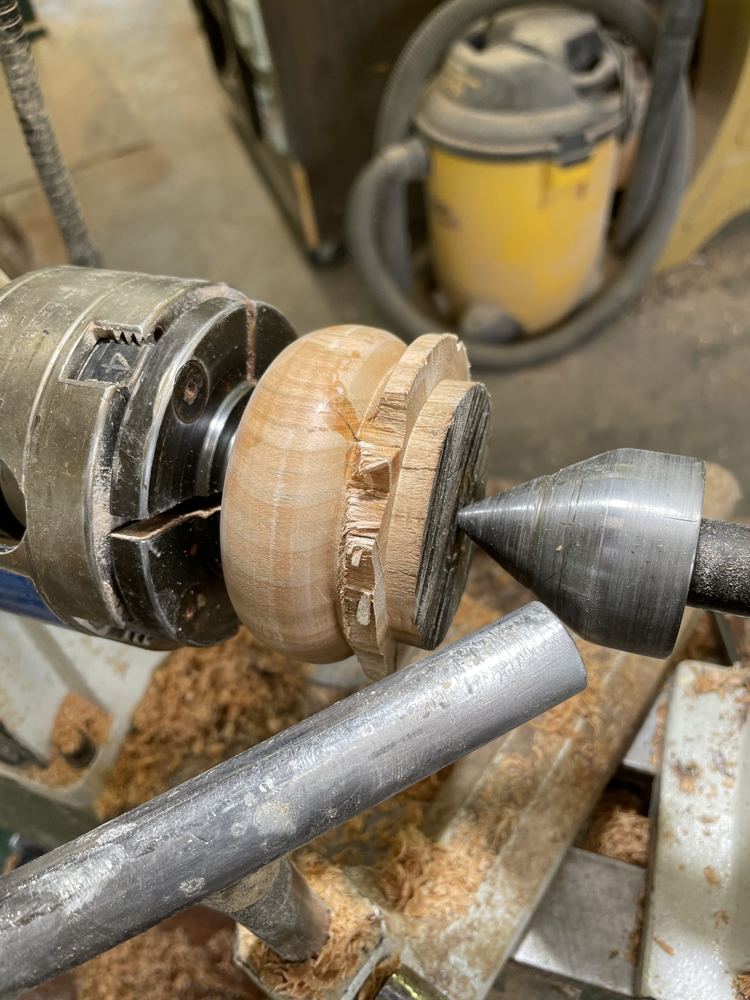
With an inner shoulder scraped for remounting using the chuck’s ability to expand from the interior.
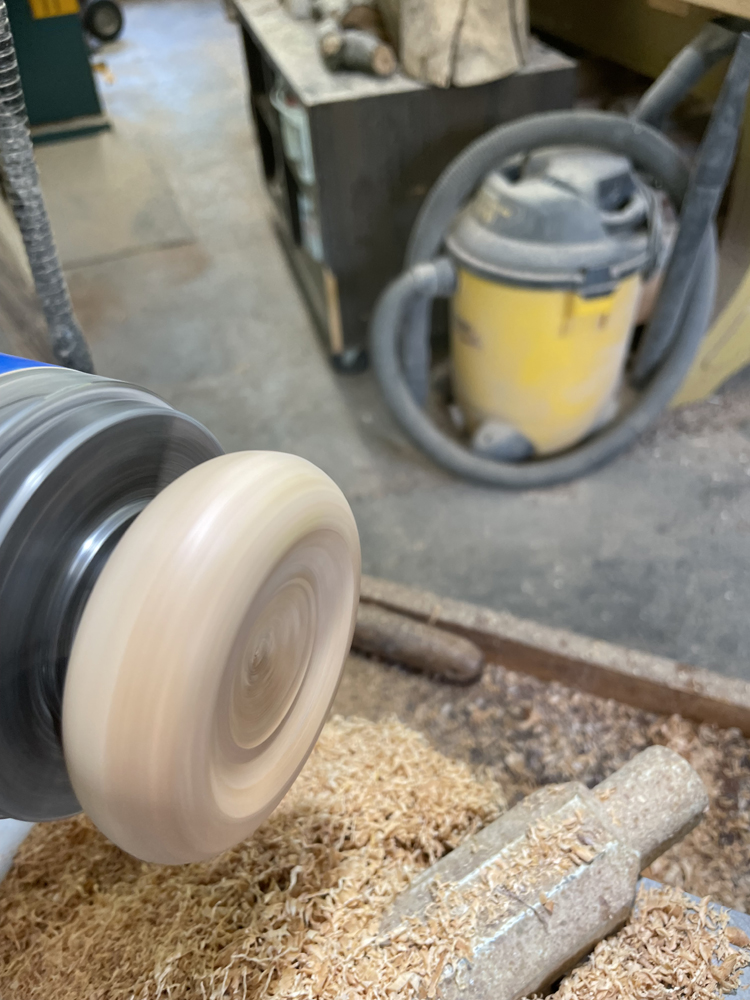
Sanding the exterior diameter at this point is simple.
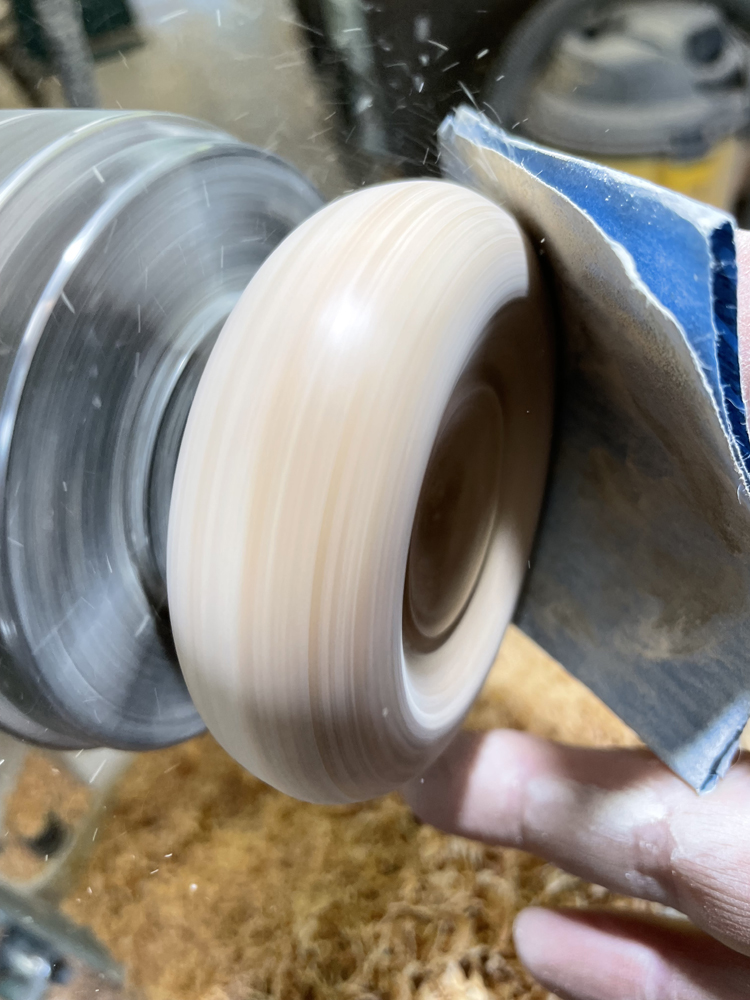
Using a straight scraper to form that inner shoulder prepares for remounting using the chuck jaws on the inside to expand for gripping which will allow the little tenon on the other side to be cut away with a final sanding to the outside diameter and finish applied (I prefer the inexpensive and satisfying shop-made friction polish of shellac, boiled linseed oil, and turpentine – 1/3 each in a closed container).
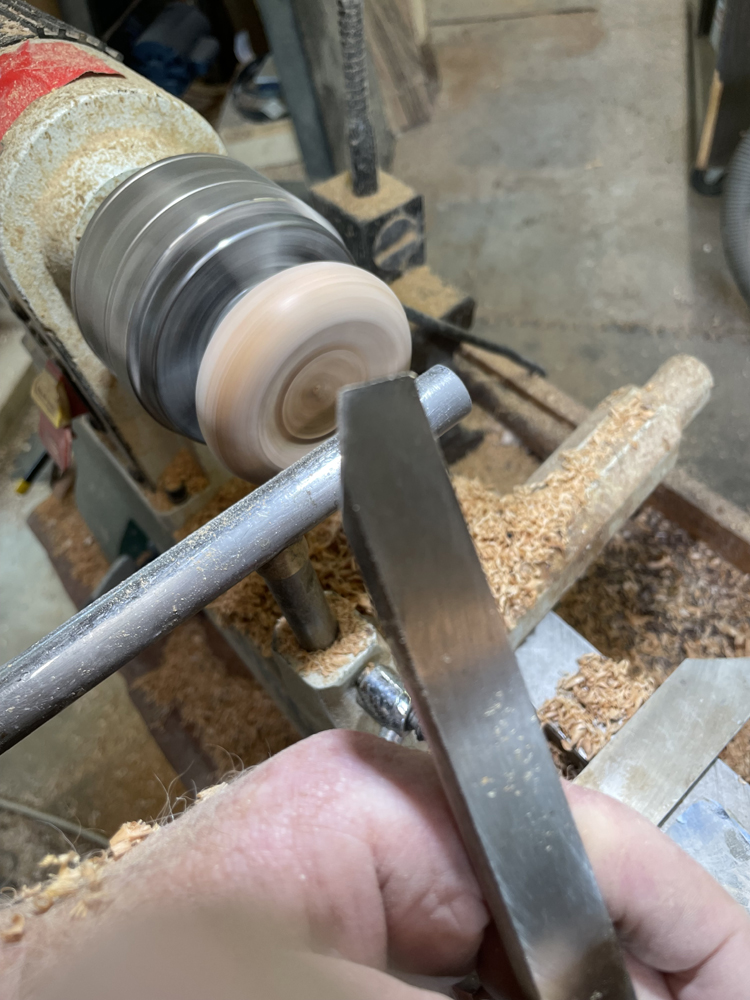
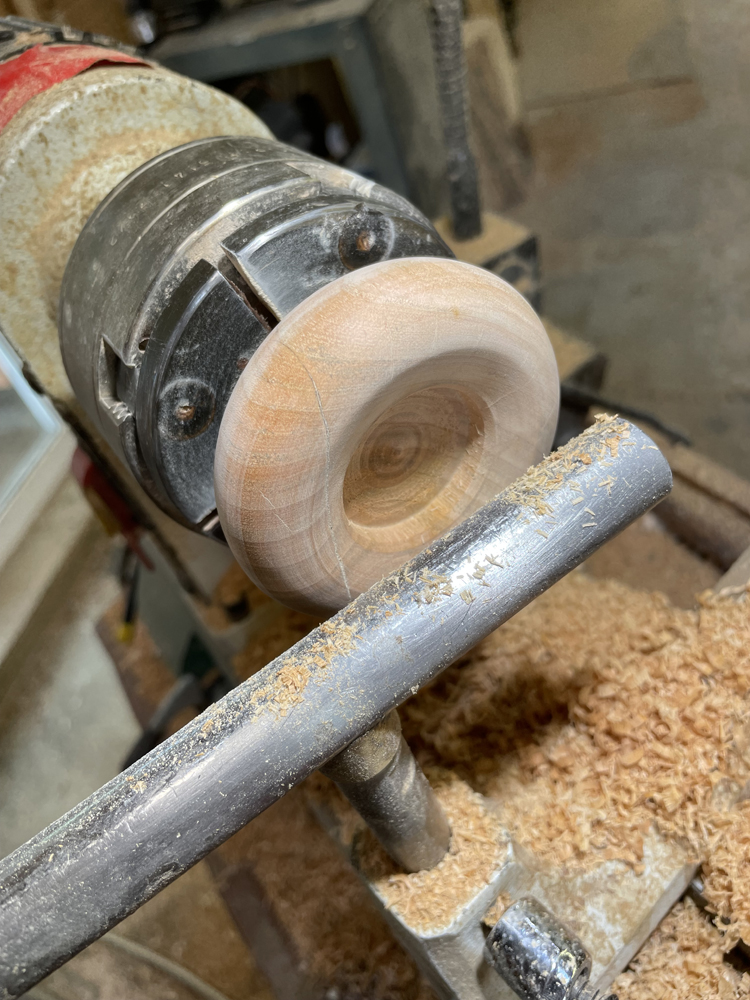
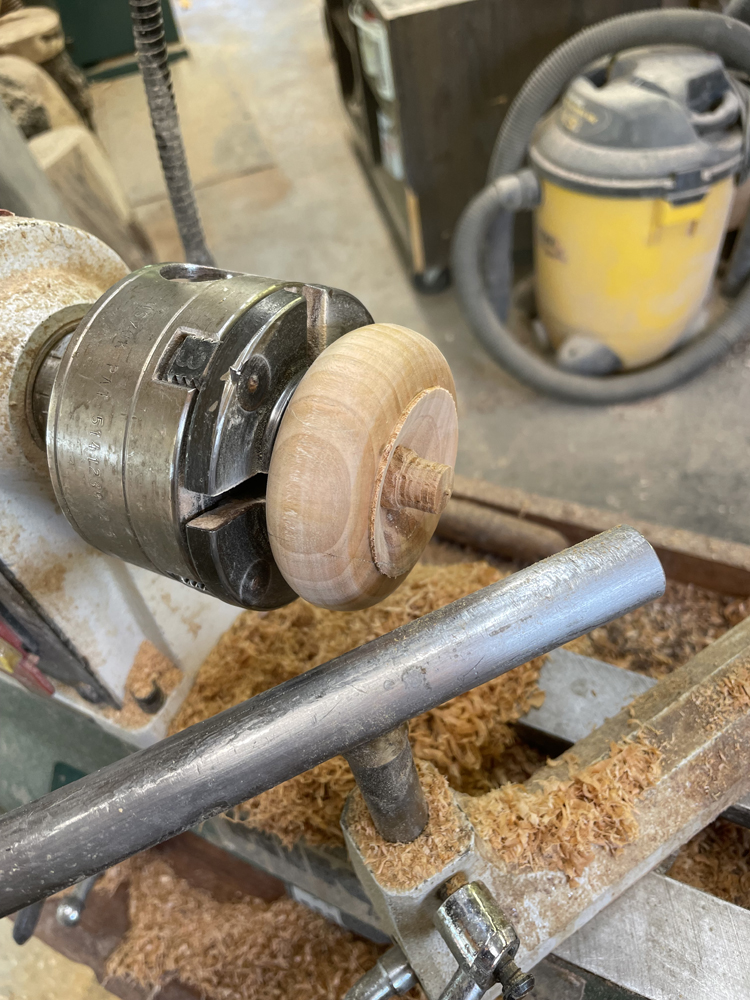
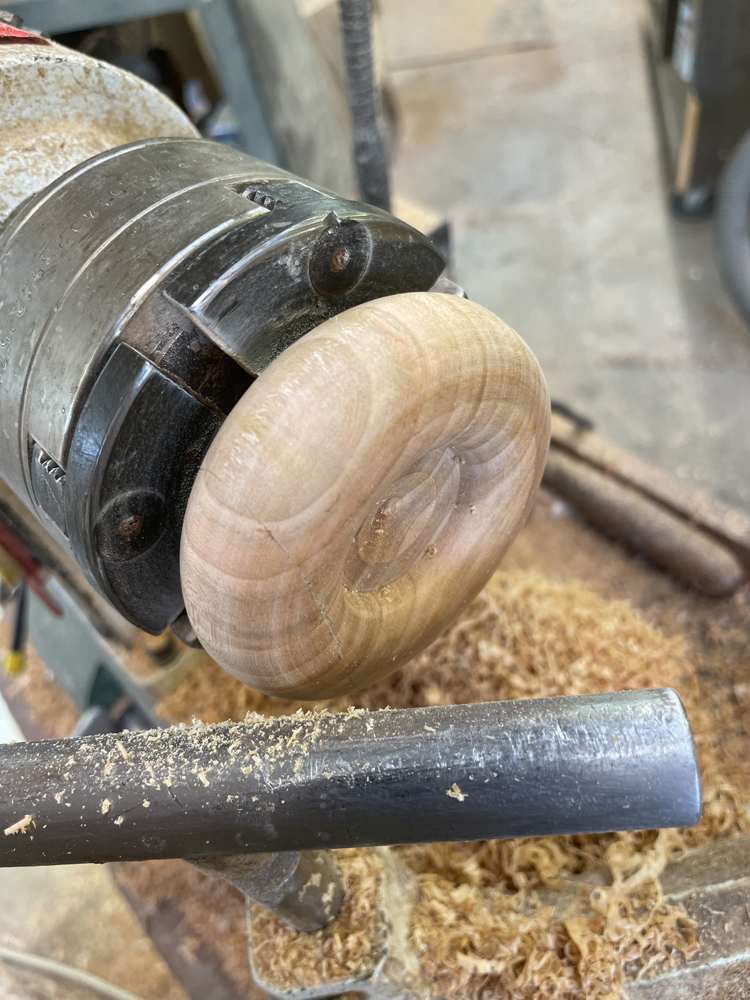
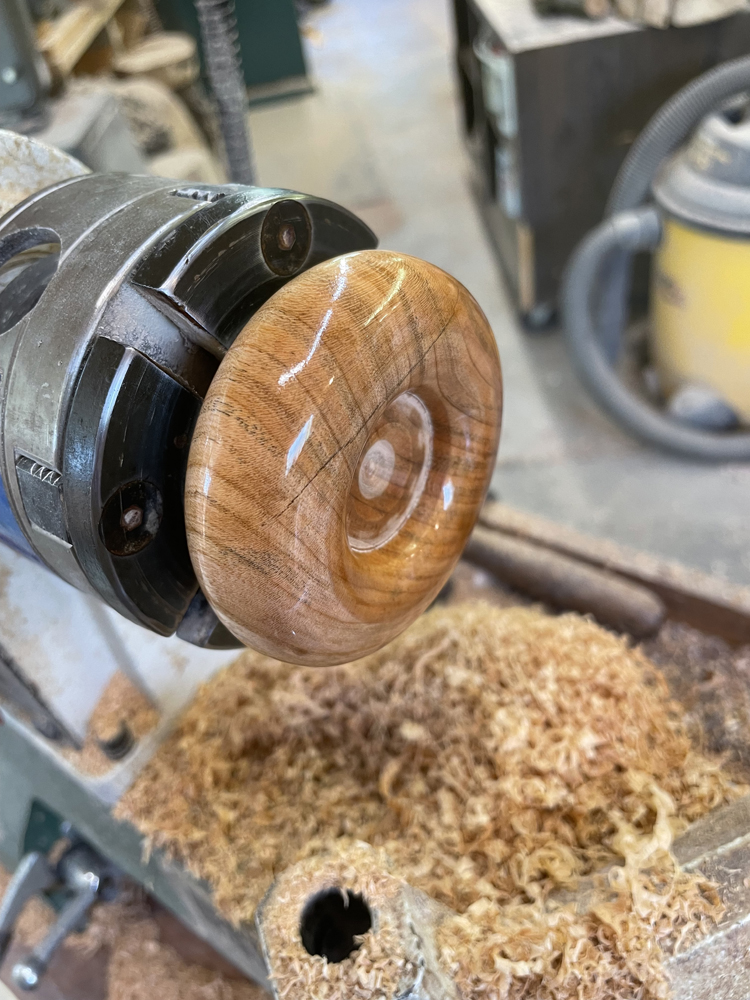
Before remounting the nearly finished donut on the chuck using the chuck jaws gripping the outside diameter (protecting the finished exterior with a layer of paper towel) to scrape through the center, sand, polish the inside on both sides, and add to the growing bowl of “fresh” multi-flavored donuts on the workbench awaiting a “trade” when delivered.
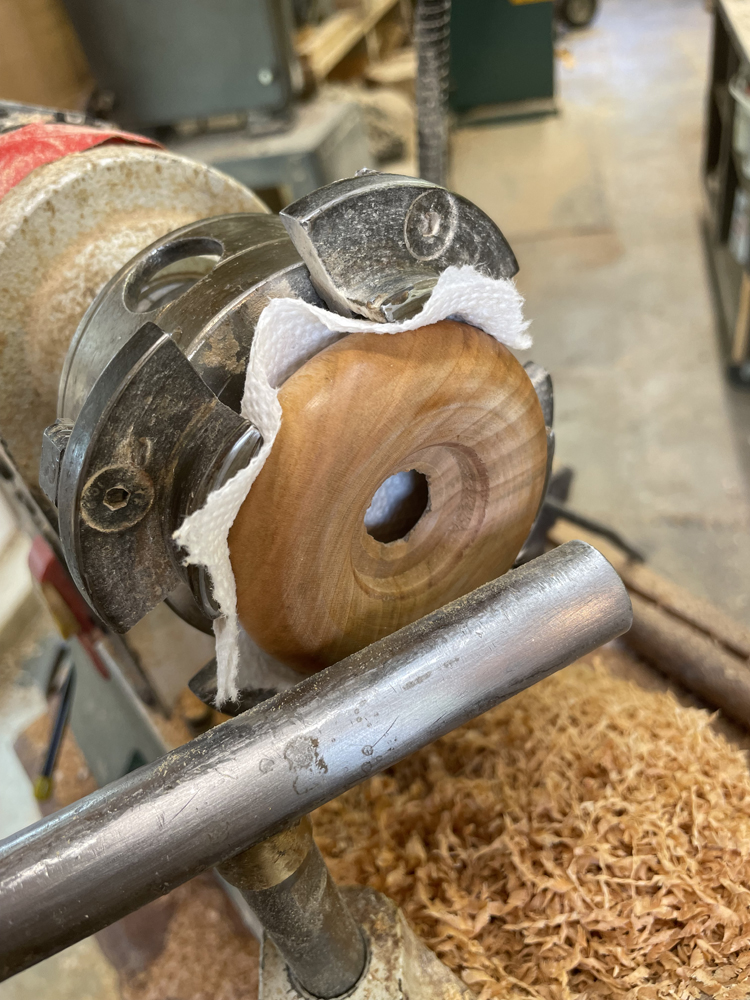
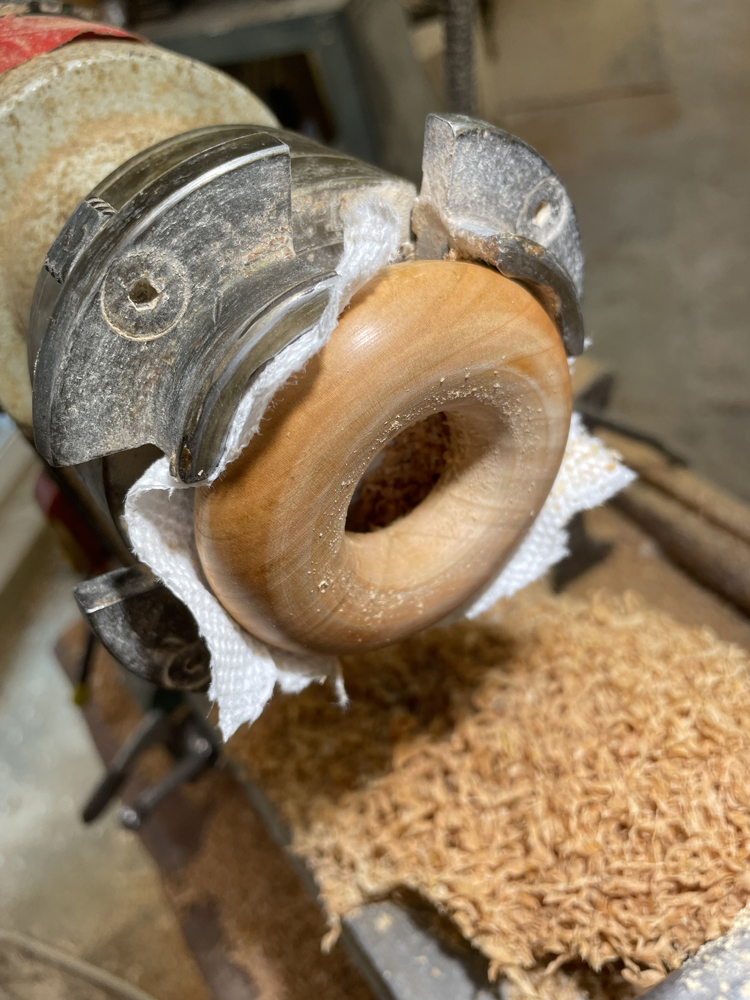
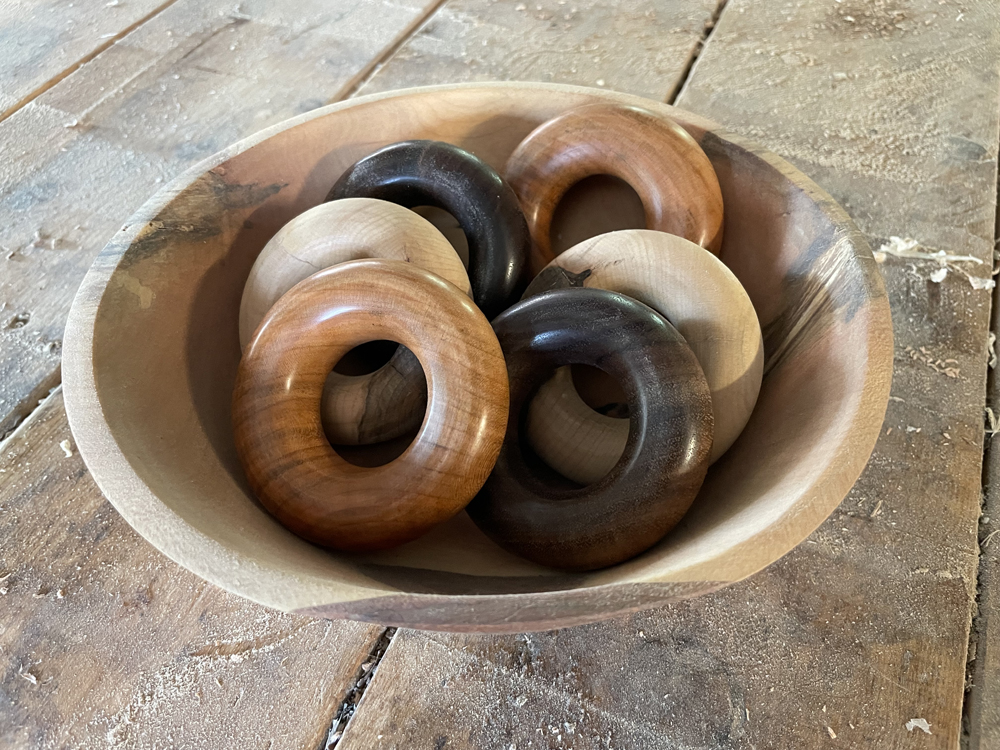
When I showed up the following Tuesday at my friend’s kitchen with my bowl of donuts, I was greeted with delight over the clear flavors of glazed cherry, chocolate, and old-fashioned. We all agreed that these always-fresh donuts would add no pounds and would attract no ants if left sitting out.
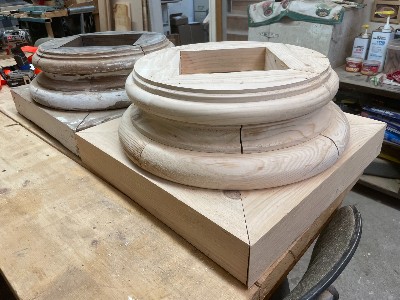
For the February 2022 issue of Wood News Online, Temple Blackwood shared his process for turning a replacement porch post column.
One of my regular contractor customers came by some time ago with an interesting problem that he decided I would be the perfect person to help him with. An elderly customer of his had a rotted porch post column base in the front corner of her garage where it was constantly in her sight as she drove away from or back to her home. While she had no real interest in replacing the other five column bases that are in equal deterioration further back, she wants this one repaired soon with as little fuss as possible.
Read the rest of the article
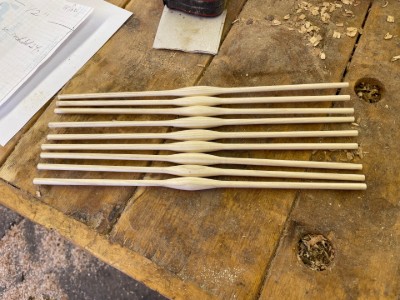
For the March 2022 issue of Wood News Online, Temple wrote about a project where he had to turn twenty-four replacement spindles for a horse carriage seat:
One of my new customers wrote to me and explained that he is in the process of rebuilding an antique horse carriage and needs to replace twenty-four white ash spindles that decorate and support the back of the seat.
Read the rest of the article

For the March 2022 issue of Wood News Online, Norm Reid reviewed The Stick Chair Book by Christopher Schwarz:
Chris Schwarz’s latest rendering, The Stick Chair Book is a revelation and an inspiration. Even if you’ve never had the desire to build your own chair out of wood, this book might change your mind.
Read the rest of the review
Purchase your own copy of The Stick Chair Book
Click this link for more great woodworking books to read
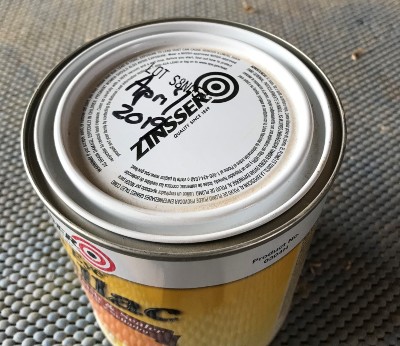
For the March 2022 issue of Wood News Online, Bob Rummer discusses the shelf life of wood finishing products and offers some tips and advice:
When we are tempted to use old finishes, I think several factors come into play. Sometimes we don’t really know how old our finish may be. When I look at my shelves, there are lots of cans of unknown origin. Are they past their expiration dates?
Read the rest of the article